

Direct Answer
Arcadian Digital and Intelligent Resourcing overlap on one thing and differ on the rest. Arcadian is a Melbourne web and app studio that also sells SEO, AEO and paid ads. Intelligent Resourcing runs its own priced GEO Engine for AI search citations. It also builds signal detection and CRM routing on top of a platform a client already has. The overlap is AEO and GEO content. Everything else is different. Choose Arcadian if the problem is the site or app itself. Choose Intelligent Resourcing if the problem is AI search visibility, buying-intent detection, or both.
Key Facts
- Arcadian Digital was founded in 2014, per GoodFirms and a Forbes Australia feature. Crunchbase lists 2013. That year is not settled.
- Founder Adrian Randall spent ten years as a Combat Systems Engineer for the Australian Navy and Air Force before he started the agency.
- Arcadian builds on Laravel, React, WordPress and Craft CMS. These suit complex, data-heavy apps, not template sites.
- Pricing for Arcadian's build work is not public. Crunchbase lists the firm at 11 to 50 staff, based in Melbourne, Victoria.
- Arcadian sells AEO as one of 12 named marketing services.
- Intelligent Resourcing runs a priced GEO Engine. A Strategic Blueprint audit starts from AUD$2,500 one-off. A retainer then runs AUD$3,200 to AUD$3,700 a month, on a six-month minimum.
- The GEO Engine retainer covers schema markup, E-E-A-T signal work and citation tracking across ChatGPT, Perplexity, Claude and Gemini.
What Does Arcadian Digital Actually Build?
Arcadian's own services page splits its work into five groups. These are AI and data, cybersecurity and digital trust, digital marketing, strategy and transformation, and technology and development. The page lists 8 AI and data offers and 8 tech and build offers. That is more than its 12 marketing offers on their own. The split matters. It shows the firm builds as much as it markets.
The build side runs on Laravel, React, WordPress and Craft CMS, per its GoodFirms profile. Those tools suit custom, data-heavy apps. They are not the template stack most marketing agencies use for a brochure site.
ZoomInfo lists Arcadian's top rivals as Traffic Radius, Absoltz Internet Marketing, Social Sutra and Result Driven SEO. All four are SEO-first shops. That suggests Arcadian sits in a different market than a directory listing alone would suggest.
Intelligent Resourcing sits in a different market again for its platform work. It is not a web build shop and does not compete with Arcadian for build jobs.
| Criteria | Arcadian Digital | Intelligent Resourcing |
|---|---|---|
| Core deliverable | A built or maintained web application, plus SEO, AEO and paid media | A dedicated GEO Engine for AI search citations, plus signal detection and CRM routing on the client's existing stack |
| AEO / GEO service | Bundled into broader digital marketing services, not priced separately | Dedicated GEO Engine, priced from AUD$2,500 one-off or AUD$3,200 to $3,700/mo, 6-month minimum |
| Tech stack | Laravel, React, WordPress, Craft CMS | Clay, HubSpot and n8n, wired into the client's own CRM |
| Named verticals | Financial services, retail, travel and leisure, technology | B2B revenue teams with a defined ICP and target account list |
| Build/platform pricing | Not published | Not applicable, IR does not build platforms |
| Team size | 11 to 50 staff, Melbourne (Crunchbase) | Focused team, one operating model |
The Founder Story Behind the Positioning
Arcadian was founded in 2014 by Adrian Randall. He spent a decade building combat and secure communication systems for the Australian Navy and Air Force. He started the agency after that, according to a Forbes Australia feature. That defence background is a real point of difference. Few marketing agencies have a founder with that kind of engineering history.
The same feature says AI now makes up more than a quarter of Arcadian's revenue. That share is growing 200 percent every quarter. The company holds its AI work to an 80 percent accuracy target, with people checking the rest.
Two examples from the feature show what that looks like. In factories, Arcadian's AI creates design files for robotic cutting and welding. That cuts down manual programming time. For the Queen Victoria Market trader portal, its AI workflows keep the branding the same across many trader pages. No single trader loses their own look in the process. Neither example is ad copy. Both are real engineering work, which fits a founder whose career started in defence, not in an ad agency.
Where Do the Two Actually Overlap on AEO and GEO?
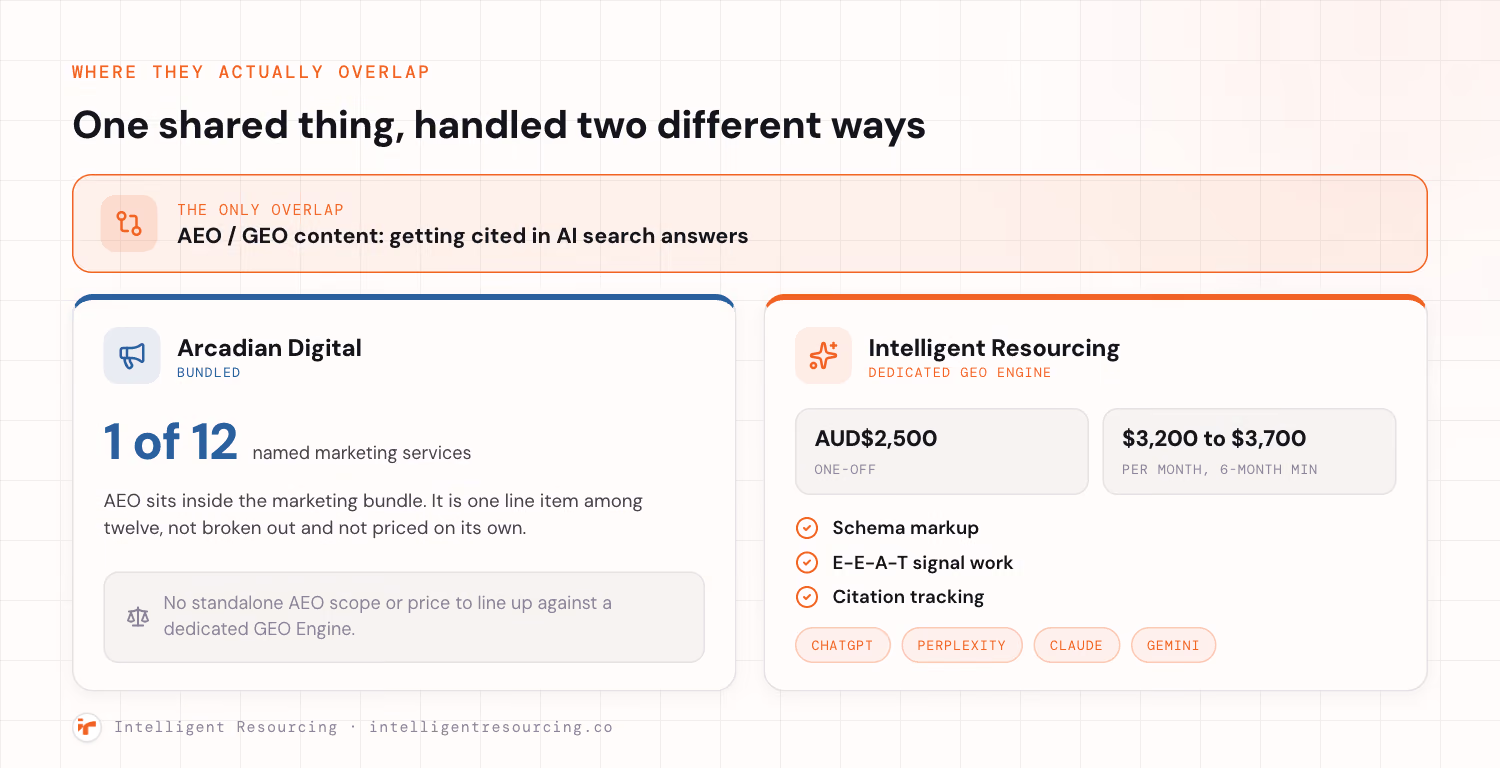
Arcadian and Intelligent Resourcing are not real competitors on platform work. But they do compete on one thing: AEO. Arcadian lists Answer Engine Optimisation as one of its 12 named marketing services. It sits bundled in with SEO, paid ads and content, on Arcadian's own site.
Intelligent Resourcing runs Generative Engine Optimisation as its own priced product instead. A Strategic Blueprint audit starts from AUD$2,500 one-off. A retainer then runs AUD$3,200 to AUD$3,700 a month, with a six-month minimum. That retainer covers schema markup, E-E-A-T signal work, and citation tracking across ChatGPT, Perplexity, Claude and Gemini.
Arcadian's AEO offer is not priced or measured on its own. At least, not on its public site. That is the honest gap. Both sell AEO. Only one has split it out into its own service, with its own price and its own reports.
A buyer who only needs AEO, and nothing else, could compare the two directly on that one line. A buyer who needs an app built or kept running will find Arcadian's AEO offer folded into a bigger deal. That may or may not suit them.
The Comparison Most Articles Get Wrong
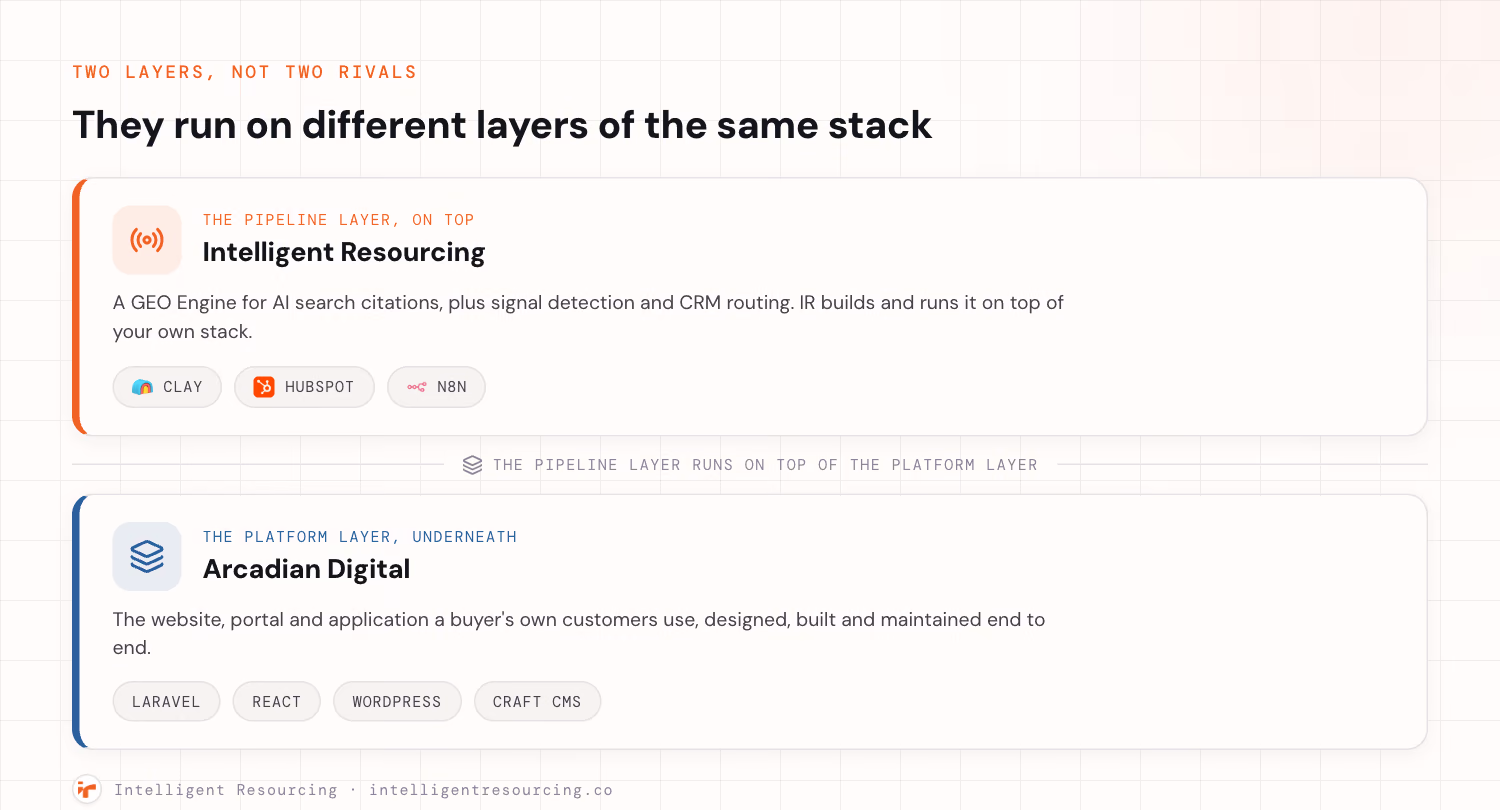
Most "X vs Intelligent Resourcing" posts assume both sides fight for the same budget. That is only true for AEO, covered above. Everywhere else, Arcadian builds the thing a buyer's customers use directly: a website, a portal, an app. Intelligent Resourcing builds a layer that decides which accounts to contact, and when. That layer runs on top of whatever platform already exists. Naming when you would call each one beats making up a contest between them.
A buyer who needs a complex web app should call Arcadian. That is true above all if they lack a build partner with that kind of skill. A buyer who already has a working site and CRM should call Intelligent Resourcing instead. That fits if the real problem is knowing which accounts are ready to buy, or getting cited in AI search. Those two buyers are rarely the same person on the same day.
When Is the Platform the Real Bottleneck?
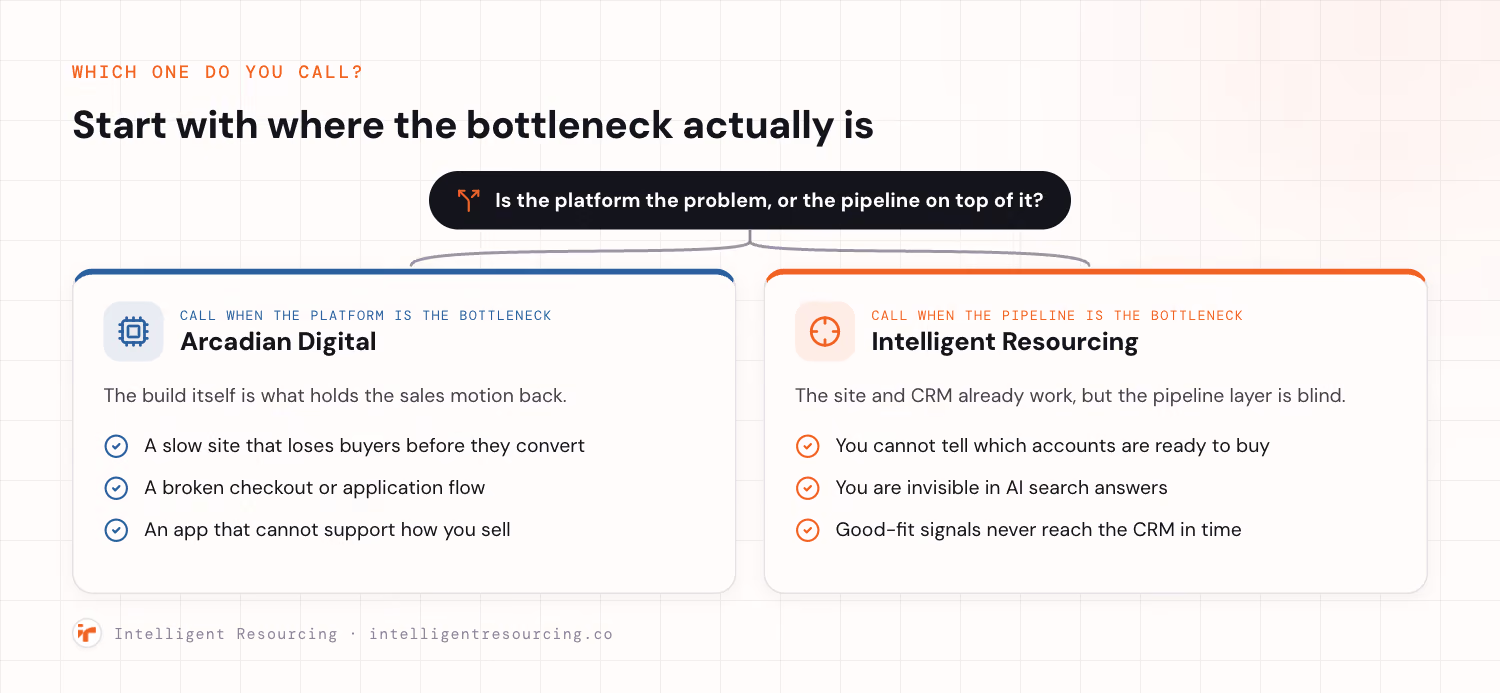
Sometimes the real problem is the platform itself. That could be a slow site, a broken checkout, or an app that cannot handle the sales process. When that is the case, Arcadian's years of build work matter most.
- Industries served: financial services, retail, travel and leisure, and technology, per TechBehemoths
- Client mix: roughly 45 percent small business, 35 percent mid-sized firms, and 20 percent larger partners. That is a real spread of company sizes, not one narrow market
- AI and data team: builds chatbots, automated workflows, and machine learning tools. That is real technical work, not a reused template
If the platform is the real problem, a signal-detection system has nothing to plug into yet. Fix the platform first. A Clay-based workflow needs a working CRM and a working site behind it, not a platform still being built.
The Pipeline System Bottleneck
If the website and CRM already work, a different problem can show up. Sales may not be able to tell which accounts are looking to buy right now. GTM Engineering solves that exact problem: signal detection, enrichment and routing logic, built inside a client's own CRM. Unlike Arcadian's build work, this is not a project with an end date. It runs on an ongoing basis, watching for new signals every week.
Arcadian's own services list SEO, AEO, paid ads and UX discovery. All of those are useful. Only the AEO line, covered above, overlaps with what Intelligent Resourcing prices and tracks on its own. None of the rest answer which target account is showing buying intent this week. That is not a knock on Arcadian. It sits outside what its own site describes. That scope is about building and marketing the platform, not watching accounts once the platform exists.
This monitoring layer suits teams small enough that nobody owns the work full time.
The Case for Using Both
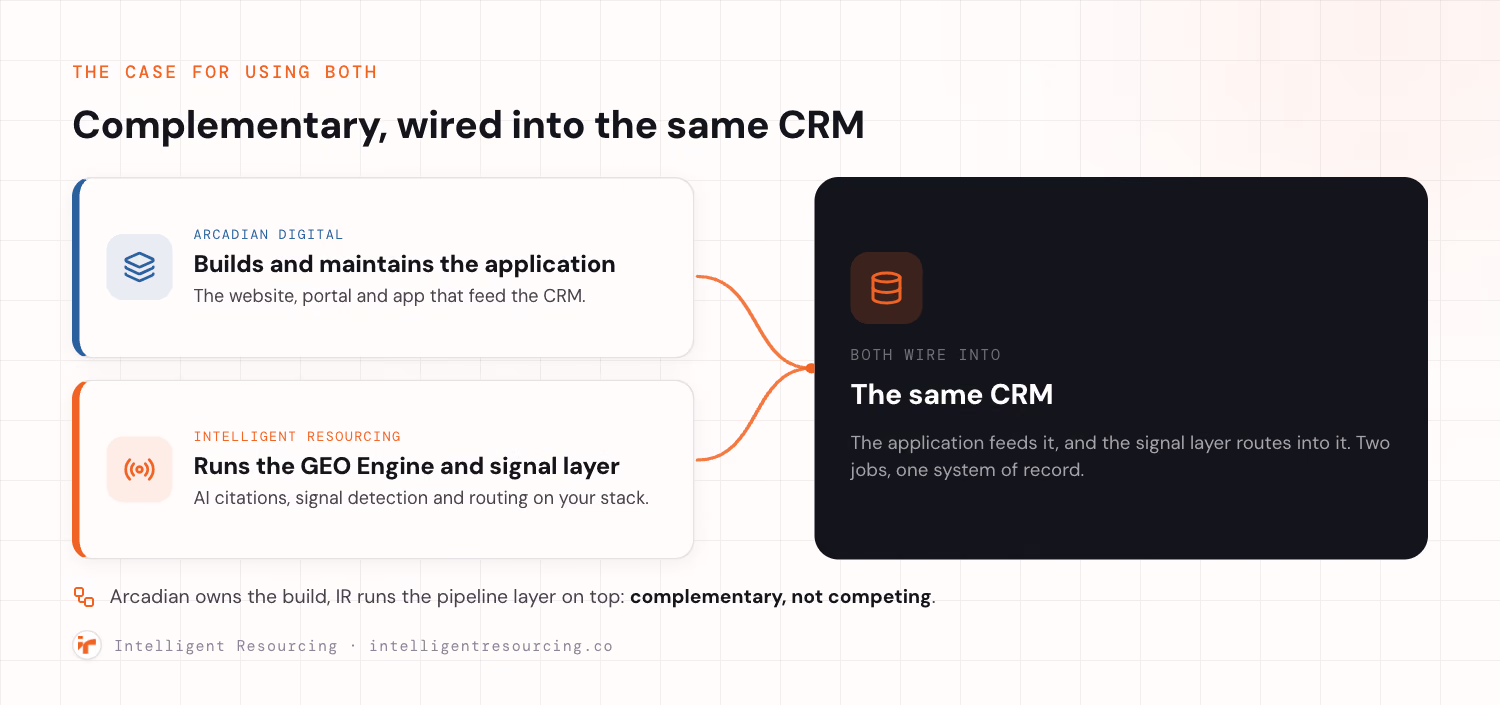
A firm can have a real, complex app need, thin AI search visibility, and a signal-detection gap, all at once. That firm could reasonably use both providers. Arcadian would build or keep the app running. Intelligent Resourcing would run the GEO Engine and the signal layer that decides when to reach out. Both would wire into the same CRM the app feeds. Neither firm needs to lose the deal for the buyer to get what they actually need.
Picture a mid-market retailer with an old, slow web app and thin AI search visibility. It also has no way to tell which wholesale accounts are shopping for a new supplier. Arcadian could rebuild the app properly, on Laravel or React. That gives it the room to carry the traffic and checkout logic the business needs. Intelligent Resourcing could separately run its GEO Engine for AI search citations. It could also wire signal detection into the CRM those wholesale reps already use. A hiring spike or a funding event at a target account would trigger outreach right away. That beats a rival getting there first. Neither piece replaces the other.
The honest verdict does not pretend these are rivals fighting for the same deal, except on AEO. It names the real split: platform work on one side, AI search citations and buying-signal detection on the other. What a GTM engineer actually does covers the signal half of that split in more depth.
Ready to see which of your target accounts is showing intent this week? Book a discovery call.
Comparisons
See which of your target accounts is showing buying intent this week. If the platform itself is the constraint instead, we will tell you that too.
FAQs
What tech stack does Arcadian Digital build on?
Laravel, React, WordPress and Craft CMS, per its GoodFirms profile. That stack is built for complex, data-heavy apps, not template marketing sites.
Does Arcadian Digital do AEO the same way Intelligent Resourcing does?
Not quite. Both sell AEO. Arcadian folds it into a bigger marketing deal, with no separate price. Intelligent Resourcing runs it as its own GEO Engine. Pricing starts from AUD$2,500 one-off, or AUD$3,200 a month on a six-month minimum. That covers schema markup, E-E-A-T signal work and citation tracking.
Who owns the code Arcadian Digital builds?
Not published on Arcadian's site. Most build shops hand code over to the client at final payment. Arcadian's own terms were not there to confirm that directly, so ask before signing.
Can I use Arcadian Digital and Intelligent Resourcing together?
Yes. Arcadian builds or keeps the platform running. Intelligent Resourcing runs AI search citations and the signal layer on top of it. A buyer with a real app need and a visibility or signal gap could run both.
Is Arcadian Digital a lead generation agency?
No. Arcadian is a web and app build shop that added ads, AEO and AI work. Comparing it to a lead agency on lead volume alone misses its real business.
What does Arcadian Digital charge for its build work?
Not published. Arcadian's site shows no rate card. Neither do its GoodFirms and Crunchbase listings, and none show a minimum project size for build work.