
Marketing Automation Consulting Engineered Around the Buying Signal
Your calendar decided to email a buyer today, your buyer decided nothing at all.
What Actually Slows B2B Marketing Down
The brief
What's actually wrong with most marketing automation?
Answer
• Here's the most common business to business (B2B) marketing mistake. Teams use automation to send more emails, faster. Buyers get sick of their inbox. More people unsubscribe. Sales complain about lead quality. • Calendar-led automation fires based on schedule (Day 7, Tuesday), not buyer intent. Teams report opens and clicks while sales receives poor timing, missing context, and broken handoffs that waste time. • Revenue conditions have changed. AI workflows and automation now let you build systems that wait for a real signal. A signal is a public event that suggests a company might buy. The system acts straight away. It sends the next step, with context, to the right person before the buyer loses interest. • We build Revenue Production Lines. Each stage has a job and a handover. They act when a buyer shows interest. They don't blast whole lists on a fixed schedule.
The Shift From Batching to Signal Processing
Standard automation runs on the calendar. It sends a message when the workflow date comes up, not when a buyer does something.
Failure 1
Engagement, Not Revenue
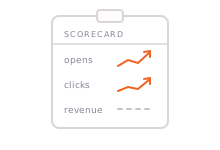
Standard automation optimises for opens and clicks. Deal origin and pipeline value never enter the scorecard.
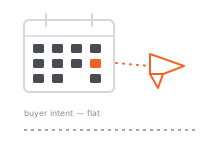
Failure 2
The Calendar Decides
Messages send because the date arrived, not because the buyer showed intent. Timing is never part of the decision.
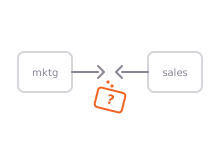
Failure 3
Broken Handoffs
Sales receives poor timing and missing context. Lead quality complaints and inbox fatigue follow.
The verdict: traditional marketing automation consulting works for some teams. Their products are simple and so are their sales cycles. For them, sending emails in batches on a set date is enough. Revenue Engineering means building the system around buyer signals. It suits B2B teams with higher value deals. For them, timing, context and good signals beat volume alone.
The List
- Messages fire because the workflow date arrived
- Success measured by opens and clicks
- Broad list sends with no account context
- Sales gets a name and an email, not a reason
The Signal
- Behaviour and event-based triggers, not fixed dates
- Success measured by deal origin and pipeline value
- The individual, targeted with context
- Event-Driven Context on every alert
We do not automate activity. Instead, we engineer revenue.
The Context Agent at Work
Signal-led marketing automation works because the system does the hard part first. It finds the buyer, adds the context and learns from the result. All this happens before sales touches the deal.
Signal Intelligence Brief
Live record
Trigger · When
Opportunity Detected: Logistics Expansion
New facility opening, Melbourne West. Source linked.
Contact · processor
Validated buyer contact via Waterfall Logic
Mobile and work email verified before routing.
Context · Why now
Customer relationship management (CRM) history checked before the alert fires
No duplicated outreach. No repeated, poorly timed touches.
Objective · Outcome
An angle, not just a name and an email
Suggested based on the signal, account fit and stage.
We don't just fire a sequence. We construct a complete opportunity brief. What you don't get is a broadcast blast. What you get is context already attached by the time the signal reaches your CRM.
What Actually Changes
This is not another list tool. Here is what changes.
- Sales or CS grades opportunity quality and fit after every close.
- The workflow learns which signals produce noise and which produce real pipeline.
- What works becomes the rules the system runs on. Those rules then carry over to every campaign and segment.
- Sales stops managing the calendar and starts acting on timing.
Case metric pending sign-off from Ronan. No dated result has been sourced for this page yet. Remove this note once a metric is approved, or leave the section out of the published build until then.
Three Ways to Start, Depending on Your Stack.
We do not replace your CRM or automation platform. We architect the workflow logic that makes it behave like a revenue system.

The Audit (Diagnostic)
For a Messy Automation Stack
We map your current workflows and find where signals get lost. Then we show where calendar-led automation wastes effort as you capture leads, nurture them and pass them to sales.

The Build (Architecture)
For Teams Ready to Engineer
We design the data model, the scoring, the routing rules and the event triggers. Together, they make your stack act on signals.

The Integration (Augmentation)
For an Established CRM and Stack
We plug signal workflows into the tools and views you already use. Your team gets deals with the context already attached, and you don't switch platforms.
What this requires
- An existing CRM or automation platform (HubSpot, Salesforce, Marketo, Clay or n8n)
- A decision-maker who can approve workflow and routing logic changes
- Sales or CS feedback on signal quality after rollout
This is not for
- Teams with simple products and low-complexity sales cycles, where scheduled batching is enough
- Broad awareness or brand-reach campaigns
- Teams unwilling to change execution logic, even while keeping the same stack
If this fits how your team works, the next step is simple. We show you where calendar-led sends are wasting budget first.
Automation Earns Revenue When the Signal Leads the Workflow
Subject lines and send-cadence tweaks matter. They do not fix the core issue when timing, context and routing are weak. Revenue goes up when automation spots buying intent. It adds the context and starts the next step at the right time.