

Should a Post-Series-A Company Hire a Fractional or Full-Time CMO?
Start fractional if you need senior marketing judgement but not five days of it. Move to full-time once marketing needs daily management of people, budget and channels.
The test is the work, not the title. Count the decisions in a normal week that only a marketing executive can sign off, then ask how many of them can wait three days for the next set day. If most of them can, the job is still a fractional one.
A raise makes a permanent CMO affordable, but affordable and needed are separate tests. The hire is also often a first-timer. The Findem and CMO Huddles tenure study found that 60% of 2026 CMO appointees are first-time CMOs, on partial-year data it treats as directional. A first-time CMO needs a clear job to step into.
The same study shows the fractional route is no longer unusual. Fractional and interim roles grew from 2.9% of new CMO appointments in 2020 to 8.8% in 2024, and held at 8.2% in 2025. Starting fractional is now a normal path into the role rather than a stopgap.
Two companies can raise the same round at very different stages. One is still testing its ideal customer profile (ICP), the type of company it sells to best. The other has a marketing team, working channels and clear revenue goals.
The first company needs someone to build the system, and the second needs someone to run it. The wider question of what to hire and outsource after funding sits one level above this one.
When Is a Fractional CMO the Better Choice?

A fractional CMO is the better choice when you need senior judgement on set days and the internal team can carry the daily work.
This is the stage where a permanent hire is most often wasted. The strategy the CMO would own does not exist yet, so the first year goes on building it, which is work a part-time leader can do just as well for a fraction of the salary.
Signs you are at this stage:
- The ICP is broad or changes from deal to deal.
- Sales and marketing describe the product in different ways.
- Reporting shows spend and clicks but not pipeline.
- The team has doers but no one setting priorities.
Pricing usually follows the days you buy rather than the hours you use. Z10 Consulting, an Australian fractional CMO firm, prices engagements against a company's stage and the days of leadership it needs each month, and says its own start at AUD 3,500 a month for 20 hours. Agree what the leader must deliver before you agree on the days.
For companies that choose fractional leadership, the next choice is the type of provider. A comparison of fractional CMO services in Australia shows how those options differ.
When Should You Hire a Full-Time CMO?
Hire a full-time CMO when marketing has become a full-time leadership job. That point comes when the leader owns team performance, budget calls, board reports, major campaigns and sales alignment each week. If people need executive sign-off most days, one or two days a week will slow the company down.
| Full-time CMO cost line | Yearly amount | Basis |
|---|---|---|
| Average base salary | AUD 182,321 | Payscale Australia, 57 profiles, May 2026 |
| Super Guarantee at 12% | AUD 21,879 | Australian Taxation Office (ATO) rate |
| Base plus super | AUD 204,200 | Before bonus, payroll tax, leave and recruitment fees |
All figures are in Australian dollars (AUD). The base comes from Payscale's Australian CMO data, which also lists bonuses of AUD 2,000 to 98,000. That sample is 57 self-reported profiles, which is small for a role this senior, so read it as an indication rather than a benchmark.
Employers pay the 12% Super Guarantee set by the ATO on top of ordinary earnings.
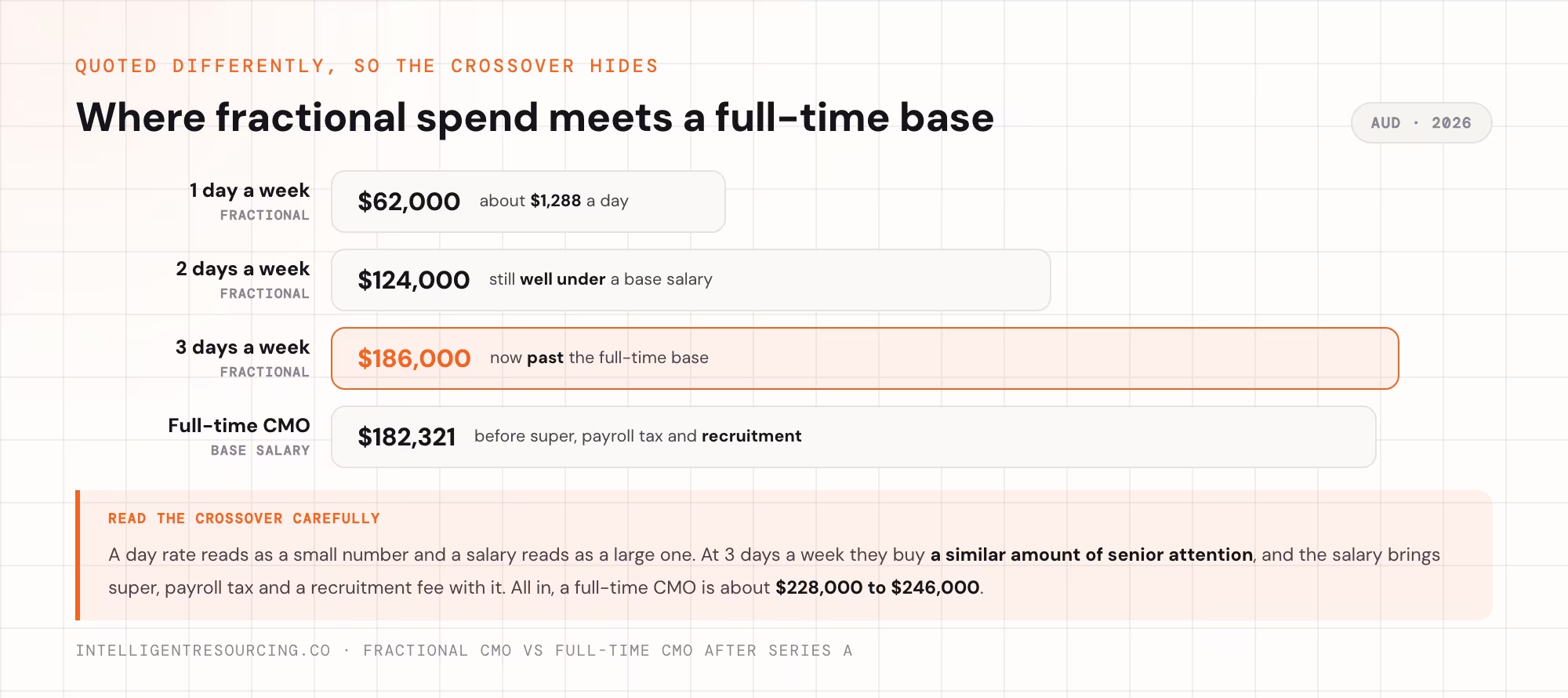
Once payroll tax, leave and a recruitment fee are added, employer on-costs of 25 to 35% put a full-time CMO at roughly AUD 228,000 to 246,000 a year. Cost still comes second, because the first question is whether you have a full-time CMO job to fill.
What Should Be in Place Before a Full-Time CMO Starts?

A new full-time CMO should spend the first year growing the function. A fractional leader can make sure the basics are ready on day one.
New CMOs have little runway. Sitting CMOs at United States venture capital (VC) backed companies have been in role 2.6 years on average so far, and current-role tenure runs 54% longer at public companies, according to the same Findem and CMO Huddles study. It also found fractional and interim roles rose from 2.9% of new CMO appointments in 2020 to 8.8% in 2024, staying at 8.2% in 2025.
| Handover item | Why the next CMO needs it |
|---|---|
| ICP and buyer definitions | The team knows who marketing is built for |
| Positioning and core messages | The strategy does not restart |
| Channel priorities with reasons | Budget choices can be traced and defended |
| Shared lead and pipeline definitions | Marketing and sales use the same numbers |
| Team roles and hiring gaps | The CMO knows what to build next |
| Tests run and results | Failed ideas are not repeated |
Short tenure is the reason this list matters. A leader with roughly two and a half years in the role cannot spend the first six months reconstructing decisions that were already made. Every item above is something the fractional leader can write down once and hand over intact.
If the main job is still to set the marketing strategy, a fractional leader may be the better fit. Once the strategy is clear, the next decision is whether the business needs ongoing leadership or a team to build the systems behind it. For that go-to-market (GTM) execution model, compare GTM agencies for funded startups.
What Are the Risks of Moving Too Early or Too Late?
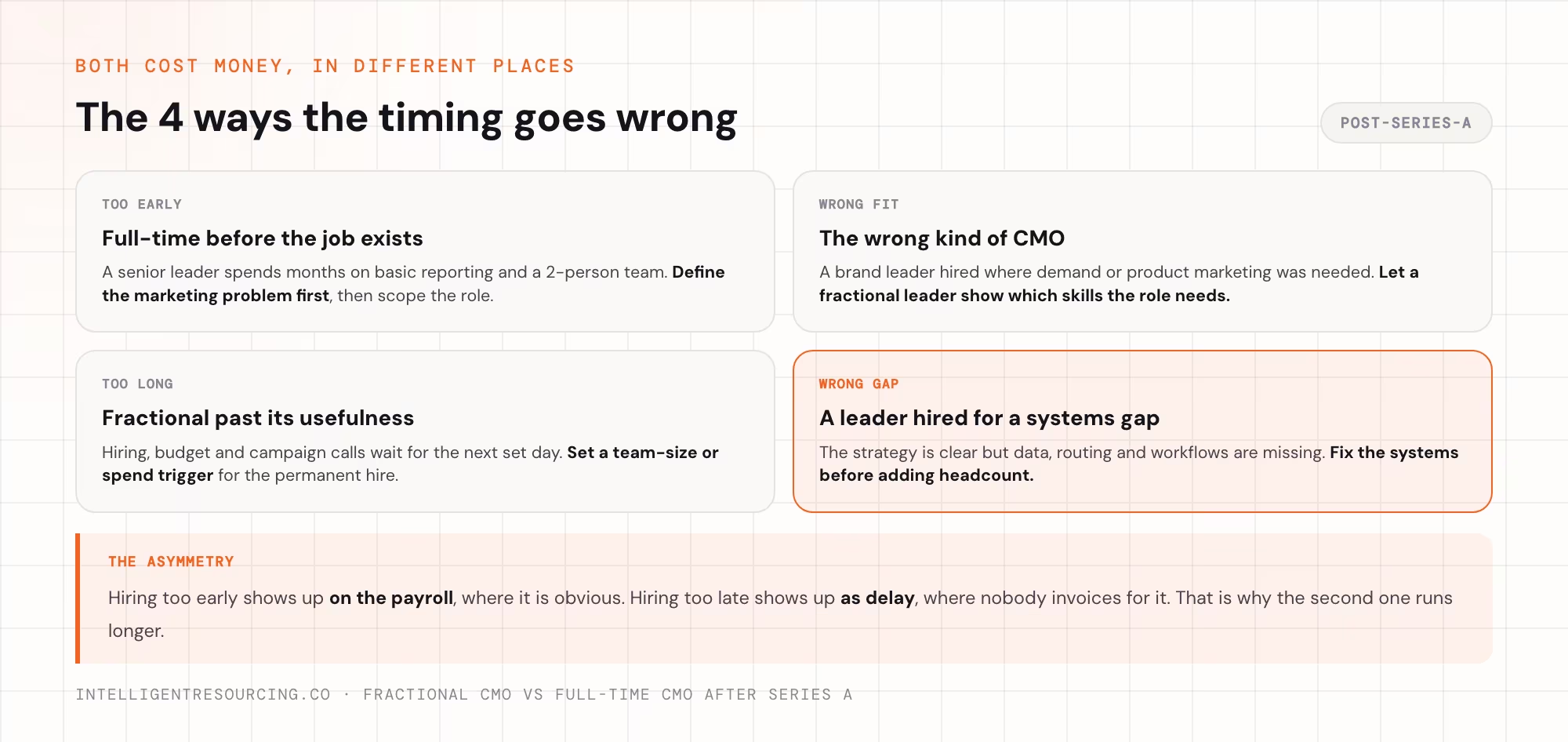
Both mistakes cost money, but they show up in different places. Hiring too early shows up on the payroll, where it is obvious. Hiring too late shows up as delay, where nobody invoices for it.
| Risk | What it looks like | What to do |
|---|---|---|
| Full-time too early | A senior leader spends months on basic reporting and a two-person team | Define the marketing problem first, then scope the role |
| Wrong type of CMO | You hire a brand leader when you needed demand or product marketing | Let a fractional leader show which skills the role needs |
| Fractional too long | Hiring, budget and campaign calls wait for the next set day | Set a team-size or spend trigger for the permanent hire |
| Leader hired for a systems gap | The strategy is clear but data, routing and workflows are missing | Fix the systems before adding headcount |
Fractional time adds up fast. Cemoh, a fractional CMO marketplace, reports an average day rate of AUD 1,288 across 347 consultant rates, read on 13 October 2026. It puts one day a week at about AUD 62,000 a year, so three days runs to about AUD 186,000.
The crossover is easy to miss because the two costs are quoted differently. A fractional day rate reads as a small number and a salary reads as a large one, but AUD 186,000 of fractional time and a AUD 182,321 base buy a similar amount of senior attention. The difference is that the salary brings super, payroll tax and a recruitment fee with it, and the retainer does not.
At three days a week, fractional cost passes a full-time base salary, so it is time to price the permanent role. When the gap is systems rather than leadership, GTM engineering builds the data, routing and workflows instead.
How Should a Post-Series-A Company Make the Final Choice?
Choose based on the work the leader must own over the next 12 months.
Choose a fractional CMO when the company is still setting strategy, fixing the system or shaping the future team. Choose a full-time CMO when the strategy is clear and the company needs one person to run people, budget and marketing decisions every day.
If your strategy is clear and the gap is the system needed to run it, book a GTM strategy session with Intelligent Resourcing. We will map what needs building before you add another senior hire.
GTM Engineering
If the strategy is set and the gap is the system beneath it, map the build with Intelligent Resourcing before you add another senior hire.
FAQs
How long should a fractional CMO engagement run before a full-time hire?
Plan for 6 to 12 months. That is usually long enough to fix the target customer, message and reporting, and to show which skills the permanent role needs. Agree the trigger for the switch at the start.
When should a startup move from a fractional CMO to a full-time CMO?
Move when the business needs a senior marketing leader every day. Common signs are a larger team, regular hiring, a bigger budget and decisions that cannot wait for the next set day.
Should every Series A company hire a CMO?
No. A funding round shows the company can pay for a CMO, but it does not show the company has a full-time CMO job. Some Series A companies still need to fix their target customer and message first.
Can a fractional CMO help hire the full-time CMO?
Yes. A fractional CMO can define the role, write down how the marketing system works and show which skills the permanent leader will need.
What should a full-time CMO inherit from a fractional CMO?
The new CMO should receive a clear ICP, positioning, shared pipeline definitions, channel priorities, a team plan and a record of tests already run.
What if we need execution and already have a strategy?
Then the gap is delivery. A GTM engineering partner can build signal, data, customer relationship management (CRM) and workflow systems around an agreed plan, so you avoid adding another strategy role.