

When Does Founder-Led GTM Stop Scaling?
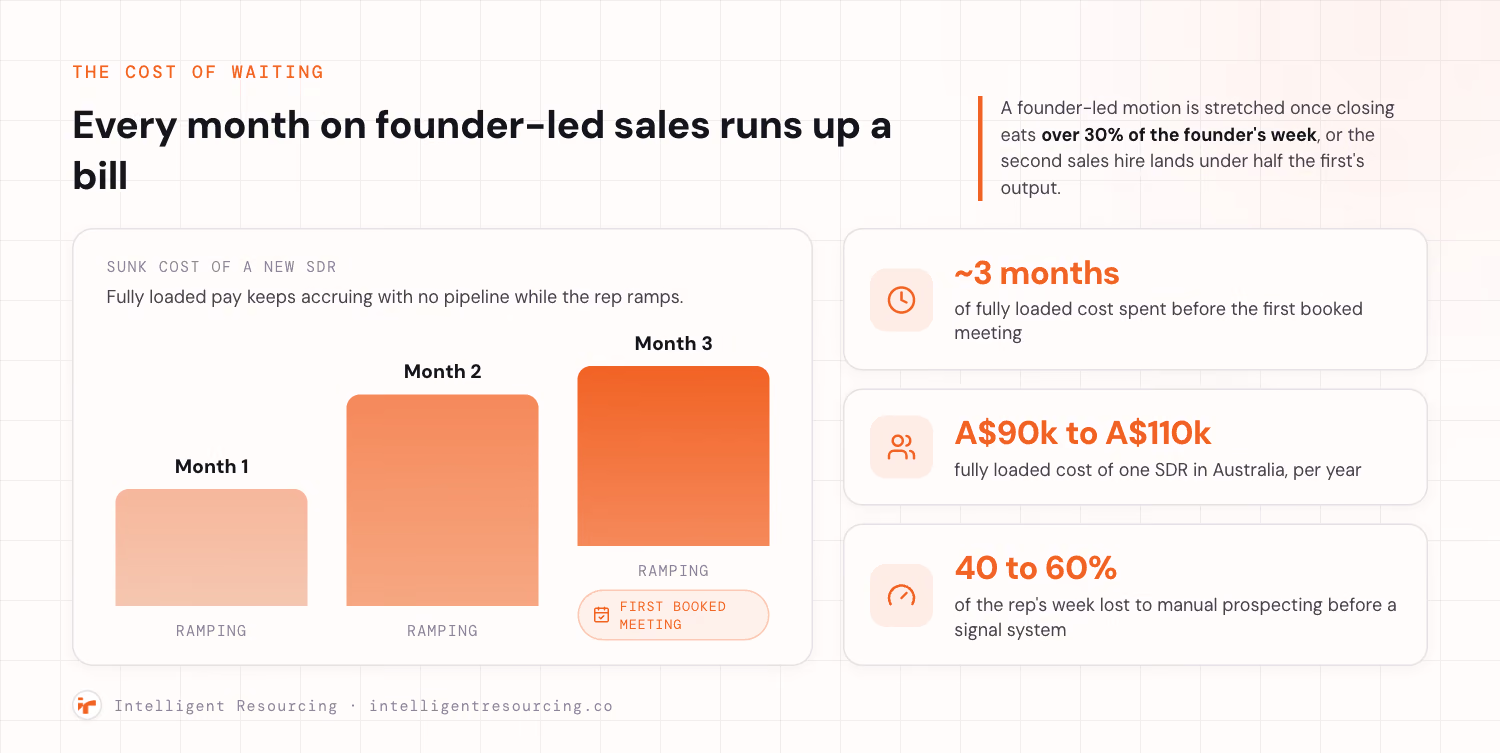
Founder-led sales works until it bottlenecks the product roadmap. The inflection point arrives when closing deals takes more than 30% of the founder's week, or when the second sales hire produces less than half the output of the first.
The cost of delaying the transition
Before a new sales rep books their first meeting, you have already spent roughly 3 months of their fully-loaded cost in ramp time. Fully loaded, an SDR in Australia costs between A$90,000 and A$110,000 a year. Across B2B clients, reps reported losing 40 to 60% of their working week to manual prospecting before a signal-based system replaced it.
The case for a GTM agency over an early hire:
- No ramp period: the agency deploys a working system, not a person who needs 3 months to hit quota.
- No payroll risk if the motion fails: a retained agency engagement ends; an SDR hire is harder to unwind.
- Faster iteration: an agency tests channels and sequencing in parallel; a single rep tests them sequentially.
How Do You Evaluate a Go-To-Market Agency for a Funded Startup?
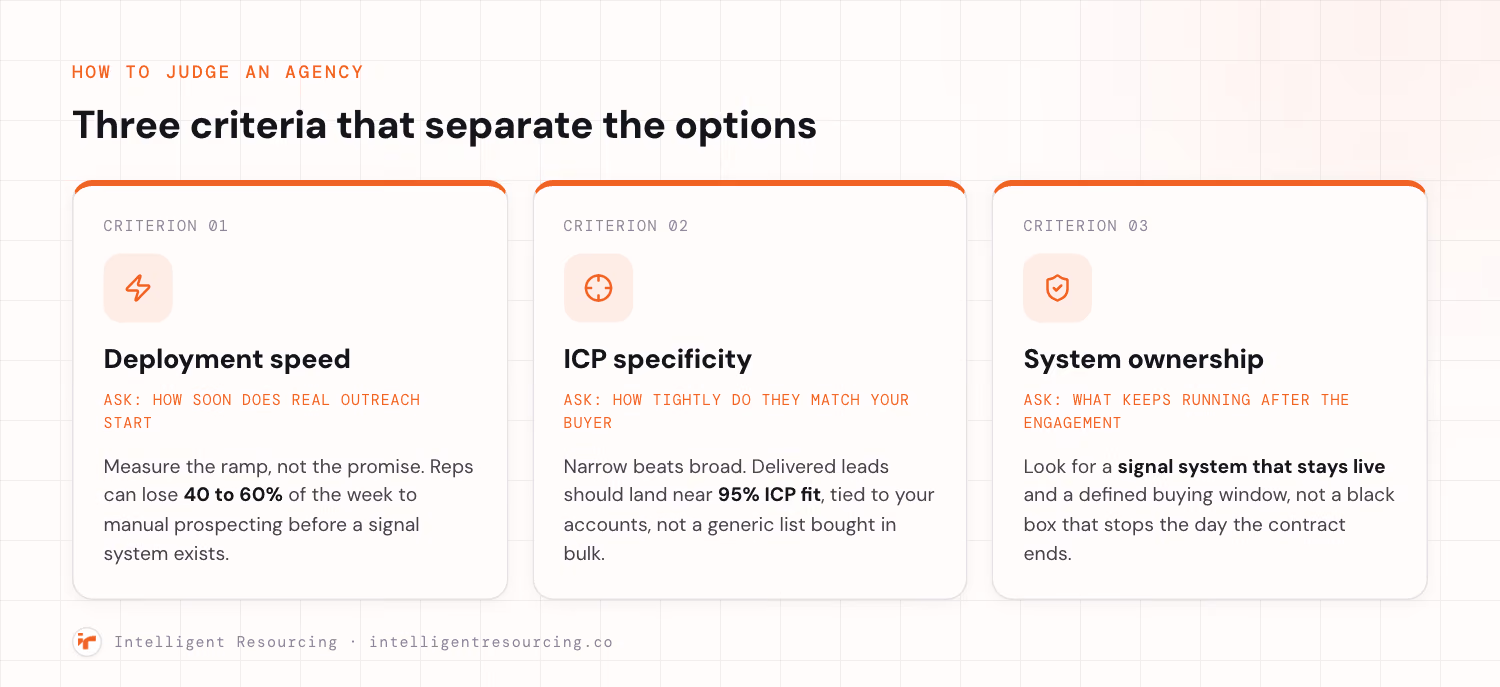
Evaluate on 3 criteria: deployment speed, ICP specificity, and system ownership after the engagement ends. An agency that takes 3 months to reach market and leaves no IP behind when the retainer stops is not a fit for a funded startup on a runway clock.
Deployment speed
Ask every agency: what happens in week 1?
A signal-led system can surface buying signals from day one. A strategy-first agency will spend the first month in workshops. Neither is wrong. For a startup with 90-day pipeline pressure, they are not equivalent.
The fastest agencies on this list confirm their week-1 deliverable before the contract is signed. If the answer is “we kick off discovery and align on ICP,” add 6 weeks to every timeline they quote you.
ICP specificity
74% of marketers say content marketing helped generate demand and leads, per HubSpot's 2025 marketing statistics, citing Content Marketing Institute. The ones who did not: built campaigns before the ICP was sharp enough to define the content.
Ask every agency for their ICP qualification process. If they start with your CRM, they are working from data. If they start with a brand workshop, they are working from assumptions.
System build and management
Ask where the system is built and who manages it. Intelligent Resourcing builds and manages the signal engine, CRM architecture and data workflows inside the client's existing stack. This keeps the system connected to the client's CRM, data and processes, while Intelligent Resourcing remains responsible for its ongoing management during the engagement.
How these agencies were shortlisted
- Engagement model: project-based, retained, or placement.
- ICP range: SMB, mid-market, or enterprise.
- Channel mix: outbound, inbound, ABM, brand, PR, digital.
- Pricing: verified from agency websites and first-hand contact where disclosed.
- Limitation: every entry includes an honest limitation, because no agency here is the right fit for every funded startup.
Go-To-Market Agencies 2026
| Agency | Best for | Pricing | Engagement |
|---|---|---|---|
| Intelligent Resourcing | Signal-led pipeline without SDR headcount | Retainer scaled to scope | Retained |
| xGrowth | B2B SaaS content and digital demand | Custom retainer | Retained |
| Outback Demand | Fast demand gen for early-stage startups | A$15K–A$35K/month | Retained |
| Green Hat | ABM and enterprise B2B | A$20K–A$50K+/month | Retained |
| KLIQ Interactive | Digital demand and performance media | Custom retainer | Retained |
| Brand Chemistry | Full-funnel brand to revenue | Custom (project or retained) | Project or retained |
| UpliftGTM | Hiring the GTM team | Placement fee | Recruitment |
7 Best Go-To-Market Agencies for Funded Startups
Intelligent Resourcing
Intelligent Resourcing builds a GTM-engineered signal engine and CRM architecture inside your stack, so the system stays connected to the client's CRM, data and processes.
- Best for: Funded B2B startups that need qualified pipeline without hiring an SDR team.
- Engagement model: Retained Revenue Operations Studio; system delivered inside client's CRM and workflow stack.
- Pricing: Retainer scaled to scope.
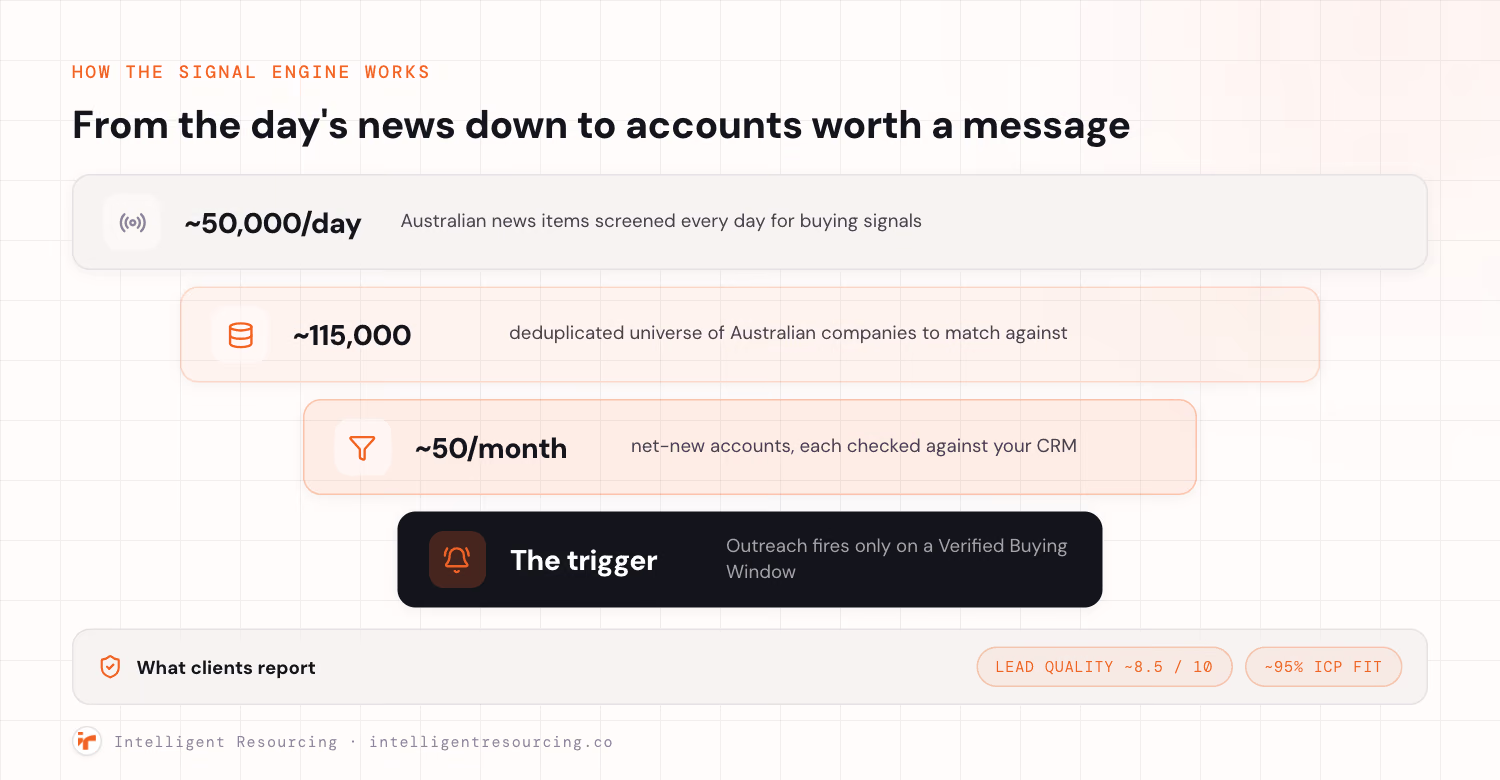
- What clients say: Business development teams rate delivered lead quality at about 8.5 out of 10. Delivered leads run at about 95% ICP fit.
- Limitation: Not suited to startups that need brand awareness or top-of-funnel PR. Intelligent Resourcing builds the signal and buying-intent layer, not the brand.
The signal engine screens roughly 50,000 Australian news items a day and narrows a deduplicated universe of about 115,000 Australian companies to roughly 50 net-new accounts a month, each checked against the client CRM. Outreach triggers only when a Verified Buying Window opens: a confirmed buying signal tied to the account.
xGrowth
xGrowth builds GTM campaigns around account-based targeting, tying content production to named accounts rather than broad buyer personas.
- Best for: B2B SaaS companies with an established ICP that need integrated content, SEO, and digital demand.
- Engagement model: Custom retainer.
- Pricing: Custom retainer, contact for scope.
- What clients say: Cited for content quality and reporting cadence; noted for responsive account management.
- Limitation: Relies on a well-defined ICP and existing brand presence. Less suited to pre-product-market-fit startups without clear positioning.
Outback Demand
Outback Demand focuses on demand generation as a standalone function, deploying multi-channel outbound and digital campaigns from day one.
- Best for: Early-stage and Series A startups that need pipeline in under 90 days.
- Engagement model: Retained.
- Pricing: A$15,000–A$35,000 per month.
- What clients say: Cited for fast ramp and transparent reporting; noted for responsiveness in the early months.
- Limitation: Less suited to startups with niche enterprise ICPs that need ABM-level account selection. Works best with a clearly defined target market.
Green Hat
Green Hat specialises in B2B ABM, building account selection, campaign execution, and pipeline attribution as an integrated programme.
- Best for: Post-Series A or Series B startups with an enterprise ICP and a minimum $20,000 monthly budget.
- Engagement model: Retained.
- Pricing: A$20,000–A$50,000+ per month.
- What clients say: Consistently cited for ABM rigour and clear campaign-to-pipeline attribution.
- Limitation: Pricing sits at the top of this list. Not viable for early-stage startups on a tight runway without the ARR to justify the spend.
KLIQ Interactive
KLIQ Interactive offers a free KLIQstart audit before any commitment.
- Best for: Funded B2B startups that want digital demand and performance media with low entry risk.
- Engagement model: Custom retainer; free KLIQstart audit available before engagement.
- Pricing: Custom retainer, contact for scope.
- What clients say: Clients report the audit delivers value before the retainer begins; cited for performance media transparency.
- Limitation: Better suited to companies with existing content assets and web infrastructure. Less suited to pre-product-market-fit startups.
Brand Chemistry
Brand Chemistry runs both inside a single programme, from brand positioning through to revenue-stage activity.
- Best for: Post-Series A B2B startups that need brand architecture alongside pipeline.
- Engagement model: Project or retained.
- Pricing: Custom project or retainer, contact for scope.
- What clients say: Clients reference the integrated brand-to-revenue methodology and strong creative output.
- Limitation: Brand-first approach takes longer to generate pipeline than demand-only agencies. Not suited to a startup with a 90-day runway clock.
UpliftGTM
UpliftGTM does not run your GTM function. It recruits the people who will.
- Best for: Funded startups at a stage where they are ready to build an internal GTM team.
- Engagement model: Recruitment, placement fee.
- Pricing: Standard recruitment percentage, contact for scope.
- What clients say: Cited for GTM-specialist candidate quality and cultural-fit screening.
- Limitation: Not a fit for startups that need immediate pipeline. Recruitment takes 4 to 10 weeks minimum and produces staff, not revenue.
Which Go-To-Market Agency Fits Your Startup's Situation?
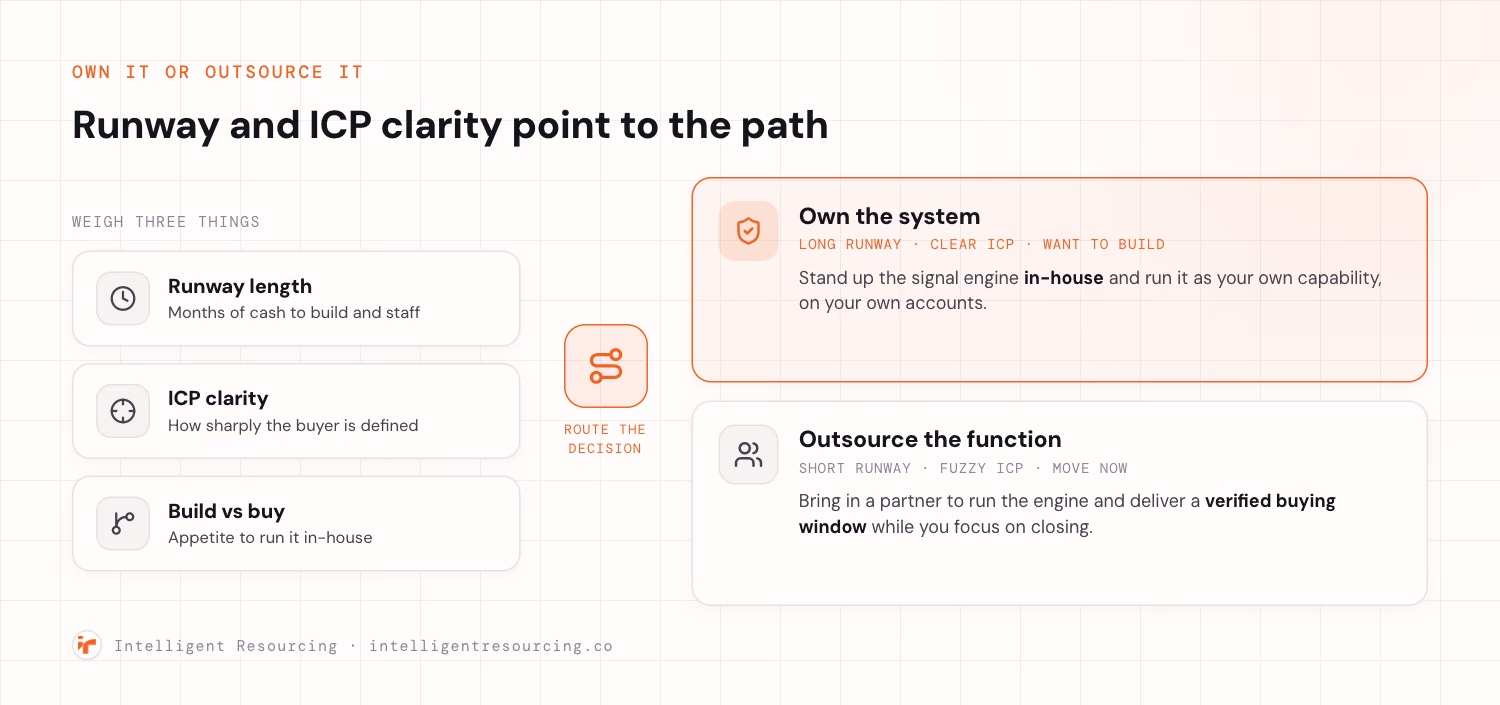
The right agency depends on 3 variables: runway length, ICP clarity, and whether you want to own the system or outsource the function.
| Startup situation | Recommended path |
|---|---|
| Runway under 12 months, ICP confirmed | Outback Demand or Intelligent Resourcing: both deploy inside 30 days |
| Runway 12 to 24 months, enterprise ICP | Green Hat or Brand Chemistry: suited to ABM and brand-to-pipeline programmes |
| Building the internal GTM team | UpliftGTM for recruitment, Intelligent Resourcing for the signal system the team will inherit |
| Digital and performance-led demand | KLIQ Interactive |
| B2B SaaS content and digital demand | xGrowth |
| Pre-product-market-fit, new category | No agency yet: prove the motion with the founder first |
Work with Intelligent Resourcing
Intelligent Resourcing maps your ICP against a deduplicated universe of about 115,000 Australian companies, identifies which accounts are in a Verified Buying Window, and builds the outreach system inside your CRM.
GTM Engineering
Intelligent Resourcing maps your ICP against about 115,000 Australian companies, then flags the accounts inside a Verified Buying Window. Our team builds and manages the signal engine and CRM architecture inside your existing stack. Book a call to see which accounts are in a buying window right now.
FAQs
How much do GTM agencies cost in Australia?
Retained GTM agencies in Australia start at about A$15,000 per month for demand-focused work. ABM-specialist agencies like Green Hat run from A$20,000 to A$50,000+ per month. Intelligent Resourcing retainers scale to scope. Recruitment agencies like UpliftGTM charge a placement fee tied to the salary of the placed hire.
How long does it take to see results from a GTM agency?
Demand generation agencies typically show pipeline movement in 60 to 90 days. Signal-led systems like Intelligent Resourcing's can surface qualified accounts from week one. Brand and PR programmes take 90 to 180 days before they influence pipeline. Expect at least 90 days before making a go or no-go assessment on any retained engagement.
Should a funded startup use an agency or hire in-house?
Agencies deploy faster and carry no ramp cost or payroll risk. Before a new sales rep books their first meeting, you have already spent roughly 3 months of their fully-loaded cost in ramp time. For startups with runway under 18 months, an agency is the faster path to pipeline. Once the motion is proven and the ICP is locked, bring the function in-house.
What is the difference between a GTM agency and a Revenue Operations Studio?
A GTM agency runs campaigns and demand generation on a retainer. When the retainer ends, it stops. A Revenue Operations Studio like Intelligent Resourcing builds the signal engine, CRM architecture, and outreach workflows inside your stack. At the end of the engagement, clients own the system permanently.
Do Australian GTM agencies work with international markets?
All agencies on this list are headquartered in Australia and focus on ANZ markets. xGrowth and Brand Chemistry have worked with US-listed clients. Intelligent Resourcing's signal engine covers Australian companies and focuses on local buying-signal data.
How do I know if my ICP is defined enough to hire a GTM agency?
You have enough ICP clarity when you can name the company size, industry, and job title of the buyer, and you can describe the trigger event that puts them in market. If you cannot do all 3, spend 4 weeks closing the next 3 deals yourself before engaging any agency.