

What Does a GTM Engineering Agency Build, Day to Day?
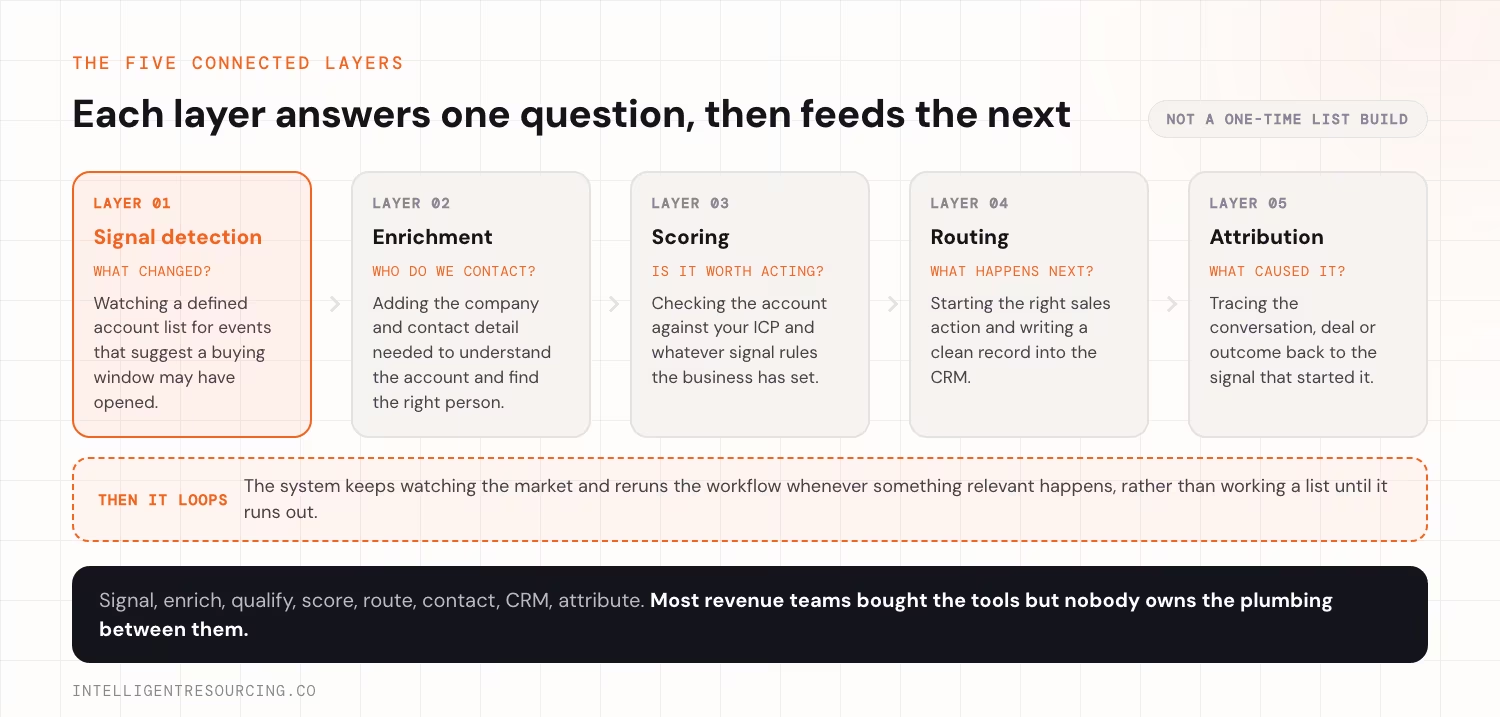
A GTM engineering agency builds the system that keeps answering 4 questions. Which companies matter? What has changed? Who should we contact? What should happen next?
In practice, that work splits into 5 connected layers:
- Signal detection: watching a defined list of accounts for events that suggest a buying window may have opened.
- Enrichment: adding the company, contact and other details needed to understand the account and find the right person.
- Scoring: checking the account against your ideal customer profile and whatever signal rules the business has set.
- Routing: starting the right sales action and writing a clean record into the CRM.
- Attribution: tracing the resulting conversation, deal or outcome back to the signal that started it.
The workflow looks something like this:
Signal, then enrich, then qualify, then score, then route, then contact, then CRM, then attribute.
Then it starts again. That loop matters, because GTM engineering is not a one-time list-building job. The system keeps watching the market and reruns the workflow whenever something relevant happens.
Imagine a business-to-business (B2B) software company selling to growing sales teams. One of its target accounts suddenly advertises 3 senior sales roles in a month.
A GTM engineering system can detect that hiring pattern, enrich the company and contacts, and check the account against the ICP. It then scores the signal, identifies the right buyer, and triggers an outreach sequence that references the hiring activity. The activity and the resulting response land in the CRM, tied back to the original signal. Nobody has to export a list, research every company by hand, paste information between tools, or remember to update a spreadsheet afterward.
This is boring work on purpose. The GTM engineer role exists because most revenue teams have picked up tools without anyone owning the plumbing that connects them. A GTM engineering agency builds that plumbing as a service. SyncGTM's 2026 RevOps Report, drawn from more than 1,200 B2B companies, puts this in the mainstream now: 78% of B2B companies with 50 or more employees have a dedicated revenue operations function, up from 48% in 2023. For the fuller system this sits inside, see the GTM Playbook.
GTM Engineering Is More Than Sales Automation
Calling GTM engineering "sales automation" misses an important part of the job. Automation decides how a task happens without a person doing it by hand. GTM engineering decides which tasks should happen at all, what conditions should trigger them, which data can be trusted, and where the result should go.
You can automate a bad list just as easily as a good one. A sequencing platform can send 5,000 emails on its own, but that does not mean those 5,000 accounts are relevant, or that any of them have a reason to buy today. Automation itself is not the differentiator: Zapier's business automation research reports that more than 90% of RevOps teams already use automation.
GTM engineering moves that decision earlier. Instead of asking how to send more outreach, the system asks what evidence should exist before outreach happens at all. That is why signal detection, enrichment and scoring sit before routing and contact.
How Is It Different From an SDR or Lead-Generation Agency?
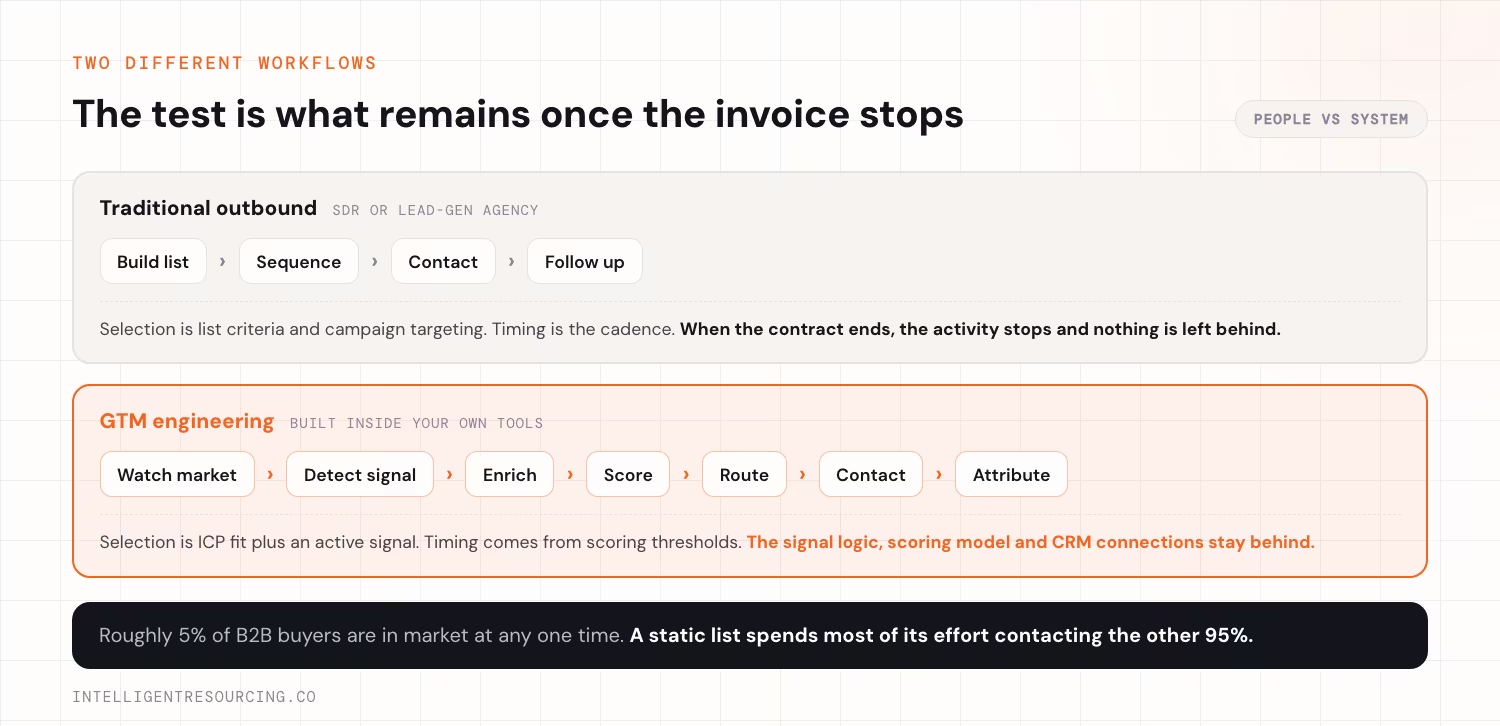
An SDR or lead-generation agency mostly sells people and their time: reps who research accounts, send messages, make calls and book meetings. A GTM engineering agency sells the system that decides who those actions should happen to, and when.
The difference comes down to 2 workflows. Traditional outbound builds a list, sequences it, contacts it and follows up. GTM engineering watches the market, detects a signal, enriches the account, scores it, routes it, contacts the buyer and attributes the result.
The test is what remains once the invoice stops. With an outsourced SDR model, the activity usually stops when the contract ends. With GTM engineering, the signal logic, enrichment rules, scoring model, workflows and CRM connections get built and written up inside the client's own tools, so they stay behind.
The market pressure behind that distinction is real:
- Reply rates are sliding. ORRJO's State of B2B Outbound 2026, citing Martal Group, reports the average B2B reply rate fell from 8.5% in 2019 to 5% in 2025 to 3.4% in 2026, as spam filters tightened.
- Volume no longer fixes it. Adding more reps to the same static-list model just sends more outreach. It does not fix the timing problem.
- Only a slice of the market is buying. LinkedIn's B2B Institute sets out the 95-5 rule: the majority of your customers are out of market at any given time, with roughly 5% in market.
An SDR agency working a static list spends most of its effort contacting accounts whether or not a buying window actually exists. The purpose of a GTM engineering signal layer is to narrow that gap.
How Is a GTM Engineering Agency Different From a GTM Engineer?
A GTM engineer is a role. A GTM engineering agency is a delivery model.
An internal GTM engineer builds and owns this system inside the company. They may manage enrichment workflows, application programming interfaces (APIs), CRM automation, scoring systems, signal sources, and the links between sales and marketing tools.
A GTM engineering agency builds much of the same infrastructure as an outside partner. It then writes it up and hands it over so the client can keep running it. The difference is who employs them, not necessarily what they can do.
The gap is also a supply problem. Unify's 2026 RevOps platform guide puts typical setup at 2 to 6 weeks for a small-business scope on HubSpot Operations Hub, 4 to 8 weeks for standard routing on LeanData, and 8 months or more for a phased enterprise rollout on Salesforce. Building the equivalent from scratch, without dedicated expertise, takes longer still. Hiring has grown faster than the pool of people who can build these systems, so an agency can build the system and write it up, and a future hire can take it over, instead of the company waiting for a permanent hire before the system exists.
Some teams therefore use both in sequence. The agency builds and steadies the machine. An internal GTM engineer later inherits a working signal system, documented workflows and a clean CRM rather than starting from an empty canvas.
What Signals Does the System Act On?
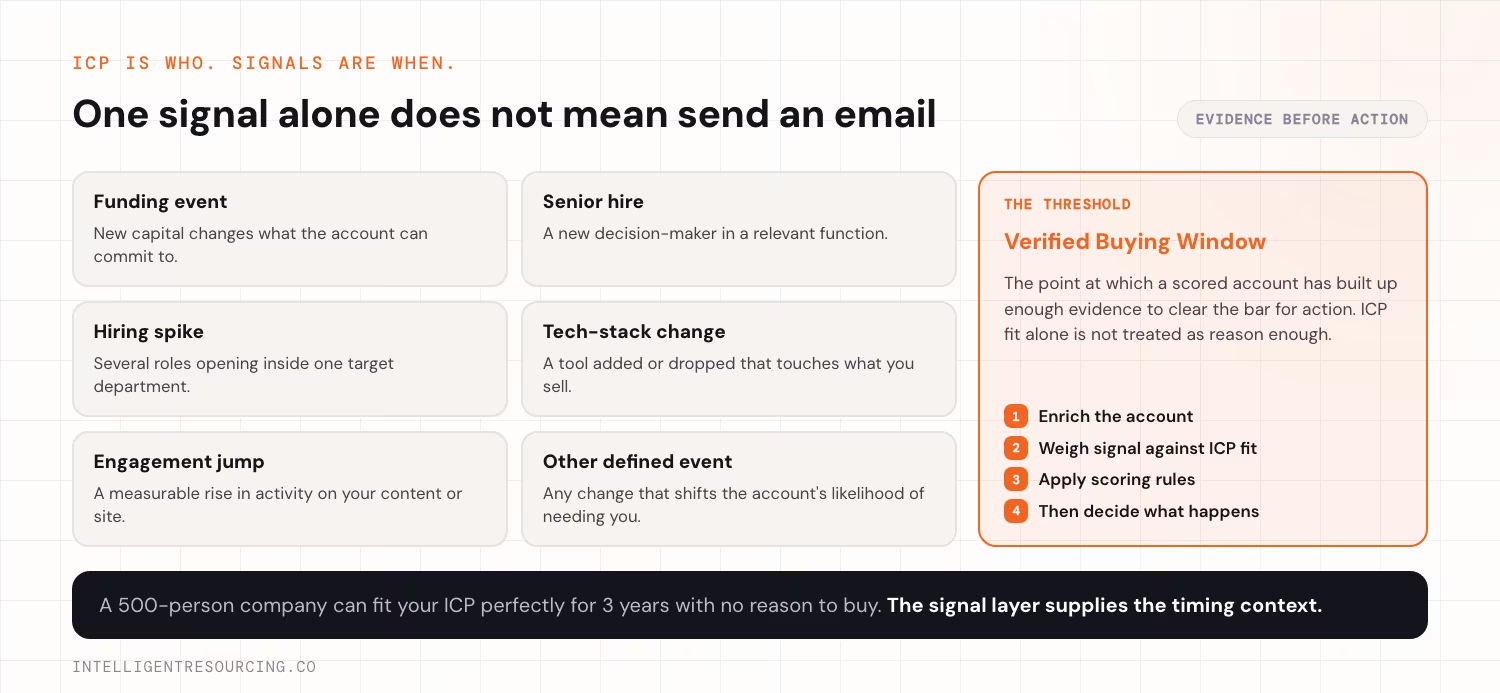
The system acts on defined buying signals, not just on who a company is. This distinction matters: ICP tells you who could buy, and signals help tell you when there is a reason to act.
A 500-person software-as-a-service (SaaS) company may fit your ICP perfectly for 3 years without having an active reason to buy your product. Then something changes.
Typical signals include:
- A funding event
- A senior hire in a relevant function
- A hiring spike within a target department
- A technology-stack change
- A measurable jump in engagement with your content or website
- Another defined business event that changes the account's likelihood of needing what you sell
One signal alone does not mean "send an email". The system enriches the account first, then weighs the signal against ICP fit, company information, contact data and scoring rules before deciding what happens next. That is the difference between detecting activity and engineering a GTM response to it.
Personalisation only becomes useful once that targeting is right. HubSpot's 2026 State of Marketing report, surveying more than 1,500 marketers, found 93.2% say personalised or segmented experiences have led to more leads and purchases. But outreach aimed at the wrong account at the wrong moment is still noise. The signal layer supplies the timing context.
Consider the earlier hiring example: a target account posts 3 senior sales hires within a month. The workflow can detect the hiring pattern, enrich the company, find the right decision-maker, confirm ICP fit, score the account, trigger outreach, and record the activity in the CRM.
Instead of opening with "Hi Sarah, I noticed you're VP Sales at Company X", the outreach has a real reason to exist, because the system spotted a real change inside the account. Intelligent Resourcing calls the point at which a scored account clears the required threshold its Verified Buying Window.
The goal is not just to find companies that look like your customers. It is to know when there is enough evidence to act.
Where Does AI Fit Into GTM Engineering?
Artificial intelligence (AI) can speed up several parts of the workflow, but it is not the system by itself. An AI model might research an account, summarise a funding announcement, sort a job posting, draft a personalised message, or help make sense of messy data. The GTM engineering layer decides what happens around that AI.
The order runs like this: a signal is detected, data is collected, AI interprets the context, scoring rules are applied, the appropriate action is selected, and the CRM is updated.
Without that surrounding logic, AI just makes bad outbound faster. The value comes from combining AI with reliable data, clear commercial rules and workflow automation, not from asking a model to run the whole GTM process alone. Apollo's 2026 AI in Sales and Go-to-Market survey, which polled more than 300 GTM leaders and operators, reports the same split: adoption is already high, but optimisation is not.
What Does the Infrastructure Actually Replace?
GTM engineering does not have to replace salespeople. It removes work they should never have had to do by hand.
Instead of asking a rep to search for companies, check LinkedIn for changes, research the account, find contact information, check the CRM, decide whether the account is relevant, write a first-pass message, create a CRM record, set a reminder, and repeat the process tomorrow, the infrastructure handles as much of that preparation and routing as possible.
The time cost is measurable. Salesmotion's 2026 research, citing Seismic, puts research and content-prep work at roughly 30 hours a month, or 7.5 hours of a rep's week. Salesforce's State of Sales research puts the wider picture at only 40% of a rep's time spent actively selling.
The salesperson steps in once judgement, conversation and relationship-building actually matter. That is the practical reason this system exists: automation handles the repeatable work, so people can focus where judgement counts.
What Should You Expect in the First 90 Days?
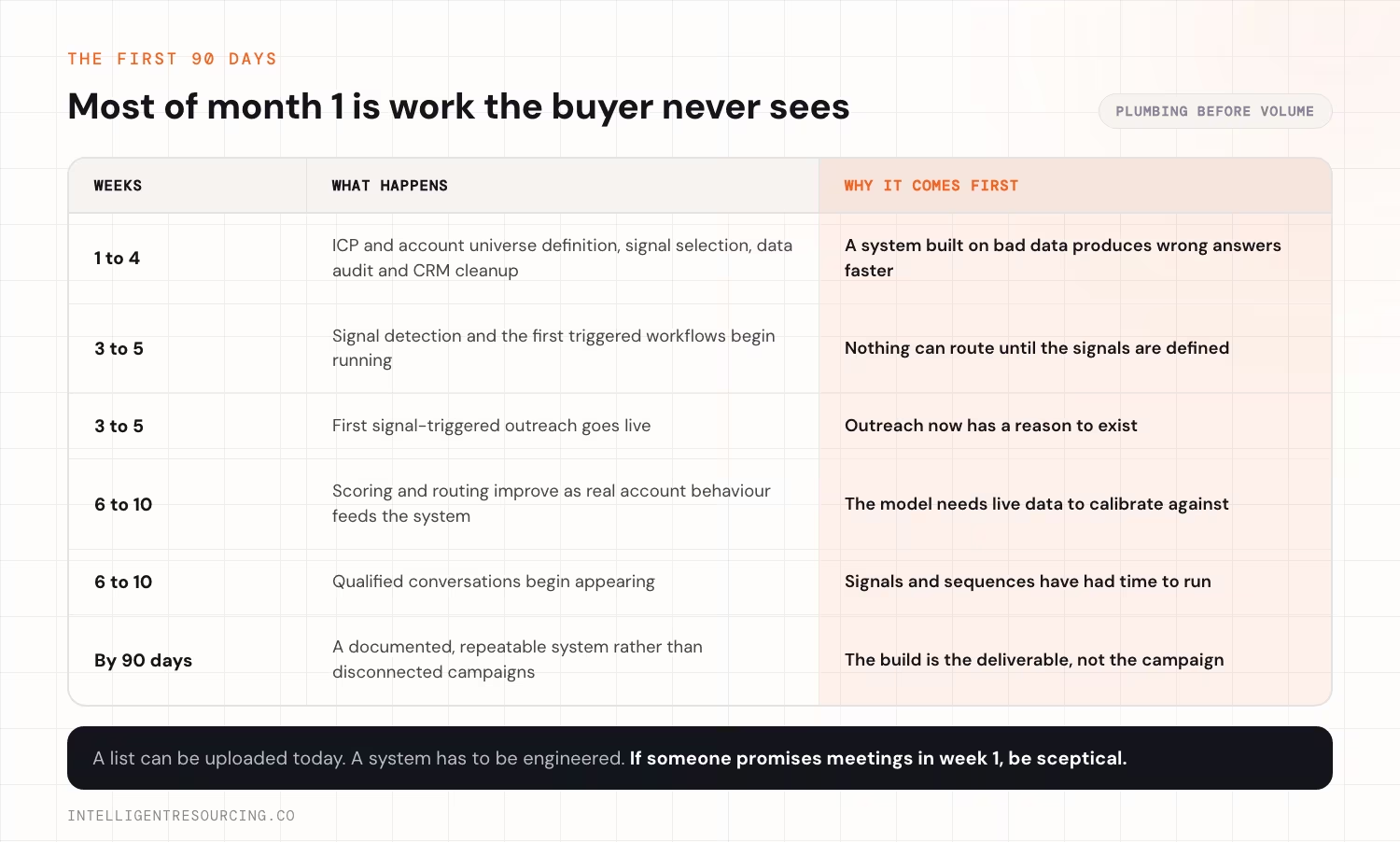
Expect the first month to contain a lot of work buyers will never see. Defining accounts, choosing signals, auditing data and cleaning up the CRM all happen before heavy automation, because a system built on bad data just produces wrong answers faster.
| Weeks | What happens |
|---|---|
| 1 to 4 | ICP and account universe definition, signal selection, data audit and CRM cleanup |
| 3 to 5 | Signal detection and the first triggered workflows begin running |
| 3 to 5 | First signal-triggered outreach goes live |
| 6 to 10 | Scoring and routing improve as real account behaviour feeds the system |
| 6 to 10 | Qualified conversations begin appearing once signals and sequences have had time to run |
| By 90 days | The objective is a documented, repeatable system rather than a collection of disconnected campaigns |
This is why the first phase can feel slower than just buying a list. A list can be uploaded today. A system has to be engineered. But that changes after the first campaign: a static list eventually runs out, while a working GTM engineering system keeps watching the market for the next signal and starts the workflow again. Weflow's 2026 90-day RevOps rollout guide makes the same point about annual plans generally. The strategy gets approved, but it never fully makes it into the CRM and the weekly cadence, so the plan quietly breaks.
If someone promises meetings in week 1, be sceptical. That speed usually comes from a pre-warmed shared domain or an old list, not a real signal system, and it creates email-deliverability problems that show up later.
Intelligent Resourcing's GTM Engineering practice builds the signal detection, enrichment, scoring and CRM routing described here, written up so your team can keep running it after the project ends. If you are already sold and just comparing providers, the guide to GTM engineering agencies grades 10 agencies against 6 criteria, from Clay depth to how much of the build survives the contract. For the shorter regional cut, see the top GTM engineering agencies in Australia.
GTM Engineering
Intelligent Resourcing builds the signal detection, enrichment, scoring and CRM routing described here, then writes it up so your team can keep running it after the project ends. You end up owning the system, not renting the activity.
FAQs
What are the main components of a GTM engineering system?
Most GTM engineering systems contain 5 connected layers: signal detection, enrichment, scoring, routing and attribution. In practice, qualification, personalisation, outreach and CRM automation can sit inside or between those layers, depending on how a company runs its GTM process.
Is GTM engineering just sales automation?
No. Sales automation executes predefined tasks. GTM engineering designs the infrastructure and logic behind it, covering which accounts enter the workflow, which signals matter, how accounts get scored, what happens next, and how the result is recorded. Automation is one piece of the system, not the whole discipline.
Is a GTM engineering agency the same as an SDR agency?
No. An SDR agency primarily provides people who perform outbound activity against a target list. A GTM engineering agency builds the system that decides who gets contacted and when: the signal logic, enrichment rules, scoring, routing and CRM connections. It is written up inside the client's own tools so it can keep running after the project ends.
Do I need a GTM engineer if I hire a GTM engineering agency?
Not right away. Some teams use an agency to build and steady the system first, then hire a GTM engineer to take it over and keep improving it. That means the new hire starts with working signal detection, workflows and CRM setup, instead of building everything from scratch.
What is a buying signal in GTM engineering?
A buying signal is a change you can observe that suggests an account's situation has shifted in a way that matters to what you sell. Examples include funding rounds, senior hires, hiring spikes, technology changes, and more activity on your content. Signals do not prove purchase intent on their own. They provide timing evidence, combined with ICP fit, enrichment and scoring, before the system decides what to do.
What is a Verified Buying Window?
Intelligent Resourcing's Verified Buying Window is the point where a scored account has built up enough evidence to clear the bar for action. ICP fit alone is not treated as reason enough for outreach. The model combines fit with timing signals, so sales activity happens when there is a stronger reason to engage.