

What Is a GTM Operating Partner?
A GTM operating partner is a hands-on partner that helps design, build and run the systems behind go-to-market execution. Unlike a traditional agency focused on campaigns or individual channels, a GTM operating partner connects strategy, data, automation, CRM workflows, sales processes and measurement around a shared revenue outcome.
The difference is operational ownership. A GTM operating partner helps turn growth strategy into repeatable workflows, improves hand-offs between marketing and sales, and builds the systems used to create and progress pipeline. This is where disciplined GTM engineering becomes the operating layer between strategy and execution.
What Does a GTM Operating Partner Actually Do?
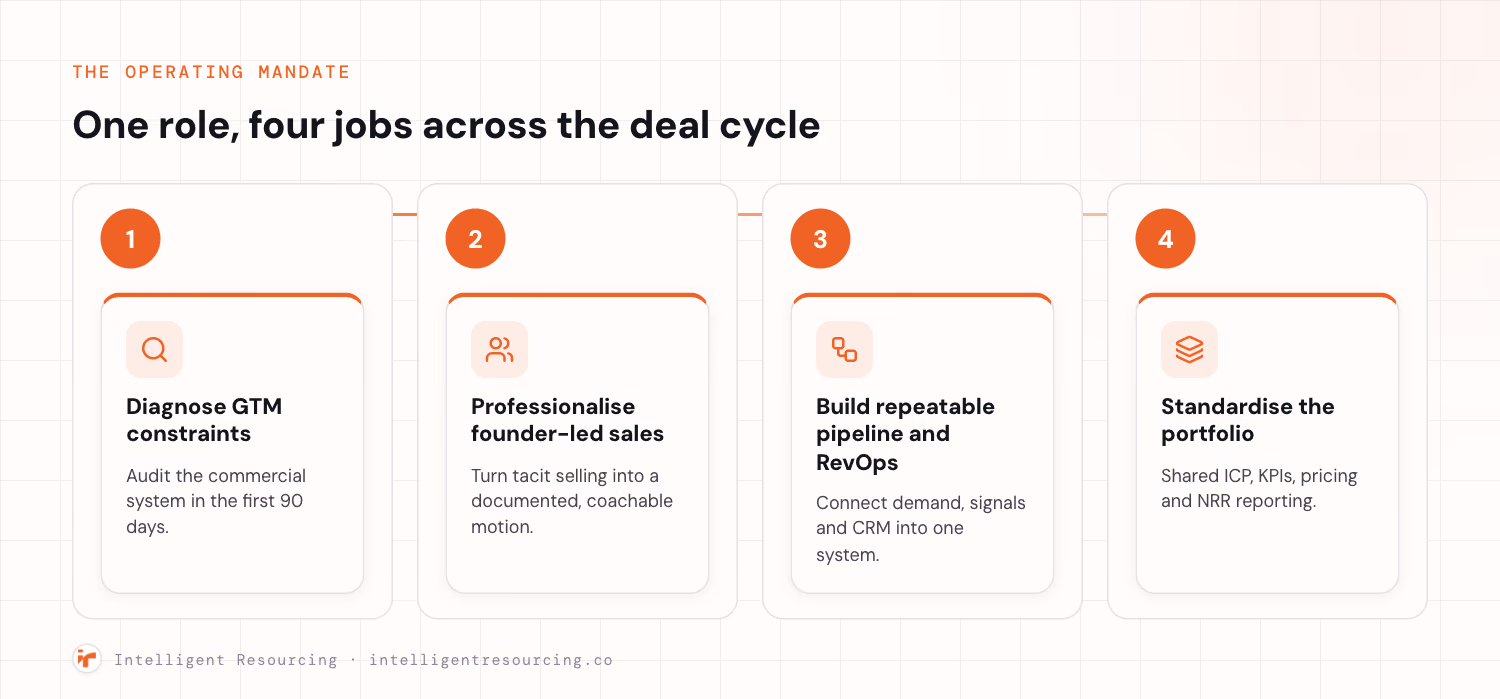
A GTM operating partner builds a repeatable revenue engine, they do not run campaigns and their work spans the deal cycle: from diligence through exit. They diagnose constraints, professionalise selling, and instrument RevOps and set portfolio-wide playbooks and KPIs. NU Advisory Partners found in 2025 that these operators often step in before a company’s first Chief Commercial Officer (CCO) or Chief Revenue Officer (CRO), helping the CEO transition out of day-to-day selling. Four responsibilities define the role:
Diagnosing GTM Constraints in the First 90 Days
The first 90 days should be used to identify the GTM constraints limiting pipeline performance and execution. A GTM operating partner audits the commercial system, ranks the highest-impact bottlenecks and turns those findings into a practical execution plan.
The diagnostic should cover 5 areas:
- ICP clarity: Whether targeting reflects the accounts most likely to buy.
- Pipeline efficiency: Where opportunities stall, leak or fail to convert.
- Channel mix: Which channels create qualified pipeline and which consume budget without enough return.
- Positioning: Whether messaging reflects the buyer problem, buying stage and competitive context.
- RevOps maturity: Whether CRM data, workflows, reporting and hand-offs support consistent execution.
NU Advisory Partners identifies the pre-CCO diagnostic as a key entry point for an operating partner. The output should be a ranked list of constraints, giving the team a clear order of operations for the GTM playbook that follows.
How Does a GTM Operating Partner Professionalise Founder-Led Sales?
Founder-led sales becomes a constraint when growth depends on knowledge, judgement and relationships that sit with 1 person. A GTM operating partner turns that tacit sales motion into a documented process that other team members can follow, coach and improve.
The work typically captures:
- Discovery: How buyer needs, urgency and fit are identified.
- Qualification: Which criteria determine whether an opportunity should progress.
- Objection handling: How common commercial and operational concerns are addressed.
- Sales stages: What must happen before an opportunity moves forward.
- Decision logic: Which signals trigger follow-up, escalation or disqualification.
Building Repeatable Pipeline and RevOps Systems
A GTM operating partner builds repeatable pipeline by connecting demand generation, outbound, buying signals and CRM workflows into one revenue system. The goal is to replace disconnected activity with clear hand-offs, shared data and reporting that shows how accounts move from signal to opportunity and revenue.
The work typically includes:
- Demand generation: Create repeatable programmes that attract and engage the right accounts.
- Signal activation: Connect buying signals to enrichment, routing and sales actions.
- CRM instrumentation: Configure the CRM to report on pipeline progression and revenue outcomes, not activity alone.
- Revenue alignment: Give sales, marketing, product and customer success a shared view of account status and next actions.
Forrester’s research on revenue alignment found that aligned sales, marketing, product and customer success teams achieved 19% faster revenue growth and 15% higher profitability. A revenue operations layer provides the data, process and reporting foundation, while GTM engineering designs how those systems work together.
Portfolio-Wide Playbooks, KPIs and NRR
A GTM operating partner standardises pricing, segmentation, KPIs and retention reporting across portfolio companies. This creates a shared view of performance and makes revenue gaps easier to identify.
ACG’s Middle Market Growth noted in 2023 that acquiring a new client can cost up to 5 times more than retaining one. That makes NRR a useful portfolio-level metric for tracking retention, expansion and churn.
When Should PE Firms Bring In a GTM Operating Partner?
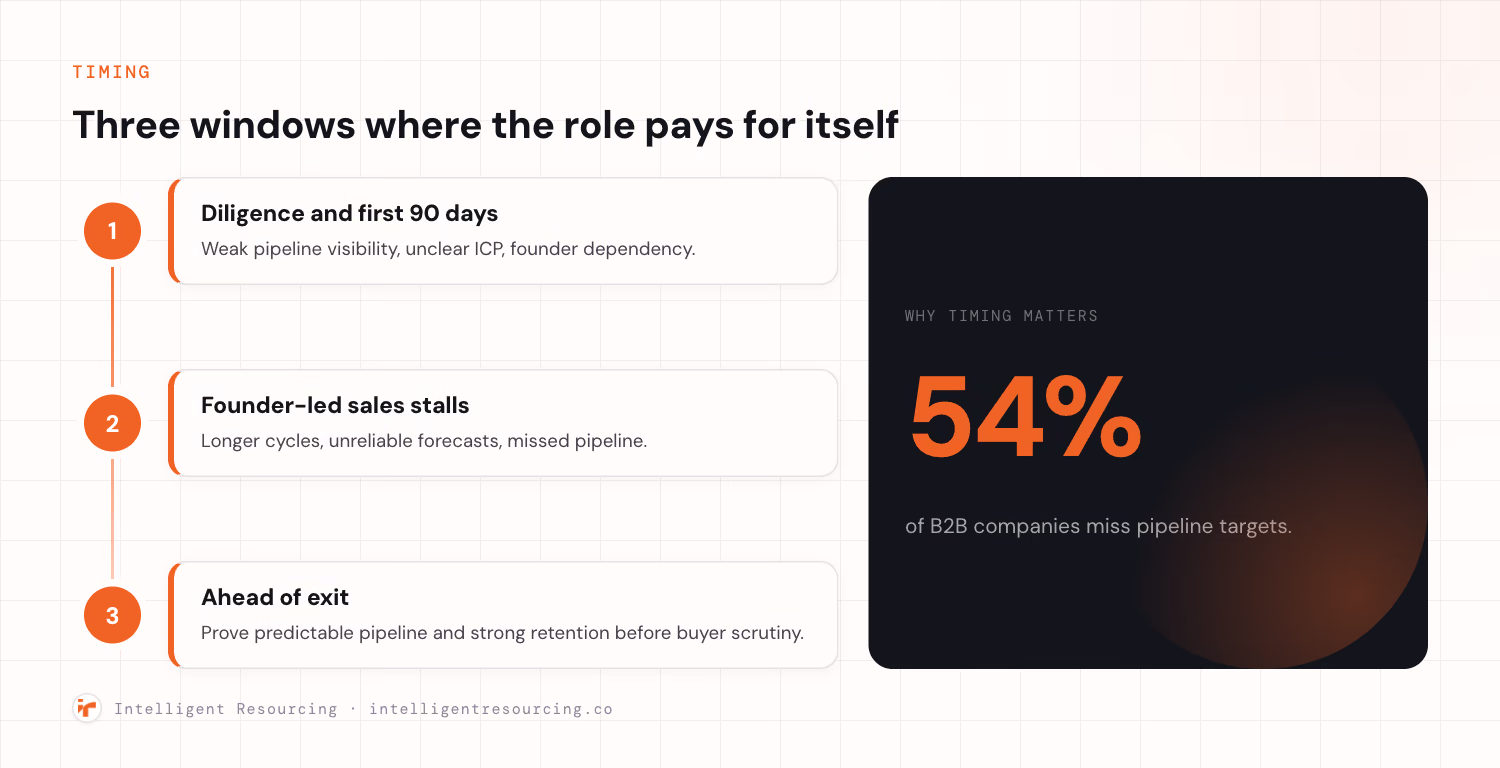
PE firms should bring in a GTM operating partner when go-to-market risk could affect the investment thesis, not after growth has already stalled. The 3 highest-value windows are during diligence and the first 90 days, when founder-led sales or pipeline performance starts to weaken, and ahead of exit.
GTM Partners cited by Demand Revenue that 54% of B2B companies did not create enough pipelines to hit revenue targets, showing why GTM gaps are better addressed early than allowed to compound.
| Timing | What to Look For | Role of the GTM Operating Partner |
|---|---|---|
| Diligence and first 90 days | Weak pipeline visibility, unclear ICP, founder dependency or immature RevOps | Assess GTM readiness, quantify commercial gaps and build the value-creation plan |
| Founder-led sales stalls | Longer sales cycles, unreliable forecasts, missed pipeline targets or founder-dependent closing | Document the sales motion, improve forecasting and build a repeatable revenue system |
| Ahead of exit | Inconsistent pipeline, weak retention or an unproven growth story | Strengthen pipeline predictability, NRR and commercial evidence before buyer scrutiny |
At Diligence and in the First 90 Days
GTM readiness should be assessed before the growth plan is locked in. This allows the PE firm to identify commercial gaps early, understand the cost of fixing them and sequence the operating plan around the highest-impact constraints. PwC’s 2024 analysis positions GTM as a diligence issue rather than a post-close discovery.
When Founder-Led Sales or Pipeline Starts to Stall
Founder dependency becomes a risk when forecasts weaken, sales cycles lengthen or large deals still rely on 1 person. GTM Partners also reported an 18% decline in win rates and a 21% drop in average deal values. A GTM operating partner responds by improving forecasting, documenting the sales motion and rebuilding the system around repeatable execution.
Ahead of Exit
Exit readiness depends on proving that growth is repeatable. Buyers want evidence of predictable, ICP-aligned pipeline and strong retention. 6sense’s 2025 Buyer Experience Report found that buyers place 4 vendors on their Day-One shortlist and that 95% of wins come from that initial list, which makes brand and pipeline maturity important well before the exit process begins.
GTM Operating Partner vs Fractional CMO, RevOps and Agencies?
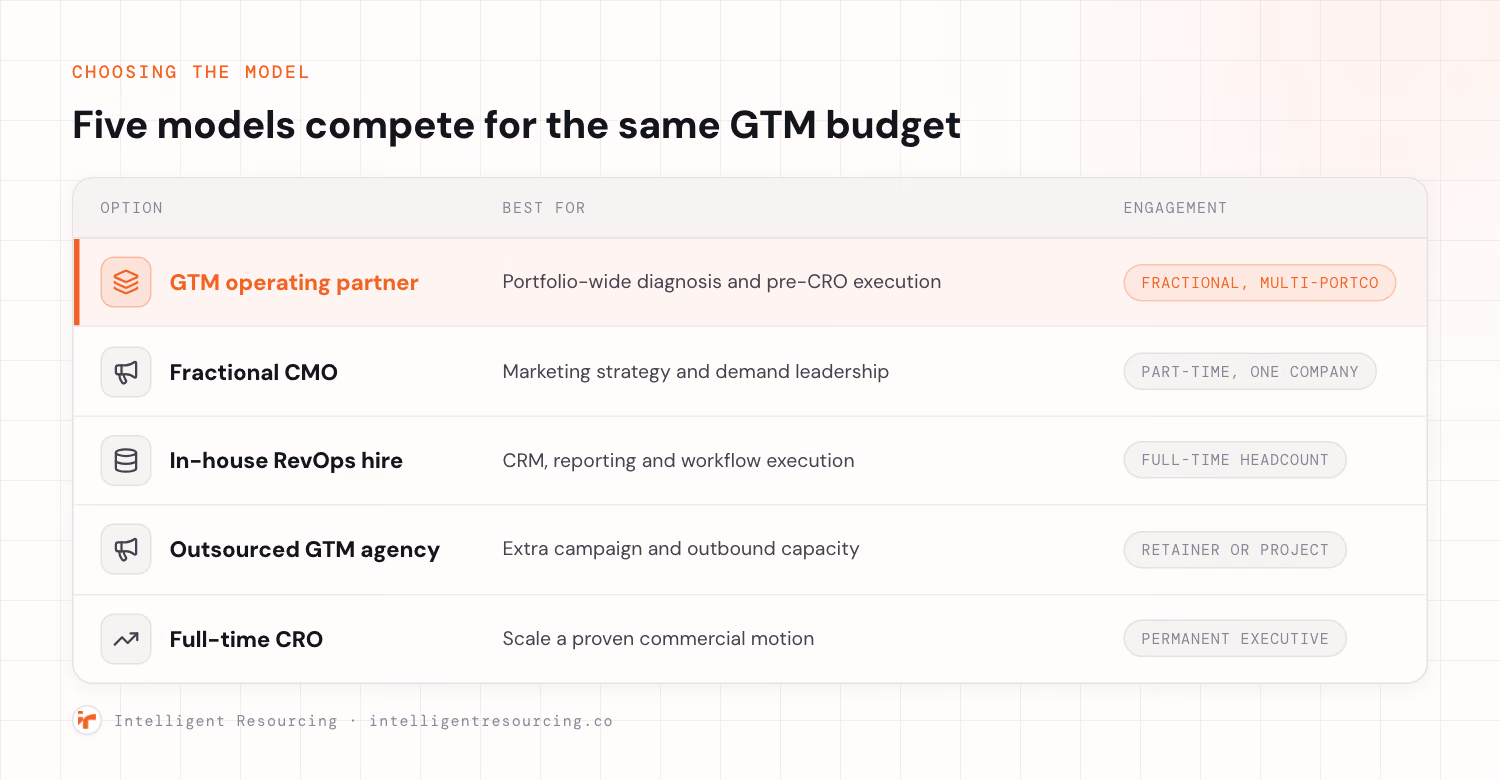
Five models compete for the same GTM budget. A GTM operating partner works fractionally across a portfolio, aligned to the investor. A fractional CMO fixes marketing leadership for one company. An in-house RevOps hire builds systems and reporting. An outsourced agency adds execution capacity. A full-time CRO owns one scaling company.
The honest part is knowing when the operating partner is the wrong call. A single early-stage portco needing full-time ownership should hire a CRO. When systems are the only gap, an in-house RevOps hire is cheaper and better. When strategy is already set and you need execution output, an outsourced GTM agency wins on cost.
At Intelligent Resourcing, that execution is signal-led: outreach fires when a Verified Buying Window opens, that window is a leadership change, a funding event, or a new tech install.
What Are the Biggest GTM Implementation Challenges in PE Portfolios?
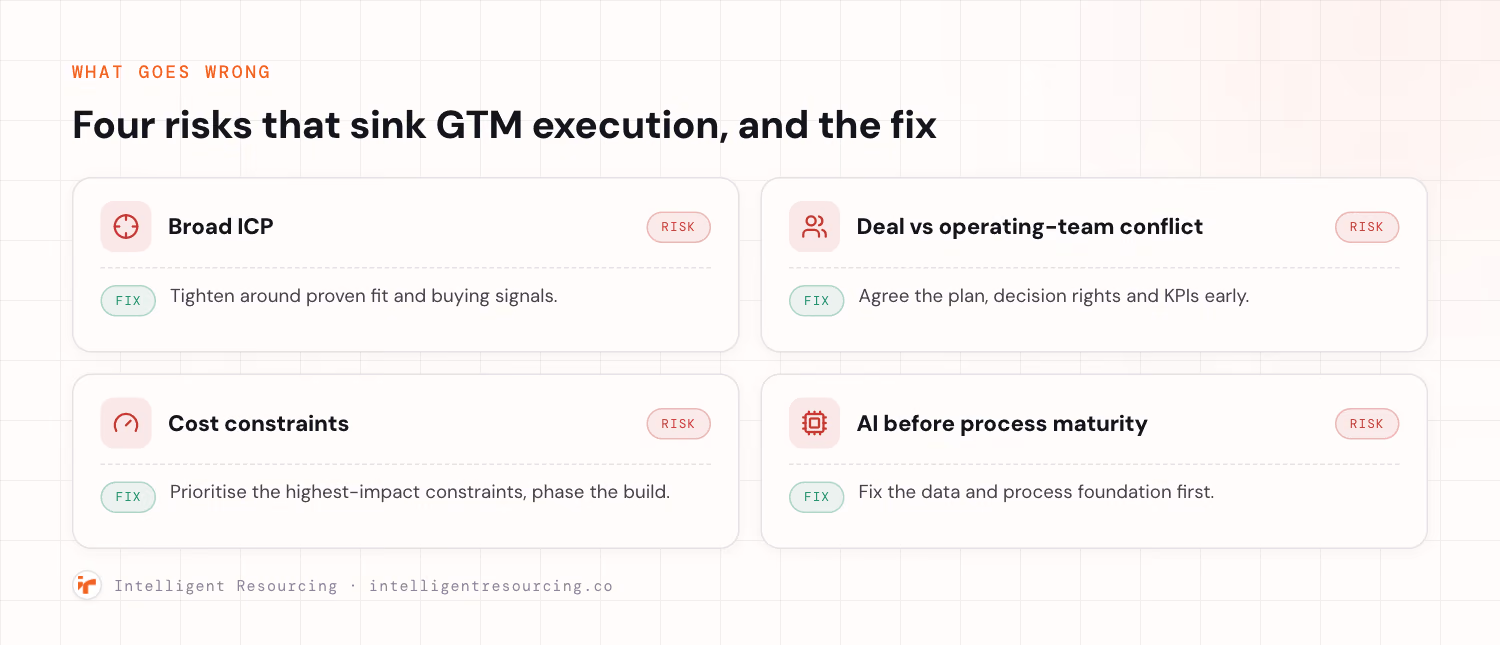
Most GTM implementation problems in PE portfolios come from execution gaps rather than strategy. The 4 recurring risks are an ICP that is too broad, misalignment between deal and operating teams, cost constraints that limit implementation support, and AI adoption before the underlying GTM process is mature.
| GTM Challenge | What Goes Wrong | Operating Response |
|---|---|---|
| Broad ICP | Teams target too many accounts, reducing relevance and conversion | Tighten ICP criteria around proven fit, buying signals and commercial value |
| Deal and operating-team conflict | Ownership, priorities and timelines are unclear | Agree the GTM plan, decision rights and KPIs early |
| Cost constraints | The portfolio company lacks enough operating support to execute the plan | Prioritise the highest-impact constraints and phase implementation |
| AI before process maturity | Automation scales weak targeting, poor data and inconsistent workflows | Fix the process and data foundation before adding AI |
How Do GTM Operating Partners Work Across Sectors?
The role adapts by sector, but the discipline holds. ICP precision is the common thread across all three. Tight ICP targeting cuts wasted pipeline, reduces CAC, and shortens payback cycles. That mechanic works in B2B SaaS, e-commerce, and financial services.
B2B SaaS and Software
In B2B SaaS, the operating partner connects acquisition, retention and expansion into one measurable revenue model. They clarify whether the business is product-led, sales-led or uses a defined hybrid motion, then instrument RevOps around that choice. Tight ICP targeting helps concentrate spend and sales effort on accounts with stronger fit and expansion potential.
E-commerce
E-commerce requires close control of channel economics. The operating partner separates marketplace, DTC and paid acquisition performance rather than relying on blended revenue or CAC alone. Contribution margin, repeat purchases and customer lifetime value then determine where acquisition spend can scale profitably.
Financial Services
Financial services requires a GTM motion built around trust, regulation and complex buying groups. The operating partner maps decision-makers, approval stages and compliance constraints so messaging and sales activity match the buying process. 6sense’s 2025 Buyer Experience Report found that buyers form shortlists early, which makes precise ICP targeting and early account engagement especially important in long sales cycles.
Building a Repeatable GTM Engine for Your Portfolio
A repeatable GTM engine turns portfolio growth from a series of isolated initiatives into a measurable operating system. The GTM operating partner diagnoses commercial constraints, professionalises the sales motion and instruments the revenue engine before those gaps become more expensive to fix.
GTM readiness should be treated as part of the value-creation plan, not as a post-close correction. The earlier the operating model is pressure-tested, the easier it is to identify weak pipeline, founder dependency, RevOps gaps and execution risk before they affect growth or exit readiness.
Book a call with Intelligent Resourcing to assess GTM readiness across your portfolio.
GTM Engineering
Intelligent Resourcing combines GTM engineering, signal activation and RevOps infrastructure for PE-backed portfolios that need hands-on operating capability without another permanent executive hire.
FAQs
What is a GTM operating partner in private equity?
A GTM operating partner is a senior commercial operator inside or beside a PE firm. They own go-to-market performance across portfolio companies. The role is a value-creation lever, not a marketing hire. They build a repeatable revenue engine. PwC ties 47% of PE value creation to operations, not financial engineering.
What is the difference between a GTM operating partner and a fractional CMO?
A fractional CMO leads marketing and positioning for one company. A GTM operating partner owns the whole revenue engine across a portfolio. The CMO fixes demand and brand. The operating partner fixes sales, pipeline, RevOps, and pricing too. Scope is the difference. One is marketing leadership; the other is commercial value creation.
When is the right time to bring in a GTM operating partner?
Bring one in when GTM risk is material to the thesis. Three windows matter. First, at diligence and the first 90 days post-close. Second, when founder-led sales stalls or pipeline misses targets. Third, ahead of exit, to prove predictable pipeline and strong NRR. Earlier engagement lowers execution risk.
Can PE firms outsource GTM instead of hiring a full-time operating partner?
Yes. Many PE firms use fractional and outsourced GTM models. A fractional GTM operating partner spreads senior expertise across several portcos. An outsourced GTM engineering team adds execution capacity without headcount. Outsourcing fits when the strategy is set and you need delivery. A full-time hire fits when one portco is ready to scale.
How much does a GTM operating partner cost, and what is the ROI?
Costs vary by scope and portfolio size. As of 2026, fractional GTM engagements typically run monthly retainers, well below a full-time CRO's loaded cost. The ROI logic is direct. One recovered deal often covers the fee. Engagement models and cost comparisons are on the GTM engineering pricing page in the next section.
Do GTM operating partners work for e-commerce and financial-services portfolios?
Yes. The role adapts to each sector's economics. In e-commerce, they focus on contribution margin, retention, and channel mix. In financial services, they manage regulated sales, longer buying committees, and compliance in messaging. In B2B SaaS, they prioritise NRR and CAC payback. ICP precision is the common thread across all three.