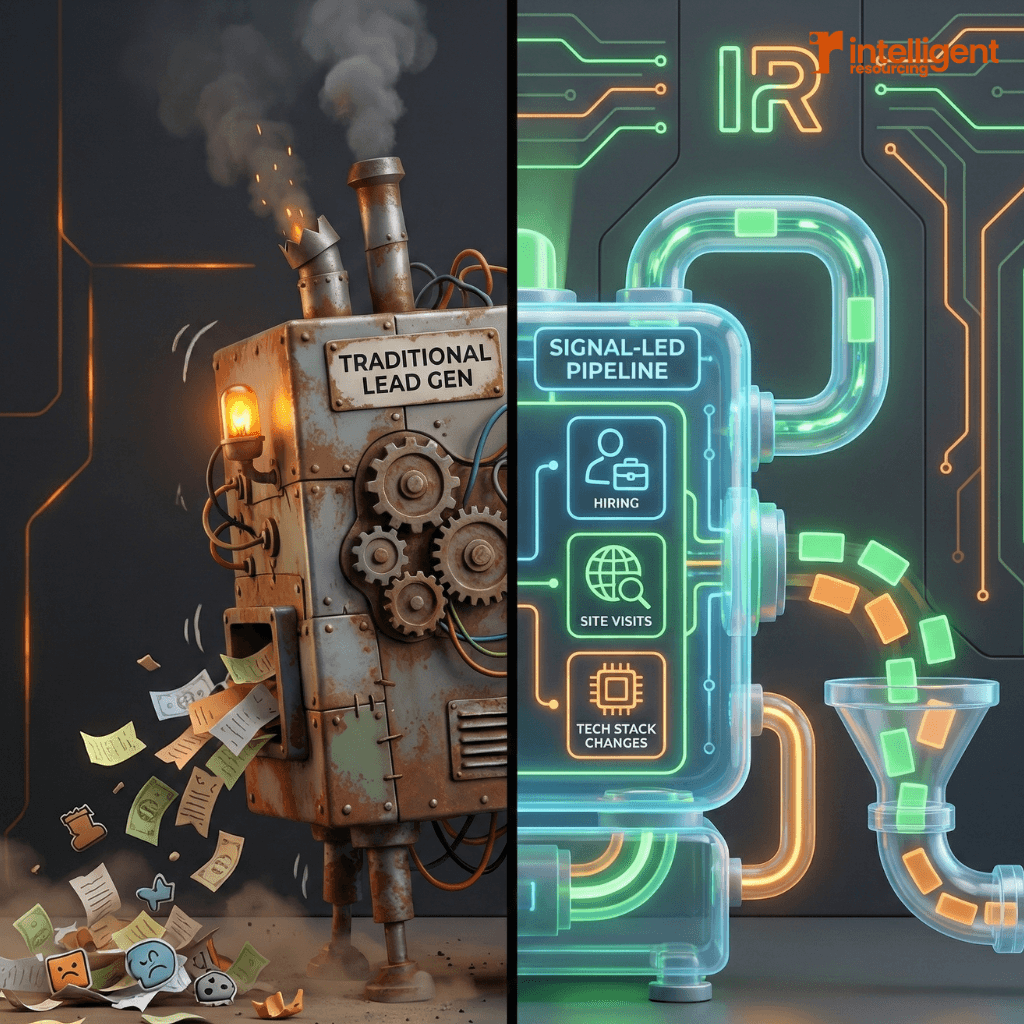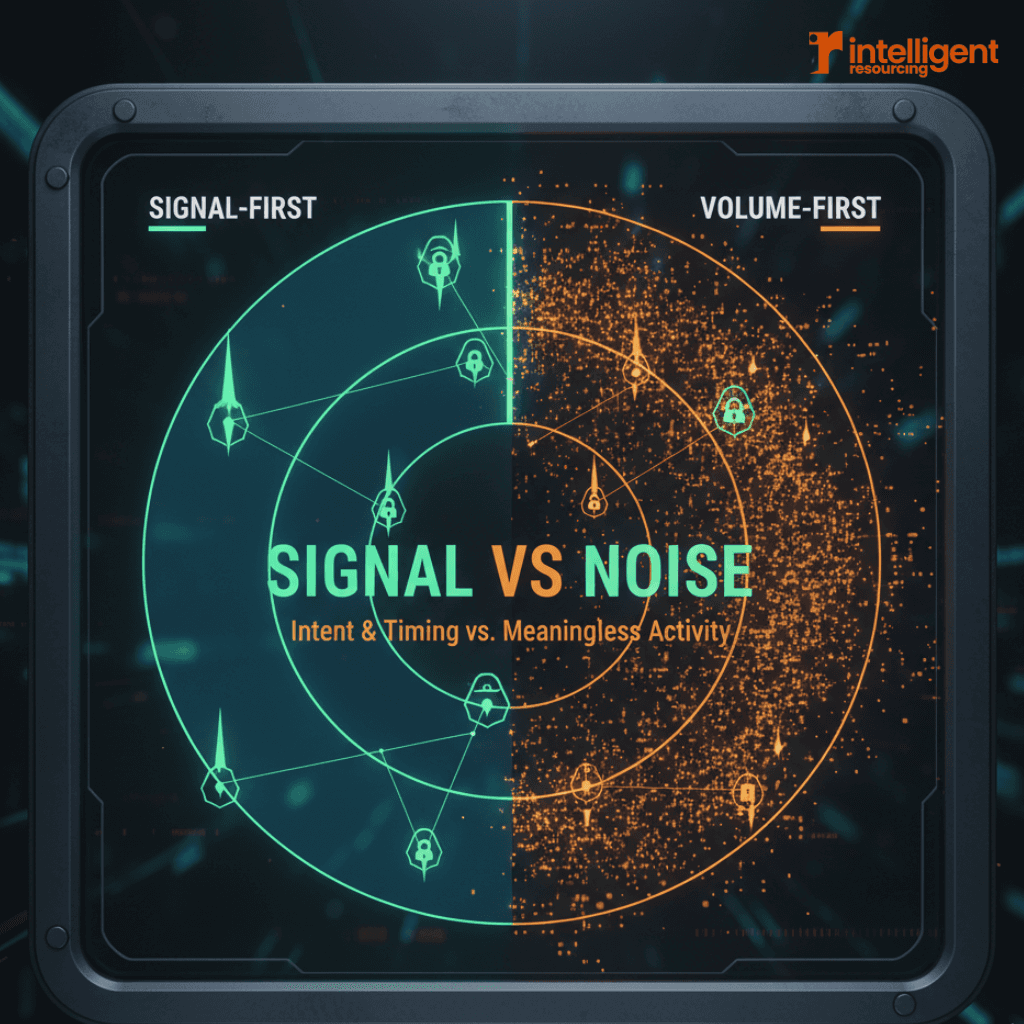
B2B lead generation in 2026 is no longer about buying contacts or outsourcing lead generation services. High-performing teams use signal-led growth: identifying real buying signals, segmenting accounts dynamically, and activating coordinated multi-channel plays. This shift produces higher-quality conversations, shorter sales cycles, and a more predictable pipeline.
What's Changed
Leads are static; signals are real-time
Channels don't create demand; signals reveal when to act
Single-channel outreach fails; multi-touch orchestration wins
Services are replaced by systems

The Problem with Traditional Lead Generation Services
Traditional lead generation services were built for a simpler buying world: capture a contact, pass it to sales, repeat. That model no longer matches reality.
Modern B2B buyers research anonymously, across devices, and across teams long before engaging with vendors.
McKinsey's 2024 B2B Pulse Survey, based on responses from nearly 4,000 B2B decision makers across 34 sectors in eight industries, reveals that B2B decision makers now use an average of 10.2 channels in their buying journey jumping up from five channels in 2016. This multi-channel behavior means traditional single-touchpoint lead generation is fundamentally misaligned with how buyers actually operate.
This creates four systemic failures:
Leads ≠ intent — contact data doesn't indicate readiness
Static targeting — ICPs defined once, never updated
Channel silos — email, LinkedIn, ads operate independently
False efficiency — activity metrics replace revenue outcomes
The result is volume without relevance and pipeline without predictability.
What Signal-Led Growth Actually Means
Signal-led growth replaces "lead capture" with intent interpretation.
A signal is any behavioural or contextual data point that indicates an account is moving closer to a buying decision especially when multiple signals align.
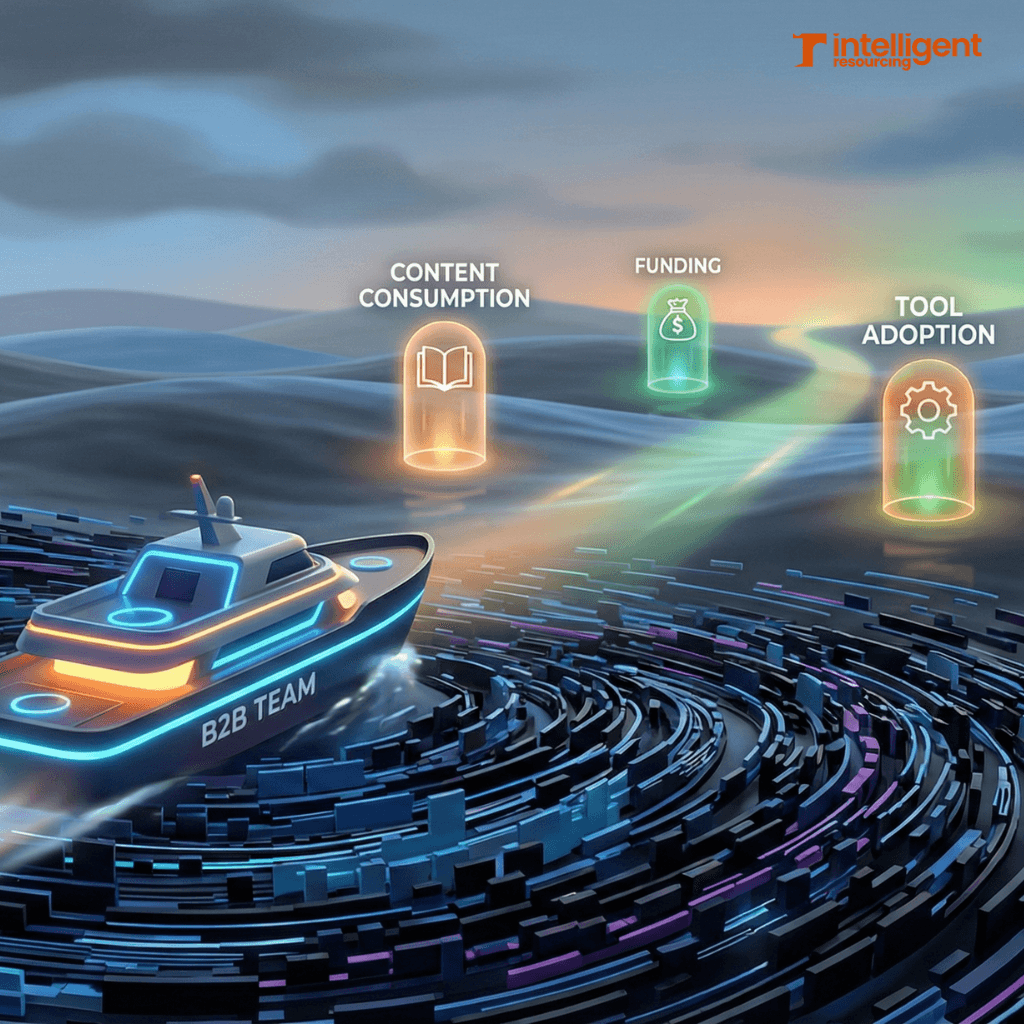
Common B2B buying signals include:
Behavioural: repeated content consumption, pricing or comparison pages
Contextual: hiring for relevant roles, funding, expansion signals
Technographic: new tools adopted, legacy systems replaced
Engagement: cross-channel responses, not just form submissions
Unlike leads, signals:
Decay quickly (timing matters)
Stack cumulatively (patterns beat single actions)
Dictate which channel should be activated next
This is why Intelligent Resourcing reframes lead generation as a B2B lead generation framework built on evidence, not lists.
Best B2B Lead Generation Channels in 2026
(Activated by Signals, Not Guesswork)
In 2026, the most effective teams don't ask "Which channel is best?" They ask "Which channel fits the signal we're seeing?"
Signal-Activated Channels That Perform
Outbound Email + LinkedIn: Most effective when triggered by validated buying signals, not cold lists. Outreach benchmarks from Lavender.ai, based on millions of real emails, show that timing and relevance tied to buyer readiness outperform generic personalisation.
Discover our complete guide to B2B lead generation automation strategies to implement these channels effectively.
Content & SEO: Content functions as signal capture infrastructure, not just traffic generation especially when aligned with a broader signal-led go-to-market strategy.
Paid Media (Retargeting): Efficient only when aimed at accounts already showing intent; otherwise, it amplifies noise. According to Factors.ai's 2026 B2B Benchmark Report analyzing 100+ B2B companies, the best performers are pairing paid search with LinkedIn exposure, which lifts search conversions by 46%, demonstrating the power of coordinated multi-channel strategies.
Partnerships & Communities: Reveal latent demand that outbound alone cannot detect.
Channels don't generate demand. Signals tell you when to use them.
Review our breakdown of platforms for your tech stack in 2the best sales engagement026.
Multi-Touch vs Single-Channel Outreach
Single-channel outreach assumes:
The buyer is ready
You picked the right moment
One message is enough
Real-world buying data contradicts all three.
Analysis from HockeyStack, using multi-touch attribution across B2B funnels, shows that deals are influenced by multiple interactions across channels long before conversion meaning single-channel reporting consistently misrepresents reality.
The 2025 LinkedIn-Edelman B2B Thought Leadership Impact Report, based on insights from nearly 2,000 global professionals, found that more than 40% of B2B deals stall due to internal misalignment within buying groups underscoring the need for multi-stakeholder, multi-touch engagement strategies.
Why Multi-Touch Wins
Cognitive reinforcement: familiarity builds trust
Timing alignment: signals mature at different speeds
Channel preference: buyers respond where they are active
Example: Signal-Activated Sequence
Day 1: LinkedIn profile view + contextual connect
Day 3: Email referencing the observed trigger
Day 7: Value-led content follow-up
Day 14: Direct commercial message
Multi-touch isn't about pressure. It's about presence at the right moments.
Signal-Driven Segmentation Frameworks
Traditional segmentation focuses on who the buyer is. Signal-driven segmentation focuses on where they are in the decision process.
Survey data from Demand Gen Report consistently shows that buyers expect relevance based on behaviour and intent not static personas and disengage when messaging doesn't reflect their current context.
A Practical 3-Tier Signal Model
Aware — problem recognised, light engagement
Active — researching solutions, multiple aligned signals
In-Market — vendor comparison and pricing intent
Each tier demands different:
Messaging
Channels
Expectations of conversion
This dynamic approach aligns naturally with a modern revenue operations model rather than siloed lead hand-offs. Explore what signal-based automation is and how it reduces wasted outreach for your sales team.
How This Reframes B2B Lead Generation Entirely
When organisations adopt signal-led growth:
Lead generation becomes pipeline engineering
Marketing and sales operate from shared evidence
Outreach volume falls while win-rates rise
BCG research found that more than 70% of sales leaders plan to invest in GenAI, with 84% of sellers who already use GenAI reporting it helps increase sales by enhancing or speeding up customer interactions reflecting how technology is enabling more sophisticated signal-based approaches.
This is why the future of B2B lead generation is not a service to buy, but a system to build — one grounded in signals, sequencing, and orchestration.
Key Takeaways
Stop buying leads; start interpreting signals
Choose channels after intent, not before
Multi-touch beats single-channel every time
Segmentation must be dynamic, not demographic
FAQs
What is signal-led growth in B2B?
Signal-led growth uses real buying signals to trigger segmentation, channel selection, and outreach, replacing static lead lists.
Are lead generation services obsolete?
They are increasingly misaligned with how B2B buyers behave, especially when they rely on lists rather than signals.
What are the best B2B lead gen channels today?
There is no universal "best" channel. Performance depends on matching channels to verified buying signals.
How many signals should trigger outreach?
One signal is rarely enough. High-performing teams act when multiple signals align within a short timeframe.
References
Demand Gen Report — B2B Buyer Behaviour Survey
Factors.ai — 2026 B2B Benchmark Report
HockeyStack — Why Multi-Touch Attribution Reflects Real B2B Buying
Lavender.ai — B2B Email Outreach Benchmarks
LinkedIn-Edelman — 2025 B2B Thought Leadership Impact Report
McKinsey & Company — Five Fundamental Truths: How B2B Winners Keep Growing