B2B Lead Generation Agency Pricing (2026)
Most B2B agencies price for activity, not outcomes. What exactly should B2B lead generation agencies actually cost these days?
By Ronan Leonard, Founder, Intelligent Resourcing
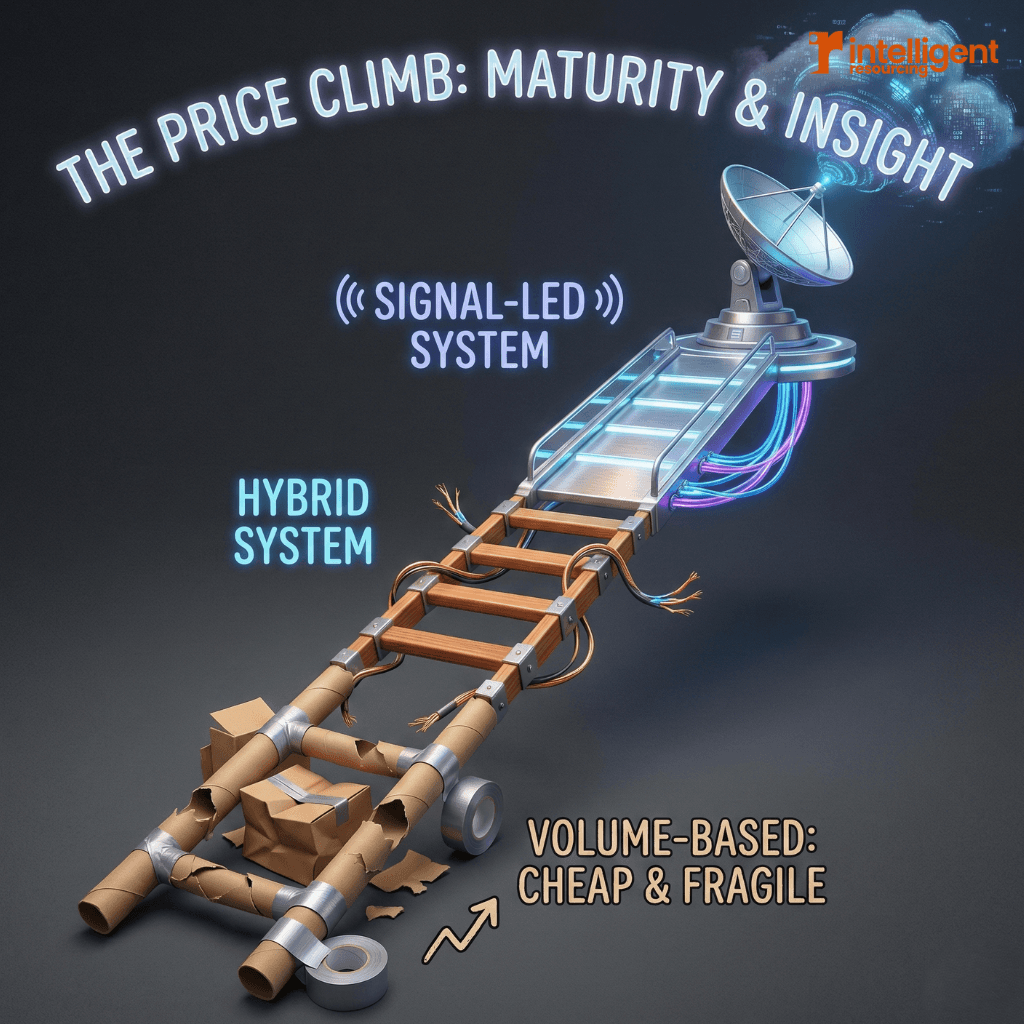
In 2026, B2B lead generation usually costs $2,500 to $19,000+ per month, depending on whether you’re paying for just outreach or a system that turns real buying interest into qualified leads your sales team can use. The right price depends on lead quality, timing, and smooth CRM handoff, not just the number of leads delivered.
Cheaper plans buy activity not results. Often deliver poor-quality leads.
Better plans focus on signal-driven targeting, lead qualification, and consistent improvement
Pay-per-lead can look cheap but often rewards delivery over real sales-ready conversions.
Pay-per-appointment works only if qualification and show rates are strictly controlled
Best value comes from a system that reduces wasted outreach and delivers CRM-ready leads
choose the lowest-risk pricing model
Option | Typical pricing | Best for | What you’re really paying for | Risk level | What to demand in writing | |
| Typically ranges from $3,000–$5,000 per month depending on system scope and build complexity | Teams that want qualified pipeline and a repeatable system | Signal-driven GTM infrastructure, ICP qualification framework, CRM hygiene/enrichment, triggered outbound plays, multi-channel activation | Low | Written “qualified” definition, rejection policy, deliverability ownership, CRM field map, weekly optimisation cadence | |
Retainer (volume-led agency) | $2.5k–$5k/month | Basic outbound execution | Activity and manual outreach | High | Channel limits, deliverability plan, lead QA, reporting depth | |
Retainer (hybrid agency) | $6k–$10k/month | Teams with clear ICP and internal follow-up capacity | Outreach + partial optimisation | Medium | Qualification rules, QA gates, CRM mapping, show-rate policy | |
Premium retainer programme | $11k–$19k+/month | Complex ICP, high ACV | Strategy + ongoing optimisation | Medium–Low | Signal sources, QA process, attribution, sales handoff rules | |
Pay-per-lead | Varies widely | Narrow use cases only | “Delivered leads” | High | Hard qualification, rejection/refunds, source transparency | |
Pay-per-appointment | Varies | Fast testing | Booked meetings | Medium–High | Seniority + intent criteria, agenda standards, replacements/no-show policy |
If you want cheap volume, choose a low retainer and accept the risk (wasted Account Executive time, CRM noise, deliverability damage).
If you want predictable meetings, choose hybrid or pay-per-appointment with strict definitions and replacements.
If you want a predictable pipeline, choose RevOps Studio and buy the system: signal capture, qualification gates, CRM hygiene, and weekly optimisation.
The Next Best Step
If you are serious about pipelines, make this your rule: Do not buy leads. Buy a system that produces qualified buying windows.
See Intelligent Resourcing GTM Engineering Pricing
How Intelligent Resourcing Stacks Up Against Traditional Lead Gen Agencies
Most traditional lead generation agencies are built on a pricing model that AI has made obsolete. At the $3,000–$5,000 tier, traditional agencies deliver activity-based outreach: volume lists, manual sequences, and reports that measure effort rather than outcome. Intelligent Resourcing's GTM Engineering approach delivers something different: signal-based targeting, ICP qualification gates, CRM integration, and triggered outbound that produces fewer contacts and higher conversion rates.
The outcome difference is material. Traditional agencies justify their retainer by reporting on activity: emails sent, meetings booked, contacts reached. RevOps Studios justify their fee by measuring outcome: qualified conversations, CRM-ready handoffs, cost per closed-won deal. Activity-based reporting was invented to justify retainers, not results. Volume without qualification is a noise problem disguised as pipeline potential.
For B2B teams evaluating agencies in the $4,000–$6,000 range, the choice is clear: pay for activity and chase unqualified leads, or pay for a system that produces qualified pipeline. Intelligent Resourcing's GTM Engineering model sits in this range but delivers infrastructure, not just outreach.
What’s changed about B2B lead generation pricing in 2026
From labour to systems: Pricing now reflects the quality of the system, not just the hours spent on outreach.
Static leads vs real-time signals: Modern lead generation uses real-time buying signals, not just contact lists.
Multi-touch wins: Single-channel outreach often fails; coordinated, multi-channel campaigns drive results.
Learning systems replace services: Providers now deliver smart systems that improve over time, not just manual effort.
That’s why two providers charging the same monthly fee can produce very different outcomes depending on their system and signal quality.
The Problem with “Traditional” Lead Generation Pricing
Traditional pricing models encourage the wrong actions:
More emails sent: quantity over quality.
More contacts scraped: lists that may never convert.
More meetings booked: even if prospects aren’t ready to buy.
The predictable outcome: Sales teams end up chasing unqualified leads, wasting time, and seeing small pipeline growth.
The right approach: Focus on fewer high-quality leads. Only target prospects that are ready to buy and likely to convert. This allows your sales team to spend time on conversations that generate revenue instead of chasing unqualified contacts.
B2B lead generation pricing ranges (what you’ll actually see)
Many agencies charge between $2,500 and $19,000+ per month, with higher tiers focused on signal-led execution that delivers qualified leads and consistent pipeline results.
Some providers share public starting points. For example, Sopro lists a starting price of around $3,800 per month. This gives you a reference point to calibrate expectations, not a recommendation.
A lower-than-average quote may indicate less emphasis on systems, data quality, or lead qualification. Investing in signal-driven processes and structured systems ensures your sales team works with leads that are ready to convert and CRM-ready, rather than just adding volume.
What Affects B2B Lead Generation Costs (and what is not worth paying for)
Why You Should Know This
Knowing what affects costs helps you spend wisely. It ensures you pay for actions that improve pipeline results and avoid wasting money on volume that don’t convert.
Factors That Affect Cost
ICP difficulty: Targeting niche roles or regulated industries takes more research and effort.
Decision-maker seniority: Top executives need clear messages and fewer emails or calls.
Regions and languages: More markets make communication harder and more complex (compliance, careful planning , customisation)
Qualification depth: Leads with clear needs and timing cost more but sell better than casual ‘interested’ leads.
Deliverability management: Without proper email monitoring, your messages might fail to get delivered
CRM compatibility: Leads must land cleanly in your CRM; otherwise, you pay twice; for leads and for cleanup.
What Is Not Worth Paying For
“Unlimited outreach” : more contacts do not mean more sales.
Lead volume guarantees without qualification: quantity without quality doesn’t help.
Delivery without clear rules, rejection options and unclear processes often hide low-quality leads.
Key takeaway: Knowing these factors helps you buy better leads and use systems that let your sales team focus on deals that actually bring in revenue.
Pricing models explained
Retainer: You pay a fixed fee for 3–6 months to get steady, reliable lead generation and improvements. It’s risky if the provider is just sending lots of messages without a proper system.
Pay-Per-Lead: Pay-per-lead looks performance-based, but providers may focus on sending leads instead of real sales. Only use it if leads are clearly defined, checkable, and have clear rejection rules.
Pay-per-appointment can be used for quick testing, but it’s easy to abuse without clear rules. Australian guides show costs from $50–$300 per meeting. Only use this model if ‘qualified’ is clearly defined, checked, and backed by replacement or rejection rules.
Hybrid: For most serious teams, a hybrid model is ideal. It combines a stable base fee for quality with a performance-based component for outcomes, aligning incentives without underfunding the system and delivering higher-quality leads with a predictable pipeline.
Why RevOps studio is the best value (not the cheapest)
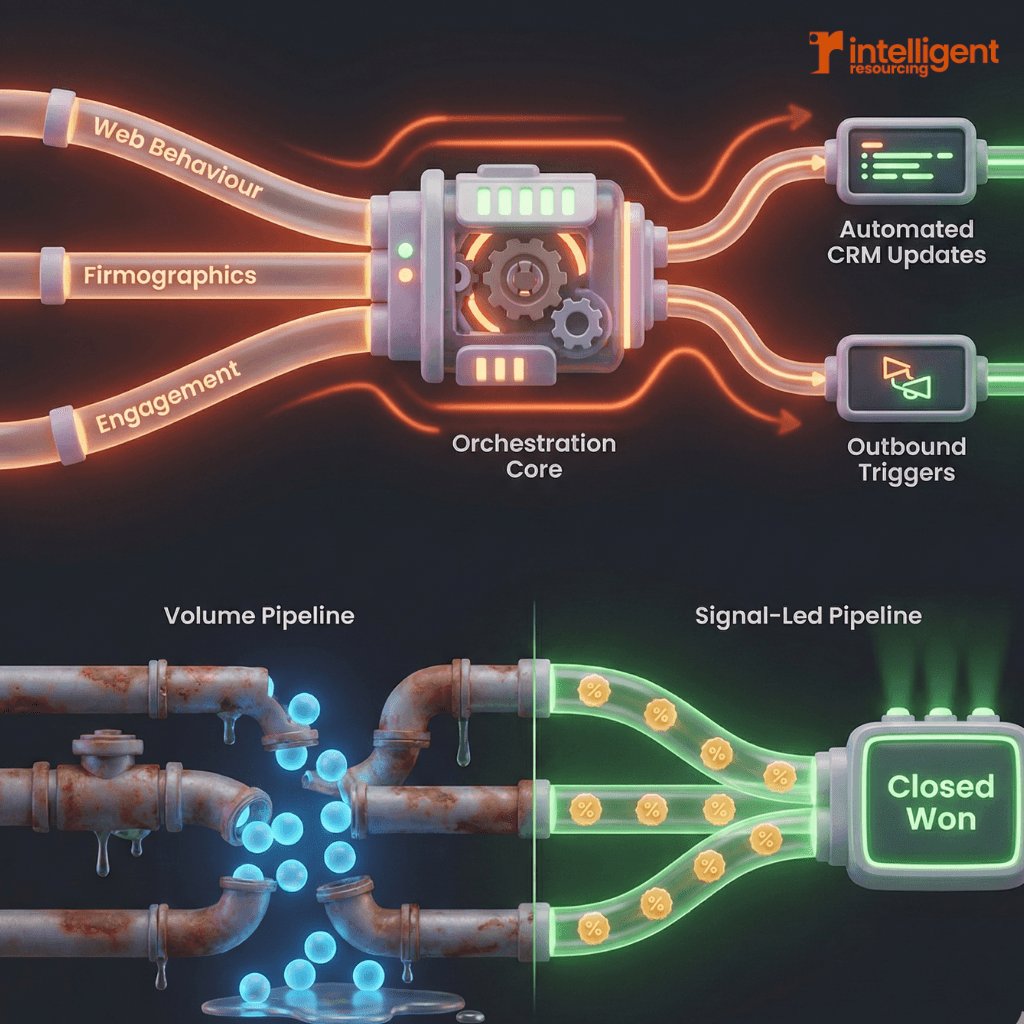
Most lead gen providers sell manual execution. A RevOpers studio builds your revenue infrastructure.
Through GTM engineering, RevOpers studio positions the work as “done-for-you signal-based systems” that turn real-time intent into sales, reducing wasted effort and tool sprawl.
GTM Engineering plans include:
Signal Starter: foundational signal infrastructure including CRM hygiene, data enrichment, signal reporting, and an ICP qualification framework.
Fractional GTM Engineer: adds triggered outbound plays, live lead scoring, multi-channel activation, and dedicated GTM engineering capacity to operate and optimise the system.
Strategy Blueprint Intensive: a one-time plan for teams that want the system architecture designed before committing to ongoing execution.
Plans typically fall between $3,000–$5,000 per month depending on system scope and build complexity, with the option to start with a one-time blueprint.
Translation: you are buying less guesswork and more precision.
Red flags that make “cheap” pricing expensive
Use this as your walk-away list:
No written definition of “qualified”
No rejection policy for low-fit leads or meetings
No CRM field mapping or handoff process
No ownership of deliverability
Reporting that stops at “sent, opened, replied”
If any of these are missing, the provider is selling outputs, not outcomes.
The only metric that matters: cost per closed-won conversation
Stop focusing on cost per lead. It rewards noise, not real revenue.
The metric that matters is cost per closed-won conversation:
Cost per closed-won conversation = (program fee + tool costs + internal time cost) ÷ closed-won opportunities influenced
This tells you what you actually pay for revenue outcomes, not just activity.
Can the provider track which leads actually result in closed deals? If not, you cannot measure real value and any spend is at risk of being wasted.
FAQ
What is B2B lead generation pricing in 2026?
Most providers sit between $2,500 and $19,000+ per month, depending on whether you’re paying for basic outreach execution or a full system that delivers qualified, CRM-ready opportunities. Use the range as a filter, then judge value on qualification, signal quality, and handoff.
How much does RevOps Studio typically cost?
RevOps Studio programmes typically fall around $3,000–$5,000 per month, depending on system scope and build complexity. If you want to start with strategy first, you can begin with a one-time blueprint and then move into monthly execution when the system is defined.
Is pay-per-lead cheaper than a retainer?
It can look cheaper upfront, but it often costs more in reality because it rewards delivery over conversion.
What’s the lowest-risk way to buy lead generation?
Choose a model that funds quality and governance: a signal-led system with qualification gates, CRM hygiene, and weekly optimisation. That’s why RevOps Studio style programmes often outperform “cheap outreach” retainers, even when the monthly fee is higher.
What should be included in pricing to avoid hidden costs?
If something isn’t clearly included or priced, expect surprises. A proper quote should outline who owns deliverability (domains, warm-up, and monitoring), how CRM fields and handoffs are handled, what qualifies as a lead and how that is verified, what happens if leads or meetings don’t meet the agreed criteria, and how often campaigns are reviewed and optimised. If a provider can’t put these details in writing, you’re not buying a system. You're buying an activity.
A Better Question Than “How Much Does It Cost?”
If you are comparing lead generation providers, do not start with the cheapest monthly retainer. Start with the system behind the leads.
A good provider should show how they identify the right accounts, qualify timing, enrich the data, protect deliverability and hand clean opportunities into your CRM. Without that system, pricing is just a number attached to more activity.
The best results typically come from working with a B2B lead generation agency that combines data, buying signals, outreach and qualification into a repeatable process rather than relying on volume alone.
For a closer look at how Intelligent Resourcing builds this model, see our signal-led lead generation service and compare the process against any provider you are considering.