

How to Evaluate Any Nifty Marketing Alternative
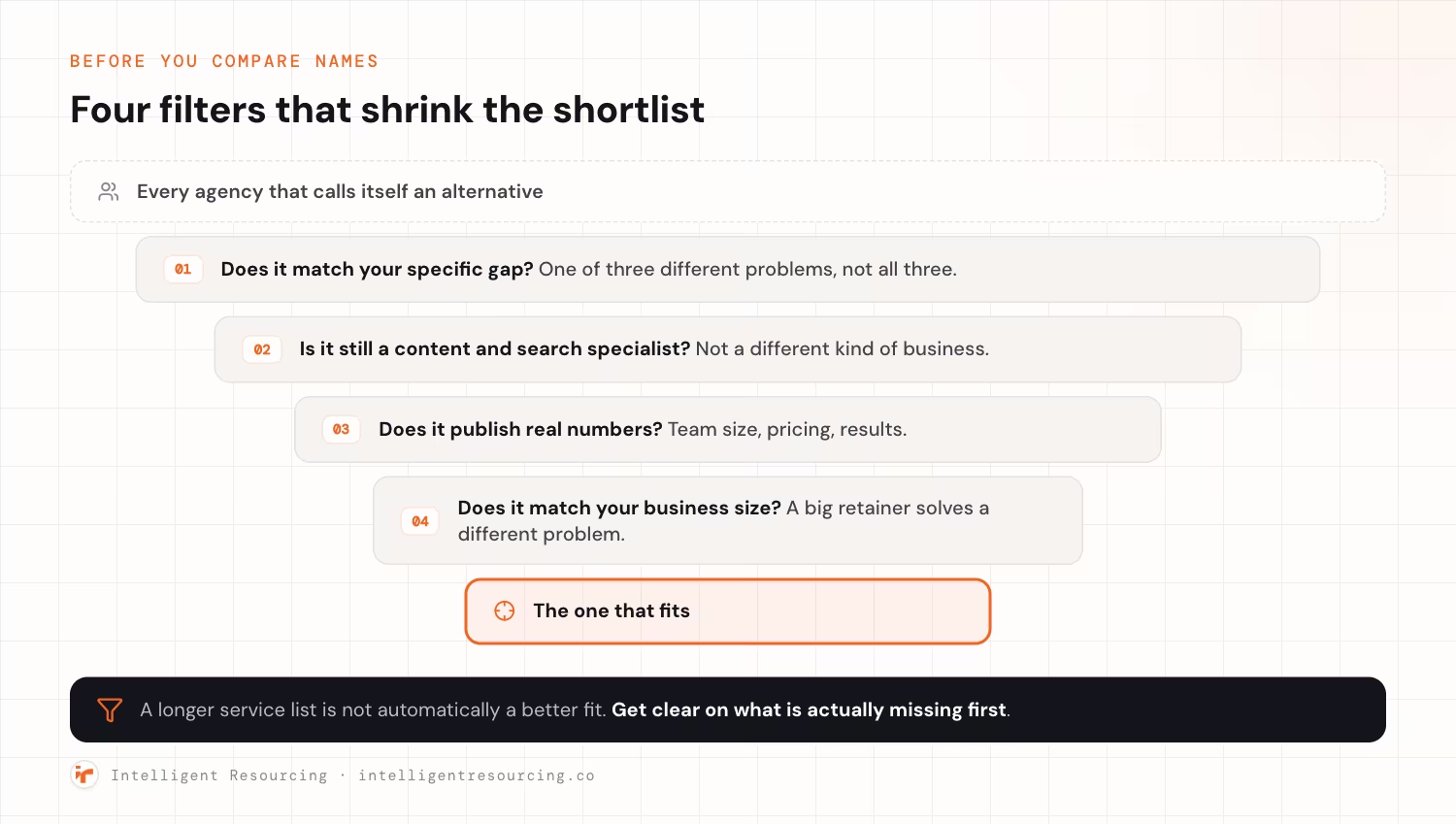
Before comparing agencies by name, get clear on what is actually missing. A longer service list is not automatically a better fit.
- Does it match your specific gap? A missing GEO plan, a stalled SEO programme, and content that is not built for your buyers are three different problems. No single alternative on this list solves all three.
- Is it a content or search specialist, not a different kind of business entirely? An alternative to a content and search agency should still be a content and search agency. Outreach or account-based marketing companies solve a different problem.
- Does it publish real numbers? Team size, pricing, and results vary a lot across this list. Ask for specifics rather than accepting a general claim of expertise.
- Does it match your business size? A big team charging $10,000 a month solves a different problem than a small, focused specialist built for a smaller client list.
The 6 Best Nifty Marketing Alternatives
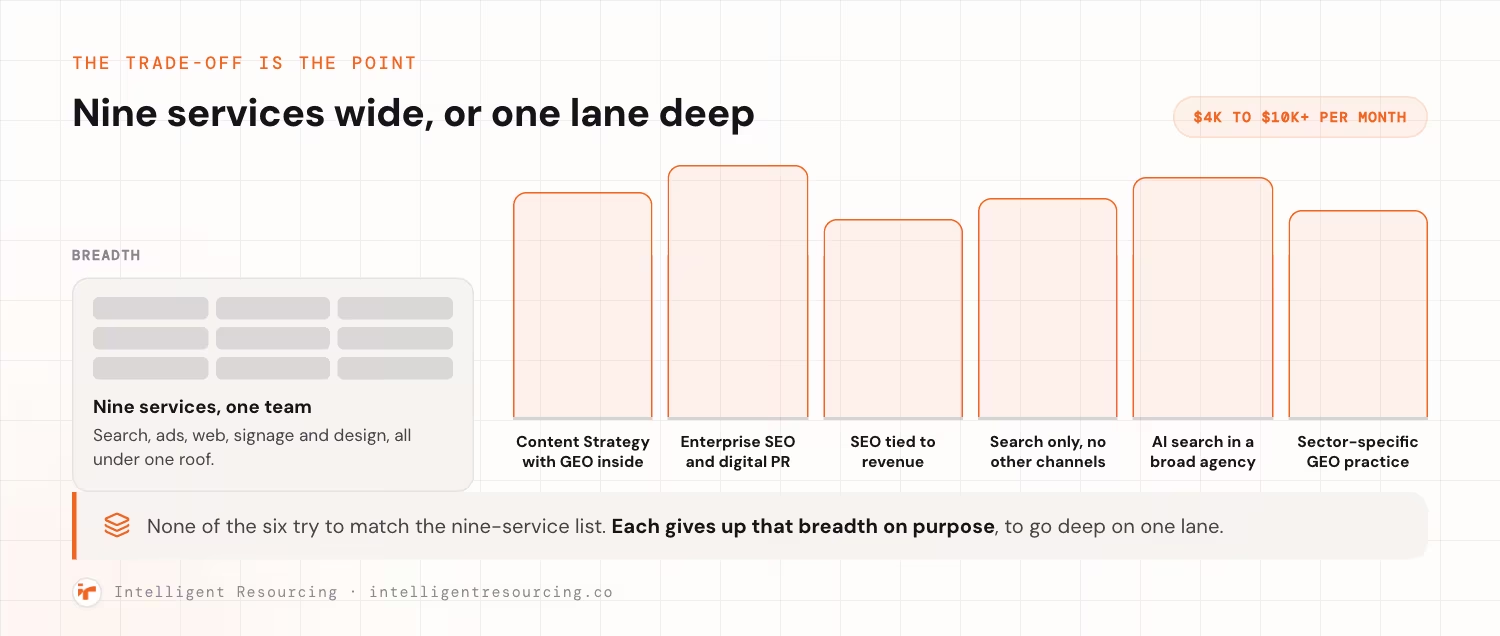
1. Intelligent Resourcing
Intelligent Resourcing is a Revenue Operations Studio. Its Content Strategy service includes GEO, built as one system rather than a set of separate jobs. One content plan drives the keyword research, the writing, and the schema work behind it. That is instead of three different people handling three different briefs. It follows the same structured-data rules Google itself recommends for machines to read content properly.
Key capabilities:
- GEO built inside Content Strategy, not sold as a separate add-on
- Schema, entity work, and content writing handled in one pass, by one team
- Content built around a defined buyer's actual questions
Best for: B2B teams whose AEO or GEO work needs to be built around specific buyer questions, not treated as a generic service.
Limitation: Team size and delivery details are not published in the same depth Nifty Marketing offers on its own site. Buyers wanting full transparency on staffing should ask directly.
For a side-by-side breakdown of where each option fits, see Intelligent Resourcing vs Nifty Marketing compared in full.
2. Prosperity Media
Prosperity Media is a Sydney agency founded by James Norquay in 2012. It has grown to a 30-plus person team and was named Best Large SEO Agency in APAC for 2025 at the APAC Search Awards.
Prosperity Media runs GEO alongside enterprise SEO and digital PR, and works mostly with mid-market to enterprise clients. Its enterprise SEO pricing starts around $10,000 a month. That reflects the size of the accounts it takes on.
Key capabilities:
- GEO, technical SEO, and digital PR under one large team
- 30-plus specialists, no outsourcing
- Named client work in competitive, high-spend markets
Best for: A business that has outgrown small-team SEO and needs a bigger, specialist team for a competitive, high-spend market.
Limitation: The price puts it out of reach for the small-business buyers Nifty Marketing serves well. It is not a like-for-like swap for a small business on a tight budget.
3. Odin Digital
Odin Digital is an Australian B2B SEO agency built around revenue, not rankings. It works as a HubSpot Solutions Partner, tying SEO reporting to sales data instead of keyword positions alone. Its own site reports over $237 million in tracked client revenue. This distinction matters more now that more research happens inside AI answers than on a normal results page. A ranking alone no longer proves a buyer saw the content.
Key capabilities:
- Ties SEO results to CRM and sales data, not just rankings
- Official HubSpot Solutions Partner
- Cites $237M+ in tracked client revenue on its own site
Best for: A team that wants to keep SEO as the core channel but needs it reported against deals won, not just traffic.
Limitation: It does not publicly describe a way to track which specific accounts are actively considering a purchase. It shows what already converted, not what is about to.
4. Earned Media
Earned Media is a Sydney agency founded in 2019 by Nick Brogden, with a 10 to 49 person team across Sydney, Melbourne, Brisbane, and a few overseas offices. It is an SEO-only agency by design. It does not run ads or social media management at all, choosing instead to focus entirely on search, AEO, and GEO.
Its own client work reports a 288% increase in organic traffic within twelve months, alongside an 84% jump in share of voice for that same client.
Key capabilities:
- SEO, AEO, and GEO handled by one focused team, no other channels
- Reports a 288% organic traffic increase for a named client
- Offices across Sydney, Melbourne, Brisbane, Singapore, and Los Angeles
Best for: A business that wants search handled by specialists who do not split focus across ads, social, or web design.
Limitation: It does not offer web development, paid ads, or signage. A business wanting one vendor for everything Nifty Marketing covers will not find that here.
5. Bushnote
Bushnote is a strategy and creative agency that runs AI Search as one service, alongside brand and narrative, campaigns, research and polling, creative and media buying, and website work. Its AI Search Optimisation service describes retainers starting at AUD $4,000 a month, covering ongoing prompt testing, schema updates, content tuning, and reporting.
The published scope is specific. A full audit and implementation roadmap lands in two weeks, then optimisation runs in 30-day sprints across ChatGPT, Google AI Overviews, Perplexity and Bing Copilot.
Key capabilities:
- AI Search sold as a defined service with a published price
- Audit and roadmap in two weeks, then 30-day optimisation sprints
- Covers ChatGPT, Google AI Overviews, Perplexity and Bing Copilot
Best for: A business that wants AI search handled alongside brand, campaign and creative work by the same agency.
Limitation: Its service page does not publish the metrics behind its reporting, so Share of Voice, mention rate and citation rate are worth pinning down in scoping rather than assuming.
6. Luminary
Luminary runs a dedicated GEO practice with named work across more than 16 Australian financial services clients, including Vanguard Australia, Netwealth, and IFM Investors. The practice is led by Shayna Burns.
Key capabilities:
- Dedicated GEO practice, not a generalist team with GEO added
- Named client list of 16+ financial services brands
- Sector-specific experience in a regulated, compliance-heavy industry
Best for: A regulated or enterprise business wanting GEO experience from a team that already understands its specific industry.
Limitation: Its published strength is concentrated in financial services. A small business outside that sector may not get the same depth of relevant experience.
What Happens to Existing Work When You Switch
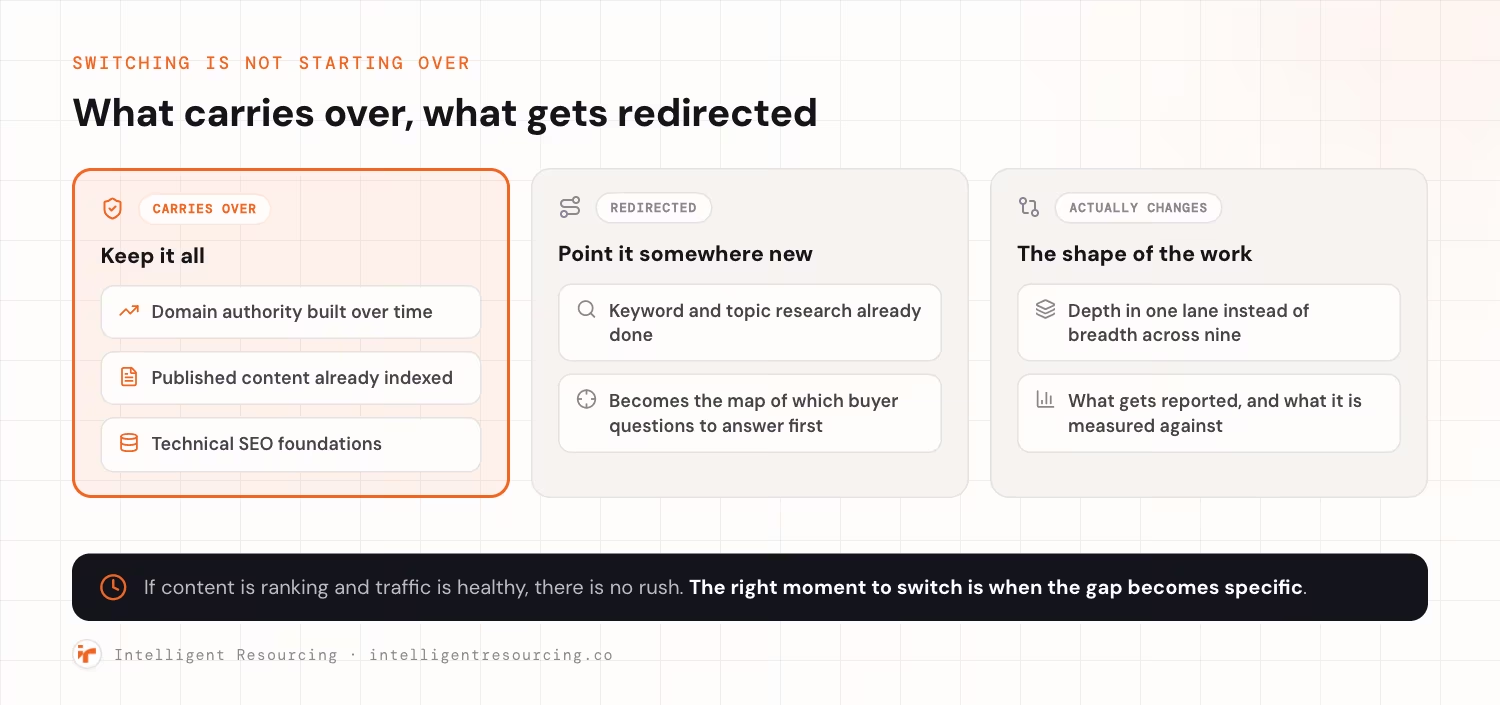
None of this means throwing away work already done. SEO foundations, published content, and domain authority built during a Nifty Marketing engagement do not disappear when you switch.
Keyword and topic research already done can guide which buyer questions a new content system should answer first. Domain authority built over time supports AI search inclusion without a full rebuild. A specialist alternative builds on that foundation. It does not start from zero.
The right moment to switch is when the gap becomes specific. If content is ranking and traffic is healthy, there is no rush. If a nine-service, do-everything model cannot go deep enough on the one thing your business now needs, that is the signal to look at a specialist instead.
Which Alternative Fits Your Actual Gap?
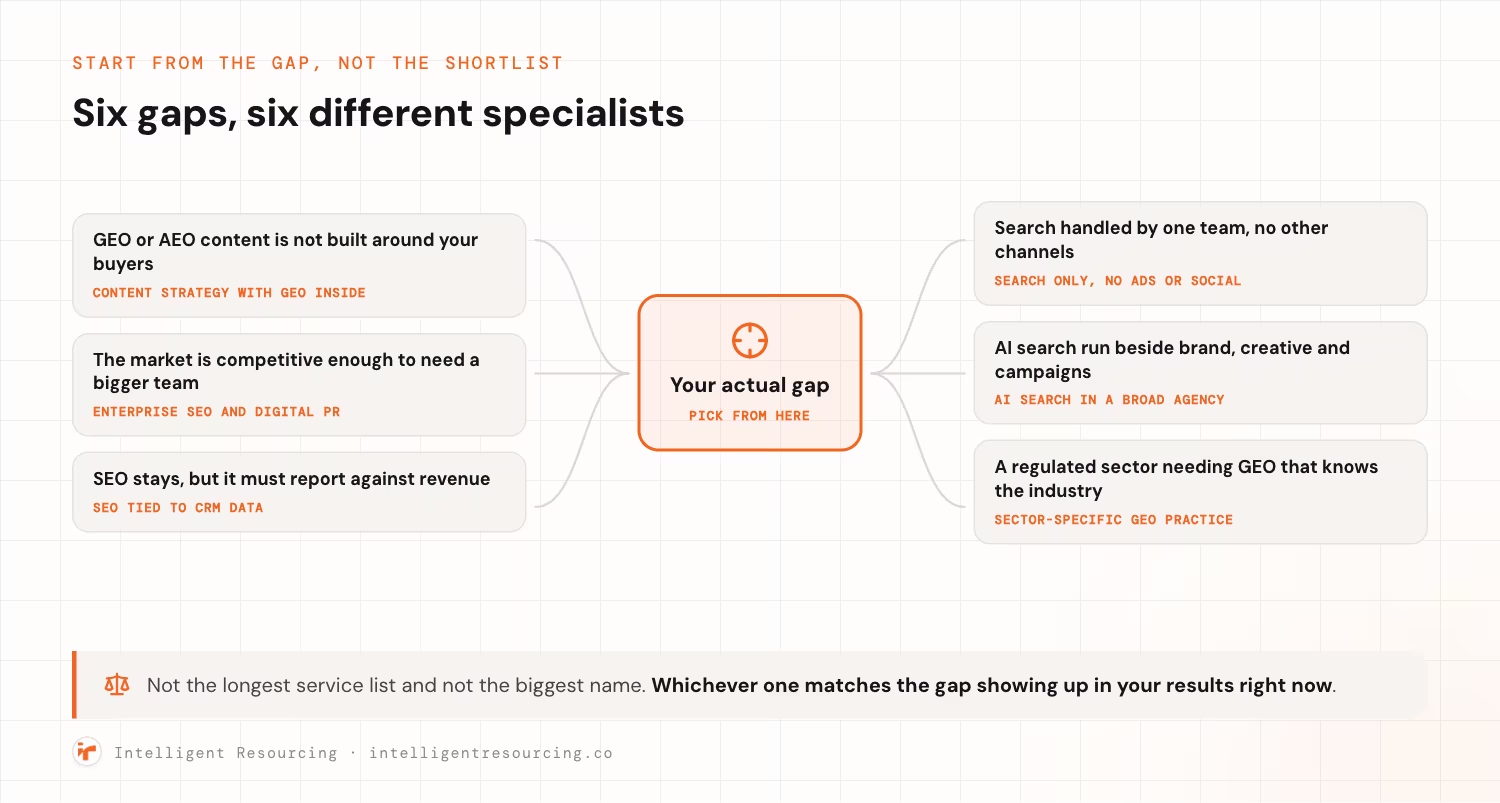
Your GEO or AEO content is not built around your specific buyers. Choose Intelligent Resourcing's Content Strategy service.
Your market is competitive enough that you need a bigger, specialist SEO team. Choose Prosperity Media.
You want to keep SEO but need it reported against revenue, not rankings. Choose Odin Digital.
You want SEO, AEO, and GEO from one team with no other channels to split focus. Choose Earned Media.
You want AI search run beside brand, campaign and creative work. Choose Bushnote.
You are in a regulated or enterprise sector and want sector-specific GEO experience. Choose Luminary.
Book a discovery call if the gap is specifically about AEO or GEO content that is not built around your buyers.
Our how to choose an AEO agency guide covers the questions worth asking any of the six.
If you are keeping a generalist for one job and a specialist for another, our AEO, GEO and SEO sequencing guide covers the order to run both in.
Comparisons
A longer service list is not the same as depth where you need it. Book a discovery call with Intelligent Resourcing if the gap is AEO or GEO content that is not built around the questions your buyers actually ask.
FAQs
Is Nifty Marketing a bad choice?
No. It is a strong all-rounder for small businesses wanting SEO, ads, web development, and signage from one Australian team. These alternatives only matter if you need more depth in one area than a nine-service, do-everything model can offer.
Which of these alternatives is closest to Nifty Marketing in price?
None are confirmed, since none of the six publish small-business pricing the way Nifty Marketing does. Prosperity Media is clearly priced for enterprise, starting around $10,000 a month. Bushnote publishes the lowest confirmed starting point, from AUD $4,000 a month for its AI Search service.
Do any of these alternatives also offer AEO or GEO?
Yes, most of them. Intelligent Resourcing, Prosperity Media, Earned Media, Bushnote, and Luminary all offer AEO or GEO directly. Odin Digital focuses on SEO tied to revenue reporting instead.
Are all of these alternatives similar to Nifty Marketing?
They are similar in that all six do SEO, AEO, or GEO-style content work, the same category Nifty Marketing operates in. Bushnote is the closest to Nifty Marketing's breadth, since it also sells brand, campaign and creative work, though not web development or signage.
How do I know if I actually need more depth than Nifty Marketing provides?
Check whether your current AEO or SEO work is reported against your actual buyer questions and revenue, or just against generic traffic and ranking numbers. If it is the latter, a more specialised alternative is worth a look.
Can I use Nifty Marketing for early work and switch to a specialist later?
Yes. SEO foundations, content, and domain authority built during a generalist engagement usually carry over. A specialist agency builds on that work rather than starting over.