

For the specific data-decay math and AU/APAC coverage gaps that make this necessary, see AU/APAC Data Accuracy Showdown. This guide picks up from there: the build itself.
How Does Clay's Enrichment Waterfall Fix Contact Quality Before Outreach Fires?
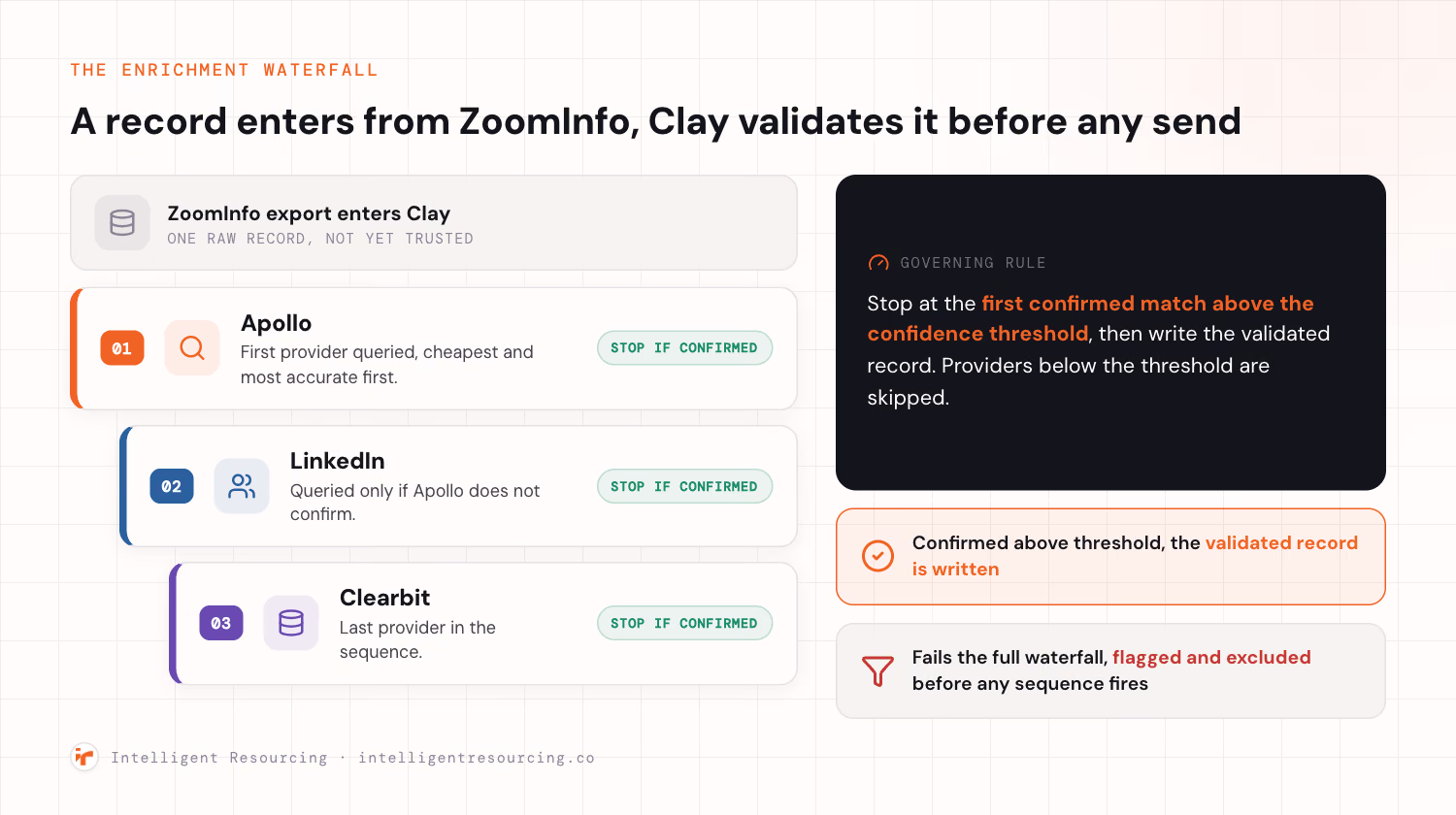
Clay runs a sequential waterfall across Apollo, LinkedIn, Clearbit and multiple other data providers to validate or update each contact record before it enters any outreach sequence. The waterfall checks providers in order of cost and accuracy, stopping when it reaches a confirmed match. No outreach fires against an unvalidated record.
Intentsify and Ascend2's 2023 research, published by MarketingProfs, found that 48% of B2B go-to-market teams using intent data rate their strategy as very successful, versus 17% of teams without intent data in their workflow.
How the Waterfall Works
The waterfall runs five steps for every record:
- The record enters Clay from ZoomInfo with original contact details attached
- Clay queries Provider 1 (typically Apollo or LinkedIn) for a live match
- If the match confirms at the required confidence threshold, Clay writes the validated data and stops the waterfall
- If the match fails, Clay queries Provider 2, then Provider 3, working down the cost stack
- Records that fail the full waterfall are flagged and excluded from outreach before any sequence fires
What Intelligent Resourcing Observed in Production
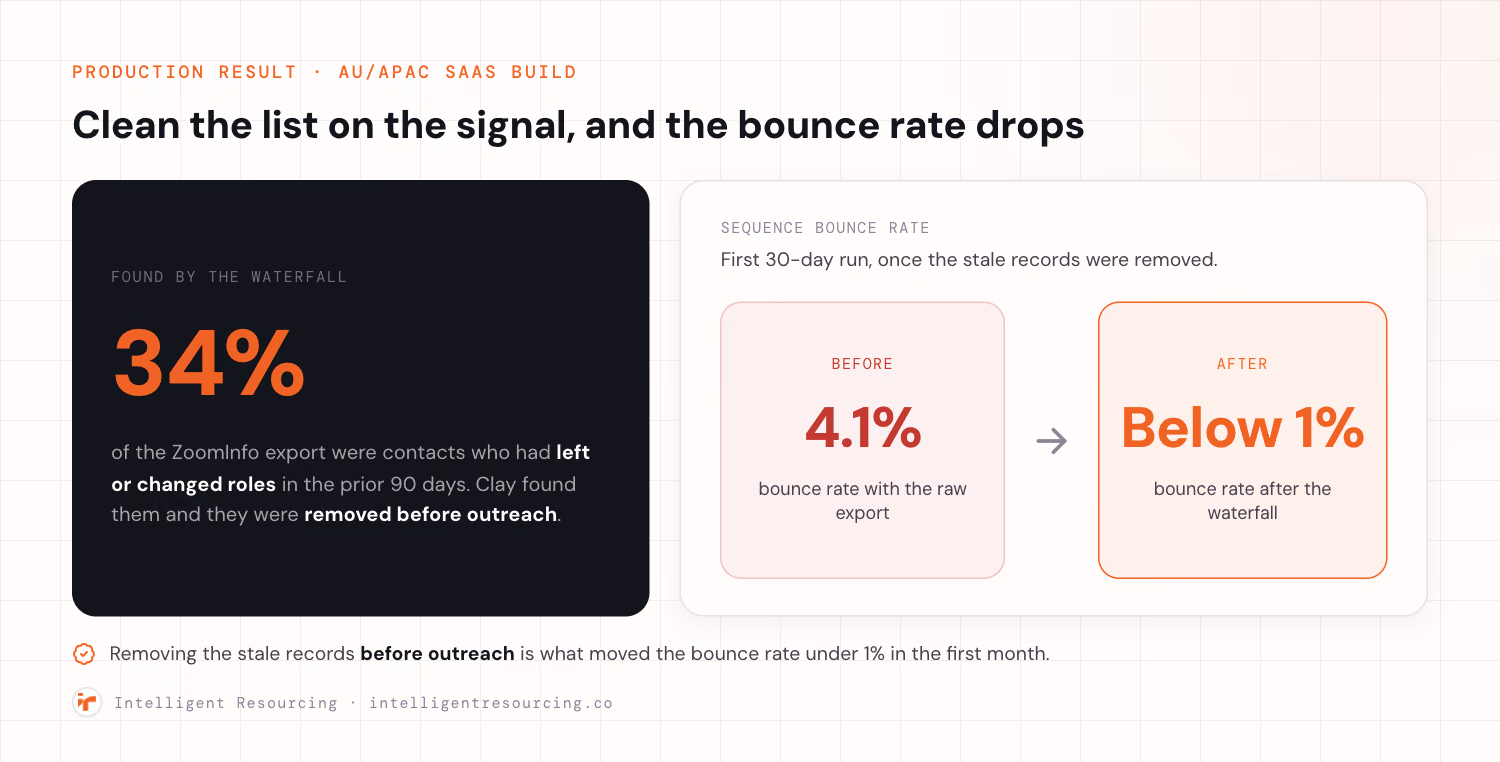
When Intelligent Resourcing built this Clay-to-HubSpot signal layer for a SaaS business targeting AU/APAC enterprise accounts, the enrichment waterfall identified that 34% of the ZoomInfo export contained contacts who had either left the organisation or changed roles in the previous 90 days. Removing those records before outreach fired reduced the sequence bounce rate from 4.1% to below 1% in the first 30-day run.
The Clay lead enrichment workflow Intelligent Resourcing deploys achieves a 90 to 95% field fill rate within 7 days of initial ZoomInfo export, using the provider stack described above.
How Do You Build the Clay and ZoomInfo Hybrid Stack?
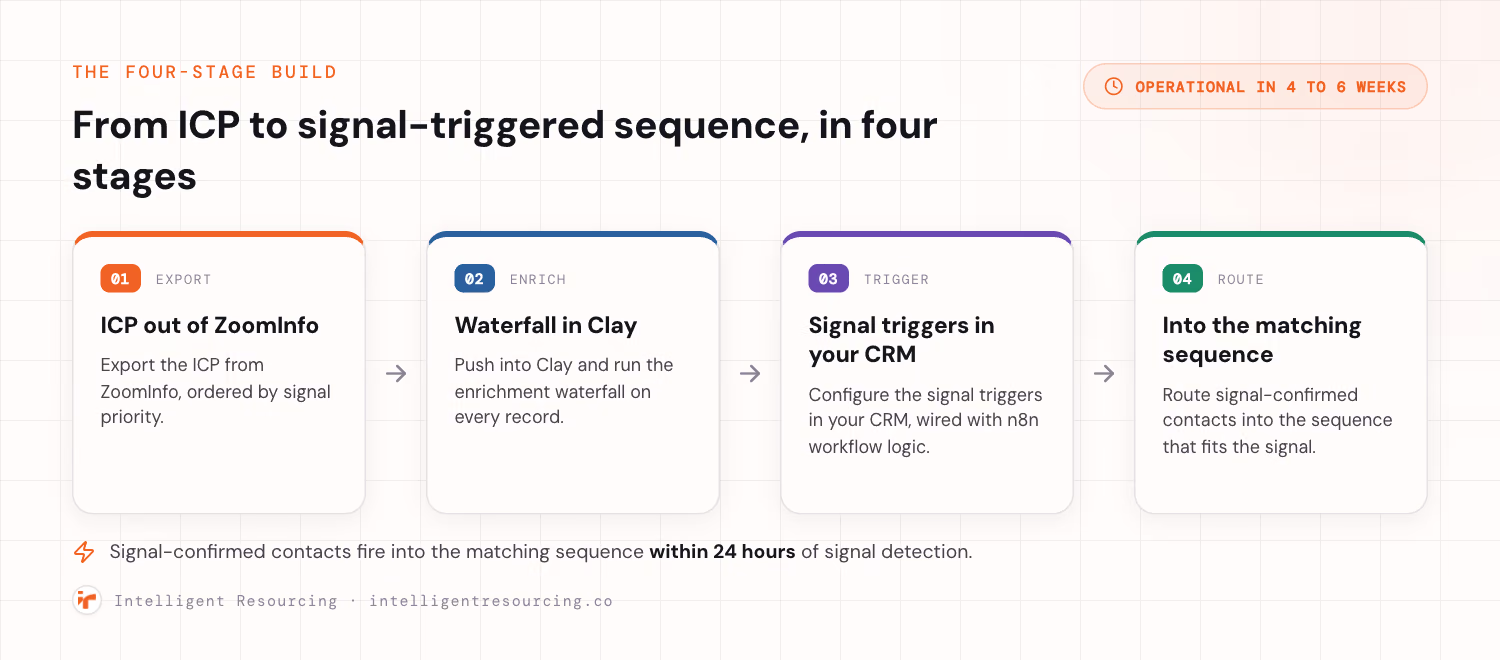
Building a Clay and ZoomInfo hybrid stack involves four sequential stages: ICP export from ZoomInfo, enrichment validation through Clay's waterfall, signal trigger configuration in HubSpot, and sequence routing based on confirmed buying signals. Each stage has a defined input and output. The full architecture is operational in 4 to 6 weeks from ICP finalisation.
Stage 1: Export Your ICP From ZoomInfo by Signal Priority
Export from ZoomInfo using ICP filters: industry, employee count, revenue band and location. Before the export leaves ZoomInfo, apply a signal priority score using ZoomInfo's intent layer indicators: job postings, technographic changes and funding events logged within the platform. This score determines the order in which Clay validates records. Highest-signal accounts enter the enrichment queue first.
Stage 2: Push the Export Into Clay and Run the Enrichment Waterfall
Import the scored ZoomInfo list into Clay as the base record. Configure the waterfall to query Apollo, LinkedIn and Clearbit in sequence. Set the fallback rules before the first run: if Provider 1 returns a match above the confidence threshold, write the record and stop. If it fails, proceed to Provider 2, then Provider 3.
The Clay-to-HubSpot integration that routes validated records into the CRM requires field mapping before the first enrichment run fires. Map the enriched fields: verified email, mobile number, LinkedIn URL, job title and seniority, to the corresponding HubSpot contact properties before Clay runs.
Stage 3: Configure Signal Triggers in HubSpot
The signal layer is built by a GTM engineer who configures n8n workflow logic and HubSpot routing rules to monitor validated accounts for confirmed buying signals. The three highest-conversion signal types are: a new hire into a relevant role (VP Sales, RevOps Director, CTO), a Series A or B funding announcement, and a tech stack addition indicating the account is building toward a specific capability.
HubSpot's 2026 sales analysis found that sales representatives dedicate only 2 hours per day to active selling. Signal-triggered automation reclaims the remaining hours by removing manual monitoring and sequence timing from the SDR's workflow entirely.
Stage 4: Route Signal-Confirmed Contacts Into the Right Sequence
When HubSpot detects a confirmed signal, it routes the contact into the relevant outreach sequence automatically. The sequence fires within 24 hours of signal detection. No manual intervention is required after the initial architecture is configured. Each sequence maps to a specific signal type: the new hire sequence differs from the funding sequence in angle, proof point and timing.
How Does Signal-Led Outreach Change the Trigger Mechanism?
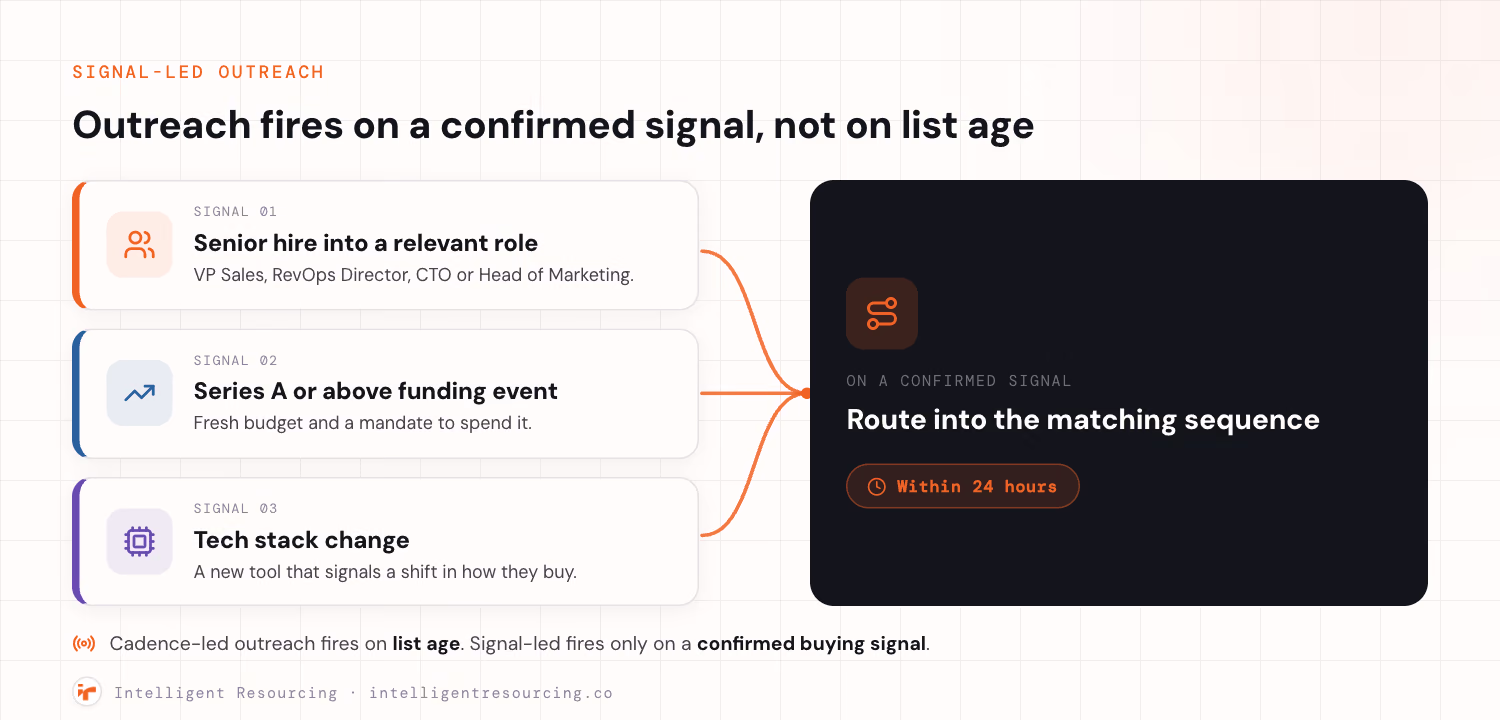
Signal-led outreach fires when a monitored account shows a confirmed buying signal: a job change, a funding event, or a tech stack install that indicates active purchasing intent. Cadence-based outreach fires on list age. Bombora's intent-signal research found that campaigns using confirmed buying signals achieve a 28% higher closed-won rate than campaigns without intent data.
The difference is not marginal, because a stale-data handicap compounds across every deal in the pipeline simultaneously, not just the deals where outreach arrived before the buyer was ready.
A Verified Buying Window is the specific period when an account is actively evaluating a purchase.
Three signal types confirm when this window opens:
- A senior hire into a relevant role: VP Sales, RevOps Director or Head of Marketing, indicates the company is resetting its go-to-market approach and evaluating new vendor relationships.
- A funding event (Series A or above) puts capital into a company that needs to build out its tech stack within a defined timeline.
- A tech stack change logged in a monitoring tool indicates the company has either removed a competing product or added a complementary tool, signalling an active evaluation cycle.
Signal-led outreach from Intelligent Resourcing's outbound lead flow built on signals fires only when one of these signals is confirmed for a validated contact record. The sequence does not fire on list age or arbitrary cadence timing.
The full taxonomy of buying signals worth monitoring in B2B markets covers over 20 distinct trigger types across job changes, funding events and tech stack installs.
Where Does Intelligent Resourcing's System Fall Short?
Intelligent Resourcing's Clay-based Revenue Operations Studio is not the right fit for every B2B team. The architecture requires 4 to 6 weeks to build before the first outreach sequence fires. Teams that need outbound running within days, or organisations without an existing HubSpot or Salesforce stack, face a longer timeline to first results.
When the Target Account List Is Too Small
Clay's enrichment waterfall adds a cost-per-record for each validated contact. For teams with fewer than 500 target accounts, per-record enrichment costs at full waterfall depth add cost without proportional return compared to manual validation or a lighter single-provider enrichment tool. The hybrid architecture is built for scale.
When the Sales Cycle Is Too Short
Signal-led systems are built for longer considered purchases, where a job change or funding event signals a 60 to 90 day evaluation window. For products with sales cycles under 14 days, the signal layer adds configuration complexity without proportional pipeline benefit. A simpler outbound sequence on a clean single-provider list delivers better ROI for transactional products.
When No CRM Is in Place
The signal routing layer depends on an existing CRM to receive, score and act on validated contact data. A HubSpot implementation adds 4 to 8 weeks to the project before the signal architecture can go live. Teams without a CRM need to complete that project first.
For teams without these constraints, Intelligent Resourcing builds and runs the system on your own HubSpot stack, with no ongoing retainer fees once the architecture is delivered.
Comparisons
Keep ZoomInfo's coverage, add Clay's validation, and fire only when a buying window opens. The Revenue Operations Studio at Intelligent Resourcing builds and runs this Clay-to-HubSpot architecture on your own stack.
FAQs
Is Clay a replacement for ZoomInfo?
Clay does not replace ZoomInfo. Clay acts as the validation and orchestration layer on top of a ZoomInfo export. ZoomInfo provides the initial contact list. Clay validates each record in real time through a waterfall of data providers before any contact enters an outreach sequence. The two tools perform different functions in the same workflow.
What signals does the hybrid workflow monitor?
The three primary signals are senior hires into relevant roles, funding events and tech stack changes. A senior hire indicates the company is resetting its vendor relationships. A funding event indicates capital is available for new tools or services. A tech stack change indicates the company is actively evaluating its current setup. When any of these signals fires, the system routes the contact into an outreach sequence within 24 hours.
What happens to ZoomInfo data that fails Clay's enrichment waterfall?
Records that fail the full enrichment waterfall are flagged in Clay and excluded from outreach. They are held in a separate list for manual review. In most AU/APAC builds, between 25% and 40% of the original ZoomInfo export fails the waterfall and is excluded before any sequence fires.
How does the hybrid stack handle AU/APAC coverage gaps in ZoomInfo?
The enrichment waterfall queries Apollo, LinkedIn and Clearbit as fallback providers after the ZoomInfo base record is checked. For AU/APAC contacts, Apollo and LinkedIn provide stronger direct email and mobile number coverage than ZoomInfo. The waterfall accepts the first confirmed match above the confidence threshold and writes it to the HubSpot contact record. Coverage gaps in the ZoomInfo base are resolved across the provider waterfall.