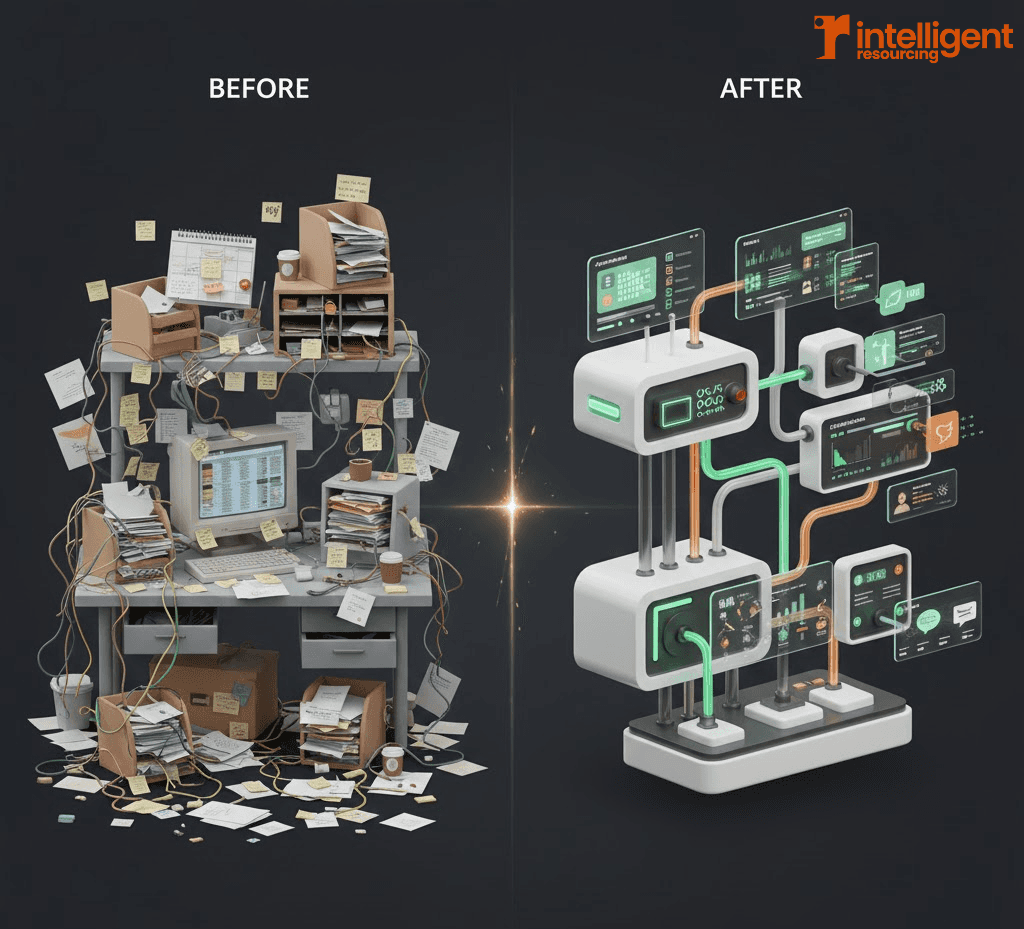

Marketing teams face more pressure than ever to scale content output across multiple channels, formats, and campaigns. But with every new asset comes the risk of message drift, duplicated effort, or missed opportunities. Traditional scheduling tools can’t respond fast enough to shifting buyer behaviour. That’s where marketing content automation comes in a system-led approach that reacts to signals in real time, keeping workflows efficient and messaging consistent.
This guide breaks down how signal‑based systems differ from calendar-led publishing, what tools support it, and how to maintain brand voice at scale.
What Is Marketing Content Automation?
Static Campaigns vs Signal-Based Systems
Marketing content automation refers to the use of intelligent workflows, enriched CRMs, and connected tools that publish, adapt, and route content based on audience behaviour and system triggers, not rigid calendars.
The old model is calendar-first: teams plan months in advance, manually scheduling content across platforms. These workflows often feel slow, disconnected, and hard to optimise. In contrast, signal-based automation systems respond in real time to buyer signals such as CRM updates, email opens, lead score changes, or product usage milestones.
Rather than pushing the same content to everyone on a fixed schedule, signal-led systems route the right content to the right person based on context.
Key Characteristics of Content Automation
Modern content automation frameworks include:
Signal triggers from CRM, lead scoring, or platform activity
Content libraries that feed dynamically into automated journeys
Routing rules to determine format, channel, and timing
Tool integrations such as Clay, HubSpot, SmartLead, and n8n
Brand consistency enforced through templates and tokens
Auto-personalisation at the message and asset level
This isn't just about publishing faster, it's about publishing smarter.
Why Traditional Content Calendars Break at Scale
The Limits of Schedule-Based Marketing
Content calendars once worked well for batch-based publishing. But they collapse under the complexity of today's marketing requirements: always-on campaigns, multiple personas, dynamic buyer journeys, and fast-changing data. According to research from the Content Marketing Institute, only 29% of B2B marketers say their organisation is very successful at managing content strategically. Much of that difficulty comes from inflexible planning methods that ignore live signals or data updates.
Static calendars don't account for timing mismatches or personalisation needs, meaning leads often receive irrelevant or mistimed messaging.
Common Bottlenecks with Manual Workflows
Manual content systems usually suffer from:
High coordination overhead between teams
Missed windows for timely content delivery
Difficulty measuring performance by signal or event
Delays in updating or adjusting assets
Inconsistent brand execution across campaigns
Without automation, it becomes hard to scale without sacrificing either speed or message control. Learn more about overcoming content automation challenges.
How Signal-Based Content Automation Works
Introduction to Signal Triggers
Signal-based automation begins with identifying triggers that indicate buyer intent or activity. These might include:
A lead entering a new lifecycle stage in your CRM
An increase in lead score
A specific product action (e.g. completed onboarding)
A reply to an outbound sequence
A form submission or page visit
Signals are then passed into your content routing system to determine what should be sent, when, and how. For a deeper understanding of signal-based marketing, explore our guide on what is signal-based marketing and how does it work.
Connecting Clay, HubSpot and SmartLead
A strong automation stack typically combines three tool types:
Clay for data enrichment and workflow branching
HubSpot for CRM updates, lifecycle tracking, and workflow triggers
SmartLead for outbound sequencing and email logic
Together, these tools allow content to be auto-selected and routed based on live data without constant oversight.
For instance, Clay can pull lead activity from multiple sources, SmartLead can trigger nurture sequences based on responses, and HubSpot can record engagement and update lifecycle stages accordingly. Learn how to build production-grade workflows in our Clay workflow guide.
Example: Routing Based on CRM Events or Lead Intent
Imagine a lead whose score increases after a pricing page visit. Clay enriches their profile, HubSpot updates their stage, and a workflow triggers a SmartLead sequence with high-intent content. If they click a CTA, a new signal is triggered, possibly routing them to a product use case video or an SDR call.
All of this happens without manual intervention, ensuring personalised touchpoints that respect brand tone and logic. See this in action with our Clay + Smartlead integration guide.
Visual Blueprint: A Modern Marketing Automation Stack
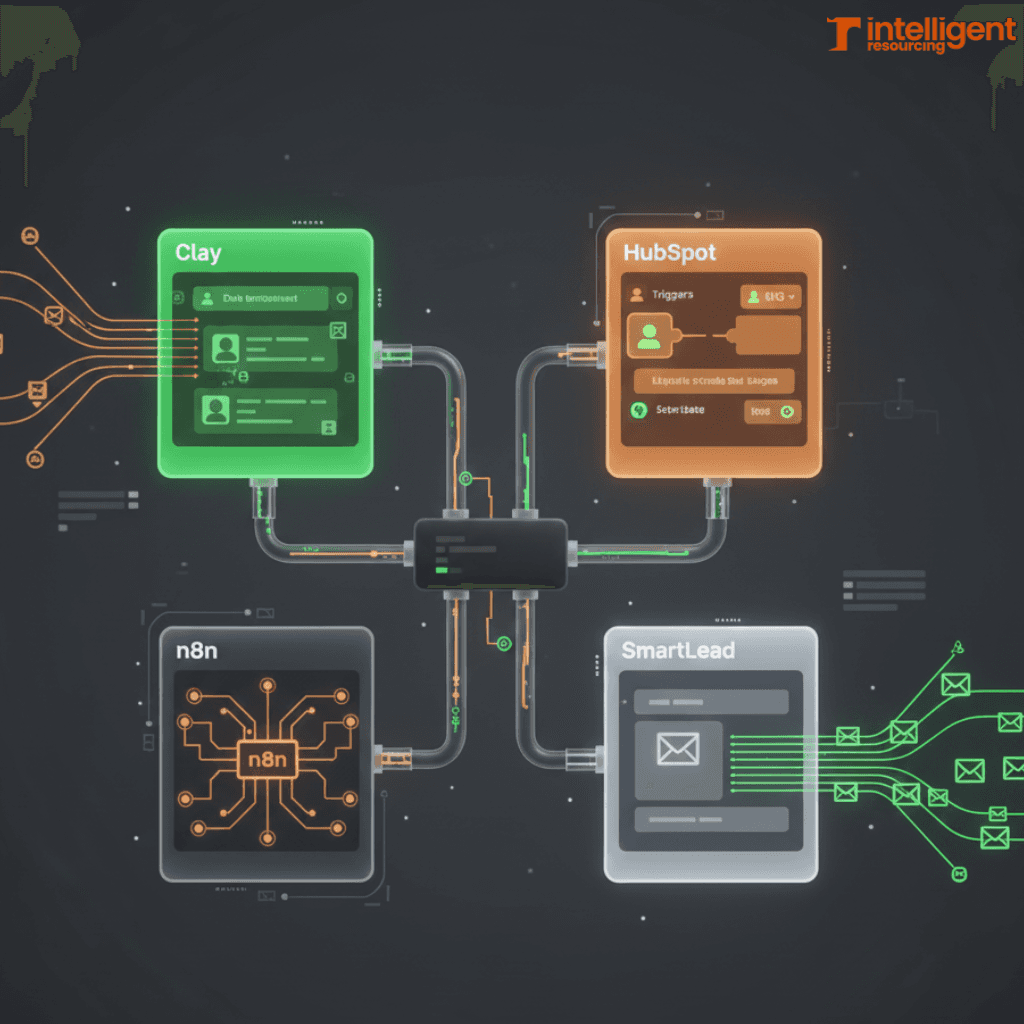
This stack forms the foundation of an intelligent automation system:
Clay pulls in third-party data and formats enriched profiles
HubSpot handles CRM logic, triggers, and content rules
SmartLead sends outbound emails based on predefined routes
n8n connects and sequences actions between tools
For comprehensive orchestration guidance, see our article on Clay & n8n API workflows.
Signal-to-Content Flow Logic Explained
At the core is a flow like this:
Trigger: CRM field change or signal is detected (e.g. lead score rise)
Branch: Workflow logic evaluates persona, funnel stage, or priority
Route: The right content asset is selected (from a library or AI-generated)
Send: Message is pushed to the channel (email, LinkedIn, ad, etc.)
Track: Responses feed back into the CRM, creating new signals
This loop creates a responsive, always-on publishing engine that scales.
Benefits of Marketing Content Automation
Time-to-Pipeline Gains
By reacting to signals immediately, teams shorten the time between intent and conversion. No more waiting weeks for a content calendar slot content is routed the moment it's relevant.
Research shows that 68% of high-performing marketing teams use real-time data to guide messaging, compared to just 32% of underperformers. Additionally, businesses see an average $5.44 return for every dollar spent on marketing automation, translating to a 544% ROI.
Consistency Without Manual Oversight
Templates, tokens, and workflow logic ensure brand voice remains intact even across thousands of personalised sends. Once your library and logic are set, content scales without risking off-brand errors.
This is especially critical for teams working across multiple GTM motions or managing regional compliance. With 77% of marketers using AI-powered automation to create personalised content, maintaining brand consistency at scale has become both more achievable and more essential.
Integration With GTM Motions
Automation works best when connected to wider GTM processes, product-led growth, outbound sequences, ABM, or event-triggered nurture. Each motion can plug into the same system, using shared logic but custom triggers. This level of integration improves alignment between sales, marketing, and operations.
To understand the role of GTM engineering in automation, read about what a GTM engineer brings to your strategy.
From Tools to Systems: What Actually Scales?
Why Tool Choice Alone Isn’t Enough
Having the right tools is only part of the equation. True scale comes from turning those tools into interconnected systems.
Many teams invest in AI-driven content generation platforms or social media content automation tools without aligning them to CRM signals or GTM workflows. The result is fragmented automation.
To move beyond disconnected tools, teams must architect workflows around signal flow, content libraries, and unified data models. According to industry research, 71% of B2B marketers use marketing automation for email marketing, but success depends on how well these tools integrate into broader business systems.
Role of GTM Engineers in Automation Setup
GTM engineers or technical marketers often lead the implementation of content routing systems. Their role involves:
Mapping signals to business events
Writing workflow logic across tools like Clay and n8n
Ensuring brand and compliance guardrails
Setting up testing and fallback rules
Without this role, it's easy to create brittle or incomplete systems that miss signals or send the wrong content. Learn more about what exactly a GTM engineer does.
Ready to Build a Content System That Actually Scales?
Most marketing teams are stuck between two bad options: manually creating content that can't keep up with demand, or automating everything and losing their brand voice in the process.
There's a third way.
What You Get With Signal-Based Content Automation:
✓ Content that responds to buyer signals in real-time – not three weeks after someone showed interest
✓ Workflows that maintain your brand voice – even across thousands of personalised messages
✓ A system built by GTM engineers – not just marketers clicking buttons in automation tools
✓ Integration that actually works – Clay, HubSpot, SmartLead, and n8n working together seamlessly
What Happens Next:
When you book a consultation, we don't start by selling you tools. We start by understanding your signals.
Signal Audit – We map your existing buyer signals and identify what's being missed
Workflow Architecture – We design the routing logic that connects signals to content
Stack Integration – We build the Clay + HubSpot + SmartLead workflows that actually scale
Brand Governance – We implement templates and validation rules that protect your voice
The result? A content engine that publishes the right message, to the right person, at exactly the right moment without manual intervention.
Let's Build Your Signal-Based Content System
Stop choosing between scale and quality. Get both.
Schedule Your Free GTM Engineering Consultation →
Working with B2B teams who are ready to move beyond scheduled posts and into signal-driven content that converts.
FAQs: Marketing Content Automation Explained
What is marketing content automation, and how is it different from content scheduling?
Marketing content automation uses real-time signals to route content automatically, while content scheduling relies on fixed timelines. Automation is dynamic and responsive, allowing personalisation at scale.Can I use automation without sacrificing brand voice or compliance?
Yes. Templates, tokens, and validation logic ensure messages follow brand rules. Automation often improves compliance by reducing human error.What tools are essential to building a signal-based content system?
Key tools include a CRM (like HubSpot), a data enrichment platform (Clay), an outbound tool (SmartLead), and a connector (n8n). These form the base of a signal-led workflow.How does Clay integrate with HubSpot and SmartLead for automated content?
Clay enriches lead profiles and feeds that data into HubSpot. Based on triggers or lead score updates, HubSpot kicks off workflows that SmartLead then uses to send personalised content.What are common pitfalls when scaling content workflows?
Teams often rely too heavily on static tools or lack signal mapping. Without clear routing logic, content may be delayed, duplicated, or misaligned with intent.Do I need a developer or GTM engineer to implement automation?
While some tools are no-code, setting up reliable, scalable signal-based systems usually requires technical expertise. A GTM engineer helps map signals, connect tools, and troubleshoot logic.
Build Your Stack and Strategy
To go deeper on building and scaling your own system-led approach, explore the related guides below:
Discover the top marketing content automation tools for 2026
Review social media content automation tools that work at scale
Build your stack with content distribution automation software
Connect workflows by integrating AI with marketing automation tools
Study marketing automation workflow examples by channel
See how dynamic content automation for personalisation boosts engagement
Measure the benefits of automating marketing content creation
Compare marketing content automation vs manual creation ROI
Read case studies of successful content automation from B2B teams