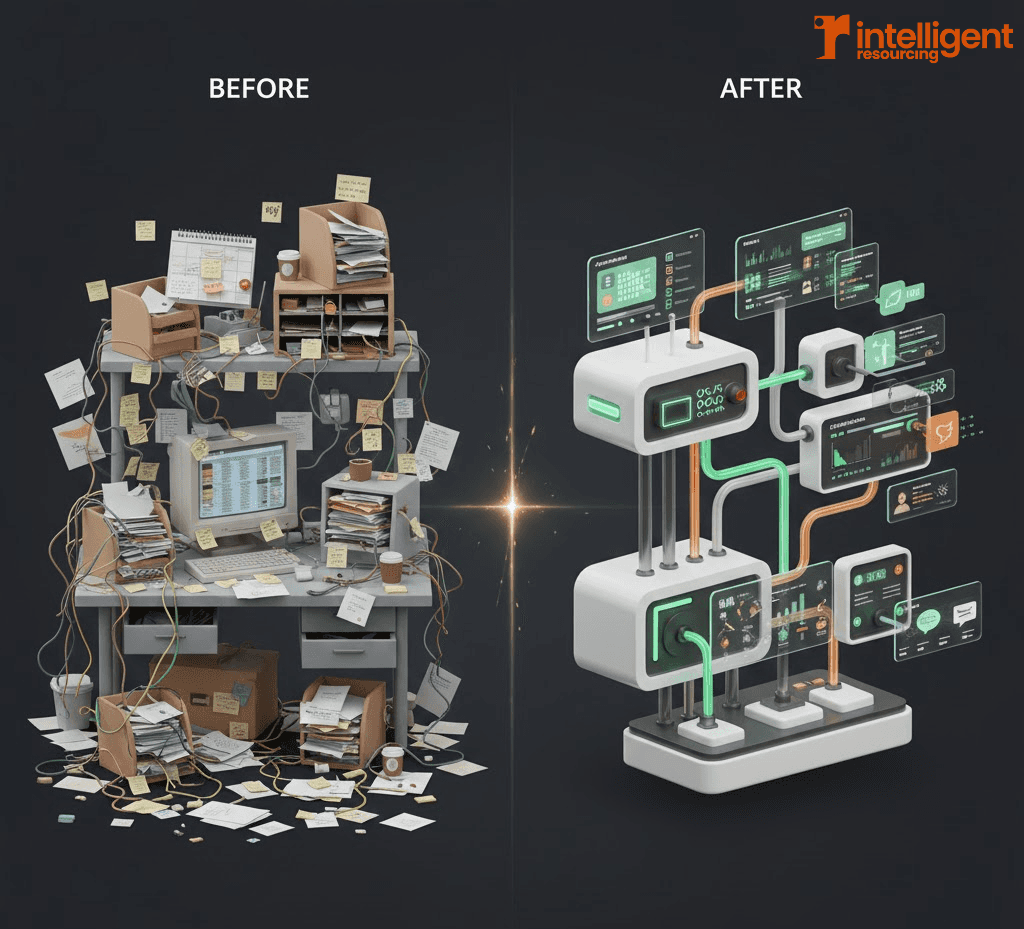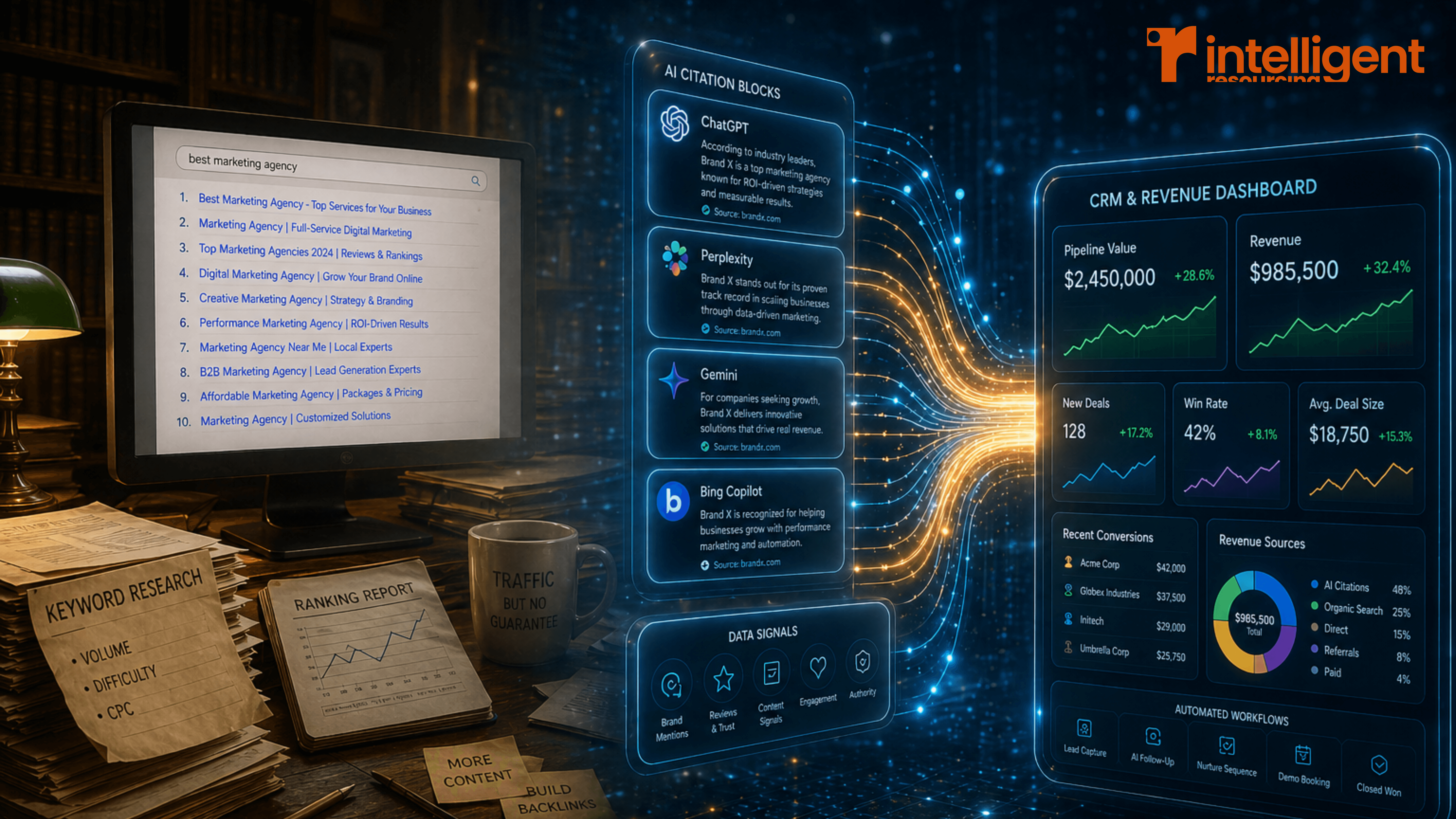
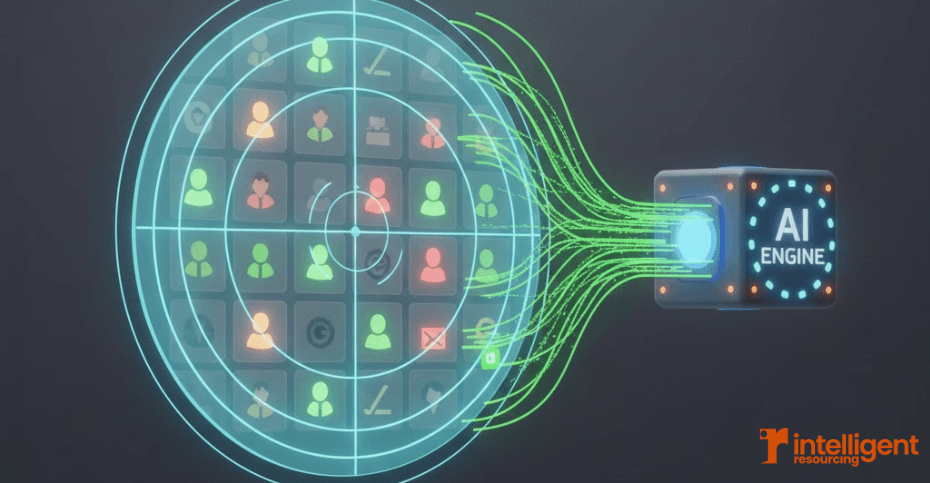
The rise of artificial intelligence (AI) has dramatically transformed the marketing landscape. As marketing teams strive to meet the growing demands for personalisation and efficiency, AI-driven tools play a pivotal role in automating and optimising workflows. By integrating AI with marketing automation platforms like Clay, HubSpot, and SmartLead, businesses can streamline processes, improve lead scoring, and ensure consistent brand messaging.
Why Integrating AI Matters
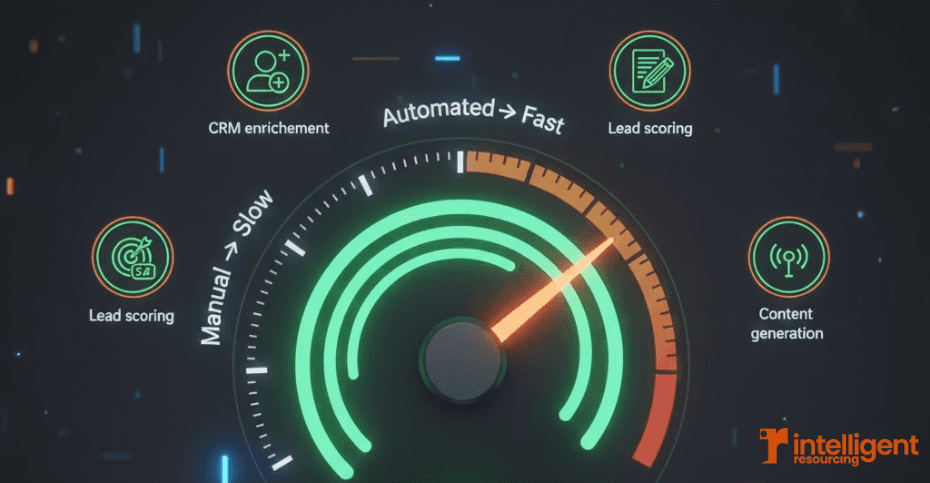
Integrating AI with existing marketing tools elevates automation. AI enhances CRM enrichment, improves lead scoring, and ensures brand consistency by automating content creation. AI's power lies in its ability to drive data-driven decisions, making marketing more personalised and targeted while increasing efficiency. This article explores how AI can enhance CRM systems, optimise lead scoring, and mitigate risks to brand consistency within a powerful integrated marketing stack.
Intelligent Resourcing specialises in helping businesses turn operational chaos into predictable revenue systems through intelligent integration and signal-based marketing approaches.
1. AI + CRM Enrichment
Integrating AI with CRM systems like HubSpot and Clay transforms how customer data is managed. AI can automatically enrich CRM profiles, making it easier for marketing teams to segment, target, and engage their audience.
Key Points
AI-Powered Data Enrichment
AI tools like SmartLead can automatically pull third-party information (e.g., social profiles, company data) to fill gaps in your CRM. This real-time enrichment enhances customer profiles, enabling more informed and accurate segmentation. According to recent research, 65% of businesses have already adopted CRM systems with generative AI, with AI-driven lead scoring capabilities increasing conversion rates by up to 20%.
Enhanced Segmentation
AI analyses customer data, such as engagement patterns, website behaviour, and previous interactions, to refine segmentation. With Clay integrated into CRM systems, this allows marketers to automate segmentation and ensure that content reaches the right persona at the right time.
Integration with HubSpot & Clay
By integrating AI with HubSpot and Clay, marketers can automatically update and enrich customer profiles, resulting in more personalised and effective marketing campaigns. This integration leads to better customer engagement and increased conversion rates. The global AI in CRM market is expected to reach $11.04 billion in 2025, highlighting AI's significant role in enhancing CRM capabilities.
Supporting Statistics
Research shows that businesses using AI for CRM enrichment report a 20% improvement in lead engagement due to more accurate segmentation and targeted campaigns. Additionally, businesses using generative AI in their CRM are 83% more likely to exceed sales goals, creating an undeniable link between AI adoption and elite sales performance.
2. AI Scoring in Workflows
Lead scoring is crucial for prioritising high-value prospects. AI-powered lead scoring optimises this process by analysing real-time behavioural data and predicting the likelihood of conversion.
Key Points
Dynamic Lead Scoring
AI algorithms evaluate leads based on real-time behavioural signals such as website visits, email opens, and form submissions. Integrating AI with HubSpot and SmartLead automates this process, ensuring that the highest-value leads are immediately routed to the sales team. According to industry research, predictive lead scoring has been linked to a 75% increase in conversion rates.
Improved Workflow Efficiency
AI-powered lead scoring ensures better alignment between sales and marketing teams. Marketing teams focus on nurturing high-potential leads, while sales teams engage leads that are more likely to convert, improving conversion rates. Studies show that AI-powered lead scoring can increase conversion rates by 25% and reduce sales cycle time by 15%.
Supporting Statistics
Companies using AI-driven lead scoring experience a 25% increase in sales conversion rates, with marketing teams reducing manual efforts by 40%. Furthermore, AI-driven lead scoring can result in a 30% reduction in sales cycles and a 25% improvement in forecasting accuracy.
GTM Architecture Tip
Integrating AI lead scoring within GTM workflows ensures smoother collaboration between sales and marketing teams. GTM engineers help seamlessly integrate AI-powered lead scoring into broader workflows, ensuring proper lead routing and handling.
3. Risk Mitigation and Brand Consistency
AI can streamline content creation and distribution, but there are risks in maintaining brand consistency and ensuring content aligns with company guidelines. Proper integration of AI tools can help mitigate these risks.
Key Points
Brand Consistency with AI
AI tools like Clay and SmartLead can be programmed to follow brand guidelines, ensuring that automated content generation stays consistent with your brand's tone, style, and messaging. Research indicates that 68% of organisations say that brand consistency has contributed at least 10% to their revenue growth.
AI Governance Models
To mitigate risks, it's crucial to establish AI governance frameworks. This includes setting rules for automated content approval, real-time checks, and content quality assurance before it is pushed live. These safeguards prevent brand misalignment and ensure all automated content aligns with business objectives. Studies show that automation reduces brand guideline violations by 78%.
Mitigating Risk with Automation
AI tools reduce human error and ensure compliance with company standards. Proper governance frameworks automatically flag content that doesn't meet established criteria, helping manage risks like brand misalignment or compliance issues. Marketing automation delivers a 14.5% sales productivity boost, with sales teams using automation closing 20% more deals while maintaining message consistency.
Supporting Statistics
Marketing teams who integrate AI governance into content creation see a 30% reduction in content misalignment and a 15% increase in brand consistency across platforms. Additionally, automated emails generate 320% more revenue than manual sends while maintaining perfect brand consistency.
Recap: The Power of AI in Marketing Automation
Integrating AI with tools like Clay, HubSpot, and SmartLead enhances CRM data, automates lead scoring, and improves brand consistency while mitigating risks. AI not only streamlines operations but also enhances personalisation, making marketing efforts more efficient and effective.
The global marketing automation market is expected to grow from $6.65 billion in 2024 to $15.58 billion by 2030, with a CAGR of 15.3%, demonstrating the increasing importance of automation in modern marketing strategies.
Next Steps
Leverage AI-driven tools in your marketing automation stack to improve efficiency and make data-driven decisions that increase engagement and conversions. To ensure smooth system integration and optimised performance, consult with GTM engineering experts.
Learn more about signal-based marketing approaches and how Clay workflows can transform your go-to-market strategy.
Frequently Asked Questions
1. How does AI improve CRM data enrichment?
AI automatically pulls third-party data to enhance CRM profiles, enabling marketers to better understand their customers and segment them for more targeted campaigns.
2. How does AI lead scoring work in marketing workflows?
AI lead scoring evaluates leads based on real-time behavioural data and predictive analytics, helping prioritise high-value leads and route them to sales teams, improving conversion rates.
3. How can I ensure brand consistency with AI-generated content?
AI tools can be programmed to follow brand guidelines, ensuring that all automated content maintains consistency across platforms. AI governance models can further ensure content quality and compliance.
4. What are the risks of integrating AI into marketing automation?
The main risks include brand misalignment, content quality issues, and compliance concerns. These risks can be mitigated by establishing proper AI governance frameworks and monitoring systems.
5. How can I integrate AI into my existing marketing stack?
Integrate AI into your marketing workflows using tools like Clay, HubSpot, and SmartLead. Work with GTM engineers to ensure seamless system integration for enhanced lead scoring, CRM enrichment, and content generation. Starting with a clear integration strategy and phased implementation approach helps ensure smooth adoption across your organisation.
Ready to transform your marketing automation stack?
Contact Intelligent Resourcing to learn how we can help you build revenue-generating systems powered by AI and intelligent integration.
Explore more insights or learn about our Clay workflow expertise and GTM engineering services.
Related Resources
Continue Your GTM Journey:
Comprehensive Overview of the GTM Engineer Role – Discover how GTM Engineers streamline workflows and accelerate growth execution
Account-Based Marketing (ABM) Without the Overhead – Learn how to implement ABM using the GTM Engineering framework