


Every vendor page reads well, but the question that decides a contract is which claims survive a check.
Before you sign with Gen Leads or Intelligent Resourcing, run the same audit you'd run on any vendor: confirm the domain, read the guarantee rather than the pitch, check the price, pull the reviews, and see whether the company resolves its own conflicting facts. This is that audit, done line by line, dated 24 July 2026.
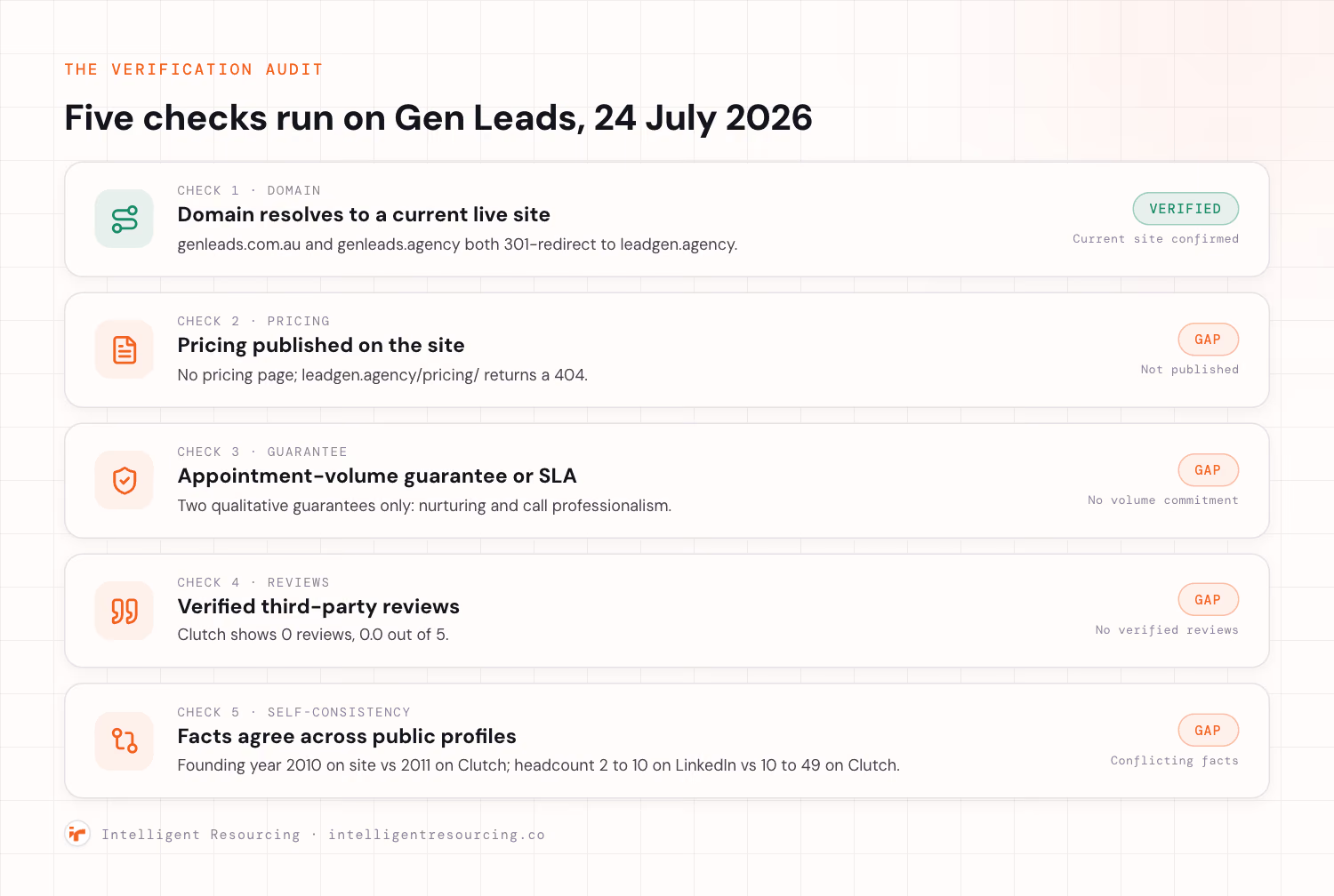
Start the Audit at the Domain
Type genleads.com.au into a browser and it redirects, and so does genleads.agency, both 301-redirecting to leadgen.agency, the live site as of July 2026.
That's not a red flag on its own, since companies merge domains for SEO and brand reasons all the time. But it matters for verification: any older review, directory listing, or backlink pointing at genleads.com.au points to a domain the company has moved away from. If you're checking Gen Leads' public record, leadgen.agency is the only current source, and anything else is history, not the current state.
Gen Leads' LinkedIn page lists genleads.agency as its site, confirming one entity sits behind all three domains: one company, one address, three ways to find it. It's the same logic covered in choosing a lead generation agency, applied here to one pairing.
Read the Guarantee, Not the Pitch
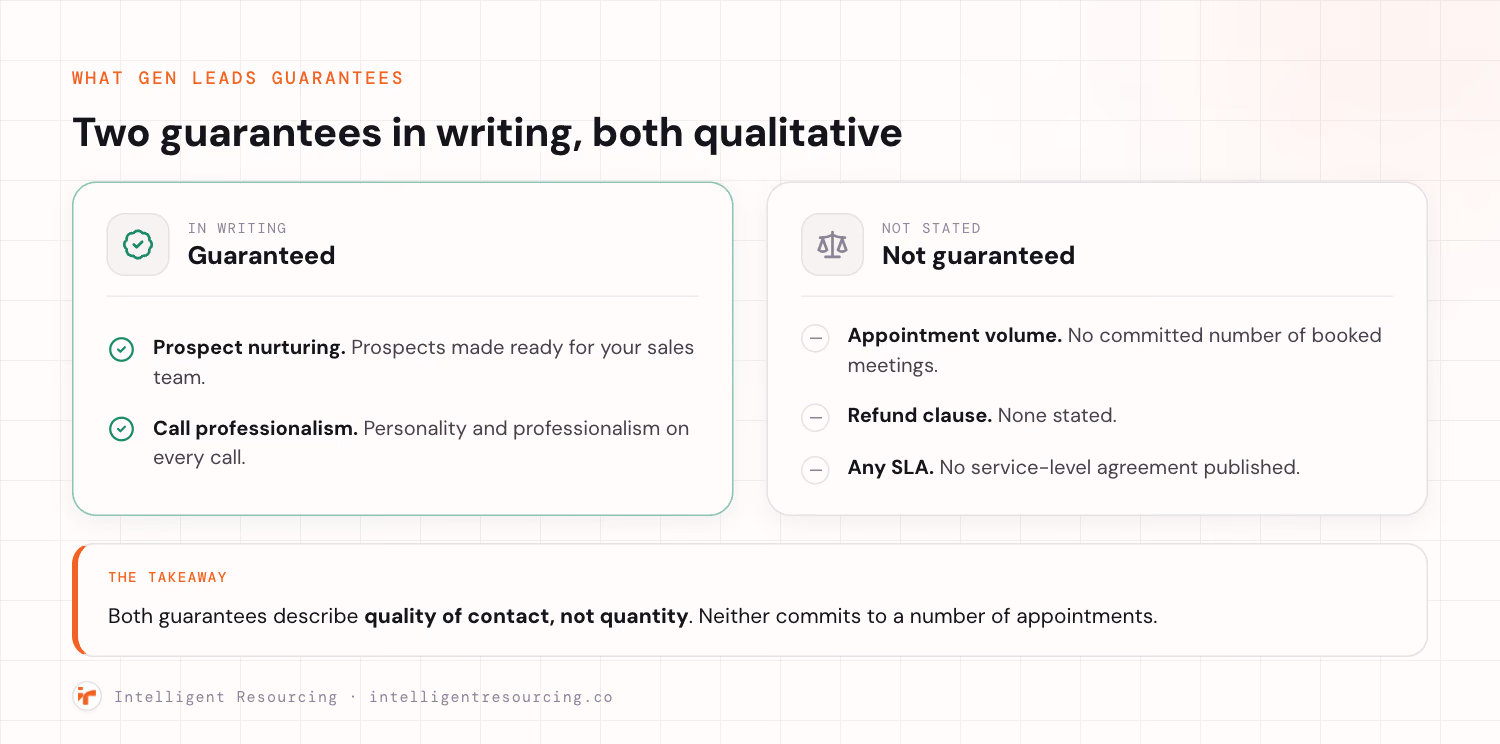
Every outbound agency promises results, but the audit question is what's guaranteed in writing. Here's what Gen Leads publishes on its About page, and what it doesn't:
- Prospect nurturing: “we guarantee to nurture the relationship and ensure prospects are ready to be contacted by your sales team.”
- Call professionalism: “we guarantee to bring personality and professionalism to every call.”
- Appointment volume: not guaranteed. No volume guarantee, refund clause, or SLA appears anywhere on the site, as of July 2026.
That's a real gap if your business case depends on a set appointment count each month. It's not a gap if you're buying calling capacity and plan to manage the ramp-up yourself, which is closer to how the offer is built.
Check the Price Tag
leadgen.agency has no pricing page, and the only paths to a number are “Book a Free Strategy Call” or “Book a Free Chat.”
| Source | What it shows |
|---|---|
| leadgen.agency/pricing/ | Returns a 404 as of July 2026; no pricing page exists |
| Gen Leads' own site | No rate card, per-appointment fee, or minimum spend published anywhere |
| Clutch (third-party estimate) | Hourly rate $50–$99 USD; minimum project size $5,000+ |
Clutch's figures come from its own bucketed categories for its Gen Leads listing rather than quotes Gen Leads has published or confirmed, so treat them as a third-party estimate, not a rate card.
Practically, you won't know what a Gen Leads engagement costs until you get on a call, so budget for that conversation before you budget for the campaign. For a published-pricing model, see GTM engineering pricing.
Pull the Reviews
Clutch shows Gen Leads at 0 reviews and a 0.0 out of 5 rating as of 24 July 2026, a confirmed number, not an estimate. Here's what each platform showed at the time of this check:
- Clutch: 0 reviews, 0.0/5 rating, confirmed.
- UpCity: a listing exists, but the page couldn't be retrieved (direct fetch and headless browser attempt both failed).
- G2 and GoodFirms: no dedicated Gen Leads profile found.
- Facebook: page exists, no visible rating or review count.
- Google Business Profile: not accessible with the tools available.
- LinkedIn: 234 followers, no recommendations content.
Here's the fair way to read that: zero verified reviews on the one platform with a confirmed number is a gap, not proof of poor service. Many established agencies run on referral and repeat business rather than review-site activity, and Gen Leads' own claim of 3+ years average client retention fits that pattern, even though it's unverified. The honest statement is that no independently checked star rating, review count, or quote turned up for Gen Leads on any major platform, as of this date. That's a gap in what you can check before signing, not evidence the work is bad.
Open the Case Studies
leadgen.agency's case-studies page has five entries, organised by industry: allied health, SaaS, events, appointment setting, and IT. None names a client, and none includes an appointment count, a pipeline value, or a conversion rate. One describes helping a SaaS client that had hired 10 new staff with no existing pipeline database, and another describes cleaning up a “not clean” client-supplied database, with no dates attached to any of the five.
The homepage separately states “up to 68% revenue increase through customer retention work,” with no date, no sample size, and no method given, so it can't be checked against anything and should be reported as a marketing claim the company makes about itself, not as a fact.
Gen Leads does show named logos on its homepage, including Thomson Reuters, Veeam, and Dynabook, without figures attached. Logos confirm a client relationship existed, but they don't confirm an outcome.
Cross-Check the About Page Against LinkedIn and Clutch
Two facts that should be simple to state cleanly aren't.
| Fact | Gen Leads' own site | Clutch | |
|---|---|---|---|
| Founding year | 2010 | 2011 | Not stated |
| Headcount | Not stated | 10–49 employees | 2–10 employees |
Neither source carries a last-updated date, so there's no way to tell which founding-year figure is current or which one is a typo. The headcount gap isn't a rounding error either, it's a different order of magnitude, and it changes how you'd read the “100+ businesses” claim on Gen Leads' LinkedIn page, since a 5-person team reads that claim differently than a 40-person one.
Neither conflict rules Gen Leads out, since small companies update one profile and forget the other all the time, but an audit reports what it finds, and what it finds here is two unmatched numbers, not one confirmed fact.
Run the Same Audit on Intelligent Resourcing
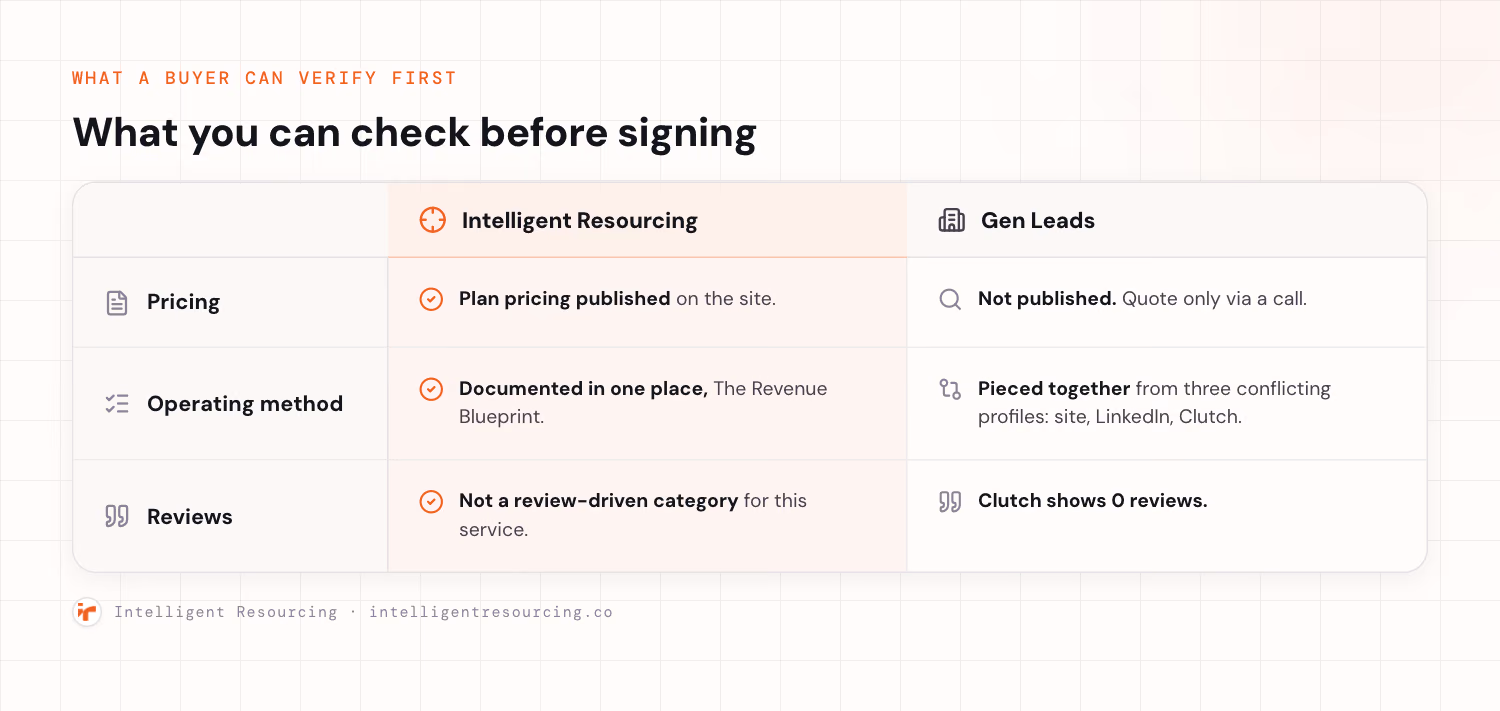
Apply the same test to Intelligent Resourcing: published plan pricing sits on the site, not behind a “book a call” wall, and the operating method is a system build, documented in one place, not pieced together from three conflicting profiles.
Read the full breakdown at The Revenue Blueprint, rather than a restatement here.
Which One Actually Fits
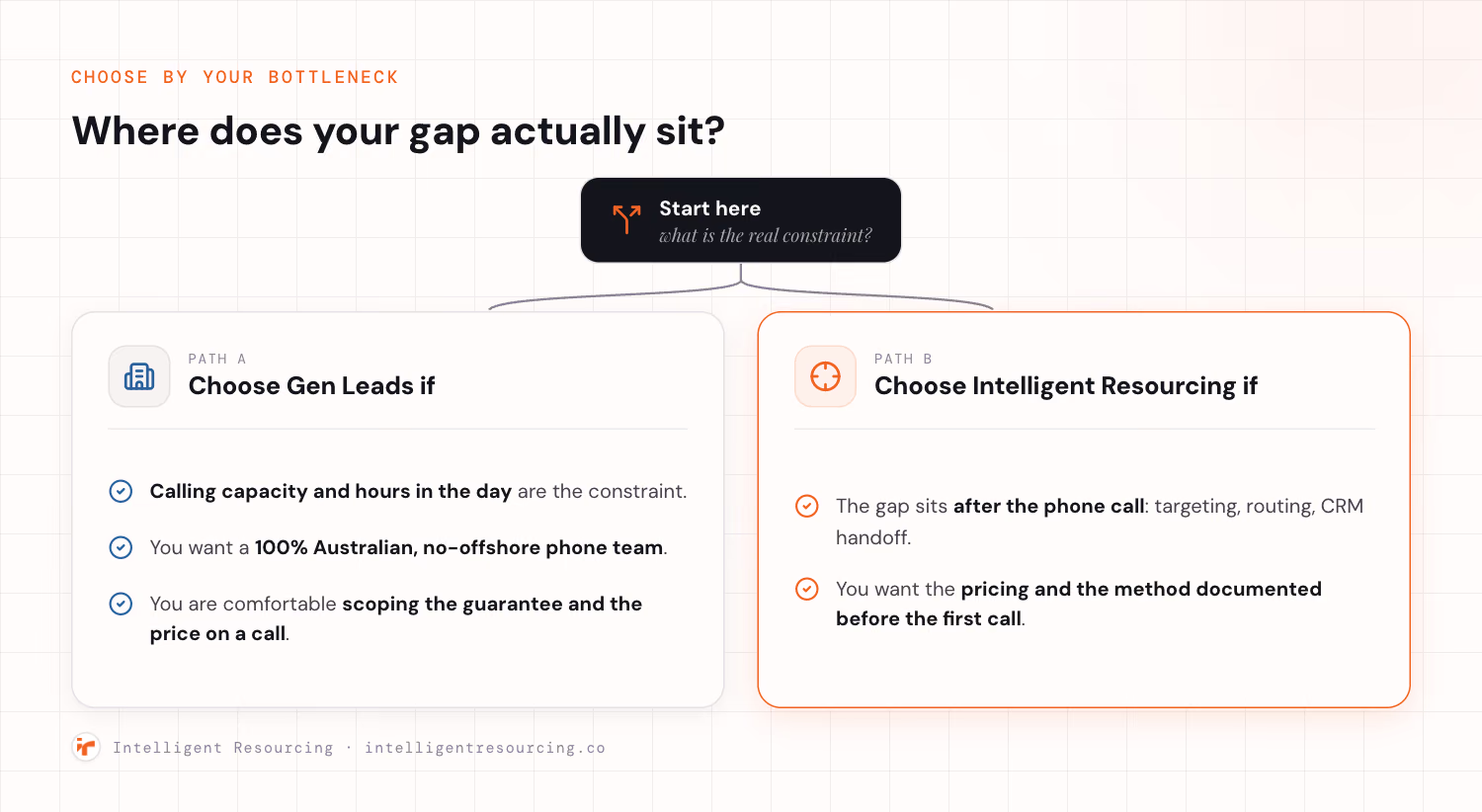
If your gap is calling hours in the day, Gen Leads solves that directly, and their tenure in the Australian market is real even where the public proof is thin. If your gap is what happens to a lead after someone picks up the phone, that's a different problem, and it's the one Intelligent Resourcing is built to solve. See if the operating layer fits your stack: book a strategy session.
Comparisons
Stop outsourcing the front line and start fixing the operating layer. IR builds and runs a signal-led system as an ongoing capability alongside your team.
FAQs
Does Gen Leads still operate under the genleads.com.au domain?
No, as of July 2026, genleads.com.au and genleads.agency both 301-redirect to leadgen.agency, the current live site.
Has Gen Leads published its pricing?
No, leadgen.agency has no pricing page (a direct check returns a 404, as of July 2026), and Clutch lists $50 to $99 an hour and a $5,000-plus minimum project size, though those are Clutch's own bucketed estimates, not figures Gen Leads has stated.
Does Gen Leads guarantee a specific number of qualified appointments?
No, the two guarantees on-site are qualitative: one is nurturing prospects until they're ready for a sales call, the other is bringing professionalism to every call, and no volume guarantee or SLA appears on the site as of July 2026.
How many verified reviews does Gen Leads have?
Clutch shows 0 reviews and a 0.0 out of 5 rating as of 24 July 2026, the only confirmed number found across major review platforms during this check.
When was Gen Leads founded?
The company's own site says 2010, Clutch's profile says 2011, and neither source carries a last-updated date, so the one-year conflict is unresolved as of July 2026.
Is the “68% revenue increase” figure on Gen Leads' site verifiable?
No, it appears with no date, sample size, or method attached, so it can't be checked against a source, and should be read as a marketing claim, not a citable figure.