

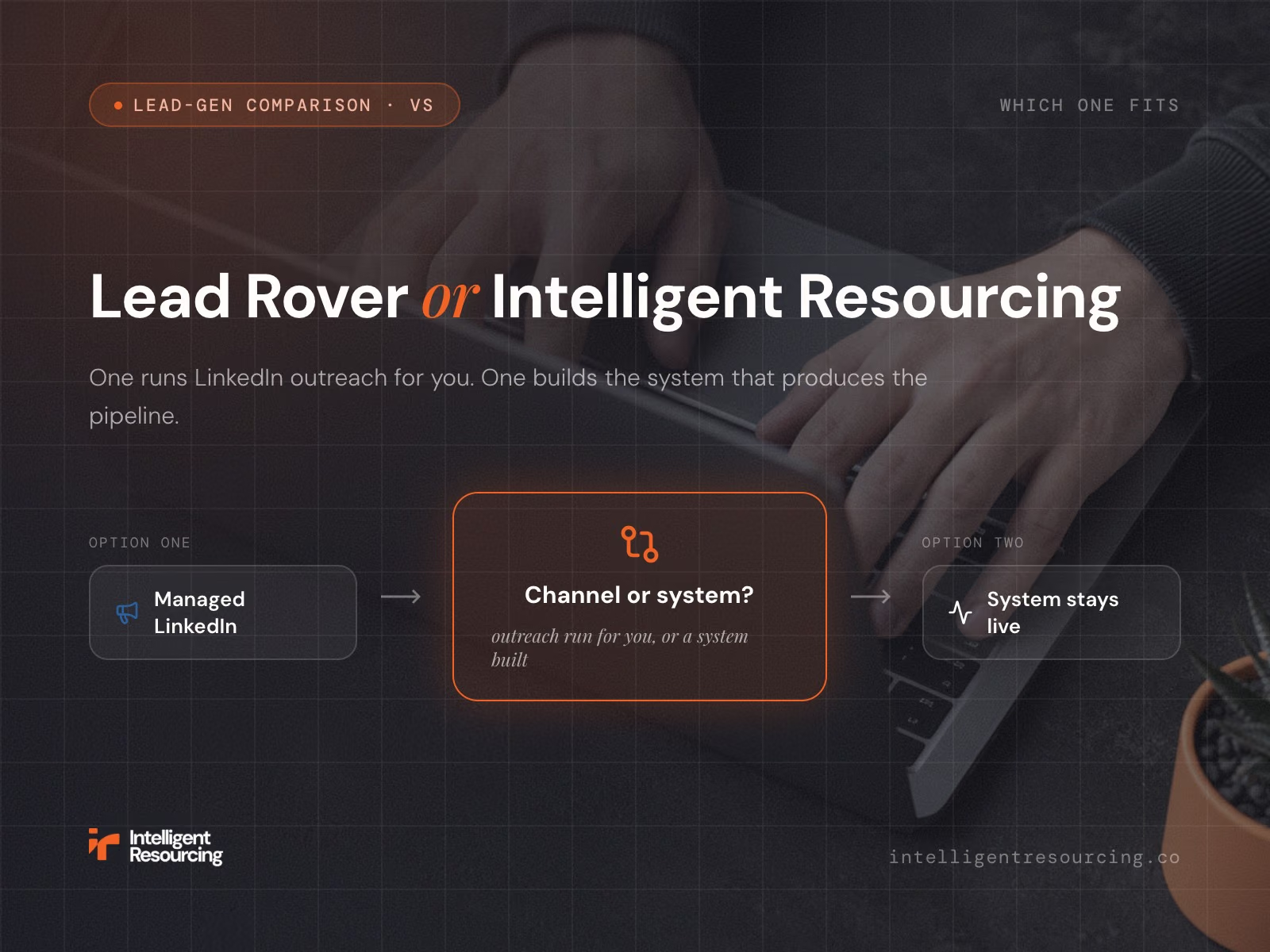
The core decision is no longer only about who can book more meetings. It is whether you want a vendor to run one outreach channel for you, or a broader revenue system built inside your own stack. Lead Rover is a fully-managed LinkedIn marketing-automation service; Intelligent Resourcing is a GTM engineering partner that builds signal-led workflows, Clay-powered systems, and CRM-connected automation that sit in your stack and keep running over time.
That difference matters because buyers now complete most of their research before they ever speak to sales. One analysis of buyer behaviour puts the anonymous share of that research at roughly 70%. Buyers also reward timing and relevance over interruption. That puts pressure on growth teams to improve data flow, follow-up, and system quality, not just outsource more activity into a single channel.
Why compare these two models in 2026?
Industry shifts in B2B
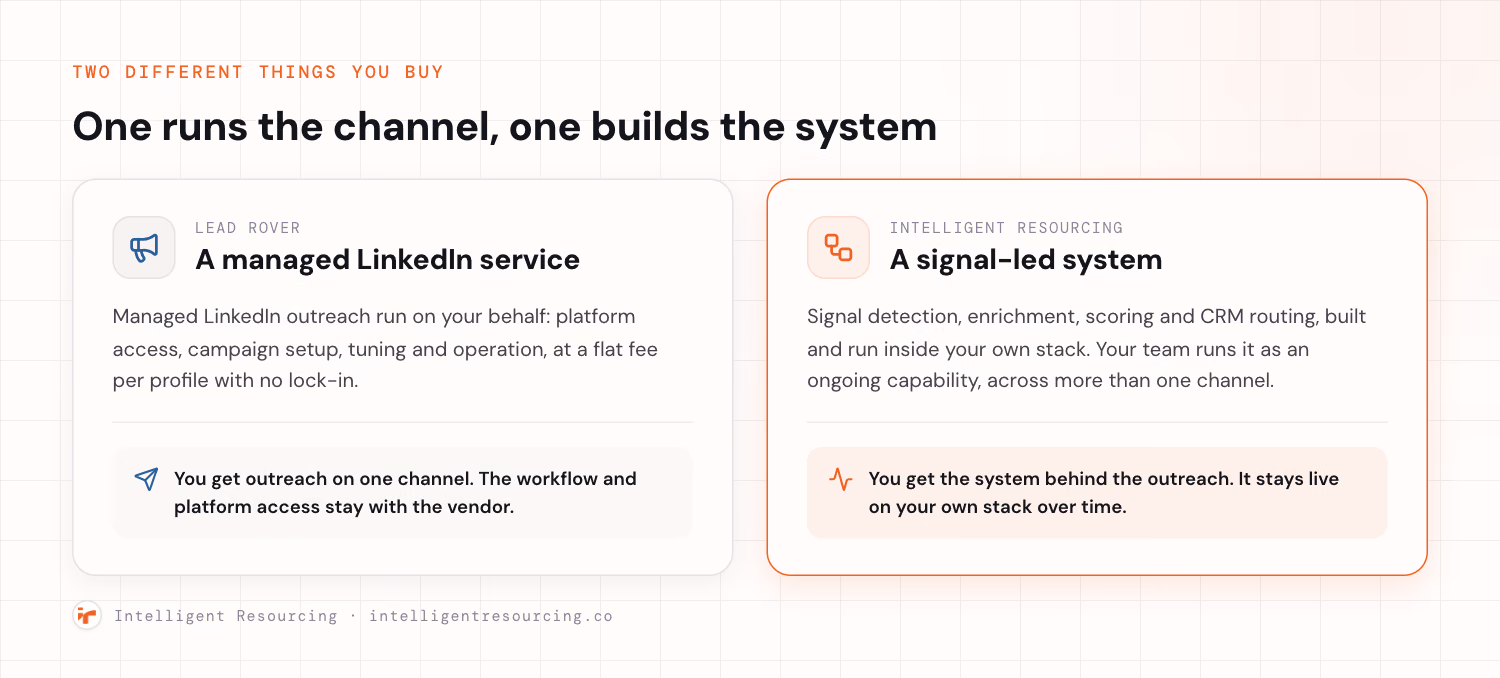
B2B teams are moving from static lists toward systems that use signals, enrichment, routing, and automation to decide who to contact and when. Intelligent Resourcing is built around that model, with Clay workflows, CRM routing, and RevOps support. Lead Rover sits on a narrower part of the stack, offering a done-for-you LinkedIn automation service. That works well if LinkedIn outreach is the main need, but it is a different offer from building a broader revenue system.
Channel dependence and where the system lives
This is the key difference. Lead Rover offers speed and ease through a managed LinkedIn channel. Intelligent Resourcing is built around a system that lives inside your stack and keeps running over time. One is mainly outsourced execution; the other is workflow design, data control, and a process the team keeps improving over time.
Why the difference matters
More B2B teams now want lead generation tied directly to CRM hygiene, routing logic, and the sales process. They want it inside the business, not sitting outside as a separate activity layer. Lead Rover is the simpler, channel-led option; Intelligent Resourcing is the broader, system-led option. The real decision is not who generates activity faster. It is whether a managed outreach service fits better than a revenue system that keeps working inside your business.
Side-by-side comparison
| Category | Intelligent Resourcing | Lead Rover | Notable difference |
|---|---|---|---|
| Core model | Signal-led GTM system builder | Managed LinkedIn automation service | IR builds the layer growth runs on; Lead Rover runs one managed channel |
| Channel focus | Multi-signal workflows tied to the CRM and sequencers | LinkedIn outreach and automation | IR is wider than one channel; Lead Rover is LinkedIn-specific |
| Where the system lives | Built inside your stack and run as an ongoing capability | A vendor-managed service layer | IR keeps the system inside the business; Lead Rover keeps it with the vendor |
| CRM integration | CRM-native sync, scoring, routing, and n8n workflows | Centred on appointment flow, lighter on workflow depth | IR is clearer on CRM-native workflow design |
| Automation depth | Clay workflows, signal verification, lead scoring, routing | Managed LinkedIn automation with campaign setup and tuning | Both automate, but at different levels of the growth system |
| Pricing posture | Bespoke build plus workflow and execution cost | Flat managed-service fee per LinkedIn profile, no contract | IR behaves like a built system plus people; Lead Rover like a recurring service |
| Best fit | Teams wanting a durable, signal-led revenue system | Teams wanting outsourced LinkedIn execution quickly | The decision is system versus single-channel service |
Intelligent Resourcing
What it does well
It is strongest when the buyer wants more than outsourced lead flow. Its Clay workflow offer identifies, enriches, scores, and routes leads directly into your CRM and sequencer, with a focus on data quality, automation stability, and measurable outcomes. The model is broader than LinkedIn alone: the work around Clay, CRM automation, and GTM workflows connects multiple inputs into one system, not a single channel. Intelligent Resourcing's lead generation is built so the workflows live inside the client's own stack and the internal team can run them directly, which means the system keeps improving in the business rather than resetting with each vendor invoice.
Where it may fall short
It is not the strongest fit for a buyer who wants a fully hands-off service with very little hands-on work. The model asks the client to think about workflow design, CRM logic, and routing, and the first results take longer than simply switching a managed channel on. It suits B2B growth teams, SaaS companies, and firms with a defined ICP more naturally than a business that just wants a single channel activated quickly.
Best fit when
- you want a signal-led system that keeps running inside your stack, not detached outreach
- you need CRM-connected lead generation rather than a single managed channel
- you want broader signal-led capability beyond LinkedIn alone
- you are willing to invest in workflow design for longer-term control
Lead Rover
What it does well
Lead Rover is strongest when a business wants simplicity. It is a fully-managed LinkedIn marketing-automation service: its terms describe a free setup period and ongoing management, including platform access, campaign setup, tuning, and operation on the client's behalf, at a flat fee per LinkedIn profile with no lock-in contract. That is a clear offer for teams that want LinkedIn outreach done for them without building in-house workflows first. If the need right now is channel-specific execution rather than revenue-system design, it is easier to understand, easier to buy, and faster to launch than a broader systems build.
Where it may fall short
The main gap is scope: it is tightly centred on LinkedIn automation, which makes it narrower than a broader GTM system. The public offer does not point to that depth if a business needs CRM-native workflow design, multi-signal orchestration, or a growth engine beyond one managed channel.
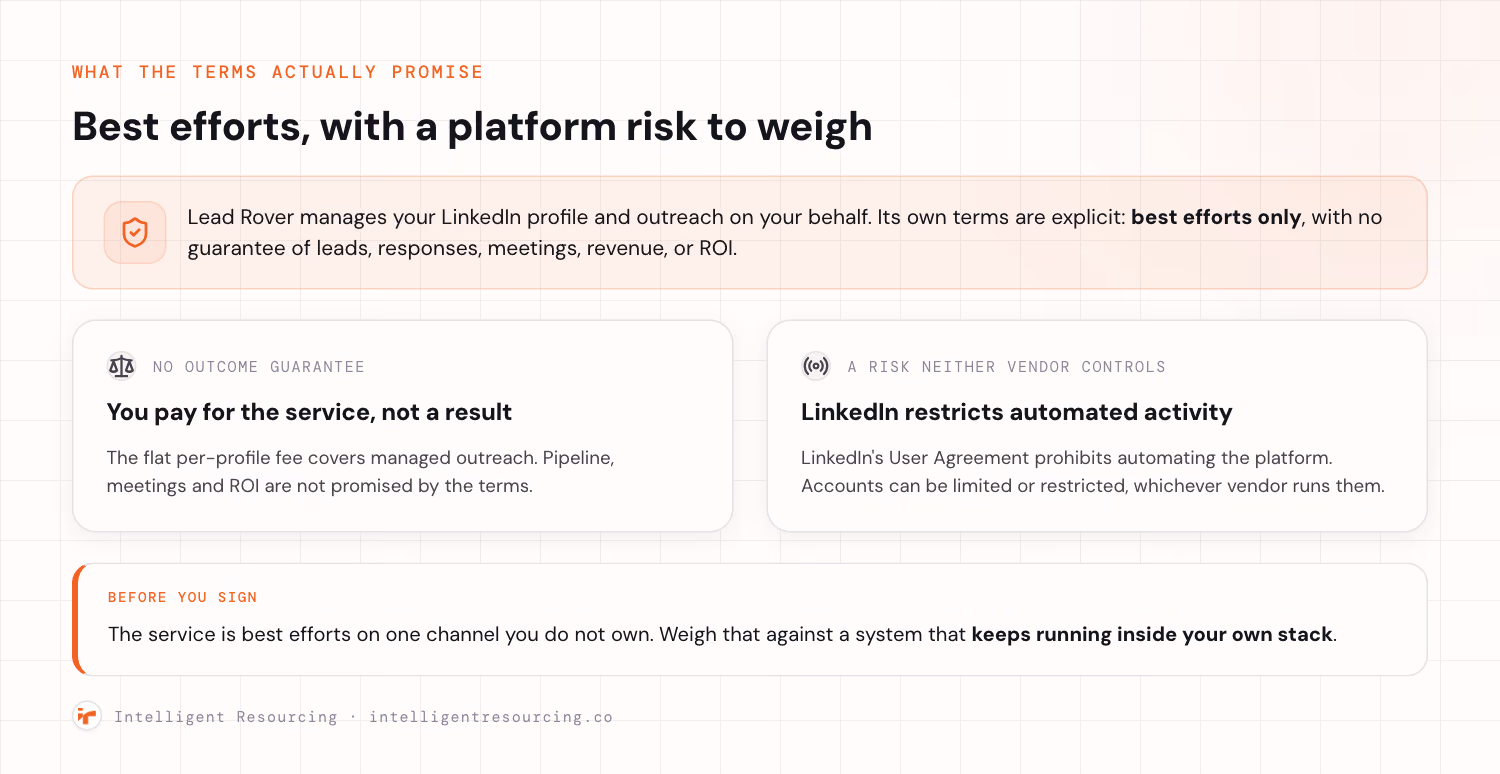
There is also a platform risk neither vendor controls. LinkedIn's own account restriction policy states that automating activity on its platform violates the User Agreement, which can mean a temporary or permanent restriction, regardless of which automation vendor manages the account.
The other gap is that the value is rented, not owned. The service is managed for the client rather than built inside their stack, so when the deal ends, the working layer does not stay with the business the way an in-house system would. Its terms are also clear on this: best efforts only, with no guarantee of leads, responses, meetings, revenue, or ROI. That matters when comparing channel ease with a built system.
Best fit when
- you want a managed LinkedIn outreach service
- you need quick outsourced execution
- you do not want to build in-house systems yet
- your need is channel-specific rather than system-wide
Pricing, scalability, and support
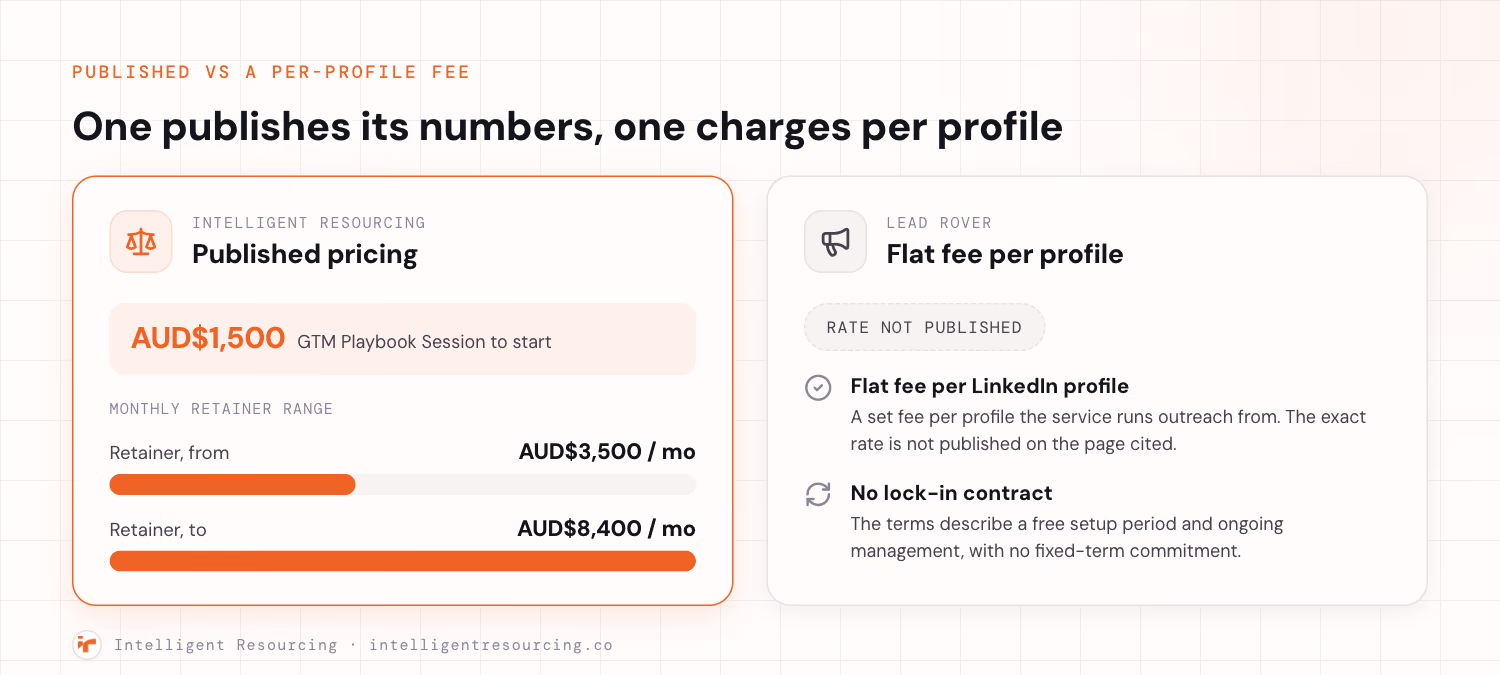
The comparison is clearest through how each model scales. Intelligent Resourcing scales like a built system: system design, workflow logic, and embedded talent, with a capability that lives in the working layer of the business, so growth comes from better workflows and automation rather than more outsourced hours. Lead Rover scales like a recurring managed service: setup, campaign launch, tuning, and ongoing management for LinkedIn automation, which is fast to consume but tied to continued vendor delivery, at a flat fee per profile. Support differs the same way: one is built around teamwork and a system that transfers into the team, the other around outsourcing the work. One asks more of your in-house team; the other asks less.
Which should you choose?
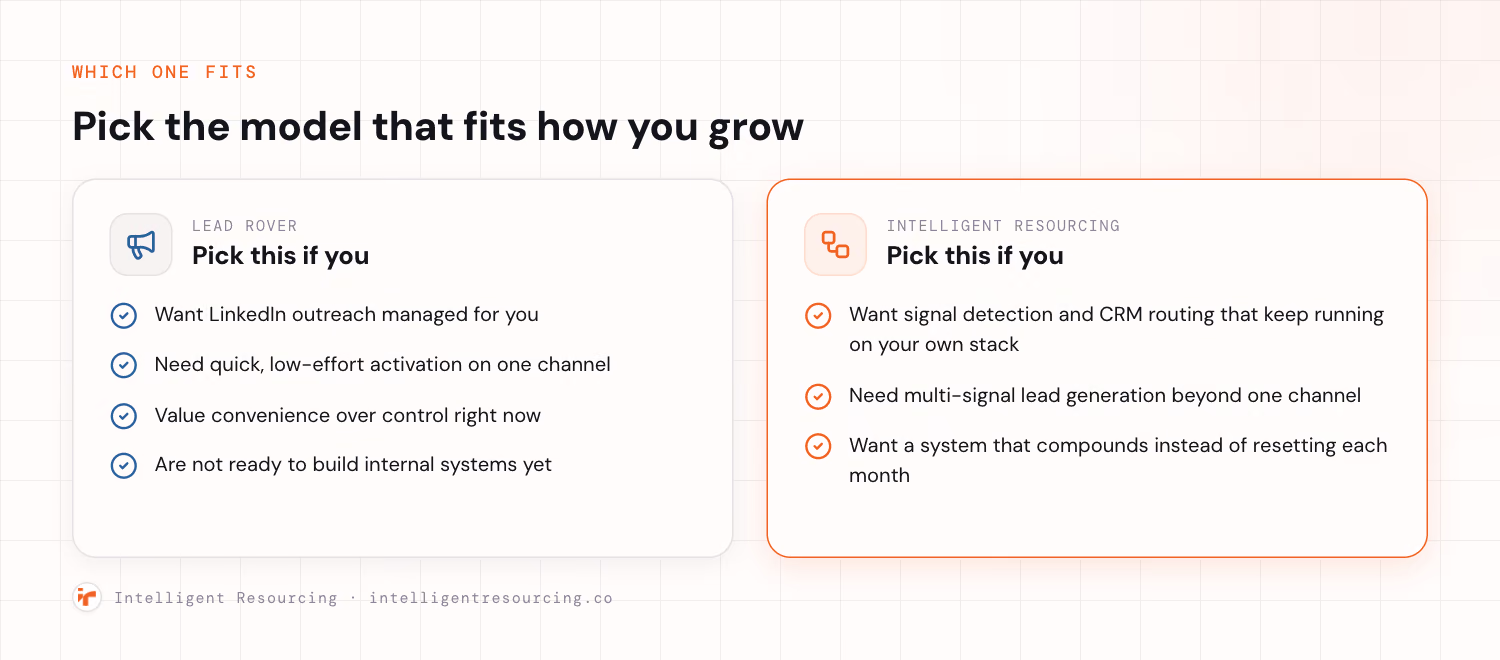
This is not a quality contest, since the two solve different problems. The right answer is the one that matches where your growth is breaking, and whether you need a single channel run for you or a system that keeps working.
Choose Lead Rover if your need right now is a managed LinkedIn outreach service handled for you. It is the stronger pick when ease matters more than control, when LinkedIn is the main channel you want to activate, and when you are not ready to build the underlying working layer yet. The flat per-profile fee and no lock-in make that choice easier.
Choose Intelligent Resourcing if you need the system behind the outreach, not just another channel running on top of it. Rather than renting outreach capacity, Intelligent Resourcing engineers the pipeline system itself, from signal detection to CRM routing. See The Revenue Blueprint for the full operating model.
To see the wider field first, read the best Lead Rover alternatives, then talk to the team about a system that books qualified meetings.
Comparisons
Intelligent Resourcing designs GTM engineering systems, Clay workflows, CRM automation, and signal-led routing, that sit inside your stack and sharpen over time.
FAQs
Is Lead Rover a platform or a managed service?
It is best understood as a managed service. It provides a done-for-you LinkedIn lead generation and automation service, covering setup, tuning, and ongoing operation on the client's behalf, at a flat fee per profile.
What happens if Lead Rover's LinkedIn outreach gets flagged or restricted?
Lead Rover's terms describe managing your LinkedIn profile and outreach on your behalf, but they do not extend a guarantee against platform restrictions, since LinkedIn sets its own automation rules. The same terms are explicit that the service is best efforts only, with no guarantee of leads, responses, meetings, revenue, or ROI. That risk sits with the client, no matter which automation vendor manages the account.
Is LinkedIn automation enough for Australian B2B growth in 2026?
For some businesses, yes. A managed LinkedIn service can work well if LinkedIn is your main route to market and you need it running fast. LinkedIn automation alone is usually not enough if you need stronger CRM control, broader signal capture, and a system that does not rely on one managed channel.
Which option gives more control over CRM and data?
Intelligent Resourcing, because its model builds the system inside the client's stack, where the team can run and keep improving CRM-connected workflows. Lead Rover's terms describe managing your LinkedIn profile and campaigns on your behalf instead, at a flat per-profile fee. That is easy, but it keeps the workflow with the vendor rather than inside your own CRM.
Which option is better for SaaS or tech-enabled B2B firms?
For most SaaS or tech-enabled B2B firms, Intelligent Resourcing is likely the stronger fit because its offer is built around systems, signals, automation, and CRM workflows. Lead Rover is more naturally suited to teams that want LinkedIn-specific outreach managed for them.
Does Intelligent Resourcing replace an SDR team or support one?
It can do both, depending on the design. The model spans embedded talent, Clay workflows, CRM-connected automation, and signal routing, so systems and people work together rather than a simple one-for-one replacement. Lead Rover, by contrast, does not touch your CRM or your team structure; it runs a LinkedIn channel on your behalf instead, for a flat per-profile fee.