

Does more leads really mean more revenue?
Every sales leader with a slow pipeline has the same instinct: buy more leads, run more sequences, push more contacts into the CRM. The assumption is simple. If you contact enough accounts, some of them will be ready to buy. It makes sense operationally, which is why done-for-you lead gen services stay appealing. They promise speed, execution and scale without the operational burden.
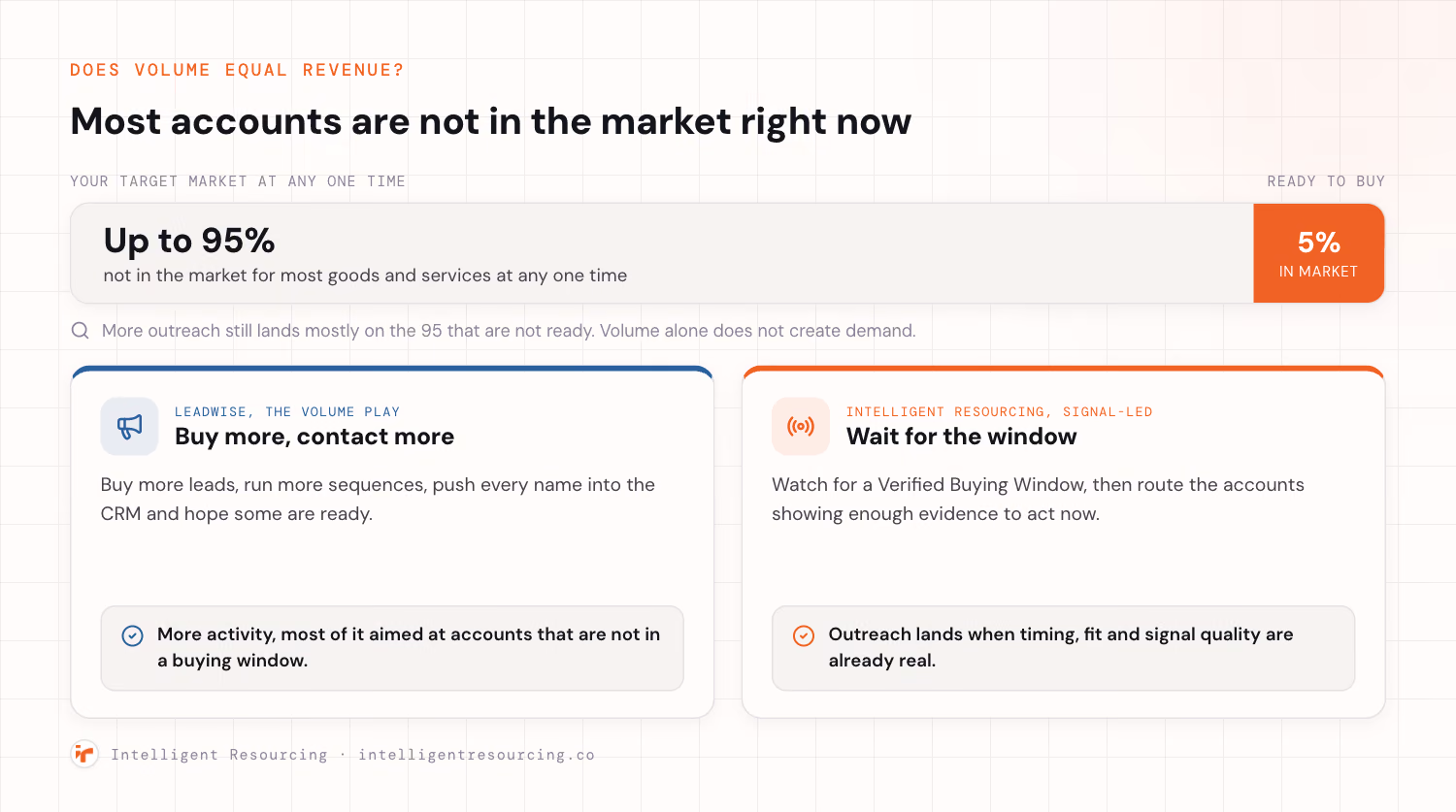
But volume often solves the wrong problem. The Ehrenberg-Bass Institute's summary of Professor John Dawes' research states that up to 95% of businesses are not in the market for most goods and services at any one time. That means more outreach does not automatically create more demand. It often means pushing more activity towards accounts that are not ready to move.
Extra leads only matter if the accounts are qualified, actually reachable and genuinely in a buying window. Without fit, timing and signal quality, more outreach just becomes more noise. Most teams buying outsourced lead generation are not fixing a volume gap. They are paying to add names to a system that cannot tell the difference between an account that is ready now and one that will never be ready.
That is why the comparison that matters is not Intelligent Resourcing versus Leadwise. It is lead generation services that sell you volume versus Signal-Led Growth, which sells you timing.
Why compare Intelligent Resourcing and Leadwise in 2026?
This is not just a comparison between two lead generation providers. It is a comparison between renting a service and building a signal-led system that runs on your own stack.
Leadwise is built around a done-for-you lead generation service, with pay-per-lead campaigns, exclusive leads, CRM and calendar integration and an onshore team. Intelligent Resourcing is built around setting up the system inside your own business, using tools and workflows that keep running on your stack as an ongoing capability.
The difference matters because B2B buying has shifted. Buyers now do research before they talk to sales. That means lead generation is no longer about pushing more messages. It is about catching the moment when a specific account is actually looking.
One answers the question "How do we get more leads delivered?" and the other answers the question "How do we build a system that tells us when the right accounts are ready?"
How has B2B buying actually changed
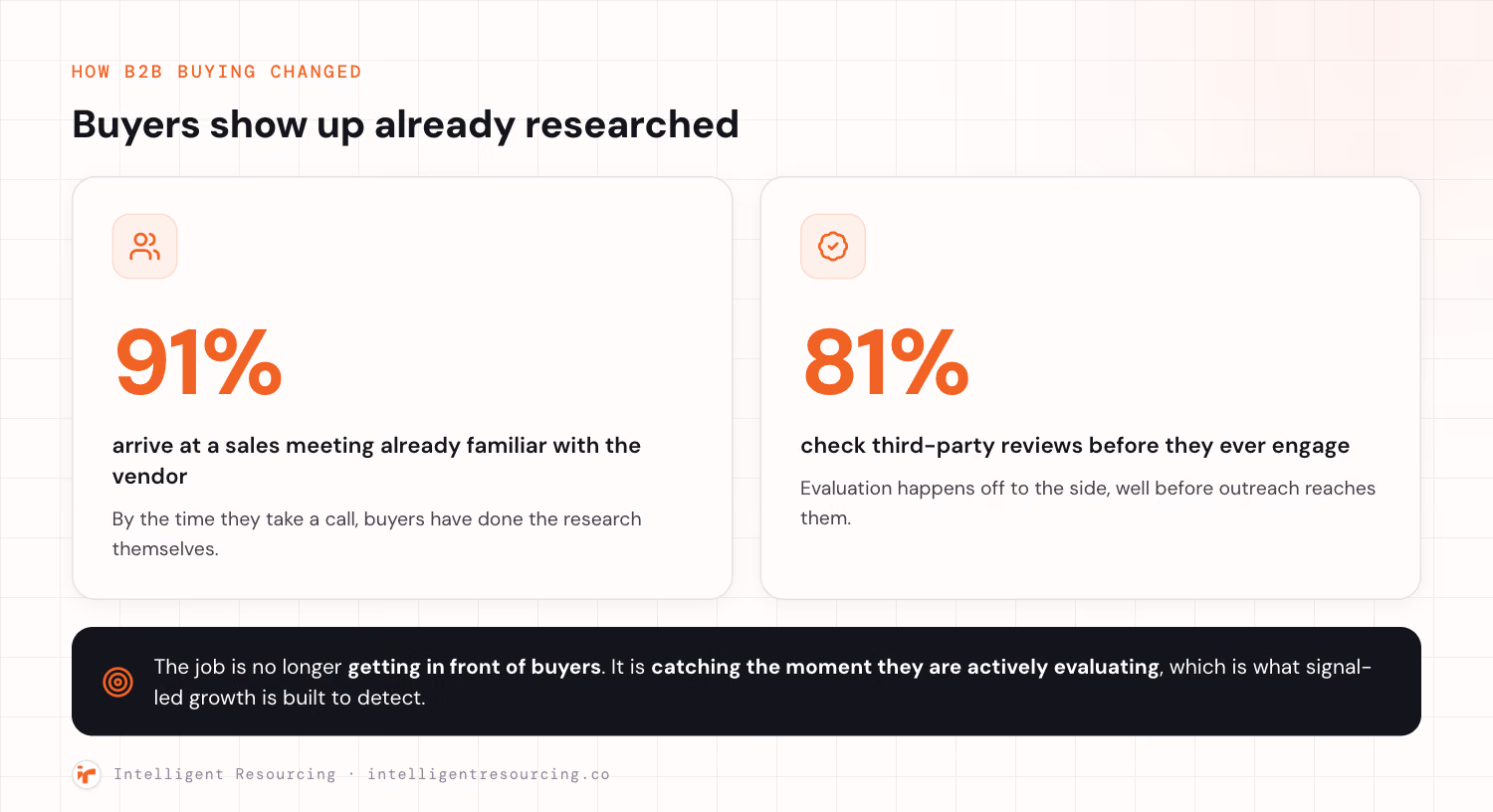
Buyers no longer wait for outbound sequences to tell them what is available. They research solutions, check reviews and evaluate options before they ever take a call. Wynter's B2B buyer journey research found that 91% of buyers come to a sales meeting already familiar with the vendor, and 81% look at third-party reviews before engaging.
That shift changes what lead generation actually means. When buyers are already researching, the problem is not getting in front of them but identifying the moment they are actively evaluating.
That is why chasing lead volume is becoming a weaker measure of growth. A larger list may create more outreach activity, but it does not prove that an account has budget, urgency, fit or intent. It only proves that another name has entered the system. More volume can make the pipeline look busier, but it does not make the opportunity more real.
What teams need instead is a verified buying window that appears when multiple signals suggest an account is ready for action now. That might include hiring activity, funding, expansion, technology change, repeated engagement or comparison-stage research.
Instead of asking "How many leads did we generate?", a signal-led system asks "Which accounts are showing enough evidence to justify outreach now?"
That is where these two start to separate. Leadwise is built around delivering more leads. Intelligent Resourcing is built around identifying the buying windows that make outreach worth acting on.
Lead generation services vs Signal-Led Growth
| Category | Leadwise | Intelligent Resourcing | What It Means |
|---|---|---|---|
| Core model | Done-for-you lead generation service | Signal-Led Growth system builder | Leadwise supplies leads. Intelligent Resourcing builds the operating system that identifies when outreach is worth acting on. |
| Growth logic | More lead flow and booked opportunities | Better signal detection, routing and activation | Leadwise optimises for delivery volume. Intelligent Resourcing optimises for timing, fit and signal quality. |
| Market belief | More leads means more revenue | Better signals create better revenue opportunities | This is the central shift: volume alone does not prove buying readiness. |
| Measurement layer | Lead volume and booked calls | Verified Buying Windows | Leadwise measures how many opportunities enter the funnel. Intelligent Resourcing focuses on whether the account is showing enough evidence to act now. |
| Workflow control | Vendor-managed service layer | Workflows that run on your stack | Leadwise gives convenience. Intelligent Resourcing gives more long-term control over the growth system. |
| CRM role | CRM and calendar integration | CRM sync, enrichment, routing and workflow logic | Both connect to CRM, but Intelligent Resourcing treats the CRM as part of the signal and routing infrastructure. |
| Automation depth | Lead generation service with less public detail on signal mechanics | Clay workflows, orchestration, enrichment, scoring and routing | Intelligent Resourcing is more explicit about the system behind the output. |
| Best fit | Service businesses wanting quick lead flow | B2B teams wanting a signal-led revenue engine on their own stack | The choice is convenience versus control. |
Intelligent Resourcing
What it does well
It is strongest when the buyer wants to build a system rather than buy meetings.
The company focuses around GTM engineered revenue systems and helping businesses grow at scale. Its lead generation services are not just about supplying contacts. They focus on building the architecture, workflows and internal handoff logic behind lead generation.
That makes it especially relevant for B2B teams whose real problem is not "we need more names". The more accurate problem is often "our process is manual, fragmented and hard to scale".
Its signal-led growth is not about chasing every possible account. It is about identifying the right accounts when buying signals appear, then routing those opportunities through a cleaner workflow.
For IR, Clay is not just a prospecting tool but part of the operating layer. The value sits in the way data, triggers, enrichment, scoring and CRM logic work together.
Where it may fall short
It is not the best fit for buyers who want a fully hands-off lead service with very little internal involvement.
Its model assumes the client values workflow depth, CRM logic and internal capability. That is a stronger fit for firms willing to think in systems, and a weaker fit for teams that simply want leads dropped into the calendar without changing how the business operates.
It is also more naturally aligned to B2B teams with a defined ICP and a willingness to work with modern tooling. If the business is not ready to improve its internal process, it may not get the full value from the model.
Best fit when the business wants to
- Run signal-led workflows on your own stack.
- Connect lead generation to CRM logic.
- Improve buying-signal detection.
- Reduce wasted outreach.
- Build internal capability over time.
- Move from lead volume to signal-led growth.
Leadwise
What it does well
Leadwise is strongest when a business wants simplicity.
It offers done-for-you lead generation, pay-per-lead campaigns, exclusive leads, onshore team support and CRM plus calendar integration.
That creates a clear value proposition for SMEs and professional service firms that need lead flow quickly without building internal workflows first.
It fits the traditional lead generation services category well, helping businesses outsource activity, reduce internal workload and get opportunities moving without designing the full system themselves.
If the main constraint is capacity, and the business already knows how to handle, qualify and close leads once they arrive, a done-for-you lead generation service can be useful.
Where it may fall short
Its biggest limitation is control. Leadwise is positioned around outsourced lead delivery rather than signal-led workflows that run on your stack. The convenience is real, but the process remains more rented than run by you.
If a buyer wants deeper visibility into how targeting improves over time, how signals are prioritised, or how workflows can be reused internally, it is not the best option.
If a business believes more leads automatically means more revenue, Leadwise may feel like the obvious option. But if the real problem is poor fit, poor timing or weak lead handling, then more lead flow can expose the weakness rather than solve it.
Best fit when the business wants
- A done-for-you lead generation service.
- Quick outsourced execution.
- Minimal internal setup.
- Pay-per-lead flexibility.
- Lead flow without building infrastructure first.
What happens after a lead is found?
Many teams now need more than contact delivery.
They need clean records, clear routing, better follow-up and stronger visibility into why an account should be contacted now.
This is where signal-led workflow separates itself from traditional lead generation services.
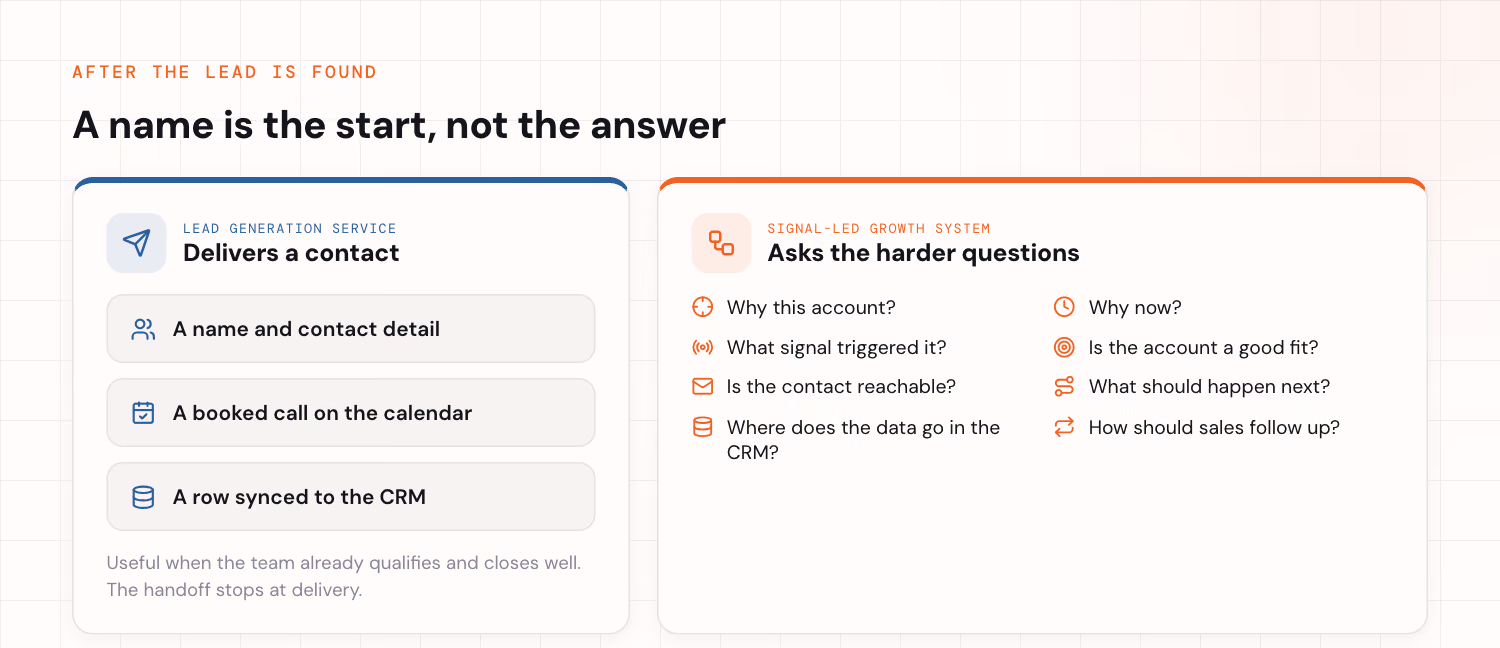
A lead generation service can supply a lead. A signal-led growth system asks harder questions:
- Why this account?
- Why now?
- What signal triggered the action?
- Is the account a good fit?
- Is the contact reachable?
- What should happen next?
- Where should the data go in the CRM?
- How should sales follow up?
Intelligent Resourcing is positioned around that wider process, with lead handling tied to enrichment, scoring, routing and CRM workflow.
Leadwise covers part of the handoff through CRM and calendar integration, which is useful for businesses that want convenience. The difference is that one model focuses more on lead delivery, while the other focuses more on how demand is interpreted and acted on after it appears.
Pricing, scalability and support
The clearest way to compare the commercial model is by looking at how each one scales.
Leadwise scales more like service consumption. Its model is based on outsourced delivery, pay-per-lead activity and lead flow, which can be commercially flexible and easier to buy at the start, especially for teams that want movement without building internal infrastructure.
Intelligent Resourcing scales more like infrastructure. Its model is based on building the workflows, operating logic and signal-led system behind growth. That means the value sits in the system, not only in the activity delivered by a supplier.
Support also looks different in practice. One is built around outsourced funnel handling with onshore support. The other is built around collaboration, workflow design and capability transfer.
Which platform should you choose?
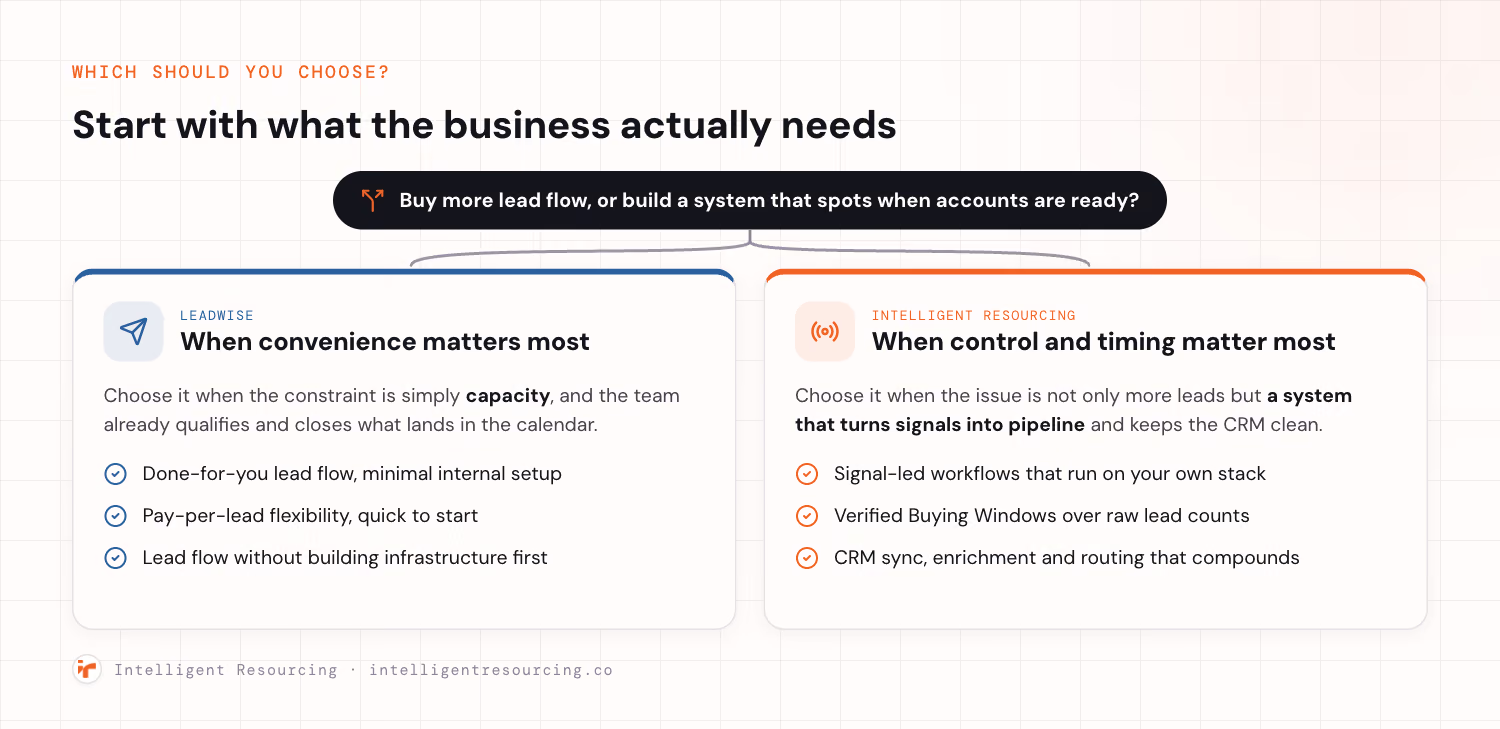
Choose Leadwise when convenience matters most
When the business wants a done-for-you lead generation service handled with as little internal setup as possible, or wants an external team to create lead flow against a clear service offer, Leadwise is the better choice.
Choose Intelligent Resourcing when control and timing matter most
When the business wants to build a signal-led growth system that runs on its own stack, and the main issue is not only "we need more leads" but "we need a system that turns signals into pipeline, keeps the CRM clean and improves over time", its model is the better fit.
The real decision is whether you want to buy more lead flow or build a system that identifies when accounts are ready to move. The old assumption is that more leads should create more revenue, and that is understandable. When pipeline slows, lead volume gives teams an obvious lever to pull: buy more contacts, run more outreach, book more calls. But volume only creates value when fit, timing, reachability and signal quality are already in place. Without those conditions, more leads make the pipeline look busier without making it more likely to convert. That is the real distinction between traditional lead generation services and signal-led growth.
If you want to see how Leadwise stacks up against the wider market first, read our guide to the 5 best Leadwise alternatives for 2026.
Comparisons
Explore how to build Signal-Led Growth systems that detect Verified Buying Windows and route the right accounts into action.
FAQs
Are traditional lead generation services still useful?
Yes. Traditional lead generation services can still be useful when a business needs outsourced activity and quick lead flow. The limitation is that more leads do not automatically create more revenue unless the leads are qualified, well-timed and routed through a strong sales process.
What is signal-led growth?
Signal-led growth is a B2B growth model that uses buying signals to decide which accounts should be contacted, when they should be contacted and what workflow should happen next. It replaces static lead volume with timing, fit and signal quality.
Which option is better for service businesses?
Leadwise may be the more natural fit for service businesses that want quick, outsourced lead flow with minimal setup. Intelligent Resourcing can also work for service businesses, but it is a better fit when the buyer wants broader control over the workflow and signal-led infrastructure.
Which option is better for SaaS or complex B2B sales?
Intelligent Resourcing is likely the stronger fit for SaaS or complex B2B sales because those motions usually depend on timing, buying committees, account fit, data quality and CRM-connected workflows. These are better served by a signal-led growth system than by lead volume alone.