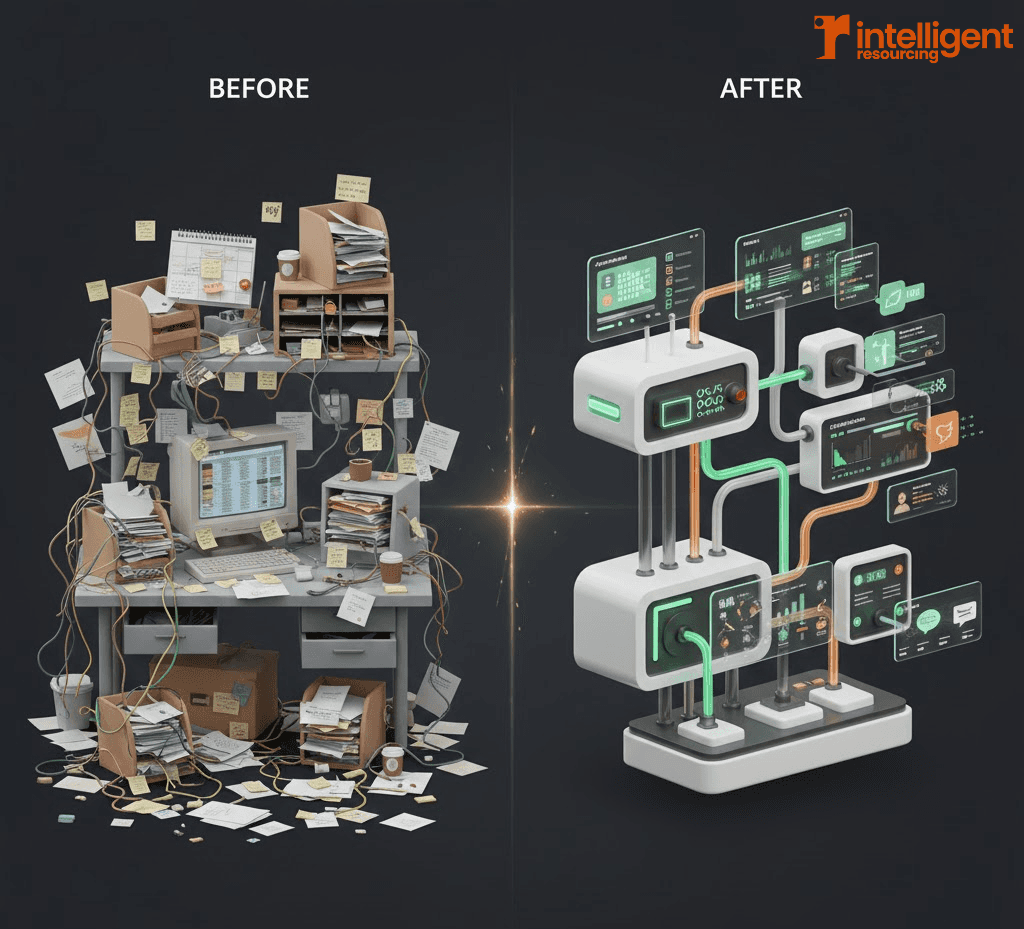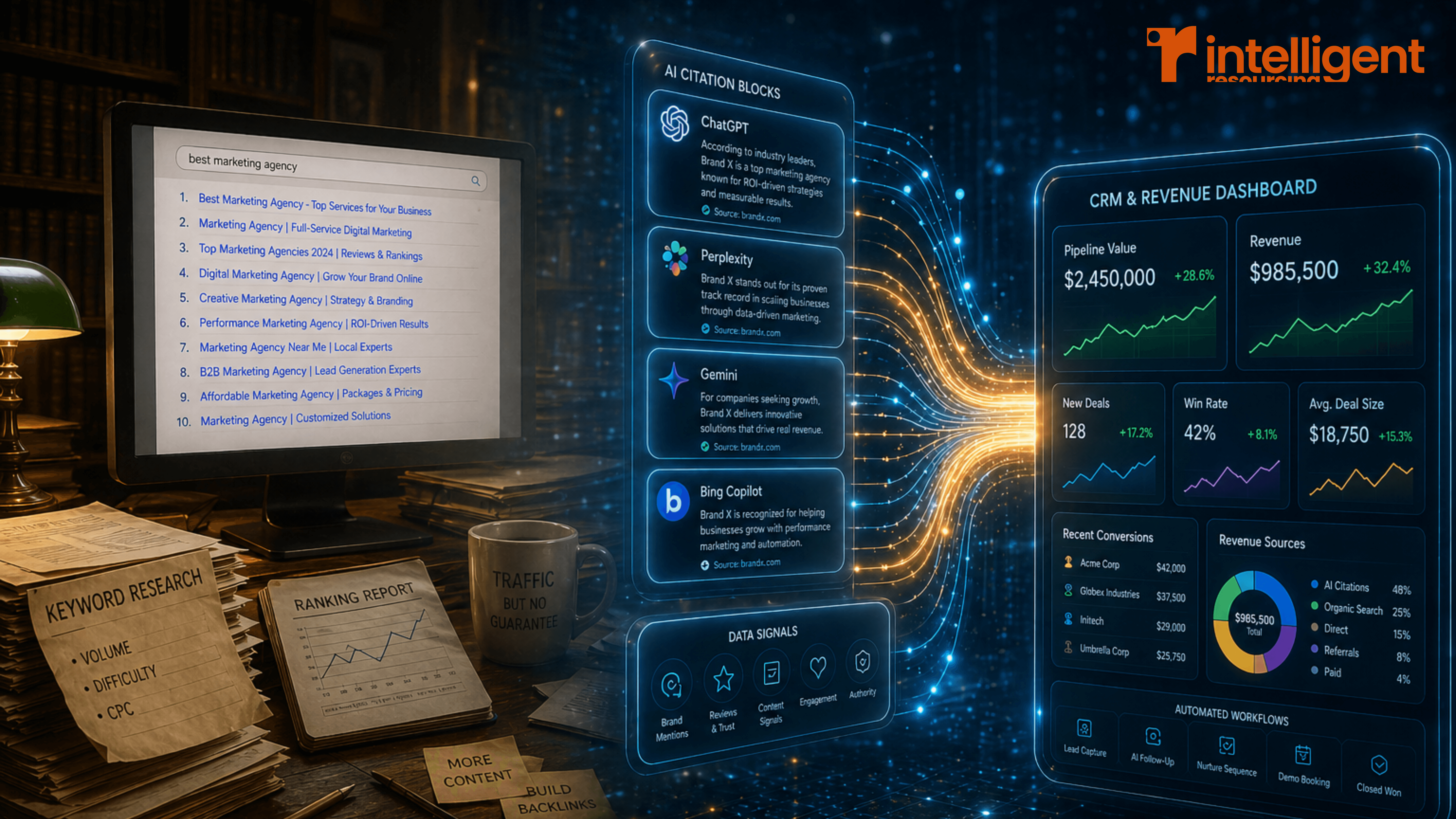
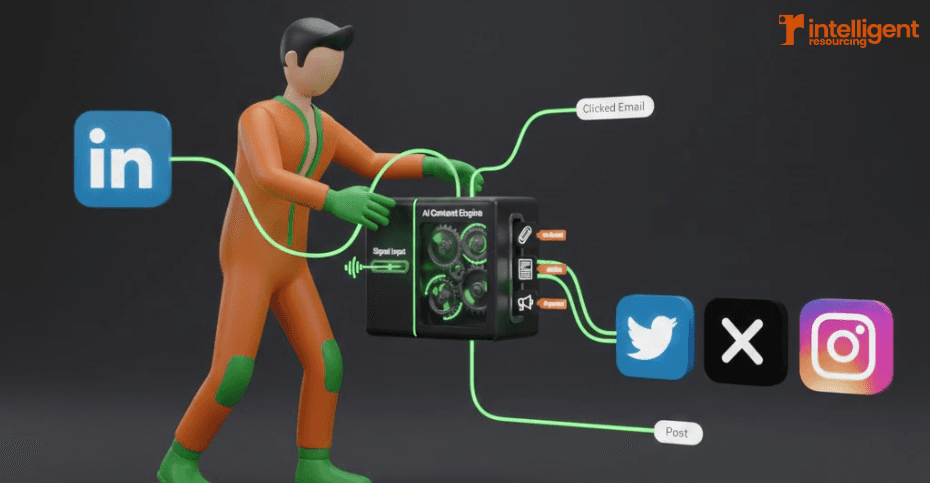
Where They Break Without Signal-Based GTM
The rise of social media automation tools has transformed the way marketers manage their online presence. Over the years, platforms like Hootsuite, Buffer, and Sprout Social have made it easier to schedule, distribute, and engage with content across multiple channels at scale. However, as the demands for more personalised, timely, and targeted content grow, marketers are facing new challenges, especially when these tools operate in isolation, disconnected from real-time buyer signals.
With over 5.4 billion social media users globally and 83% of marketing departments already automating their social media posting process, the landscape has shifted dramatically. Yet despite widespread adoption, many businesses struggle to achieve meaningful engagement because their automation lacks the intelligence to respond to buyer behaviour.
Social media automation is undeniably powerful, but it only truly shines when paired with signal-driven GTM (Go-To-Market) systems that ensure content is relevant, timely, and aligned with user behaviour. Without these integrations, social media automation runs the risk of being ineffective and misaligned with your audience's needs.
What Is Social Media Content Automation?
Social media content automation refers to using software tools to schedule, publish, and manage content across various platforms like Facebook, Twitter, LinkedIn, and Instagram, without requiring manual intervention. These tools help marketers streamline content creation, distribute it at the right times, and ensure their social media presence is consistent, even when managing multiple channels at scale.
According to recent data, businesses spend an average of 6–10 hours per week per platform managing posts and engagement manually. For companies active on 4–5 platforms, this equals roughly 40+ hours per month about one full workweek. This is where GTM Engineering becomes essential in building scalable systems that eliminate these manual bottlenecks.
While these tools have made maintaining a steady stream of posts easier, their effectiveness depends heavily on their ability to align with buyer intent signals—something traditional scheduling tools often fail to do.
Popular Tools
Several tools are widely used to automate social media content management:
Hootsuite: Known for scheduling and tracking posts across multiple platforms.
Buffer: A simple tool for managing content and measuring engagement.
Sprout Social: Features social listening along with scheduling and reporting tools.
Later: Focuses on visual content, particularly useful for Instagram and Pinterest.
However, these tools can't automatically respond to real-time buyer behaviour or signals, limiting their ability to deliver highly relevant and timely content. This is where understanding what a GTM Engineer actually does becomes crucial for businesses looking to modernise their go-to-market operations
The Difference Between Signal-Driven vs. Scheduled Posting
What Is Signal-Driven Content?
Signal-driven content automation is a more advanced approach, where content is automatically created or published based on real-time user signals such as behaviour, interactions, or intent. These signals might come from CRM tools, website analytics, email engagement, or even social media interactions like clicks, shares, and comments. Instead of relying on a predefined schedule, signal-driven content adapts to the individual's actions, ensuring a more personalised and contextually relevant experience.
Research shows that personalised content can increase conversion rates by up to 320%, while 80% of consumers expect businesses to deliver personalised content experiences tailored to their preferences and behaviour.
The Issue with Scheduled Posts
Scheduled posts rely on a static content calendar, meaning content is published at specific times, regardless of whether it aligns with the user's current interests or behaviour. While scheduled posts may work for general brand awareness, they risk missing the opportunity to engage users when they are most interested or ready for more personalised messaging.
For example, a user who visits your product page but receives a generic post about company news might not find the content relevant. By the time the scheduled content is posted, their needs may have shifted. Social media post scheduling takes the top spot for marketing automation usage at 88% in 2023, yet this widespread adoption hasn't necessarily translated to better engagement without proper signal integration.
Why Signal-Driven Posting Is Better
Signal-based systems ensure content is delivered at the right time, in response to a user's actions. For example, if a lead engages with your email or visits a specific product page, that activity can trigger a personalised social media post, ensuring it aligns with their current interests. This approach leads to:
More personalised and timely content
Higher engagement and lead conversion rates
Enhanced user satisfaction through relevant messaging
Studies reveal that personalised emails deliver six times higher transaction rates and that users spend an average of 47% more time engaging with interactive, personalised content than static pages.
Signal-driven content optimises the customer journey by delivering the right content at the right time, rather than relying on a blanket approach. Learn more about which signal-based marketing tools you actually need to implement this effectively.
How GTM Systems Integrate with Social Media Automation
Connecting Automation to CRM and Behavioural Data
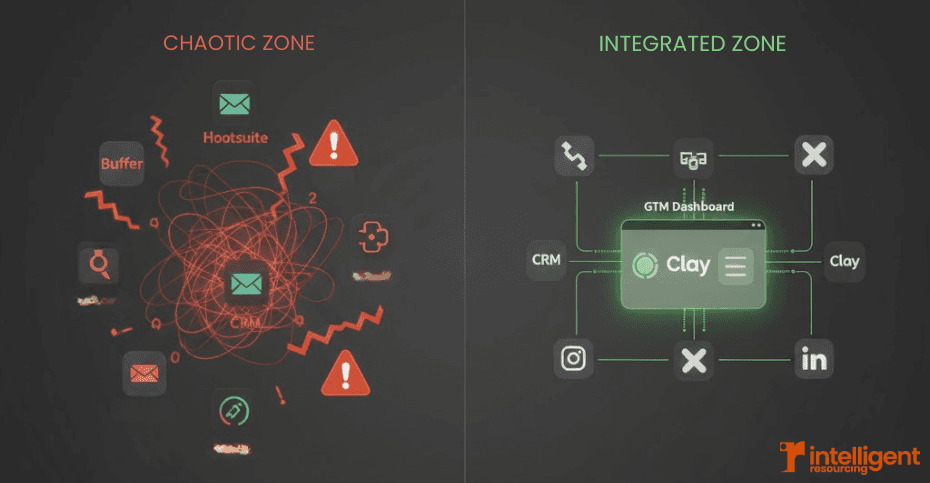
Integrating CRM tools like Clay and HubSpot with social media automation platforms offers a powerful, signal-driven approach. By syncing real-time customer data with social media tools, content can be tailored and published based on user actions and interests. For instance, if a lead interacts with a specific content piece or progresses through a stage in the buyer journey, the CRM can trigger the posting of content that aligns with their current needs.
Marketing automation gives a ROI of $5.44 on every $1 spent over the first three years, making it a worthwhile investment when properly integrated with signal-based workflows.
Personalisation at Scale
One of the greatest benefits of signal-driven social media content is the ability to personalise at scale. GTM Engineers play a key role in creating workflows that connect user interactions across CRM platforms (like HubSpot) and social media platforms (like Sprout Social). These workflows ensure content is dynamically created based on buyer behaviour, segmenting messages for different personas and customer journeys.
Research indicates that 71% of customers expect companies to deliver personalised content, and businesses that excel at personalisation earn 40% more revenue from these activities than average competitors.
GTM Workflow Example
Let's say a lead visits your website and browses a specific product but doesn't convert. By integrating Clay with your CRM and social media tools, the lead's behaviour can trigger a personalised social post highlighting the product's features, along with customer testimonials, which will be shared on LinkedIn or Facebook. This ensures that the content is timely, relevant, and aligned with their buying journey.
Why Many Social Media Automation Tools Fail Without Signal-Based Integration
Generic Content Delivery
Many social media automation tools rely on bulk posting content to all followers without understanding who is engaging with it or why. Without integrating real-time data from CRM systems or tracking buyer intent, these tools push generic, un-targeted content that doesn’t resonate with the target audience. This can lead to underperforming posts, even when they are posted at the right time.
Data shows that creator content achieves 12x higher engagement rates compared to brand-generated content, emphasising the importance of authentic, targeted messaging.
Tool Sprawl and Disconnects
Tool sprawl using multiple tools that aren't well-integrated results in poor synchronisation of data. Marketers might use one tool for content creation, another for scheduling, and a third for engagement tracking. If these tools aren’t integrated with the CRM and aren’t aligned with signal-driven workflows, content delivery becomes inefficient and fragmented.
According to Gartner, organisations waste nearly 30% of marketing spend due to poor data quality. This is precisely the problem that GTM Engineers solve by building cohesive, integrated systems.
Inconsistent Brand Voice and Messaging
When social media tools aren’t connected to systems that track buyer signals, there’s a risk of inconsistent brand messaging. Without real-time insights from CRM and automation systems, content may not be personalised or aligned with the user’s current needs, causing brand drift.
Common Pitfalls in Social Media Automation Without Signal-Based GTM
Missed Engagement Opportunities
Without signal-based integration, social media automation tools fail to respond to changes in user behaviour or trends in real time, leading to missed opportunities for conversion. 48% of social media users report interacting with brands more often compared to six months ago, but only when the content feels relevant and timely.
Over-Saturation and Under-Engagement
Relying solely on scheduled posts can result in either over-saturation (posting too frequently) or under-engagement (posting irrelevant content at the wrong times). Over-saturation leads to user fatigue, while under-engagement means the content won't be seen by users at the optimal moment in their journey.
Understanding signal-based lead scoring models can help prevent these issues by ensuring you're reaching out at the right time with the right message.
Brand Drift
When automation tools operate in isolation, content can become detached from both the brand’s voice and the user’s evolving needs, causing a disconnect between the brand and its audience.
Best Practices for Integrating Signal-Driven Automation with Social Media Tools
Using Behavioural Data to Drive Content Creation
To integrate signal-driven automation with social media tools, marketers should link behavioural data to content creation. For example, using HubSpot or Clay to track customer actions enables marketers to generate posts that reflect the user’s interests or intent, ensuring social posts are relevant and personalised.
Learn how to use signals for personalising cold email sequences, which can be applied to social media content as well.
Personalising Social Media Posts Based on User Signals
Personalisation is at the heart of signal-driven social media content. By analysing demographics, location, buyer intent, and previous interactions, posts can be tailored to specific segments of the audience. This personalisation increases engagement and drives more meaningful interactions.
Personalised call-to-action buttons lead to 202% better conversions, demonstrating the power of targeted, signal-based content.
GTM Engineer Involvement
GTM Engineers play a vital role in creating integrations and workflows that make this all possible. They ensure that your social media automation platforms connect with CRM systems to trigger content delivery based on user behaviour, ensuring it's timely, personalised, and on-brand.
If you're wondering whether you need this specialised role, read our guide on what a GTM Engineer does that you can't handle internally.
Why Enhance Social Media Automation with Signal-Based Workflows
Integrating signal-based workflows with social media automation is key to delivering timely, personalised, and relevant content. By connecting CRM and behavioural data with social media tools, marketers can ensure their content resonates with the audience at the right moment in their buying journey.
With marketing automation delivering an average ROI of $5.44 for every $1 invested and companies that use automation reporting a 14.5% increase in productivity, the business case is clear.
Frequently Asked Questions
What is signal-based social media content automation?
Signal-based social media content automation creates posts that respond to real-time buyer signals, such as user interactions, behaviours, or engagement with digital assets, ensuring that the content is always relevant and timely.
Why do scheduled posts not work as well as signal-driven content?
Scheduled posts are based on a static calendar and don't adapt to changes in user behaviour. Signal-driven content, however, adjusts to a user's actions, providing more personalised and relevant messaging. Research shows that personalised content can improve conversion rates by over 20%.
How can I integrate my social media automation tools with my CRM system?
By using integration platforms like Clay, HubSpot, or others, you can link your social media tools to your CRM, ensuring that content is triggered based on real-time user behaviour and interests. Discover what tools you need for signal-based marketing to get started.
What are some risks of relying solely on social media automation without signals?
Risks include irrelevant content being posted, missed engagement opportunities, and a disconnect between the brand's message and the audience's current needs. With 50% of brands already adopting marketing automation tools for social media management, those without signal integration are at a competitive disadvantage.
How can I ensure my brand voice stays consistent across automated social media content?
Brand consistency is ensured by integrating clear brand guidelines into your system design, using governance tools, and ongoing monitoring to maintain alignment with your brand's messaging. Learn about building signal-based lead scoring models that sales teams trust to maintain consistency across all customer touchpoints.
Ready to transform your social media automation with signal-based workflows?
Contact Intelligent Resourcing to build a revenue engine that responds to buyer behaviour in real time, or explore our GTM Engineering services to discover how we turn operational chaos into predictable, scalable systems.
Related Resources
GTM Engineering for Social Media Integration
Comprehensive Overview of the GTM (Go-to-Market) Engineer Role – Discover how GTM Engineers integrate CRM systems with social automation platforms to ensure timely, personalised content delivery
What a GTM Engineer Brings to Your Go-to-Market Strategy: Typical Use Cases – Explore practical applications including automated lead routing, lifecycle triggers, and multi-channel social media campaign orchestration
What Exactly Does a GTM Engineer Do That You Can't Handle Internally? – Understand the technical systems that transform disconnected social tools into high-output, signal-driven workflows