

Lead Rover runs a done-for-you LinkedIn outreach service: it manages your profile, sends connection requests and follow-ups, and charges a flat fee per LinkedIn seat with no lock-in contract. If you are weighing alternatives, the real fork in the road is not which vendor is cheaper. It is whether you still want someone else managing the channel, whether you would rather run it yourself, or whether you want the whole approach to be something other than LinkedIn automation.
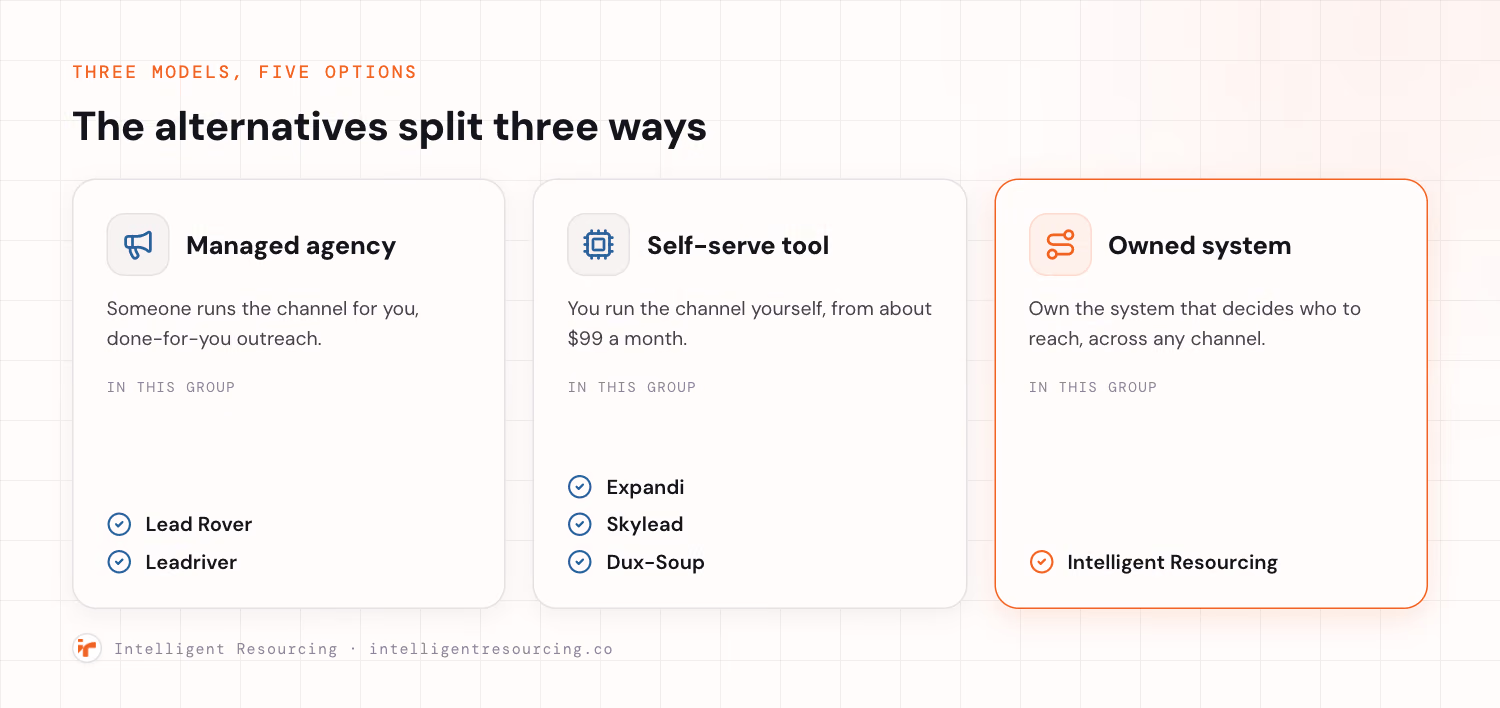
The five options below split across those three answers. One is a managed agency like Lead Rover itself. Three are self-serve tools you would run in-house, which cuts the price sharply but hands you the work Lead Rover currently does for you. The last is a different model entirely, one built around owning the system rather than renting a channel.
For a side-by-side breakdown of the two models, see Intelligent Resourcing vs Lead Rover compared in full.
Snapshot comparison
| Vendor | Category | Price | Standout feature |
|---|---|---|---|
| Lead Rover | Managed LinkedIn agency | Flat fee per seat, no lock-in | Done-for-you outreach, zero setup |
| Leadriver | Managed outbound agency | Quote-based | Adds email and on-ground sales support |
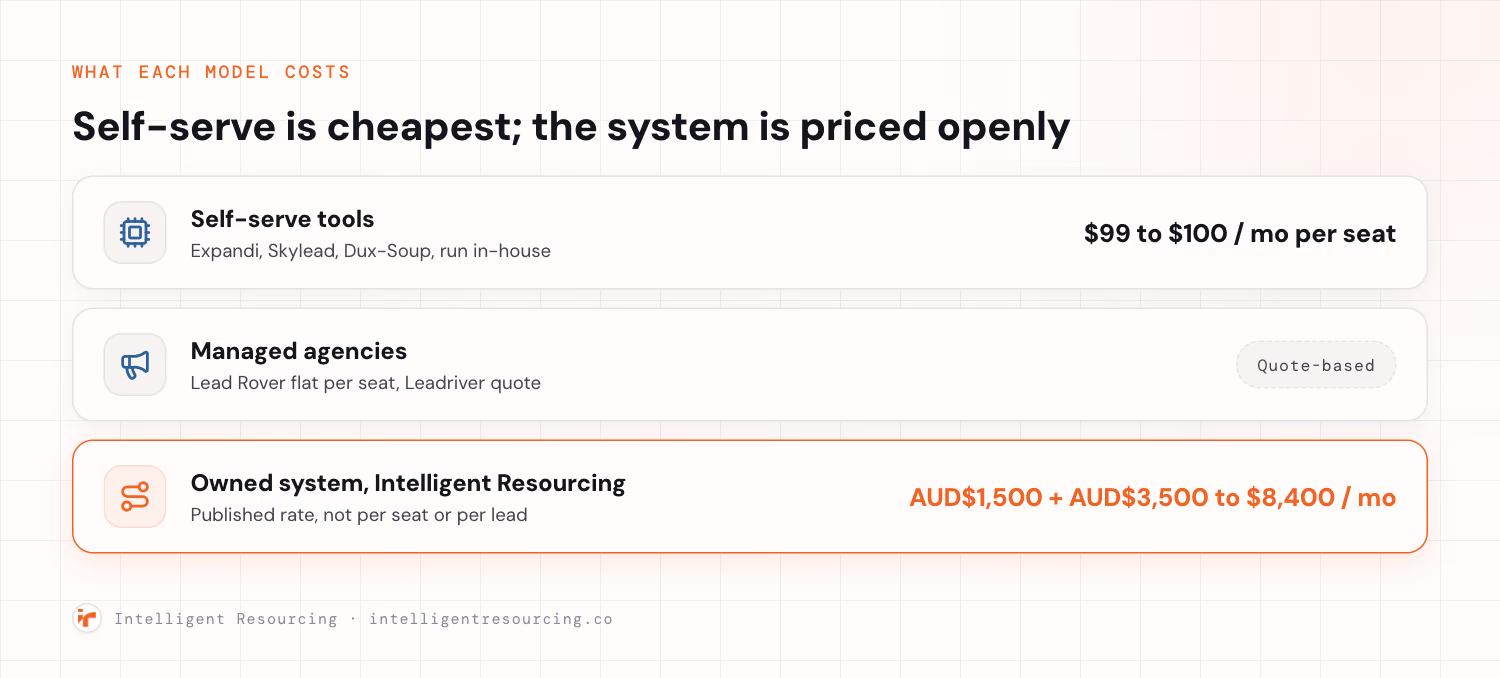
| Expandi | Self-serve LinkedIn tool | $99 / month per seat | Deepest safety and sequence logic |
| Skylead | Self-serve multichannel tool | $100 / month per seat | LinkedIn and email in one sequence |
| Dux-Soup | Self-serve LinkedIn tool | Lowest entry price in category | Native two-way CRM sync |
| Intelligent Resourcing | Owned signal-led system | AUD$1,500 + AUD$3,500 to $8,400/mo | System stays live after the engagement ends |
Leadriver
Leadriver runs managed, end-to-end outbound campaigns rather than selling you a tool to run yourself. Its own site states it has run more than 2,000 campaigns across 22 industries, pairing LinkedIn and email outreach with on-ground sales support rather than software alone.
This is the closest like-for-like match to Lead Rover on delivery model: both are agencies doing the work, not tools you operate. The difference is scope. Lead Rover stays LinkedIn-only, while Leadriver adds email and sales support on top, which suits a buyer who wants outbound handled beyond one channel.
Choose Leadriver if you want a managed agency like Lead Rover, but need email included and some sales support beyond the outreach itself.
Capabilities and features
- Managed, end-to-end outbound campaigns across LinkedIn and email
- On-ground sales support included, not just message sending
- Track record of 2,000+ campaigns run across 22 industries
- Pricing is quote-based, not published
Expandi
Expandi is a self-serve LinkedIn automation tool, not a managed service. You run the campaigns yourself, from a cloud-based dashboard, at $99 a month per seat.
Expandi's reputation rests on safety architecture and conditional sequence logic, the deepest in its category according to independent comparisons. That matters because automating LinkedIn activity carries real platform risk regardless of which tool runs it, a point that applies equally to Lead Rover.
Choose Expandi if you want LinkedIn automation without the flat agency fee, and you are comfortable building and managing the sequences yourself.
Capabilities and features
- Self-serve, cloud-based dashboard, not a browser extension
- Deep conditional sequence logic for branching campaigns
- Priced at $99 a month per seat
- LinkedIn-only, no built-in email channel
Skylead
Skylead is another self-serve, cloud-based tool, priced at $100 a month. Where Expandi focuses on LinkedIn depth, Skylead runs LinkedIn and email touches in a single sequence, with an email finder and verifier built in rather than sold separately.
That multichannel design is the real differentiator. A team that wants LinkedIn and email working from one sequence gets that from Skylead, without stitching two tools together. Lead Rover's LinkedIn-only scope does not offer that.
Choose Skylead if you want LinkedIn and email combined in one self-run sequence, not just a single channel.
Capabilities and features
- Self-serve, cloud-based, no browser extension needed
- LinkedIn and email touches combined in a single sequence
- Built-in email finder and verifier, not a separate tool
- Priced at $100 a month per seat
Dux-Soup
Dux-Soup has been on the market for close to a decade, longer than most names in this category. It also carries the lowest credible entry price among the self-serve tools here. It started as a Chrome extension and has since added a cloud-based option.
Its standout feature is native two-way CRM integration, syncing lead data both directions rather than the one-way push common elsewhere. A team that already runs a CRM gets a real practical edge here: LinkedIn activity syncs cleanly into it, unlike a managed service like Lead Rover, where the CRM connection depends on what the agency chooses to hand back.
Choose Dux-Soup if budget is the main constraint and you want two-way CRM sync without paying for a managed service.
Capabilities and features
- Started as a Chrome extension, now also offers a cloud-based option
- Native two-way CRM integration, not a one-way data push
- Lowest credible entry price among the self-serve tools here
- On the market for close to a decade
Intelligent Resourcing
Intelligent Resourcing is not a LinkedIn tool or a LinkedIn agency. It builds signal detection, scoring, and CRM routing inside your own stack instead. That system decides which accounts are worth reaching out to in the first place, across any channel, not just LinkedIn.
Pricing is listed openly instead of hidden behind a quote request. It starts from AUD$1,500 for the GTM Playbook Session, with monthly retainers landing between AUD$3,500 and AUD$8,400 after that. Unlike every option above, the system stays live in the client's own CRM after the engagement ends, rather than resetting when a subscription or contract stops. Full method: The Revenue Blueprint.
Choose Intelligent Resourcing if lead volume from one channel is not the actual constraint, and the constraint is knowing which accounts to reach in the first place.
Capabilities and features
- Builds signal detection, scoring, and CRM routing inside your own stack
- Works across any channel, not limited to LinkedIn
- Pricing published: AUD$1,500 GTM Playbook Session, then AUD$3,500 to AUD$8,400 / month retainer
- System stays live in your CRM after the engagement ends
Which one actually fits
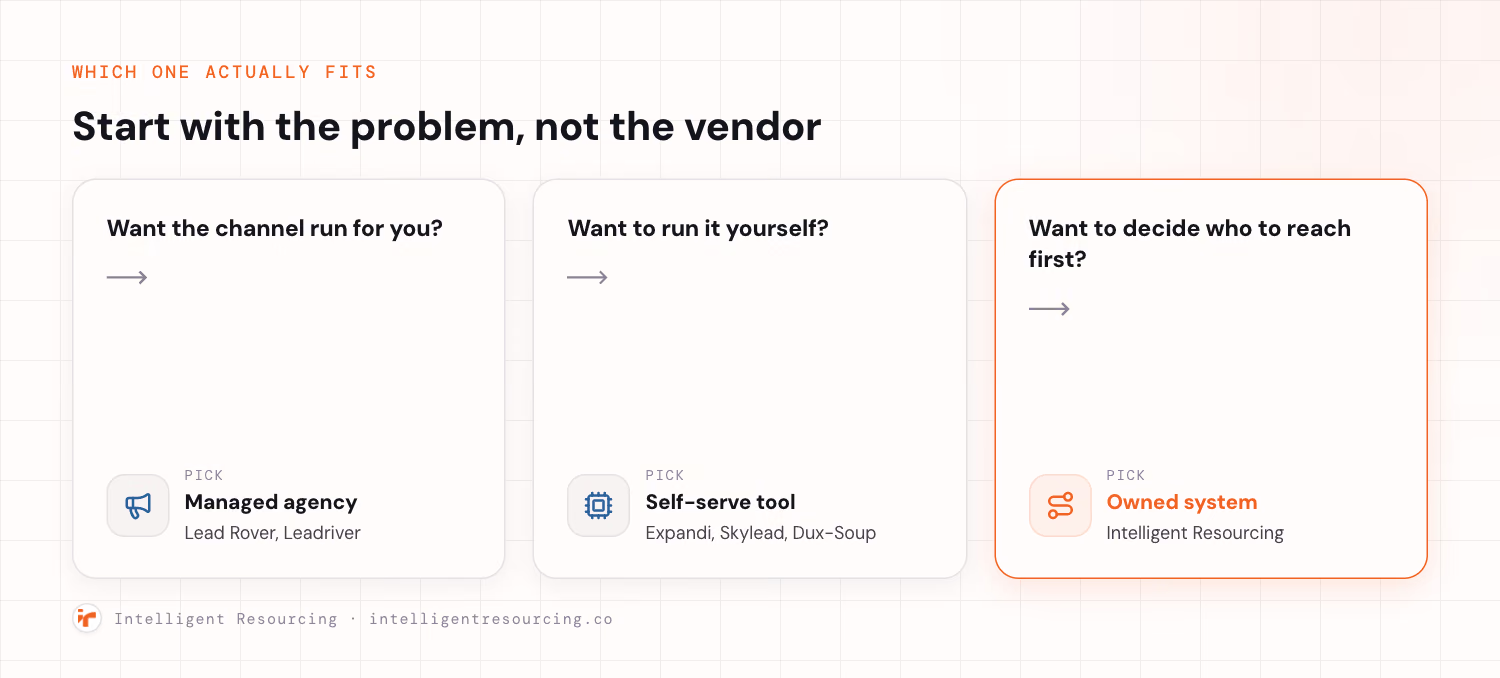
The real fork is simpler than a feature list. Do you want someone else running the channel, or do you want to run it yourself? Lead Rover and Leadriver answer the first version. Expandi, Skylead, and Dux-Soup answer the second, at a fraction of the cost, in exchange for doing the work yourself. Intelligent Resourcing answers a different question entirely: what decides who gets contacted, before any tool or agency starts sending messages. Our signal-based lead generation approach is one answer to that, though the self-serve tools above solve a narrower, cheaper problem well.
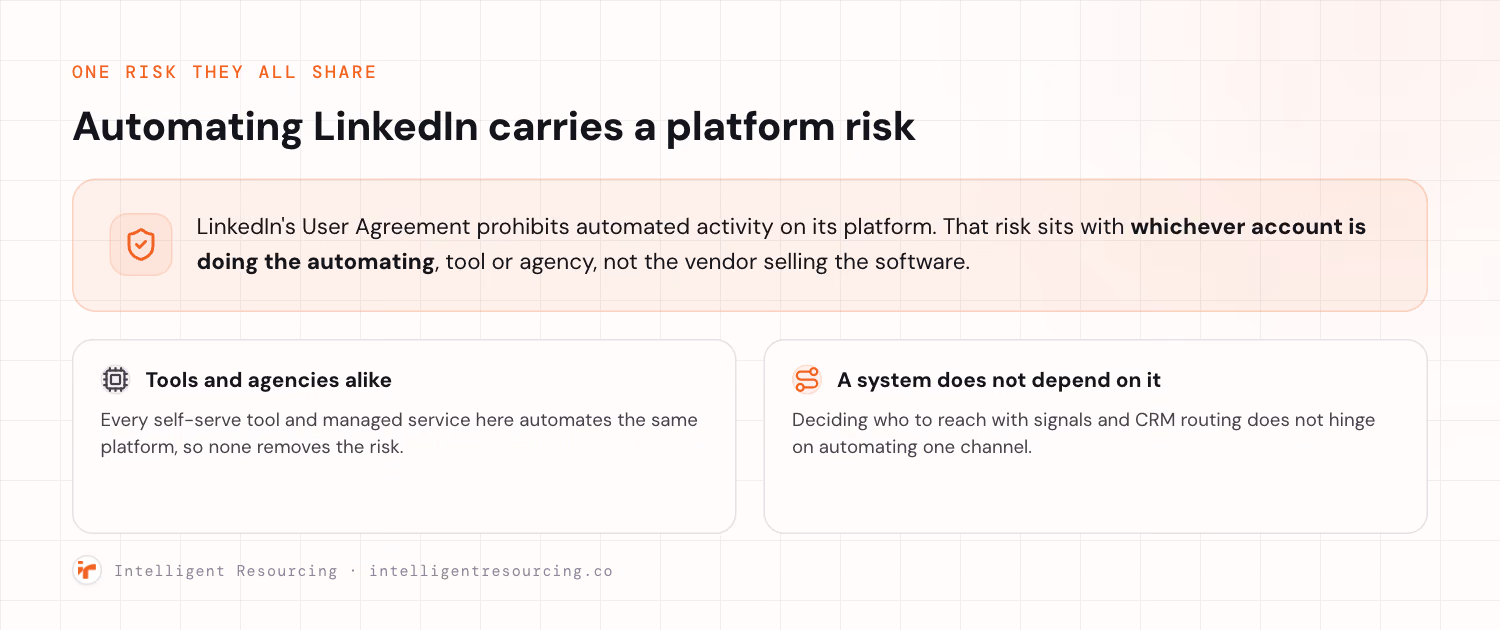
None of the self-serve tools remove the platform risk that comes with automating LinkedIn activity. LinkedIn's own policies prohibit automated activity on its platform. That risk sits with whichever account is doing the automating, tool or agency, not with the vendor selling the software.
Choosing a lead generation agency covers the delivery-model question in more depth if channel versus system is still unclear. Book a pipeline review to see which model actually fits your sales team's capacity.
Comparisons
This alternatives guide gives you the overview. For a deeper comparison of fit, model, and long-term value, read Intelligent Resourcing vs Lead Rover for B2B Growth. It is the better next step if you are deciding between outsourced outreach and a system your business can keep.
FAQs
Is Leadriver a direct substitute for Lead Rover?
It is the closest match on delivery model, since both are managed agencies rather than software. Leadriver adds email and sales support that Lead Rover does not offer, so it suits a buyer who wants outbound handled beyond LinkedIn alone.
Are the self-serve tools cheaper than Lead Rover?
Yes, usually. Expandi and Skylead run close to $100 a month per seat, well under a typical managed agency fee. The buyer takes over building and running the campaigns instead of an agency doing it.
Do any of these avoid LinkedIn's automation risk entirely?
No. LinkedIn's policies restrict automated activity regardless of which tool or agency runs it. Some tools invest more heavily in safety architecture than others, but none remove the underlying platform risk.
Which option fits a team that already has a CRM they care about?
Dux-Soup, since its native two-way sync keeps LinkedIn activity flowing into the CRM in both directions. Or Intelligent Resourcing, since the CRM is where its entire system lives.
Can I combine a self-serve tool with Intelligent Resourcing?
Yes. A LinkedIn automation tool and a signal-led system are not answering the same question. Some teams run both: one for outreach execution, one for deciding who to reach in the first place.