

Directive Consulting
Running B2B SaaS Google Ads is not cheap. One 2026 benchmark puts the cost per conversion somewhere between $500 and $1,300, depending on deal size and vertical. That is the backdrop Directive Consulting is actually selling into.
Pain point they answer: A funded B2B SaaS team often runs paid media, SEO, and revenue operations through separate contractors, none of which talk to each other. Nothing ties the spend back to pipeline.
Capabilities:
- Runs paid media across Google Ads and LinkedIn Ads.
- Handles SEO and content marketing.
- Covers CRO and revenue operations.
- Builds go-to-market and ABM strategy, under one method called Customer Generation.
Key features:
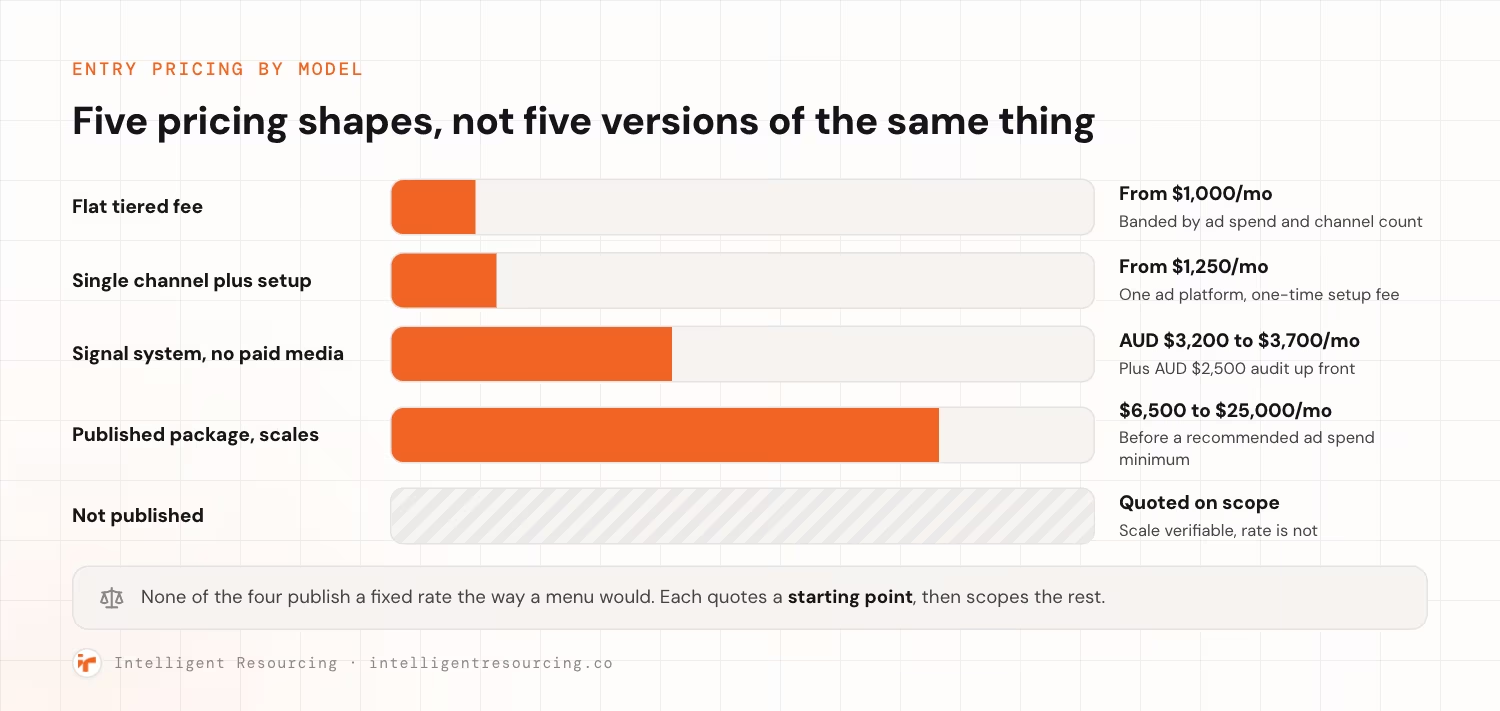
- Publishes a Startup Package at $6,500 a month, before ad spend.
- Scales up to $25,000 a month for larger accounts.
- Runs a team of about 100 to 150 people.
- Started in 2014.
Possible limitations: The entry price alone is steep. Factor in the recommended ad spend minimum of $10,000 to $20,000 a month, and it puts this out of reach for early-stage or lean teams.
Directive makes sense if the budget can genuinely absorb that. Of everyone here, it comes closest to a full-service agency running at real scale.
OneMetrik
OneMetrik takes a different approach. Five ad platforms, plus SEO and AEO, all under one retainer rather than five separate line items.
Pain point they answer: A SaaS team usually wants paid spend running across several platforms at once. No hidden markup on the spend, no surprise invoice later.
Capabilities:
- Runs paid media across five platforms: Google, LinkedIn, Meta, Reddit, and X.
- Connects campaign data to CRM stages, not just form fills.
- Handles SEO.
- Bundles AEO into the same retainer.
Key features:
- Starts at a flat, tiered fee of $1,000 a month.
- Bands the fee by ad spend and channel count.
- Charges no percentage-of-spend fee on top.
Possible limitations: Where OneMetrik gets a little thin is the AEO line specifically. What it actually covers is not itemised anywhere on the site. The B2B GEO playbook is a useful comparison point if you want to see what proper measurement looks like. Scale here is smaller than Directive's too, though that seems intentional rather than a real drawback.
That bundling matters more than it sounds. The martech landscape hit 14,106 products in 2024, per chiefmartec's yearly count, up nearly 28 percent in a year. A team running five channels through one retainer has fewer places for a signal to get lost, compared to five separate vendor logins.
Disruptive Advertising
CRO work does pay off, and there is actual research behind that, not just marketing copy. CXL Institute surveyed 3,100 people who run conversion tests for a living. The average winning test lifted B2B SaaS landing pages by 22 percent. Disruptive Advertising builds that kind of testing straight into the paid media work, rather than treating it as an afterthought.
Pain point they answer: A team that already spends heavily on ads usually wants conversion testing built into the campaign work itself. Not tacked on later as a separate line.
Capabilities:
- Manages Google and Meta ad campaigns.
- Builds CRO testing directly into the campaign work.
Key features:
- Manages more than $450 million a year in client ad spend.
- Ranks among the more recognised names in the category, by scale.
Possible limitations: One gap worth flagging: pricing is not published anywhere on its own site. That scale and structure may also be more than a smaller B2B team genuinely needs.
Worth a look if you already spend heavily on ads. Testing layered on top from day one beats bolting it on later.
SaaSHero
SaaSHero keeps its offer narrow on purpose. Google Ads and LinkedIn Ads, for B2B SaaS companies only, nothing else on the menu.
Pain point they answer: An early SaaS team typically just wants one paid channel run well. A cost they can predict, without a long ramp-up eating into the first few months.
Capabilities:
- Runs Google Ads and LinkedIn Ads, exclusively for B2B SaaS companies.
Key features:
- Starts at $1,250 a month for one channel, managing up to $10,000 in ad spend.
- Charges a one-time setup fee of $1,000 to $2,000.
Possible limitations: Worth noting: it runs one channel at entry, not a full-funnel programme. The pricing here comes from a competitor's comparison page too, not SaaSHero's own site, worth being upfront about.
SaaS Capital's 2025 survey of over 700 private B2B SaaS companies found the median company spends about 8 percent of ARR on marketing. Early-stage, bootstrapped founders often work with fixed monthly budgets instead, commonly $5,000 to $15,000, per SaaSHero's own site. Its low entry price is built for exactly that stage.
Intelligent Resourcing
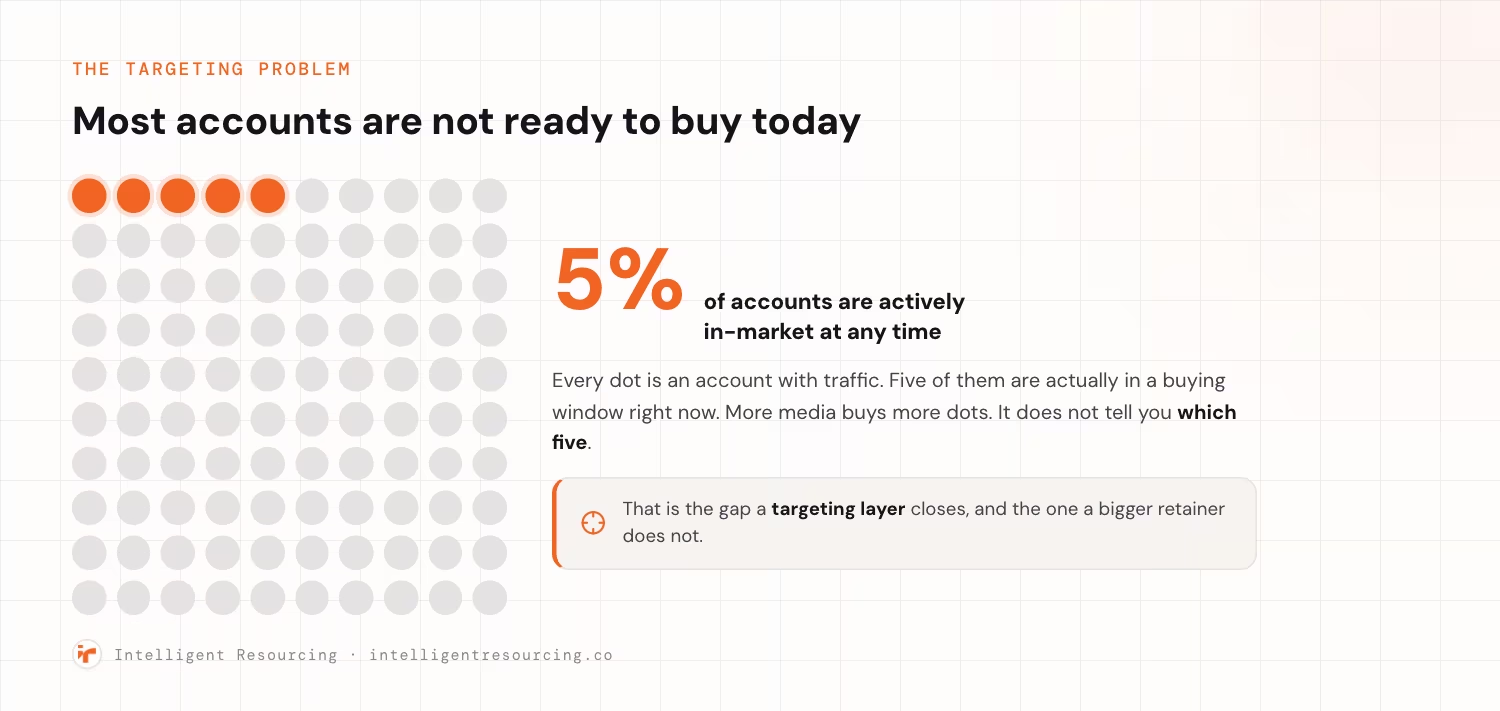
Most B2B accounts are not actually ready to buy on any given day. Easy to forget when you're staring at a traffic dashboard. Ehrenberg-Bass Institute research puts the share actively in-market at any time at just 5 percent. Intelligent Resourcing is built around finding that 5 percent.
Pain point they answer: A team already running traffic or paid campaigns often has the same problem. Out of everyone visiting, which accounts are actually close to buying?
Capabilities:
- Builds signal detection and CRM routing inside the client's own stack.
- No paid media here. No SEO execution or content work either. This is a different question entirely.
Key features:
- Starts with a Strategic Blueprint audit from AUD $2,500.
- Runs a retainer from AUD $3,200 to $3,700 a month.
- Keeps the system inside the client's own CRM, not a rented platform.
Possible limitations: The obvious limitation: it does not run ads at all. If the real gap is execution capacity across channels, this is not the right fit.
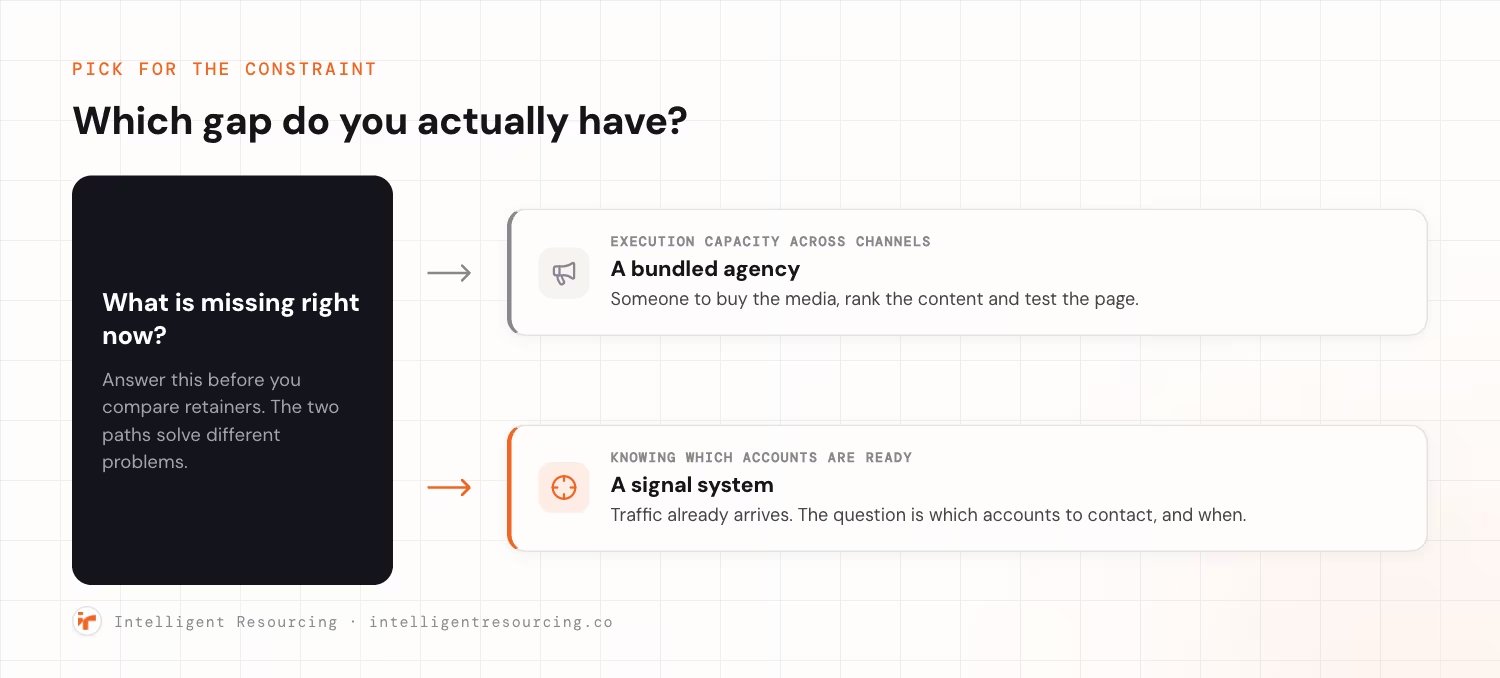
That is a genuinely different job from what the four agencies above do. None of them are really built to answer which specific account, out of everyone with traffic, is ready right now.
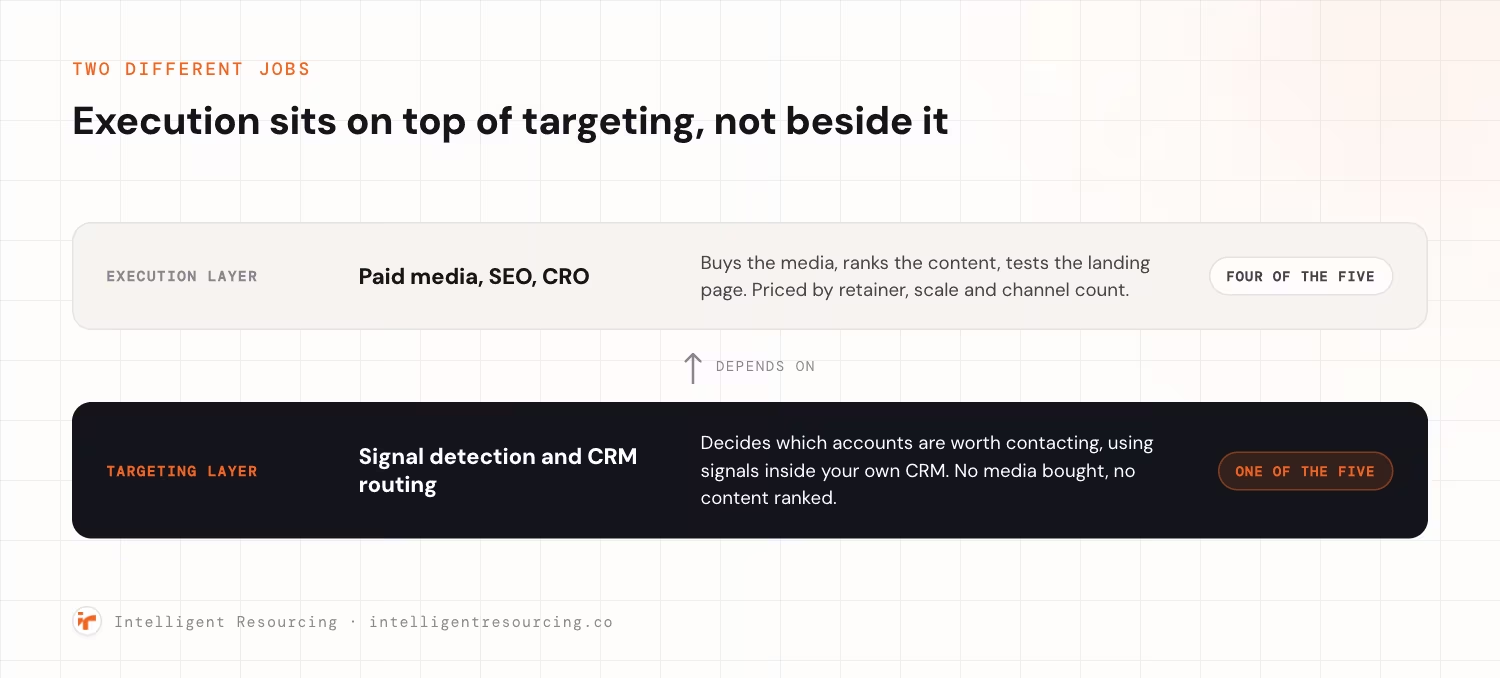
Intelligent Resourcing sits outside this whole shortlist for that reason. The other four sell execution, while this one sells the targeting layer underneath it.
Not sure which gap you actually have? GTM Engineering covers how to tell the difference before you sign anything.
If the answer turns out to be a system, not a channel, our GTM tools guide is a useful next read.
Still not sure which option fits your team? You can always get in touch directly.
Comparisons
Four of these sell execution across channels. Intelligent Resourcing sells the targeting layer underneath it, deciding which accounts are worth contacting using signals inside your own CRM. Talk to us before you sign anything.
FAQs
Does Directive Consulting work with businesses outside SaaS?
No. Its own site names SaaS and tech companies as its focus, running Google Ads, LinkedIn Ads, SEO and CRO under one methodology.
Is OneMetrik cheaper than SaaSHero?
At the entry tier, close. Both start near $1,000 to $1,250 a month, though OneMetrik's fee is banded by ad spend and channel count rather than a fixed per-channel rate.
Does Disruptive Advertising publish its pricing?
Not directly on its own site. Its scale is verifiable: it manages more than $450 million in ad spend a year, per independent industry coverage.
Do any of these four sell AI search visibility as its own service?
Not clearly. Each publishes a service list built around paid media and SEO. If AI visibility work happens, it appears folded into SEO rather than sold on its own.
Can Intelligent Resourcing replace an agency's paid media budget?
No. It does not run ad campaigns at all. It solves a different problem: knowing which accounts already in your pipeline are ready to buy.
Which of these fits a lean, early-stage SaaS team?
OneMetrik or SaaSHero, based on published entry pricing. Directive and Disruptive Advertising both assume a larger, funded ad budget already in place.