
Background

/

Blogs Details

Intelligent Resourcing vs RSXigital for 2026 B2B Growth

This comprehensive analysis makes one thing clear: some B2B growth problems need better campaigns, others need a better system. Find the real gap before spending leaks.

By Ronan Leonard, Founder, Intelligent Resourcing

|

Intelligent Resourcing vs RSXigital for 2026 B2B Growth

/

Blogs Details

Intelligent Resourcing vs RSXigital for 2026 B2B Growth

This comprehensive analysis makes one thing clear: some B2B growth problems need better campaigns, others need a better system. Find the real gap before spending leaks.

By Ronan Leonard, Founder, Intelligent Resourcing

|

Intelligent Resourcing vs RSXigital for 2026 B2B Growth

RSXigital is the better fit if you need a specialist B2B partner to improve paid media, search visibility and campaign efficiency. Intelligent Resourcing is the better fit if you want an owned GTM Engineering system, Generative Engine Optimisation and workflow control that compounds inside your business over time. 

Why compare Intelligent Resourcing and RSXigital in 2026?

This comparison matters because many B2B teams generate activity without clear revenue impact, run too many disconnected tools and struggle to turn demand into sales action. More digital spend does not solve weak routing, unclear ROI or poor CRM follow-through.

  • Campaigns generate activity but not pipeline. Sixty six percent of leaders say campaign metrics often look successful but fail to drive actual revenue. That is the first issue in this comparison: more activity does not always produce more pipeline.

  • No visibility into what is working. More tools often make it harder to see what is working and what is creating noise. Organisations with 11 to 25 tools report nearly 90% unclear ROI, versus 62% for those with 6 to 10 tools. 

  • Disconnected systems slow execution. When sales, CRM and revenue workflows do not connect properly, follow-up and conversion suffer.


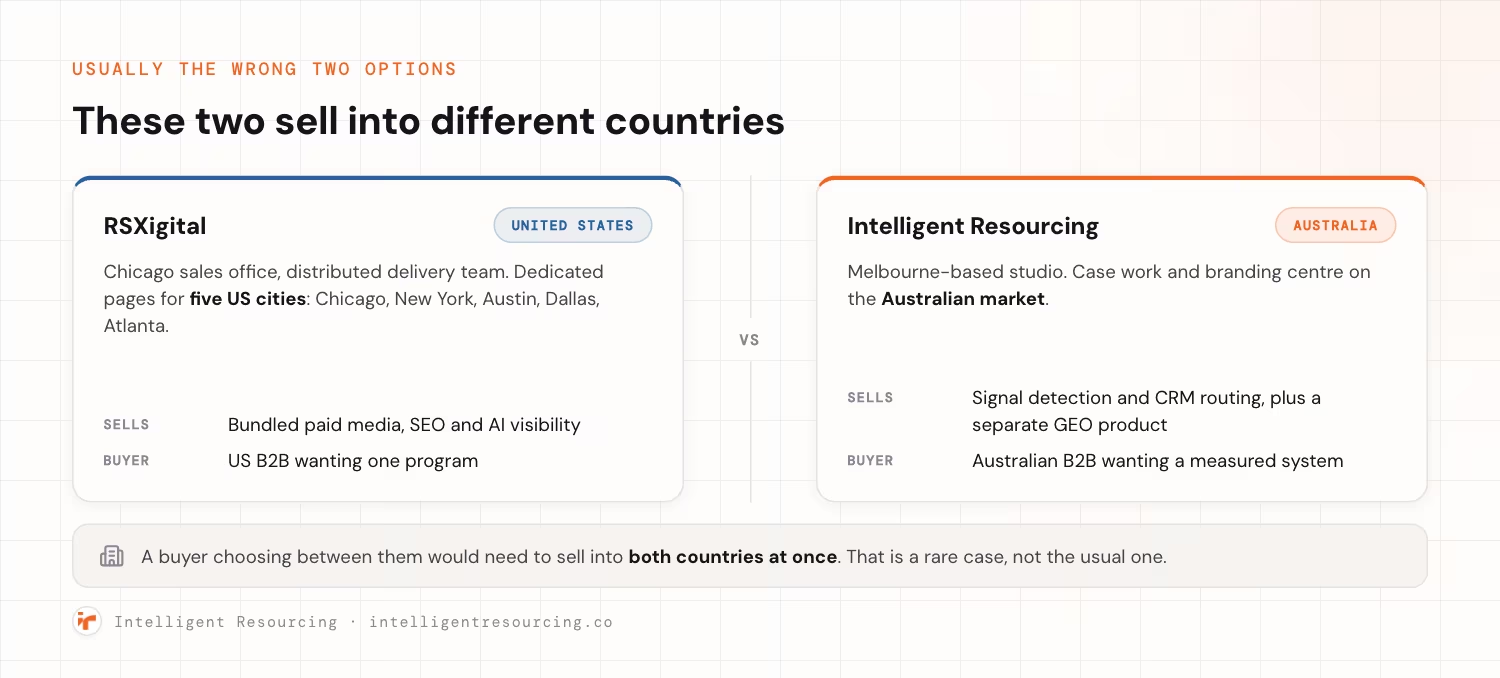
RSXigital is the stronger fit when the main problem still sits inside the acquisition layer. If your team needs better paid media performance, stronger SEO, tighter campaign execution and more efficient lead generation, a specialist model can make sense. The priority is improving performance inside the existing growth motion.


Intelligent Resourcing is the stronger fit when the main problem sits after acquisition has already started doing its job. If your issue is disconnected systems, weak signal response, poor hand-offs or no owned GTM infrastructure inside the business, channel improvement alone will not solve it. The priority is building a system that improves timing, control and execution across the full revenue motion.


That is the real hinge in this comparison. The question is not only who can generate more activity. It is whether better growth will come from improving channel performance, or from improving what happens once intent appears.

Why some RSXigital buyers need a different model

Some buyers need a different model because their bottleneck no longer sits inside campaign performance alone. The agency model is strongest when the growth problem still sits at the channel level. If the business needs better paid media performance, stronger SEO, lower CPL and tighter campaign execution, that is a valid frame. A specialist B2B digital marketing agency can create real value when the goal is to improve how active channels perform.


What changes is where the bottleneck sits after that activity is generated. Some businesses do not primarily have a traffic or campaign problem. They already have activity in the market, but still struggle to tell which accounts actually matter, which signals deserve action and how demand should move cleanly into sales. In that situation, better campaign execution helps, but it does not fully solve the operating problem underneath.


How buyer-intent capture changes the comparison

Once the bottleneck shifts from acquisition performance to post-acquisition response, Buyer-Intent Capture becomes the more useful concept. Channel-led models improve campaign lead volume from paid search, LinkedIn, SEO and other acquisition channels. Signal-led systems detect intent earlier, enrich the account, route signals and help the business respond when timing becomes commercially relevant.


That difference matters because not every lead represents the same level of opportunity. Campaign lead volume tells you that activity happened. Real buying windows tell you whether the account is showing signs of movement now, whether the record is ready for action and whether sales can respond with enough context to make the timing count.


This is also why the model label matters. Performance marketing agencies improve channel efficiency and manage acquisition performance. Revenue Operations Studios strengthen the operating layer behind discovery, qualification, routing and execution.


The sequence is different. Channel-led models improve what happens inside active campaigns. Buyer-intent capture models detect movement, enrich the record, identify real buying windows and trigger cleaner CRM-connected action. That is the real mechanism shift in this comparison.

Channel performance vs operating-layer performance


Where performance marketing agencies excel

Performance marketing agencies improve demand capture from active channels. They focus on B2B lead generation, campaign optimization, B2B SEO and growth strategy. Their offer turns ad spend into qualified leads and revenue.


This model suits businesses with a funnel bottleneck near the top or middle. A team may already invest in paid search, LinkedIn, SEO or content. They may need lower CPL, better conversion paths and tighter accountability from media spend.


Where signal-led systems improved the operating layer

They improve the operating layer behind demand by focusing on GTM Engineering, answer-first content infrastructure and workflow systems designed to sit closer to the client's own stack. Their positioning is strongest around operational control, signal response and long-term system ownership.


This model suits businesses with execution problems after intent appears. A team may already have traffic, awareness or outbound activity. They may still struggle to detect intent, enrich accounts, route signals and keep the logic inside the business. In that case, this approach is the stronger fit.


What each model still leaves unresolved

Neither model solves every growth problem by itself.


A performance marketing partner can improve traffic quality and campaign efficiency. It cannot automatically fix internal routing, CRM discipline or sales follow-up.


A signal-led systems partner can improve timing, workflow control and data quality. It may not be the first choice for businesses that still need broader paid media, SEO or content execution.

Side-by-side feature comparison

Criteria

Intelligent Resourcing

RSXigital

Practical difference

Core methodology

GTM Engineering, signal-led workflow design, and revenue execution systems

B2B performance marketing focused on managed optimisation across paid, SEO, and lead generation

One builds the operating layer behind growth, while the other improves channel performance

Operating model

Revenue Operations Studio

B2B performance marketing agency

One compounds through owned systems, while the other compounds through managed channel execution

Primary mechanism

Buyer-intent capture, routing, workflow control, and CRM-linked action

Campaign execution, optimisation, and lead volume improvement

One is designed to detect and act on intent, while the other is designed to improve acquisition efficiency

Primary channels

Signal-led discovery, CRM automation, GEO, and workflow orchestration

Paid media, B2B SEO, inbound content, and campaign optimisation

One is routing-heavy, while the other is acquisition-heavy

Team model

System builder with transfer of capability into the client team

Managed agency team providing specialist execution

One builds internal capability, while the other supplies retained delivery capacity

Ownership

Client-owned stack, workflows, and operating logic

Service-led delivery with performance managed by the agency

One compounds internally, while the other compounds through external expertise

Search logic

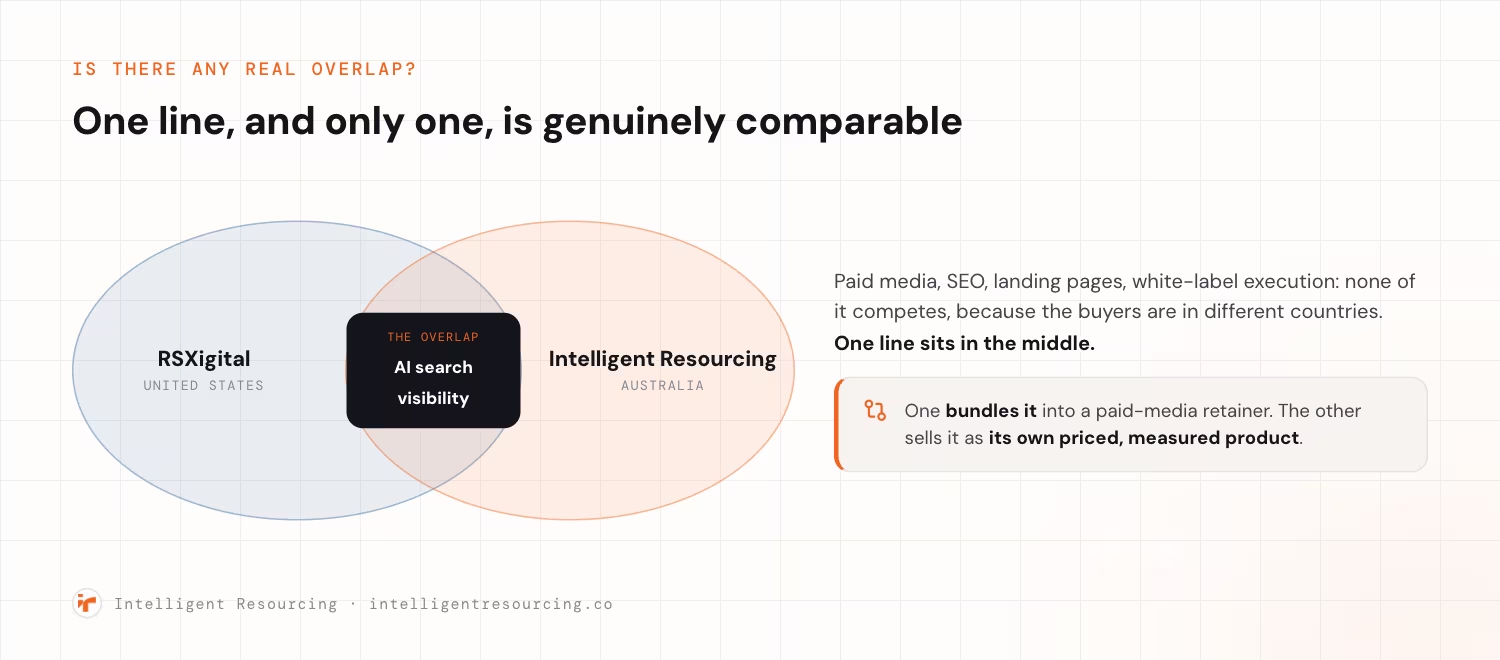
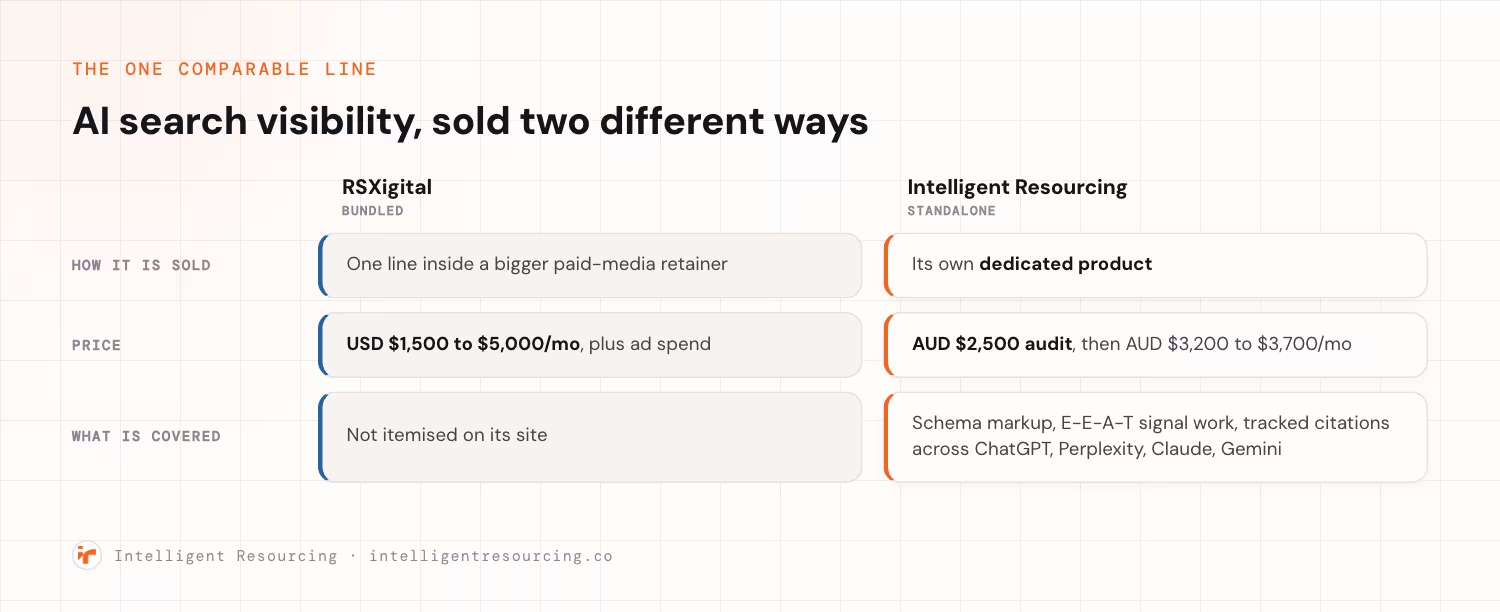
Answer-first structure and AI-assisted discovery visibility

Inbound search visibility and organic demand capture

One is built for answer-surface discoverability, while the other is built for search acquisition

Best use case

Businesses that want more control, stronger routing, and less vendor dependence

Businesses that want better paid efficiency, stronger SEO, and managed demand generation

Control and infrastructure versus managed performance and channel optimisation

Intelligent Resourcing

What It Does Well

It focuses on GTM Engineering. It positions itself around systems that detect buying signals, route opportunities and support execution inside the client’s growth environment. Its public offer is strongest when the buyer wants more control over workflow logic, signal handling and execution discipline over time.


It also goes deeper on workflow design than a typical channel partner. Its GTM Engineering offer centres on connected systems rather than isolated campaigns, and its GEO engine positioning extends that system into AI-led discovery and answer visibility. This makes the model stronger for teams that want tighter control over timing, routing and execution across the revenue process.


Capability: GTM Engineering 

Feature: Feature: CRM-connected workflows, signal detection and system-led execution support.

Benefit:  The business gains a more controlled revenue operating layer that can continue improving inside the company.


Where It May Fall Short

It's not the first choice when the main need is paid media management, broad SEO delivery or ongoing campaign operations across multiple channels.


It also works best when the business already knows its offer, ICP and sales motion. A signal-led system performs best when the team knows who it wants to reach and what should happen after intent appears.


Best fit when:

  • You want to own the workflow, logic and operating system behind growth.

  • You want to improve signal response, routing and CRM-connected execution.

  • You want to reduce dependence on static lists, fragmented tools and manual hand-offs.

  • You already have market activity and need a better system to capture and act on it.

RSXigital

What It Does Well

It focuses on B2B performance execution. Its public positioning centres on paid media, SEO, campaign optimisation and lead generation. It makes a direct case for improving lead quality, lowering CPL and increasing revenue from channel activity.


It also presents a stronger channel-led growth model for teams that want both paid and organic performance. Its SEO and performance marketing positioning focuses on capturing decision-makers, improving conversion paths and making media spend more accountable. This makes the model stronger for businesses that want better results from search, paid campaigns and inbound acquisition.


Capability: B2B channel performance
Feature: Paid media, SEO and campaign optimisation across active channels
Benefit: The business improves traffic quality, lead quality and conversion from existing channel spend


Where It May Fall Short

They are less clearly positioned around internal ownership. Its offer focuses on campaign delivery, reporting and performance improvement rather than building the full operating layer inside the client’s own stack.

It is also a less direct fit when the main problem sits below the channel level. If the business struggles with signal response, routing, hand-offs or workflow control, better campaign performance alone may not fix the bottleneck.


Best Fit when:

  • You want stronger paid media and SEO performance from channels you already use.

  • You want a B2B specialist to improve lead quality and campaign efficiency.

  • You want better conversion from paid search, LinkedIn, SEO or content.

  • You do not need to build the full GTM operating layer internally.

Cost, control and compounding


Cost now vs control later

RSXigital is easier to justify when the business wants managed execution now. Intelligent Resourcing becomes easier to justify when the business wants more control later. One model behaves like specialist outsourced execution. The other behaves like infrastructure design plus embedded support.


What compounds after 6 to 12 months

With RSXigital, what compounds is channel knowledge, campaign learning, SEO momentum and performance management. With Intelligent Resourcing, what compounds is the internal operating layer: the data logic, routing rules, enrichment flows and execution habits inside the company. Both can create value over time, but they compound in different places.


What you still own if the engagement stops

This is where the split becomes most obvious. One focuses on delivery, reporting and performance expertise. The other focuses on systems ownership, operational control and growth infrastructure inside your business.


The practical question is simple: 


Do you want to build internal control, or rely on an external team to run performance for you?

Which partner should you choose?

Choose Intelligent Resourcing if your main goal is to improve control over the revenue system, reduce vendor dependence and improve how demand gets enriched, routed and converted inside the business. It is the better fit when your current problem is not more impressions, but a cleaner operating layer.


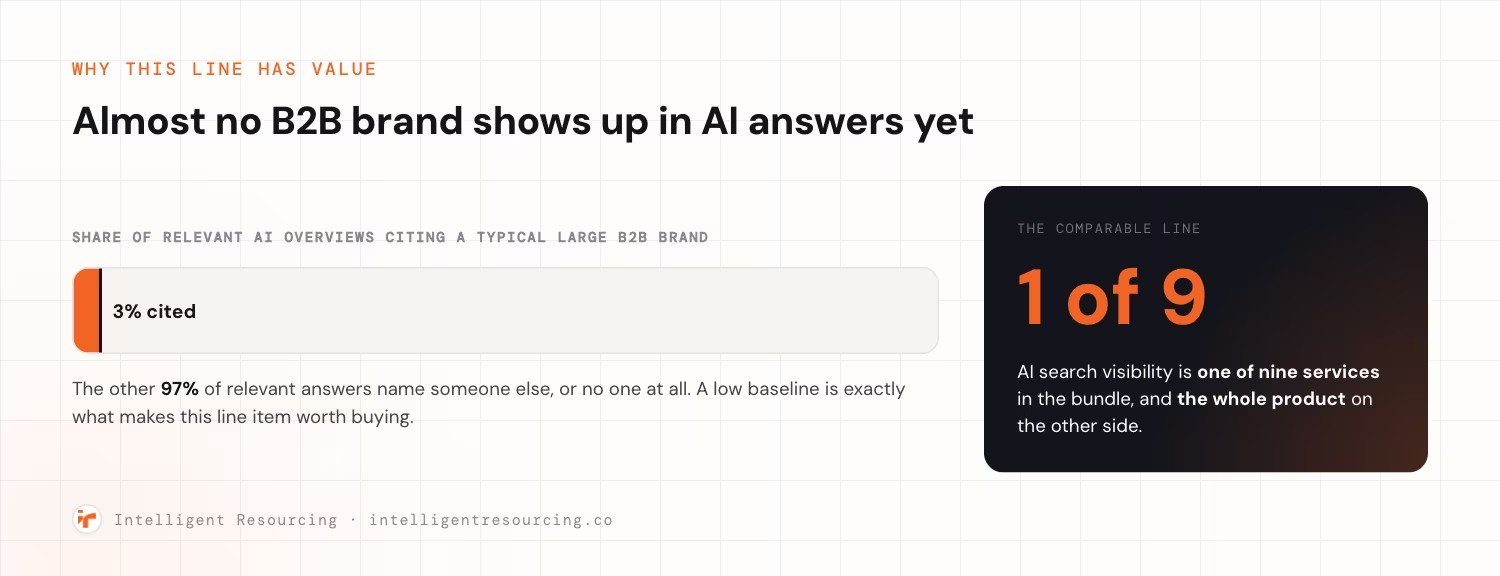
It is also the better choice when AI-facing discoverability matters. Buyers now research through search, AI tools and answer-led interfaces before they contact sales. The business needs clear visibility, structured answers and a system that connects discovery to action. That makes Intelligent Resourcing the clearer fit for teams that want discoverability tied to execution.


Choose RSXigital if your main goal is to improve acquisition efficiency across paid and search without building every process internally. It is the stronger choice when you already accept the need for managed channel execution and want a B2B-only specialist to improve lead quality, conversion efficiency and reporting discipline.


It is especially relevant when your team needs help capturing demand rather than engineering the full response layer.


Signal-led systems or performance marketing?

The answer depends on where the bottleneck really sits.


Choose Intelligent Resourcing if you want a signal-led system that you can own, refine and keep.


Choose RSXigital if you want a specialist team to improve paid and search-led demand capture.

FAQs

Which model is better if I want to reduce ad dependency?

Signal-led systems are the better fit because they are built around owned systems, signals and workflow control rather than ongoing channel management.


Is RSXigital only a paid ads agency?

No. Its public site positions it more broadly as a B2B-only performance marketing partner covering lead generation, campaign optimisation, B2B SEO and growth strategy.


Is Intelligent Resourcing just an outbound provider?

No. In this context, its public positioning centres on GTM Engineering, signal-led lead generation systems and Generative Engine Optimisation.


Which option gives more internal control over data and workflow?

Signal-led systems. Its public positioning places more emphasis on internal control, workflow design and systems ownership than performance marketing agencies do.


Still trying to fix the bottleneck after acquisition?

Explore Lead Generation services built around signal capture, enrichment, routing and sales-ready handoff, not just more channel activity.

Ronan Leonard

I'm Ronan Leonard, a Certified Innovation Officer and founder of Intelligent Resourcing. I design GTM workflows that eliminate the gap between strategy and execution. With deep expertise in Clay automation, lead generation automation, and AI-first revenue operations, I help businesses to build modern growth systems to increase pipeline and reduce customer acquisition costs. Connect on LinkedIn.

I'm Ronan Leonard, a Certified Innovation Officer and founder of Intelligent Resourcing. I design GTM workflows that eliminate the gap between strategy and execution. With deep expertise in Clay automation, lead generation automation, and AI-first revenue operations, I help businesses to build modern growth systems to increase pipeline and reduce customer acquisition costs. Connect on LinkedIn.