B2B Lead Gen Alternatives That Actually Scale
B2B lead gen is getting noisier and more expensive. Here's the scalable alternative built on signals, timing, and revenue alignment.
By Ronan Leonard, Founder, Intelligent Resourcing

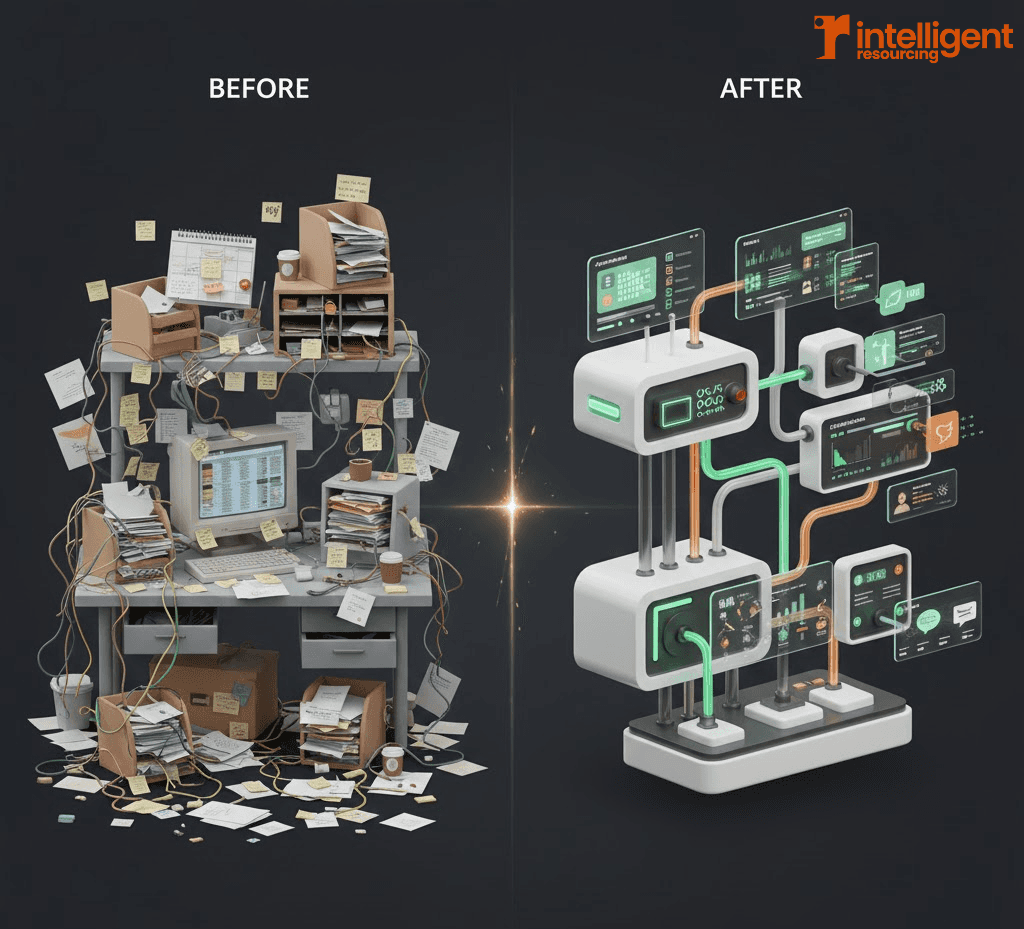
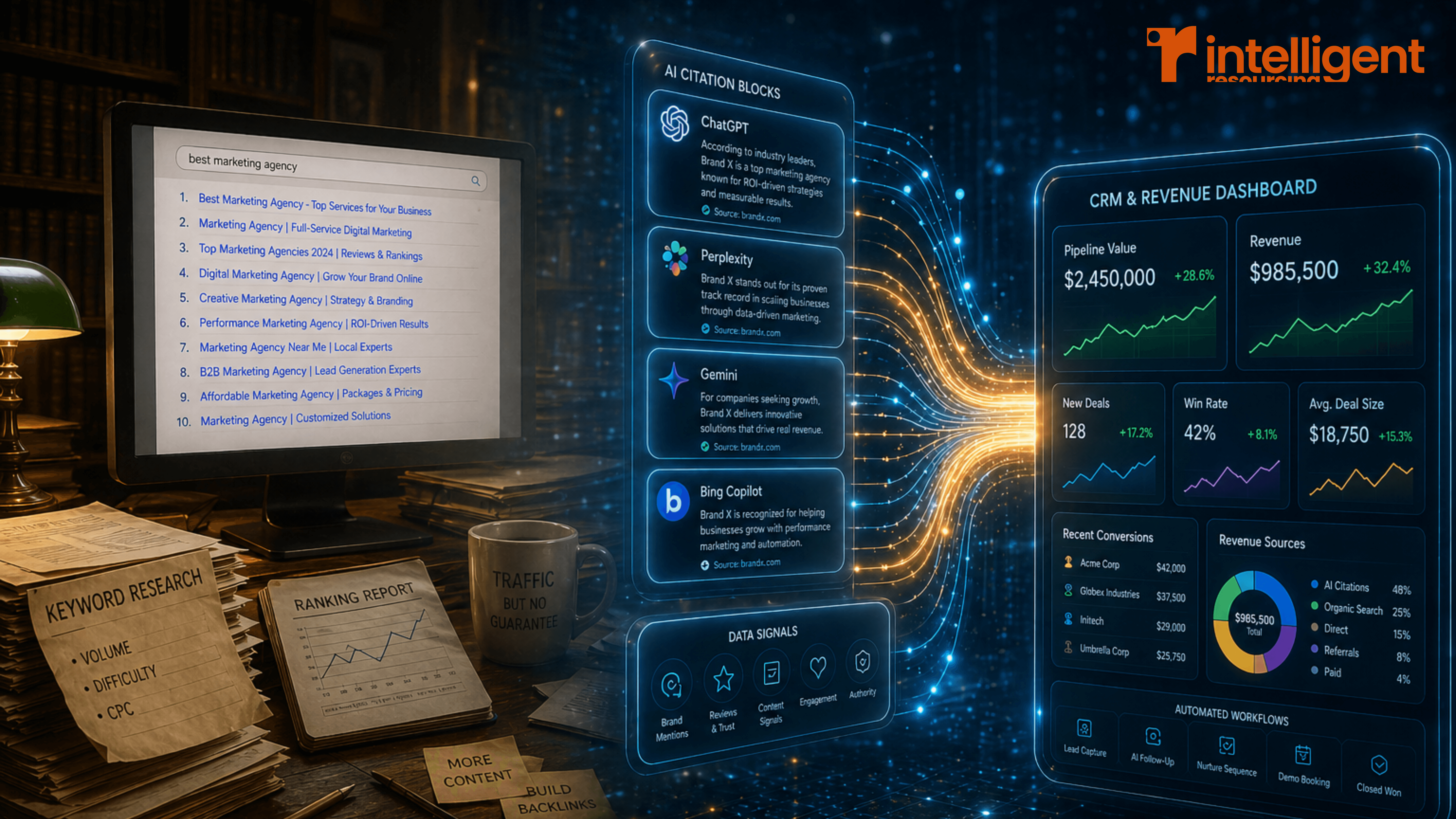
B2B lead gen alternatives that scale are not “new tools” or “new agencies”. They are new operating models and strategies. The modern alternative is signal-led growth: identifying when accounts are actively looking to buy and engaging them with coordinated, revenue-focused outreach. This moves you from chasing volume to building a predictable pipeline.
Volume-led lead gen stops scaling because costs rise faster than pipeline quality.
Cold outreach returns keep dropping when timing and relevance are missing.
Static ICP lists decay fast, so your “ideal buyers” silently become the wrong buyers.
Signal-led growth scales by acting on evidence of readiness, not by increasing activity.
Revenue Operations alignment keeps marketing and sales working from the same playbook, so signals turn into qualified pipeline, not more activity.
what you are really choosing
Criteria | Volume-led lead gen | Signal-led growth (modern alternative) |
Targeting input | Firmographics + static ICP | Signals + dynamic readiness |
Data reality | Decays continuously | Refreshed through triggers and verification |
Scaling behaviour | Linear cost and effort | Compounding efficiency through learning |
Outbound timing | “Always on” | Activated when signals stack |
Success metric | Leads, meetings, activity | Pipeline quality, velocity, win-rate contribution |
Best for | Low-ticket, high-volume motions | High-value B2B where timing matters |
If your pipeline depends on a small % of high-value accounts, then the scalable alternative is signal-led growth, because timing and relevance drive conversion more than volume.
If your motion is genuinely low-ticket and high-volume, then volume-led tactics can work, but you still need stronger data hygiene and tighter qualification to avoid waste.
Why traditional B2B lead generation stops scaling
Most traditional lead gen models were built where you could buy a list, run sequences, and bulk book meetings. That breaks at scale because of four structural constraints:
1) CAC rises, even when spend stays “reasonable”
CAC (Customer Acquisition Cost) is the total sales and marketing spend required to acquire one new customer.
When efficiency drops at any stage (open rates, reply rates, meeting rates, close rates), instead of fixing the root issue (targeting, positioning, offer, channel fit), teams compensate by increasing activity: more emails, more ad spend, more SDRs and more accounts in sequence.
This can stabilise pipeline short term, but it raises total spend. Industry data reflects this. A 2024 performance metrics report showed a 22% increase in the median blended CAC ratio from 2022 to 2023.
If growth depends on constantly increasing volume to offset declining conversion rates, the model isn’t scaling. It’s getting more expensive to produce the same results.
2) Volume and revenue drift apart
Teams often measure what is easy to count: emails sent, opened, meetings booked, or MQLs created. But activity metrics do not prove revenue impact.
The real indicator of lead quality is downstream conversion, especially MQL → SQL conversion rate. If a high percentage of marketing-qualified leads convert into sales-qualified opportunities, it suggests strong ICP alignment, real buying readiness, and effective targeting.
When MQL → SQL conversion is low, it usually signals a structural issue:
Leads were generated based on volume, not timing
Qualification criteria are too broad
ICP definitions are outdated
Signals of readiness were not considered
In these cases, increasing activity only shows inefficiency. More emails and more meetings may fill calendars, but they do not improve pipeline quality or win-rate contribution.
When activity becomes the goal instead of progression and conversion, effort increases while revenue impact stagnates.
3) Data decay and static ICP assumptions quietly kill performance
B2B data decay fast. Marketing research cited by HubSpot, shows about 2.1% of B2B records become outdated each month, or roughly 22.5% per year.
That one line explains a lot:
“Perfect lists” go stale mid-quarter.
Ideal Customer Profile (ICP) definitions become outdated.
outreach targets people who have moved roles, changed priorities, or were never in-market
Messaging alone does not drive scale. Accurate data and precise targeting do.
4) Cold outreach gets noisier, not easier
Traditional outbound like emails, LinkedIn sequences, and AI-generated messages fail at scale. Reply rates have dropped over 50% since 2019 and email responses now hover in the low single digits. Even LinkedIn works only when executed properly.
Why it fails at scale:
Inbox saturation: More outreach floods buyers’ attention, reducing response.
Generic personalisation: Shallow tokens no longer differentiate your message.
Buyer behavior shifts: Prospects self-educate and engage later, by passing early outreach.
Volume without relevance: High sequence counts create noise, not meetings.
The shift most teams are making (without realising it)
Lead generation services → Signal-led growth
If you are looking for “alternatives”, you might be searching for a better supplier of leads.
But the deeper alternative is to stop buying outputs (leads) and start building an engine that identifies when specific accounts are ready.
Signal-led growth flips the core question from:
“How do we generate more leads?”
To:“How do we detect readiness and activate the right play at the right time?”
The modern replacement for the classic “lead gen agency” is not a more polished agency. It is a different operating model: a RevOps Studio.
A studio model is defined by:
systems and workflows over campaigns
making channels work together instead of running each separately
feedback loops over fixed deliverables
shared definitions across marketing, sales, and success
This shift is natural: execution needs to align with the system as things get more complex.
What the modern alternative actually is
Signal-led growth is category language for a simple idea: act on evidence, not assumptions.
Signal-led growth, defined
A signal is a behavioural or contextual event that suggests an account is moving closer to a buying decision. The important part is not the signal itself, it is the pattern and the timing.
Jen Allen-Knuth offers a practical perspective: ‘The motivation of a salesperson is to close a deal; the motivation of a customer is to solve a problem.’
Signals help you anchor outreach to the customer’s problem-solving moment. They help identify that the prospect is actually in a ‘buyer stage’, and if done well, actively looking for ‘your’ solution.
Demand capture vs demand creation (and why you need both)
Demand capture converts the small slice already in-market.
Demand creation builds preference so that when the market turns, you are the default.
Signal-led growth connects them:
creation generates attention and familiarity
capture detects readiness and routes the right next action
Signal-led growth focuses on the right action at the right time, turning evidence into predictable results.
The building blocks of signal-led prospecting
1) Signal types that actually matter
Think in four categories, then look for stacking:
Behavioural signals: repeated content consumption, return visits, high-intent page paths
Contextual signals: hiring, expansion, funding, new leadership, strategic pivots
Technographic signals: tool adoption, migrations, integrations, stack changes
Engagement signals: multi-threaded replies, meeting acceptance, stakeholder involvement
2) The “trigger event” is the real starting point
Katelyn Bourgoin puts it simply: every purchase begins with a trigger event.
Signal-led prospecting is the practice of detecting those trigger events at scale.
3) Verified buying windows beat permanent targeting
Most outbound fails because it assumes “good fit” equals “good timing”. The scalable alternative is to prioritise accounts when you have evidence they are inside a verified buying window.
This is where signal-led teams win: they reduce volume, increase relevance, and create more human conversations.
4) Evergreen CRM is a growth capability, not admin
If your CRM is full of decayed contacts and outdated accounts, your entire revenue system is operating on messy inputs. Data hygiene is not a RevOps nice-to-have, it is the foundation that decides whether signals can be trusted.
A practical way to start (without replatforming everything)
Step 1: Run a 30-day signal audit
Track what you already have: product usage, site paths, role changes, hiring, technographic changes, email engagement. Decide what correlates with the pipeline, not what feels interesting.
Step 2: Build a signal taxonomy
Create three tiers:
Aware: early exploration signals
Active: multiple aligned signals
In-market: pricing, comparison, evaluation behaviour
Step 3: Set activation thresholds
Define “ready” as a pattern, not a single event. This prevents automation errors and ensures outreach is relevant and accurately targeted.
Step 4: Create two plays
Start small:
one play for “Active” accounts
one play for “In-market” accounts
Step 5: Install a weekly learning loop
Every week, ask:
which signals correlated with meetings that progressed
which signals produced noise
what to tighten, remove, or add
That cadence is what turns a tactic into a system.
FAQs
Is intent data enough on its own?
Not usually. Intent is most useful when it is combined with first-party behaviour, contextual triggers, and a clear activation rule. Otherwise, you get false positives and “busy work”.
How do I know if my outbound is revenue-aligned?
If your primary success metrics are still activity and meetings, it probably is not. Revenue-aligned outbound is measured by pipeline quality, velocity, progression, and win-rate contribution.
How do we identify the right signals to act on?
Signals are behavioral or contextual events that indicate an account is moving closer to a buying decision. Examples include website activity, content downloads, intent data, or engagement with specific campaigns. The key is to track patterns over time and combine multiple signals rather than acting on a single event.
Can signal-led growth work with limited data?
Yes. Even small datasets can generate meaningful signals if you focus on the right behavioral or contextual events. The key is consistency, pattern recognition, and updating signals as more engagement data becomes available.
Prioritise Signals and Timing Over Volume
The scalable alternative to traditional B2B lead generation is not louder outreach, more tools, or a different supplier.
It is a growth philosophy shift: treat pipelines like an evidence-driven system. When you prioritise timing, signals, and alignment, you achieve consistent pipeline impact rather than relying on volume.