B2B Lead Generation: Signals, Tools & Playbooks That Actually Convert
Master modern B2B lead generation. Learn how to use signals, automated workflows, and multi-channel playbooks to build a system that converts to pipeline.
By Ronan Leonard, Founder, Intelligent Resourcing
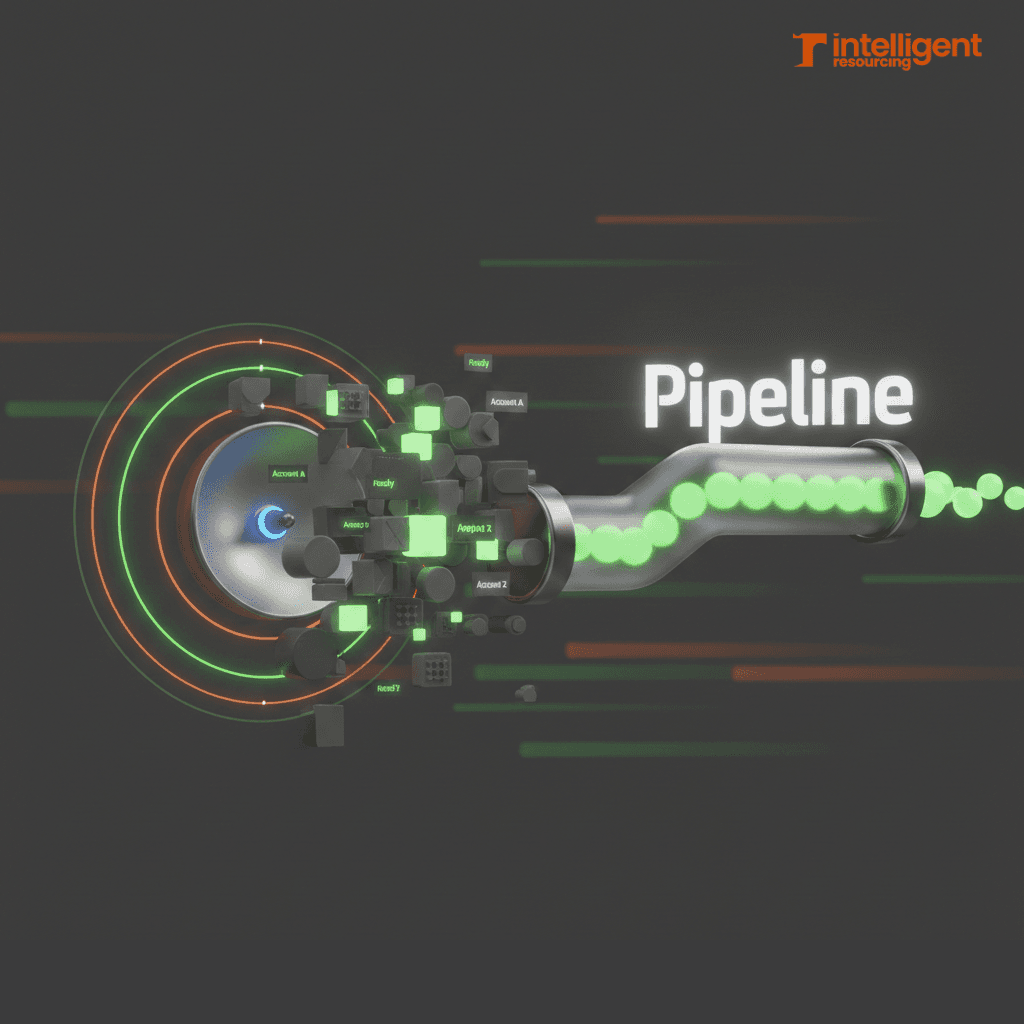
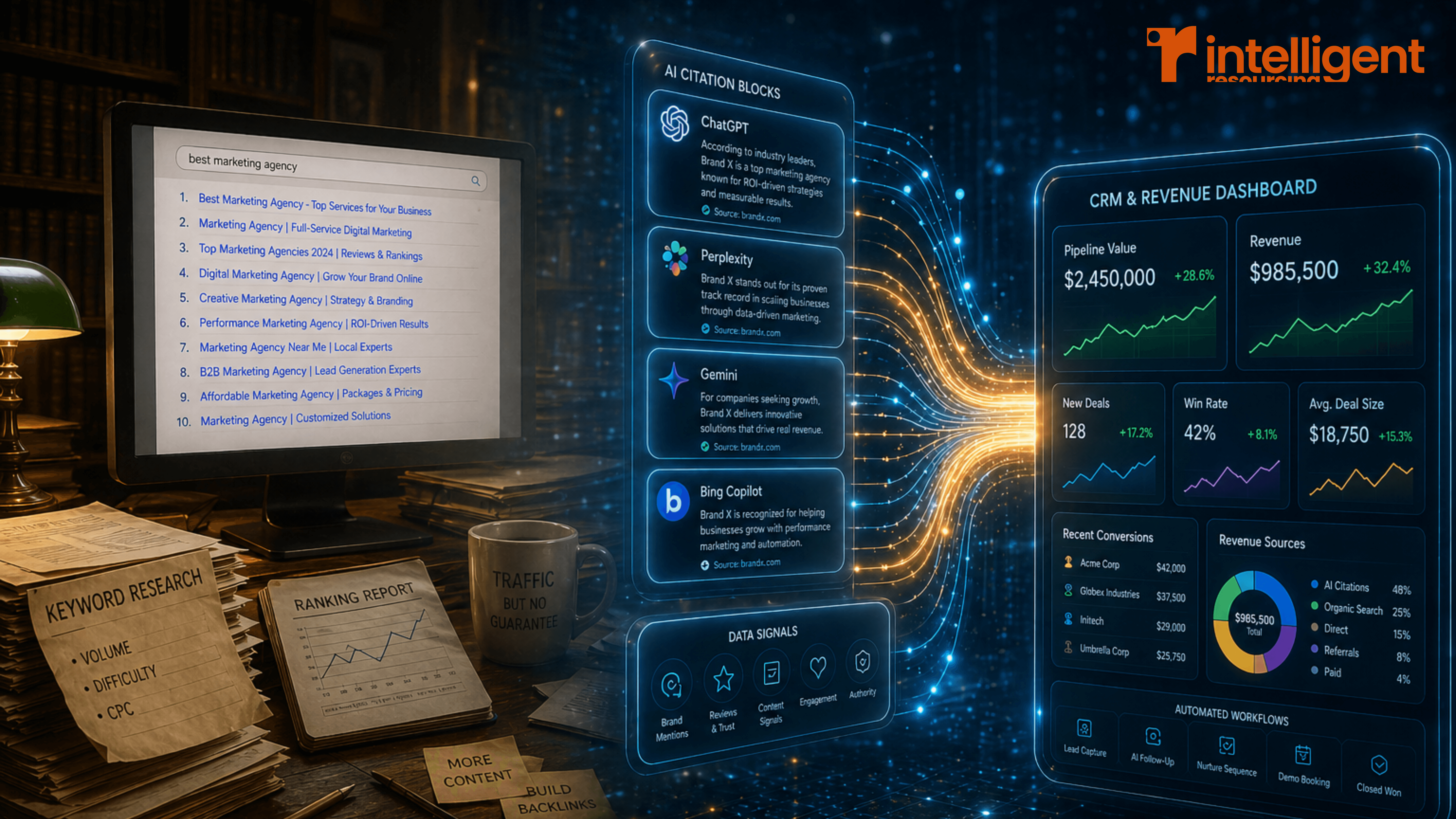
B2B lead generation in 2026 is a signal-led system. Instead of buying leads or outsourcing outreach, high-performing teams capture behavioural and contextual signals, qualify them with time-bound logic, then trigger multi-channel playbooks only when an account enters a Verified Buying Window™. Leads become the output of readiness—not the input.
Signals beat services because they reveal timing, not just interest.
Static lists decay fast, so “more volume” usually means “more waste”.
Workflows replace hand-offs: capture → qualify → route → activate.
Tools don’t create pipeline—orchestration does.
UK/EU compliance matters: PECR/UK GDPR rules shape how you use email and intent data.
Decision matrix: Service-led vs signal-led lead gen
Criteria | Traditional lead gen services | Signal-led (Signal Orchestration) |
|---|---|---|
Primary optimisation | Volume of contacts/meetings | Timing + readiness (Verified Buying Window™) |
Targeting | Static ICP + lists | Dynamic accounts based on signals |
Qualification | Form fills / surface intent | Stacked, weighted, time-bound evidence |
Handoff | Marketing → Sales | Workflow routes next-best action |
Outcome | Activity spikes, volatile pipeline | Predictable pipeline creation |
Choose service-led lead gen if you need low-cost volume and can tolerate low conversion. Choose signal-led systems if you need pipeline reliability and higher-value deals—because timing and relevance drive conversion.
Why Traditional Lead Generation Services No Longer Work
For years, B2B growth depended on lead generation services promising more leads, more meetings, and faster results. These services assumed that:
Buyers reveal intent through forms
Volume compensates for weak relevance
Outreach itself creates demand
Modern buying behaviour has invalidated all three.
Research published by Harvard Business Review shows that B2B buyers now complete most of their evaluation before engaging sales, relying on peer insight, content, and internal alignment long before a "lead" exists. In this environment, form-fills and outsourced outreach capture only a fraction of real demand.
In this environment, form-fills and outsourced outreach capture only a small fraction of real demand.
When organisations rely on lead capture alone, predictable failure patterns emerge:
False positives — contacts with no urgency or authority
False negatives — real buying committees never surface
Pipeline volatility — activity is mistaken for progress
The issue is not execution quality. It is a broken model optimised for visibility rather than timing. Teams become trapped in a cycle of generating more leads to compensate for poor conversion, which only amplifies the underlying problem while consuming more resources.
What Modern B2B Lead Generation Actually Is
Modern B2B lead generation is a signal-led system.
Instead of asking "How do we get more leads?", high-performing teams ask:
"What evidence tells us an account is entering a buying window and how do we act on it?"
This framing aligns with research from McKinsey & Company, which shows that B2B buying is non-linear, digitally driven, and consensus-based. Intent emerges across multiple interactions over time, not in a single conversion moment.
Signal-led lead generation is therefore:
Predictive, not descriptive
Dynamic, not static
Time-sensitive, not permanent
Leads become the output of the system, not the starting point.
These approaches are explored in depth in our guide to B2B lead generation strategies for 2026, which covers specific playbooks for different signal types and buying stages.
B2B Lead Generation Strategies That Actually Convert
High-performing B2B teams no longer design strategies around channels. They design around signals.
The most effective strategies align four strategic layers:
Signal-based prospecting
Accounts are prioritised by behaviour and context, not static firmographics.Multi-channel orchestration
Channels are activated after intent appears, not in parallel.Inbound + outbound integration
Inbound captures signals; outbound converts them at the right moment.Timing-driven activation
Outreach is triggered by evidence, not sales cadence.
Behavioural funnel analysis from HockeyStack demonstrates that pipeline creation is driven by sequences of interactions across channels, not isolated actions or single lead events. This is why signal-first strategies consistently outperform volume-based campaigns.
These approaches are explored in depth in our guide to B2B lead generation strategies for 2026, which covers specific playbooks for different signal types and buying stages.
The B2B Lead Generation Workflow
From Signal Capture to Sales-Ready Lead
The true differentiator in modern B2B lead generation is workflow design.
Tools alone do not create pipeline. Systems do.
A signal-led lead generation workflow typically follows four stages:
1. Signal Capture
Data is collected across behavioural, contextual, and engagement touchpoints — not just forms.
2. Qualification Logic
Signals are stacked, weighted, and time-bound. Readiness thresholds replace static lead scores.
3. Automated Routing
Accounts are assigned dynamically based on intent, segment, and opportunity context.
4. Sales Handoff
Sales receives timing, insight, and narrative, not raw contacts.
This workflow-centric approach aligns with revenue operations research from Forrester, which shows that predictable growth emerges when systems own outcomes, not departmental hand-offs or manual coordination.
This system is explored fully in our lead generation workflows, which includes implementation blueprints and technical specifications for each stage.
Signal-Based Lead Generation
Predicting Pipeline, Not Leads
Signal-based lead generation focuses on what buyers are doing, not just who they are.
Firmographic signals answer: Could they buy?
Behavioural and contextual signals answer: Are they buying now?
Research from OpenView Partners shows that modern B2B go-to-market success depends on recognising account momentum and buying signals, rather than relying on static lead scoring or list-based qualification.
Key characteristics of effective signals:
Qualified – filtered for relevance and intent
Time-bound – decay over time if not reinforced
Actionable – directly trigger workflow decisions
This explains why signal-based models consistently outperform traditional lead-centric approaches. They reduce wasted effort on accounts that are not ready, accelerate engagement with accounts that are, and provide sales teams with context that improves conversation quality and close rates.
Our guide to signal-based lead generation covers signal taxonomy, scoring methodologies, and integration strategies for building a complete signal capture system.
Tools Don't Generate Leads — Systems Do

Most B2B teams do not lack tools. They lack orchestration.
Point solutions fail when signals are collected but not qualified, data remains siloed across platforms, and automation lacks decision logic. Teams end up with intent data providers, marketing automation platforms, sales engagement tools, and analytics systems that do not talk to each other or coordinate action.
High-performing teams design revenue automation systems where workflows, not tools or departments, own outcomes.
In these systems, marketing does not "pass" leads to sales. Instead, the workflow qualifies readiness and routes accounts to the appropriate next action, which might be continued nurture, sales outreach, or account-based plays depending on signal strength and account characteristics.
Sales does not "chase" activity or work arbitrary lists. They receive qualified accounts with context about why engagement is warranted now, what the account cares about based on behaviour, and which stakeholders are involved based on engagement patterns.
Operations does not manually reconcile data between systems or create weekly reports to align teams. The system continuously updates account readiness, automatically triggers appropriate actions, and provides real-time visibility into pipeline generation rather than lagging metrics.
Lead generation becomes an engineered process, not a collection of disconnected tactics. The system ingests signals, applies qualification logic, orchestrates engagement, and measures outcomes in a closed loop that improves over time.
How This All Connects
Modern B2B lead generation works when three pillars align:
Signals define when buyers are ready by capturing behavioural and contextual evidence of intent across all touchpoints.
Workflows define how intent becomes action by automating qualification, routing, and engagement based on signal patterns.
Playbooks define where and how teams engage by providing channel-specific tactics matched to signal type and buying stage.
Together, they form a signal-led go-to-market system, not a volume-driven funnel. This system recognises that pipeline creation is not about generating more activity, but about recognising readiness and responding with precision.
Key Takeaways
Lead generation services optimise volume, not timing
Signals predict pipeline better than contacts
Workflows prevent leakage between teams
Systems convert where tactics fail
Modern B2B lead generation is not a service you buy. It is a system you build.
FAQs
What is B2B lead generation in 2026?
A signal-led system that captures buying intent, qualifies readiness, and activates sales only when evidence supports engagement.
Are lead generation services obsolete?
They are increasingly misaligned with modern buying behaviour and rarely produce predictable pipeline on their own.
What's the difference between signals and intent data?
Intent data is raw input. Signals are qualified, time-bound evidence used to trigger action.
Where should B2B teams start?
By defining which signals indicate readiness before choosing channels, tools, or services.
References
Harvard Business Review — The New Sales Imperative
McKinsey & Company — The New B2B Growth Equation
HockeyStack — The Right Way to do B2B Multi-Touch Attribution: Key Models, Challenges & Best Practices
Forrester — Why Revenue Operations (RevOps) Should Be On Your Radar
OpenView Partners — A Product-led Approach to Sales