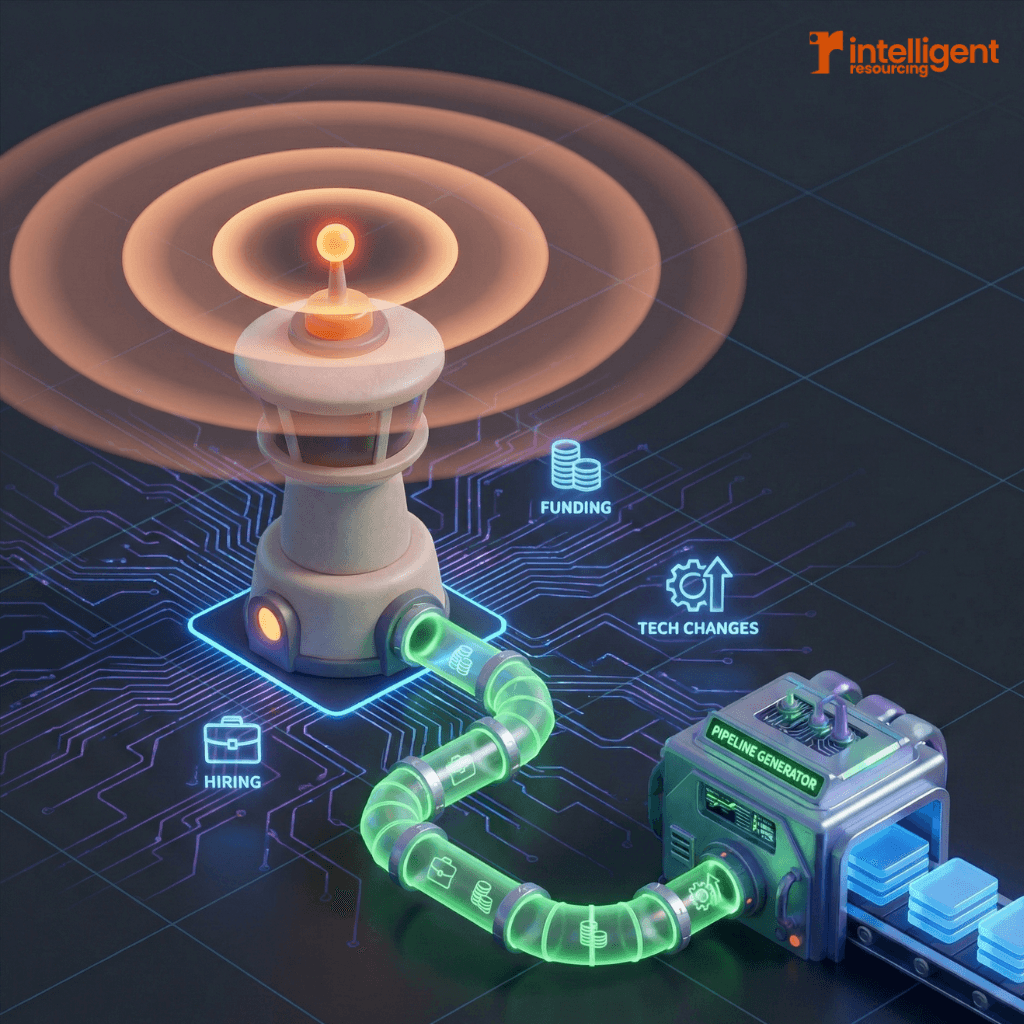
Signal-based lead generation is a go-to-market strategy that catches buying signals well before a prospect officially becomes a "lead." Instead of just paying for a high volume of names, teams look for real-world triggers, such as:
Hiring changes and leadership moves
New technology implementations
Early research and engagement patterns
Key company milestones or commercial events
Once you capture these signals, you can enrich, score, and route them to the right team exactly when the timing and relevance are perfect.
Why ICP is No Longer Enough: The Core of Signal-Based Lead Generation
Matching your Ideal Customer Profile (ICP) only tells you ‘who’ to target. It does not tell you ‘when’ to engage.
To build a reliable pipeline, you must detect meaningful, time-sensitive changes inside those target accounts. Signal-based lead generation is the operational system for doing exactly that. Instead of waiting passively for a generic form fill, you actively monitor for triggers such as executive hiring, tech stack shifts, funding rounds or renewed CRM activity. This allows you to pinpoint the exact moment an account transitions from casually browsing to genuinely ready to buy.
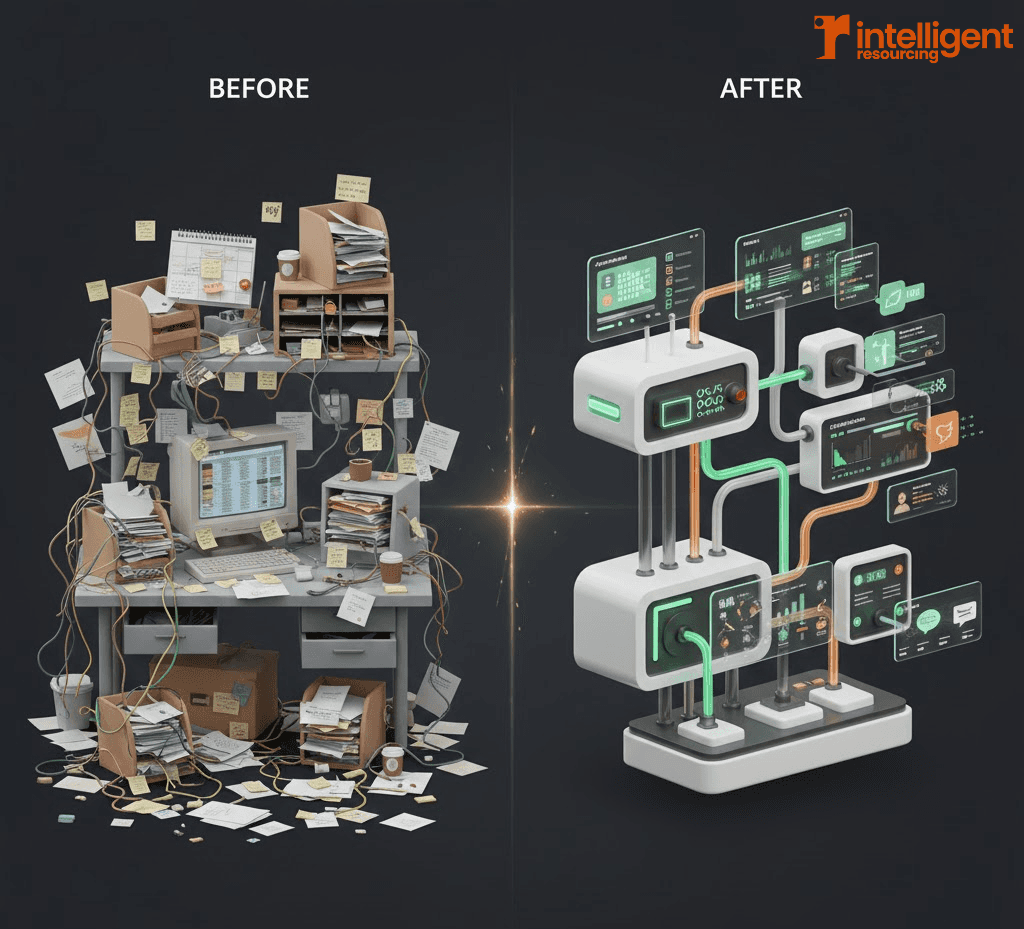
This breaks from the traditional lead generation agency model. Most agencies are built to manufacture surface-level activity: static lists, low-intent meetings, and vanity hand-raisers.
A signal-based approach abandons volume in favor of precision. It systematically connects the dots to drive actual revenue:
Validates intent before a single piece of outreach is sent.
Integrates operations by connecting data enrichment, automated scoring, rep routing, and CRM attribution.
Measures success strictly through pipeline movement, conversion rates and revenue impact, not just activity metrics.
In this model, the ultimate test of a lead is not just who they are. It is identifying what just changed inside their business, proving that change indicates buying readiness, and executing the exact right next action the moment it happens.
Why traditional lead generation breaks down
The traditional playbook relies on waiting for prospects to officially raise their hands. This approach suffers from three major flaws.
Volume hides terrible timing
Chasing lead volume ignores the reality of when people actually buy. The 95-5 rule shows us that 95% of prospects are not ready to buy leaving only 5% actively ready. Pumping massive volumes of cold names into an outreach sequence does not create opportunity. It just creates noise and wastes effort. You burn through your Total Addressable Market (TAM) by forcing to pitch accounts that are structurally unready to buy.
Disconnected systems
Disconnected systems create blind spots. When list building, data enrichment, and outreach live in separate silos, you lose sight of what actually works. You stop learning which signals predict meetings and which ones are just noise.
This lack of coordination is why 46% of sales professionals say data issues hurt their performance, and 37% of CRM users report losing revenue due to poor data quality.
Leads are lagging indicators
The core problem is simple. A traditional lead usually appears way too late. By the time someone fills out a form or books a demo they have already spent weeks quietly researching, comparing vendors and talking to peers. If your system only reacts to these late stage actions you completely miss the early window where buyers form opinions and build shortlists.
When you optimise for volume over intent, you don't build a pipeline, you just build a backlog of wasted effort.
Traditional vs. Signal-Based Lead Generation
Criteria | Traditional lead generation | Signal-based lead generation |
Primary input | Names and contact records | Change events and buying clues |
Timing | After a form fill or list pull | Before a formal lead exists |
Qualification | Mostly firmographics | Fit, timing, context, and intent |
Data model | Static and batch-led | Dynamic and event-led |
Action | High-volume outreach | Routed, context-aware plays |
Best fit | Volume-first activity | Predictable pipeline creation |
This comparison shows the shift from volume to value in modern market strategies. Traditional lead generation forces teams to be reactive, waiting for a standard form fill and relying on static data, which usually leads to high-volume, but low-converting outreach.
Signal-based lead generation flips that model. By tracking buying signal and context before a prospect ever becomes an official lead, your team can prioritise actual intent. This allows you to route leads and reach out at the right moment, turning wasted effort into predictable pipeline.
Signals that actually predict pipeline
High-intent signals are often subtle. The real value isn't in a single event, but in how those events stack up. We look for relevance, clustering, and timing.
Hiring and org changes. New roles, team expansion, and leadership hires often signal budget movement, operational pressure, or a change in priorities. A single vacancy is weak. A cluster of related hires is far stronger.
Technology changes. New tools entering the stack, legacy systems being replaced, or implementation partners appearing can all signal a coming purchase motion. These signals are especially useful when your offer depends on integration, migration, or workflow redesign.
Funding, restructuring, and expansion. Commercial change often creates new buying windows. Expansion into a new market, new investment, or a reorganisation can all trigger new operational requirements and vendor reviews.
Behavioural signals. Repeated visits to pricing, comparison, or service pages, content engagement across several sessions, return visits from multiple people in the same account, or growing AI discovery visibility can all signal emerging demand.
CRM and sales interaction signals. Reopened opportunities, revived dormant contacts, multithreaded email engagement, and repeated touches from related stakeholders are often stronger than a fresh list of net-new names. They show movement inside known demand, not just theoretical fit.
How signal-based lead generation works in practice
1. Signal Capture: Events, Not Lists
In a signal-based model, prospecting doesn't start with a static list; it starts with events.
Instead of pulling a thousand names and hoping for the best, we monitor for specific triggers that actually matter, such as:
Executive Hires: A new leader looking to make an impact.
Tech Stack Shifts: A competitor’s contract expiring or a new integration being added.
Engagement: Renewed CRM activity or high-intent website behavior.
Company Growth: New funding rounds or rapid department expansion.
The goal isn't to collect every possible data point. It’s to identify the 3 or 4 specific signals that consistently prove a verified buying window has opened in your market. This is where we immediately depart from traditional prospecting: Timing and relevance come first, not volume.
2. Enrichment and Validation
A raw signal on its own is rarely enough to trigger action. It needs context to become an opportunity. Before a signal moves forward, it must pass a "truth test" across several layers:
Company Fit: Does this account actually match your Ideal Customer Profile (ICP)?
Role Relevance: Is the signal coming from a decision-maker or someone just browsing?
History: What does your CRM say? Have they talked to you before, or is this a fresh entry?
Data Accuracy: Is the contact information verified and up to date?
This is where traditional systems break down. Validity found that 76% of companies admit less than half of their CRM data is accurate and complete. Without this validation step, even the best signal is wasted on a "dead" lead. We ensure that by the time a signal reaches your team, it is fully enriched and ready for a conversation.
3. Prioritisation and Scoring
Not every account that fits your ICP should be activated, and not every active signal deserves the same response. Good scoring models balance "Who they are" with "When they are buying."
In practice, a perfect-fit account with no movement is often less valuable than an "okay" fit that is showing multiple signals at once. This is where the workflow becomes intelligent:
Weighting the Signals: A "New VP of Sales" might be a stronger signal than a "Website Visit." We score them accordingly.
The Power of "And": We look for overlapping signals. One event is interesting; three events happening in the same week is a high-priority opportunity.
Automated Decision Rules: Modern teams use tools like Clay to instantly combine enrichment and verification. This ensures that only the highest-scoring accounts, those with the right fit and the right timing are pushed live to your sales team.
The result is that your reps stop guessing who to call and start focusing on the accounts that have already "raised their hand" through their actions.
4. Routing and Action
This is the stage where signal-led systems either build a pipeline or just create more noise. A signal is a starting point, not an excuse to send a generic email.
Depending on the strength and type of the signal, the "next best action" might look very different:
High-Intent Signals: Route directly to a sales rep for a personalised, manual reach-out.
Early-Stage Signals: Trigger a LinkedIn ad or a "founder-led" soft intro to stay top-of-mind.
Low-Weight Signals: Move the account into a long-term nurture workflow until more activity is detected.
Review Queue: Send a manual check if the data needs a human eye before any outreach begins.
What matters is that the output is clean, verified, and trusted. When a rep sees a lead in the CRM, they shouldn't have to wonder if the data is right. They should already know why they are reaching out and what the "hook" is.
To see this handoff logic in action, check out how we use Clay to sync signals directly to the CRM, ensuring a seamless transition from "detected event" to "sales opportunity."
5. Feedback into CRM
Signal-led lead generation only improves when outcomes feed back into the system. Without a feedback loop, you’re just repeating the same actions without knowing what actually works. To build a reliable revenue engine, you have to ask:
Which signals created meetings?
Which combinations led to a qualified pipeline?
Which signals looked promising but failed to convert?
When you sync these results back to your CRM, your "Signal Capture" (Step 1) becomes smarter over time. You stop chasing the "noise" and double down on the high-conversion triggers.
Tools execute logic. They do not create strategies
A strong tech stack can help you collect events, score accounts, and launch actions faster. But if the underlying logic is noisy, you are simply automating noise. The real advantage doesn’t come from buying a "signal platform." It comes from the strategy behind it:
Deciding which signals actually matter to your specific business.
Identifying the combinations that signal a true buying window.
Orchestrating how those signals route through your GTM system.
This is the pivot many teams miss. They think they need more tools when what they actually need is cleaner definitions, better orchestration, and tighter feedback loops. Signal-led growth is not anti-tool. It is anti-random automation. For readers mapping the stack side of this, What Tools Do I Need For Signal Based Marketing is a useful supporting guide.
Build Signal-Based Lead Generation In-House or Buy Help?
Deciding how to build your engine depends on your goals for speed versus long-term control.
Build In-House if Ownership is the Priority
Building internally makes sense when your category is nuanced and your sales motion is highly consultative. If you want to turn your data logic into a durable competitive asset, keeping the "brain" of the system inside your company ensures you have total control over every signal and workflow.
Buy Support if Speed is the Priority
External help is best when you need to move fast. If your team understands the problem but doesn't have the capacity to build the technical architecture, an outside partner can accelerate your workflow design, enrichment logic, and implementation.
The Hybrid Model: The Strongest Path
For most teams, a hybrid approach offers the best of both worlds. External experts get the machine running and handle the heavy lifting of the initial build, while your internal team maintains ownership of:
Signal Definitions: Deciding what "ready to buy" looks like.
Routing Rules: Choosing who gets which lead.
CRM Discipline: Ensuring the feedback loop stays clean.
Teams evaluating that route would usually compare a hands-on build such as Automated B2B Lead Generation with Clay & n8n (2026) with a broader systems offer such as GTM Engineering | Build Growth with AI Automation.
Why signal-led growth wins
Signal-led growth wins because it aligns with how buying really happens.
It improves timing because teams act on movement instead of static lists. It improves relevance because outreach reflects what changed, not just who fits an ICP. It improves attribution because signals, routing, and outcomes can be tied back to the same operating system. And it reduces waste because fewer actions are launched at the wrong moment.
FAQs
How is signal-based lead generation different from lead generation services?
Lead generation services usually optimise for output, such as list size, meetings, or hand-raisers. Signal-based lead generation optimises for timing, context, and pipeline probability.
How do signals become pipelines?
Signals become pipeline when they are captured, enriched, prioritised, and routed into the right motion, then fed back into CRM so the model can improve. Clean data is essential to that process.
Should I build this in-house or get outside help?
Build in-house when ownership and learning matter most. Buy help when speed matters most. Many teams get the best result from a hybrid model where external support accelerates implementation and internal teams keep strategic control.
What tools are used in signal-led growth?
Teams typically use a mix of enrichment, workflow, CRM, analytics, and orchestration tools. But the tools are secondary. Clear logic and reliable routing are what create value.