
B2B sales teams are under growing pressure to deliver more leads, faster, without simply increasing headcount. The rise of AI-driven sales prospecting powered by intelligent agents is changing the game. These systems can manage thousands of contacts, execute personalised outreach, and qualify leads at scale. But how do they fit alongside human reps, and what does it take to implement them well?
This article explores the practical side of deploying AI agents, covering workflows, tools, and common pitfalls. For organisations looking to modernise their B2B outreach with AI-driven prospecting and resource planning strategies, this guide offers a solid foundation.
Prospecting Is Changing Fast. Here's Why It Matters
The challenge of scaling outbound without more headcount
Hiring more SDRs isn't always feasible. Labour costs, onboarding time, and burnout all limit how far traditional teams can scale. Meanwhile, buyer expectations keep climbing today's prospects expect personalised, timely outreach that speaks to their specific pain points.
Sales leaders are turning to AI agents not to replace teams, but to augment them. According to recent research, companies adopting agentic AI report an average revenue increase of 6% to 10%, while 35% of Chief Revenue Officers are expected to establish centralised "GenAI Operations" teams by 2026. These tools allow reps to focus on conversations that matter while maintaining consistent outbound volume.
Where intelligent agents step in
Intelligent agents can autonomously research, engage, and qualify leads. They operate inside your existing sales stack and follow structured logic to determine when and how to reach out. Whether it's reacting to website visits or scoring inbound leads, these agents ensure no opportunity is missed.
AI-first prospecting isn't theoretical it's already helping teams increase conversion rates while reducing manual tasks. With78% of organisations now using AI in at least one business function, up from 55% in 2023, the adoption curve is steep. For a broader view of how AI and resource planning are converging, refer to our guide on signal-based marketing.
What Are Autonomous Sales Agents?
Defining intelligent agents in the B2B context
An autonomous sales agent is a software system trained to carry out top-of-funnel sales activities without constant human input. These agents can analyse data, execute outreach across channels, and determine follow-up steps based on engagement signals.
Unlike generic chatbots, they are integrated into CRMs, follow multi-step workflows, and operate with predefined goals such as booking discovery calls or qualifying accounts. The market for AI agents is projected to reach $47.1 billion by 2030, with a CAGR of 44.8% from 2024 to 2030.
Types of agents: rule-based vs LLM-powered
There are two main categories:
Rule-based agents: These follow if/then logic and pre-set rules. Ideal for predictable tasks like sending follow-up emails or assigning leads.
LLM-powered agents: These use large language models to handle more nuanced tasks, such as writing personalised emails or managing multi-threaded conversations.
While LLM agents offer greater flexibility, they often require stronger oversight—particularly where tone or compliance is involved. Organisations implementing these systems are seeing impressive results: companies using AI-powered sales automation tools report an average increase of 10-20% in ROI.
How AI Agents Qualify and Engage Leads
Data collection, enrichment, and scoring at scale
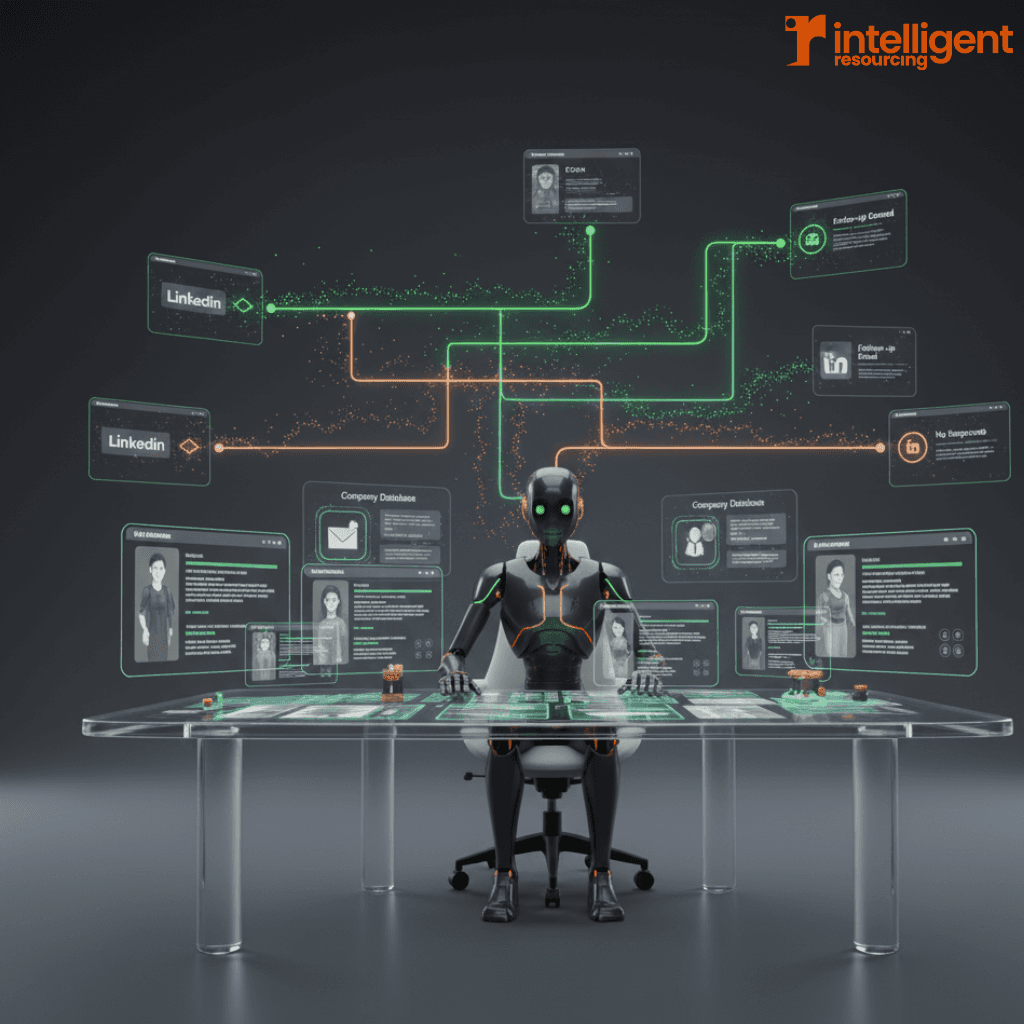
AI agents continuously scan databases, LinkedIn, and firmographic tools to enrich contacts. They then score leads based on ICP criteria, engagement history, and buying intent. This removes the need for reps to spend time on list cleaning or cold prospecting.
Research shows that sales automation can boost sales reps' selling time by 15-20% while enhancing conversion rates. Agents integrate directly with CRMs and sales intelligence platforms, improving qualification consistency. For deeper insights on leveraging signal-based workflows to reduce wasted outreach, explore our dedicated guide.
Conversational outreach via email, LinkedIn, and chat
Modern agents craft outreach messages tailored to the prospect's role, industry, or activity. Through integrations with sales engagement platforms, they can launch sequenced campaigns across email and LinkedIn.
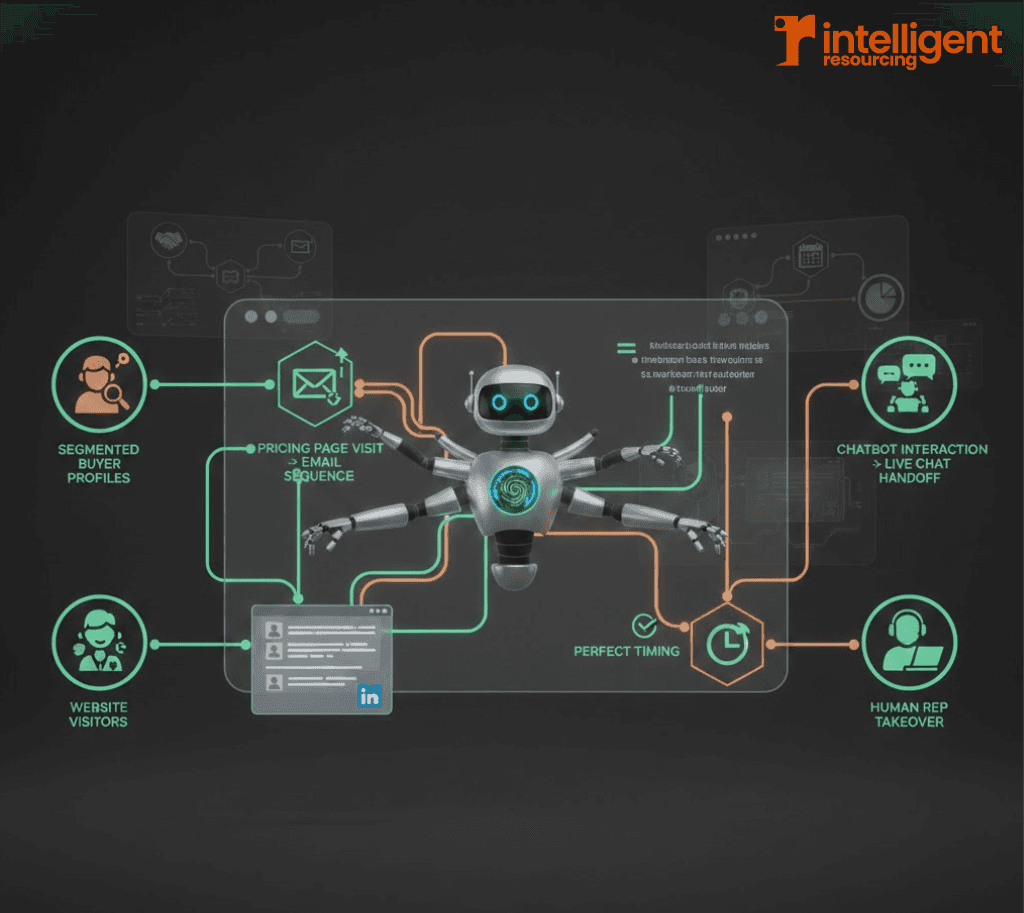
For example, an AI agent might detect a CFO visiting your pricing page and send a follow-up message with a tailored use case. These multi-channel engagements are automated but built for context, an idea further explored in our article on how to use signals for personalising cold email sequences.
Trigger-based decision-making in outreach sequences
Agents follow branching logic based on prospect behaviour:
Email opened = wait 1 day, then send follow-up
No reply after 3 days = try LinkedIn connect
Link clicked = escalate to SDR with talking points
This decision-tree logic improves timing and relevance two critical factors in successful outbound. According to industry data, B2B deals often need 2-6 follow-ups before conversion, yet 38% of reps never follow up after initial contact.
Real-World Workflows for AI Sales Reps
Example 1: SDR agent qualifying cold inbound leads
An AI agent monitors website form submissions and email replies. It reviews the lead's company profile, scores fit based on CRM data, and sends an initial message. If the prospect engages meaningfully, it assigns the contact to a human SDR.
This frees reps from basic filtering and lets them focus on high-conversion opportunities. Companies implementing this approach have seen lead generation improve by 80% and conversions increase by 77%.
Example 2: AI outbound agent managing 1,000 contacts/week
A Sydney-based SaaS firm deployed an AI agent to handle weekly outbound to 1,000 finance leaders. The agent pulls data from LinkedIn Sales Navigator, applies firmographic filters, and sends dynamic emails. Response data feeds back into the CRM, allowing for pipeline forecasting.
The team reduced SDR workload by 40% and booked more qualified meetings without increasing headcount. This aligns with findings that sales teams using automation report an average 14.5% increase in productivity.
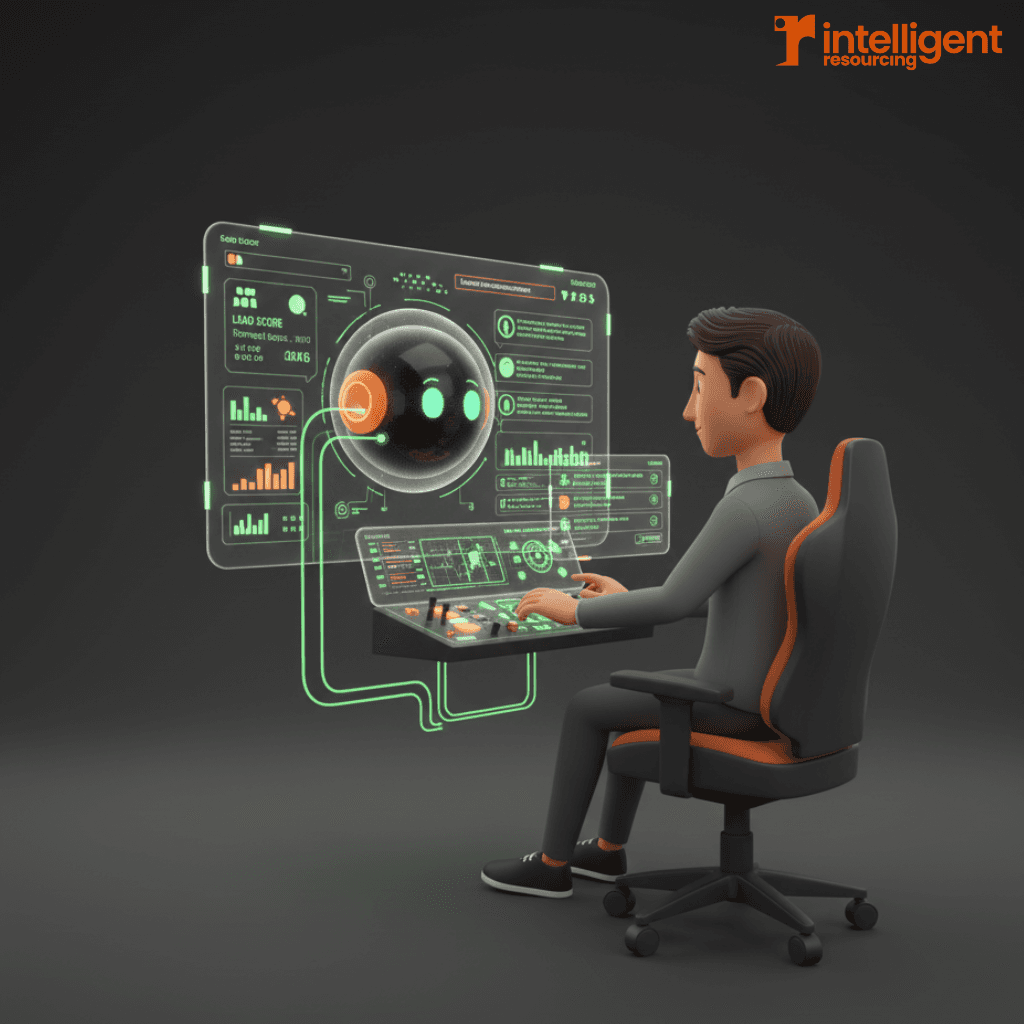
Roleplay: Agent + human SDR co-pilot model
In a co-pilot model, the AI agent handles first contact and follow-up sequencing. The human SDR monitors a dashboard showing agent activity and prospect scores. When the agent flags a hot lead, the SDR can jump in and personalise the conversation.
This hybrid setup maintains volume without losing the human nuance needed to close deals. Our GTM engineering services specialise in building these integrated workflows.
Benefits and Boundaries: Where AI Works Best
When to use full automation vs hybrid workflows
Full automation suits early outreach, lead scoring, and follow-ups. Hybrid workflows are better where tone, timing, or personalisation matter such as large enterprise accounts or later-stage conversations.
The right balance depends on deal size, sales cycle, and buyer expectations. Data shows that 80% of all B2B sales engagements will take place through digital channels by 2025, making this strategic choice increasingly critical.
Compliance, privacy, and tone: human review checkpoints
AI agents must follow regional compliance standards. In Australia, that includes the Spam Act 2003 and data protection under the Privacy Act 1988. Human review checkpoints such as email approvals or campaign previews are critical safeguards.
The CSIRO notes that ethical use of AI in Australian workplaces is now a priority, with 64% of organisations citing responsible automation as a key concern. Learn more about which metrics prove that signal-based marketing is actually driving pipeline.
Agent accountability and reporting metrics
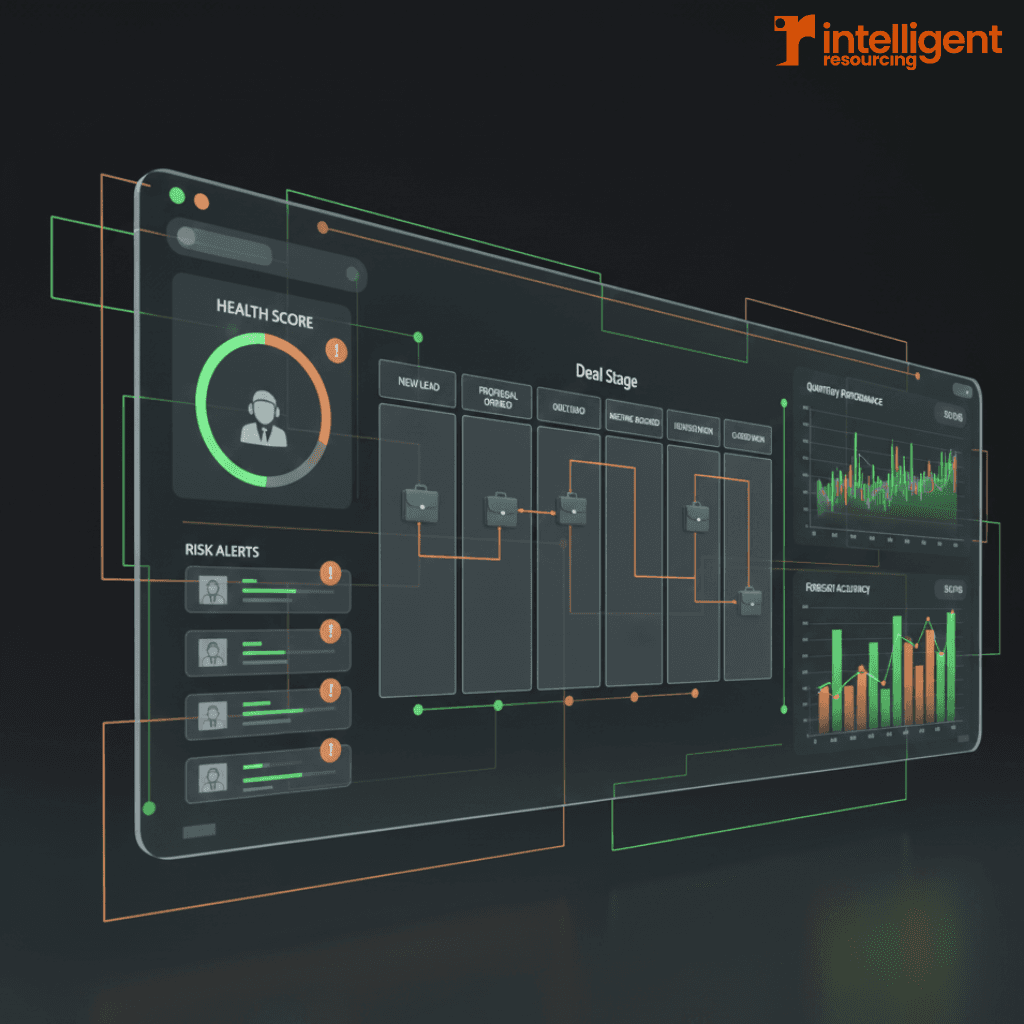
Good AI agents come with built-in dashboards showing:
Outreach volume
Reply and conversion rates
Trigger accuracy
Escalation success
These metrics ensure visibility and accountability, allowing continuous improvement of outreach logic. Research indicates that 76% of companies see ROI from marketing automation within a year.
Getting Started With Intelligent Prospecting
Tech requirements for running AI sales agents
To run an AI agent, you'll typically need:
A CRM with open APIs (e.g., HubSpot or Salesforce)
Sales engagement platform (e.g., Outreach, Apollo)
Intent data provider (optional)
Integration layer (Zapier, native tools)
For detailed guidance on tool selection, see our article on which signal-based marketing tools we actually need and why. Additionally, explore how HubSpot and n8n work together to automate sales & marketing.
Integrating agents into your existing prospecting stack
Start by defining one workflow such as cold outreach to a single vertical and assigning it to an agent. Use human oversight at first, then gradually expand. Make sure the agent logs actions in your CRM for visibility and compliance.
Companies that successfully integrate these systems report impressive results: organizations see a $5.44 return for every dollar spent on marketing automation.
Common missteps to avoid in implementation
Ignoring compliance or opt-out rules
Deploying without human backup
Letting AI run without visibility or analytics
Poor hand-off logic between agent and rep
Avoid these pitfalls to ensure a smoother rollout and better results. Discover the 7 reasons why companies hire a Go-To-Market (GTM) Engineer to support these implementations.
Ready to Deploy AI Sales Agents in Your Team?
Stop letting manual prospecting slow your growth. Whether you're handling 100 leads or 10,000, AI agents can scale your outreach while your SDRs focus on closing deals.
To Get Started:
1. Free Consultation Call
Book a 30-minute strategy session to map your current prospecting challenges and identify quick automation wins. Schedule Your Free Call
2. Explore GTM Engineering Services
See how we build revenue systems that turn operational chaos into predictable pipeline growth. View GTM Engineering Services
Frequently Asked Questions
What is an AI sales agent?
An AI sales agent is a software system that automates early-stage sales tasks like outreach, lead scoring, and follow-ups using predefined logic and real-time data.
Can AI agents fully replace SDRs in 2026?
No. While they can handle repetitive tasks and scale outreach, human SDRs are still essential for handling objections, relationship building, and complex conversations. However, 54% of companies are actively using or planning to use agents in sales and marketing in the next six months.
How do AI agents qualify leads?
They score leads based on firmographics, engagement data, and behavioural triggers then assign them to reps if they meet specific criteria.
Are AI agents compliant with privacy laws?
Yes, if configured correctly. They must comply with regulations such as the Privacy Act 1988 and Spam Act 2003 in Australia. Human review checkpoints help ensure compliance.
What tools do AI agents work inside?
Most agents integrate with CRMs (like HubSpot or Salesforce), sales engagement platforms (like Apollo or Outreach), and data providers (like LinkedIn Sales Navigator). Learn more about what tools you need for signal-based marketing.
How can I deploy AI agents in my sales team?
Start with one use case such as cold outreach or inbound follow-up then expand. Ensure strong CRM integration and clear escalation rules for human reps. For expert guidance, contact our GTM engineering team.
Want to explore AI-driven prospecting for your sales team?
Get in touch with our experts to see what’s possible with intelligent resourcing.
Related Pages and Resources
GTM vs RevOps: Which One Do SMEs Actually Need? - Compare GTM Engineering with Revenue Operations to determine the right fit for your growth stage
How Outsourced GTM Engineering Consultants Can Save Marketing Budget - Learn how GTM consultants reduce costs compared to agency retainers and internal hires