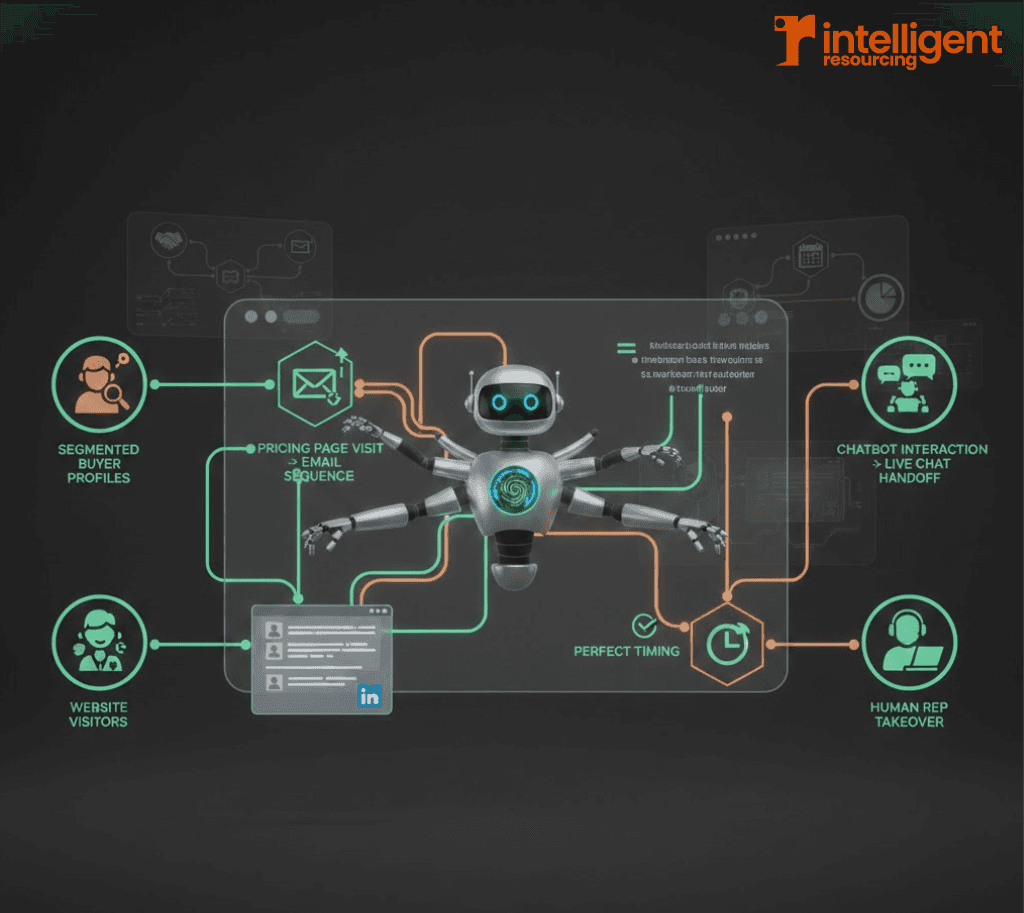

In 2025, sales teams can't afford to rely on manual updates, scattered notes, or inaccurate forecasting. As AI-driven prospecting gains momentum, CRM automation has become the backbone of scalable, predictable sales operations. According to recent industry data, 78% of sales teams say automation improves their pipeline management and deal tracking, while teams using sales force automation software see a 14.5% increase in productivity on average. It's no longer just about tracking activity, it's about triggering workflows, supporting resource planning, and ensuring the sales team works in sync.
This guide explores which automation features matter, how they align with intelligent sales automation and resource planning models, and what to look for in a modern CRM platform.
Why CRM Automation Matters in 2026
The shift from manual data entry to automated pipeline management
Manual CRM updates have always been a weak link in pipeline hygiene. Reps forget to update deal stages, log follow-ups, or mark meetings. This creates blind spots that affect team coordination and forecasting. Research shows that sales reps spend only 28% of their time actually selling, with the remainder consumed by administrative tasks and data entry.
In contrast, automated CRMs now update fields based on rep and prospect behaviour, email opens, meeting bookings, deal progress ensuring the pipeline reflects real-time activity without relying on memory. CRM data entry automation reduces admin time by 17%, freeing up time for selling.
How automation supports accurate forecasting and team capacity planning
Forecasting depends on clean, timely data. With automation in place, sales leaders can:
See which deals are progressing or stalled
Spot risks earlier
Allocate resources to fast-moving opportunities
This level of accuracy is essential for resourcing models that rely on pipeline velocity and sales capacity. According to research, 78% of frequent AI users reported shorter deal cycles, enabling faster decision-making and deal closures. Automation isn't just admin it's operational clarity that directly impacts revenue forecasting and intelligent resourcing strategies.
Automated CRM Workflows That Strengthen Pipeline Management
Auto-updating stages based on activity or deal behaviour
Modern CRMs allow deal stages to update automatically. For example:
Stage 1 to Stage 2 when a prospect opens a proposal
Stage 2 to Stage 3 when a meeting is booked
Close Lost if no activity for 30 days
These logic-based updates reduce pipeline lag and support more reliable revenue projections. Industry statistics reveal that sales reps who automate follow-ups close deals 20% faster on average.
For organisations looking to build comprehensive sales workflows that integrate with AI-driven prospecting, consider exploring our guide on top-rated lead gen workflows for B2B sales teams.
Task creation and reminders triggered by rep or buyer actions
Automation can generate:
Follow-up tasks when a lead replies
Reminders if a deal sits idle
Notifications for deal-stage changes
This ensures no contact is forgotten and keeps reps accountable without relying on constant CRM checks. Automating lead distribution improves response time by up to 87%, significantly reducing the risk of lost opportunities.
Routing and lead assignment rules that reduce bottlenecks
Using round-robin or rules-based logic, CRMs can route leads based on territory, product, or rep availability. This reduces delays and ensures leads are picked up quickly. When integrated with signal-based marketing tools, this also enables faster handoffs from AI-driven prospecting workflows to human reps for qualified opportunities.
For teams building automated prospecting systems, our article on buyer intent signals provides insights on tracking high-intent behaviours across your tech stack.
AI Forecasting Tools in Modern CRMs
Predictive scoring and probability adjustments
AI forecasting models apply dynamic scores to deals based on factors like:
Email response time
Deal size and cycle length
Rep engagement levels
These scores adjust probabilities automatically so your forecast isn't static. Platforms like Salesforce and HubSpot already include this as standard. According to Salesforce's State of Sales report, 74% of high-performing teams now use AI for forecasting accuracy.
Research also indicates that predictive lead scoring, powered by AI and automation, increases pipeline conversion by up to 20%. For teams implementing signal-based lead scoring models, these AI-driven probability adjustments become essential.
Forecast categories powered by real-time sales signals
Advanced CRMs segment deals into:
Committed: All conditions met
Best Case: On track but needs follow-up
Pipeline: Early-stage, high uncertainty
These categories help RevOps leaders create rolling forecasts that reflect real buyer behaviour rather than arbitrary stages. Understanding social signals for intent can further enhance forecast accuracy by incorporating external buying signals.
Identifying risk, stalled deals, and under-resourced segments
CRMs can flag:
Deals inactive for X days
Deals with no stakeholder engagement
Pipeline segments assigned to overloaded reps
This enables proactive intervention, prevents revenue leakage, and supports smarter team allocation. 70% noted an increase in deal size, attributed to better prospect insights and tailored outreach.
Best CRMs for Sales Automation in 2025
HubSpot, Salesforce, Pipedrive, Zoho – automation strengths and limitations
CRM | Strengths | Limitations |
HubSpot | Built-in automation, clean UI, strong integrations | Less depth in enterprise customisation |
Salesforce | Powerful AI tools (Einstein), advanced reporting | Steep setup learning curve |
Pipedrive | Visual pipeline, sales-focused automations | Limited AI features |
Zoho | Highly customisable, cost-effective | UI less intuitive |
According to industry research, the global CRM market is expected to reach $43.8 billion by 2025, growing at a CAGR of 14.2%, with 77% of businesses using CRM automation tools to improve sales and customer service processes.
Key considerations for B2B sales teams choosing a platform
When choosing a CRM, consider:
Native automation vs external add-ons
Integration with prospecting tools and AI platforms
Ability to support multiple sales roles (SDRs, AEs, CSMs)
Custom reporting for pipeline velocity and forecasting
Most importantly, your CRM should align with your workflow not force you to adapt to it. For businesses building comprehensive go-to-market systems, our GTM Engineering services can help design and implement CRM workflows that align with your entire revenue operation.
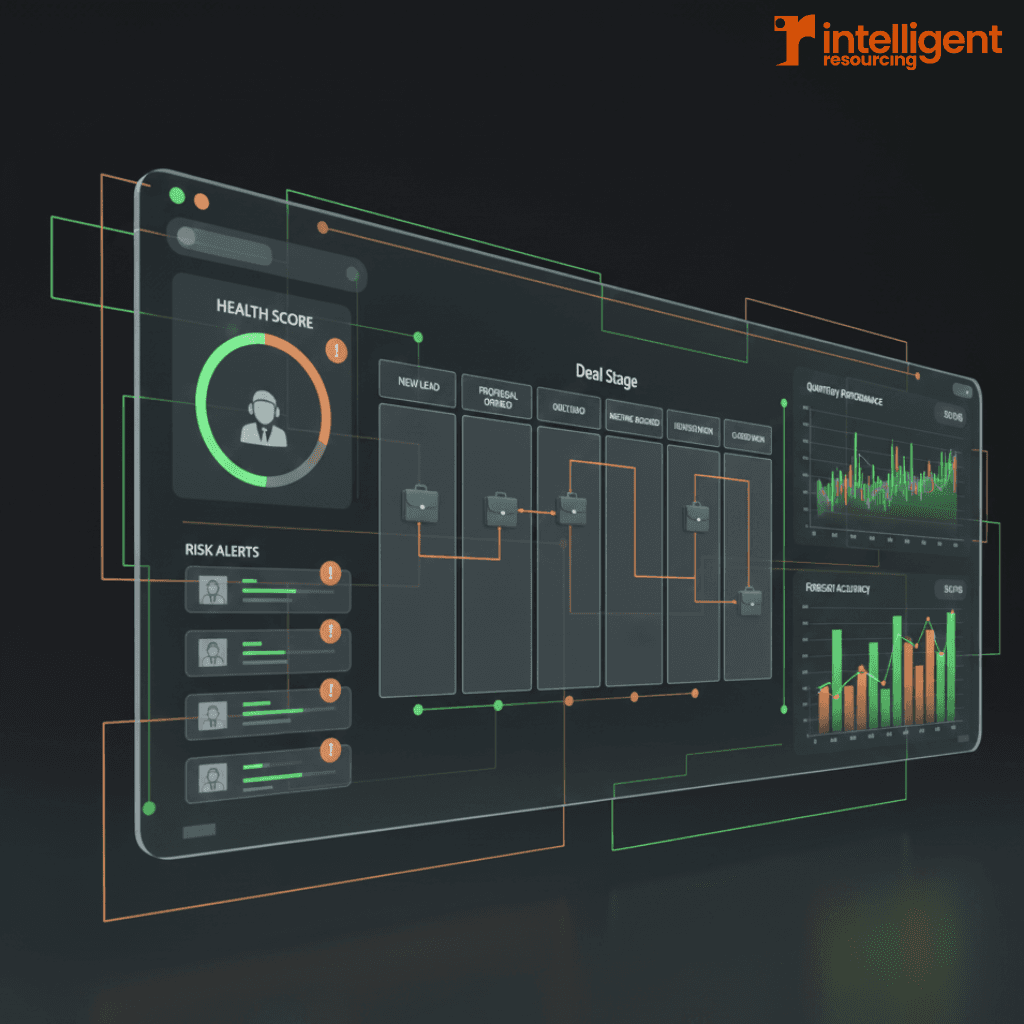
Example: AI-driven forecasting interface and automation rules
A forecasting dashboard in a modern CRM might show:
Total pipeline weighted by AI probability
Deal health scores
Upcoming risk alerts (e.g., deals stalling)
Pipeline velocity trends
How CRM Automation Supports Intelligent Resourcing
Using CRM data to assess SDR and AE workload capacity
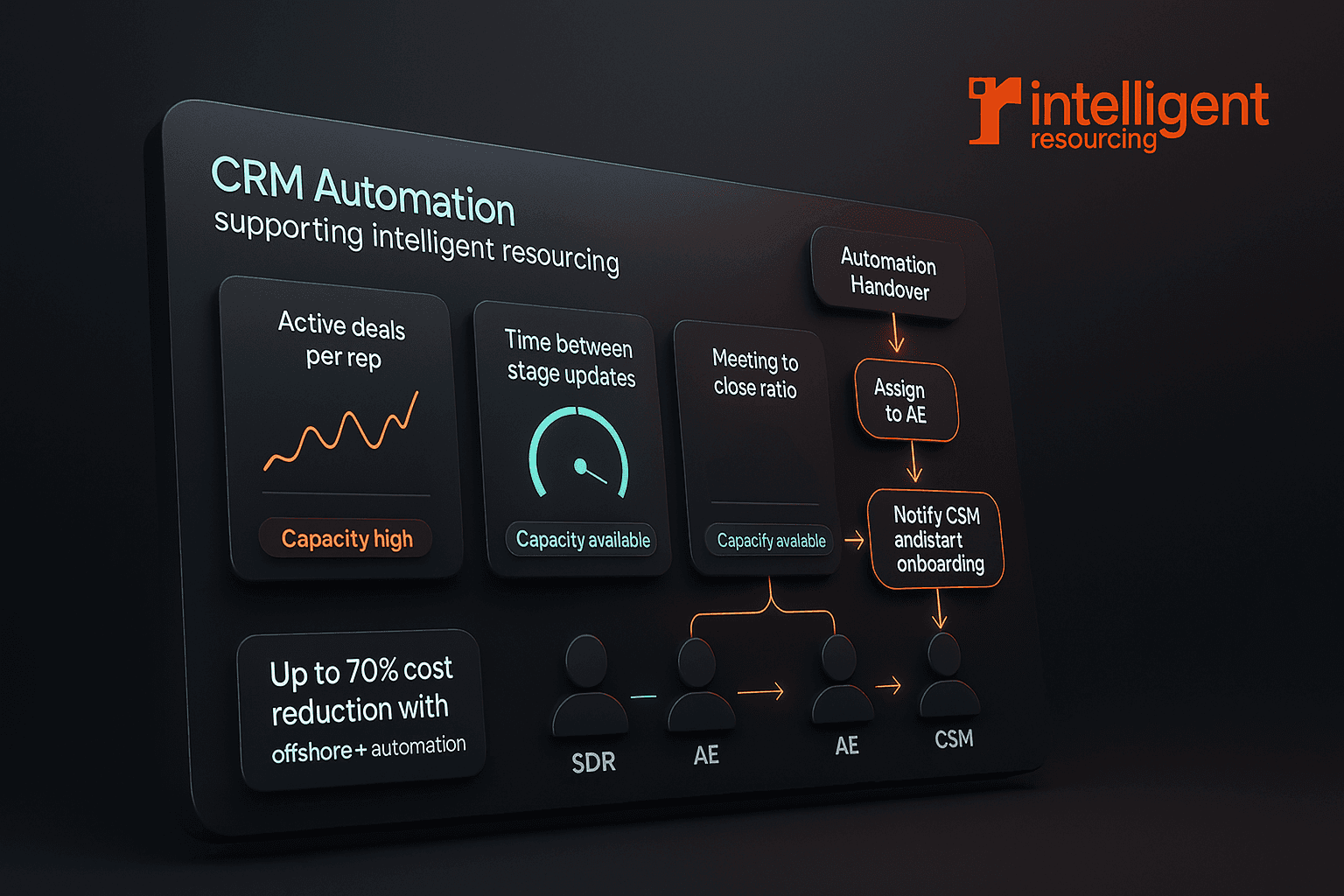
By tracking:
Number of active deals per rep
Time between stage updates
Meeting-to-close ratio
Sales leaders can assess rep workload and determine whether capacity is maxed or underused. This supports intelligent allocation of inbound leads or outbound prospecting efforts. Industry data shows that teams using automation for customer onboarding reduce onboarding time by 30%.
For companies looking to scale efficiently, offshore resourcing strategies combined with automated CRM workflows can reduce costs by up to 70% while maintaining quality and control.
Automation-triggered handovers between sales roles
When a lead reaches a defined qualification point, automation can:
Assign to an AE
Notify the CSM team for onboarding
Pause AI outreach to avoid conflict
This reduces friction and ensures the right rep engages at the right time supporting both AI-led prospecting and intelligent resourcing strategies. Teams implementing signal-based marketing examples can leverage these automated handovers to act on buyer intent immediately.
Resource modelling based on live pipeline velocity
Real-time CRM data shows:
How fast deals move from open to close
Average rep cycle times
How many deals sit idle
This allows sales and HR teams to model staffing needs and forecast future headcount requirements more accurately. 76% saw higher win rates when using AI-powered CRM tools for pipeline management.
For organisations exploring the intersection of automation and team structure, our article on what GTM Engineers bring to your go-to-market strategy explains how specialised roles can optimise CRM workflows.
Common CRM Automation Gaps and How to Fix Them
Missing triggers or outdated workflows
Legacy CRM setups often include:
Incomplete workflows
Irrelevant triggers from past processes
No task creation logic
These gaps lead to missed follow-ups and poor pipeline visibility. Auditing workflows quarterly helps keep logic aligned with evolving sales motions. Research indicates that workflow automation cuts the time spent on reporting tasks by 27%.
Poor integration between prospecting tools and CRM
When prospecting platforms don't sync correctly, CRMs become outdated quickly. Fix this by using native integrations or automation middleware (like Zapier or Make.com). Our guide on GTM engineering tools provides a comprehensive overview of integration platforms that connect prospecting tools with CRMs.
Lack of alignment between pipeline stages and automation logic
Sometimes, pipeline stages don't reflect actual deal progress. If automation is tied to these outdated stages, it breaks.
Solution: Review your stage definitions, then map automation rules to buyer milestones, emails, meetings, decisions, not internal guesses. For teams working with complex sales cycles, consider how social signals checkers can validate stage progression with external buyer intent data.
Stop Fighting Your CRM. Start Engineering Your Growth.
Most sales pipelines aren't broken, they’re just manual. When your CRM lacks the automation to surface real intent, your best reps spend their time on data entry instead of deals.
At Intelligent Resourcing, we help you bridge the execution gap through:
GTM Engineering: We design and implement the signal-driven workflows that turn your CRM into a predictable revenue engine.
Offshore Team Building: We help you hire and embed high-quality, full-time talent to manage your operations at 70% lower costs.
Ready to move from reactive updates to automated pipeline velocity? Book a Workflow Audit with our GTM Team →
Frequently Asked Questions
What CRM automation features matter most in 2026?
Key features include automated deal stage updates, task triggers, AI-based forecasting, lead routing rules, and pipeline risk alerts. According to research, 81% of companies report that adopting sales automation has improved lead generation quality and quantity.
How do automated workflows improve pipeline accuracy?
They ensure the pipeline reflects real-time activity, reducing the lag between rep actions and CRM updates leading to better forecasting and cleaner data. 78% of sales teams say automation improves their pipeline management and deal tracking.
What does AI forecasting look like in modern CRMs?
It includes probability scoring, real-time pipeline weighting, and categorisation (e.g., committed, best case) based on behaviour and deal history. 74% of sales professionals expect AI to redefine their roles by 2026.
How do CRMs integrate with prospecting tools?
Modern CRMs offer native integrations or use middleware tools to sync contacts, track activity, and automate handoffs between AI agents and reps. Learn more about building integrated workflows in our article on Reddit monitoring with AI.
How does CRM automation help with resource planning?
It gives visibility into rep workloads, pipeline velocity, and deal distribution supporting accurate hiring, allocation, and sales enablement strategies. Businesses that automate lead management see a 10% or greater increase in revenue in 6-9 months.
If you're looking to bring more accuracy and consistency into your sales pipeline, speak with our team about building CRM automation that supports intelligent resourcing. Our GTM Engineering services can help you design and implement workflows that transform your pipeline management and forecasting accuracy.
Related Pages & Resources
Dive Deeper into Sales Systems & Strategy:
What Exactly Does a GTM Engineer Do? – Understand the role that builds and maintains high-output CRM automations.
Guide to Signal-Based Lead Scoring – Learn how to move beyond static data and use real-time buyer intent to power your CRM.
Which Buyer Intent Signals Matter Most? – A breakdown of first and third-party signals (including social) that should trigger your CRM workflows.
Prioritising GTM Workflows – A framework for deciding which CRM automations will deliver the highest ROI for your team.