

What J2 Group sells
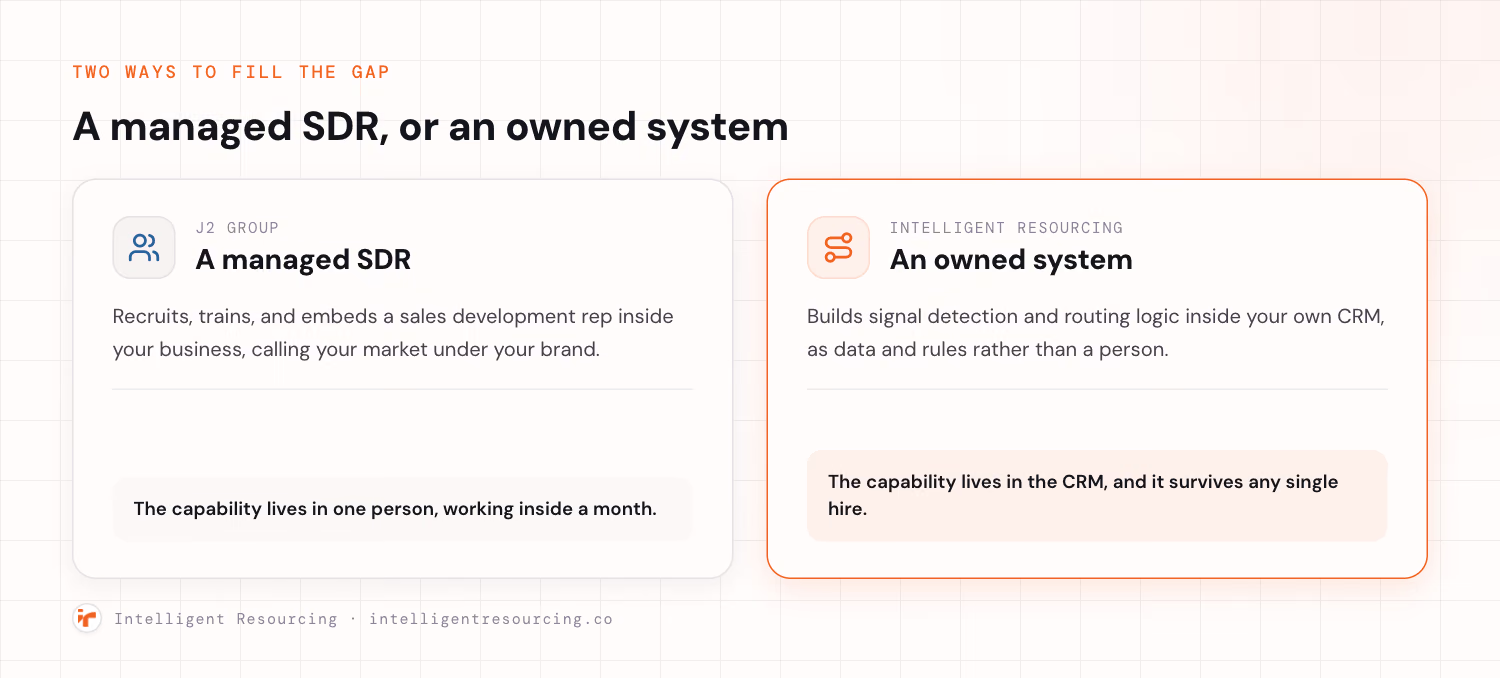
J2 Group is a Melbourne-based agency built around one core service: a managed SDR. It recruits a sales development rep, trains them, and embeds them inside your business, so the calling happens under your brand rather than through an outside call centre. Per J2's own site, the model is priced to run for less than the cost of hiring a junior SDR directly.
That is a real, specific value proposition. A business gets a trained rep working their market without running a hiring process, an onboarding cycle, or a base salary and super obligation of their own.
The company itself is small. J2 Group Consulting Pty Ltd is based in Melbourne, founded by a former sales director at an Australian agency. Its own about page names a handful of staff running the business, not a large delivery team. Crunchbase independently confirms the same managed-SDR model: recruiting, training, and managing reps embedded inside client businesses.
Intelligent Resourcing works differently from the ground up: no calling team to staff, just a system built inside the client's own CRM.
Where a managed SDR is the right call
A managed SDR is the right call when the constraint is headcount, not strategy. A business that already knows its market and its pitch, but has nobody free to make the calls, gets exactly what it needs from this model. The strategy work is already done. What is missing is a person to execute it, and that is precisely the gap J2 Group is built to fill.
| J2 Group | Hiring in-house | |
|---|---|---|
| Time to first conversation | Weeks, since J2 recruits and trains the rep | Months, covering the hiring process and ramp |
| Ramp cost | Built into J2's fee | Recruitment cost, base salary, and management time |
| Who carries the hiring risk | J2 Group, since they employ and manage the rep | The business, if the hire does not work out |
That speed is a genuine advantage. A founder who needs a voice on the phone next month, not next quarter, is better served by a managed SDR than by running a hiring process from scratch.
Where an owned system is the right call
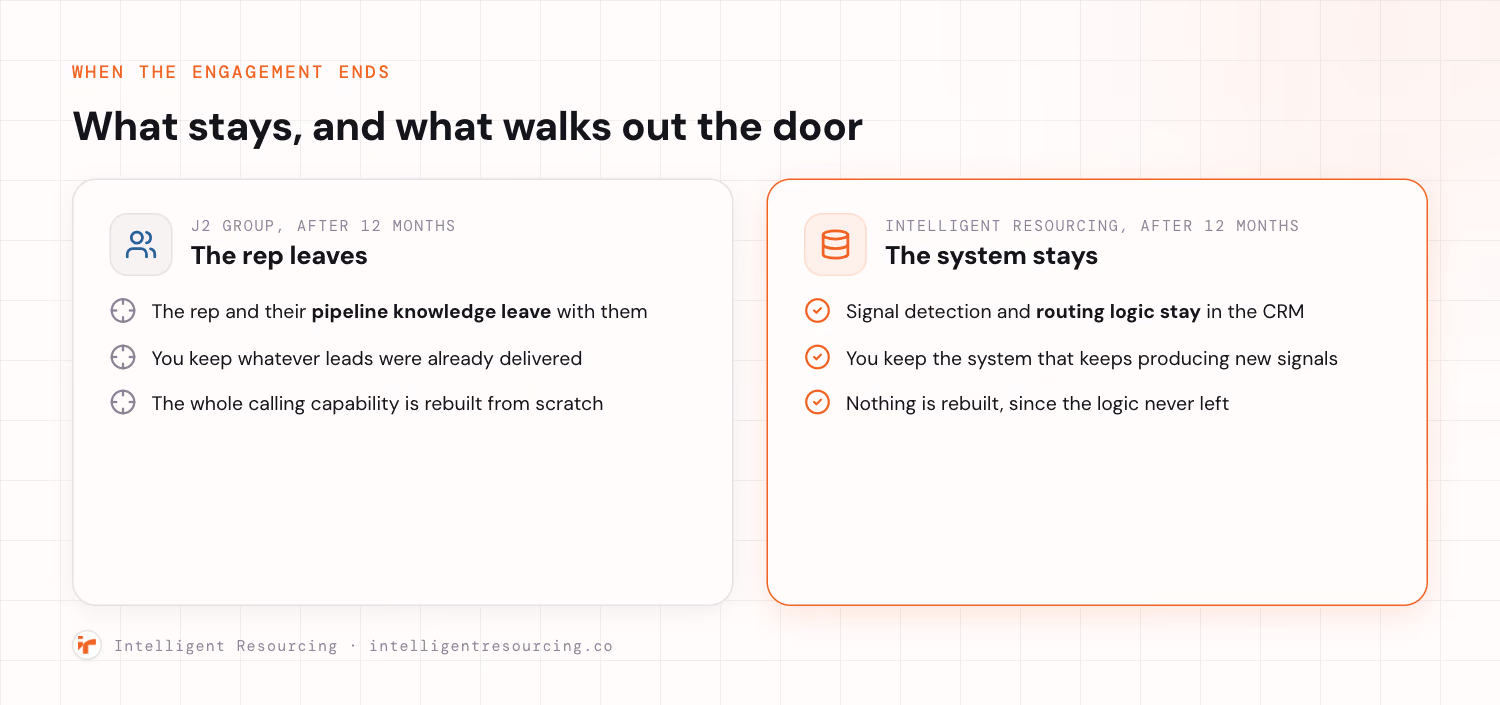
An owned system is the right call when the real gap is not headcount. It is knowing who to call, and why, before anyone picks up the phone.
| J2 Group, after 12 months | Intelligent Resourcing, after 12 months | |
|---|---|---|
| If the relationship ends | The rep and their pipeline knowledge leave with them | Signal detection and routing logic stay in the CRM |
| What the business keeps | Whatever leads were already delivered | The system that keeps producing new signals |
| What has to be rebuilt | The whole calling capability, from scratch | Nothing, since the logic never left |
A managed SDR carries the market knowledge in their own head, not in a system the business can inspect or hand to someone else. When they move on, that knowledge goes with them. Intelligent Resourcing's argument is the opposite: put the decision logic itself into the CRM, as data and rules, so the capability does not depend on any one person staying in the role.
The evidence problem: what neither company publishes
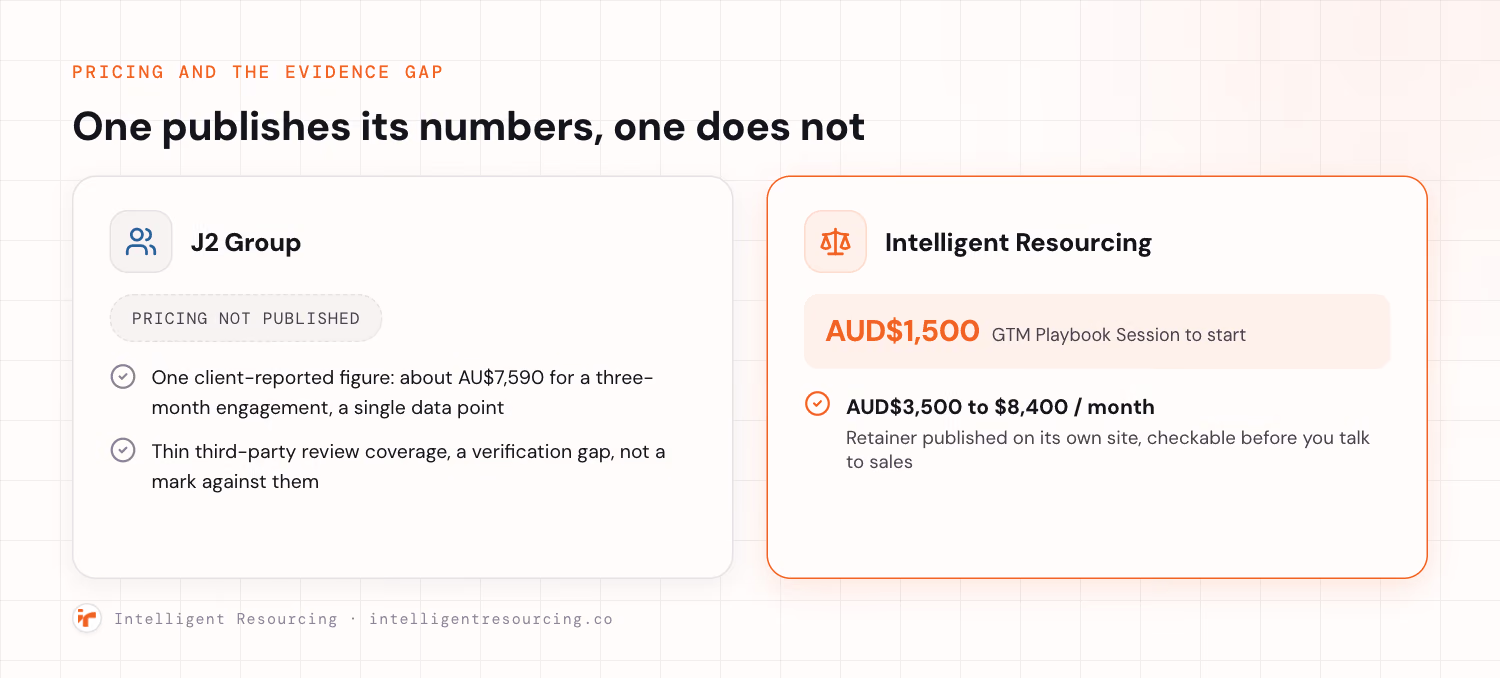
Two gaps are worth naming plainly. J2 Group does not publish retainer pricing anywhere on its site. One client-reported figure puts a three-month engagement at roughly AU$7,590, but that is a single data point, not a rate card.
Public review coverage is also thin. An independent business profile confirms the Melbourne base and lead-generation focus, but little else exists to verify beyond that. That is a verification gap, not proof of anything either way. A thin review trail means there is very little third-party evidence to check, not that the service performs poorly. Treat it as a gap to be aware of, not a mark against the company.
Intelligent Resourcing takes the opposite approach on pricing specifically: the numbers sit on its own site, where anyone can check them before ever talking to sales. Full method: The Revenue Blueprint.
Who should choose J2 Group
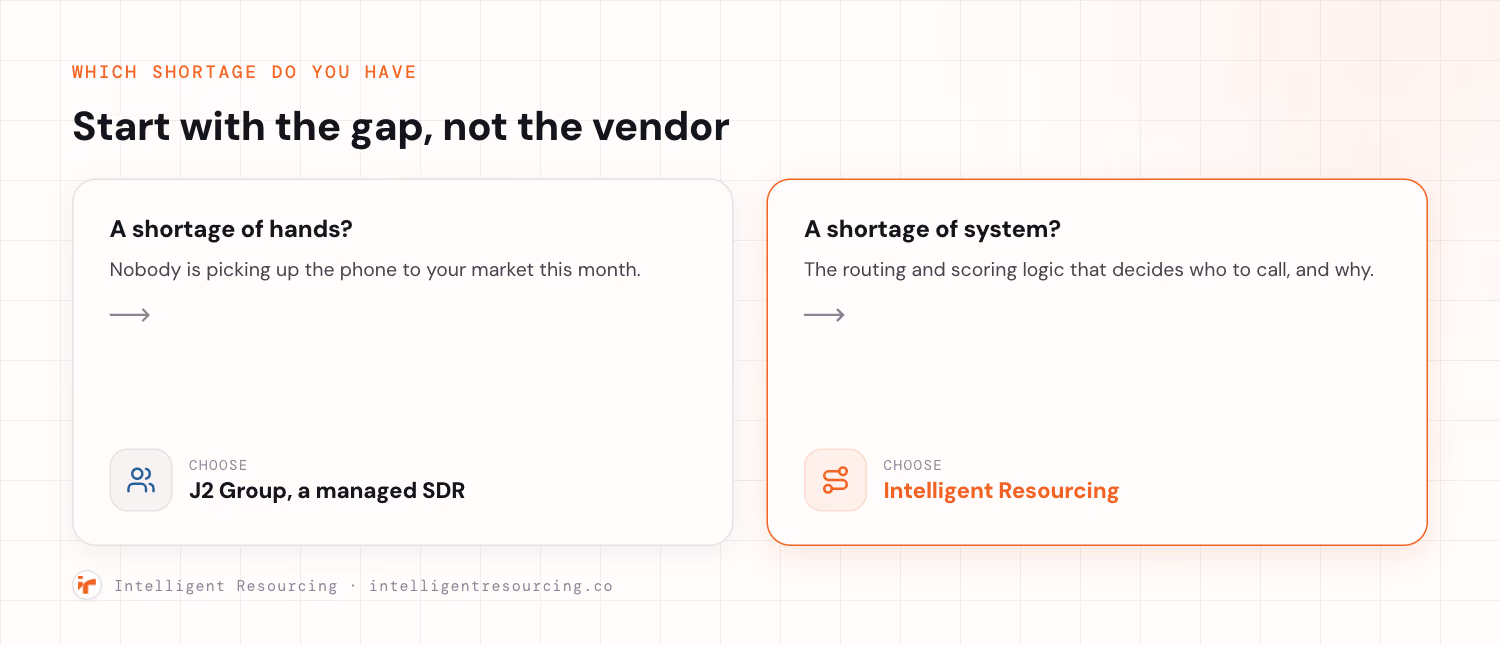
Choose J2 Group if you need a trained SDR working your market inside a month, and you are prepared to re-hire that capability if the engagement ends. Choose Intelligent Resourcing if the constraint is not calling capacity, but knowing who to call and why, in a way that survives past any single hire. Choosing a lead generation agency covers that trade-off in more depth.
Our signal-based approach to lead generation is built for that second group. It maps buying signals directly into the actions a sales team takes next, without needing a new hire to interpret them. See how signal-based lead generation works in practice.
To see which model actually fits your team, book a pipeline review.
Comparisons
J2 Group can put a trained SDR on the phone inside a month. If the harder gap is knowing who to call and why, Intelligent Resourcing builds that signal detection and routing logic into your own CRM, so it outlasts any single hire.
FAQs
Who actually employs the SDR working my account?
J2 Group does, and the rep is their employee, trained and managed by them, even though the calling happens under your brand and targets your market.
What happens to the SDR's pipeline knowledge if the engagement ends?
It largely leaves with them, since J2 Group's model does not include handing routing logic or account scoring into your CRM. The capability sits with the person, not a system.
Does J2 Group publish its pricing anywhere?
No. One client-reported figure puts a three-month engagement at roughly AU$7,590, but that is a single data point, not a published rate card.
What does handover actually look like if I switch providers?
J2 Group's own materials do not detail a formal handover process. Buyers should ask directly what documentation, contact lists, or scripts they would retain if the engagement ends.
Is J2 Group's thin review trail a red flag?
Not on its own, since limited third-party evidence is a verification gap, not proof of poor service. It should not be read as a mark against a small agency by default.
Can a business use a managed SDR and Intelligent Resourcing at the same time?
Yes. A managed SDR provides calling capacity, while a signal-led system decides who is worth calling. Some teams run both together, particularly during a transition to an owned system.