
Background

/

Blogs Details

Top 7 Alternatives to J2 Group for B2B Growth in 2026

We did the legwork on the best J2 Group alternatives and compared 7 options for B2B teams choosing between outsourced SDRs and automated signal-based systems.

By Ronan Leonard, Founder, Intelligent Resourcing

|

Top 7 Alternatives to J2 Group for B2B Growth in 2026

/

Blogs Details

Top 7 Alternatives to J2 Group for B2B Growth in 2026

We did the legwork on the best J2 Group alternatives and compared 7 options for B2B teams choosing between outsourced SDRs and automated signal-based systems.

By Ronan Leonard, Founder, Intelligent Resourcing

|

Top 7 Alternatives to J2 Group for B2B Growth in 2026

Australian B2B growth is moving away from the old assumption that more pipeline comes from adding more SDRs. A survey shows 67% of B2B buyers prefer a rep-free experience, which means more of the buying process is happening before a seller gets involved. At the same time, GTM engineering coverage for 2026 is pointing towards AI automation, workflow design, signal-based selling, and revenue efficiency as the new operating model for faster-growing teams. 


That shift changes how buyers should evaluate agencies like J2 Group. J2 Group still has a credible position in the Australian market, with public positioning around highly personalised B2B lead generation, managed sales development reps, appointment setting, telemarketing, and consulting-led strategy. But many teams now want a different model: one that connects signals, CRM logic, automation, and owned workflows rather than relying mainly on manual outbound delivery. 


For Australian founders, sales leaders, and GTM operators, the real question is not simply which provider can run more outbound activity. It is which option helps build a more reliable growth system for the next stage of the business. 

The 2026 market shift: from hiring more to building the system

Why Businesses are Looking Beyond J2 Group


Growth is starting to look less like a hiring problem and more like a process problem. Buyers do more of the journey on their own, so teams need cleaner data, faster handoffs, and workflows that respond to real buying signals instead of just pushing more list-based outreach. That is why more firms are moving away from traditional outbound operations and toward systems built for timing, routing, and consistency.


The result is a tougher market for manual outbound-heavy models. Buyers still want relevance and human judgement, but they also expect speed, consistency, and a smoother buying journey. The stronger model combines automation with human oversight instead of relying too heavily on either one.

Why Australian businesses are looking beyond J2 Group

1. They want more system ownership

J2 Group’s public model is clearly built around bespoke managed outbound and consulting. That can work well for firms that want a high-touch partner, but some buyers do not want to rent the machine. They want the workflow, CRM logic, and automation to live inside their own stack so the system becomes a business asset rather than a service dependency.


2. They want scaling that is less linear

Manual SDR and BDR-heavy models often scale through more people, more campaign effort, or more delivery hours. That is useful up to a point, but it can create a ceiling for teams that want better economics as volume increases. Alternatives built around workflows, embedded systems, or lighter outsourced models can appeal to buyers who want growth that is less tied to headcount expansion. 


3. They want better CRM integration

A common frustration with outsourced outbound is that the agency can sit outside the operating system of the business. If routing, enrichment, lifecycle stage, and handoff rules are not tightly connected to the CRM, internal teams still end up cleaning up the mess. 


4. They want more signal-led precision

The market is moving from list-led activity towards signal-led action. That means identifying when timing is right and triggering the next step based on real account behaviour, not only on a prospect list and a sequence. 

How to compare B2B growth partners in 2026

Signal handling
Can the provider act on live buying signals, enrichment, and workflow logic, or are they mostly running outbound against static lists? This affects timing, lead quality, and follow-up speed.


Tech-stack integration
Do they build into your CRM and workflow tools such as HubSpot, Salesforce, Clay, sequencers, and automation platforms, or do they work as a separate service layer? The more connected the model is, the easier it is to keep data clean and action fast.


Operating model
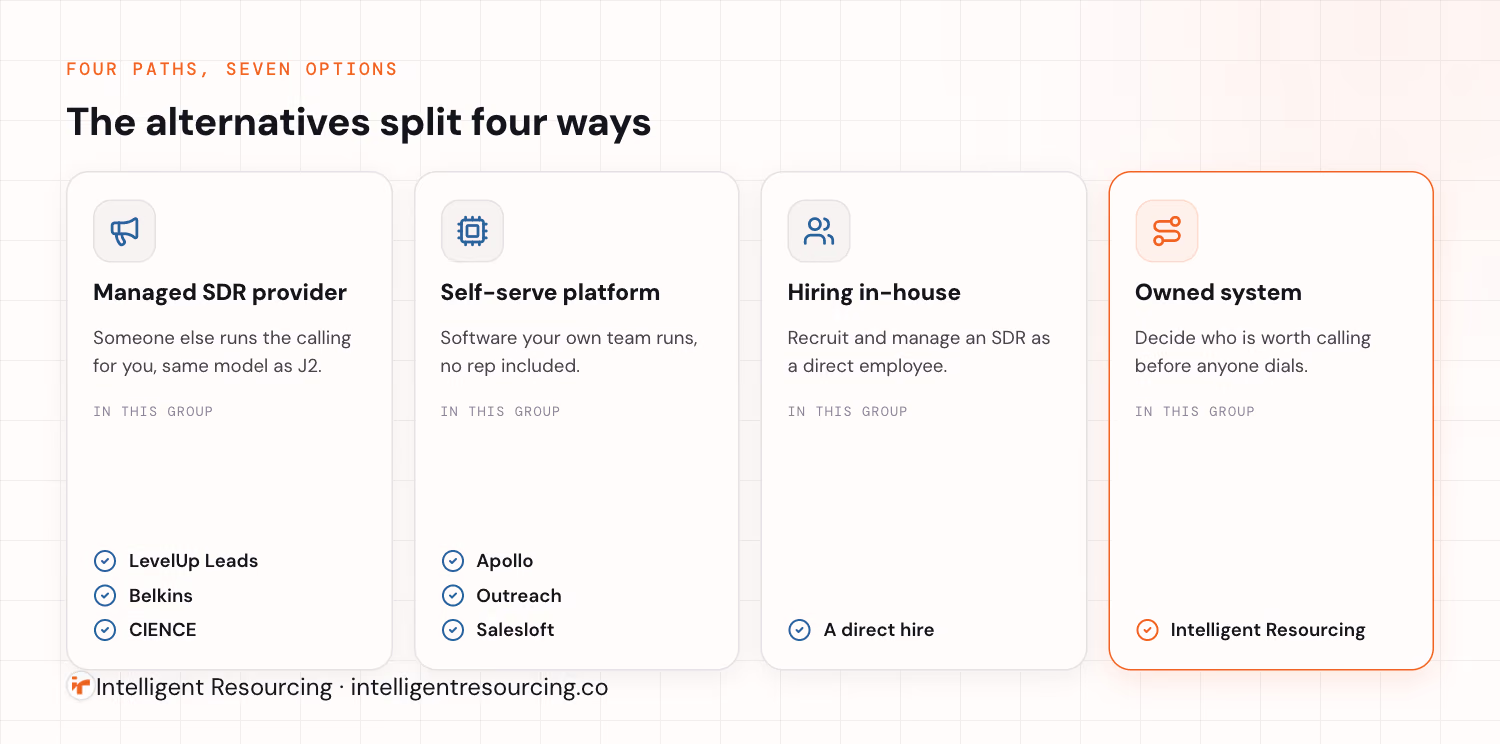
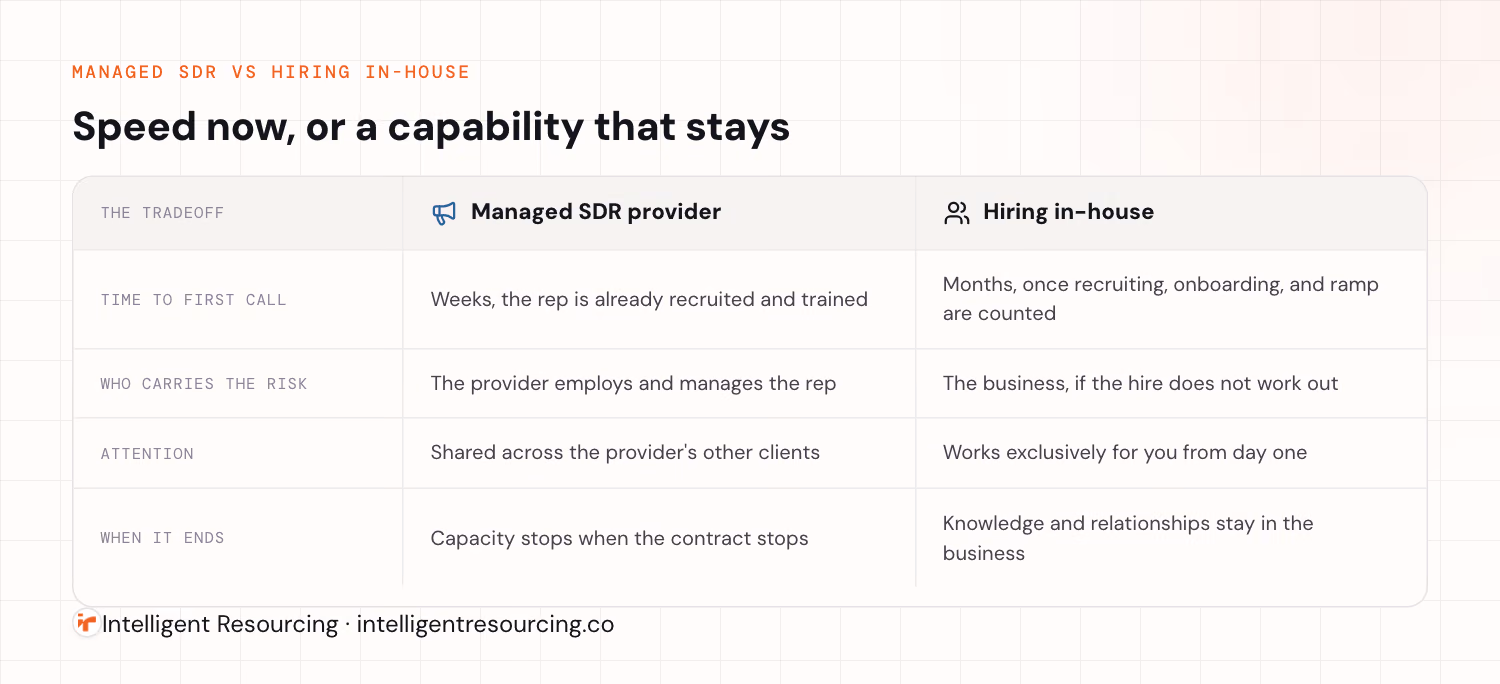
Are you buying an owned system, a managed service, a fractional SDR team, or a consulting engagement? These are different types of help, and the wrong fit can add cost without fixing the real problem.


Workflow ownership
Does the partner help you build a process you can improve over time, or are you dependent on them to keep everything moving? That difference matters if you want better control, better visibility, and less reliance on manual delivery.

Comparison table: best J2 Group alternatives in 2026

Platform

Key features

Strengths

Limitations

Pricing model

Best fit for

Intelligent Resourcing

AI GTM engineering, Clay workflows, n8n automation, CRM sync

Signal-led routing, owned workflows, workflow automation

Better fit for tech-forward B2B teams than general SME outreach

Bespoke / custom

Agile B2B, SaaS, RevOps-conscious firms

LevelUp Leads

Fractional SDRs, outsourced SDR, multi-channel outreach

Lower public starting point, clear SDR-as-a-service positioning

Still scales more like a service team than an owned system

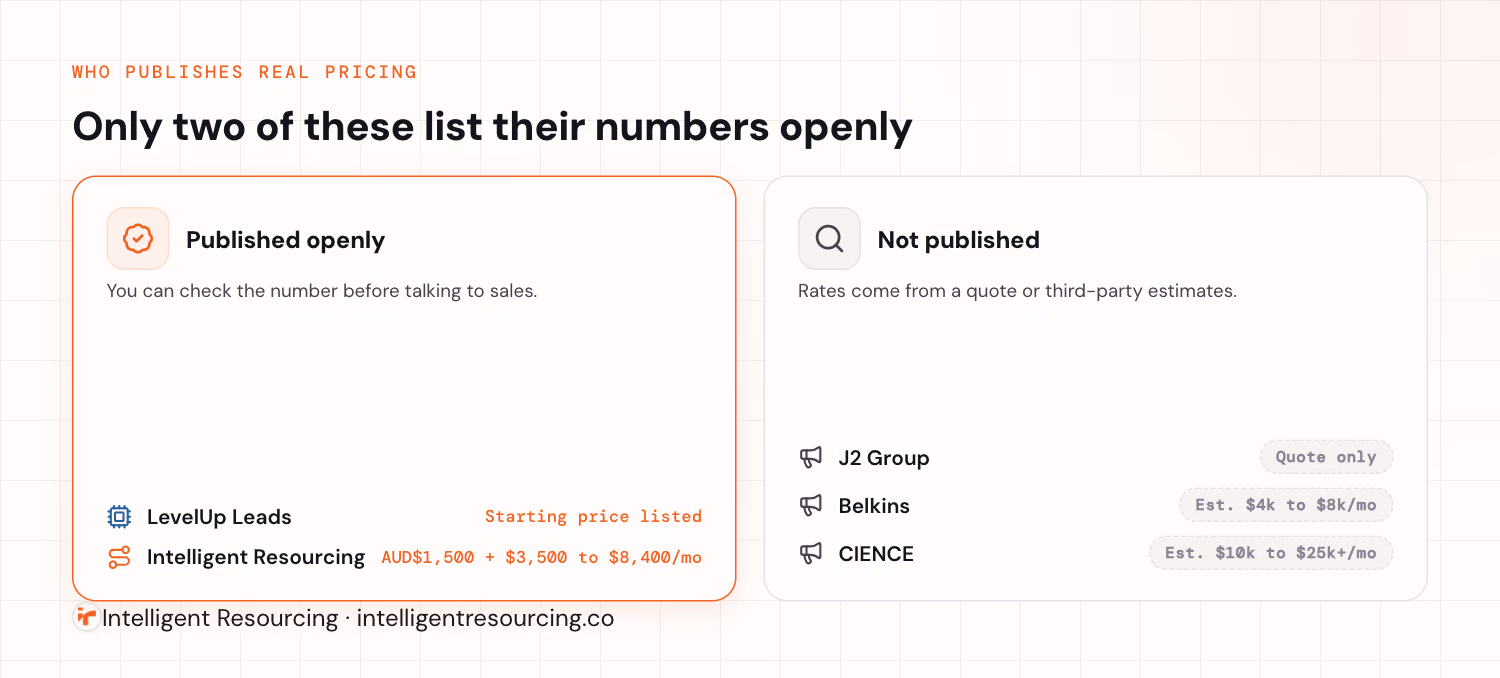
Starts at US$5,000

Mid-market B2B and outsourced SDR buyers

Callbox Australia

Global ABM, multi-channel outreach, webinar and event recruitment, Smart Engage

Large infrastructure, broad channel coverage, team-plus-AI model

Can feel more agency-heavy and resource-led

Subscription-based / custom

Global tech firms and larger managed campaigns

Illicium

Sales audit, sales consultancy, sales activation, outsourcing sales services

Strong local consulting angle, good for sales clarity and activation

Less clearly positioned around AI-led growth systems

Project-based / consultation-led

Sales teams needing audit and activation support

B2B Leads

LinkedIn lead generation, booked appointments, DFY LinkedIn support

Narrow LinkedIn focus, local positioning, simple offer

Single-channel bias compared with broader GTM partners

Monthly retainer / campaign-led

Small consultancies and LinkedIn-first firms

Lead Express

Australian telemarketing, phone-based lead generation, qualified lead focus

Australian telemarketing coverage, broad B2B experience

Leans more traditional than workflow-led GTM system builders

Custom quote

Public sector, local business, phone-led qualification

Belkins

Appointment setting, cold email, cold calling, LinkedIn, outsourced SDR

Structured multi-channel outbound execution

Less workflow ownership than a built-on-your-stack model

Custom / sales-led

Firms outsourcing outbound execution

Our top 5 picks for the Australian market

  1. Intelligent Resourcing

Best for signal-led GTM systems and workflow ownership.


Intelligent Resourcing is the strongest option on this list for buyers who want to build a system, not just buy managed outbound activity. Its public positioning centres on Clay workflows that identify, enrich, score, and route leads directly into the CRM and sequencer, with a broader GTM engineering angle that treats growth as workflow design rather than only SDR delivery.


That makes it especially useful for firms whose real bottleneck is not “we need more outreach” but “our current process is noisy, manual, and hard to scale”. For B2B teams that care about signal timing, CRM hygiene, and owned operating logic, Intelligent Resourcing is the clearest alternative to a classic outbound agency model. 

Best for:

  • Australian B2B firms with a clearly defined ICP

  • Teams that need better routing, enrichment, and CRM hygiene

  • Firms that want growth infrastructure they can keep improving over time 

  • Businesses that want to focus on leads based on buyer stage and purchase intent

  1. LevelUp Leads

Best for outsourced SDR support with a lower public entry point.


LevelUp Leads is one of the clearer outsourced SDR alternatives because its public pricing starts at US$5,000 and its service pages are explicit about full-service SDR, fractional SDR, cold calling, prospect research, outreach, qualification, and appointment setting. That makes it an easier commercial comparison point for buyers who still want managed outbound, but do not want a heavier enterprise-style programme. 


The trade-off is that this is still a service-team model more than a workflow-ownership model. It is a strong fit for firms that want meetings booked and SDR capacity added quickly, but not the same fit as a provider building core systems directly inside the client’s stack.

Best for:

  • Mid-market B2B firms

  • Teams wanting outsourced SDR support

  • Businesses looking for a clearer lower entry point than larger managed outbound providers

  1. Callbox Australia

Best for large-scale managed outbound across regions.


Callbox is the strongest option on this list if the requirement is scale, infrastructure, and broad channel coverage. Its Australian site positions the company around lead generation across Australia for software, SaaS, cloud, cybersecurity, fintech, and AI, while its pricing FAQ says clients typically spend between US$20,000 and US$40,000 quarterly. That places it firmly in the larger managed outbound category. 


This makes Callbox a better fit for buyers who want an established global delivery engine with AI-assisted tools, webinar support, and multi-channel execution. It is less attractive for teams that want a lighter, more embedded, or more owned workflow model.

Best for:

  • Global tech firms

  • Large outbound programmes

  • Teams comfortable with a bigger managed-service structure

  1. Belkins

Best for structured multi-channel appointment setting.


Belkins is a strong managed outbound option with a wide service menu. Its pricing and service pages list appointment setting, cold email outreach, cold calling, LinkedIn lead generation, lead research, HubSpot consultancy, and outsourced SDR support. Its public site also frames the company around omnichannel engagement and activation.


That makes Belkins a clear fit for buyers who still want outsourced execution, but want it across multiple channels with a well-defined SDR service line.

Best for:

  • Firms outsourcing appointment setting

  • Teams wanting multi-channel outbound support

  • Buyers who prefer structured SDR execution over workflow ownership

  1. Illicium

Best for sales audits, strategy, and local consulting support.


Illicium is strongest where sales clarity, sales process, and local consulting support are the priority. Its public pages focus on sales audits, sales consulting, strategy design, training, fractional sales management, digital audits, and outsourced sales services, with a clear Sydney-based positioning.

That makes it a strong fit for Australian firms that know the sales engine needs fixing before more outbound is added. Its “sales audit” and “blueprint to revenue growth” language makes the commercial angle very clear.

Best for:

  • Sales teams needing audits and activation support

  • Australian firms wanting local consultancy

  • Businesses moving from ad hoc selling to a more structured process

Other alternatives

  1. B2B Leads

What it does well

B2B Leads has a narrower, simpler offer built around LinkedIn lead generation and booked appointments. Its public pages position the business around generating quality B2B leads and sales using LinkedIn, with a money-back guarantee and clear local-market credibility. 


That simplicity can be attractive for small consultancies and firms that want one channel handled well instead of a larger multi-channel programme.


Best for

B2B Leads is best for small consultancies, LinkedIn-first firms, and businesses that want booked appointments from a simpler outreach model.

  1. Lead Express

What it does well

Lead Express is a long-running Australian lead generation operator with a strong telemarketing angle. Its public pages emphasise guaranteed qualified leads, executive phone-based expertise, telemarketing, inside sales, appointment setting, sales training, and strategic marketing support. External summaries also describe it as one of Melbourne’s longer-running B2B calling and appointment-setting providers. 


That makes it attractive for buyers who still believe the phone should carry real weight in qualification, especially in public sector or enterprise-style categories.


Best for

Lead Express is best for public sector, local business, phone-led qualification, and teams that want an Australian lead generation partner with a telemarketing core. 

Verdict

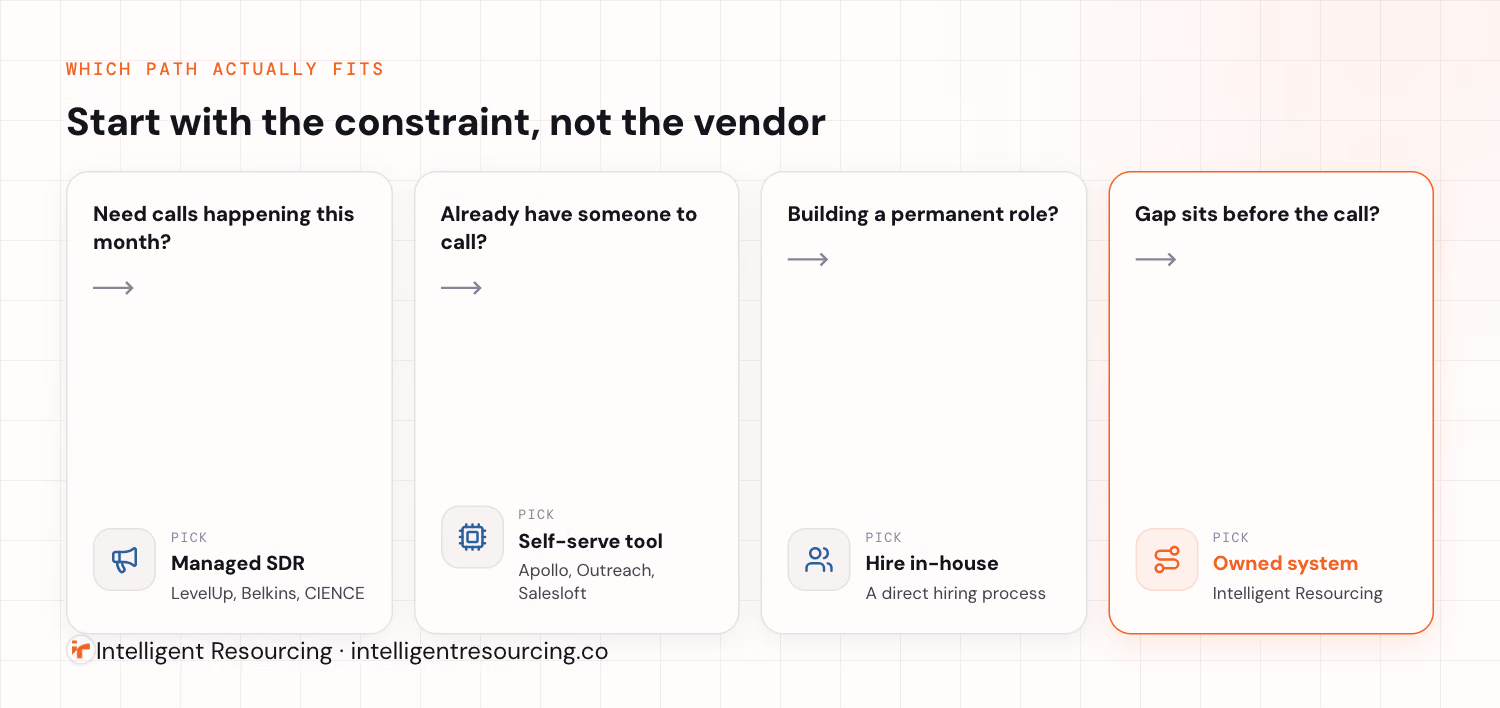
If you want outsourced SDR support with a clearer lower entry point, LevelUp Leads is the more accessible choice. 


If you want large-scale managed outbound across regions, Callbox Australia is the stronger fit.


If you want sales audit and activation support, Illicium is the better local consultancy option. 


If you want LinkedIn-only lead generation, B2B Leads is the more focused choice.


If you want Australian telemarketing and qualified lead generation, Lead Express remains a practical alternative.


If you want a complete Australian B2B growth system that ties buying signals, CRM routing, workflow logic, and execution support together, Intelligent Resourcing is the strongest J2 Group alternative on this list.

Want a closer comparison?

This alternatives guide shows the main options. For a deeper comparison of fit, model, and long-term value, read Intelligent Resourcing vs J2 Group. It is the better next step if you are deciding between outsourced SDR execution and an automated signal-based system your business can keep.

FAQs

What is GTM Engineering compared with traditional outbound?

Traditional outbound usually focuses on prospect lists, SDR activity, and campaign execution. GTM engineering treats growth more like a system, using AI, data, workflows, and automation to turn buyer intent into pipeline. Factors’ GTM engineering coverage and Intelligent Resourcing’s own public positioning both reflect this model clearly. 


Is J2 Group still worth it?

Yes, for the right buyer. J2 Group still makes sense for firms that want a high-touch Australian partner delivering personalised outbound and consulting support. It becomes less compelling when the buyer wants a more technical, workflow-native, and signal-led operating model.


Do I need an agency or a system?

That depends on the constraint. If the problem is simply delivery capacity, an agency or outsourced SDR partner may be enough. If the problem is routing, CRM hygiene, signal handling, and manual process drag, then a system-building partner will usually create more long-term value.


What is the difference between list-led outbound and signal-led growth?

List-led outbound starts with a contact list and pushes outreach to that list. Signal-led growth starts with buying signals such as behaviour, fit, timing, and engagement, then triggers the next action based on what is actually happening. The second model is usually better for timing, lead quality, and follow-up relevance.

Ronan Leonard

I'm Ronan Leonard, a Certified Innovation Officer and founder of Intelligent Resourcing. I design GTM workflows that eliminate the gap between strategy and execution. With deep expertise in Clay automation, lead generation automation, and AI-first revenue operations, I help businesses to build modern growth systems to increase pipeline and reduce customer acquisition costs. Connect on LinkedIn.

I'm Ronan Leonard, a Certified Innovation Officer and founder of Intelligent Resourcing. I design GTM workflows that eliminate the gap between strategy and execution. With deep expertise in Clay automation, lead generation automation, and AI-first revenue operations, I help businesses to build modern growth systems to increase pipeline and reduce customer acquisition costs. Connect on LinkedIn.