

What Does Myoho Marketing Actually Sell?
Myoho Marketing is a Melbourne agency founded in 2020, per CB Insights, running from 333 Exhibition St. Directory listings give conflicting team sizes: its own LinkedIn page lists 1 to 10 employees, while third-party directories list higher ranges (checked 11 September 2026). Its public service list covers:
- SEO
- Google Ads, YouTube Ads, and Bing Ads
- Generative Engine Optimisation
- White-label digital marketing for other businesses
Paid channels are outside what this comparison covers, so treat the ads line as scope rather than a point of difference. The white-label line is the one that changes how the AEO work reaches you.
Some of Myoho Marketing's AEO and SEO work ships under a marketing partner's own branding, not a direct client contract. Ask upfront whether your agreement runs straight to Myoho Marketing or through an intermediary. The answer changes who you call when a page needs fixing.
That model is common in the industry, and there is nothing wrong with it on its own. Reselling under another brand lets a small team support more clients than it could staff directly. But someone still has to own the fix when something goes wrong.
Under a white-label arrangement the work is branded under the reseller's name and delivery happens behind the scenes. The agency the client signed with is the one carrying that risk. The client at the very end never sees who did the work. Our AEO contract checklist covers the clauses that decide who holds the working files.
Myoho's AEO Offering Deserves a Fair Look
Does Myoho Marketing's AEO work actually hold up? Give it credit here. Most small agencies its size have not built a dedicated AEO page at all. Myoho Marketing has, and its own AEO page reads as technically sound. The offer covers schema and JSON-LD, consistent entity naming, and fact-dense copy with inline citations. Those are the same building blocks any credible AEO practice needs.
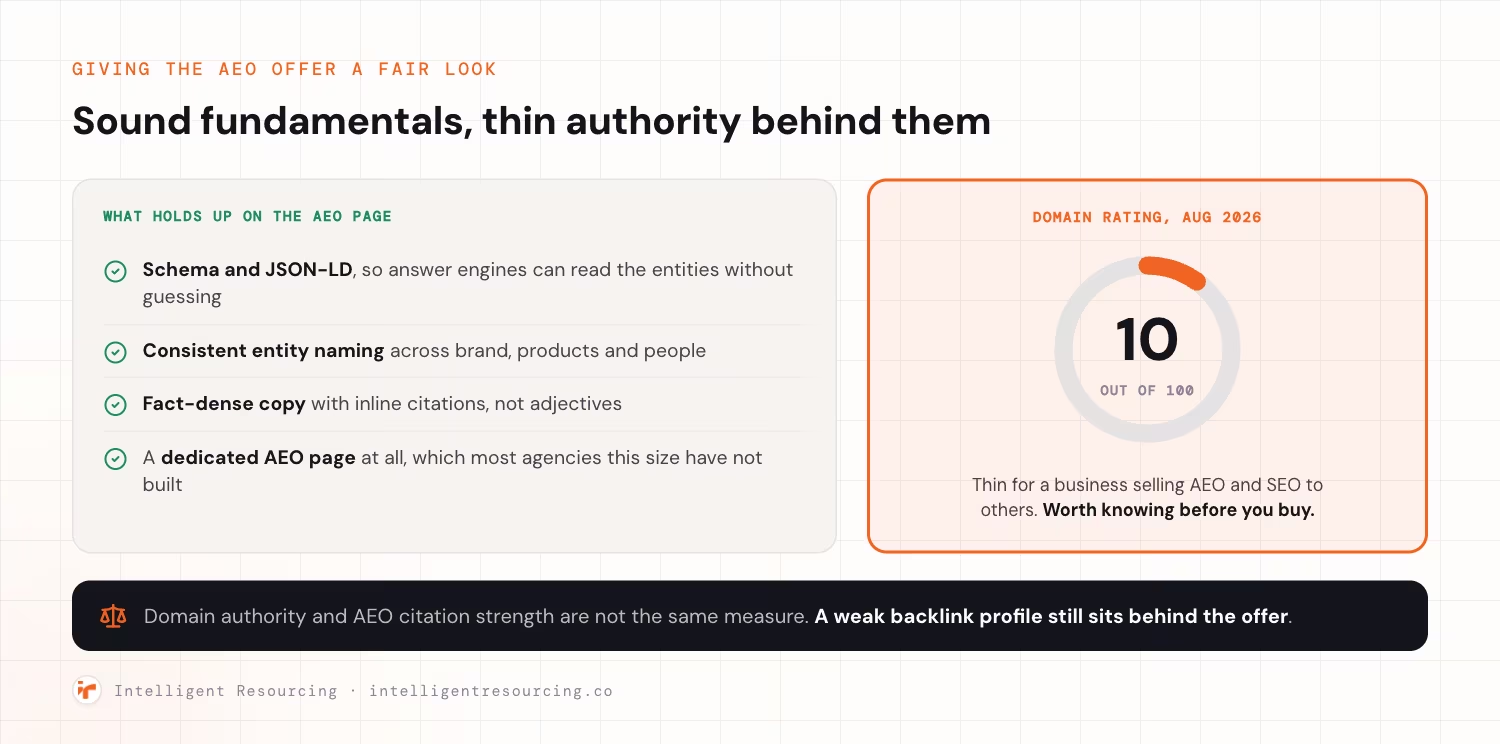
Its authority profile tells a different story. Myoho Marketing's Ahrefs Domain Rating sits at 10, checked 20 August 2026. That is thin for a business selling AEO and SEO to others. Domain authority and AEO citation strength are not the same measure. Still, a weak backlink profile is worth knowing before you buy.
Myoho Marketing sits closer to Intelligent Resourcing on the AEO question than most agencies in this set. Both treat structured data and citation-ready content as foundational, not an afterthought bolted onto SEO. Where the two diverge is what happens after the first citation lands, and who is still working on it in month six.
How Fast Can You Change an AEO Answer?
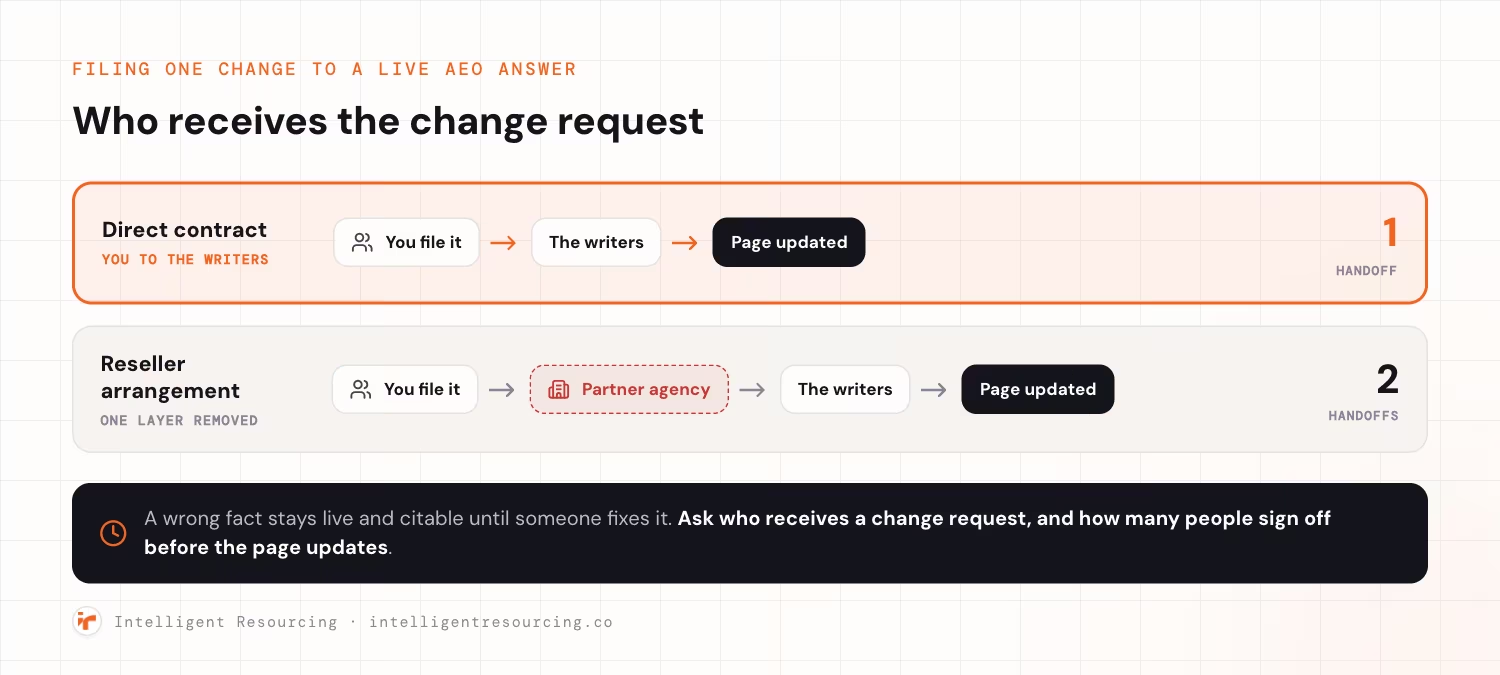
Answer engines update what they cite fairly often. A wrong fact, a stale schema field, a new FAQ, all of it needs to reach the live page fast to matter. Under a direct contract, that fix goes straight to the team that wrote the page.
Under a reseller arrangement, the request usually routes through the partner agency first. That is one more contact, one more approval step, one more day or two before anything changes live. None of that shows up on a service page. It only shows up when you file a change and time how long it takes to appear.
That lag matters more for AEO than for most marketing work, since:
- Answer engines re-crawl and re-cite on their own schedule, not yours
- A wrong fact stays live and citable until someone fixes it
- Every extra approval step is a day the wrong answer keeps circulating
How quickly corrections actually surface is a measurable thing, and citation velocity is the metric that tracks it. Ask a prospective vendor directly: who receives a change request, and how many people sign off before a live page updates. The answer tells you more than any service list.
IR's model is answer engineering, not publishing volume: content built against the questions buyers actually ask AI, then measured on citations rather than word count. See Generative Engine Optimisation for the five phases.
What Happens After the First Citation?
What does month six look like? A first citation is the easy part. Schema, entity hygiene, and evidence-backed copy will get a well-built page picked up. The harder question is what keeps happening once the project is signed off, because the engines do not hold still.
| A one-off AEO project ends with | A GEO system keeps doing |
|---|---|
| A citation report for the engines checked that month | Tracking citations across ChatGPT, Perplexity, Gemini, and AI Overviews on a rolling basis |
| Schema and entity data validated at handover | Re-checking entity data as the site and the product change |
| The pages that were in scope at the time | Widening question coverage as new buyer questions appear |
| A fixed deliverable, signed off | Refining the content when model behaviour shifts underneath you |
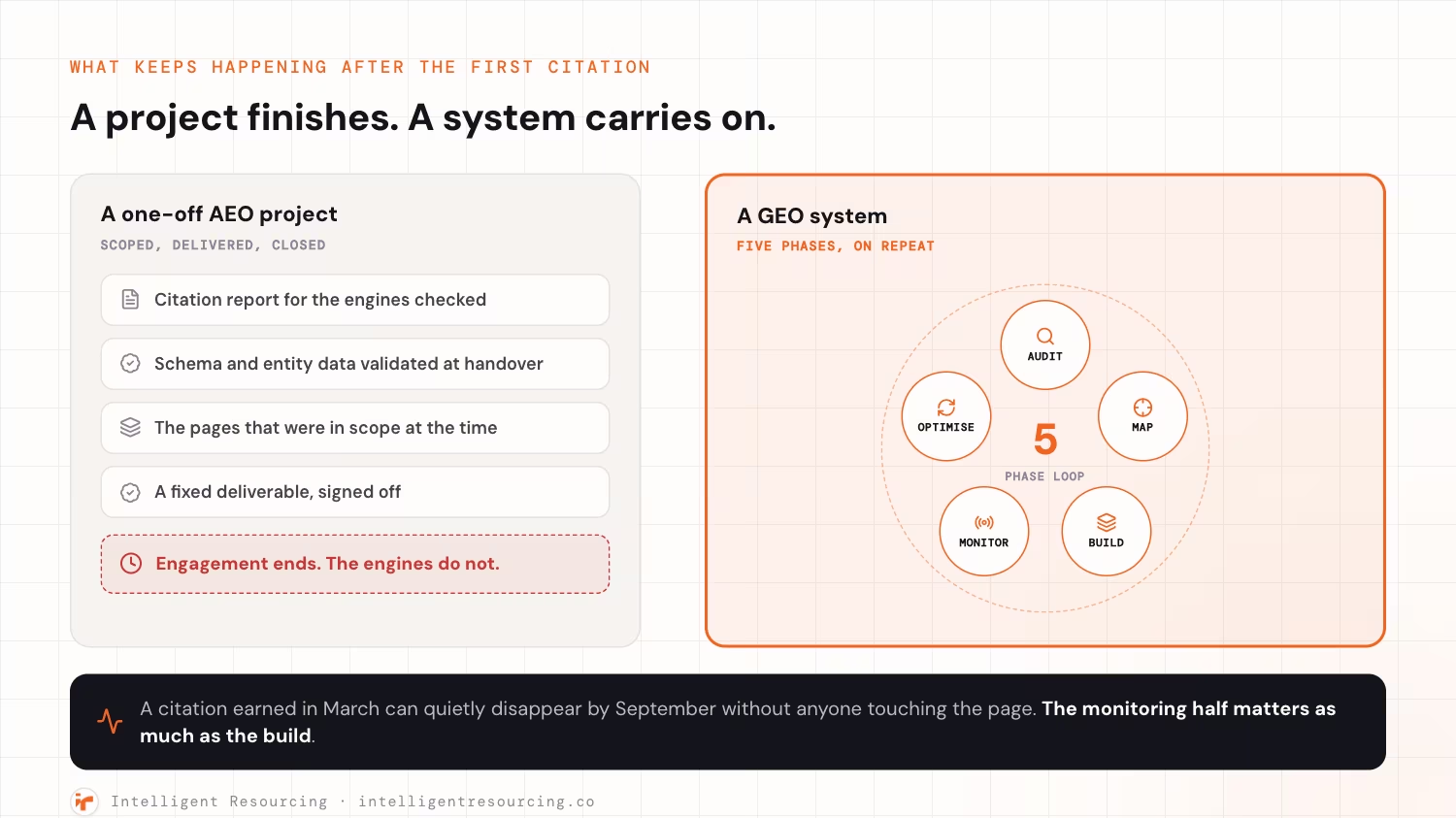
Models change how they weight and select sources. Competitors publish against the same questions. Your own product pages change underneath the schema. A citation earned in March can quietly disappear by September without anyone touching the page, which is why the monitoring half matters as much as the build.
Checking a single engine will not show you that. A cross-engine citation audit is what surfaces where you are being named, where a competitor replaced you, and which questions you never covered in the first place. That is the part a fixed-scope AEO project is not usually contracted to keep doing.
Who Should Choose Myoho Marketing?
Choose Myoho Marketing if you need white-label capacity across SEO, ads, or AEO, and you are comfortable with the system sitting one layer removed from your own team. It also suits a solo marketer who wants one small team handling ads and SEO, without juggling several vendors. Its public services page lists the full channel mix.
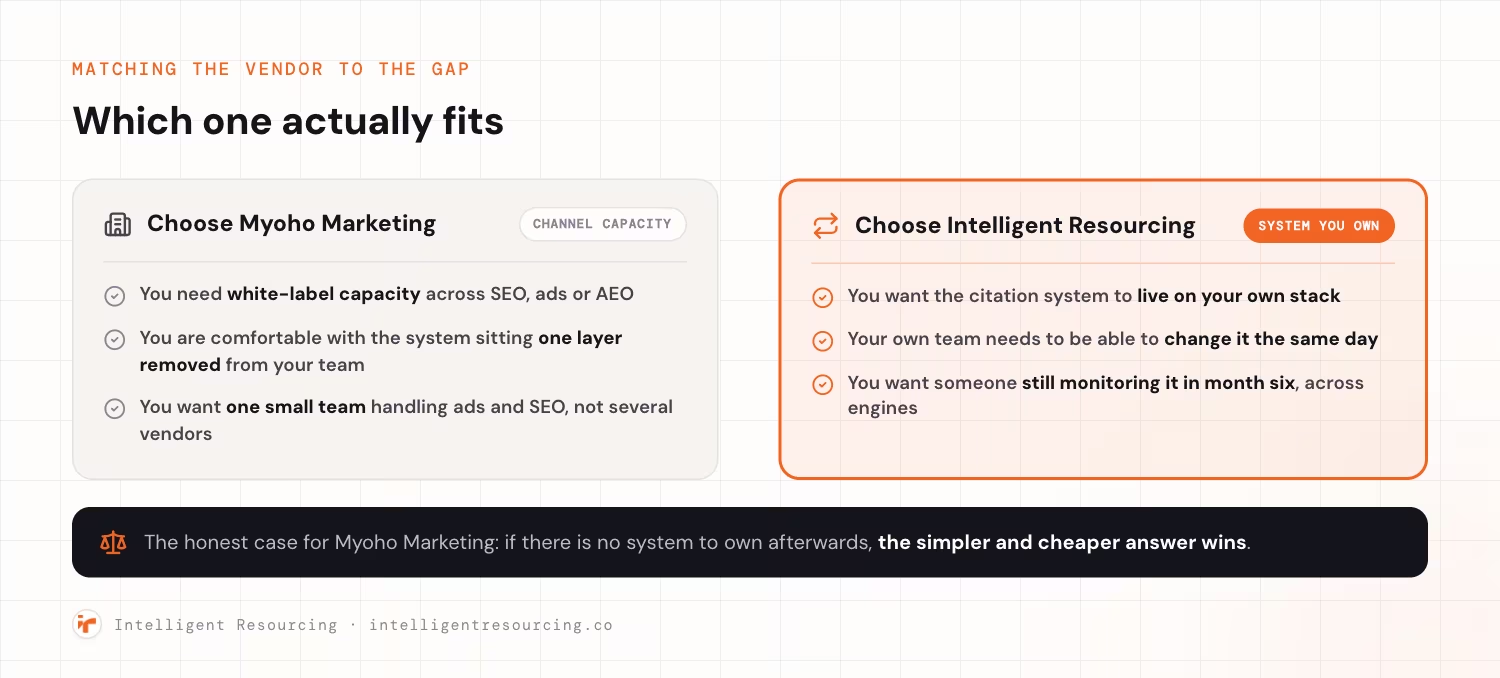
Choose Intelligent Resourcing if you want the citation system itself to live on your own stack, with your own team able to change it, and someone still monitoring it in month six. That fit matters most for B2B teams with longer sales cycles, where buyers ask an assistant several questions across months before they ever fill in a form.
Book a discovery call to map which buyer questions you are cited on today, and which ones a competitor owns.
Comparisons
Map which buyer questions you are cited on today, and which ones a competitor owns. Intelligent Resourcing builds the citation system on your own stack, then keeps monitoring it across engines as model behaviour shifts.
FAQs
Does Myoho Marketing offer AEO directly or as a white-label service?
Both. Its public service list includes a dedicated AEO offer, alongside white-label digital marketing sold through other agencies. Which one applies depends on whether you approach Myoho Marketing directly or through a partner agency.
What does Myoho Marketing cost?
Package pricing is not published on Myoho Marketing's public pages. Ask for a breakdown of what channels are included. Confirm whether AEO is scoped separately, and whether the quote assumes a direct or white-label relationship.
Does Myoho Marketing work directly with end clients?
Sometimes. Its own materials describe both direct client work and white-label delivery for other agencies. Confirm upfront which model applies, since a partner-agency layer adds a step, and time, to any change request.
How is Myoho Marketing's AEO different from Intelligent Resourcing's GEO?
The fundamentals overlap. Myoho Marketing's work centres on schema, entity hygiene, and citation frequency, and those are the right building blocks. Intelligent Resourcing runs them inside a five-phase cycle that keeps monitoring which engines cite you and refines the content when model behaviour shifts.
Who should choose Myoho Marketing over Intelligent Resourcing?
Choose Myoho Marketing if you need white-label capacity, or want AEO and paid channels run by one small external team. Intelligent Resourcing fits when you want the citation system to live on your own stack and keep improving after handover.
Can white-label AEO work still get a business cited in AI answers?
Yes. Schema, entity hygiene, and evidence-backed copy work the same regardless of who holds the client relationship. What changes is how fast a correction reaches the live page, and who is still watching the citations six months later.