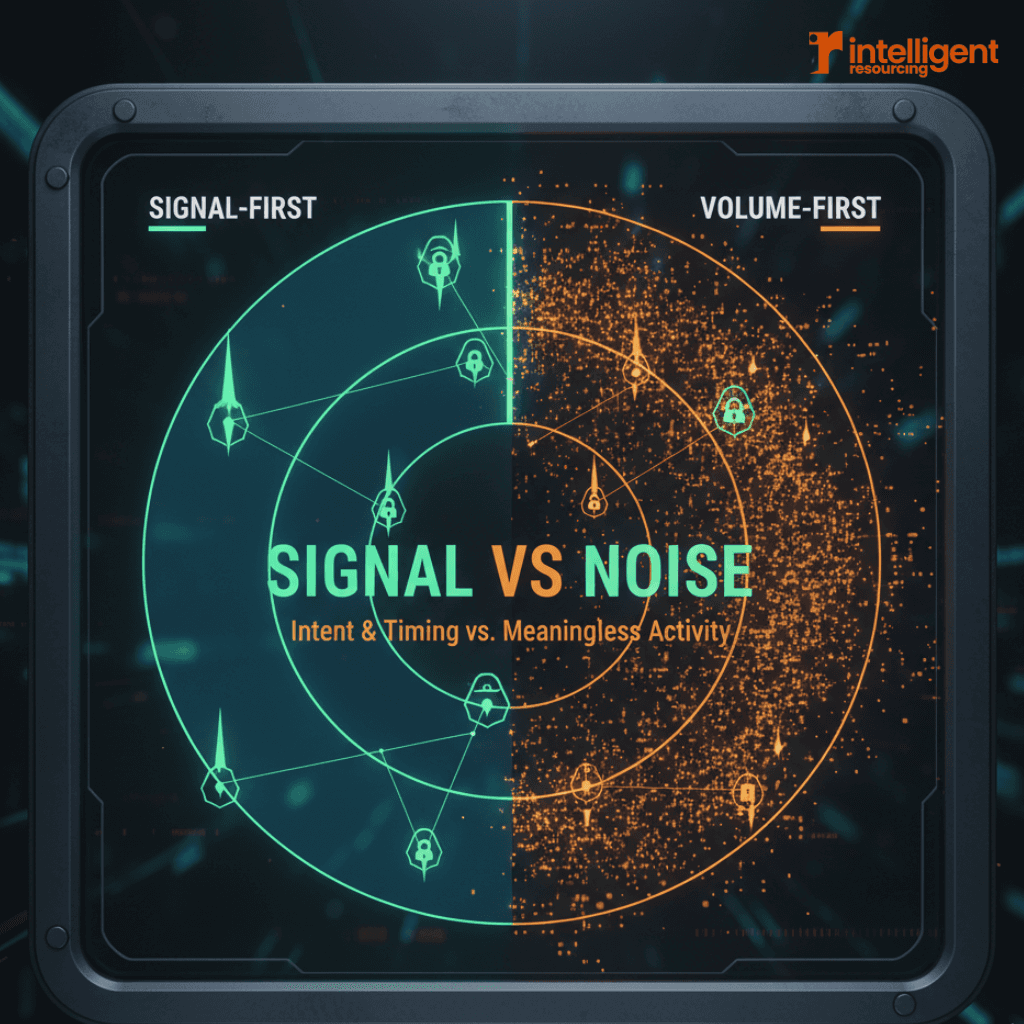
Signal-based lead generation replaces contact capture with buying-signal detection. In 2026, high-performing B2B teams track behavioural and contextual signals, qualify them dynamically, and activate sales only when intent is proven. This signal-led approach predicts pipelines far more accurately than traditional lead generation services.
The Signal Shift
Firmographics explain who, not when
Behavioural signals predict timing
Single signals are noise; patterns create certainty
Pipeline comes from qualification, not volume
Why Lead Generation Services Fail at Predicting Pipeline
Traditional lead generation services are optimised to capture contacts, not intent. They focus on form fills, list growth, and MQL volume metrics that say very little about buying readiness.
Modern B2B buyers research anonymously, collaboratively, and non-linearly. Research from 6sense shows that the majority of buying activity happens in the dark funnel, long before a prospect ever becomes a lead. When teams rely on leads alone, most real demand is invisible to sales.
This creates three predictable failures:
False positives — leads without urgency
False negatives — high-intent accounts never surfaced
Unpredictable pipeline — volume masks readiness
The issue isn't effort. It's the data model.
What Signal-Based Lead Generation Actually Means
Signal-based lead generation uses observable buyer behaviour to infer when an account is entering a buying cycle.
A signal is any action or contextual change that indicates movement toward a purchase decision, especially when multiple signals align within a short timeframe.
This is the foundation of a modern B2B lead generation framework, where pipeline is engineered from evidence rather than outsourced to services.
Signal-led systems are:
Predictive, not descriptive
Dynamic, not static
Time-sensitive, not permanent
Signals decay. Timing matters more than identity.
Behavioural vs Firmographic Signals: Which Ones Actually Predict Pipeline
Firmographic Signals (Context, Not Intent)
Firmographics include company size, industry, geography, and revenue. They answer one question:
"Could this account buy from us?"
They do not answer:
"Are they buying now?"
Firmographics are useful for filtering, not prediction.
Behavioural Signals (Intent in Motion)
Behavioural signals show what buyers are actively doing:
Repeated content consumption
Comparison or pricing page visits
Return frequency and depth
Cross-channel engagement
Analysis from platforms like HockeyStack, which track multi-touch journeys across real B2B funnels, shows that pipeline is influenced by multiple behavioural interactions, not single attributes.
Contextual Signals (Change Events)
Contextual signals explain why behaviour might accelerate:
Hiring for relevant roles
Funding or expansion
Technology stack changes
Predictive power comes from combinations, not categories.
Behavioural + contextual signals consistently outperform firmographics alone.
Signal Capture Tools and Workflows
Tools do not create signal-based lead generation. Workflows do.

Most teams fail by collecting signals without deciding:
Which signals matter
How they are combined
When they should trigger action
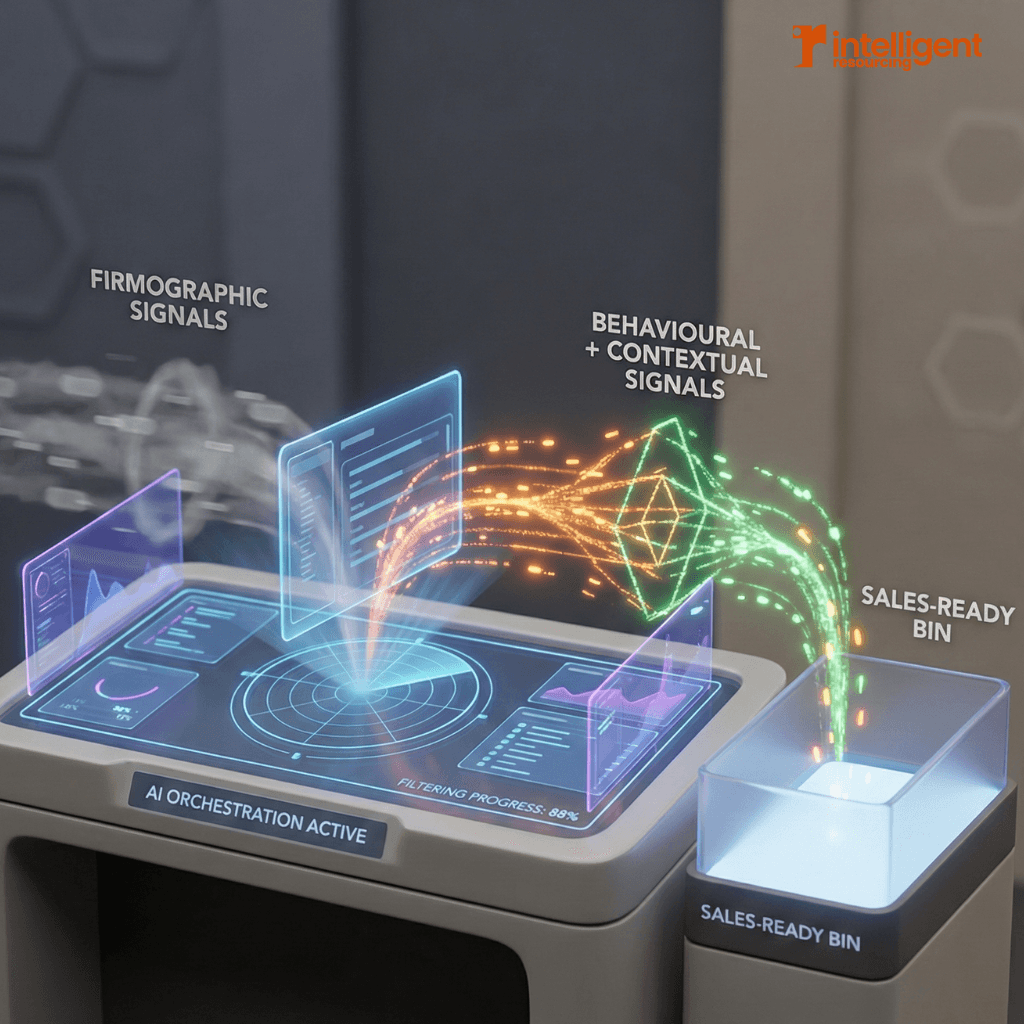
Effective signal capture follows three stages:
1. Ingestion
Signals are captured from:
Website behaviour
Content engagement
Product or demo interactions
External change data
2. Resolution
Signals are:
Mapped to accounts (not just individuals)
Normalised across sources
Time-stamped for recency
3. Orchestration
Signals flow into revenue automation workflows, not dashboards, so intent turns into action at scale.
Without orchestration, intent data becomes noise.
How to Qualify Signals Effectively: From Noise to Sales-Ready Evidence
Signal qualification is the difference between insight and pipeline.
High-performing teams avoid single-trigger logic and instead apply:
Signal Stacking
Multiple signals within a defined time window
Behaviour reinforced by context
Cross-channel confirmation
Decay & Recency Logic
Recent signals weighted higher
Old signals lose influence
Prevents stale "hot leads"
Activation Thresholds
Only when signals pass a threshold does the workflow:
Notify sales
Route the account
Trigger personalised outreach
Research from Demand Gen Report shows that buyers disengage when sales outreach doesn't align with their research stage confirming that premature activation damages trust and conversion.
This qualification logic typically sits within a broader revenue operations model, not inside isolated marketing tools.
Sales-ready is a signal state, not a score.
How This Connects to B2B Lead Generation & Automation
Signal-based lead generation does not replace lead generation, it redefines it.
Lead Generation (Pillar 1): Defines what pipeline should be created
Automation (Pillar 3): Defines how signals become action
Signals: Define when sales should engage
When aligned, they form a signal-led go-to-market strategy rather than a volume-driven funnel.
Automation without signal logic amplifies noise. Signals without automation never scale.
Key Takeaways
Firmographics filter; signals predict
Behaviour beats identity for timing
Single signals mislead; patterns convert
Qualification is the real growth lever
FAQs
What is signal-based lead generation?
A method of generating pipeline by tracking and qualifying real buying signals instead of relying on static lead data.
How is it different from intent data?
Intent data is raw input. Signal-based lead generation adds qualification logic, timing, and activation workflows.
Are firmographic signals still useful?
Yes, for filtering and prioritisation, not for predicting buying readiness.
How many signals indicate buying intent?
There's no fixed number. High-performing teams act when multiple aligned signals appear within a short timeframe.
References
6sense — The Dark Funnel: Understanding Anonymous B2B Buying Behaviour
Demand Gen Report — B2B Buyer Behaviour Survey
HockeyStack — Why Multi-Touch Attribution Reflects Real B2B Buying