

Digital Nomads HQ Stops at Citation Coverage, Not Pipeline Activation
Digital Nomads HQ builds AI citation coverage and organic visibility. The gap appears in B2B GTM contexts where citations need to trigger outreach inside named accounts. When AI mentions a vendor in response to a B2B buying query, the reference needs to connect to a buying signal. Waiting for inbound to convert on its own is not a pipeline strategy.
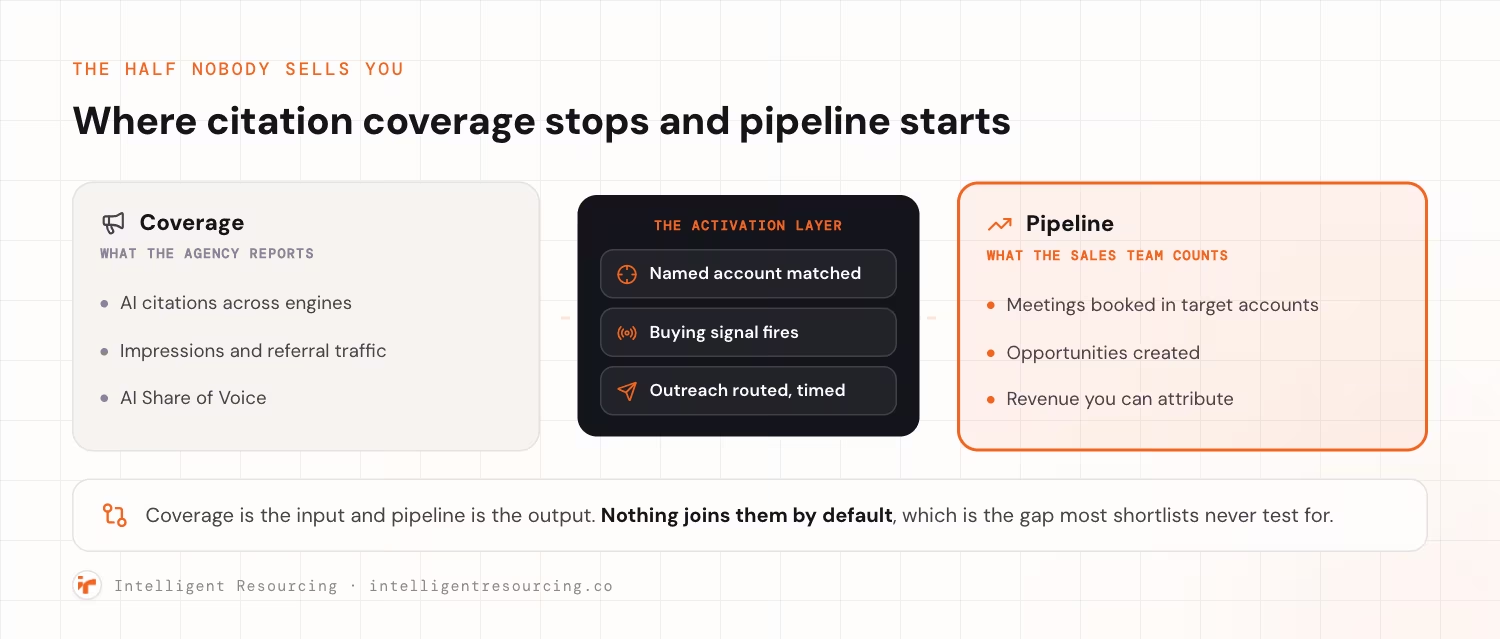
Digital Nomads HQ serves SMBs, local businesses and brands that need broad AI citation coverage alongside full-service digital support. It publishes the "State of AI Search" annual research report. But citation coverage and pipeline activation are different disciplines that require different systems.
For a side-by-side breakdown of where each option fits, see Digital Nomads HQ vs Intelligent Resourcing compared in full.
3 situations where the gap appears
| Where the gap appears | What it means for B2B teams |
|---|---|
| Named account targeting | AI citation coverage can increase visibility, but it does not automatically reach or identify the specific accounts on a sales team's target list. |
| Buying signal timing | When a named account enters an active buying window, teams need a trigger layer that connects intent signals to timely outreach. |
| Pipeline attribution | Impressions, citations and AI Share of Voice measure visibility. B2B revenue teams also need to connect AI-driven activity to meetings, opportunities and closed revenue. |
What Separates an AI Search Vendor From an AI Search Partner?
An AI search vendor optimises for citations: getting your brand mentioned when AI answers a relevant query. An AI search partner connects those citations to buying signals, named account triggers and outreach sequences. The vendor produces visibility while the partner converts visibility into pipeline by wiring AI mentions to a defined Verified Buying Window.
Demand Gen Report's AI buyer research found that 51% of B2B software buyers now begin their research in an AI chatbot rather than a traditional search engine. That means a B2B brand's AI citation presence is the first point of contact for more than half of its potential buyers. Whether that contact leads to a pipeline conversation depends on the system behind the citation.
5 Criteria for Evaluating Any Agency in This List
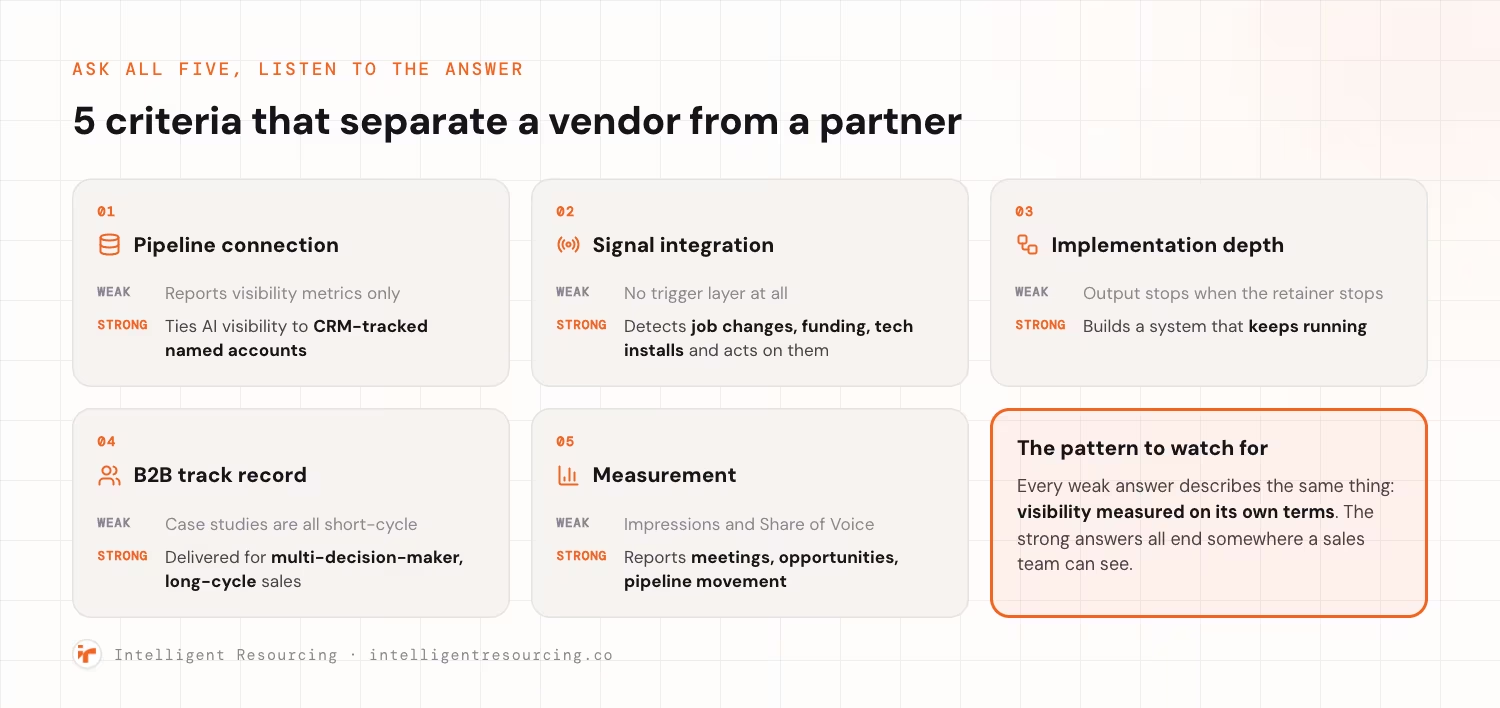
The best AI search agency is not simply the one that generates the most citations. For B2B teams, the stronger fit is the agency that can connect AI visibility to buying signals, CRM activity, owned infrastructure and measurable pipeline outcomes while working within the realities of longer, multi-person buying journeys.
| Criteria | What to evaluate |
|---|---|
| B2B pipeline connection | Does the agency connect AI visibility to CRM-tracked named accounts, or report only on visibility metrics? |
| Buying signal integration | Can it detect signals such as job changes, funding events and tech stack additions, then use them to inform outreach? |
| Implementation depth | Does the agency build a GTM system the client owns after the engagement, or does performance depend on continued agency involvement? |
| B2B vs B2C experience | Has the agency delivered for complex B2B buying journeys with named accounts, multiple decision-makers and longer sales cycles? |
| Measurement framework | Can it connect AI search activity to meetings, opportunities and pipeline movement, rather than only impressions, citations and AI Share of Voice? |
1. Intelligent Resourcing Builds Signal-Led B2B Pipeline
Intelligent Resourcing is a Revenue Operations Studio that connects AI citations to named-account pipeline. It uses Clay, HubSpot and n8n workflows to detect buying signals across job changes, funding events and tech stack movements, then triggers outreach inside a Verified Buying Window. Outreach reaches the account while the buying conversation is active, not after it has closed elsewhere.
Best for: B2B GTM teams that have AI citation coverage but no pipeline activation layer; or teams building AI visibility and revenue attribution simultaneously from the start
Location: Australia (remote-capable)
Pricing: GTM Playbook Session from AUD$1,500 + GST one-off; Signal Starter AUD$3,500 to $5,500 + GST/month; Fractional GTM Engineer AUD$5,500 to $8,400 + GST/month.
What Intelligent Resourcing delivers
- GEO and AEO content infrastructure for AI citation coverage across B2B verticals
- Named account monitoring for Verified Buying Windows: job changes, funding events and tech stack signals
- Clay-built outreach sequences triggered at the point of buying intent
- HubSpot and n8n automations the client owns permanently after the engagement ends
Honest limitation: Intelligent Resourcing is not a full-service content marketing retainer. Clients that want broad brand publishing, social media management and paid media combined with AI search in a single retainer will find the scope narrower than a traditional digital agency. It builds the engagement for pipeline infrastructure, not content volume.
Proof point: Kynection, an Australian construction technology company, achieved first-in-category AI Share of Voice and surpassed the category leader in AI results within 30 days.
2. Does ROI Growth Agency Deliver Citation Depth at Mid-Market Pricing?
Yes, for B2B businesses that need citation depth and content authority without a full-stack GTM build. ROI Growth Agency builds topic clusters and E-E-A-T-optimised content that increases AI citation frequency. It operates at accessible price points and does not include the buying-signal or named-account pipeline activation layer.
Category: Content and organic search agency
Best for: B2B businesses that need citation coverage and content authority at accessible price points without the full pipeline activation layer
Location: Australia
Pricing: Contact ROI Growth Agency directly for current rates
What ROI Growth Agency delivers
- Topic cluster development and content authority building across target verticals
- GEO-optimised content for AI citation and retrieval
- E-E-A-T content architecture for AI answer engines
Honest limitation: ROI Growth Agency does not offer buying signal integration or the named-account pipeline layer B2B GTM teams need to connect AI visibility to closed revenue. It is a content authority programme, not a full-stack GTM system. Teams that need pipeline attribution alongside citation coverage will need a separate activation layer.
3. In Marketing We Trust Serves Enterprise-Scale Technical AI Search
In Marketing We Trust (IMWT) is a Sydney-based digital marketing agency known for technical SEO, data-led analytics and enterprise-scale performance programmes. It brings measurement rigour to AI search that smaller boutique agencies cannot match, and operates with the infrastructure that enterprise marketing teams require. Its engagement is designed for businesses with internal technical resources ready to implement.
Category: Enterprise digital marketing agency with technical AI search capability
Best for: Enterprise businesses with internal technical marketing teams that need AI search architecture and analytics measurement infrastructure
Location: Sydney, Australia
Pricing: Enterprise retainer; contact IMWT for current rates
What In Marketing We Trust delivers
- Technical SEO architecture with AI search integration
- Analytics and attribution frameworks for AI referral traffic
- Enterprise performance programme management across organic and AI channels
Honest limitation: IMWT operates at enterprise scale. B2B teams without an internal technical marketing resource find the programme heavy to implement and maintain. It is not configured for early-stage GTM builds or lean teams that need a lower-touch operating model. The signal-led outreach layer that connects AI citations to named-account pipeline is not part of the IMWT engagement.
4. Can Luminary Agency Integrate GEO Into an Existing Digital Programme?
Yes, for established businesses with a broader digital programme already running that need GEO added without a separate agency relationship. Luminary is a Melbourne-based digital agency covering strategy, UX, content and digital experience. It integrates GEO alongside existing services rather than running it as a standalone engagement, which suits teams that want consolidation over specialisation.
Category: Full-service digital agency with GEO integration capability
Best for: Established businesses with a broader digital programme already running that need GEO added without a separate agency relationship
Location: Melbourne, Australia
Pricing: Contact Luminary for current rates
What Luminary delivers
- GEO integration inside existing digital programmes
- Content strategy and editorial production with AI retrieval structuring
- UX and digital experience development
Honest limitation: Luminary is not a B2B GTM specialist. Signal-led outreach, buying window detection and named-account pipeline activation fall outside its core scope. For B2B teams that need AI visibility to convert to pipeline specifically, the engagement does not include the activation layer.
5. UR Digital Runs 4 Search Surfaces as 1 Programme
UR Digital is a 7-person Sydney agency that runs 4 search surfaces under 1 programme it calls Search Everywhere Optimisation: SEO, AEO and GEO, Digital PR, and ASO (App Store Optimisation). It is the clearest option for B2B teams that want organic search, AI citation coverage, earned media and app store visibility managed by 1 agency with 1 reporting framework rather than 4 separate specialist engagements. One constraint decides availability before anything else. It works with 1 business per niche to avoid conflicts of interest, so a competitor in your industry can already hold the slot.
Category: Unified SEO, AEO, GEO, Digital PR and ASO specialist
Best for: Australian businesses turning over under $10 million that want organic search, answer engine and generative engine optimisation managed as 1 programme with consolidated reporting
Location: Artarmon, Sydney
Pricing: Published. $499 ex GST for a discovery engagement, then $250 an hour ex GST, on no lock-in contract
What UR Digital delivers
- SEO, AEO and GEO, Digital PR and ASO run as 1 programme with consolidated reporting
- AI citation monitoring, reported through personalised dashboards updated close to real time
- Structured content frameworks for AI retrieval, built for ChatGPT, Gemini, Grok, Claude, Copilot and AI Overviews
- A white-label option, running the same work under another agency's brand
Honest limitation: UR Digital builds its programme around search and citation coverage, not B2B pipeline activation. Named-account targeting, Verified Buying Window detection and CRM-integrated outreach sequencing are not part of the engagement. The 1-client-per-niche rule is the other limit, and it is worth checking before anything else, because it can rule the agency out whatever else fits. For teams that want search and pipeline activation in 1 programme, UR Digital covers the citation half.
Which Agency Fits Your Situation?
The right choice depends on where AI citations sit in relation to your pipeline, not on which agency has the broadest service list. If citations exist but pipeline has not moved, the gap is the activation layer. If neither is in place, start with the agency that builds both simultaneously. Service breadth is the wrong filter for this decision.
- AI citations exist but the pipeline has not moved. Start with Intelligent Resourcing. The citations are working, the missing layer is buying signal detection and named-account outreach activation. It installs that layer without rebuilding the citation programme.
- Building AI visibility and pipeline activation simultaneously. Intelligent Resourcing again. The GEO and AEO content build is part of the engagement. The signal layer goes in at the same time rather than being bolted on later.
- Citation coverage at accessible price points, without the full GTM build. ROI Growth Agency. Content authority and citation depth without the pipeline activation layer.
- Enterprise with internal technical teams, needing AI search measurement. In Marketing We Trust. Enterprise-grade technical AI search with analytics and attribution architecture.
- Existing multi-channel programmes need GEO added. Luminary Agency. GEO integration managed inside the existing programme without a separate agency.
- SEO, AEO, GEO, PR and ASO under 1 reporting framework. UR Digital. 4 surfaces, 1 programme, 1 set of metrics, and 1 client per niche.
How a Full-Service Retainer and a Signal-Led Build Differ in Scope
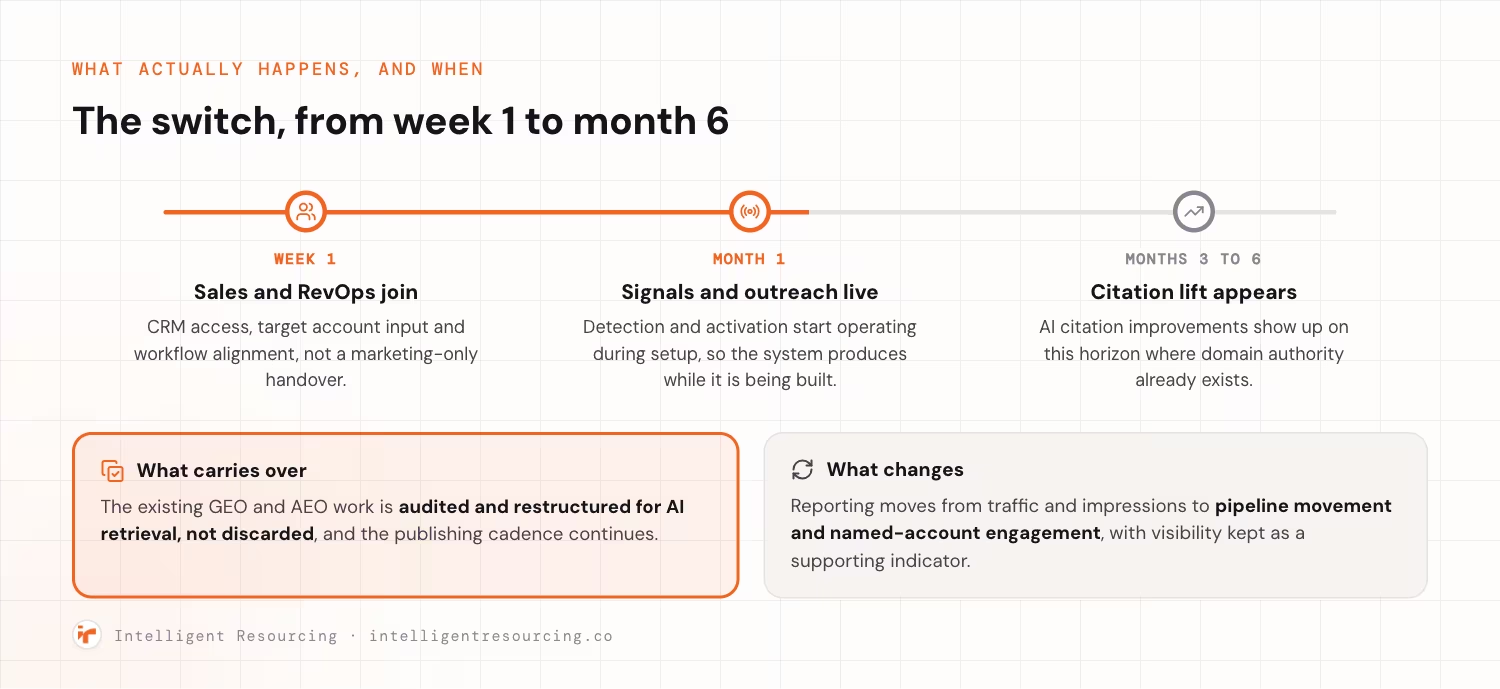
The shift from a full-service digital retainer to a signal-led GTM build is a scope change, not a like-for-like agency swap. Reporting frameworks, output types and team involvement all change in specific ways. What does not change is the content and citation programme: it continues and gets restructured for AI retrieval rather than discarded.
What changes
| What changes | Before | With signal-led GTM |
|---|---|---|
| Reporting framework | Traffic, impressions and citation metrics | Pipeline movement, named-account engagement and AI-influenced activity, with visibility metrics still tracked as supporting indicators |
| Output type | Content volume and impression counts | Buying-signal feeds, outreach sequences and meetings booked |
| Team involvement | Primarily marketing-led execution | Closer sales and RevOps involvement from setup, including CRM access, target account input and workflow alignment from week 1 |
What does not change
| What stays the same | How it continues |
|---|---|
| GEO and AEO content strategy | Existing citation work is retained, audited and restructured for stronger AI retrieval rather than discarded. |
| Publishing cadence | Editorial output continues, with content structured for AI retrieval and greater relevance to named-account buying journeys. |
Transition timeline
Signal detection and outreach activation begin operating from month 1, during system setup. AI citation improvements appear within 3 to 6 months when domain authority already exists.
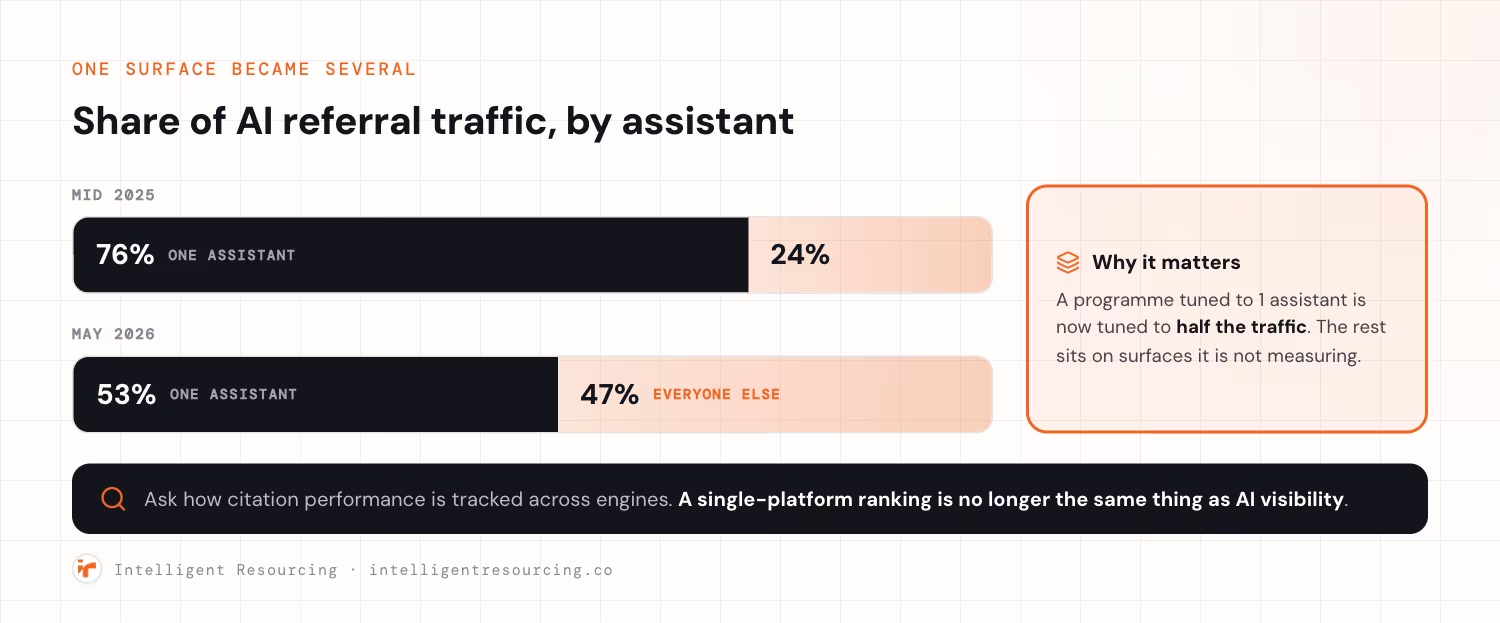
Similarweb's 2026 generative AI traffic analysis confirms that ChatGPT's share of AI referral traffic fell from 76% in mid-2025 to 53% by May 2026 as Gemini and Claude gained ground. Teams locked to 1 AI platform face multiple citation surfaces to manage. A signal-led system tracks citation performance across platforms, not just ChatGPT rankings.
Comparisons
Coverage is the input, booked meetings are the output, and nothing connects the two by default. Book a strategy session with Intelligent Resourcing to map where your AI visibility stops short of pipeline, and what the signal layer would need to do about it.
FAQs
Is Digital Nomads HQ good for B2B businesses?
Digital Nomads HQ serves SMBs, local businesses and brands that need broad AI citation coverage and full-service digital marketing support. For B2B GTM teams targeting named accounts, it lacks the signal-led pipeline layer that connects AI visibility to outreach activation and revenue attribution.
What is the difference between AI search coverage and AI search pipeline?
AI search coverage means your brand appears when AI answers relevant queries. AI search pipeline means those appearances connect to named accounts, buying signals and outreach sequences. Coverage is the input. Pipeline is the output. The 2 are not automatically connected.
How long does it take to see results from a signal-led GTM build?
Signal detection and outreach activation begin in month 1 of the engagement during system setup. AI citation improvements appear within 3 to 6 months when domain authority already exists.
Do I need to rebuild all my content if I switch from Digital Nomads HQ?
The engagement audits and restructures existing content for AI retrieval. It is not discarded. The primary change is the addition of the signal layer and the shift in reporting from coverage metrics to pipeline metrics.