

These 2 Agencies Solve Different B2B Problems
Digital Nomads HQ is built for the awareness gap: businesses that need more visibility across search, social and paid channels. Intelligent Resourcing is built for the activation gap: B2B teams that need to connect visibility to buying signals, CRM data and outreach sequencing.
What Digital Nomads HQ fills
Digital Nomads HQ is a Sunshine Coast-based digital marketing agency established in 2009, with services across SEO, paid advertising, social media and web design for SMBs and local brands across Australia and APAC.
Its Searchlight AI-SEO framework optimises client content to appear in AI-generated results on Google SGE and ChatGPT. Month-to-month flexibility with no long-term contract lock-in, and a single retainer covering multiple channels, makes it accessible for businesses that need managed marketing execution.
What Intelligent Resourcing fills
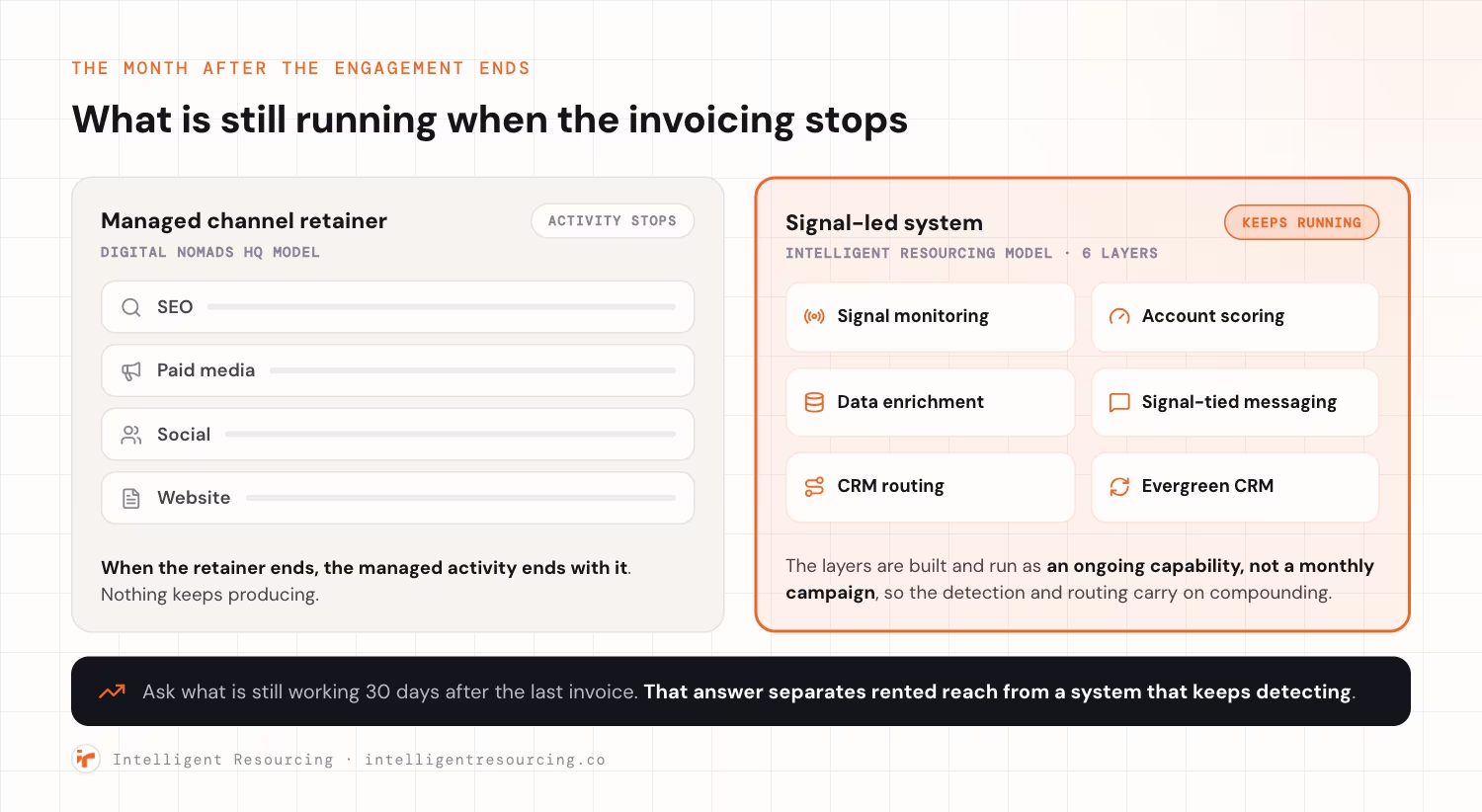
Intelligent Resourcing is a Revenue Operations Studio built for signal-led B2B growth. Its 6-layer system combines signal monitoring, account scoring, data enrichment, signal-tied messaging, CRM routing and an Evergreen CRM that stays accurate over time.
Its GEO and AEO work improves discoverability when B2B buyers research categories through AI platforms. That visibility then connects to GTM engineering, where agentic signal listening detects account-level triggers such as senior hires, funding events and technology changes, then routes timely outreach to the right contacts.
Where in the B2B Buying Journey Does Each Model Operate?
Consensus 2026 research found that B2B buyers spend only 17% of their total purchase journey in direct contact with suppliers. The 83% majority happens independently: AI-led research, peer comparisons, category shortlisting and vendor elimination. Digital Nomads HQ and Intelligent Resourcing operate on different segments of that 83%.
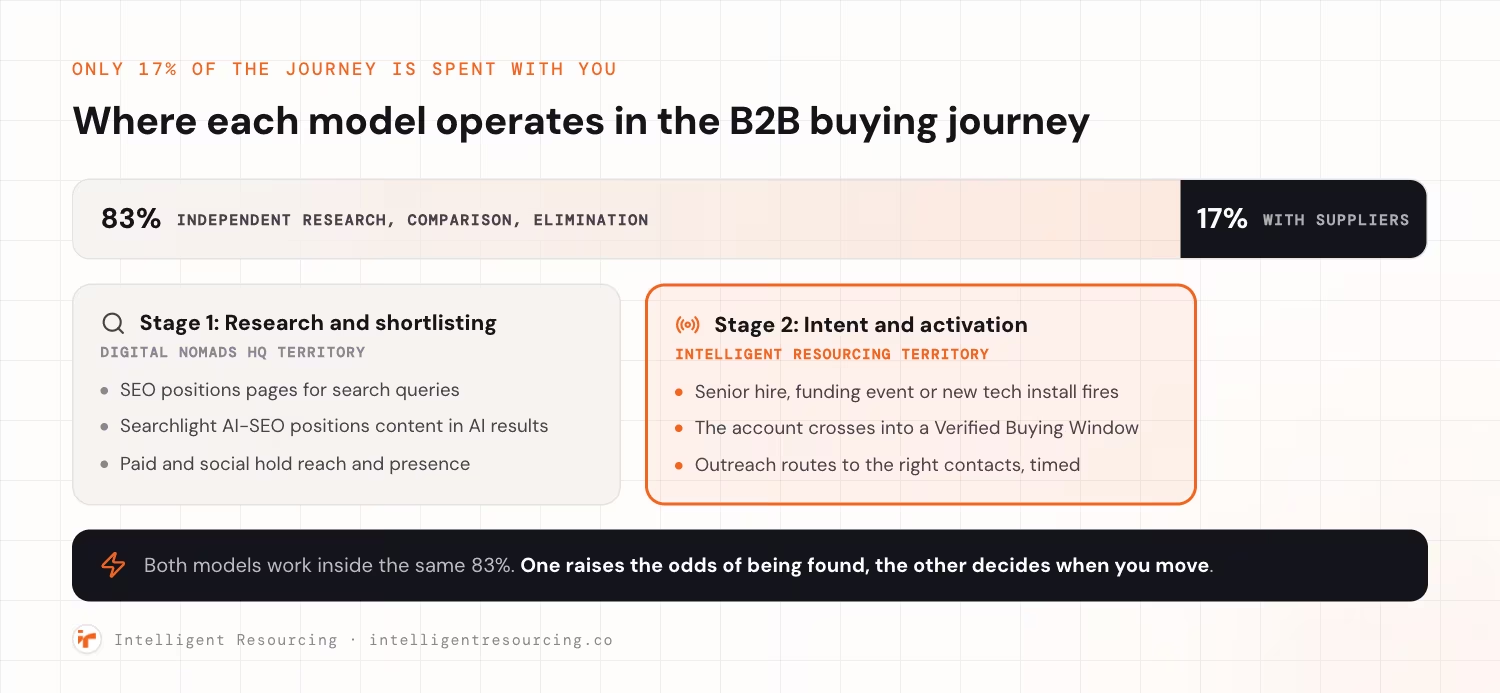
Stage 1: Research and shortlisting (Digital Nomads HQ territory)
Digital Nomads HQ's model operates at the research stage. SEO positions pages for search queries. Searchlight AI-SEO positions content to appear in AI-generated results. Paid media drives reach across audiences. Social media maintains presence. For businesses where visibility during organic research is the primary challenge, this coverage directly addresses the problem.
Stage 2: Intent and activation (Intelligent Resourcing territory)
Intelligent Resourcing's model operates at the intent stage: when a named account moves from passive research to active evaluation. The signals that mark that transition fire into the GTM engineering system: a new senior hire, a funding event or a new CRM or data tool. That triggers outreach to the right contacts at the right moment.
GEO for AI discoverability sits at the intersection of both stages: it ensures its clients are present during AI-led research and that AI citations connect to buying signal activity when the same account moves toward evaluation.
Why the stage matters for ROI
A campaign that fires on a schedule reaches accounts regardless of where they are in the buying cycle. A signal-led system waits for the verified trigger, then moves. For B2B teams with high-ACV sales and long cycles, the first missed trigger is the deal that closes with a competitor who called first.
"AI Search" Means Different Things at Each Agency
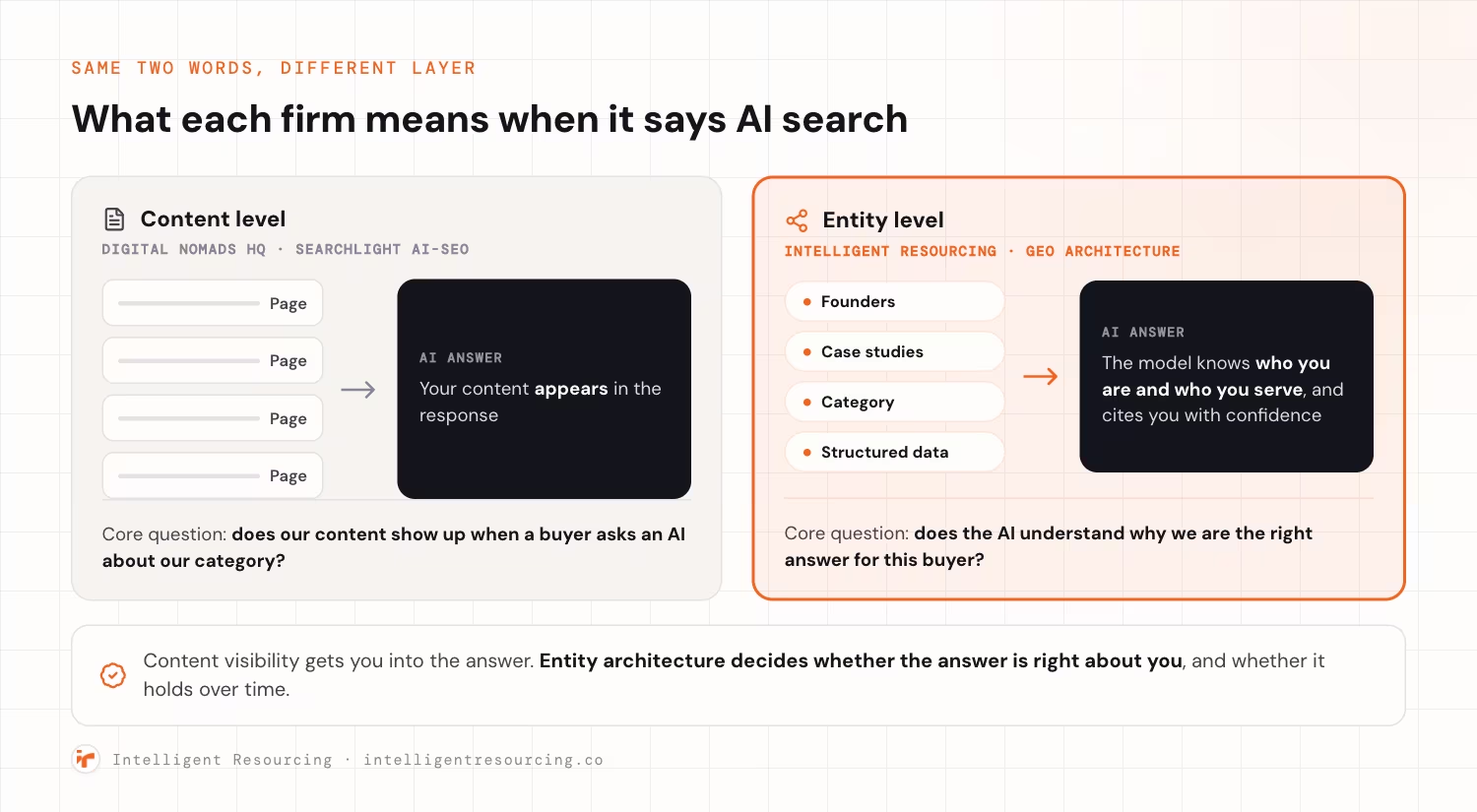
Digital Nomads HQ and Intelligent Resourcing both reference AI search. Digital Nomads HQ optimises content to appear in AI-generated results. Intelligent Resourcing structures entity signals so AI platforms cite a brand accurately, then connects that citation layer to pipeline activation.
| Area | Digital Nomads HQ | Intelligent Resourcing |
|---|---|---|
| AI search approach | Searchlight AI-SEO focuses on content visibility across AI Overviews, ChatGPT and Perplexity. | GEO focuses on how AI platforms understand and represent the brand, its audience and its relevance. |
| Core question | Does our content appear when a buyer asks an AI about our category? | Does the AI understand who we are, who we serve and why we are relevant to this buyer? |
| Primary focus | Content-level AI visibility | Entity architecture and brand understanding |
| Role in the buyer journey | Helps content surface during AI-led research | Builds the connected entity signals AI models use to form confident answers about the brand |
Intelligent Resourcing GEO also includes:
- Content structured in the answer-first format AI models prefer to retrieve and cite
- Entity connections between the brand, its founders, its case studies and its category
- Named signal evidence (client outcomes, third-party citations, structured data) that gives AI platforms the material to cite with confidence
The result is AI Share of Voice: a brand that AI platforms cite reliably when buyers ask the category question that buyer is researching.
The practical difference
Searchlight AI-SEO surfaces content in AI results. GEO architecture builds the entity and signal infrastructure that sustains AI citation over time and connects it to the buyer intent layer. For SMBs and local brands that need their content to appear in AI answers, Searchlight AI-SEO is the right level. For B2B companies where AI citation needs to feed into named-account pipeline, GEO architecture is the right level.
When Does Digital Nomads HQ Fall Short for B2B Pipeline?
Full-service digital marketing improves visibility, traffic and channel performance. The gap appears in B2B contexts where the buyer's 83% independent research journey is happening across AI platforms, and where reaching the right account at the right moment requires a detection system, not a campaign schedule.
- No buying-signal detection. Digital Nomads HQ is built around scheduled marketing activity, not monitoring triggers such as senior hires, funding events or technology changes at target accounts.
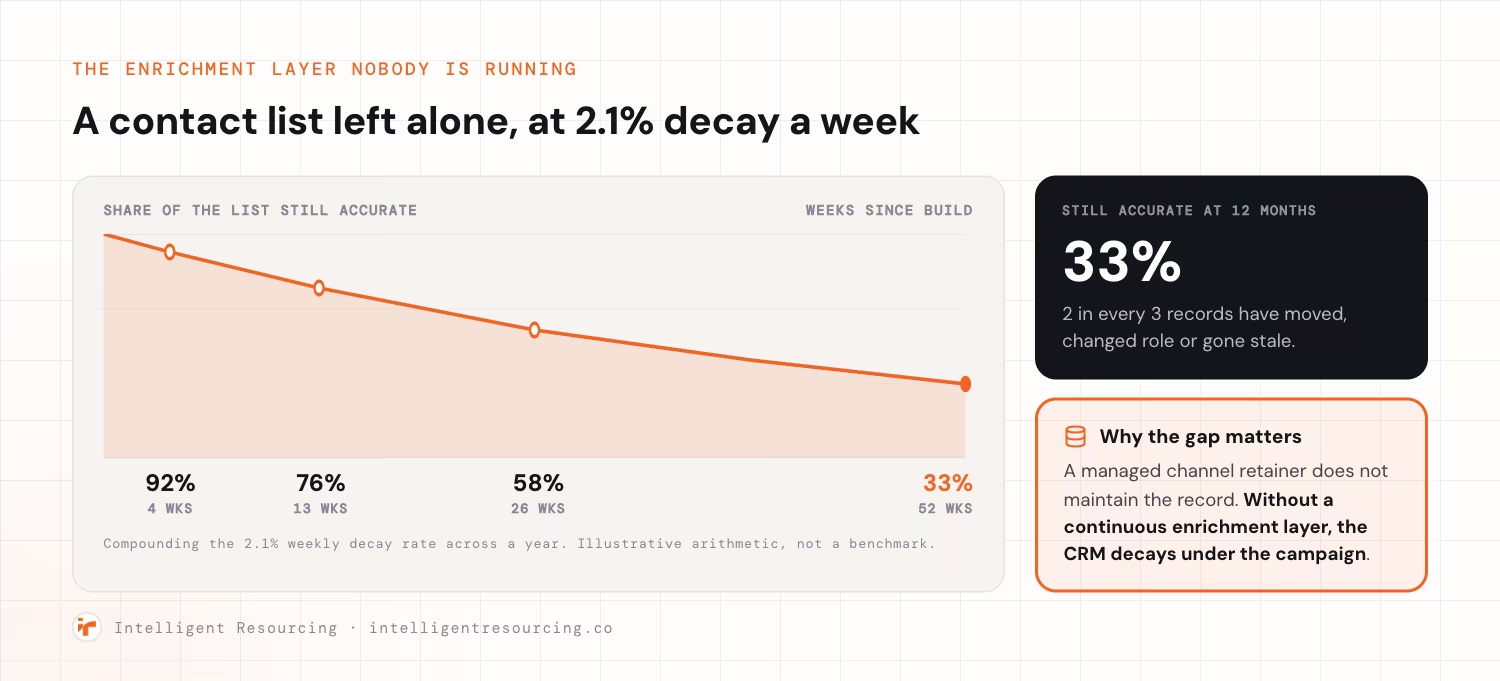
- No CRM enrichment layer. Cleanlist's Q1 2026 study found B2B contact data decayed by 2.1% per week, highlighting the need for continuous data maintenance.
- AI visibility stops at content. Searchlight AI-SEO supports AI visibility, but does not extend into entity architecture or signal-triggered GTM activation.
- Limited durable infrastructure. When the retainer ends, managed campaign activity stops. No ongoing signal, CRM enrichment or outreach system is left behind.
- Not built for buying committees. The model focuses on broad channel reach rather than timed, account-level outreach across multiple decision-makers.
Intelligent Resourcing Is Not Built for Every B2B Sale
Intelligent Resourcing is not the right fit when the primary requirement is managed SEO execution, paid media campaigns, social media content or website support. Those needs are better served by a full-service digital marketing agency like Digital Nomads HQ. 3 scenarios make that limit clearer.
- No in-house sales team to activate signals. The GTM engineering system detects buying windows and routes outreach sequences to the sales team. Without a sales function ready to follow up, the signals fire and go unused. The infrastructure requires a team on the other end.
- Brand awareness is the primary goal. If the business needs to build brand recognition across a broad consumer or SMB market, a full-suite agency is the right model. Signal-led systems are not built for broadcast campaigns or high-volume brand reach.
- Simple, fast-close, single-buyer sale. The signal-led approach delivers the most value for considered B2B sales with long timelines, multiple decision-makers and high deal values. For simple products with a single decision-maker and a short sales cycle, a full GTM signal infrastructure is not proportionate to the return.
The Right Choice Depends on Your Sale Type
The decision turns on 2 variables: the shape of your sale and what you want to own after the engagement ends. Broad awareness, local reach and multi-channel execution fit a managed retainer. Named-account pipeline, AI-led buying journey influence and compounding infrastructure fit a signal-led specialist. Pick the model that matches the problem you are actually solving.
Choose Digital Nomads HQ if:
- You are an SMB, local business or ecommerce brand building digital presence across search, paid and social
- Brand awareness and channel visibility are the primary growth levers
- You need managed SEO, paid advertising, social media and web support from 1 team
- You do not have a sales function ready to act on named-account buying signals
Choose Intelligent Resourcing if:
- You sell into complex B2B buying journeys with longer sales cycles and multiple decision-makers
- You need AI discoverability (GEO) during the 83% of the buyer's journey done independently
- You need GTM infrastructure connecting account data, buying signals, CRM workflows and outreach
- You want pipeline infrastructure that compounds and stays with you after the engagement ends
Comparisons
Visibility only pays when someone acts on it. Book a strategy session with Intelligent Resourcing to map where your buying signals are firing unnoticed, and what it would take to route them into pipeline.
FAQs
Is Digital Nomads HQ good for B2B companies?
Digital Nomads HQ works well for SMBs and local brands building digital presence through SEO, paid advertising and social media. For B2B companies with long sales cycles and multiple decision-makers, the retainer model does not include buying-signal detection or CRM enrichment: the infrastructure B2B pipeline requires.
What is Intelligent Resourcing's Verified Buying Window?
A Verified Buying Window is the period when a B2B target account shows confirmed buying signals: a new senior hire, a funding event or a tech stack addition that indicates the account is evaluating vendors now. Intelligent Resourcing's GTM engineering system detects these signals and routes outreach precisely at that moment.
Does Digital Nomads HQ offer AI search optimisation?
Yes. Digital Nomads HQ's Searchlight AI-SEO framework optimises content to appear in AI-generated results on platforms including Google SGE and ChatGPT. This builds content-level AI visibility. It does not include GEO entity architecture, buying-signal detection or pipeline activation.
What is the difference between Searchlight AI-SEO and Intelligent Resourcing's GEO?
Searchlight AI-SEO positions content to appear in AI-generated search results. Intelligent Resourcing's GEO builds entity architecture: the connected signals that AI platforms use to understand who a brand is, who it serves and why it is the right answer for a specific buyer's question. GEO is then connected to GTM engineering so AI citations feed into account-level pipeline activity.
Does Intelligent Resourcing replace a digital marketing agency?
No. Intelligent Resourcing focuses on GEO and GTM engineering rather than managed digital marketing. Businesses that need paid media, social campaigns or ongoing website management use a digital agency alongside it.
What signals does Intelligent Resourcing monitor?
The system monitors job changes in buying roles, funding events including Series A and B announcements and tech stack installs such as a new CRM, data platform or automation tool. When any of these fires at a target account, the system routes a timed outreach sequence to the right contacts.