

What the Two Labels Usually Mean
An agency selling answer engine optimisation (AEO) usually builds its pitch around Google's own answer spots: featured snippets, the People Also Ask box, and voice search. A specialist selling generative engine optimisation (GEO) usually builds its pitch around citation inside AI chat tools such as ChatGPT, Perplexity and Gemini. The term GEO comes from a November 2023 research paper whose authors were affiliated with Princeton, Georgia Tech, the Allen Institute for AI and IIT Delhi, and it is now the common industry label.
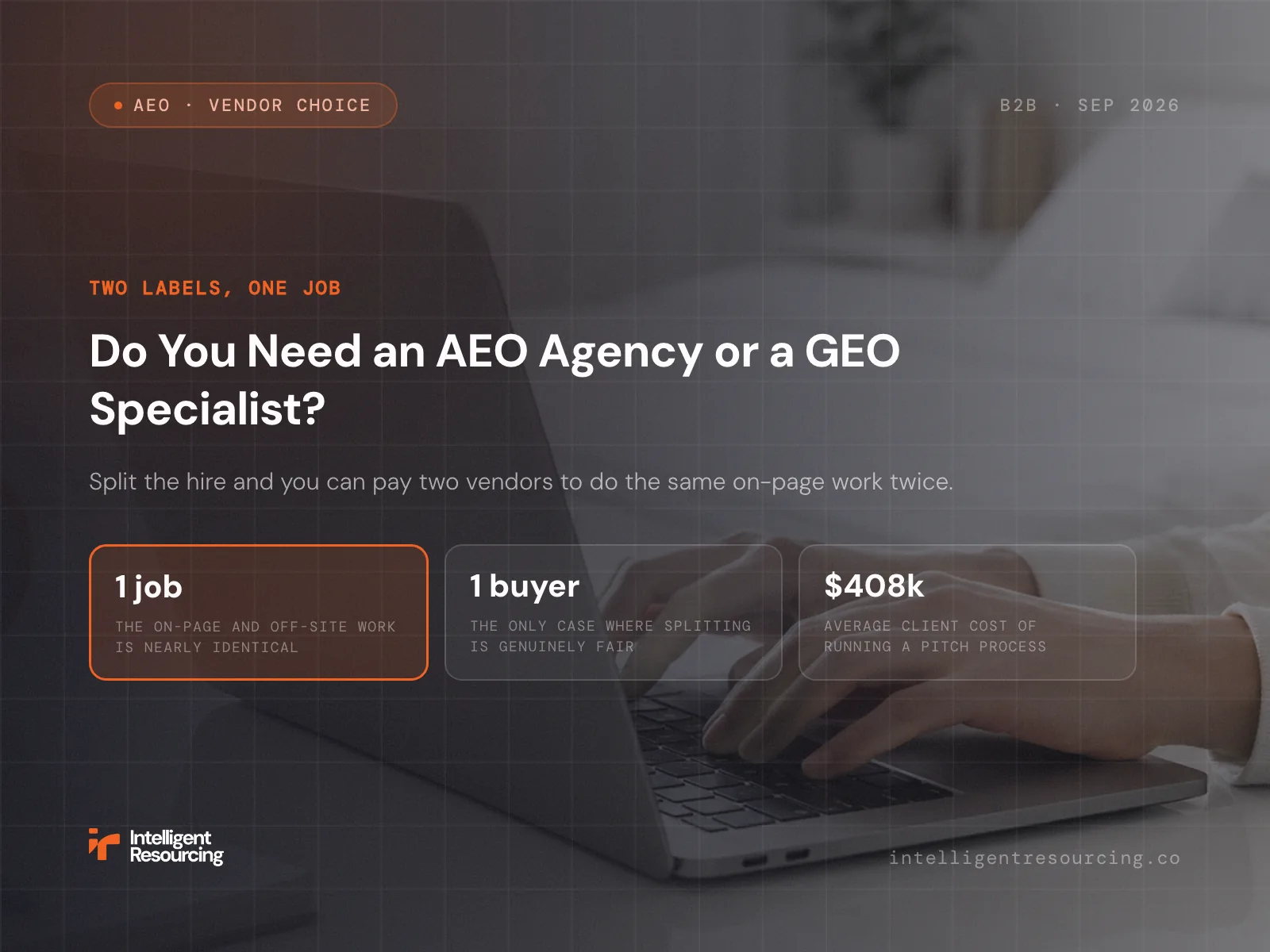
The actual work behind both pitches is usually the same: structured content, clear entity signals, and off-site support. The gap between the two labels is a marketing habit, not proof of a wider or narrower job. Our explainer on the three terms covers the full history and terminology if that is what you need first. This piece assumes you already know the difference, and wants to help you decide what to do about it.
Where Do the 2 Jobs Actually Overlap?
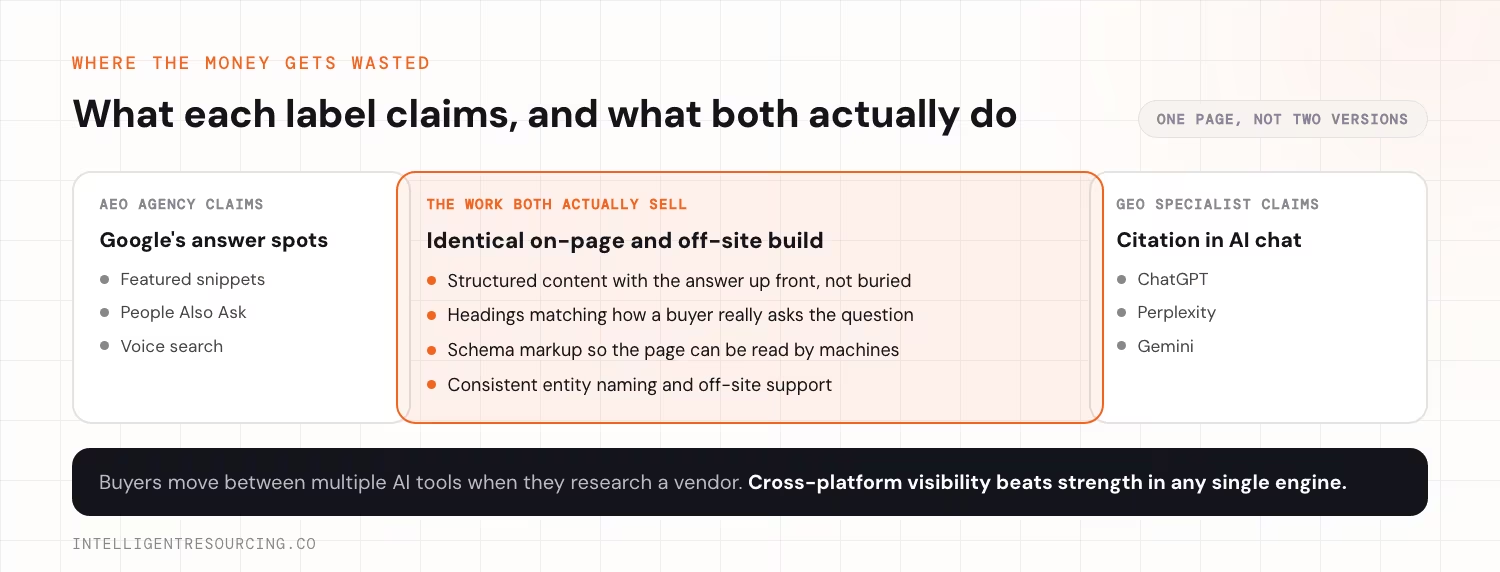
The 2 jobs overlap almost completely. A buyer does not stay inside 1 AI tool when they check out a vendor. Semrush surveyed 643 United States business-to-business (B2B) professionals in March and April 2026 and found buyers increasingly move between multiple AI tools, which makes cross-platform visibility worth more than strength in any single engine. In the same research, 92% said AI had shaped their vendor shortlist.
The same work serves both labels at once:
- Structured content, direct answers up front, not buried in a page
- Clear headings that match how a buyer actually asks a question
- Schema markup so a page can be read by machines
- Consistent entity naming, the same facts about the business everywhere
There is no separate "AEO version" of a page and "GEO version" of the same page. It is 1 page, built to be quoted everywhere.
Want AEO and GEO handled as 1 job, not 2? That is exactly how Intelligent Resourcing runs it. Talk to us about Answer Engine Optimisation.
What Does a Combined Contract Look Like vs Two Separate Ones?
A combined statement of work (SOW) puts the same four things under one signature: content, schema, entity work, and citation tracking across every platform. One invoice, one report, one person accountable if a number moves.
Two separate contracts split those same four things across two vendors, but the split is rarely clean. Schema and entity work cannot be divided by platform, since the same page markup feeds every engine at once. Both vendors end up touching the same layer, or one quietly does work the other is paid for.
| Contract Element | Combined SOW (1 vendor) | Two Separate Contracts (2 vendors) |
|---|---|---|
| Signature and invoice | One signature, one invoice | Two signatures, two invoices for overlapping work |
| Schema and entity ownership | One vendor owns it end to end | Split on paper, rarely split in practice, since the same markup feeds every engine |
| Reporting | One dashboard, one shared set of numbers | Two dashboards, often with no shared definition of "citation rate" |
| Accountability if a number slips | One vendor to call | Each vendor can point at the other |
| Platform coverage | Named once, in one place | Depends on which vendor claims which platform, and gaps hide here |
Brandwatch's Marketer of 2026 research found 40% of marketing professionals named integrating data from multiple sources as their single biggest challenge. Two vendors reporting the same work through two dashboards is that exact problem, with an extra invoice attached.
Our AEO agency contracts checklist covers the full 12-term list for what any single AEO or GEO contract should specify, ownership, key performance indicators (KPIs), exit terms and all. The question here is narrower: before you redline either contract, decide whether you are redlining one or two.
When Does Splitting the Work Into 2 Hires Make Sense?
Splitting the work only makes sense for 1 narrow buyer type. That buyer does exist, so it is worth naming exactly. Our generative engine optimisation page covers what a full, multi-tool programme looks like, for comparison against the narrow case below.
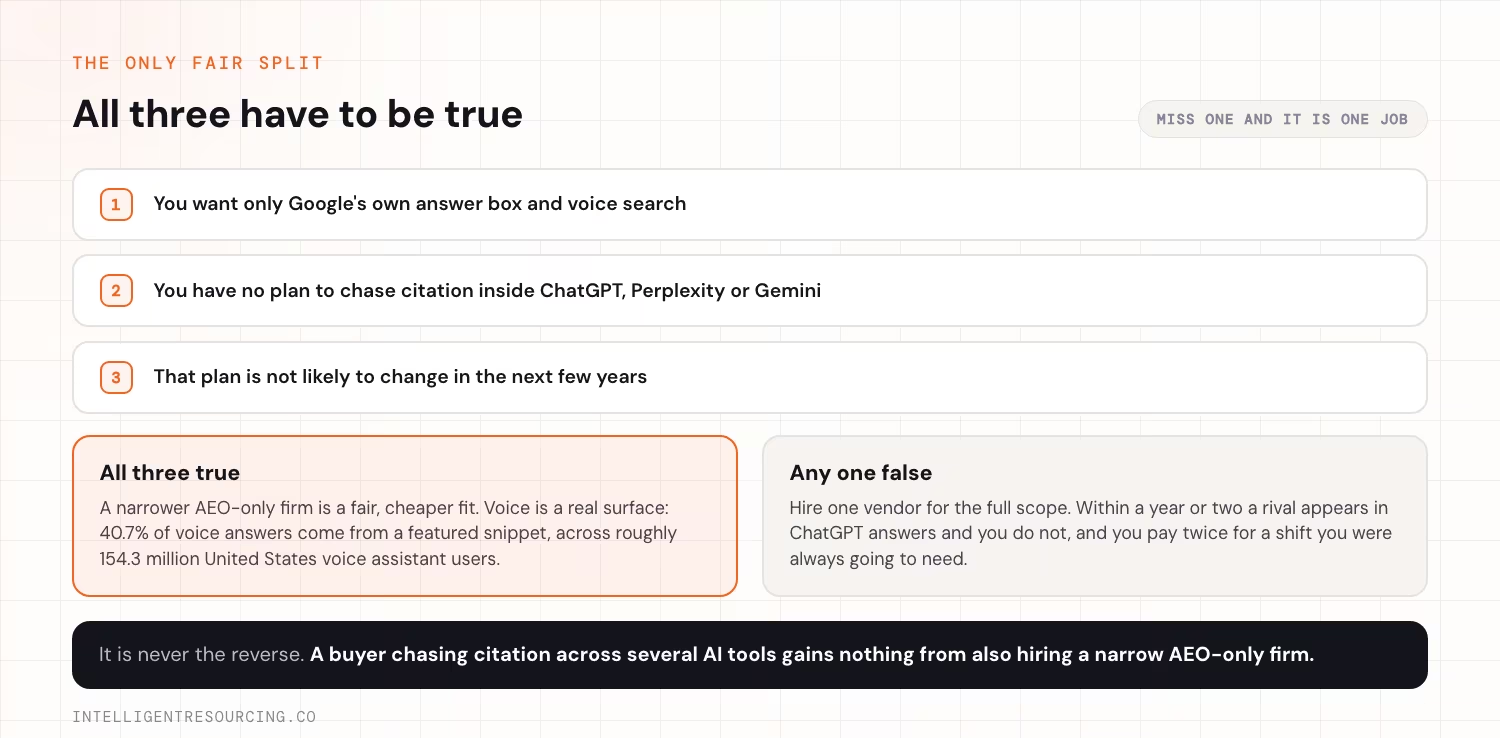
You fit this narrow case if all 3 are true:
- You want only Google's own answer box and voice search
- You have no plan to chase citation inside ChatGPT, Perplexity or Gemini
- That plan is not likely to change in the next few years
Backlinko's Voice Search SEO Study, which analysed 10,000 Google Home results, found 40.7% of voice search answers were pulled directly from a featured snippet. eMarketer's voice assistant forecast puts the United States voice assistant user base at roughly 154.3 million people in 2025. That is a real surface on its own.
If all 3 points describe your business, a narrower AEO-only firm is a fair, cheaper fit. For nearly everyone else, that plan changes within a year or 2. A rival starts showing up in ChatGPT answers, and you do not. At that point, you end up paying twice for a shift you were always going to need.
How Do You Run a Comparable Evaluation on Both Vendors?
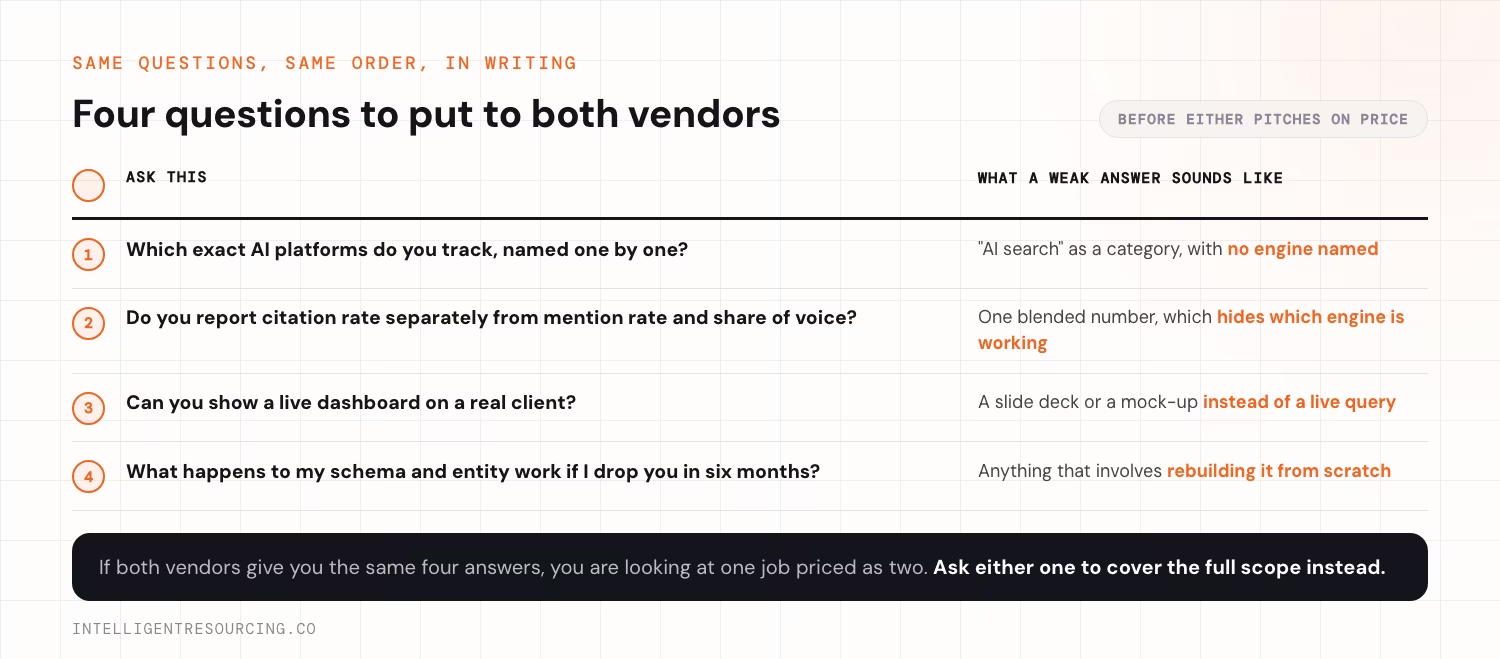
If you are getting quotes from both, ask each vendor the same 4 questions, in the same order:
- Which exact AI platforms do they track, named one by one, not just "AI search"?
- Do they report citation rate separately from mention rate and share of voice, or as one blended number?
- Can they show a live dashboard on a real client, not a slide deck or a mock-up?
- What happens to the schema and entity work already on your site if you drop them in six months?
Ask for these in writing, before either vendor pitches you on scope or price. A written answer is harder to walk back than a verbal one made in a sales call.
Score each vendor's answers against a client you can actually call, not the case study they chose to show you. Our guide on how to choose an AEO agency covers the same four checks in more depth if you want a fuller reference before you run this.
If both vendors give you the same 4 answers, you are looking at 1 job, priced as 2. That is the moment to ask either one to simply cover the full scope instead.
What Does Unwinding a 2-Vendor Setup Actually Cost?
The moment that ends the narrow case is specific: a prospect tells your sales team, "I asked ChatGPT and you did not come up." At that point, whichever vendor was never covering the missing platform has to either expand scope or get replaced, and replacing an agency is rarely quick or cheap.
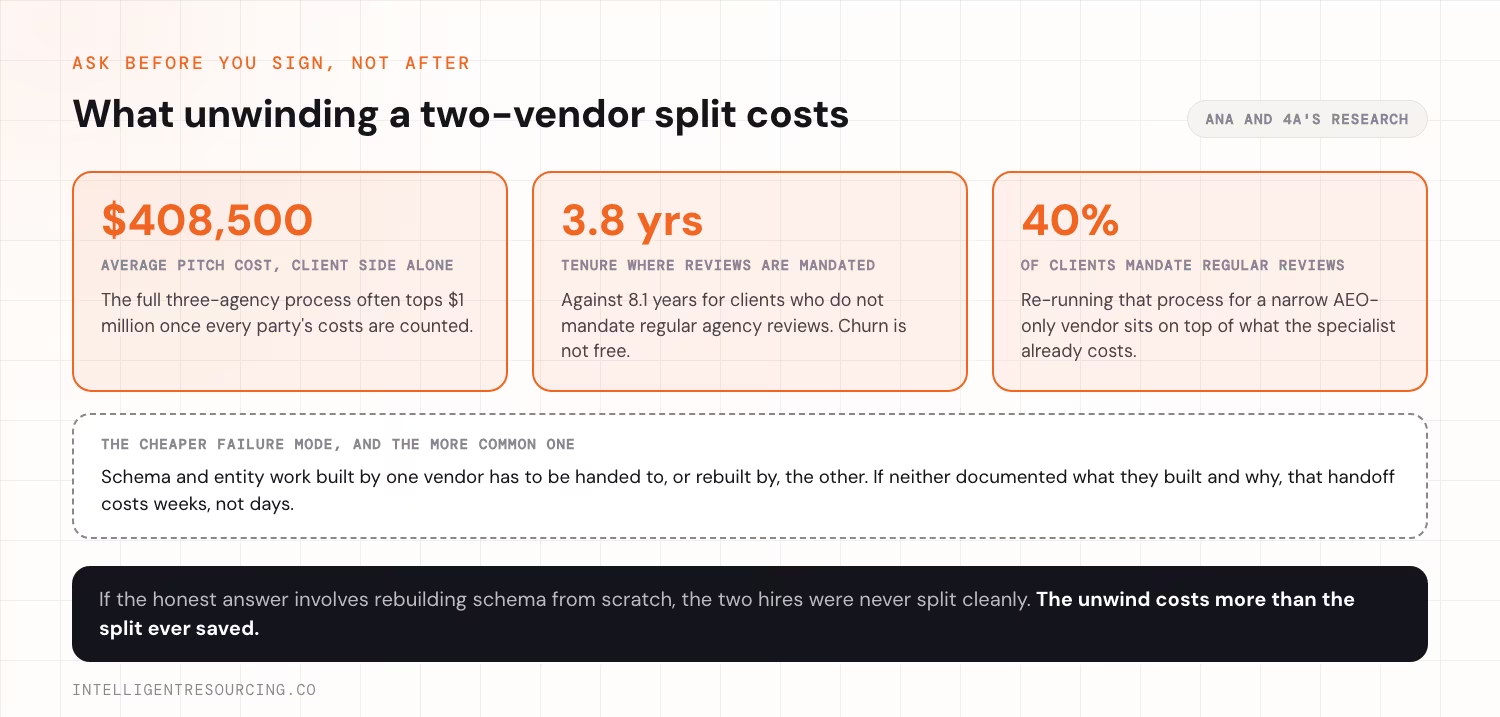
The Association of National Advertisers and the American Association of Advertising Agencies put the average cost of a pitch process at about $408,500 for the client alone, with the full three-agency process often topping $1 million once every party's costs are counted. Their client-agency tenure research adds a second warning: the 40% of clients who mandate regular agency reviews hold relationships as short as 3.8 years, against 8.1 years for those who do not. Re-running that process for a narrow AEO-only vendor, on top of what the GEO specialist already costs, adds up fast.
The cheaper failure mode is smaller but just as common. Schema and entity work built by one vendor has to be handed to, or rebuilt by, the other. If neither vendor documented what they built and why, that handoff costs weeks, not days.
Ask before you sign, not after you need to switch: what happens to the work if you drop one vendor and keep the other? If the honest answer involves rebuilding schema or redoing entity work from scratch, the 2 hires were never really split cleanly. The unwind will cost more than the split ever saved.
Comparisons
See what a single programme covers across every AI surface, before you sign two contracts for the same work.
FAQs
Is an AEO agency the same thing as a GEO specialist?
Usually, yes. Both try to get a brand cited inside AI answers, and the on-page and off-site work is nearly the same. The main gap is which platforms a firm names in its pitch.
What is the 1 case where you actually need a narrower AEO-only provider?
A business that wants only Google's featured snippets and voice search, with no interest in ChatGPT or Perplexity, can fairly hire a narrower AEO-only firm. That narrow goal rarely lasts long once rivals start showing up in AI chat answers.
Can 1 agency do both AEO and GEO work?
Yes, and for most buyers this is the better fit. The same work, structured content, schema, and off-site support, earns both a featured snippet and a citation inside ChatGPT or Gemini. 1 firm covering both avoids paying twice for the same job.
Does Intelligent Resourcing offer AEO and GEO as separate services?
No. Intelligent Resourcing delivers AEO as part of 1 Content Strategy job through GEO, not as a 2nd, separate service. The work that wins a featured snippet is the same work that wins a citation on any AI tool.
What happens if we split the hire and later want to unwind it?
Whoever owns the schema and entity work should be named in the contract before you sign, not after you need to switch. If the answer involves rebuilding that work from scratch, the split was never clean, and the unwind will cost more than either vendor quoted.