

What Goes Wrong When Three People Each Do Good Work?
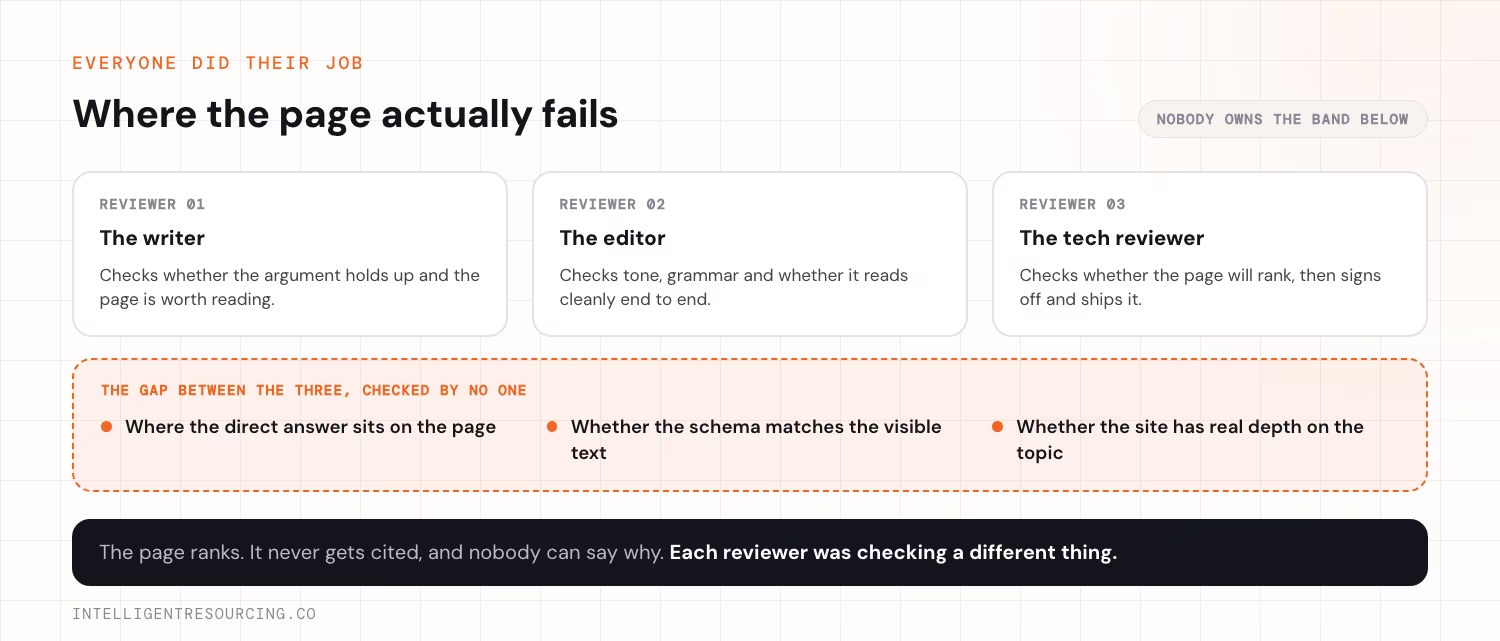
Search engine optimisation (SEO), answer engine optimisation (AEO) and generative engine optimisation (GEO) rarely fail because one person did sloppy work. A writer builds a solid page, an editor checks the tone and grammar, and a tech reviewer runs an SEO pass before it goes live.
The page ranks. No one ever cites it, and no one on the team can say why, because each reviewer was checking a different thing.
The writer checked whether the argument held up, and the editor checked whether it read well. The tech reviewer checked whether it would rank. None of them checked where the answer sits, or whether the schema matches the page. That check was nobody's job.
This is not just a small-team problem. The Content Marketing Institute's enterprise research surveyed 310 marketers at companies of 1,000 or more people and found the most common non-creation challenge was communicating across organisational silos, at 61%, ahead of a lack of resources at 56%. That gap shows up on big teams just as often as small ones. Our explainer on how the three disciplines actually differ is worth a read first if the terms alone are the sticking point.
The same pattern shows up in three forms:
- A page ranks on page one and never shows up in an AI answer, because no one checked where the answer sat.
- A well-written FAQ has no schema, because the writer assumed a developer would add it later.
- Two reviewers each sign off on their own piece, and neither one owns the full page.
What Goes in the Brief Before Anyone Writes a Word?
The fix starts before the review. It starts at the brief, before a draft even exists. Corporate Ink's 2026 GEO and AI Visibility Report, a May 2026 survey of 150 B2B technology marketers, found 88% of marketing chiefs and vice presidents are now asked by leadership or the board what they are doing about AI visibility. That pressure belongs in the brief, not just a slide.
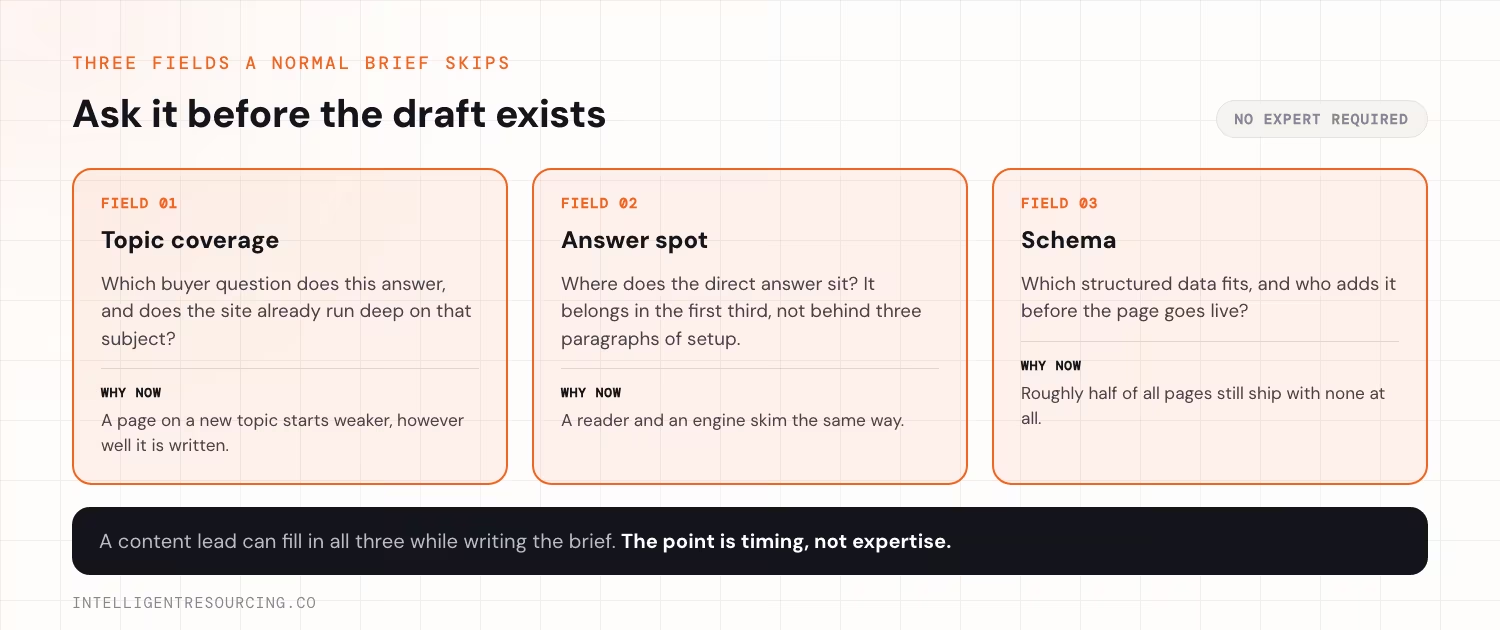
A brief built for one workflow carries three fields a normal SEO brief tends to skip:
Topic coverage
Which buyer question does this page answer, and does the site already run deep on that wider topic? A page on a new topic starts weaker, even when it is well written, because there is nothing around it to establish that the site covers the subject properly. Check what else already exists on the same subject before the brief is signed off, not after the draft is done.
Answer spot
Where does the direct answer sit on the page? It should sit in the first third, not behind three paragraphs of setup. A reader and an AI engine both skim the same way, so a buried answer costs the page in both cases.
Moz's analysis of AI Mode, run across 40,000 tracked keywords, found only a 12% overlap between the URLs cited in AI Mode and the top 10 organic results for the same search. AI Overviews behaved almost the opposite way, at 88% overlap. Structure decides selection almost as much as rank does, so note the answer's position in the brief itself, not just the outline.
Schema
Which structured data fits this content, and who adds it before the page goes live? A comparison table calls for one schema type, a step-by-step guide calls for another, and a plain explainer may need none at all. The WebDataCommons project at the University of Mannheim found structured data on 1.3 billion of the 2.4 billion pages in the October 2024 Common Crawl, or 51.25%, so close to half of all content still ships with none at all. Name the type in the brief, and name who owns adding it before launch.
None of these fields need an expert to fill in. A content lead can answer all three while writing the brief. The point is timing: the question gets asked before the draft exists, not found after the page is live and quietly missing citations.
Our own generative engine optimisation work builds these fields into the brief stage, not tacked on after a page set is already live.
The One-Page Sign-Off Checklist
The checklist stays short on purpose. A long list never gets finished, and an unfinished check looks like a check that happened when it did not.
| Check | What it confirms | Who signs off |
|---|---|---|
| Topic coverage | The page answers a real buyer question and fits the site's depth on that topic | Content lead, at brief stage |
| Answer spot | A direct answer sits in the first third of the page, not buried under setup | Editor, before the page moves to publish |
| Schema match | Structured data matches the text a visitor can see | Whoever runs the content management system (CMS), before the page goes live |
| Combined sign-off | All three checks are confirmed at once, by one person, not assumed from three separate yeses | The named checklist owner |
The schema row exists because structured data is easy to get wrong. Google's documentation on AI features is explicit that structured data has to describe the content a visitor can actually see on the page. Schema that contradicts the page is worse than no schema at all.
The fourth row is the one most teams skip. Three separate yeses are not the same as one combined sign-off, since each person can fairly assume someone else already checked the rest.
Who Owns It on a Small Team vs a Big One?
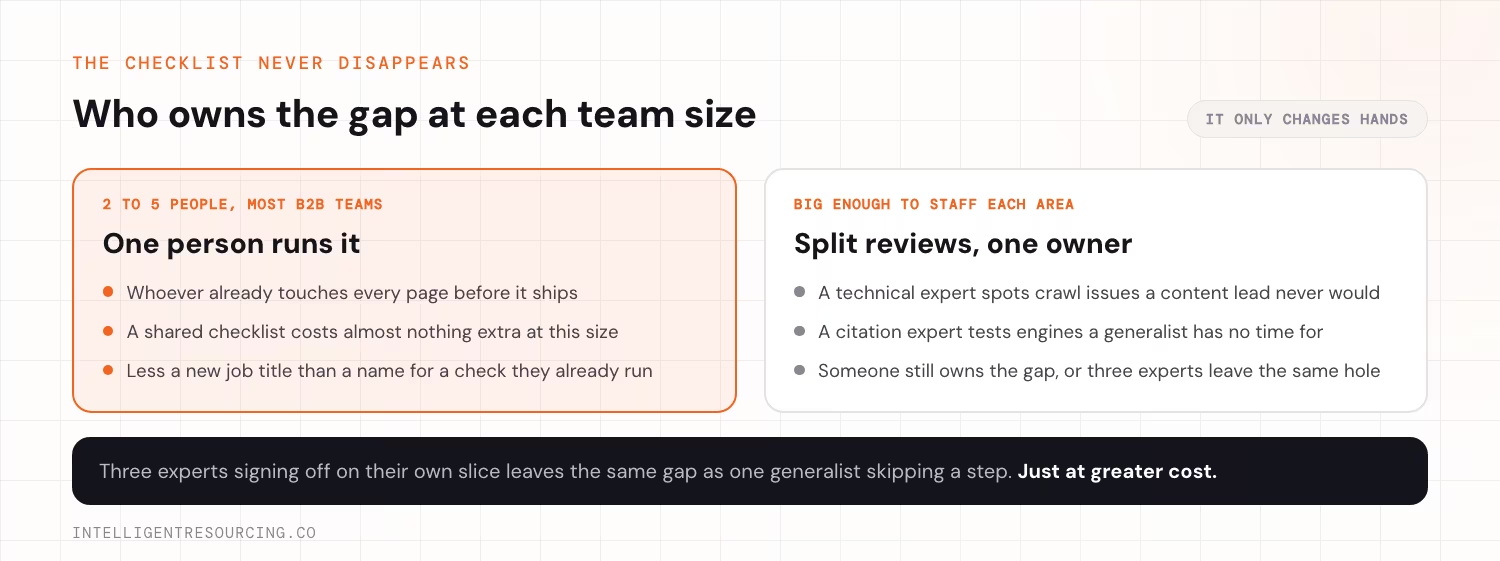
On a small team, the answer is simple. One person runs the checklist, because that person already touches every page before it ships. The Content Marketing Institute and MarketingProfs annual business-to-business (B2B) research found 54% of B2B content teams are just two to five people.
For a team that size, a shared checklist costs almost nothing extra. AEO vs GEO vs SEO covers a different question, which discipline to fund first, and that matters more once a team is big enough to choose.
On a bigger team, split reviews earn their keep. A tech SEO expert spots crawl issues a content lead would never catch, and a citation expert tracks engines a generalist has no time to test. That depth is real, and a single checklist cannot fully replace it.
That edge only holds if someone still owns the gap between the three reviews. Three experts signing off on their own slice leaves the same gap as one generalist skipping a step, just at greater cost. The checklist does not disappear once a team can afford experts. It shifts from being the whole job to being the one check that confirms their combined work adds up to a page that gets cited.
How Do You Know the Checklist Is Working?
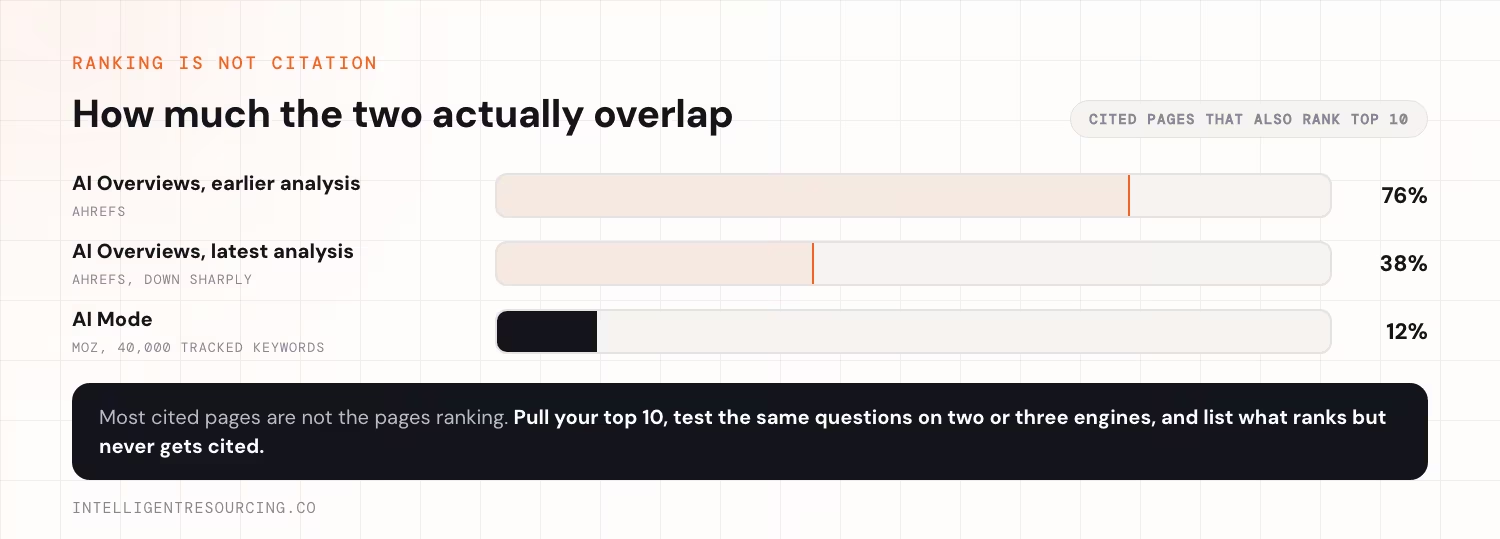
The checklist works if the gap between your ranked pages and your cited pages shrinks over time. It is not working if pages keep ranking well but rarely get cited, since that gap is exactly what a missed spot or schema check leaves behind.
Ranking and citation overlap, but only partly. Ahrefs found 38% of pages cited in AI Overviews also rank in the top 10 for the same query, down sharply from 76% in its earlier analysis. Most cited pages are not the ones ranking, and that gap is the signal worth tracking.
The test itself costs nothing beyond time you already spend on reports:
- Pull the list of pages ranking in your top 10 for a set list of buyer questions.
- Test the same questions on two or three AI engines, and note which pages get cited.
- Where a page ranks but is never cited, check it against the checklist above before you blame the content itself.
A shrinking gap over a few cycles means the checklist is catching what it was built to catch. A gap that holds steady means the checklist is not being run every time, or the sign-off has quietly slipped back to three separate yeses. What is GEO covers how an engine picks a passage to cite, for anyone who wants that layer once the checklist is in place.
Content Creation
Run the gap test on your own top pages and see which ones rank without ever being cited.
FAQs
Does this replace SEO, AEO and GEO experts?
No. It replaces treating three separate yeses as the same as one combined sign-off, since the checklist confirms the experts' combined work actually clears all three checks before it ships.
How long should the checklist be?
Short enough that one person finishes it every time. Four rows, as shown above, is enough to catch most of these gaps, and a longer list tends to get skimmed rather than done.
Who should own the checklist on a two-person team?
Whoever already checks every page before it goes live. On a team that size, this is less a new job title and more a name for a check that person already runs.
What is the first sign the gap is the problem, not the content?
Pages that rank well but rarely get cited on the same buyer questions. That pattern points to the gap between jobs, not to any one reviewer's work.
Does schema alone fix a low citation rate?
No. Schema should match the text on the page, but it is one row on a four-row checklist, not a fix on its own, so a page with correct schema and a buried answer still misses citation.