


How Does an Engine Decide What to Extract Mid-Answer?
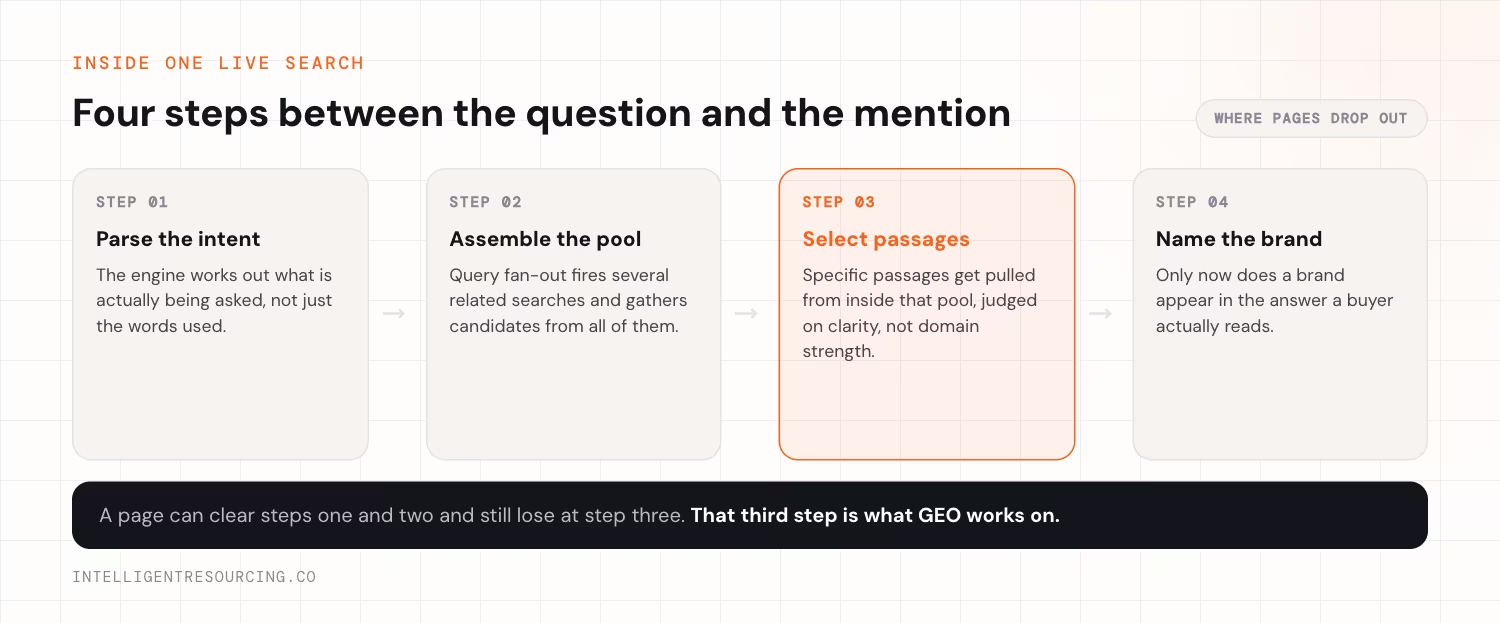
An engine running a live search does not simply read the top 10 and summarise it. It searches, assembles a pool of sources, then selects specific passages from inside that pool based on how the writing is built.
Google describes part of this openly. Its documentation on AI features says AI Overviews and AI Mode may use a query fan-out technique, issuing multiple related searches across subtopics and data sources to build one response. The stated aim is to surface a wider and more diverse set of links than a single results page would.
That single design choice explains most of the gap covered in the next section. If one question triggers several searches, the citation pool is drawn from several result sets, not one.
Selection then runs in four steps:
- Parse the intent. The engine works out what is actually being asked.
- Assemble a source pool. It gathers candidates across those fanned-out searches.
- Select passages. It pulls specific passages from inside that pool.
- Name the brand. Only then does a brand get named in the answer.
A page can clear the first two steps and still lose at the third. Clear, self-contained, quotable claims win the extraction step in a way general authority does not.
This is a different mechanism from Large Language Model Optimisation, which shapes what a model already believes before any search runs. What is LLMO covers that pre-search half, and it matters more than it sounds: ChatGPT triggers a live search in only 31% of prompts, according to Search Engine Land's reporting on Nectiv data. GEO governs that 31%. LLMO governs the rest.
Why Doesn't Ranking First Guarantee the Citation?

Because ranking and citation measure different things.
Moz's analysis of nearly 40,000 queries in February 2026 found 88% of Google AI Mode citations do not appear in the organic top 10 for the same query. A page can rank first and lose the mention to a page twenty places below it, or to a source that never ranked at all.
The two systems reward different signals:
| Organic ranking | AI extraction | |
|---|---|---|
| Weighs | Backlink volume, keyword match, page authority | Passage clarity, verifiable claims, entity consistency |
| Rewards | Links pointing at the page | An answer that lifts cleanly, whatever the link count |
| Unit of selection | The whole page | A single passage inside it |
The practical consequence is a budget problem. Money spent on link building and keyword density does not move citation rate. A brand can improve its organic position for months and see no change at all in how often an engine names it. Traditional SEO versus LLM SEO sets out the full mechanics behind that split, and AEO, GEO and LLMO explained separates the three labels properly.
What Google says, and why it is not the whole answer
Worth putting the counter-argument up front. Google's own guidance states there are no additional requirements to appear in AI Overviews or AI Mode, and no special optimisations necessary. A page needs to be indexed and eligible to show with a snippet. That is it.
That is true, and it is about eligibility. Eligibility is not selection. Being allowed into the pool is not the same as being the passage that gets pulled from it, and the Moz numbers describe what happens after eligibility is settled. Both things hold at once: you do not need special markup to qualify, and how a page is written still decides whether it gets used.
How Do You Structure Content So It Gets Extracted, Not Just Ranked?
A page gets extracted when it states a clear answer near the top, backs it with something verifiable, and names entities plainly enough that an engine never has to guess who is being described.
The research behind this is specific. The 2024 GEO study, from researchers at Princeton, Georgia Tech, the Allen Institute for AI and IIT Delhi and published at KDD 2024, tested a range of optimisation methods against generative engine responses. It found the right changes can boost visibility by up to 40%. The methods that performed best centred on adding citations, quotations and statistics. Keyword stuffing was among the weakest approaches tested.
In practice that means three habits:
- Open each section with a direct answer of roughly 40 to 60 words, before any context or preamble.
- Name a specific source or figure rather than making a vague claim. An engine cannot verify "many companies find" but it can lift a named study.
- Keep entity names consistent, so nothing forces an engine to work out whether "the company" in one paragraph is the brand named in another.
What the difference looks like on the page
The change is smaller than it sounds. Take a section headed "How long does GEO take to work?"
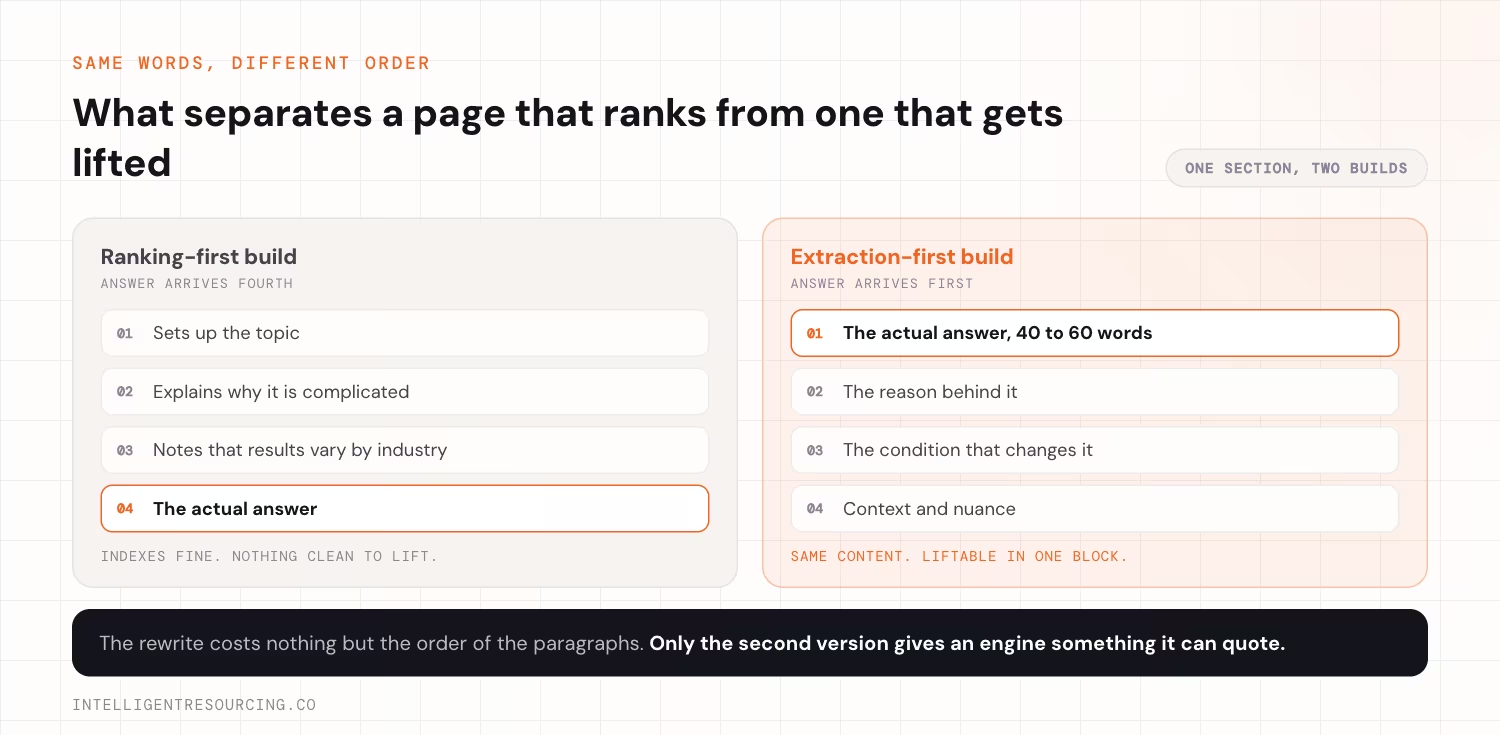
A ranking-first version opens with context. It sets up the topic, explains why the question is complicated, mentions that results vary by industry, and reaches the actual answer in the fourth paragraph. That page can rank perfectly well. Google indexes the whole thing and weighs the domain behind it.
An extraction-first version opens with the answer: a named timeframe, the reason behind it, and the condition that changes it. The context still follows. It just does not come first.
Only the second version gives an engine something it can lift without editing. That is the whole difference, and it costs nothing but the order of the paragraphs.
None of this is writing for machines at the expense of people. A reader skimming for an answer wants exactly what an extraction layer wants: the point, stated early, with something solid behind it. The two audiences have converged, which is the part most teams miss.
Our generative engine optimisation work runs this as a restructuring exercise across a whole content set, page by page, rather than as a rewrite of one article at a time.
Does Schema Markup Get You Cited?
Not on its own, and the evidence here is unusually clear.
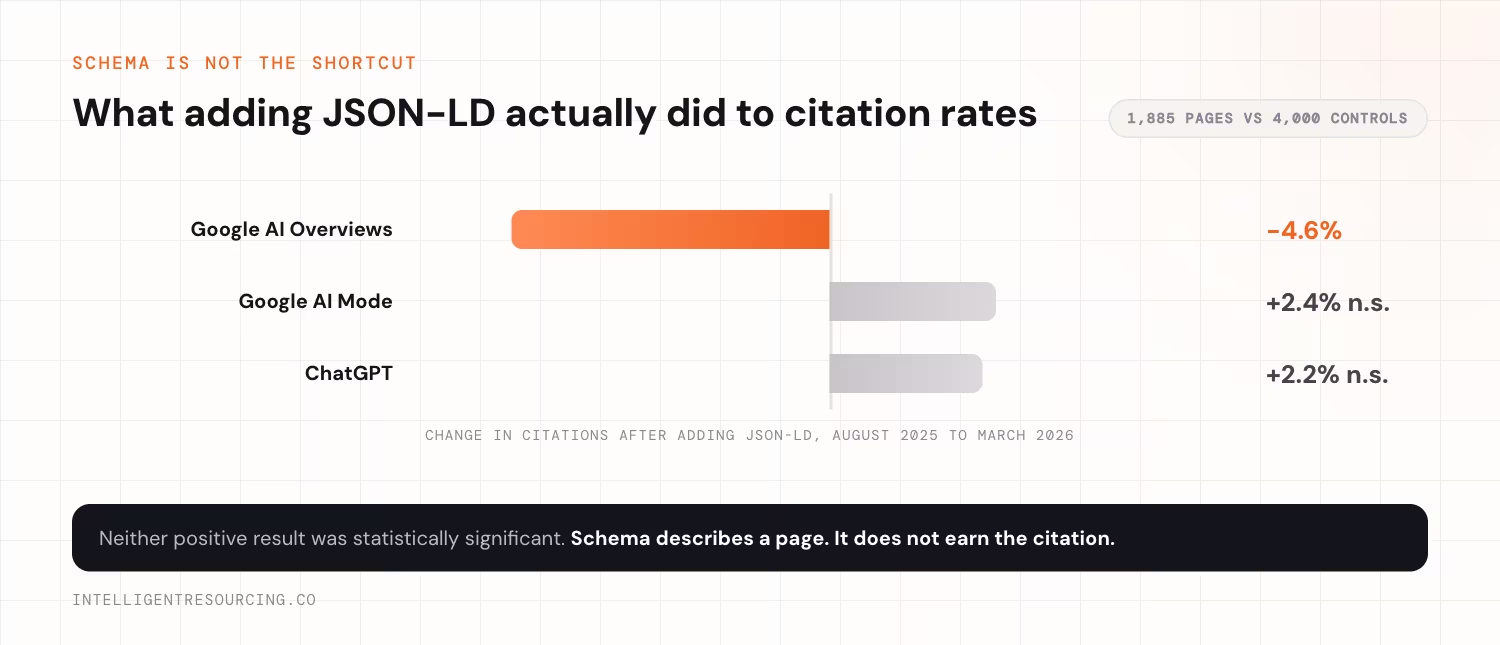
Ahrefs tracked 1,885 pages that added JSON-LD schema between August 2025 and March 2026, measured against 4,000 control pages. Across Google AI Overviews, Google AI Mode and ChatGPT, adding schema produced no meaningful citation lift. AI Mode and ChatGPT moved about two percent, neither result statistically significant. AI Overviews moved slightly negative.
The honest reading is not that schema is worthless. Ahrefs makes that point themselves: highly cited pages tend to carry schema because technically careful sites do everything well, not because the markup drives the citation. Schema describes a page that has already earned its place. It does not earn the place.
So treat schema as hygiene rather than strategy. If a page is not being extracted, adding markup will not fix it. The structure of the writing is what changes the outcome, and GEO for B2B SaaS walks through the same pattern in a specific vertical.
One caveat on all of this. The core mechanism holds across engines, since each one assembles a source pool and pulls passages from it. What differs is how often a live search fires at all, and which sources each engine reaches for. A page structured for extraction improves its odds everywhere. It does not guarantee the same result on every platform, and anyone promising that is describing a system nobody controls.
Content Creation
Ranking first no longer means getting cited, and the gap does not show up in a rank tracker. Book a GEO diagnostic call with Intelligent Resourcing and we will read which of your pages are eligible, which are actually being extracted, and what separates the two.
FAQs
Does ranking first in Google guarantee an AI engine will cite my page?
No. Moz's February 2026 analysis of nearly 40,000 queries found 88% of Google AI Mode citations do not appear in the organic top 10 for the same query. The two outcomes are only loosely connected, partly because AI Mode fans one question out into several searches.
What makes a passage more likely to get extracted by an AI engine?
A clear, self-contained answer near the top of the section, backed by a specific citation, quotation or statistic. The Princeton-led GEO study found those additions produced the largest visibility gains of the methods it tested, up to 40%.
How is GEO different from just writing better SEO content?
SEO optimises for ranking signals: backlinks, keyword match, page authority. GEO optimises for extraction signals: passage clarity, verifiable claims, entity consistency. The unit differs too. Ranking selects a page, extraction selects a passage inside it.
Does adding schema markup improve AI citations?
Not measurably on its own. Ahrefs tracked 1,885 pages that added JSON-LD against 4,000 controls and found no meaningful lift on AI Overviews, AI Mode or ChatGPT. Schema is worth having, but it describes a page rather than earning it a citation.
Does Intelligent Resourcing offer GEO as a separate service from AEO?
No. GEO sits inside Intelligent Resourcing's Answer Engine Optimisation work rather than as a separate line. AEO is the umbrella. GEO is the part focused specifically on generative-engine citation during a live search.