


What Is LLMO, and How Is It Different From a Live AI Search?
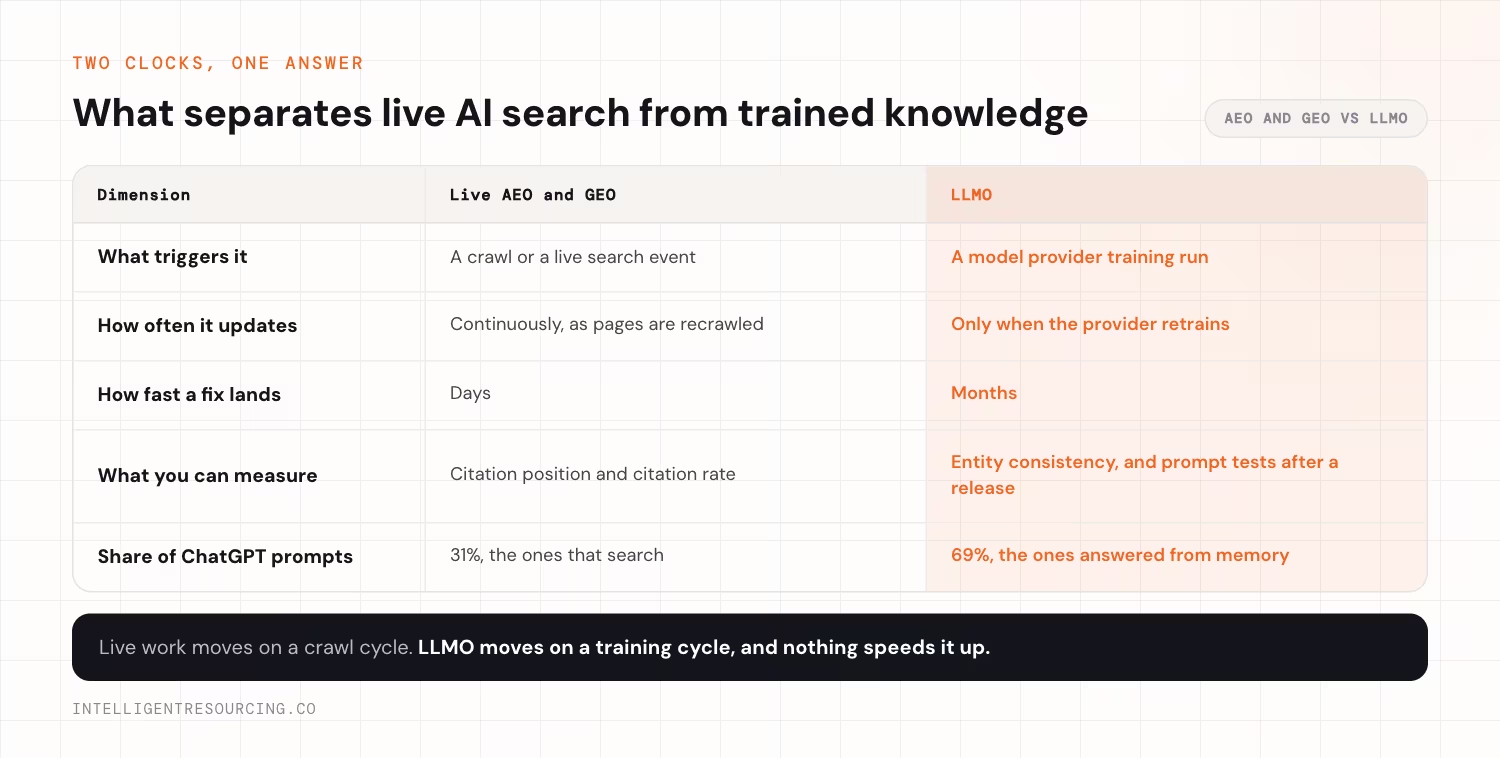
Large Language Model Optimisation (LLMO) is the discipline of shaping what a model already knows about a brand from training. That makes it distinct from Answer Engine Optimisation (AEO) and Generative Engine Optimisation (GEO), which both govern live, per-query citation. All three disciplines answer a different piece of the same problem: whether a model finds a brand, cites it correctly, or already believes the right thing about it before anyone searches. That shared surface is why AEO, GEO and LLMO get confused for one another so often. LLMO is the one that keeps working when no search happens at all.
The confusion runs deeper than the acronyms. LLM SEO and AEO get used interchangeably in places, and vendors rarely draw the line clearly. The cleanest dividing line is the clock. AEO and GEO operate on a crawl and query cycle. LLMO operates on a training cycle.
When AI Answers From Training Instead of Search
Search Engine Land's review of Nectiv AI Tracker data, covering more than 8,500 prompts across nine industries, found ChatGPT performs a search in just 31% of prompts, averaging 2.17 searches when it does. In the other 69%, the assistant answers from what it already holds. No crawl, no citation event, no ranking.
The term itself has no equivalent founding moment. GEO traces to a 2023 research paper written by academics at Princeton, Georgia Tech, the Allen Institute for AI and IIT Delhi. No comparable paper coined LLMO. It grew informally, as marketers needed language for the training-data half of AI visibility once GEO's live-citation meaning had already settled. The term is nascent. The mechanism it names is not.
The same model session can produce two different mechanisms depending entirely on how a question gets framed:
- Ask it to name AEO agencies in Melbourne. The assistant runs a search, because the prompt reads as a live lookup against current market information.
- Ask it to describe what a specific company does. The assistant answers from training. No ranking or comparison was implied, and a past run already absorbed the brand's stable web presence.
A buyer switching between those two phrasings has no signal that the machinery underneath changed.
How Does a Model Already Know Something About Your Brand?
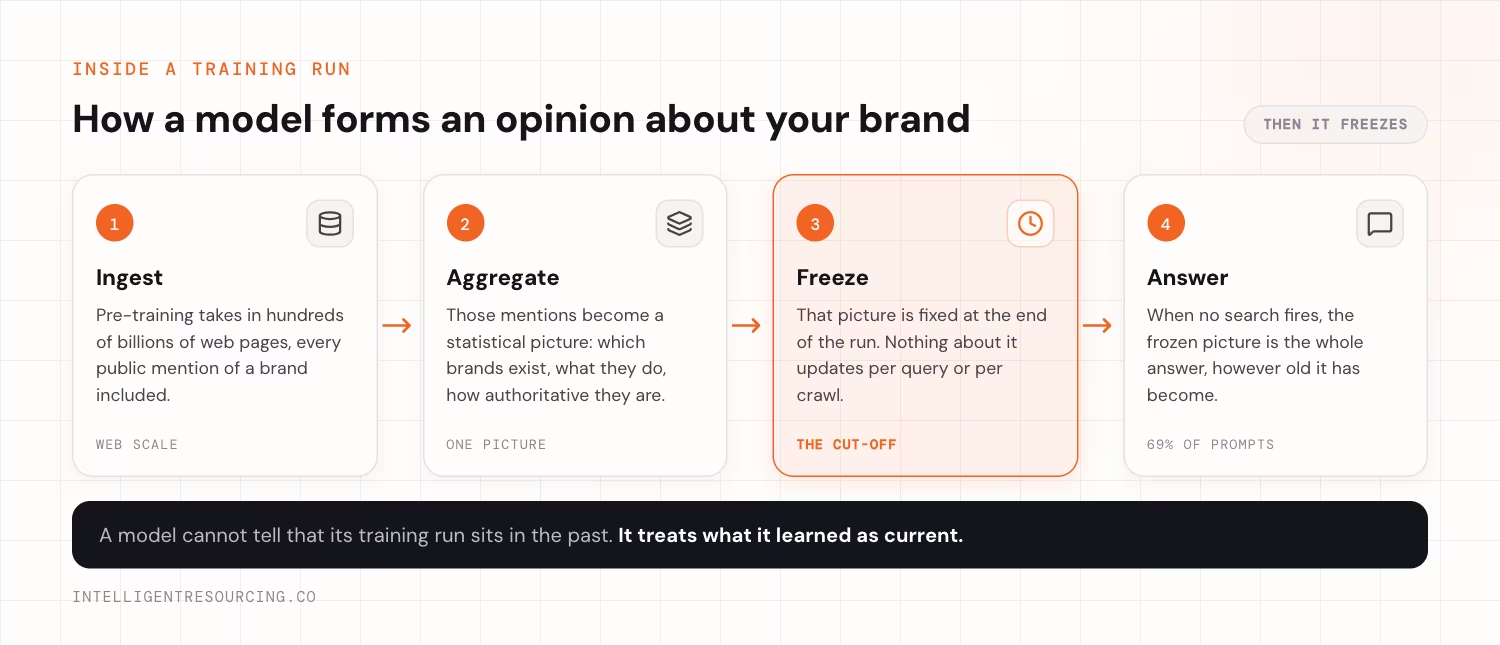
A model learns what it knows during training, when it processes text mentioning a brand across the open web, then holds that impression until the next training run. Live AEO and GEO work runs differently: a fresh crawl can change a citation within days. LLMO cannot.
Pepper Content's research on entity optimisation describes what happens during pre-training. Models take in hundreds of billions of web pages and build a statistical model of the world: which brands exist, what they do, and how authoritative they are. That snapshot is fixed until the next run.
The gap explains a pattern founders notice and rarely name. The same model describes a company accurately in one context and wrongly in another, depending on whether a fresh search ran or the answer came from an older training run that predates a rebrand or a service line change.
This is not a fault in the model. A trained model has no built-in way to know its training run sits in the past relative to today, unless a live tool call tells it so during that specific answer. Left to its training alone, it treats what it learned as current, because from its own vantage point nothing has happened since.
Why Does This Matter When a Buyer Never Searches at All?
A buyer who never runs a search still gets an answer, drawn entirely from what the model learned in training, and no live citation work can change it. Bluefish's research across nearly 200 brands in nine verticals found that the brands appearing most often in AI responses are not the ones described most favourably. Frequency and framing are separate outcomes, and LLMO governs both.
This is the same 69% slice. No crawl, no ranking and no citation fires inside it, so even perfect AEO and GEO execution changes nothing there. Whatever a model absorbed about a company's funding stage, service line or location stays fixed until the next training run.
The stakes are concrete. Two patterns come up repeatedly:
- Outdated positioning. A company that moved from traditional SEO to answer-engine work a year ago still gets called an SEO agency by a model trained before the change. Nobody searched for anything wrong. The model has not been retrained since the fact changed.
- Wrong location. A business that closed one office and consolidated to a single site eight months ago still gets described by its old address in answers drawn from training. If that training run predates the move, no live search corrects it in that turn.
The buyer reading either answer has no visible way to tell which mechanism produced it, and no reason to doubt it. That is what makes the training-time layer worth budget: the errors it produces are confident, fluent and invisible to the person receiving them.
If a model holds the wrong version of your brand, the right AEO execution alone cannot fix it. Intelligent Resourcing's GEO service covers the live citation layer and the training-time layer together.
How Do You Influence What a Model Already Knows?
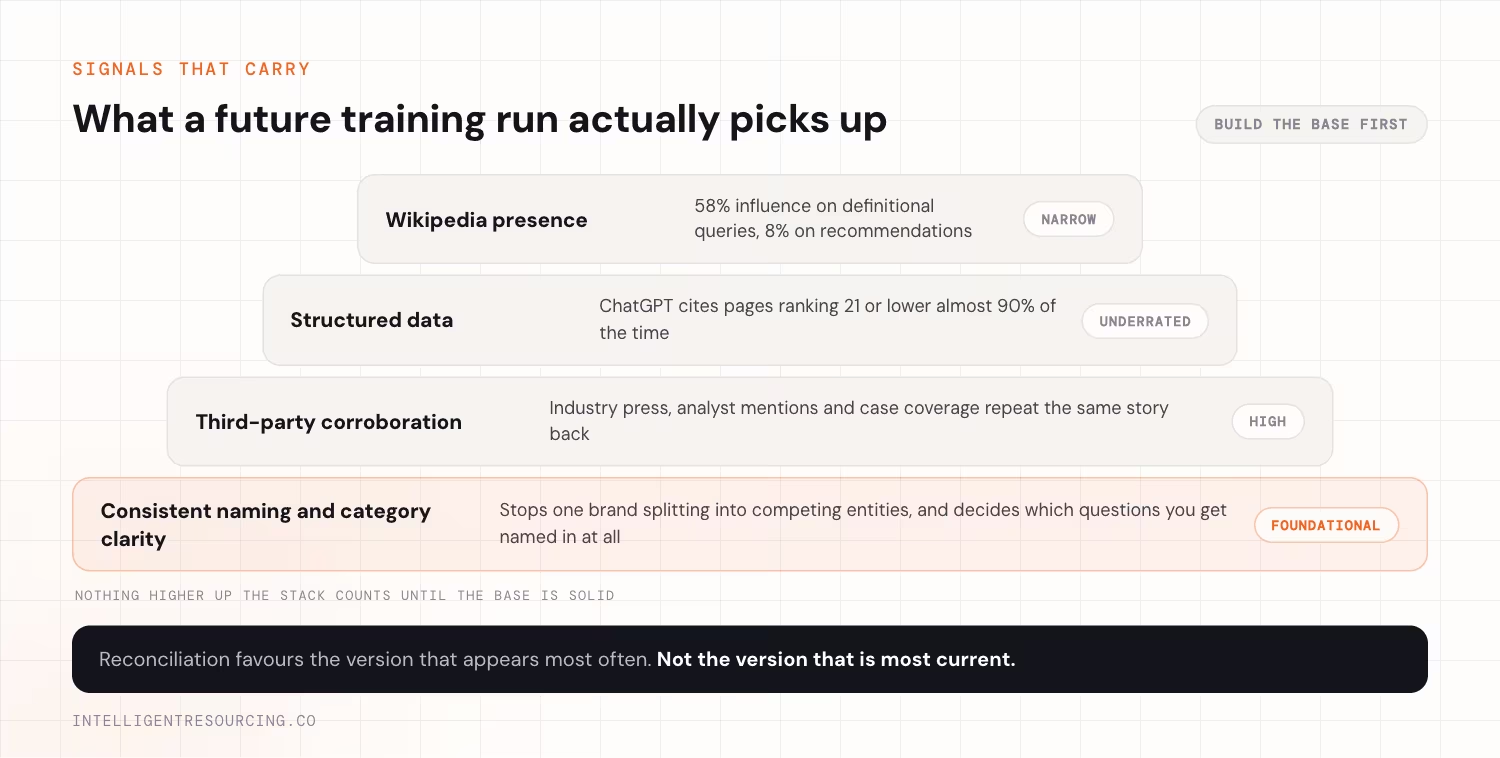
A brand's entity signals come from every public, indexable source a future training run draws from. Consistency and corroboration across those sources, rather than targeting one search result, shape the training-time representation. LLMO applies that same signal discipline on a slower clock.
Consistent naming and categorisation
A model's impression of a brand is a statistical aggregate of everything it read at training. Inconsistent naming produces a fractured signal. Writing "Intelligent Resourcing" in one place and a two-letter abbreviation in another hands a future training run competing versions of the same entity to reconcile. Consistent, specific naming across every indexable source strengthens the single category signal the model builds.
Reconciliation favours whichever version appears most often across the open web, not whichever version is most current. A company name that reads one way on its own site, another on LinkedIn and a third on a directory listing is not a cosmetic problem. It is three votes split across one entity.
Third-party corroboration and Wikipedia's role
Research on Wikipedia's influence over LLM answers, based on 5,127 controlled prompts, found that influence peaked at 58% on definitional queries and fell to 8% on recommendation queries. Wikipedia matters for founding dates and basic facts. It does very little for how a brand gets described in an answer about the best option for a specific problem.
The corroboration that shapes a recommendation-context impression runs wider:
- Industry publications
- Analyst mentions
- Case study coverage
- Authoritative third-party pages
The signals that make a model trust a brand at training time are the same ones behind E-E-A-T for AI: third-party citations, analyst recognition, and authoritative coverage a search engine would also reward.
Structured data and schema
Consistent structured data gives a training-time crawl clearer entity signals to absorb. Semrush's citation research found ChatGPT cites pages ranking in traditional positions 21 or lower almost 90% of the time. Traditional SERP position is close to irrelevant to what gets absorbed. Entity clarity and corroboration of indexed content are what matter.
None of that pays off on a crawl schedule. A training run happens on the model provider's timeline, not a brand's, so this is a parallel investment alongside live AEO and GEO work, never a substitute for it.
How Do You Measure LLMO When There Is No Query to Track?
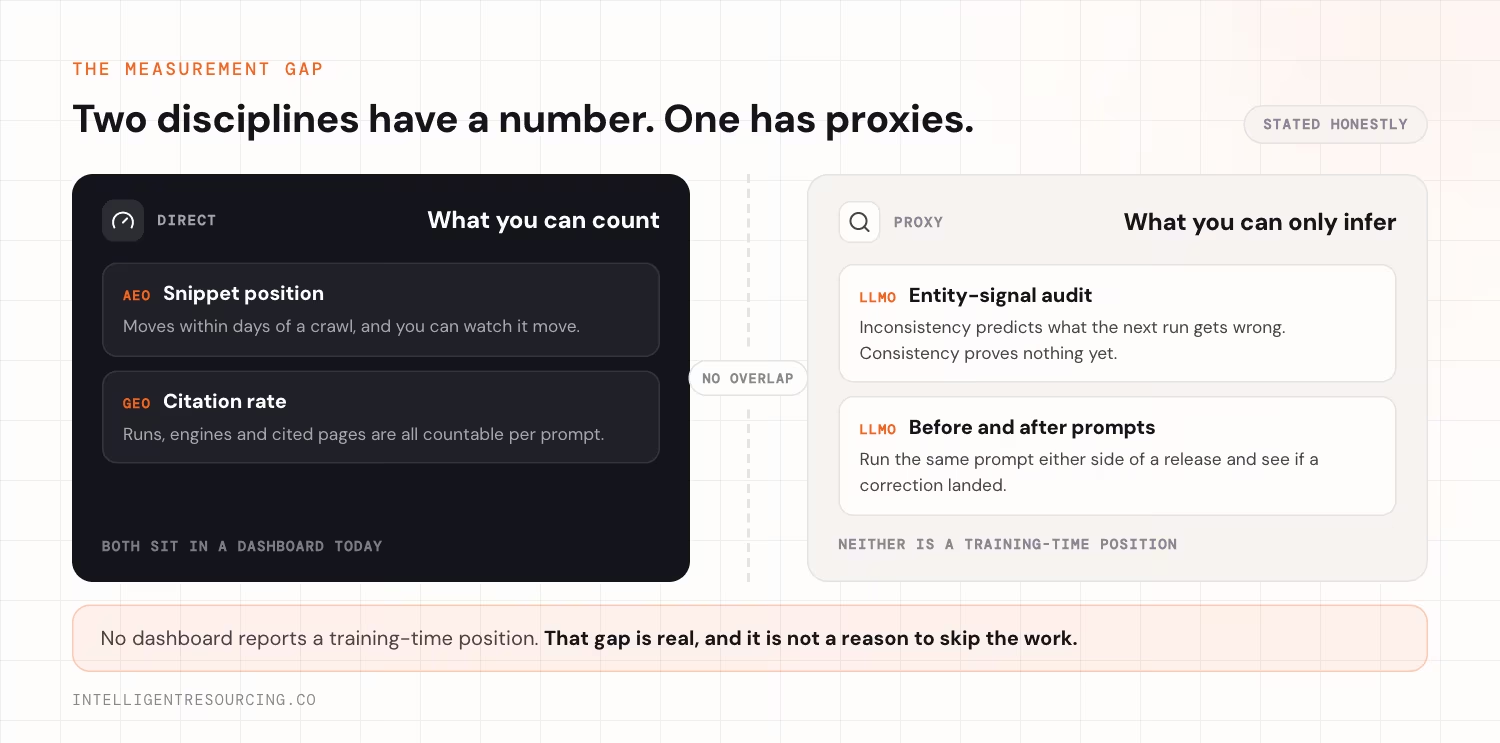
LLMO has no per-query metric, the way AEO has snippet position and GEO has citation rate, because the 69% of AI prompts it governs never fire a live search. Nothing gets ranked, crawled or cited in that slice, so nothing shows up in a rank tracker or a citation dashboard.
Two working proxies are available. Neither is a direct equivalent.
1. Entity-signal audit. Check whether a brand's name, category and facts read the same way across every public, indexable source a training run draws from. Consistency is not proof of what a model has already learned, but inconsistency is a reliable predictor of what it will get wrong the next time it retrains.
2. Before and after prompt testing. Run the same prompt against a brand before and after a model provider's next public release, then check whether anything changed. That does not measure LLMO directly. It measures whether a training run picked up a correction, which is the only after-the-fact evidence available until the industry builds a citation dashboard equivalent for trained knowledge.
Both proxies fall short of what AEO and GEO already offer: a number that moves when the work moves. That gap is honest, not a reason to skip the work. The alternative is doing nothing about the layer of AI answers no dashboard currently watches.
Content Creation
Most brands have never checked what an AI assistant says about them when no search runs. Book a GEO diagnostic call with Intelligent Resourcing and we will read your current AI visibility across both layers, the live one and the trained one.
FAQs
Does ChatGPT already know about my brand even if it never searches the web?
Yes. In the 69% of prompts where ChatGPT skips a live search, it answers from training rather than from anything it finds that day. Whatever it absorbed at that training run is the only answer available in that turn.
How is LLMO different from AEO or GEO if all three involve AI?
AEO and GEO govern live, per-query citation, where a fresh crawl can change what gets cited within days. LLMO governs what a model already knows before any query happens, fixed until its next training run. Two mechanisms, two clocks, not two names for the same thing. Confusing them leads teams to measure only citation rate and miss the slower-moving half entirely.
Can I correct a wrong or outdated answer an AI model gives about my brand?
Not instantly. Trained knowledge only updates when the provider runs a new training pass, so a correction lands on that timeline rather than on demand. Consistent, corroborated entity signals increase the likelihood the next run captures the correction.
How long does LLMO work take to change what a model already knows?
Longer than live AEO or GEO work. A citation can shift within days of a crawl. A trained impression only shifts when a provider retrains, a cycle measured in months. Treat LLMO as a slower, parallel investment rather than an immediate lever, and set budget and expectations on that basis from the start.
Does Intelligent Resourcing offer LLMO as a separate service from GEO?
No. Intelligent Resourcing delivers LLMO as part of Content Strategy through GEO, not as a third, separate service line. The work that shapes live citation is the same work that shapes what a model eventually learns in training.