

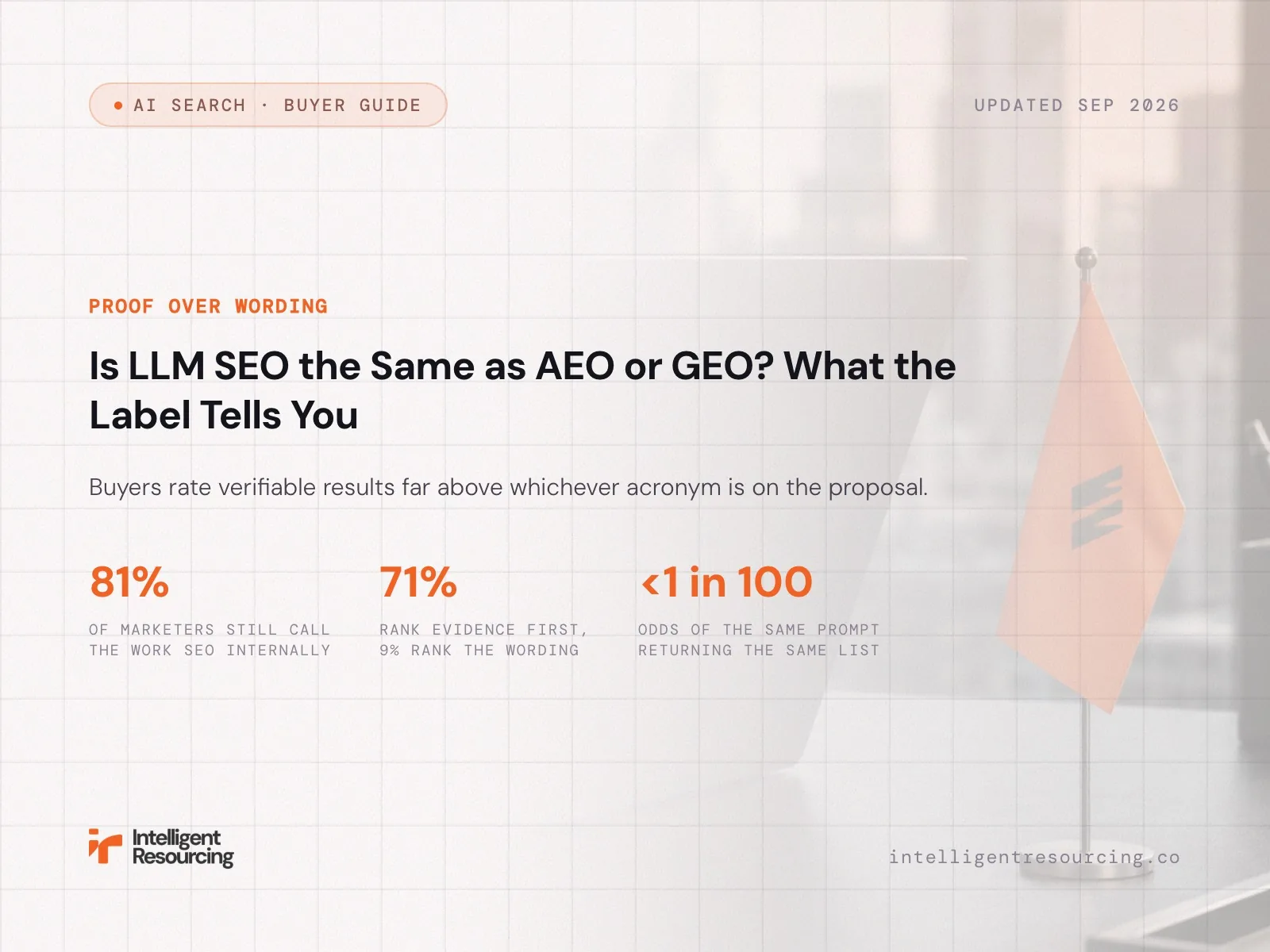
Is LLM SEO the Same as AEO or GEO?
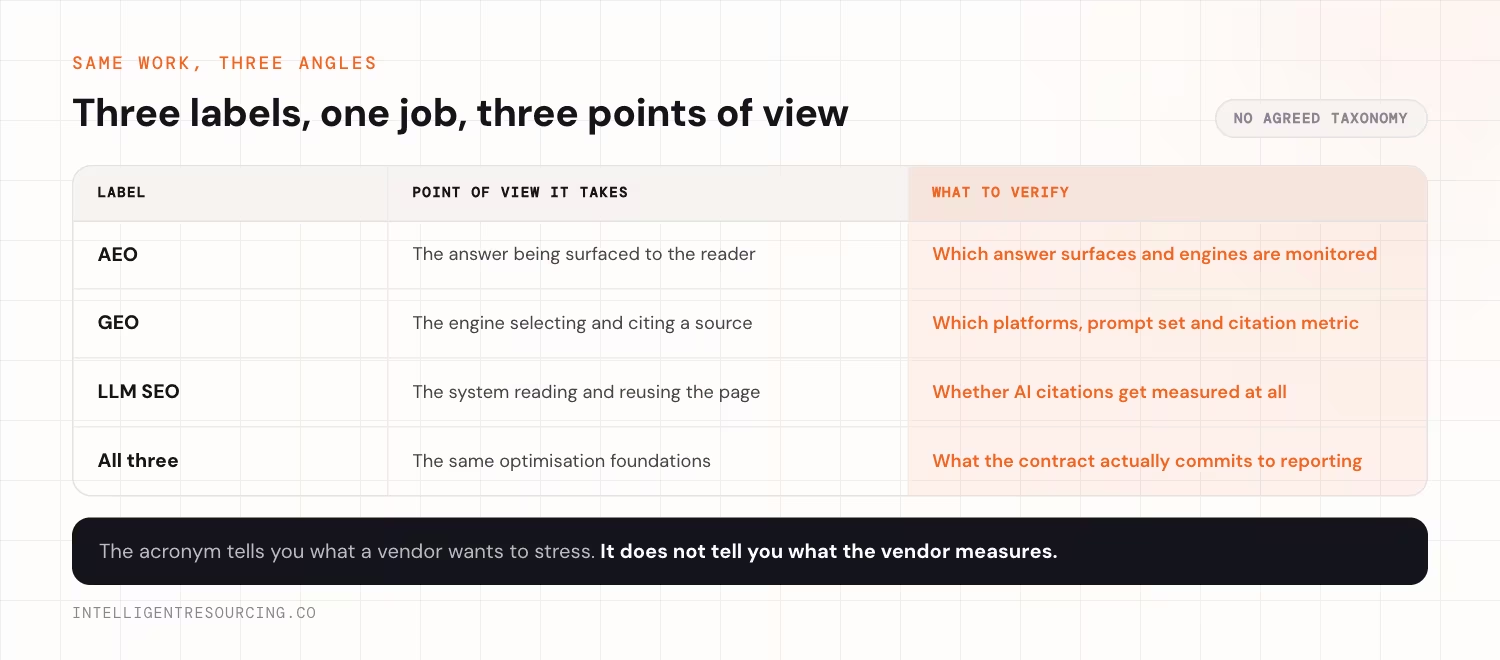
All three respond to the same shift. Buyers increasingly read a synthesised answer instead of choosing between ranked links. The difference is scope and emphasis, not three separate optimisation systems.
EMARKETER put it plainly in April 2026: no common taxonomy exists for this category, and in practice AEO and GEO describe the same underlying approach. It found agencies and publishers using GEO, AEO, GSO, LLMO and AIO for the same tactics. Fewer than a third of the SEO influencers it tracked kept one term across the year.
That does not make the words meaningless. Each one describes the same work from a different vantage point.
What each label emphasises
- AEO describes the work from the point of view of the answer being surfaced. Write clearly, structure the page logically, and make each section understandable on its own so a machine can lift it cleanly.
- GEO describes it from the point of view of the engine selecting and citing sources. The term has an academic origin: the researchers behind it, working out of Princeton, reported that their methods could boost visibility by up to 40% in generative responses. That figure comes from the benchmark those same authors built, so treat it as a direction of travel rather than a service guarantee.
- LLM SEO describes it from the point of view of the system reading the content. A page still needs technical foundations and useful writing. It also needs clear answers, plain entity relationships and passages that survive being pulled out of the article.
Why Would a Vendor Say LLM SEO Instead of AEO or GEO?
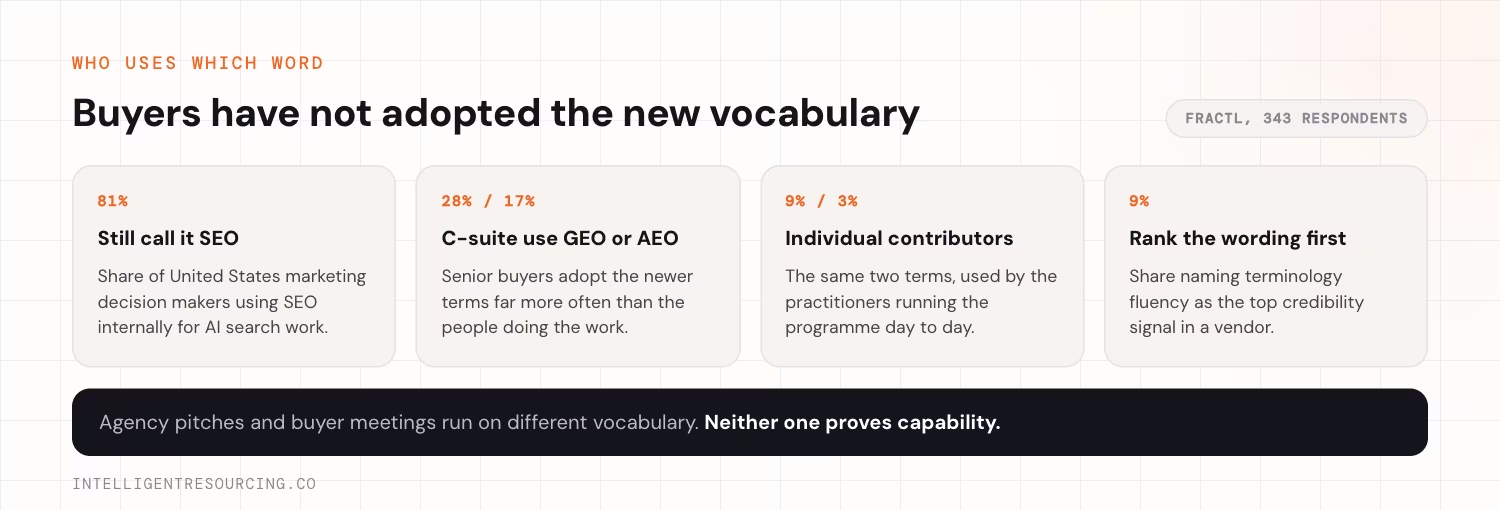
Often because the buyer recognises the phrase. In a Fractl survey of 343 United States marketing decision makers, reported by Search Engine Land in August 2026, 81% still called it SEO internally when discussing AI search visibility. Use of the newer terms split by seniority: 28% of C-suite respondents used GEO and 17% used AEO, against 9% and 3% among individual contributors. Fractl is itself an agency in this market, so read the survey as a directional read on vocabulary rather than a neutral census.
The gap that matters is between the words in agency pitches and the words buyers use in their own meetings.
The terminology signals emphasis, not capability
The safest reading is that AEO signals an answer-first emphasis, GEO signals a citation emphasis, and LLM SEO signals a model-readability emphasis. Those are signals, not guarantees.
A vendor calling itself a GEO specialist may spend the engagement producing conventional SEO content. An AEO provider may track citations across ChatGPT and Perplexity as well as Google. An LLM SEO consultancy may run a serious multi-engine visibility programme. Our breakdown of how AEO, GEO and LLMO overlap reaches the same practical conclusion: the disciplines share foundations and differ in the surfaces they target.
Does a Different Label Mean a Different Deliverable?
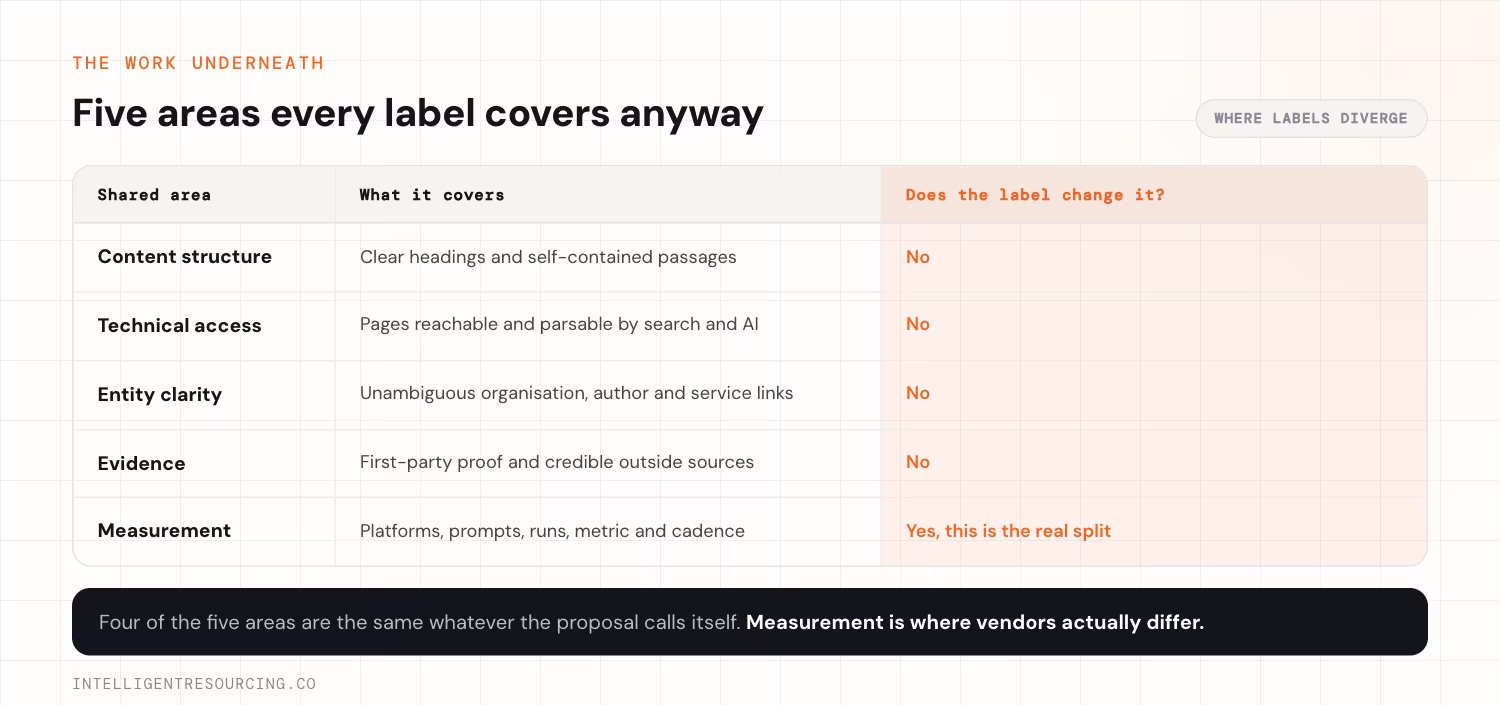
Sometimes, but not reliably. The core work overlaps across five areas.
- Content structure: clear headings, answer-first sections and self-contained passages.
- Technical accessibility: making sure search and AI systems can reach and parse important pages.
- Entity clarity: making the organisation, author, service and subject relationships unambiguous.
- Evidence and authority: supporting claims with first-party proof and credible external sources.
- Measurement: tracking whether the brand is cited, mentioned or recommended for real buyer questions.
Google's own guidance on AI search is blunt about the first four. It says its AI features run on the same core ranking and quality systems. A page needs no special technical treatment beyond normal Search eligibility. And in Google's own words, optimising for generative AI search is still SEO. It also names tactics that do nothing for Google Search, including llms.txt files, chopping content into small pieces, and writing in a special style for AI.
Read that scope carefully. Google is describing Google. It says nothing about how ChatGPT, Perplexity or Claude select sources, which is exactly why per-platform measurement is the part worth paying for.
The label can be weaker than the proposal behind it
Picture two providers. Vendor A calls the service AEO. Its scope covers content restructuring, entity work and monthly citation tracking across ChatGPT, Perplexity, Gemini and Google AI experiences. Vendor B calls the service GEO. Its scope promises twelve AI-optimised articles a month, and reports only Google rankings and organic traffic.
Vendor B has the broader-sounding acronym. Vendor A has the measurable service. That is the whole argument against using terminology as a proxy for capability. The same trap applies inside traditional SEO and LLM SEO work, where ranking and citation are no longer the same outcome.
What Is the One Question That Cuts Through the Label?
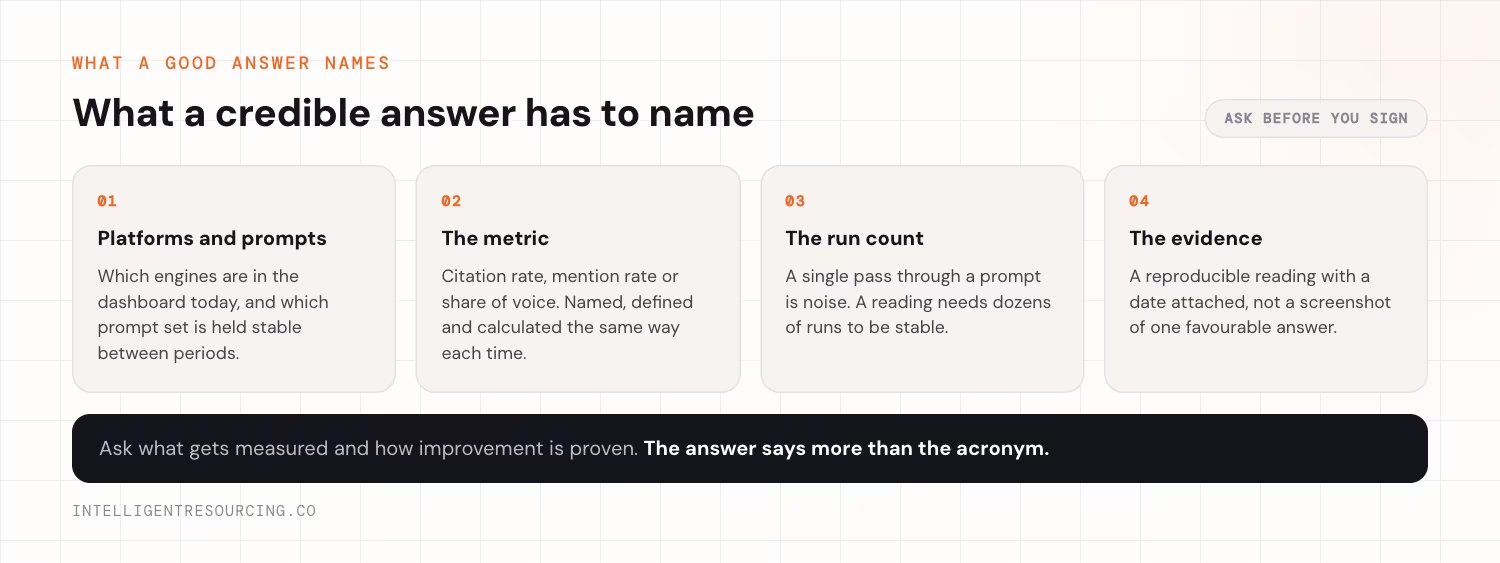
Ask what exactly gets measured, and how improvement is proven.
That question matters more than it sounds, because AI answers are unstable by default. SparkToro had 600 volunteers run 12 prompts across ChatGPT, Claude and Google's AI Overview 2,961 times in late 2025, and found under a 1 in 100 chance that the same prompt returns the same brand list. The odds of the same order were closer to 1 in 1,000. Its advice was to stop buying tools that claim AI ranking positions and measure a visibility rate across dozens or hundreds of runs instead.
So a screenshot of one good answer proves nothing. A credible answer names five things:
- The platforms monitored, such as ChatGPT, Perplexity, Gemini or Google AI experiences.
- The prompt set, held stable enough to compare periods against each other.
- The metric, such as citation rate, mention rate or share of voice.
- The run count, because a single pass through a prompt is noise, not a reading.
- The reporting cadence, so results are a trend rather than a snapshot.
Buyers already weight it this way. In the same Fractl survey, 34% named case studies with verifiable results as the top credibility signal, 22% chose a clear methodology and 15% chose demonstrated expertise. Those evidence-led answers came to 71%. Terminology fluency scored 9%. That ordering is the practical basis for choosing an AEO agency on method rather than vocabulary.
Which Label Does Intelligent Resourcing Use?
Intelligent Resourcing leads with generative engine optimisation, and uses AEO or AI SEO where those terms make the service clearer to a buyer.
That choice is deliberate. The objective is not producing direct answers for their own sake. It is whether clients get cited, named and described accurately when buyers research a category through an AI tool. The generative engine optimisation service publishes the engines it tracks and what the engagement reports, rather than treating the acronym as the deliverable.
Apply the same test to any provider, including this one. Start with the outcome, inspect the method, then look at the label.
How Should B2B Buyers Compare Providers?
Ask what success means
If the answer is still rankings, impressions and traffic, the provider may be selling traditional SEO under a newer name. Those metrics still matter. An AI search programme should also explain how it assesses citations, mentions or visibility inside generated answers.
Ask which surfaces are covered
AI visibility is too broad a phrase on its own. A provider should name the engines and answer surfaces in scope. Different systems retrieve and cite information differently, so the measurement plan has to say where results are being observed.
Ask to see the method
A credible vendor can explain how prompts are chosen, how often tests run, how many runs make a reading, and how periods are compared. Changing the prompt set every month makes improvement impossible to verify.
Ask what happens beyond content production
Adding FAQs to blog posts is not a programme. Visibility depends on content structure, technical access, entity consistency, schema, internal links, original evidence and outside mentions working together. That is the thinking behind a B2B GEO strategy built on citation rather than content volume.
Content Creation
The three labels describe the same job. What separates providers is whether they can show where your brand appears, on which platforms and against which prompts. Book a GEO diagnostic call with Intelligent Resourcing to get that reading before you brief anyone.
FAQs
Is LLM SEO the same as AEO?
They overlap heavily and emphasise different parts of the same process. AEO focuses on getting content surfaced as a direct answer. LLM SEO focuses more broadly on making content discoverable, understandable and citable by systems built on language models.
Is LLM SEO the same as GEO?
They are closely related. LLM SEO usually describes the methods that help a model interpret and cite content. GEO usually describes the resulting visibility inside generative responses. Many providers use the two interchangeably, and no standard body defines either.
What is the difference between AEO and GEO?
AEO generally targets winning the direct answer. GEO generally targets being selected, cited or mentioned as a source inside a generated response. The underlying content, technical and authority work largely overlaps.
Does GEO replace traditional SEO?
No. Google states that established SEO practice still applies to its generative AI experiences, and that optimising for those experiences is still SEO from its point of view. GEO adds citation visibility as a further objective rather than replacing the foundation.
Why do agencies use different terms for similar services?
The category has no agreed taxonomy, so vendors pick terminology that suits their technical emphasis, their positioning and the language their buyers already use. EMARKETER found five competing acronyms in circulation for overlapping tactics.
What should I ask an AEO, GEO or LLM SEO agency before hiring?
Ask which platforms they monitor, which prompts they use, how many runs sit behind a reading, which metrics they report and how they show improvement over time. The method behind the label decides the result, not the acronym.