

What Is the Practical Difference Between AEO, GEO and SEO?
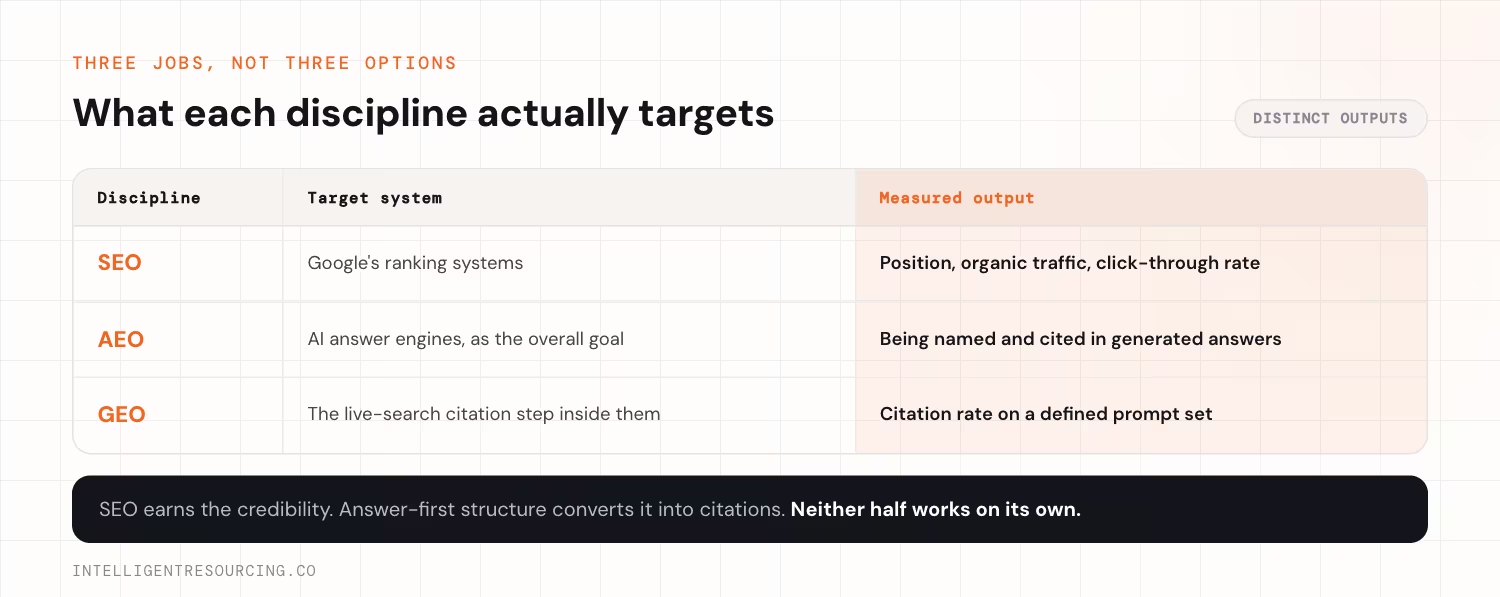
SEO ranks pages in Google's results through authority, technical quality and relevance. Answer Engine Optimisation (AEO) is the broader goal of being named and cited inside AI-generated answers. Generative engine optimisation is the part of that work focused specifically on citation during a live AI search.
The common mistake is treating these as competing budget lines. "We are doing GEO this quarter" assumes they produce the same output. They do not.
| Discipline | Target system | Measured output |
|---|---|---|
| SEO | Google's ranking systems | Position, organic traffic, click-through rate |
| AEO | AI answer engines, as an overall goal | Being named and cited in generated answers |
| GEO | The live-search citation step inside those engines | Citation rate on a defined prompt set |
AEO, GEO and LLMO explained separates the three labels properly if the terminology is the sticking point. What matters for sequencing is simpler: SEO earns the credibility, and answer-first structure converts that credibility into citations. Neither half works alone.
Why Does Sequencing Matter More Than Picking One?
Because the two failure modes are different, and both are expensive.
Invest only in SEO and you build rankings that engines increasingly answer around. Moz's analysis of nearly 40,000 queries found 88% of Google AI Mode citations do not appear in the organic top 10 for the same query. Ranking is a weak predictor of being cited.
Invest only in AEO and you produce well-structured pages on a domain engines have no particular reason to trust.
The stakes sit in the research that happens before anyone contacts you. 6sense's Buyer Experience Report found buyers complete 61% of their evaluation before first vendor contact. That figure moved down from 69%, so buyers now engage slightly earlier than they used to. The harder number sits alongside it. The winning vendor is already on the day-one shortlist about 95% of the time. If an engine is not naming you during that research, you are not on the list being drawn up.
Why the two signal layers stack
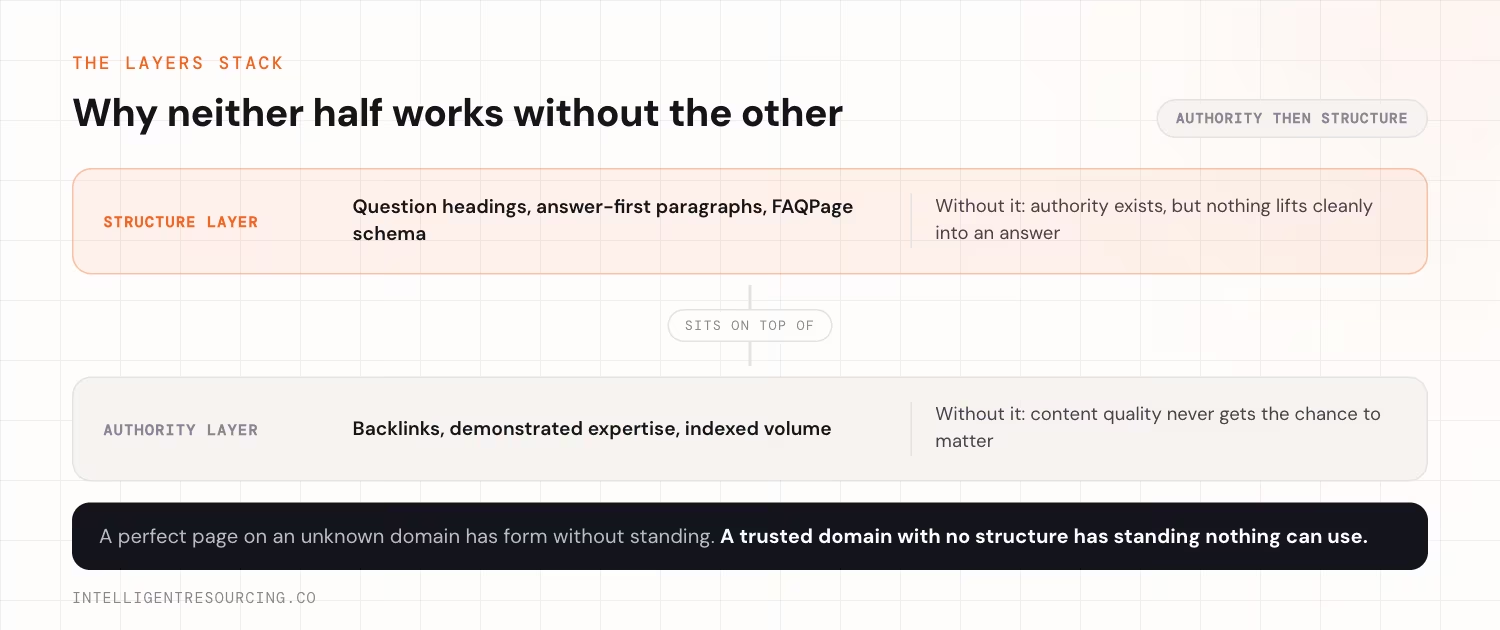
| Signal layer | What it provides | What happens without it |
|---|---|---|
| Authority: backlinks, demonstrated expertise, indexed volume | The credibility signal engines use to decide whether a domain is worth drawing from | Content quality does not get the chance to matter |
| Structure: question headings, FAQPage schema, answer-first paragraphs | The extractability that turns credibility into a quotable passage | Authority exists but nothing lifts cleanly into an answer |
A strong domain with no answer-first structure has credibility an engine cannot easily use. A perfectly structured page on an unknown domain has form without standing.
When Does SEO Need to Come First?
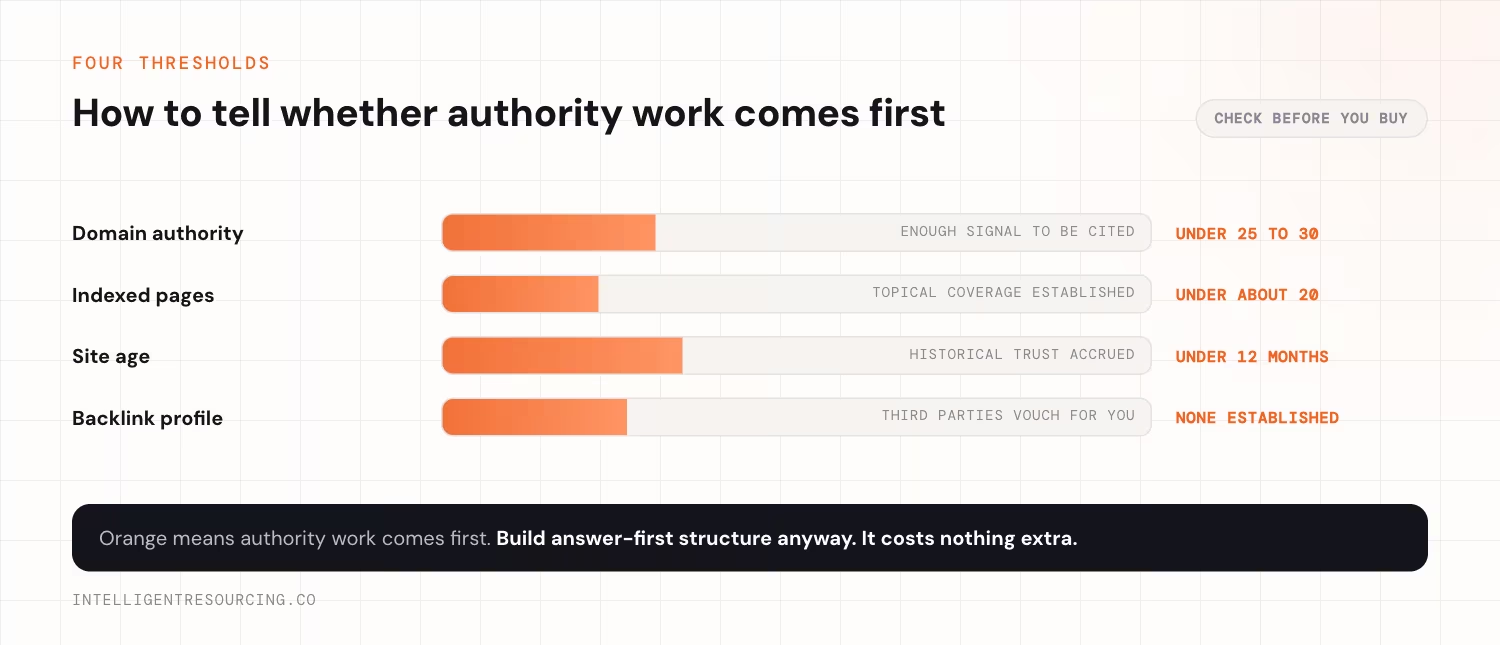
When the authority signals are not there yet. Four thresholds are worth checking before committing budget to a dedicated citation engagement:
- Domain authority under roughly 25 to 30. Below that, engines have little signal that the domain is a credible source.
- Fewer than about twenty indexed pages. A sparse site does not demonstrate topical coverage across a category.
- Site age under twelve months. New domains lack the historical signals both Google and AI engines lean on.
- No established backlink profile. External links from credible domains feed both systems.
In that situation, six to twelve months of authority building comes first: quality backlinks, twenty to thirty well-structured indexed pages, and clear evidence of who is behind the content.
That work pays off on a delay, which is the point. The 95-5 rule, from the LinkedIn B2B Institute and based on Professor John Dawes' work at the Ehrenberg-Bass Institute, holds that roughly 95% of B2B buyers are out of market at any given moment. Content published now is what gets found when they enter it.
Build the structure anyway
None of this means writing badly until authority arrives. Every page published during that phase should already use question-format headings, a direct answer of roughly 40 to 60 words up top, and specific named entities rather than vague claims.
That costs nothing extra at the time of writing and saves a retrofit later. The distinction worth holding is narrow: build the structure from day one, but do not buy a dedicated citation engagement before there is authority for it to convert.
Where the threshold actually sits
This is the part the rule of thumb gets wrong, and our own client work is the evidence against it. Kynection reached 20.9% AI share of voice across 198 monitored buyer prompts, ahead of a nearest competitor at 8.63%. It did so with a domain rating only in the high 30s. Seventy-one focused content pieces carried it, not a decade of link building.
So the authority threshold is real but lower than most people assume. The full Kynection case study sets out the measurement context, including the prompt set and the dates those readings were taken.
What Does the Return Look Like on Each?
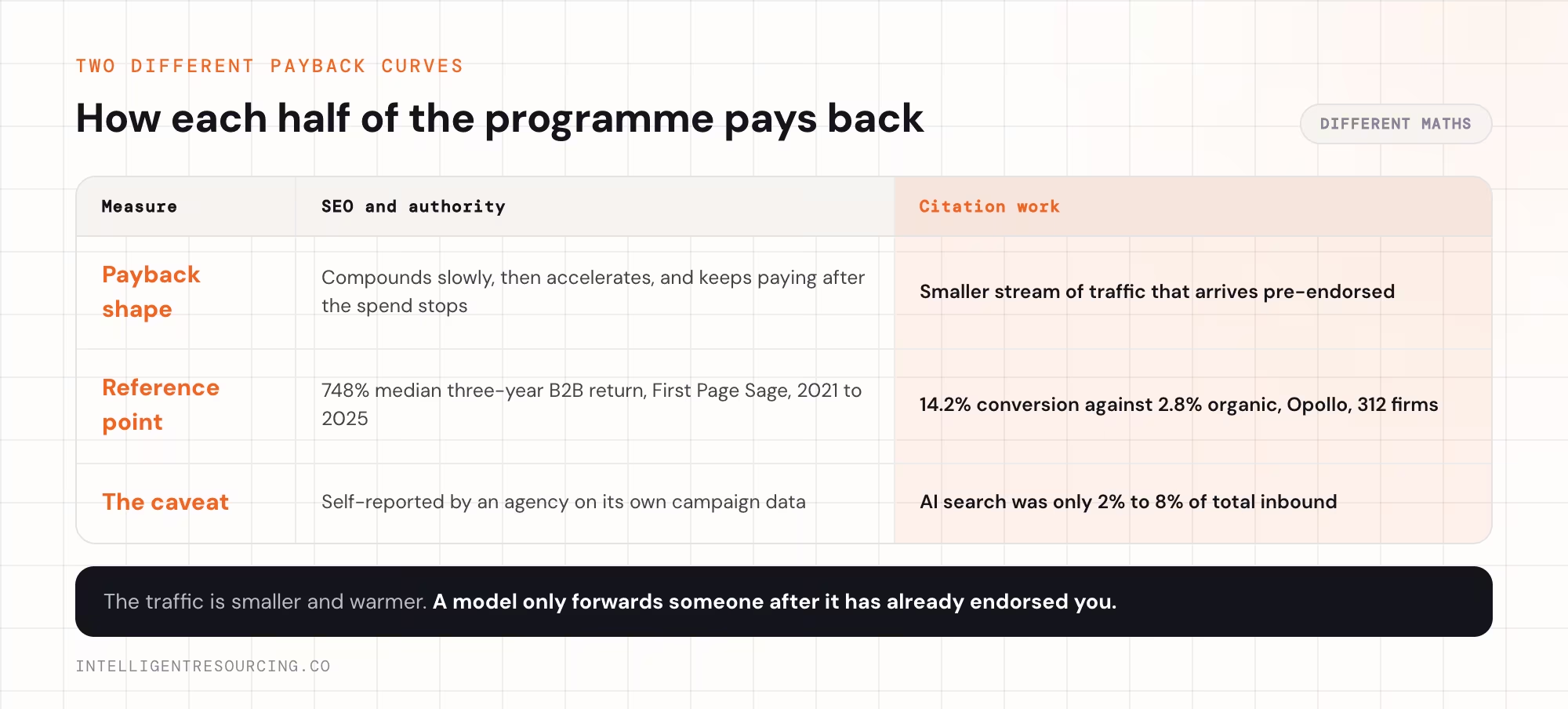
They pay back differently, which is the practical reason to run both rather than pick one. SEO compounds. Citation work converts.
On the compounding side, First Page Sage puts median B2B SEO return at 748% over three years, from its own campaign data between 2021 and 2025. Read that as a directional figure from an agency reporting on its own work, not an independent benchmark. The shape is the useful part: slow, then accelerating, and it keeps paying after the spend stops.
Citation work changes different maths. Opollo tracked 312 technology services firms between January 2025 and January 2026 and found AI referral traffic converting at 14.2% against 2.8% for Google organic, roughly five times the rate.
Two caveats belong with that number, and Opollo names them itself. AI search was only 2% to 8% of total inbound traffic for those brands, so it is a small stream. And there is a selection effect, since the people using AI search early skew more technical and higher intent. The honest reading is not "AI traffic is five times better". It is that the traffic is smaller and warmer, because a model only forwards someone after it has already endorsed you as a source.
Why Does a Cited Visitor Behave Differently?
That endorsement is the whole mechanism. A buyer who arrives from a ranked link chose you from a list. A buyer who arrives from a cited answer was handed to you by something they were already treating as impartial.
It also reaches people who were never going to find you otherwise. G2 research reported by Demand Gen Report found one in three buyers purchased from a vendor they had not previously heard of, discovered through an AI answer. In a committee purchase where several people each run their own research, the source cited across those sessions is the one that enters every shortlist.
When Should Citation Work Take Priority Instead?
When the authority is already there and the citations are not. The signal is a gap between how you rank and how often you get named.
Four things suggest the structural work is overdue:
- Click-through falling while rankings hold. Engines are answering those queries before anyone clicks, and more SEO does not close that.
- No citations on your own category questions. The authority exists, the extractability does not.
- Statement-format headings throughout. Nothing in the page matches the shape of the question a buyer actually asks.
- Prospects arriving already fluent in competitor positioning. They researched somewhere you were not present.
There is a practical point about measurement here too, which is AEO the same as SEO covers in more depth: a rank tracker cannot answer any of this. You need a defined prompt set, named engines and a stated run count before a citation rate means anything.
What Does Our Own Tracking Show?
We run the same measurement on ourselves, so here is the current reading rather than a claim.
As of 11 September 2026, our tracker covers 197 buyer prompts across ChatGPT, Gemini, Google AI Overview and Copilot, with 6,898 runs logged. Across that set, intelligentresourcing.co is cited in 26.1% of responses, 1,799 citations in total, and sits first among 80 tracked domains at 14.48% share of voice. The nearest competitor holds 10.23%.
Three things in that reading are worth naming, including the parts that are not flattering.
- Share of voice is a lead, not a moat. Roughly four points separates first from second. A quiet quarter would close it.
- Citation and mention are different. Being used as a source in 26.1% of responses is not the same as being named in the answer text, and the second number is always the smaller one.
- It is a dated reading on a defined prompt set. Change the prompts or the window and the number changes. Any share-of-voice figure without a prompt count, a run count and a date attached cannot be checked by anyone, including by us.
That last point is the one worth taking away. The numbers above are useful because they are falsifiable, not because they are large.
How Do You Run All Three Without Splitting the Budget?
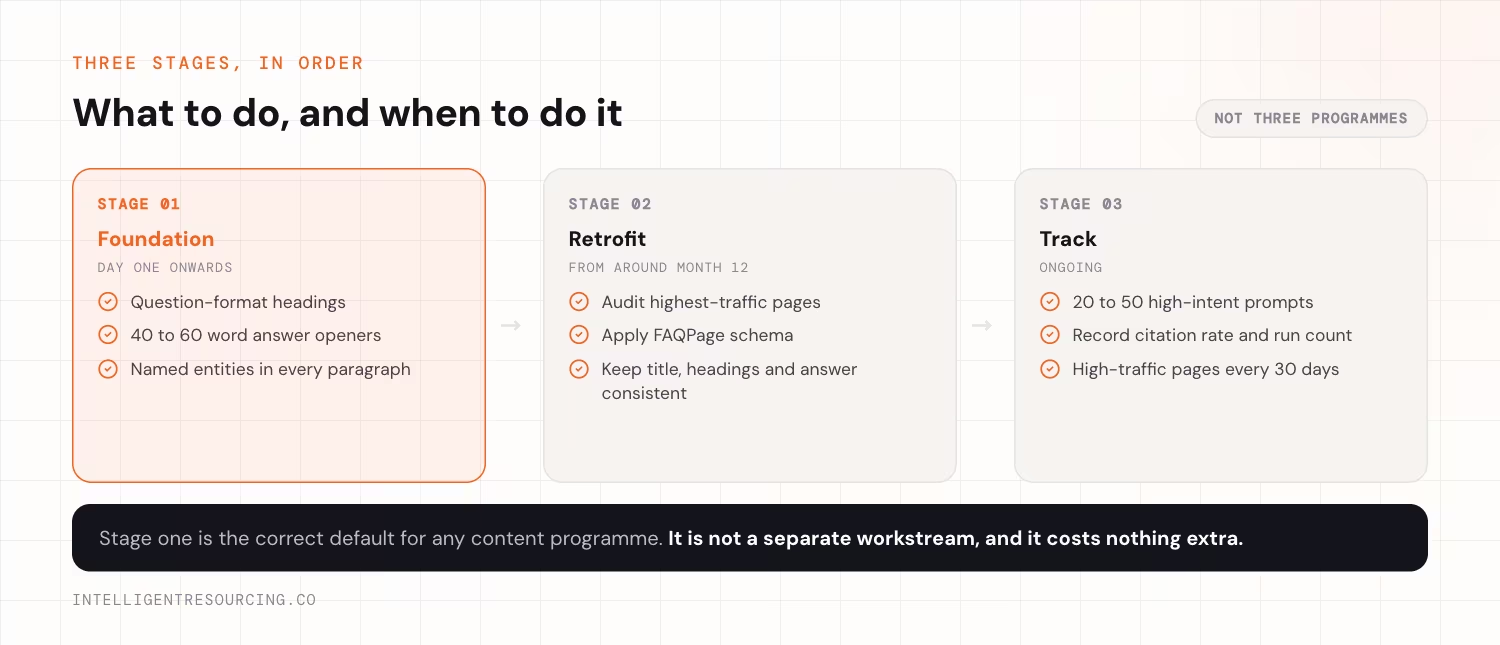
You do not need three programmes. Answer-first content performs for ranking and citation at the same time, so the sequencing question is about where implementation effort goes first, not about funding three workstreams forever.
The pressure is real. Pipeline360's 2025 report, fielded to 534 B2B marketing professionals, found 74% reporting longer sales cycles. Another 41% saw increases of two to six months. Longer cycles mean more time in which a buyer forms a view of the market without talking to anyone. Dentsu's Superpowers Index 2025, based on 6,107 decision-maker interviews across 21 markets, found 77% of buying processes now involve AI tools.
Three stages, run in order:
Stage one, foundation. Publish answer-first structured content from day one: question-format headings, a 40 to 60 word answer opener, and named entities in every paragraph. This is the correct default for any programme that will eventually need citations, not a separate workstream.
Stage two, retrofit. From around month twelve on an established site, audit the highest-traffic and most commercially relevant pages. Apply answer-first structure and FAQPage schema. Keep the title, headings and answer consistent so nothing contradicts.
Stage three, track. Test twenty to fifty high-intent prompts across ChatGPT, Perplexity and Google AI Overviews. Record the citation rate, then retest. Review high-traffic pages every thirty days and everything else quarterly.
Content Creation
The thresholds in this article are a self-assessment, not a diagnosis. Book a GEO diagnostic call with Intelligent Resourcing and we will read your current authority signals, test your category prompts across the engines, and tell you which of the three stages your site is genuinely in.
FAQs
Is GEO the same as AEO?
Not quite. AEO is the broader goal of being named and cited inside AI-generated answers. GEO is the part of that work focused on citation during a live AI search, when an engine assembles sources and pulls passages from them. AEO is the umbrella. GEO sits inside it.
Can a new website skip SEO and go straight to AEO?
Not entirely. AI engines use authority signals as a filter before selecting sources, so a new domain with sparse indexed content is unlikely to be cited regardless of how well its pages are structured. The threshold is lower than most assume, though. Build the answer-first structure from day one and the authority alongside it.
How do I measure whether the citation work is doing anything?
Test twenty to fifty high-intent prompts for your category across ChatGPT, Perplexity and Google AI Overviews. Record how often you are named or cited, note the date and the run count, then retest every thirty to ninety days after structural changes. Without a defined prompt set and a run count, a citation figure cannot be checked.
Do I have to choose between ranking and getting cited?
No, and the choice is a false one. Answer-first structure improves both. A page that opens with a clear, sourced answer reads better for a person skimming and lifts more cleanly for an engine. The two audiences want the same thing.