

What Is AEO, and Why Does the Term Keep Appearing Now?
Answer Engine Optimisation is the practice of structuring content so an AI system selects it as a cited source when generating an answer. The term gained traction after May 2024, when Google launched AI Overviews. The output of search changed, and a new optimisation discipline followed. The label is older than that, though: AEO started life in 2014 meaning something narrower, winning Google's featured snippet.
The reason is mechanical. Search used to return a ranked list of links. It now often returns a generated answer with a handful of cited sources underneath. Getting into that answer is a different problem from ranking on page one.
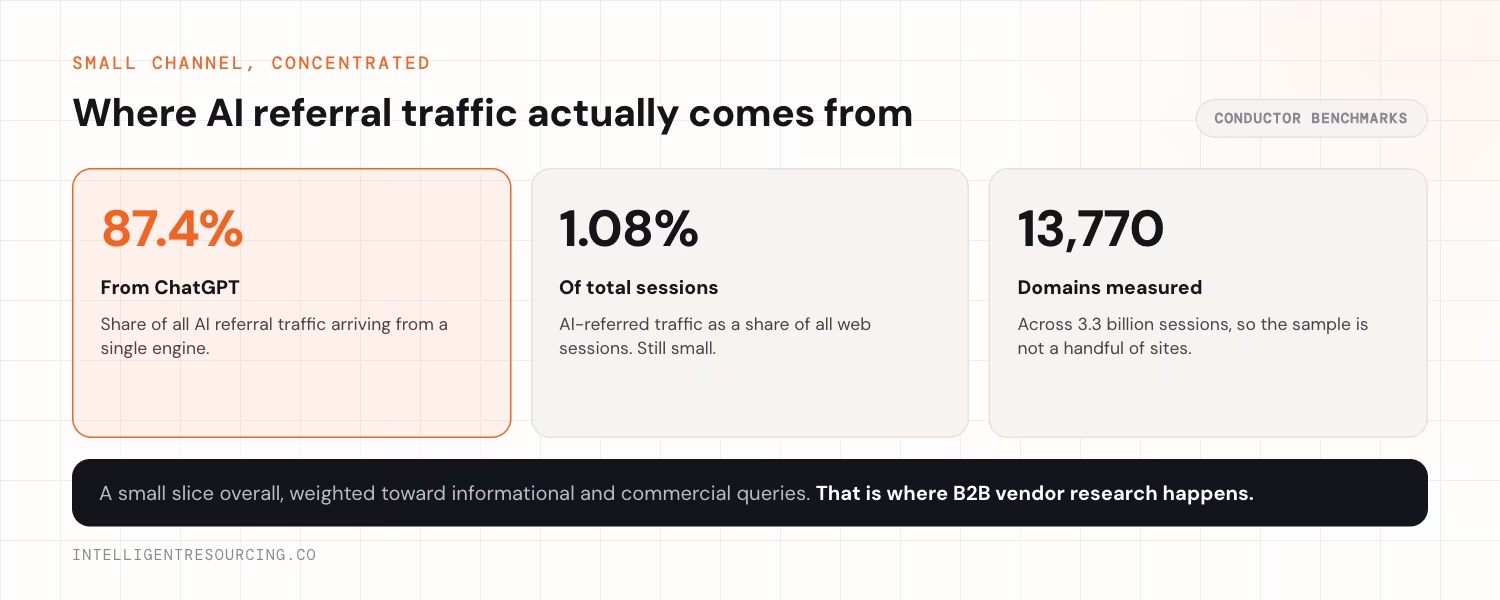
The traffic behind it is real but still concentrated. Conductor's benchmarks, across 13,770 domains and 3.3 billion sessions, found 87.4% of AI referral traffic arriving from ChatGPT, with AI-referred sessions making up 1.08% of total web sessions. That is a small slice overall. But it is weighted toward the informational and commercial queries where B2B buyers research vendors. That is why it matters more than the headline percentage suggests.
What Does SEO Actually Optimise For?
SEO optimises for position on a results page, where someone clicks a link and lands on your site. Google's ranking systems weigh relevance, authority and technical quality. The output is measurable and attributable: a page ranking first for a commercial keyword produces organic sessions you can track in Search Console and tie to conversions.
The signals are well established:
- Backlink profile. External domains linking to a page build authority.
- On-page alignment. Title, headings and body text matching search intent.
- Technical accessibility. Site speed, Core Web Vitals and clean crawlability.
- Click-through rate. How often a listing earns the click once it appears.
None of that has stopped working. What has changed is how often the click happens at all. SparkToro's clickstream analysis found 68% of United States Google searches ended without a click in the first four months of 2026, up from 60% in 2024. Position one still drives traffic. A growing share of queries simply never reaches the click.
Where Do AEO and SEO Share the Same Foundation?
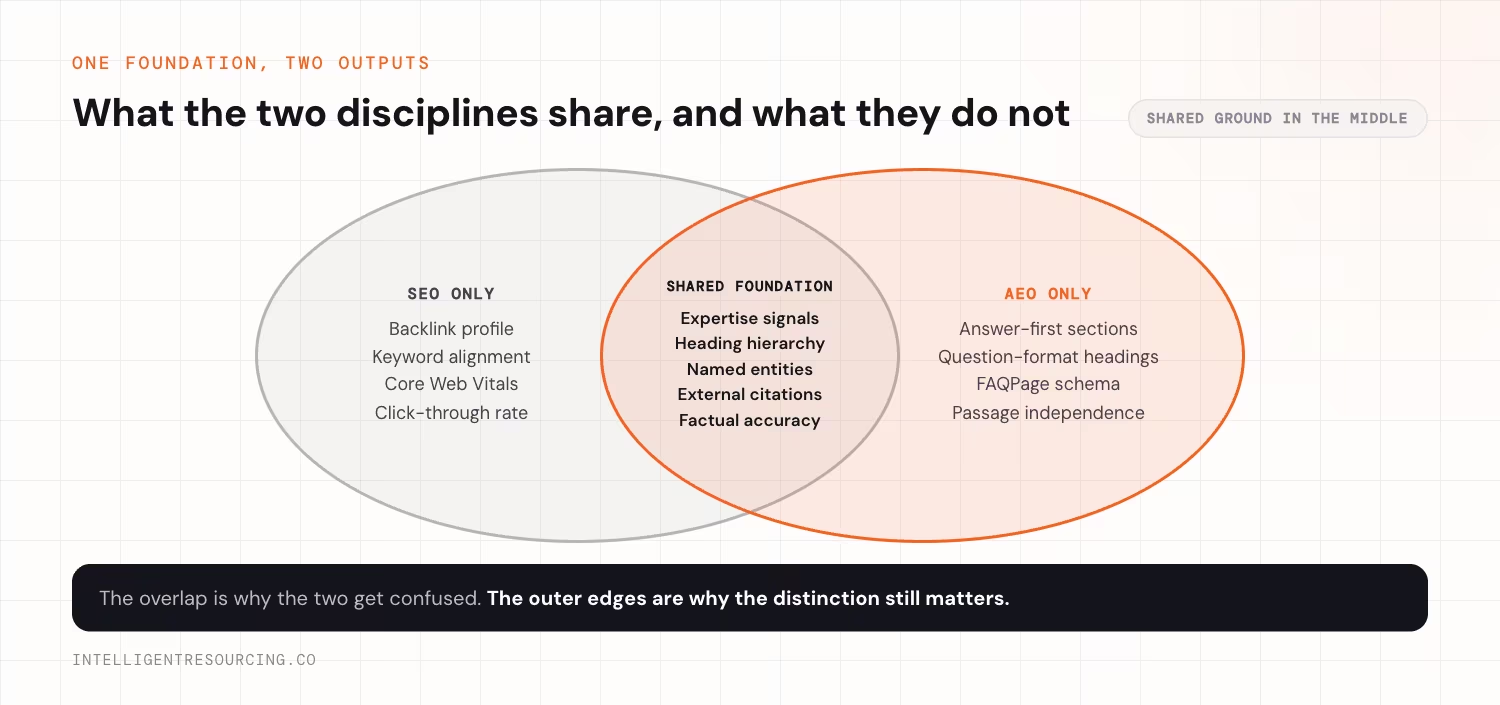
Both reward content that is accurate, well-structured and credibly sourced. Experience and expertise signals, a logical heading hierarchy, named entities, external citations and factual accuracy all influence Google's ranking systems and an AI engine's choice of sources.
That shared ground is why the disciplines get conflated, and it is not an unreasonable starting point. AgencyAnalytics surveyed 494 agency professionals and found 66% reporting increased demand for AEO and SEO aimed at AI-driven search, the top new service category, while 48% said they struggle to track users who discover brands through AI tools. The shared foundation explains why the service is spreading. The measurement gap explains why the distinction matters.
Five things both disciplines want:
- Demonstrated experience and expertise, which both Google and AI engines use to judge whether a source is worth trusting
- A clean heading hierarchy, which helps crawlers and models parse what a document contains
- Named entities, since specific companies, people, dates and figures are verifiable by whatever system is reading
- External citations, because content that points to primary sources earns credibility in both systems
- Factual accuracy, which both systems reward and both penalise the absence of
Good SEO content does pick up some AI citations. The reverse holds too, since pages that get cited tend to attract links over time. The foundation is genuinely shared. It is not the whole picture.
Why the measurement does not carry across
The 48% who cannot track AI discovery are not being careless. The tooling genuinely does not transfer.
A rank tracker asks one question: where does this page sit for this keyword, on this day. That answer is stable enough to chart. Citation tracking asks something messier. Which engines named us, on which buyer questions, how often across repeated runs, and which page did the answer draw from. Rerun the same prompt an hour later and the answer may differ.
So the unit changes from position to presence, and the reporting changes with it. Instead of a ranking graph, you get a citation rate against a defined prompt set, on named engines, with the run count stated. Intelligent Resourcing's generative engine optimisation work reports it that way because an average with no prompt set or run count behind it cannot be checked by anyone.
Where Does AEO Go Beyond Traditional SEO?
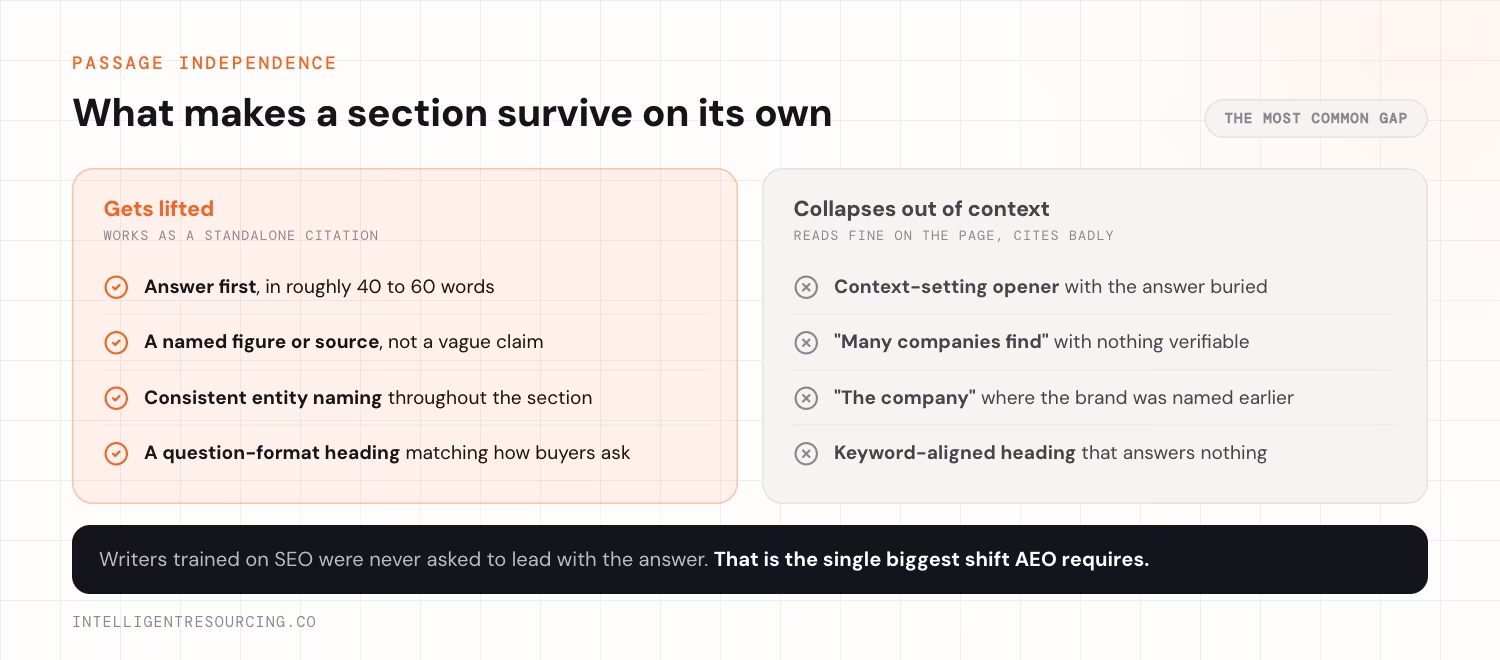
AEO adds a layer SEO does not address: building every section so an engine can lift a complete answer from it without reading the rest of the page. SEO optimises the document. AEO optimises the passage.
That distinction has research behind it. The 2024 GEO study from Princeton, Georgia Tech, the Allen Institute for AI and IIT Delhi, published at KDD 2024, tested optimisation methods against generative engine responses and found the right structural changes lift visibility by up to 40%. The strongest methods centred on adding citations, quotations and statistics. Keyword stuffing was among the weakest.
In practice, the shift comes down to three habits:
- Answer first. Open each section with a direct answer of roughly 40 to 60 words, before any context.
- Name something verifiable. A specific source or figure, not "many companies find".
- Keep entity names consistent, so nothing forces an engine to work out who "the company" refers to.
The most common gap in existing content is not authority or backlinks. It is passage independence. Sections read well in context, then collapse as standalone citations, because the opening paragraph sets up the topic instead of answering it. Writers trained on SEO were never asked to lead with the answer. How an engine picks passages walks through the extraction mechanics and shows the same section built both ways.
Should You Replace SEO With AEO, or Run Both?
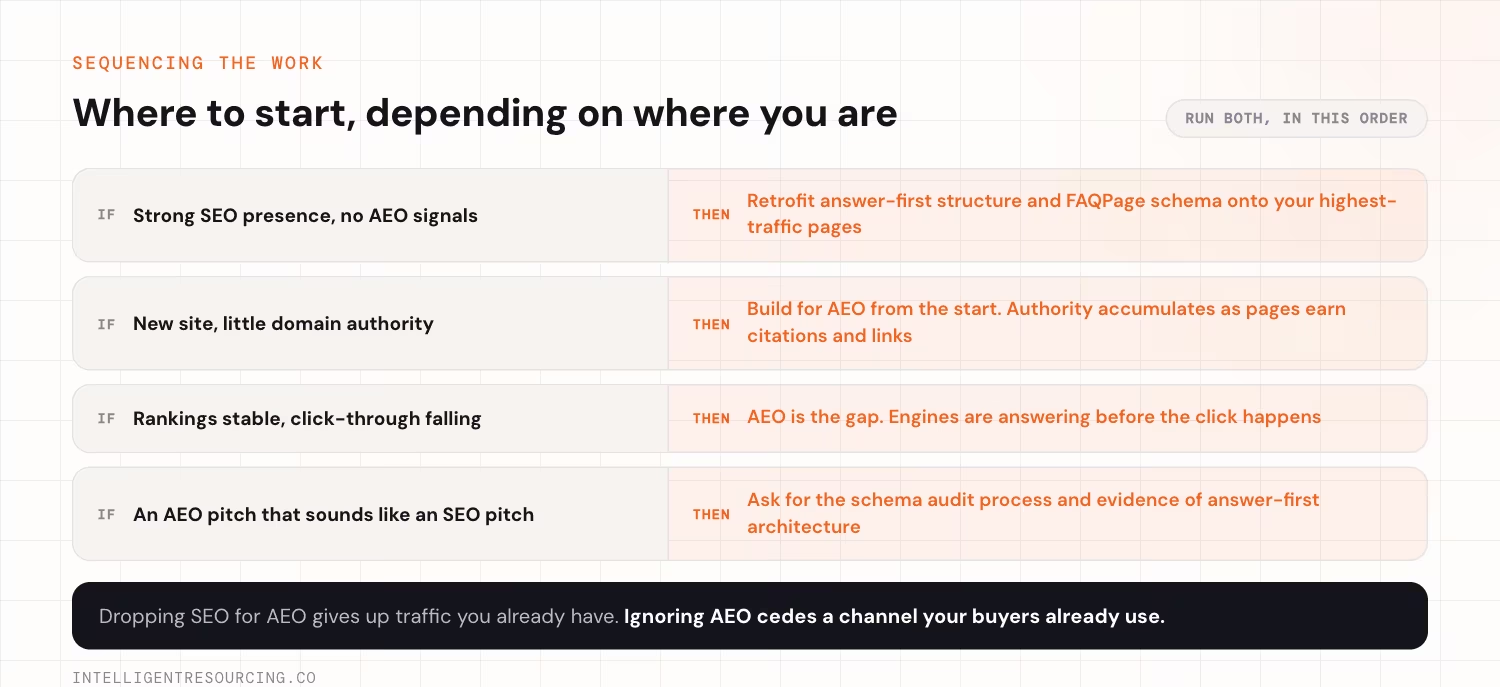
Run both. A company that abandons SEO for AEO gives up traffic it already has. A company that ignores AEO loses ground in a channel its buyers are already using.
Dentsu's Superpowers Index 2025 is based on 6,107 B2B decision-maker interviews across 21 markets. It found 77% of buying processes now involve AI tools, with 40% of buyers using them heavily. For those buyers, a programme that produces rankings but no citations leaves a gap in the research that happens before a shortlist exists.
How to sequence the work
| Where you are now | What to do first |
|---|---|
| Strong SEO presence, no AEO signals | Retrofit answer-first structure and FAQPage schema onto your highest-traffic pages |
| New site, little domain authority | Build for AEO from the start, since authority accumulates as pages earn citations and links |
| Rankings stable but click-through falling | AEO is the gap. Engines are answering the query before the click happens |
| An agency pitch that sounds identical to their SEO pitch | Ask for the schema audit process and evidence of answer-first architecture |
That last row is worth pressing on. If a provider cannot describe what specifically changes about the content, the label is doing the work rather than the method. Choosing an AEO agency sets out the questions in full, and AEO, GEO and LLMO explained separates the three labels if the terminology is the sticking point.
Content Creation
Most teams know their rankings and have never checked whether an AI engine names them at all. Book a GEO diagnostic call with Intelligent Resourcing and we will audit your existing content, show which pages are citation-ready, and identify the structural gaps on the ones that are not.
FAQs
Is AEO just a rebranding of SEO?
No. They share a foundation in content quality and credibility, but they target different systems. SEO optimises for Google's ranking systems and produces positions. AEO optimises for how an AI engine selects sources and produces citations inside generated answers. The structural requirements differ: answer-first sections, question-format headings, FAQPage schema and consistent entity naming are not standard SEO practice.
Can SEO content get cited in AI answers without AEO changes?
Some does, but not reliably. Moz's analysis of nearly 40,000 queries found 88% of Google AI Mode citations do not appear in the organic top 10 for the same query, so ranking well is a weak predictor of being cited. Strong SEO content improves the odds. Answer-first structure is what makes it consistent.
Do I need to rebuild all my content for AEO?
No. Start with an audit to find which pages already carry the right signals and which need restructuring. Most teams retrofit their highest-traffic, most commercially relevant pages rather than rebuilding everything. The changes are surgical: opening paragraphs rewritten to answer first, headings reframed as questions, FAQPage schema added.
Does AEO work differently across ChatGPT, Perplexity and Google AI Overviews?
The core mechanism is consistent, since each engine assembles a set of sources and pulls passages from it. What differs is how often a live search fires and which sources each engine favours. Structuring for extraction improves the odds everywhere without guaranteeing the same result on every platform.