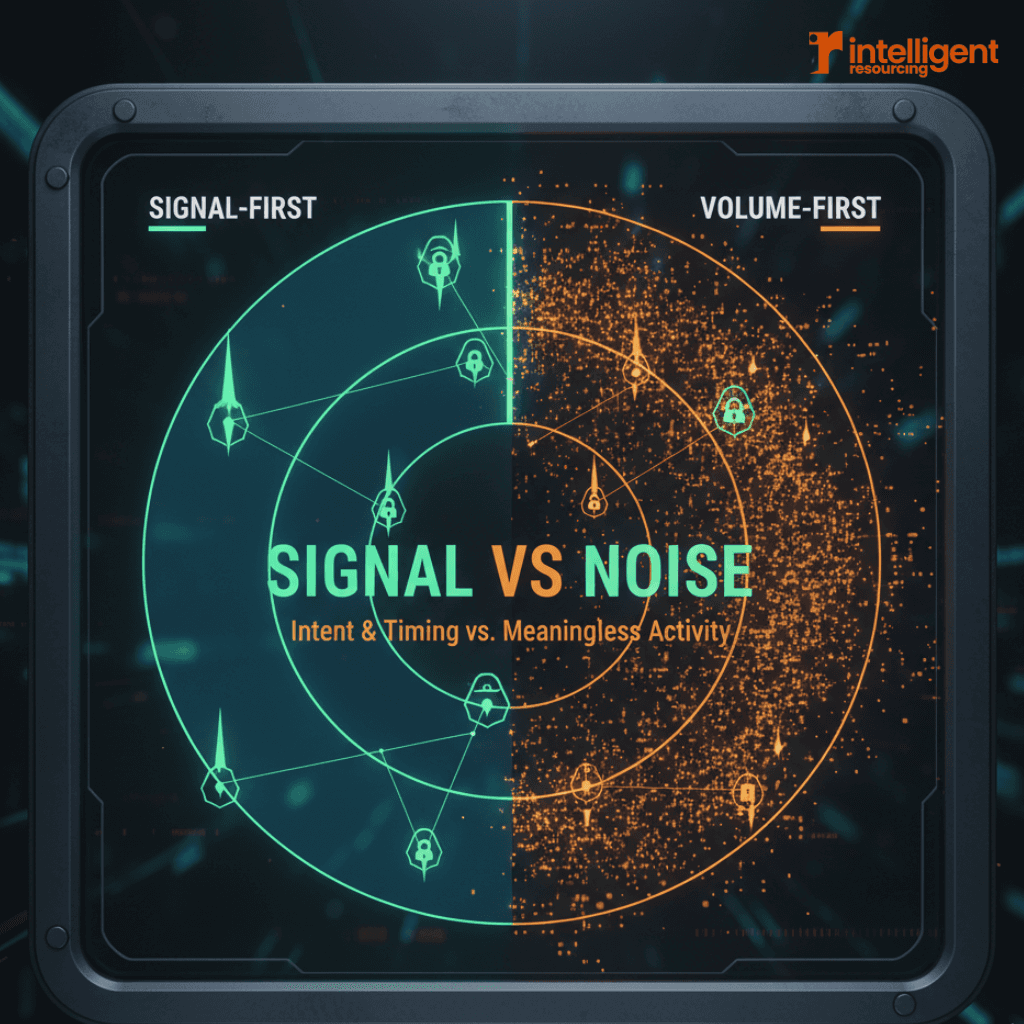

As content marketing scales, AI-powered platforms like GPT, Jasper, and other marketing-specific tools are stepping in to automate content generation for marketers. While these platforms offer tremendous efficiencies in content creation, the challenge lies in ensuring that the content remains consistent with the brand's voice and is triggered by the right buyer signals. Marketers today face a critical need to integrate these tools seamlessly with CRMs and automation systems, ensuring content remains both on-brand and highly relevant to the audience's intent.
What Are AI Content Platforms?
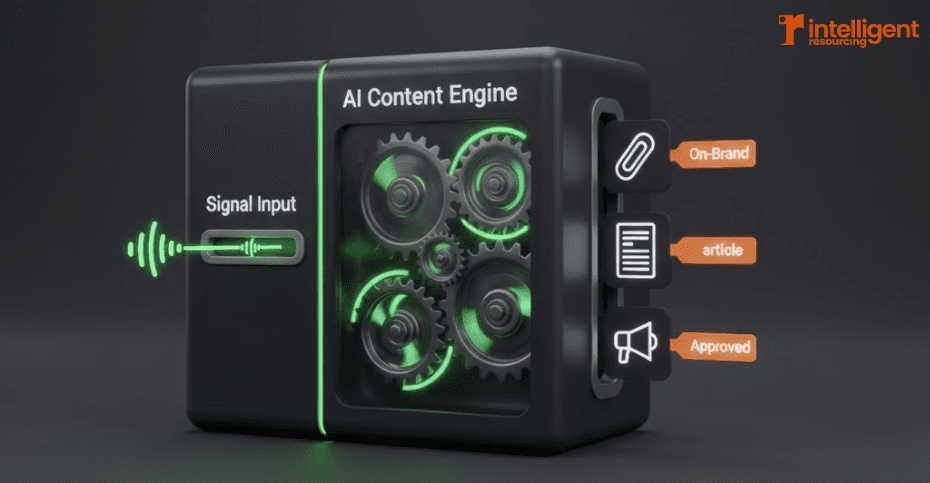
AI content platforms are tools powered by machine learning and natural language processing technologies that automatically generate various types of content. From blogs and social media posts to email copy and landing pages, these platforms can create content at scale by using data inputs from marketers, including keywords, tone guidelines, and other custom prompts.
Their primary role is to automate content creation without sacrificing quality or relevance, allowing marketers to focus on higher-level strategy. According to recent research, 88% of marketers now use AI in their day-to-day roles, with 93% reporting that AI accelerates content creation processes.
Types of Content AI Can Generate
AI content platforms can produce a wide range of content, including:
Blog posts: Long-form content that aligns with SEO goals and topic clusters.
Social media posts: Snappy, engaging copy optimised for various platforms.
Email copy: Personalised messaging for drip campaigns or product announcements.
Landing pages: Optimised copy that speaks to lead intent and is structured for conversions.
Ad copy: Targeted and compelling content for paid media campaigns.
These tools significantly reduce the time it takes to produce content and can scale the creation process without human intervention once properly set up. In fact, marketers save an average of 3 hours per piece of content when using AI tools, whilst 68% of businesses have seen an increase in content marketing ROI thanks to AI adoption.
How AI Content Platforms Can Stay On-Brand
Customisation for Brand Voice
A major concern with scaling content through AI is maintaining a consistent brand voice. AI content platforms can be tailored to adhere to specific brand guidelines. Marketers can teach AI platforms their preferred writing style, tone, and vocabulary, ensuring that the generated content stays true to the company's voice.
For example, if your brand has a formal tone, your AI tool can be trained to avoid casual phrasing. Or, if your brand uses specific technical terms, the AI can be instructed to incorporate them in a way that aligns with your messaging strategy.
GTM Engineers' Role
GTM engineers play a key role in configuring AI content platforms. They ensure these platforms work within the larger marketing stack, integrating them with CRM tools, automation platforms, and content management systems. Their work ensures that AI-generated content remains consistent with brand guidelines and governance structures.
GTM engineers set up and manage systems that control how content is generated, where it's routed, and how it is reviewed before being published. They also monitor performance metrics, tweaking workflows and AI settings for improved outputs over time.
Governance Tools and Quality Control
AI-generated content needs to be constantly monitored for brand consistency. GTM engineers can integrate quality control mechanisms, such as:
Automated content reviews to flag content that doesn't meet brand guidelines.
AI-powered content scoring based on factors like tone, relevance, and consistency.
Human oversight to review content before it's published, ensuring it aligns with brand standards.
These governance tools help marketers ensure that, even as content is scaled, the messaging remains aligned with the company's voice. With 60% of marketers concerned about AI-generated content potentially harming brand reputation due to bias or values misalignment, proper governance becomes essential.
Signal-Driven Content Automation vs. Static Content Scheduling
What Is Signal-Driven Content?
Signal-driven content refers to content that is automatically generated in response to specific user behaviour or buyer intent signals. These signals might come from CRM data (e.g., lead score changes), web analytics (e.g., page visits or form fills), or even social media interactions. The content generated is always tailored to the specific needs and actions of the individual user, creating a more personalised experience.
How AI Integrates with Signals
AI content platforms can seamlessly integrate with CRM tools like HubSpot or SmartLead to pull data directly from customer actions. For instance:
A customer visiting a specific product page may trigger an AI-generated email that highlights the product's features.
If a lead's score increases, the AI platform can produce an in-depth blog post designed to nurture them further in the funnel.
By integrating with these tools, AI can ensure content is both timely and highly relevant, maximising the chance of conversion. Signal-based marketing workflows respond in real-time to buyer actions, with research showing that 71% of customers expect real-time communication, and those who receive it are nearly twice as likely to convert.
Differences from Static Campaigns
Traditional content calendars are static; content is created and scheduled in advance, with little ability to adapt to real-time changes in customer behaviour. In contrast, signal-driven content adapts dynamically to the actions of potential leads, ensuring that content is sent at the optimal time, addressing their specific needs and pain points.
Signal-driven content is not just more timely; it's also more relevant, as it is based on real-time data rather than assumptions.
GTM Engineers' Role in Optimising Content Automation
Creating Seamless Integrations
GTM engineers ensure that AI content platforms work seamlessly with other tools, like CRMs, CMS, and marketing automation platforms. They design and implement integrations that allow for trigger-based content creation. For example, when a lead updates its status in HubSpot, the system triggers an AI-generated email or a series of social posts that directly address the updated needs of the lead.
System Design and Workflows
Creating workflows that route content to the correct channels is another key responsibility of GTM engineers. They ensure that content is personalised based on the customer journey, ensuring that leads receive the right content at the right stage of their interaction with the brand.
For instance, leads who have just signed up for a newsletter might receive an automated welcome email series, whilst more advanced leads may receive in-depth whitepapers or product demos.
Monitoring and Adjusting AI Performance
AI content is not set-it-and-forget-it; it requires continual monitoring. GTM engineers work with data teams to track the performance of AI-generated content, adjusting workflows, data inputs, and even AI settings to fine-tune content quality and relevance. This ongoing analysis ensures that AI-driven content maintains a high standard and remains aligned with business goals.
The Challenges of AI-Generated Content
Brand Consistency Risks
Whilst AI offers immense potential for scaling content production, there is always the risk of inconsistent messaging. Without proper oversight, AI may generate content that diverges from the established brand tone or message.
To mitigate this, GTM engineers integrate real-time checks and balances that assess each piece of AI-generated content before it is published, ensuring consistency.
Overcoming Governance and Workflow Issues
AI content platforms can sometimes struggle with governance issues, especially when personalisation at scale is involved. GTM engineers face the challenge of balancing dynamic, personalised content with the overarching brand voice, ensuring that the automation works within a structured framework.
Adapting the AI platform to accommodate evolving brand messages, whilst keeping everything aligned with current marketing objectives, requires a fine balance of oversight, monitoring, and tweaking.
Why Workflow Design Matters in AI Content Automation
The Importance of Structured Workflows
Structured workflows are essential for making sure that content is aligned with both business goals and buyer intent. GTM engineers design workflows that are robust yet flexible, ensuring content is both relevant and timely, while also maintaining brand integrity.
Personalisation and Segmentation
GTM engineers play a crucial role in segmenting content for different buyer personas or stages in the customer journey. By understanding how AI can be used to dynamically tailor content, engineers ensure that the right messages reach the right audiences, driving higher engagement and more conversions. Companies using AI report 22% higher ROI and 47% better click-through rates compared to traditional approaches.
Best Practices for Maintaining Brand Integrity with AI Tools
Customising AI Models
Customising AI models to reflect a company's unique language, style, and tone is critical to maintaining brand integrity. GTM engineers work alongside marketing teams to fine-tune these models to ensure they produce content that resonates with the audience.
Human-in-the-Loop Approaches
Whilst AI tools can generate high-quality content, human-in-the-loop approaches are still necessary. Having a human review the AI-generated content ensures that it aligns with brand standards and is free from errors or inconsistencies. Research shows that 93% of marketers use various methods to review AI-generated content before posting, highlighting the importance of human oversight.
AI Content Platforms and CRM Integration: A Practical Workflow Guide
AI content platforms are a powerful tool for marketers looking to scale content production. However, to ensure that content remains on-brand and effective, integrating these platforms with systems like CRMs and automation tools is essential. GTM engineers play a crucial role in designing workflows, managing governance, and ensuring that AI-generated content stays aligned with the brand and buyer intent.
As we move through 2026, organisations implementing AI in marketing functions report an average 41% increase in revenue and a 32% reduction in customer acquisition costs compared to traditional approaches. The key to success lies in combining the efficiency of AI with the strategic oversight of skilled GTM engineers who can ensure your content automation drives real business results.
FAQs About AI Content Platforms
How can AI content platforms stay on-brand?
AI content platforms can be customised by adding brand guidelines, tone of voice, and vocabulary preferences into their models. GTM engineers ensure that these customisations are applied across all generated content.
What is the difference between static content scheduling and signal-driven content automation?
Static content scheduling involves posting predefined content on a fixed schedule, whilst signal-driven content automation creates content based on real-time user behaviour or buyer intent, leading to more personalised messaging.
Can GTM engineers help with AI content governance?
Yes, GTM engineers set up governance structures, monitor AI-generated content, and adjust workflows to ensure the output remains consistent with the brand's messaging.
What tools can be integrated with AI content platforms?
AI content platforms can integrate with tools like HubSpot, SmartLead, and Clay to trigger content creation based on real-time customer actions.
What are the main challenges with using AI content platforms?
Some challenges include maintaining brand consistency, overcoming governance issues, personalising content at scale, and adapting AI to accommodate changes in buyer intent.
Related Resources
What a GTM Engineer Brings to Your Go-to-Market Strategy: Typical Use Cases – Explore practical applications including automated lead routing, lifecycle triggers, and multi-channel social media campaign orchestration
Account-Based Marketing (ABM) Without the Overhead: GTM Framework – Learn how GTM Engineers build signal detection systems and AI-driven content templates for scalable, personalised ABM campaigns