

What Does a GTM Engineering Consultant Actually Do?
A GTM engineering consultant builds the technical infrastructure behind outreach and pipeline generation. They configure Clay enrichment workflows, HubSpot sequences, and n8n automations. Those connect data sources, trigger outreach on signals, and route leads through a defined sales process. The output is a working system, not a strategy document.
The Technical Scope of a GTM Engineering Build
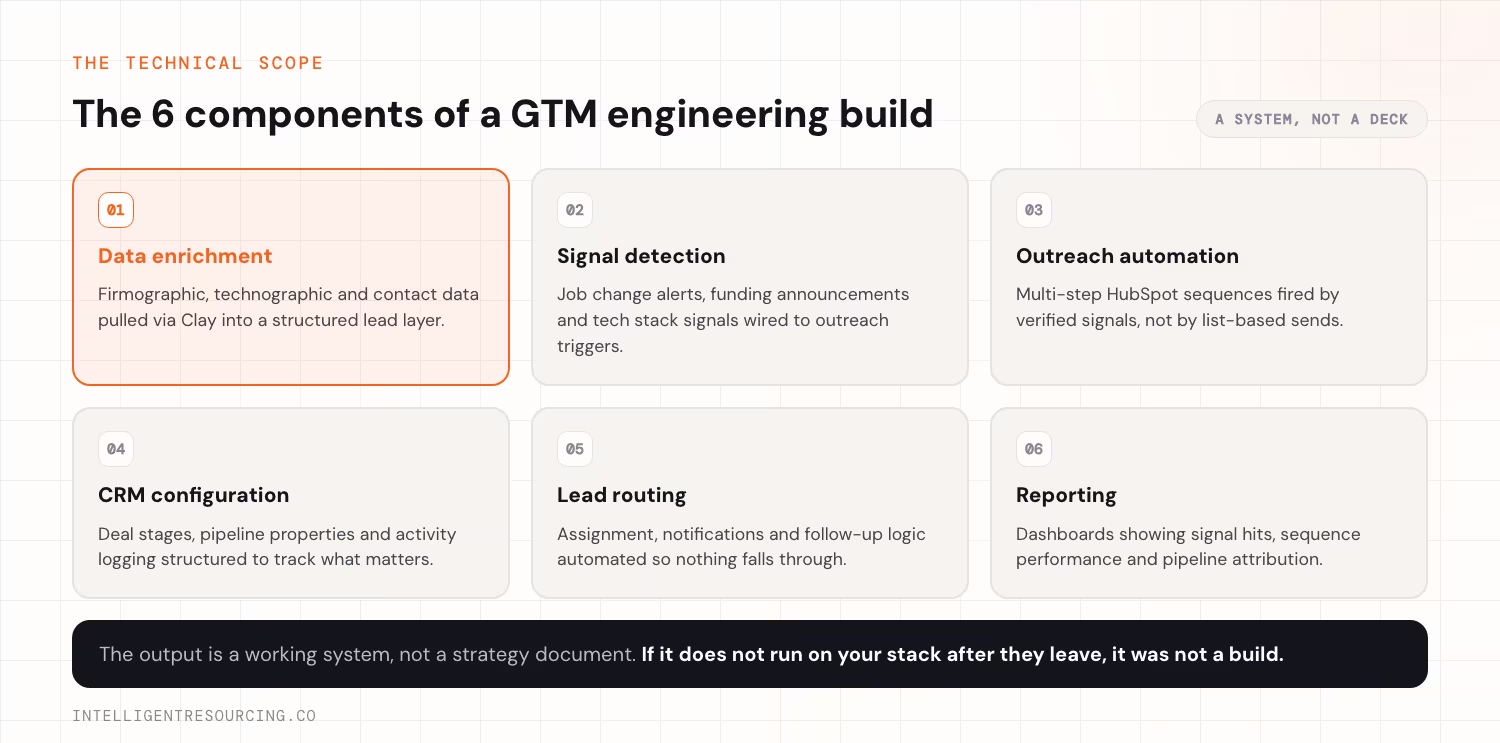
A GTM engineering build typically covers 4 to 6 components:
- Data enrichment: Pulling firmographic, technographic, and contact data via Clay into a structured lead layer
- Signal detection: Connecting job change alerts, funding announcements, and tech stack signals to trigger outreach sequences
- Outreach automation: Building multi-step sequences in HubSpot or outreach platforms, triggered by verified signals rather than list-based sends
- CRM configuration: Structuring deal stages, pipeline properties, and activity logging so the system tracks what matters
- Lead routing: Automating assignment, notifications, and follow-up logic so nothing falls through
- Reporting: Building dashboards that show signal hits, sequence performance, and pipeline attribution
Understanding what a consultant covers sets expectations before any engagement starts.
What a Consultant Delivers vs What They Leave Behind
A consultant delivers a working system configured to your stack and your ICP. What they do not deliver is ongoing management. When the engagement ends, internal operators run the system. If no one internally understands how it works, the system stops generating pipeline within weeks.
This is the core distinction between hiring a consultant and using a managed GTM Engineering service.
The Difference Between a GTM Engineer and a RevOps Consultant
A RevOps consultant typically focuses on process, reporting, and CRM hygiene. A GTM engineer builds the automation infrastructure: the Clay tables, the signal triggers, the outreach sequences, and the integration logic that connects them.
When Is a Consultant Better Than a GTM Engineering Agency?
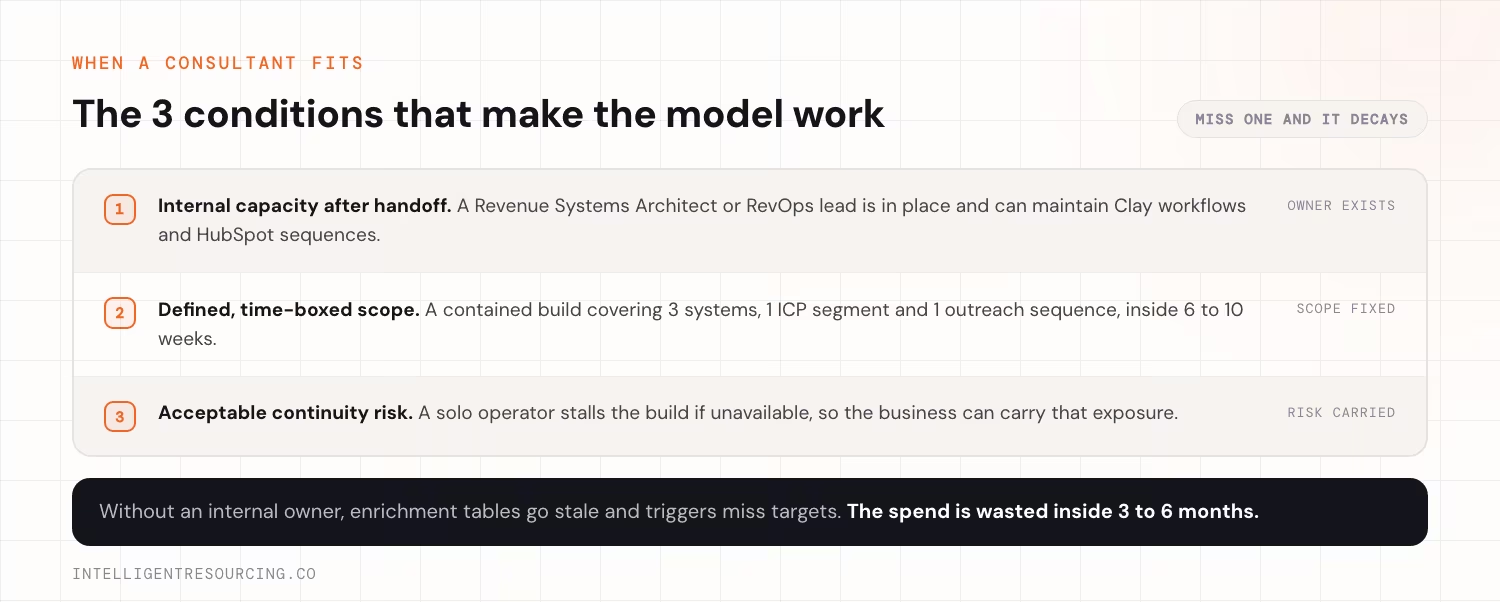
A consultant is the right choice when the scope is defined, the timeline is fixed, and an internal team is ready to run the system after handoff. The best fit is a company that already has Revenue Systems Architect or RevOps headcount, but lacks the technical skills to build the infrastructure.
You Have Internal Capacity After Handoff
A consultant engagement works when the output has a clear owner after delivery. Say a Revenue Systems Architect or RevOps lead is already in place, and can maintain Clay workflows and HubSpot sequences. A consultant then delivers the build without the cost of a long-term agency retainer.
Without that internal capacity, the system decays. Enrichment tables go stale, triggers miss targets, sequences run untuned, and the spend is wasted inside 3 to 6 months.
The Scope Is Defined and Time-Boxed
Consultants price by time and scope. A contained build covering 3 systems, 1 ICP segment, and 1 outreach sequence suits a 6 to 10 week engagement. Open-ended or multi-segment builds need the staffing cover an agency gives.
Deloitte's 2024 Global Outsourcing Survey found that 80% of executives plan to maintain or increase investment in third-party outsourcing. Half already use outsourced services for front-office capabilities including sales, marketing and R&D. The trend is toward managed models for ongoing functions. Project-based consultants suit one-off builds.
What Should You Look For When Evaluating a GTM Engineering Consultant?
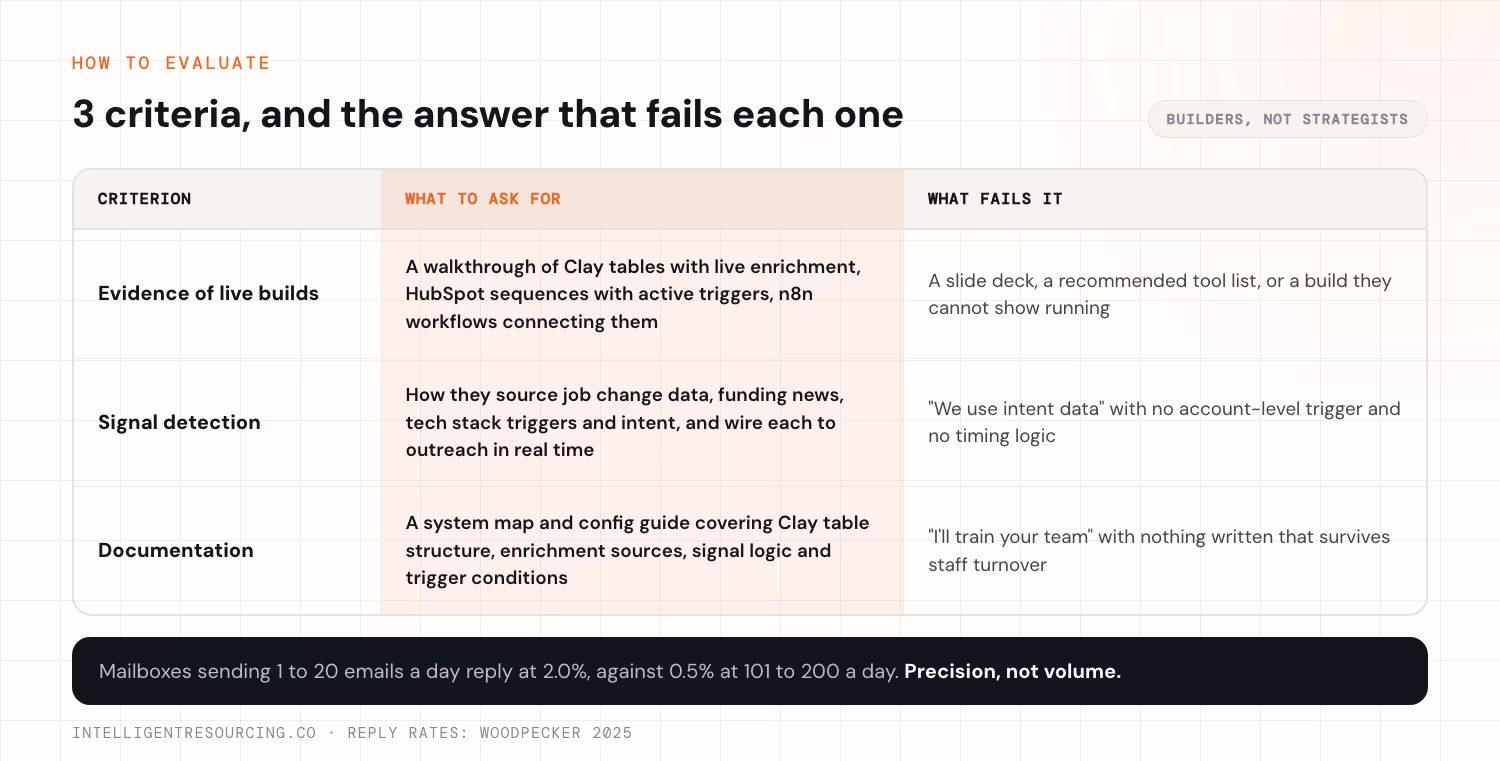
Evaluate a GTM engineering consultant on 3 criteria. Have they shipped live Clay or n8n builds? How do they source and detect signals? And do they document systems for handoff? A consultant who shows strategy but no working build is a strategist, not a builder.
Evidence of Live Builds, Not Slide Decks
Ask for a Loom walkthrough of a system they built and shipped. The walkthrough should show Clay tables with live enrichment, HubSpot sequences with active triggers, and n8n workflows connecting data sources to outreach. A consultant who cannot do this has not built what they are selling.
Ask for the reply rate data on sequences they have configured. Generic cold volume without signal infrastructure produces industry-average results. A well-configured signal-led system produces outlier results.
Signal Detection and Data Infrastructure Competency
Ask how the consultant sources buying signals. Good GTM engineers pull signals from job change data, funding news, tech stack triggers, and intent platforms. They wire those signals to outreach triggers in real time.
Woodpecker's 2025 cold email benchmarks found that mailboxes averaging 1 to 20 emails a day have a 2.0% median reply rate. That is 4 times the 0.5% rate of mailboxes sending 101 to 200 a day, across 7,676 mailboxes. The gap comes from targeting precision, not volume. Signal-competent consultants build for precision, not scale.
Documentation and Handoff Protocols
Ask what the consultant delivers at the end of the engagement. The minimum is a system map, a configuration guide, and training for internal operators. Without documentation, the system cannot be maintained after handoff.
Ask whether the docs cover Clay table structure, enrichment sources, signal logic, and sequence trigger conditions. Those 4 decay first without upkeep.
What Does a GTM Engineering Engagement With a Consultant Typically Cost and Deliver?
A GTM engineering consultant in Australia typically charges $800 to $1,800 per day, or $8,000 to $18,000 per month on retainer. A scoped build covering Clay setup, signal layer, and HubSpot configuration runs 6 to 10 weeks for a single ICP segment. Rates price above the market salary floor for revenue operations expertise.
Day Rates and Retainer Structures in Australia
Senior GTM engineering consultants price above the market salary floor for revenue operations roles. Pulse Recruitment reported in 2026 that the median salary for a Revenue Operations Manager in Australia is $150,000 AUD. That is up 31% from a median of $115,000 in 2023, on surging demand for GTM systems expertise.
At 260 working days per year, $150,000 equates to approximately $577 per day. Senior consultants with GTM engineering specialisation command a 50 to 100% premium above this floor. Expect $800 to $1,500 per day for mid-level GTM engineers and $1,500 to $2,000 per day for senior specialists with Clay workflow and signal architecture experience.
Retainer models suit multi-phase builds. A common structure: a fixed-scope discovery and configuration phase of 4 weeks, followed by a testing and iteration phase of 2 to 4 weeks, then handoff and documentation over 1 to 2 weeks.
What a Consultant Engagement Should Produce
By the end of a scoped GTM engineering engagement, the client should hold:
- A configured Clay enrichment table pulling from at least 2 data providers
- A working signal detection layer connected to at least 1 real-time trigger source
- A tested HubSpot sequence with signal-triggered enrolment
- CRM pipeline structure aligned to the ICP and deal stages
- A system map and configuration guide for internal operators
If a consultant cannot commit to these deliverables in writing before the engagement starts, the scope is not well defined.
What Is Typically Out of Scope
A consultant engagement does not include ongoing system management. After handoff, enrichment maintenance, sequence optimisation, and signal layer updates sit with internal operators.
A consultant also does not cover ongoing copywriting, campaign strategy, or paid media. GTM engineering is the plumbing. What runs on top of it is a separate job. For Clay workflow expert capability embedded in a managed team, an agency model covers both build and ongoing operation.
Consultant vs Agency vs In-house GTM Engineer
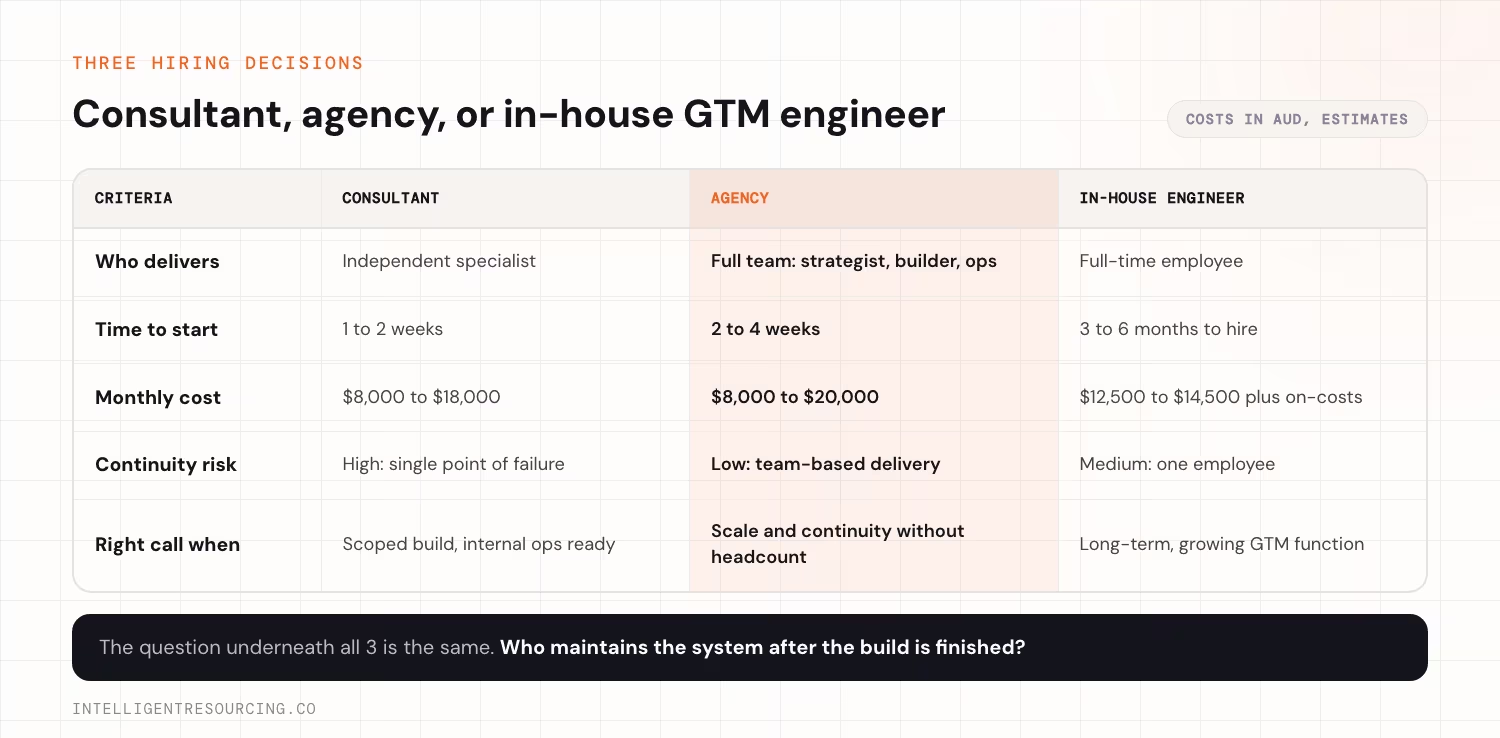
The decision comes down to 3 factors. Do you have internal capacity to run the system after build? Is the GTM engineering function permanent or time-boxed? And is continuity risk acceptable? A consultant suits a contained build while an agency suits ongoing management. In-house suits a growing permanent function with long-term headcount commitment.
The Continuity Question
If the consultant is unavailable mid-build, the system stalls. If they leave after delivery without adequate documentation, the build cannot be maintained. Agencies distribute delivery across a team: the system continues regardless of individual availability.
For companies where pipeline generation is a core and ongoing function, continuity risk from a solo consultant is not acceptable.
The In-house Hiring Cost
Hiring a full-time GTM engineer in Australia costs well above the base salary. On-costs such as super, payroll tax, leave and software licences add 20 to 30%. Recruitment usually costs another 20 to 30% of the first-year salary. A senior GTM engineer on a $160,000 base costs $220,000 to $240,000 in the first year, before productivity ramp.
A managed agency engagement at $8,000 to $20,000 per month, or $96,000 to $240,000 annually, provides full-team delivery with no recruitment risk, no leave coverage gaps, and no software procurement overhead.
When a Managed GTM Engineering Agency Is the Right Model
A managed agency is the right model when the system must keep running and improving without new internal headcount. The agency builds the infrastructure, runs enrichment and signal sources, and keeps tuning sequences against live performance data.
Compare the full options across top GTM agencies Australia before making the final decision.
Comparisons
If the system needs to keep running without internal GTM engineering headcount, Intelligent Resourcing can tell you which model fits your stage in a single scoping conversation. We build and install signal-led revenue systems on your stack, and you own the system permanently.
FAQs
What is a GTM engineering consultant?
A GTM engineering consultant builds the technical infrastructure for revenue systems: Clay enrichment workflows, HubSpot sequences, n8n automations, and signal-based outreach pipelines. They work independently, typically on a project or short retainer basis. The output is a configured system the client operates internally after handoff.
What is the difference between a GTM engineering consultant and a GTM engineering agency?
A consultant is a single specialist who builds the system and hands it over. A GTM engineering agency provides a full team that builds, manages, and iterates the system over time. The key difference is continuity: a consultant exits after delivery, and an agency manages the system permanently.
How long does a GTM engineering engagement typically take?
A scoped build covering Clay enrichment, HubSpot workflow configuration, and signal layer integration typically runs 6 to 10 weeks for a single ICP segment. Multi-segment builds or engagements that include CRM restructuring and reporting typically run 10 to 16 weeks.
What tools does a GTM engineering consultant use?
The core stack is Clay for data enrichment and workflow automation, HubSpot for CRM and sequencing, and n8n or Zapier for integration logic. Signal sources typically include LinkedIn Sales Navigator, job change data providers, funding event feeds, and technographic platforms such as BuiltWith or Clearbit.