

Most teams evaluating Clay and ZoomInfo are asking a data question: which tool has better contacts, better signals, or better AU/APAC coverage. That framing misses the actual decision, because ZoomInfo and Clay do not compete; they solve different operational problems. ZoomInfo supplies packaged contacts, accounts, and intent signals, while Clay governs what happens to that data before it reaches your sales team: how it gets enriched, verified, deduplicated, refreshed, and written back into CRM without corrupting records your reps already trust. Treating this as a database comparison means you can buy more data without fixing the workflow failures causing the problem.
If you are choosing between Clay and ZoomInfo, the decision turns on how your GTM system handles five connected problems in sequence: which signals you detect and trust, how you enrich and verify the records those signals surface, how routing happens without corrupting CRM data, and what it costs each time the system runs. Those problems have a causal relationship. A failure at signal detection compounds into bad enrichment, which compounds into stale routing, which compounds into wasted SDR cycles and broken attribution.
In AU and broader APAC markets, that distinction matters even more. Coverage varies by market, subsidiaries and HQ structures get messy, and the cost of bad data shows up fast in deliverability, pipeline attribution, and SDR confidence.
At Intelligent Resourcing, systems beat tools and a database without orchestration becomes a list factory. An orchestration layer without guardrails becomes a cost leak that compounds every time a bad record reaches your sequencer.
What's the Actual Difference Between Clay and ZoomInfo?
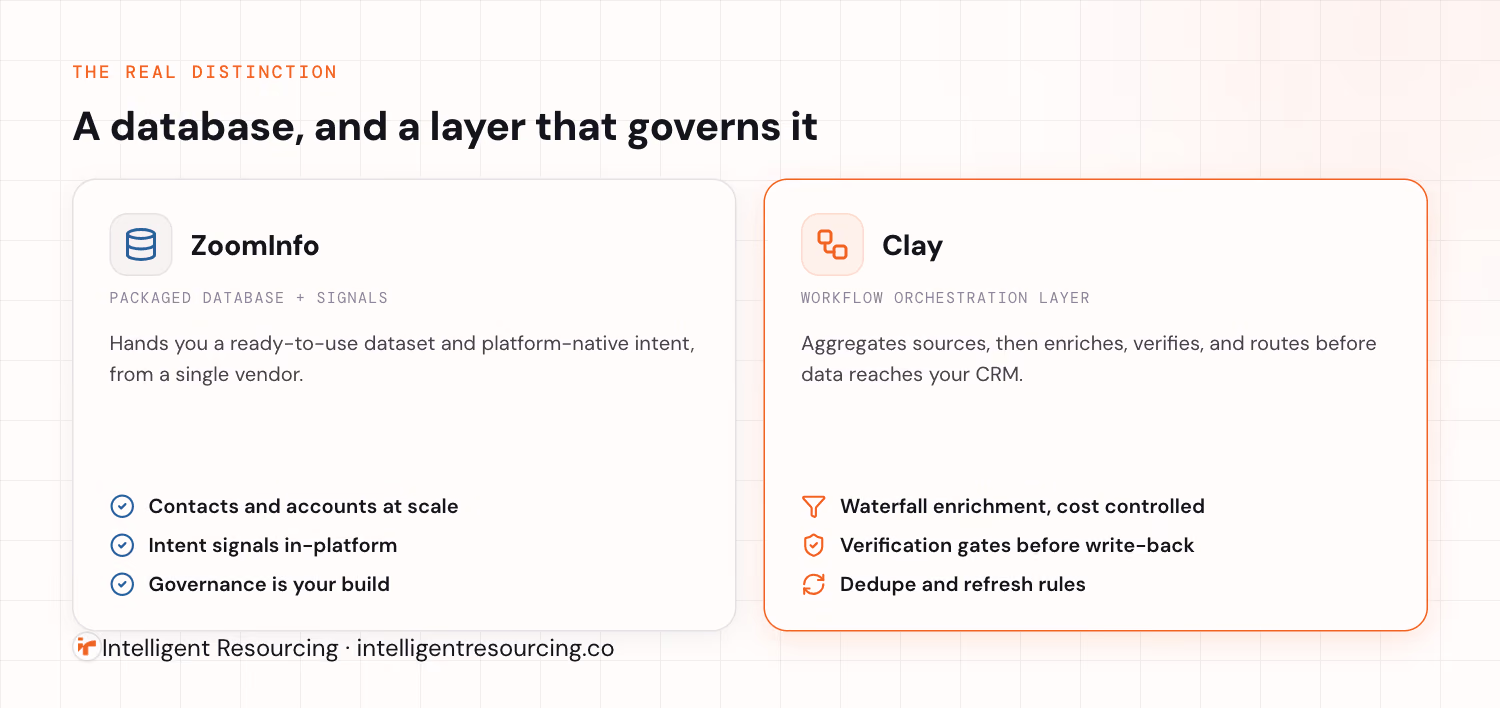
ZoomInfo's Job: A Packaged Database + Signals, Sold as a Platform
ZoomInfo is built to give GTM teams a ready-to-use dataset (contacts and accounts) plus commercial add-ons like intent and workflow surfaces inside the platform ecosystem. If you want a single vendor to hand you the data, ZoomInfo is designed for that experience, reflected in scale and review volume on G2 (thousands of reviews).
Clay's Job: A Workflow Layer That Connects Sources, Verifies, and Routes
Clay is positioned as an orchestration layer: it aggregates many providers, lets you enrich and structure data, and then pushes outputs into the rest of your GTM stack, with the real unlock being logic:
- Waterfall enrichment to increase match rates and control costs
- Verification gates and confidence thresholds before records hit your CRM
- Dedupe and refresh rules to prevent CRM rot (duplicate companies and contacts, stale titles, broken emails)
Clay's official documentation confirms this waterfall model: it queries providers in sequence and stops at the first confident result, saving credits on every record after that.
Head-to-Head for GTM Teams (What Matters in Production)
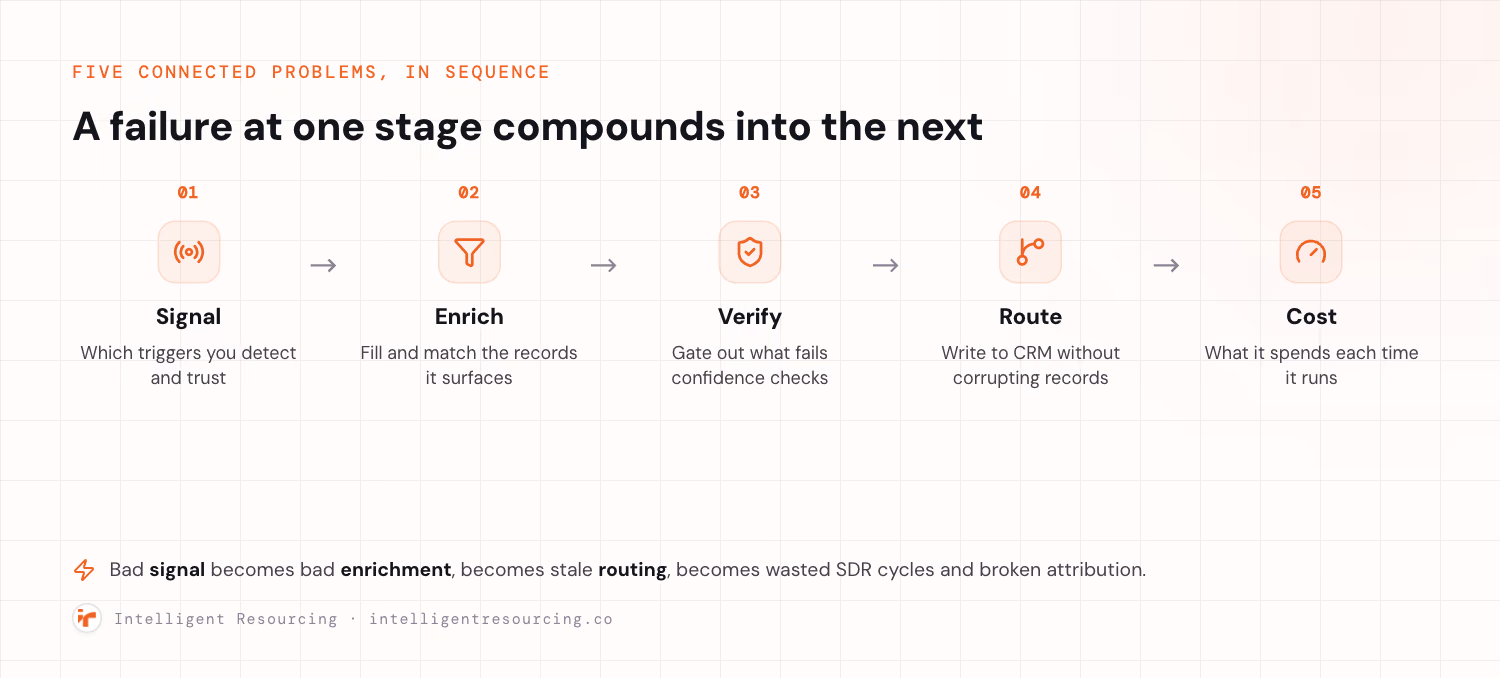
Below is the comparison we use when teams ask us "which one should we buy?"
| Criteria | ZoomInfo | Clay |
|---|---|---|
| Primary role | Packaged database with platform-native intent signals | Workflow orchestration layer across multiple enrichment sources |
| Signal detection | Intent signals inside the ZoomInfo platform ecosystem | Combines signals from multiple sources; routes after signal fires |
| Enrichment model | Single-vendor database with add-on coverage | Waterfall enrichment: sequences providers, fills gaps, controls cost |
| Verification | Requires an external verification layer before outreach | Verification gates built into the workflow; only activates records that pass |
| CRM write-back | Export and sync; governance requires external build | HubSpot and Salesforce actions support create, update, lookup and upsert workflows; governance depends on mapped fields, conditional runs and operator-defined update rules |
| Pricing model | Quote-based annual contract with per-seat dynamics | Credit-based usage model; cost controlled through workflow design |
| AU/APAC coverage | Strong North America base; APAC gaps in direct dials and mobiles | Coverage depends on sources selected. The waterfall sequences regional providers first and falls back to global databases, closing the gap for most AU/APAC ICP segments |
| Learning curve | Moderate; platform UI is accessible | Steeper; requires workflow design expertise to unlock full value |
Signal Capture & Triggering
ZoomInfo is strong when your workflow starts from: "show me accounts and contacts plus intent and buying signals in a single platform." It suits teams that want a pre-packaged environment with ops resources to ensure signals actually get operationalised.
Clay is strong when your workflow starts from: "we need a reliable pipeline that reacts to signals from multiple places." The LinkedIn B2B Institute's 95-5 Rule confirms that 95% of B2B buyers are not in-market at any given moment. Clay's edge is the ability to combine signals with enrichment, verification, and routing, then push clean outputs to CRM and sequencers only when a Verified Buying Window is confirmed.
A Verified Buying Window is a confirmed moment of buying intent: a hiring spike, a funding event, a technology change, where a well-timed message from the right company wins the conversation before a formal evaluation even starts. Most signal stacks fail not because they cannot detect that window but because nothing governs what happens after it is detected, and a Signal Response Protocol defines which contact gets routed, which sequence they enter and under what conditions outreach fires; without one, a signal is just a notification.
Why Do Most AU/APAC Teams End Up Running Both?
B2B contact data decays at 22.5% per year. In AU/APAC, where direct dials and verified mobiles are harder to source, that decay compounds quickly through wasted marketing spend and damaged deliverability. ZoomInfo's batch-refresh model can't keep pace with that rate in smaller markets, and a single bad campaign does more lasting damage to sender reputation when the addressable market numbers in the thousands rather than millions.
The common coverage gaps: parent/subsidiary mapping breaks when HQ is US or EU, direct dials and mobiles are thin for certain regions and industries, and firmographics can point at the wrong buying unit entirely (site vs HQ, regional vs global roles). Clay's answer isn't better APAC data, it's designing for the coverage reality: run a waterfall starting with your best regional source, fall back to broader providers only when needed, and require verification before anything gets activated.
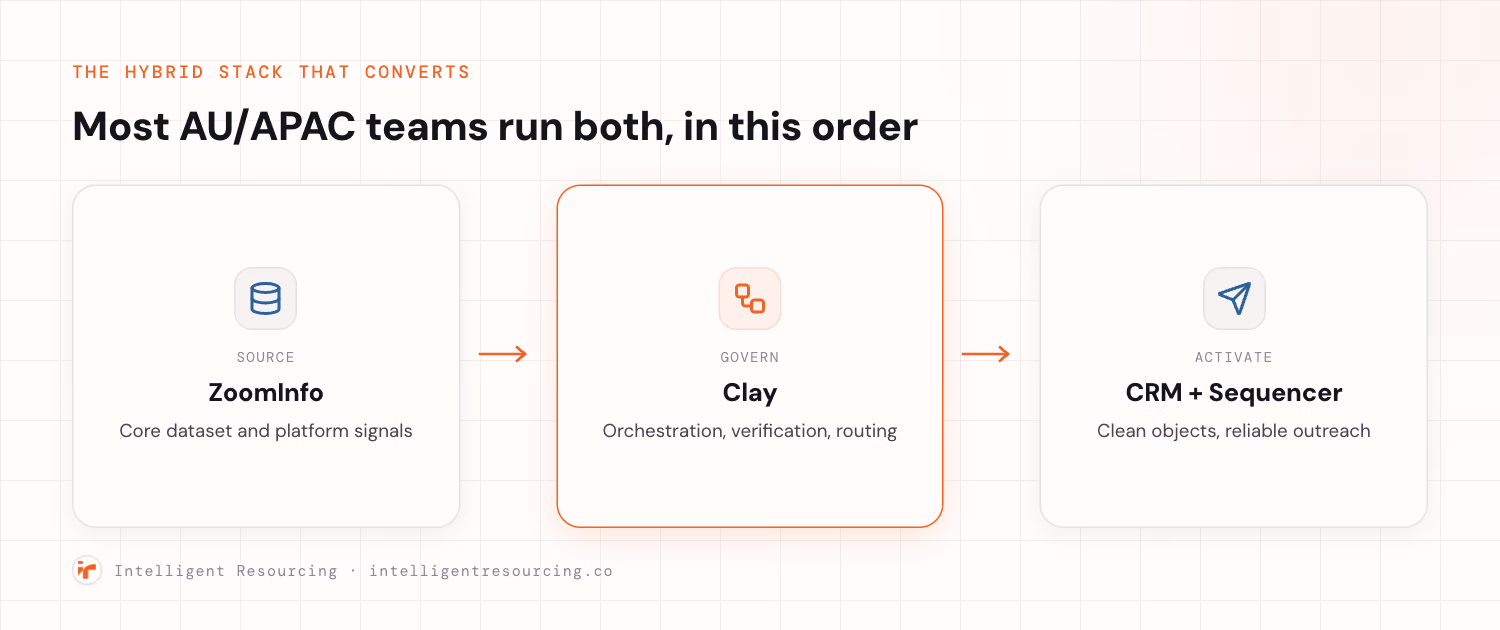
That's why most AU/APAC teams don't choose one tool over the other; they run ZoomInfo as the data source and Clay as the validation layer that catches stale records before they reach a sequence. For the full bounce-rate math and AU/APAC-specific failure modes, see Clay vs ZoomInfo: AU/APAC Data Accuracy Showdown. For the step-by-step build (export, waterfall config, signal triggers, routing), see Clay + ZoomInfo: Hybrid Sales Workflow on Live Signals.
What Does Each Platform Cost?
Clay uses a usage-based model built around Data Credits (for purchasing data) and Actions (for orchestration work, including enrichment, table runs, AI calls, exports). Cost control is a workflow design problem: gate what you enrich, cap expensive steps, and sequence cheap checks before expensive ones.
ZoomInfo pricing is quote-based rather than published, with most buyers on annual contracts. Budget risk isn't just per-seat cost; it includes contract length, renewal dynamics, add-ons (intent data, extra credits), and seat growth, so treat it as a procurement exercise, not just a tool choice.
For the full cost model across seats, credits, contract terms and add-ons, see Clay vs ZoomInfo pricing and true GTM stack costs compared in full.
What Do G2 Reviews Say About Each Platform?
As of May 2026, Clay holds a 4.7/5 rating (213 reviews) on G2, with common themes around automation and time-saving offset by learning-curve and credit-limit complaints. ZoomInfo Sales sits at 4.5/5 across roughly 9,085 reviews, with strong sentiment on dataset breadth alongside recurring notes about outdated or expensive data.
What reviews don't measure: whether workflows fail silently, whether a bad enrichment overwrote a clean CRM record, or whether refresh cycles actually prevent data drift. For the full breakdown of what G2 does and doesn't capture, including why a 9.6 vs 8.6 support-quality gap matters more than the star rating, see Clay vs ZoomInfo: The Operational Reality G2 Reviews Ignore.
Recommended Stack Patterns (Choose-Your-Path)
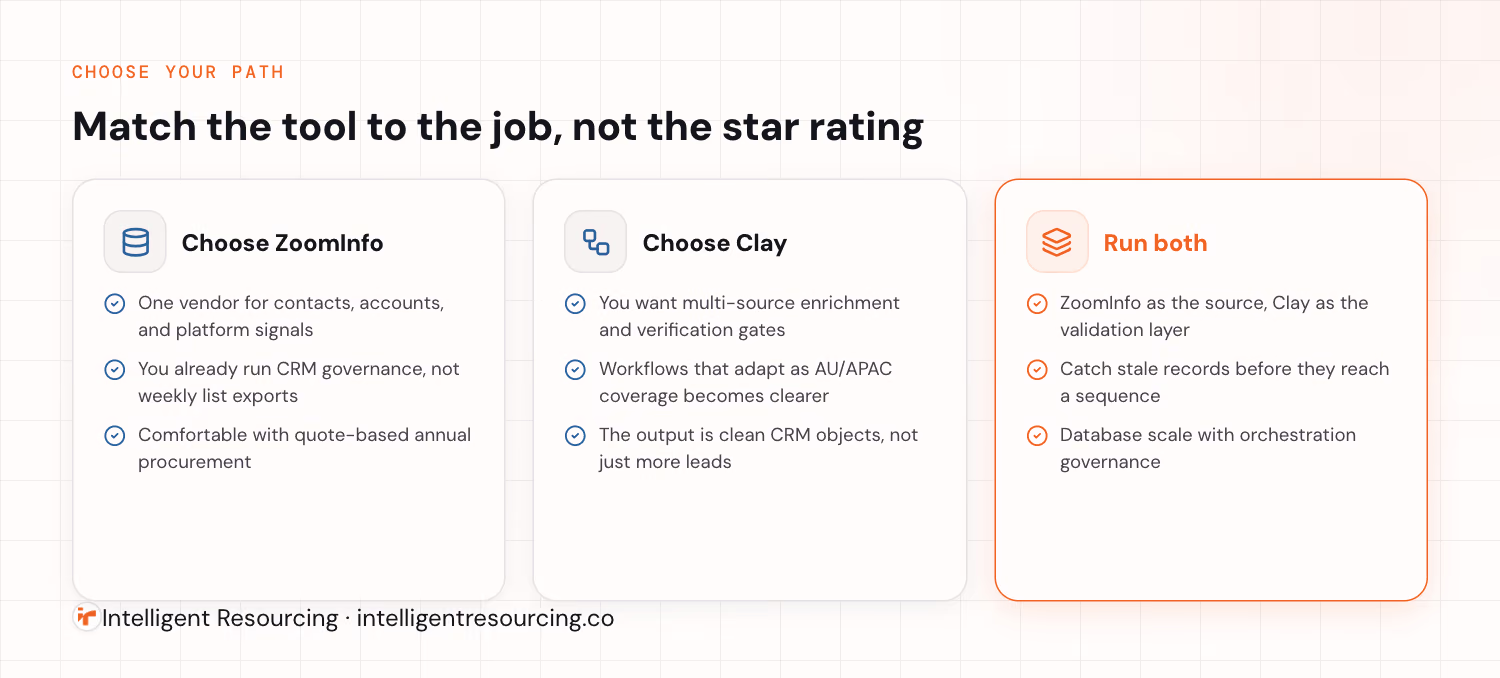
Choose ZoomInfo When...
- You want a single-vendor experience to source contacts and accounts and layer in platform signals
- Your team can operationalise it with clear CRM governance (dedupe, field mapping, refresh) and is not just exporting lists weekly
- You are comfortable with quote-based procurement and annual contract dynamics
Choose Clay When...
- You want control: multi-source enrichment, verification gates, refresh logic, cost caps
- You need workflows that can evolve as your AU/APAC coverage reality becomes clearer
- You are building a GTM engine where the output is clean CRM objects and reliable routing, not just more leads
The Hybrid Stack That Actually Converts
For many AU/APAC teams, the strongest setup is:
ZoomInfo (core dataset + signals) → Clay (orchestration + verification + routing) → CRM + Sequencer (activation)
That hybrid setup keeps the big-database benefits whilst enforcing waterfall enrichment, verification gates, dedupe and refresh, and routing logic that does not rot your CRM. Demand Gen Report research also found that 81% of B2B buyers have a preferred vendor at the time of first contact. The hybrid stack is how AU/APAC teams build the timing precision to get into the buying conversation before a shortlist is established.
Intelligent Resourcing Implementation Note: Make It a System, Not Another Tool
If you want this to work beyond a pilot, treat it like engineering. Intelligent Resourcing builds these systems as a Revenue Operations Studio, not as a tool configuration service but as a full GTM infrastructure build:
- Define activation rules (what counts as "ready to contact")
- Build waterfalls (sequence sources and control cost)
- Add verification gates (stop bad records before outreach and CRM write-back)
- Enforce dedupe and field governance (protect CRM truth)
- Set refresh cadence (prevent rot)
- Instrument outcomes (bounce rate, reply rate, meeting rate, conversion by segment)
Signal Response Protocols, the rules that define what fires, to whom, and when, after a buying signal is detected, are the mechanism that separates a GTM system from a list export with automation on top. That is the core of what Intelligent Resourcing builds under GTM Engineering.
Verdict
Most AU/APAC teams that buy ZoomInfo and then ask why their outbound is not working already have the data. What they are missing is a governed system for what happens to that data before it reaches a salesperson: the contacts are there, the signals are there, but the workflow that enriches, verifies, deduplicates, and routes that data is not.
That gap is not a tool problem; it is a workflow design problem, and the longer it runs undiagnosed, the more it costs: in bounced emails, in stale CRM records, in reps who stop trusting the pipeline they are working from, and in buying windows that close while your outreach is still being manually assembled.
ZoomInfo gives you the data; Clay gives you the system to act on it. For AU/APAC teams running outbound at scale, you need both and you need someone to build the connection between them so it runs as infrastructure, not as a configuration you revisit every quarter.
What Are the Next Steps
If you are deciding between Clay and ZoomInfo, do not ask "which is better?" Ask instead what system do we need, and what is the cleanest way to run it in AU/APAC without leaking cost or corrupting CRM data.
Comparisons
ZoomInfo gives you the data. Clay gives you the system to act on it. The Revenue Operations Studio at Intelligent Resourcing designs the waterfalls, verification gates, and routing so your CRM stays clean and outbound fires on real signals.
FAQs
Can I use both Clay and ZoomInfo together?
Yes, and this hybrid approach is what most AU/APAC teams with complex enrichment needs run. Use ZoomInfo as your core database for contacts and accounts, then route that data through Clay for verification, enrichment waterfall, and CRM routing logic. This gives you the scale of ZoomInfo with the governance of Clay.
How long does it take to implement Clay workflows?
Basic enrichment workflows typically take 2 to 4 weeks, while complete GTM systems with verification gates, dedupe rules, and CRM integration typically take 6 to 12 weeks. A GTM Engineer compresses this timeline because they arrive with pre-built workflow templates and established knowledge of which AU/APAC data providers to sequence first.
What is the minimum team size to justify Clay?
If you are running outbound at scale (500 or more leads per month), have multiple data sources, or need verification before CRM write-back, Clay delivers ROI at that volume. Smaller teams get better return starting with simpler tools until workflow complexity becomes the bottleneck.
How does data quality affect pipeline performance?
Stale contact data drives bounced emails, wasted SDR cycles, and broken attribution. B2B contact data decays at 22.5% per year, meaning a 1,000-account Signal-Led Growth list loses 225 usable records every 12 months without an active enrichment refresh cycle. Clay's verification gates stop degraded records before they reach the outreach sequencer or overwrite clean CRM data.
Can Clay help with APAC-specific data challenges?
Yes, Clay's waterfall approach lets you sequence regional providers first, then fall back to global databases, and you can also set verification rules specific to APAC formats (mobile numbers, company structures, regional email patterns).