

What Does ROI Growth Agency's AEO Actually Involve?
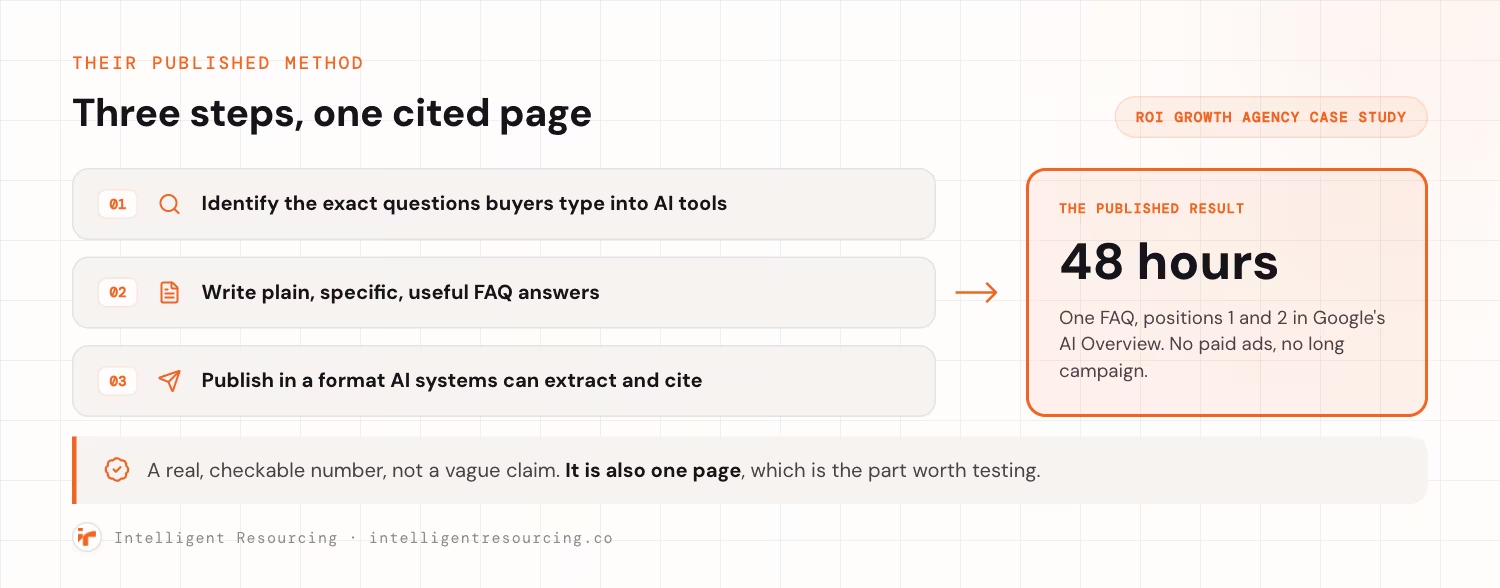
ROI Growth Agency's own AEO case study describes a specific result. One FAQ, published on their own site, reached positions 1 and 2 in Google's AI Overview within 48 hours. No paid ads, no long campaign. Just one well-structured answer.
Their stated method is straightforward:
- Identify the exact questions ideal customers are typing into AI tools right now
- Write plain, specific, useful FAQ answers
- Publish them in a format AI systems can easily extract and cite
That is a real, proven approach, not a vague "we do AEO" claim. Plenty of agencies describe AEO in the abstract. ROI Growth Agency showed a number. Our how to choose an AEO agency guide covers the fuller set of questions worth asking any vendor making a similar claim.
Are Their 20 Years and Deloitte Recognition Real Credentials?
Yes. ROI Growth Agency was founded in 2006 by Ewan Watt, and the agency has received Deloitte Technology Fast 50 recognition. Those are genuine, checkable credentials, not marketing filler.
The agency also markets itself heavily on revenue-accountable reporting. Results are tracked to leads, pipeline, and revenue, rather than impressions or rankings alone. That is a fair standard, and one worth holding any vendor to.
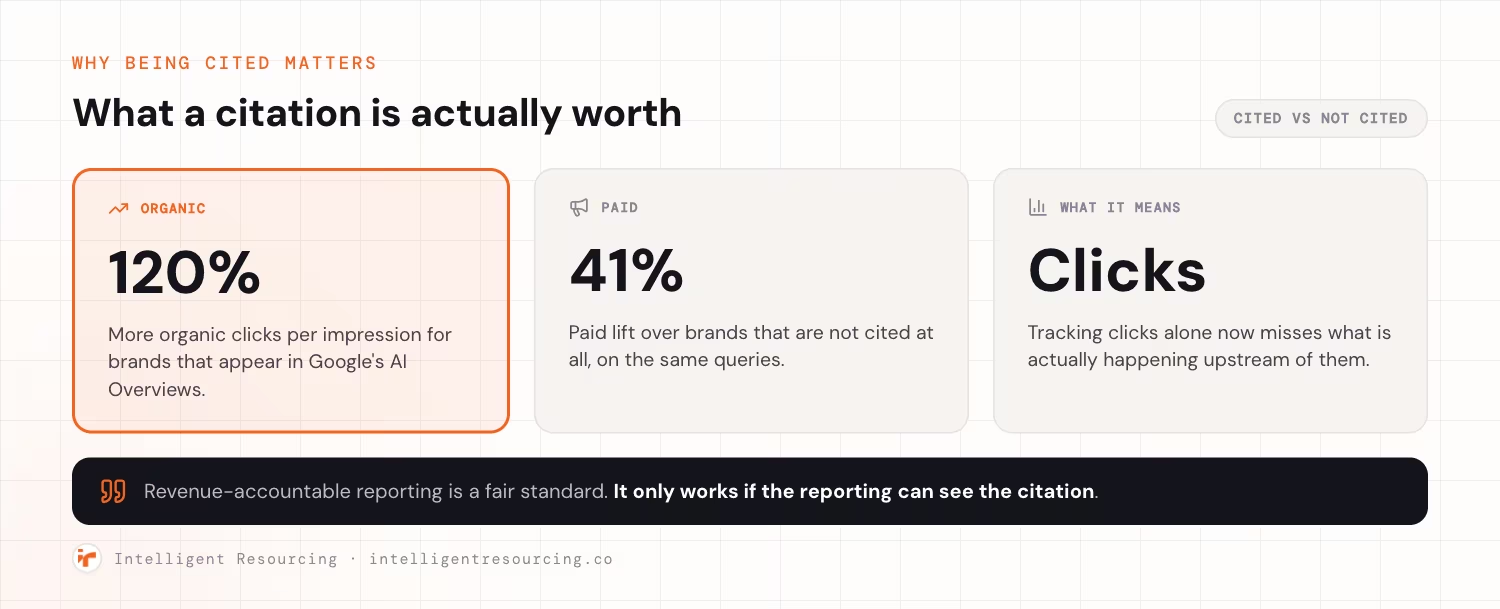
It is also a reasonable reaction to a real shift in how buyers behave. Seer Interactive research, pooled with other citation studies, found that brands appearing in Google's AI Overviews see about 120% more organic clicks per impression, and a 41% paid lift, compared to brands that are not cited at all. Tracking clicks alone now misses what is happening.
None of that is in question here. The question is narrower. Does a 20-year track record in broad performance marketing mean the newer AEO work is built as a system? Or is it one strong case study sitting inside a much bigger service list? That is the gap Intelligent Resourcing is built to close.
Does Site Authority Even Predict Which Content Gets Cited?
The instinct is to assume a bigger, older site has an edge in AI citation. Intelligent Resourcing's own tracking, and independent research, both say otherwise:
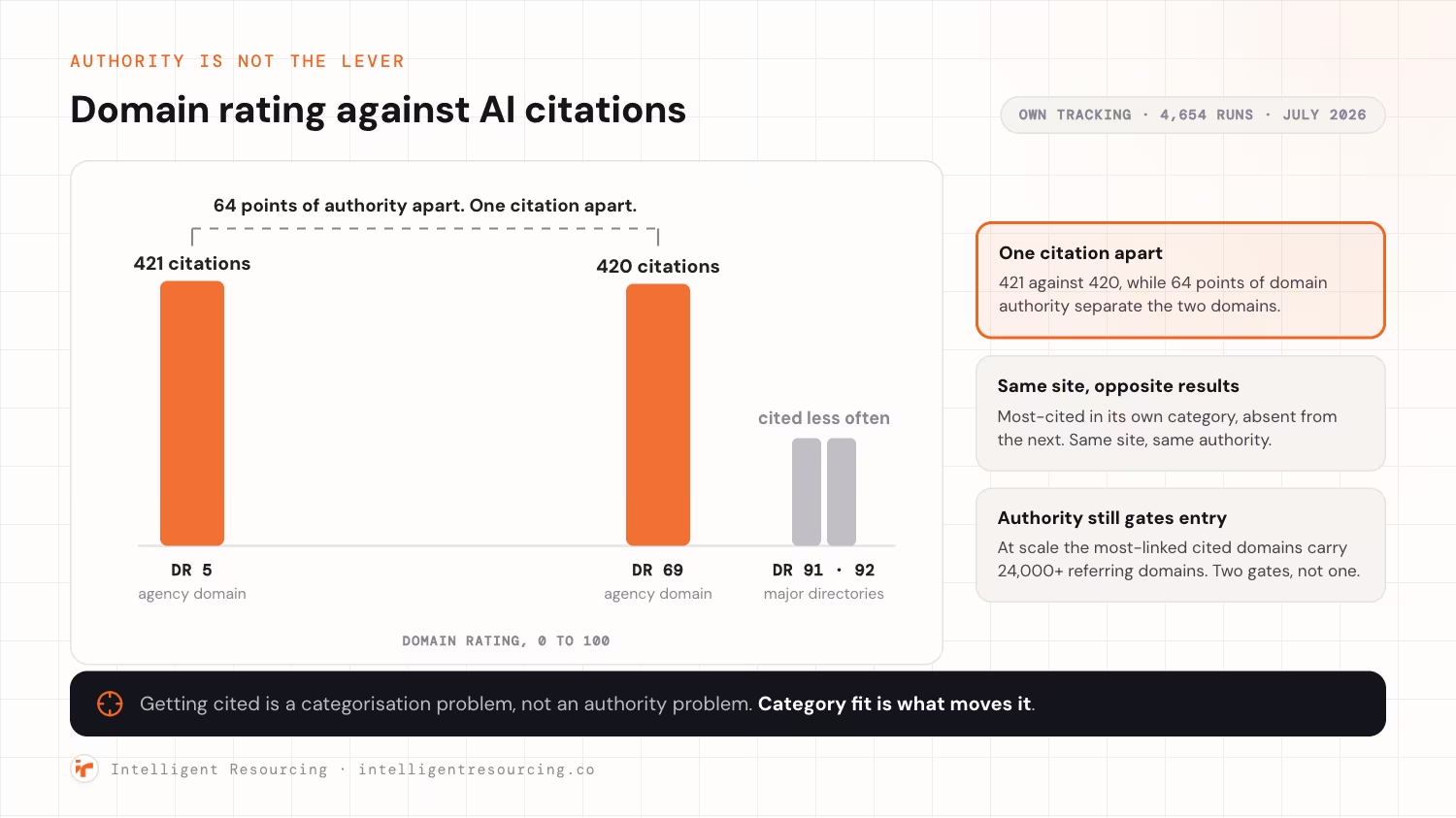
- Across 4,654 tracked runs in its own category (July 2026), the two most-cited agency domains sit one citation apart, while 64 points of domain authority separate them, at domain rating 5 and domain rating 69. Both are cited more often than two major directories at domain rating 91 and 92. Across every cut tested, the relationship between authority and citation is statistically indistinguishable from zero.
- The same pattern shows up at the brand level. One mid-size Australian software vendor holds 30.1% share of voice in its strongest category, twice the nearest rival, yet 12.7% in an adjacent category where two specialists out-mention it (non-branded prompts, July 2026). Share of voice here means share of naming across the tracked competitor set, not market share. Same site, same authority.
- An Ahrefs study of 1,885 pages that added schema markup found no meaningful citation increase on any major AI platform, and a small statistically significant decline on one. Schema helps AI systems understand a page. It does not automatically buy that page a citation.
Authority is not irrelevant, though. At scale it does gate entry. An SE Ranking study of 100,013 keywords found the most-linked domains cited in AI Overviews carry between 24,000 and 24.1 million referring domains, with one government domain the notable exception at 196. Read the two findings together and you get a two-gate model. Authority gets a page into the candidate pool. Page-level signals win the citation.
Getting cited is a categorisation problem, not an authority problem. What does predict citation, consistently, is category fit. That means whether a piece of content actually matches the specific question a category of buyers is asking, in enough depth to be the obvious answer.
That is the problem Intelligent Resourcing's Generative Engine Optimisation practice is built to solve category by category, rather than treating authority or schema as a shortcut.
If the difference between AEO, GEO, and adjacent terms is still unclear, our AEO, GEO, and LLMO explained breakdown covers where they overlap and where they do not.
How Should You Evaluate Any AEO Case Study Like This One?
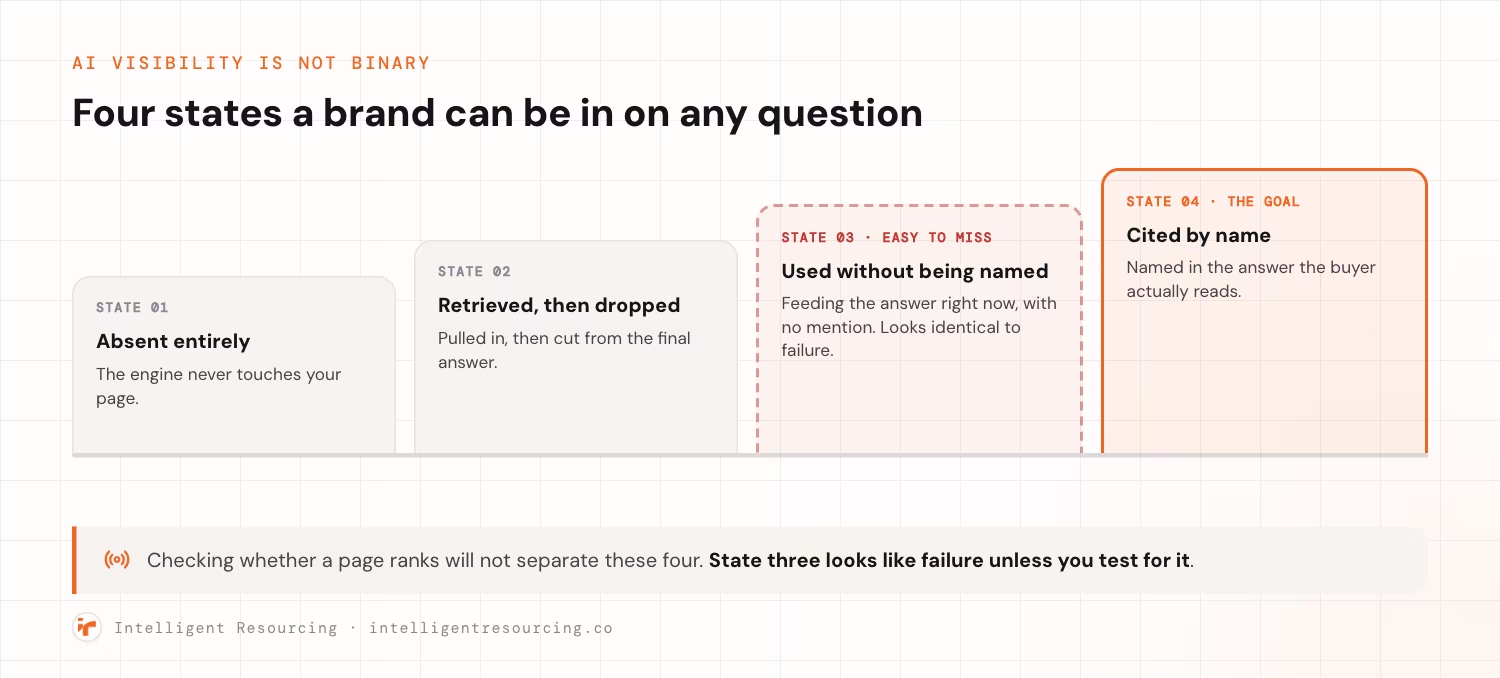
A single fast result, from any vendor, deserves a real test rather than a gut check. AI visibility is not binary. A brand can land in one of four states on any given question: absent entirely, retrieved but dropped from the final answer, used without being named, or properly cited by name.
That third state is easy to miss. A page can be feeding an AI answer right now without the brand ever getting mentioned, which looks identical to failure unless you are checking for it specifically.
A few questions worth asking about any single case study:
- Does this result repeat across many questions in the same category, or is it one page?
- Which specific AI engine was it measured on? Different AI engines behave differently in what they cite and how, so a result on one does not predict another.
- Is there a system tracking category-by-category performance, or did one page get lucky with timing?
This is not a knock on ROI Growth Agency specifically. It is the right question to ask about any vendor showing a single great result, whether AEO runs alongside SEO (Search Engine Optimisation) as one coordinated programme or two separate workstreams.
Who Should Choose ROI Growth Agency?
Choose ROI Growth Agency if you want a full-service growth agency handling search, paid media, and conversion work under one roof. It brings a 20-year track record and published search pricing. Their AEO case study is a genuine proof point worth taking seriously.
Choose Intelligent Resourcing if you need that AEO result to repeat across every category your buyers ask about, built as one ongoing Content Strategy system rather than proven one page at a time.
Book a discovery call to see whether your AEO results are a repeatable system, or a strong single page that has not been tested at category scale yet.
Comparisons
A single fast citation and a system that repeats across a category are different outcomes. Book a discovery call with Intelligent Resourcing to see whether your AEO results hold up at category scale.
FAQs
What does ROI Growth Agency's AEO service actually involve?
Their published case study describes identifying the exact questions ideal customers ask AI tools, then writing plain, specific FAQ answers built to be cited. One example reached positions 1 and 2 in Google's AI Overview within 48 hours.
Is ROI Growth Agency's AEO approach effective?
The published result is genuine and specific, not a vague claim. Whether it holds up across every category your buyers ask about, rather than the one example shown, is the fair question to ask before committing.
Does domain authority predict AI citation success?
Not on its own. Across 4,654 tracked runs in one category, the two most-cited agency domains sat one citation apart while 64 points of domain authority separated them. Authority helps a page reach the candidate pool. Category fit and page-level signals win the citation.
Does ROI Growth Agency publish AEO-specific pricing?
Not separately. Their search packages are published from $1,500 a month, but AEO pricing is not broken out as its own line item on their public pages. Intelligent Resourcing's GEO programmes start from AUD $2,500 + GST for a one-off Strategic Blueprint, with retainers from AUD $3,200 a month + GST.
Who should choose ROI Growth Agency over Intelligent Resourcing?
A business wanting a full-service growth agency, with search, paid media, and conversion work under one roof, a long track record, and one strong AEO case study, should choose ROI Growth Agency.
How do I evaluate an AEO case study like ROI Growth Agency's 48-hour result?
Check whether the result repeats across a category of related questions rather than one page, which specific AI engine it was measured on, and whether there is an ongoing system tracking performance rather than a single win.