

Before You Replace Concise Digital, Identify the Missing Layer
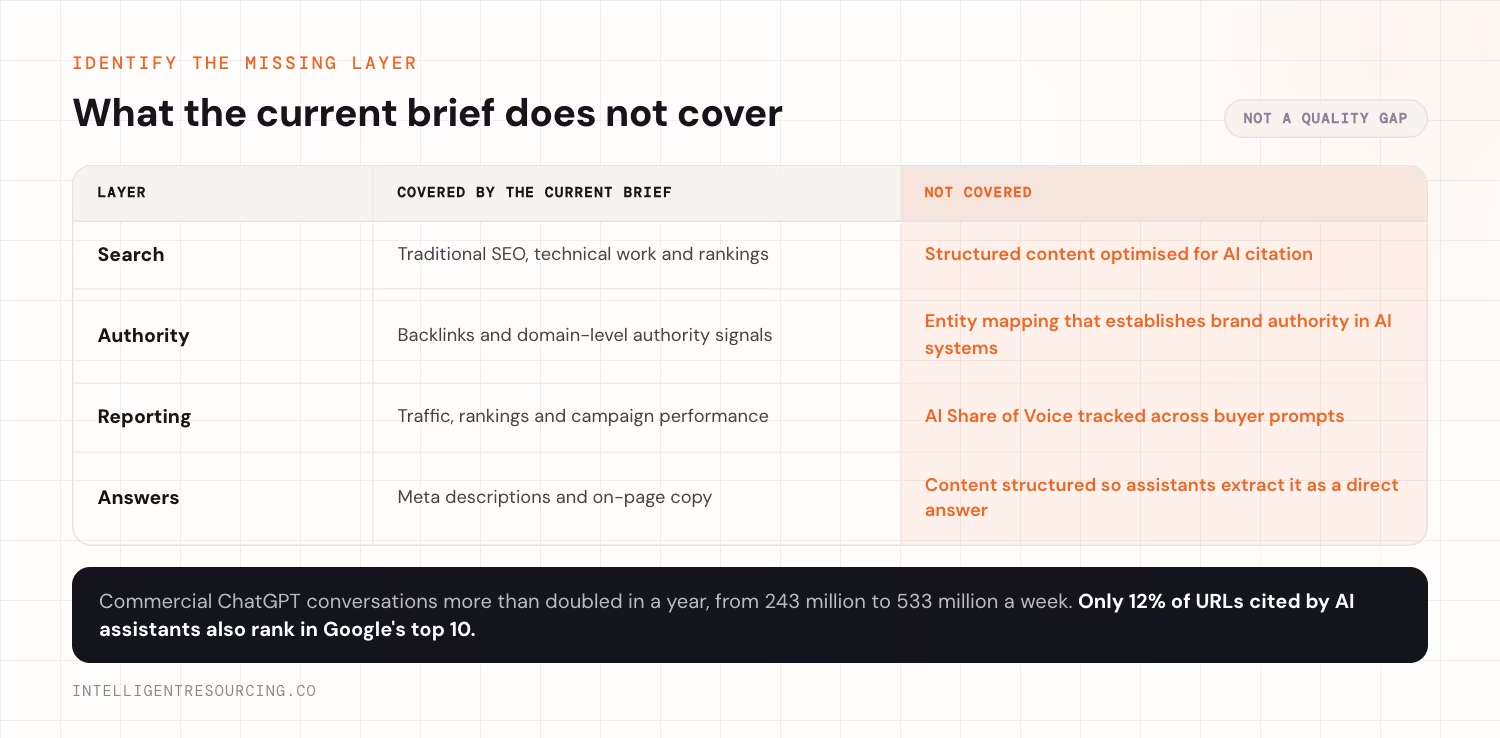
Concise Digital does not offer GEO or AEO. The gap is not in the quality of the SEO work. It sits in the layer above traditional search.
Profound's analysis of 7.5 million ChatGPT conversations found that commercial conversations more than doubled year on year, from 243 million to 533 million per week, with commercial intent rising from 13.9% to 19.2%. That is the demand a traditional search brief was never scoped to capture.
Rankings do not stand in for it either. Ahrefs research found only 12% of URLs cited by AI assistants also rank in Google's top 10 for the same query. A page can be doing well in one system and be invisible in the other.
Concise Digital's service menu covers traditional search and performance media. It does not include:
- Structured content optimised for AI citation
- Entity mapping to establish brand authority in AI systems
- AI Share of Voice tracked across buyer prompts
- Answer engine optimisation: structuring content so AI assistants extract it as a direct answer
Before switching, identify which of those is the priority. A business with a working SEO programme that needs generative engine optimisation added has a different problem from one that needs to rebuild its digital strategy from scratch.
The 4 Alternatives, Matched to Your Brief
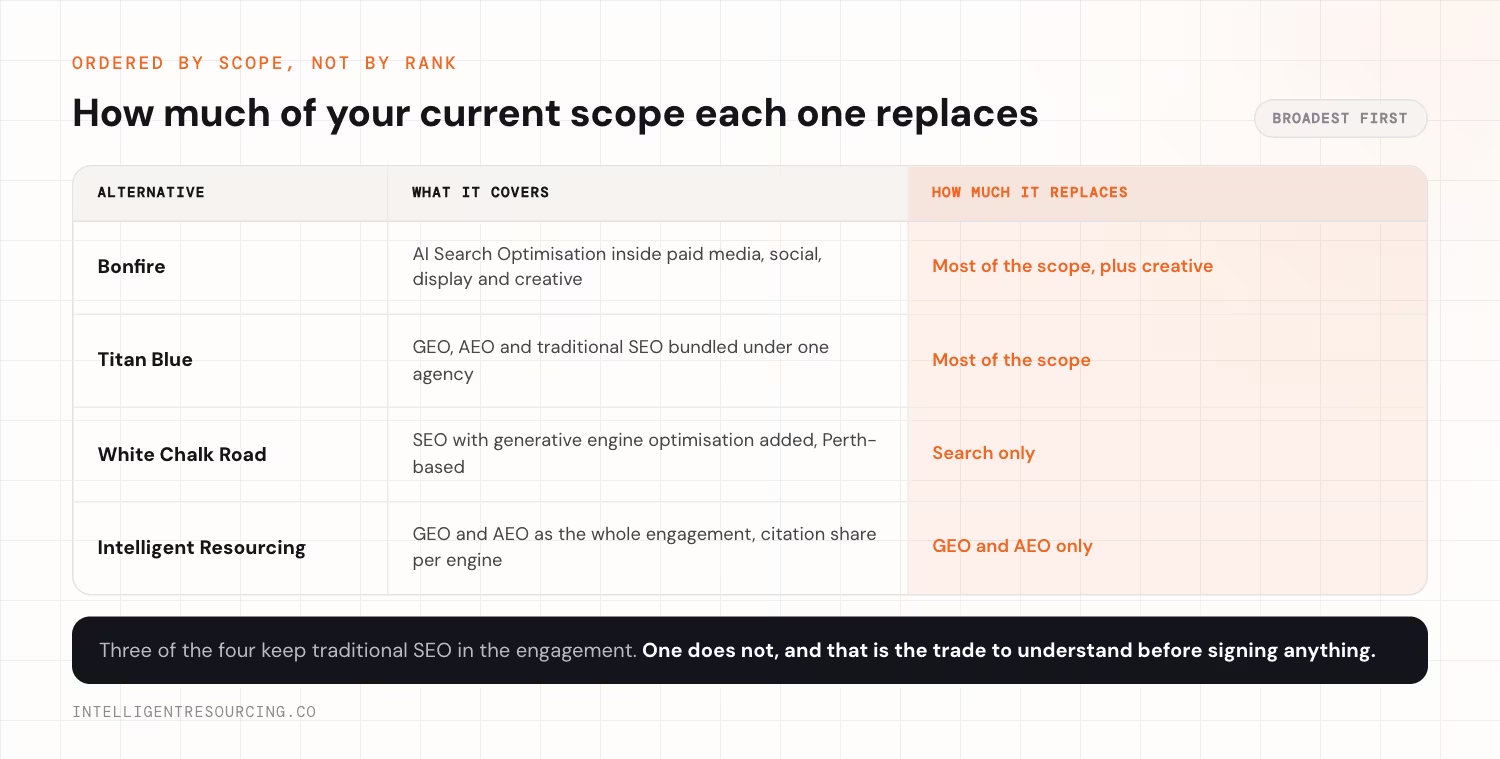
These four are ordered by how much of Concise Digital's current scope each one replaces, broadest first. That is a sequencing choice, not a ranking. The right pick is the one whose scope matches the brief you actually have.
Bonfire, when performance marketing is the centre of the account
Bonfire positions itself around being the brand AI recommends. Its AI Search Optimisation service addresses visibility in Google's AI Mode, ChatGPT and Perplexity, with a dedicated AI Search Reporting service covering how the brand performs across those platforms. Bonfire also manages Google Ads, YouTube, social, display, DOOH and programmatic, plus creative production covering brand strategy, video and TV.
Bonfire does not use GEO or AEO as named services. AI Search Optimisation covers similar territory, but the terminology and reporting framework differ from a specialist engagement.
Right when: the account already splits budget across SEO, paid and creative with multiple suppliers, and consolidation into one agency is the goal.
Verify first: how AI Search Optimisation results are measured (citation rate, brand mention rate or referral traffic), what AI Search Reporting includes, how often the data refreshes, and whether the AI work runs independently of the SEO content programme.
Titan Blue, when traditional SEO has to continue alongside GEO
Titan Blue is a Gold Coast agency operating nationally, offering GEO, AEO and traditional SEO as one bundled service. It positions GEO as helping brands get mentioned and recommended within AI-generated responses, and AEO as structuring content so assistants extract it as a direct answer. The agency reports AEO results typically appearing within 4 to 8 weeks, faster than the 3 to 6 months usual for traditional ranking improvement. Its Nova Minerals engagement is reported as 4x growth in organic traffic with mobile load time halved.
Right when: the brief needs traditional SEO to continue rather than GEO bolted on, one agency across all search channels is the operating preference, and AEO result speed is a commercial priority.
Verify first: whether Titan Blue tracks citation share per engine or only traffic and rankings, how the AEO method handles branded against non-branded prompts, and which parts of the current Concise Digital scope it would replace rather than leave.
White Chalk Road, when Perth proximity matters
White Chalk Road is a Perth-based SEO agency that has added generative engine optimisation to its menu under an AI Search category, alongside ChatGPT Ads. Its GEO method is not publicly detailed beyond the service name.
Right when: the business is Perth-based and local proximity is a real commercial consideration, traditional SEO remains the core brief with GEO developing behind it, and the budget does not support two separate suppliers.
Verify first: what the GEO delivery framework actually includes (structured data, entity mapping, citation tracking, content restructuring), how AI search visibility is measured and reported, and whether ChatGPT Ads is integrated or a separate line item.
Intelligent Resourcing, when citation measurement is the whole point
Intelligent Resourcing runs GEO and AEO as the entire engagement rather than a service line: structured content, entity authority and citation tracking, with AI Share of Voice measured monthly across ChatGPT, Gemini, Google's AI Overview and Copilot. Building content for AI citation happens at the production stage, not as a retrofit. The original GEO research paper found structured, source-grounded content earns measurably more consistent citations from generative engines than unstructured writing on the same topic.
Traditional SEO, paid media and content marketing at scale are not part of the service. That is the narrowest scope of the four, and the reason it suits businesses whose SEO is already handled or already working.
Right when: GEO and AEO are the primary requirement, citation share is a commercial priority, and traditional SEO does not need to come from the same agency. The head-to-head comparison with Concise Digital covers that split in full.
Verify first: the current AI Share of Voice baseline, which buyer prompts the business is absent from today, and whether SEO coverage is needed from the same supplier or can sit separately.
What Do You Gain and Lose by Switching?
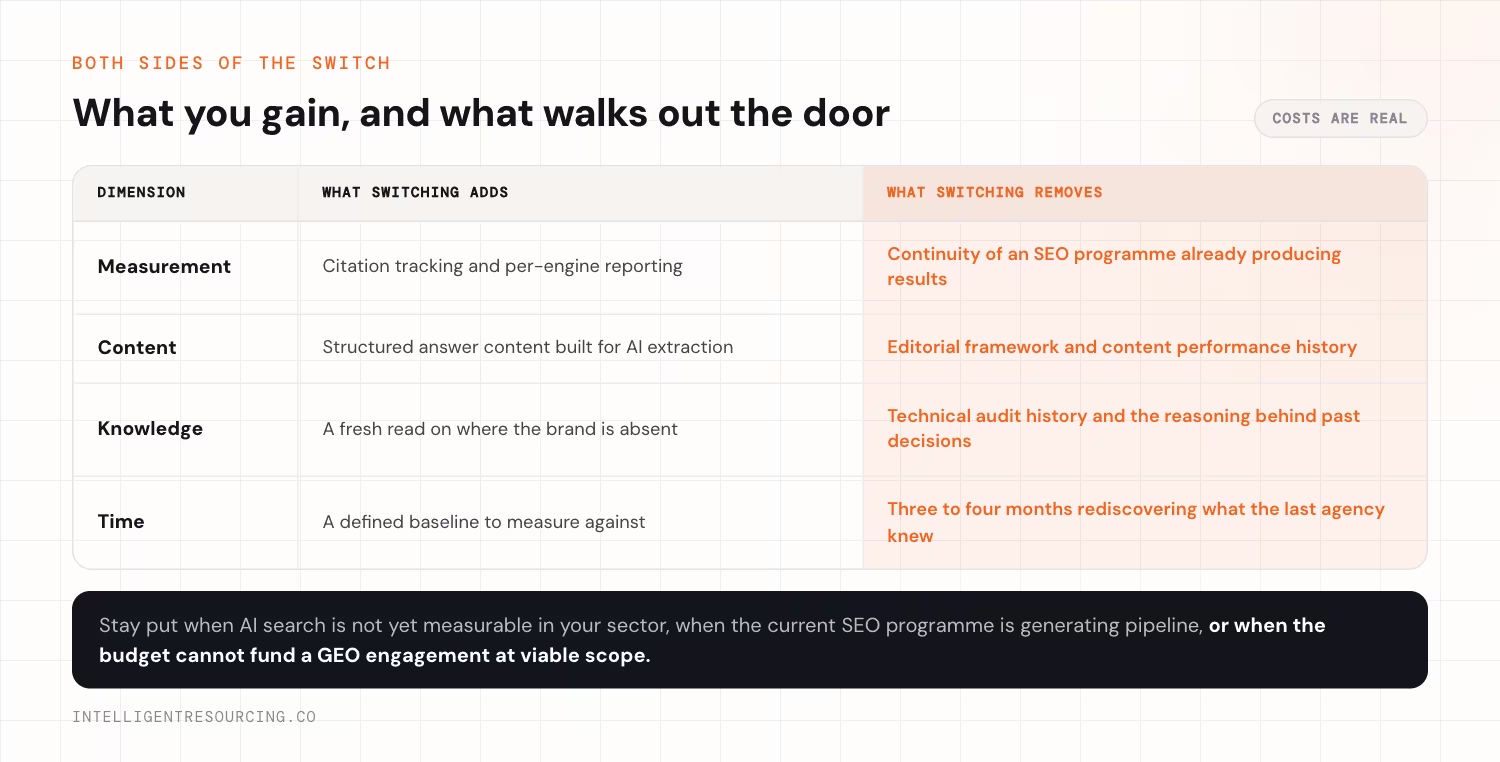
Switching to a GEO-capable agency adds citation tracking, structured answer content and per-engine measurement. It removes the institutional knowledge the current team holds, and the continuity of an SEO programme already producing results. Both are real costs, and the second is routinely underestimated.
An agency that has worked a domain for 12 to 36 months holds technical audit history and the reasoning behind past decisions, keyword strategy and competitive analysis, content performance data and the editorial framework around it, and backlink relationships. A new agency restarts from a knowledge gap however thorough the handover is. The first three to four months of any new engagement go on rediscovering what the last agency already knew.
The switch is justified when the missing GEO and AEO layer costs more in missed AI search opportunity than the transition costs in disruption. Three situations where staying put is the better call:
- AI search is not yet a measurable channel for the sector. Run the baseline first. If monitored buyer prompts return almost nothing from AI systems, the demand does not yet exist for this business.
- The current SEO programme is actively generating pipeline. Switching disrupts momentum. In a growth phase, the knowledge gap and technical risk outweigh adding GEO.
- Total digital spend cannot fund a GEO engagement at viable scope. Spreading a budget thinly across more services produces below-threshold results in all of them. A well-executed SEO programme beats underfunded GEO work.
What Should You Measure and Collect Before You Switch?
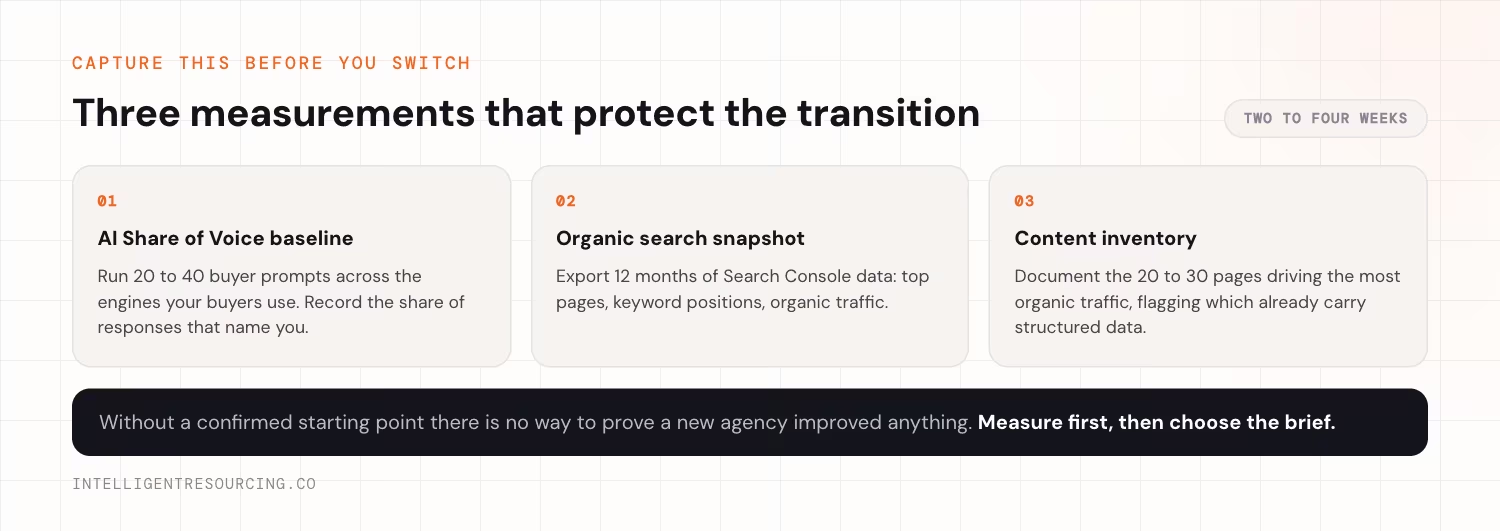
Establish the AI Share of Voice baseline first: the percentage of AI-generated responses that currently include the business when a buyer asks a relevant question. Without it there is no way to confirm whether a new agency improved anything. The measurement takes 2 to 4 weeks and needs a defined prompt set.
Three things to capture before the transition:
- AI Share of Voice baseline. Define 20 to 40 buyer prompts relevant to the business and run them across the AI engines your buyers actually use. Record the share of responses that mention, cite or recommend you. A do-it-yourself citation gap audit covers how to run this without a vendor.
- Organic search snapshot. Export 12 months of Google Search Console data: top pages, keyword positions, organic traffic. The incoming agency needs this to know what not to break.
- Content inventory. Document the 20 to 30 pages driving the most organic traffic, flagging which are optimised for traditional search only and which already carry structured data, clear definitions or question and answer formatting that AI systems extract.
The handover itself is not complete until the incoming agency can answer what was working, what was failing, and why past decisions were made. That means admin access to Search Console and Analytics rather than view-only, keyword position history, technical audit records from the last 12 to 24 months, the keyword strategy and the reasoning behind it, content briefs and editorial calendar, link acquisition records, structural decisions such as redirects and canonical tags, and the known technical issues that were never addressed, with the reasons.
Comparisons
The agency question is easier to answer once the number exists. Measure AI Share of Voice first, then pick the brief that closes the gap it exposes. Book a call with Intelligent Resourcing.
FAQs
What is the difference between GEO and AEO?
Generative engine optimisation targets visibility in AI-generated overview responses, the paragraph answers assistants produce when a user asks a question. Answer engine optimisation structures content so assistants extract specific facts, definitions or steps as direct answers. GEO focuses on brand mention, AEO on citation. The 2 are complementary and typically run together.
Does Concise Digital offer GEO or AEO?
Concise Digital does not offer GEO or AEO as managed services. Its menu covers traditional SEO, performance media, content and digital strategy. Adding AI search visibility requires a separate provider or a different agency.
Does Intelligent Resourcing replace the full Concise Digital scope?
No. Intelligent Resourcing replaces the agency relationship for GEO and AEO only. It does not include traditional SEO, paid media or content at scale. Businesses that need those alongside GEO should evaluate Titan Blue or Bonfire instead.
How long does GEO take to show results?
Timelines vary by competitive density and content depth. AEO results appear faster: Titan Blue reports results within 4 to 8 weeks for structured answer content. Fuller citation share improvement across a non-branded buyer prompt set typically takes 3 to 6 months of consistent content and citation work.
What does a GEO engagement actually deliver?
The core deliverables are entity mapping, structured data implementation, content formatted for AI extraction, and citation building across the sources AI retrieval systems recognise. The output that matters commercially is citation share reported per engine, measured against a baseline taken before the work started.