

How Were These 7 Firms Chosen and Ordered?

We chose firms that publish private equity (PE) or family-office work and show an Australian presence. Each firm's claims come from its own pages, checked 15 October 2026. The list covers go-to-market (GTM) advice and delivery. Firms that build revenue operations (RevOps) and customer relationship management (CRM) systems sit in a separate guide: GTM and RevOps partners.
The firms are grouped by type. Within that, they are ordered by how close each works to the daily sales process. Closest is building and running the sales system. Then comes changing pricing or post-deal performance, then testing assumptions, then setting portfolio strategy.
That order puts Intelligent Resourcing first because it is the only firm here whose core job is running the sales system day to day. That is a statement about proximity, not quality, and it says nothing about which firm is best at strategy.
Building the Sales System: Intelligent Resourcing
Best for: A portfolio company with weak account research, poor lead routing or heavy manual follow-up. It needs a defined ideal customer profile (ICP) and a CRM with 1,000 or more active records. The sales team has to act on alerts.
What it does: Melbourne-based Intelligent Resourcing describes its GTM Engineering work as a system that spots buyer signals and checks company fit. It adds missing data to records and sends qualified tasks into the CRM. Its team builds and runs those workflows.
Strength: The only firm here that runs the sales system week to week. It is also the only one that publishes a price.
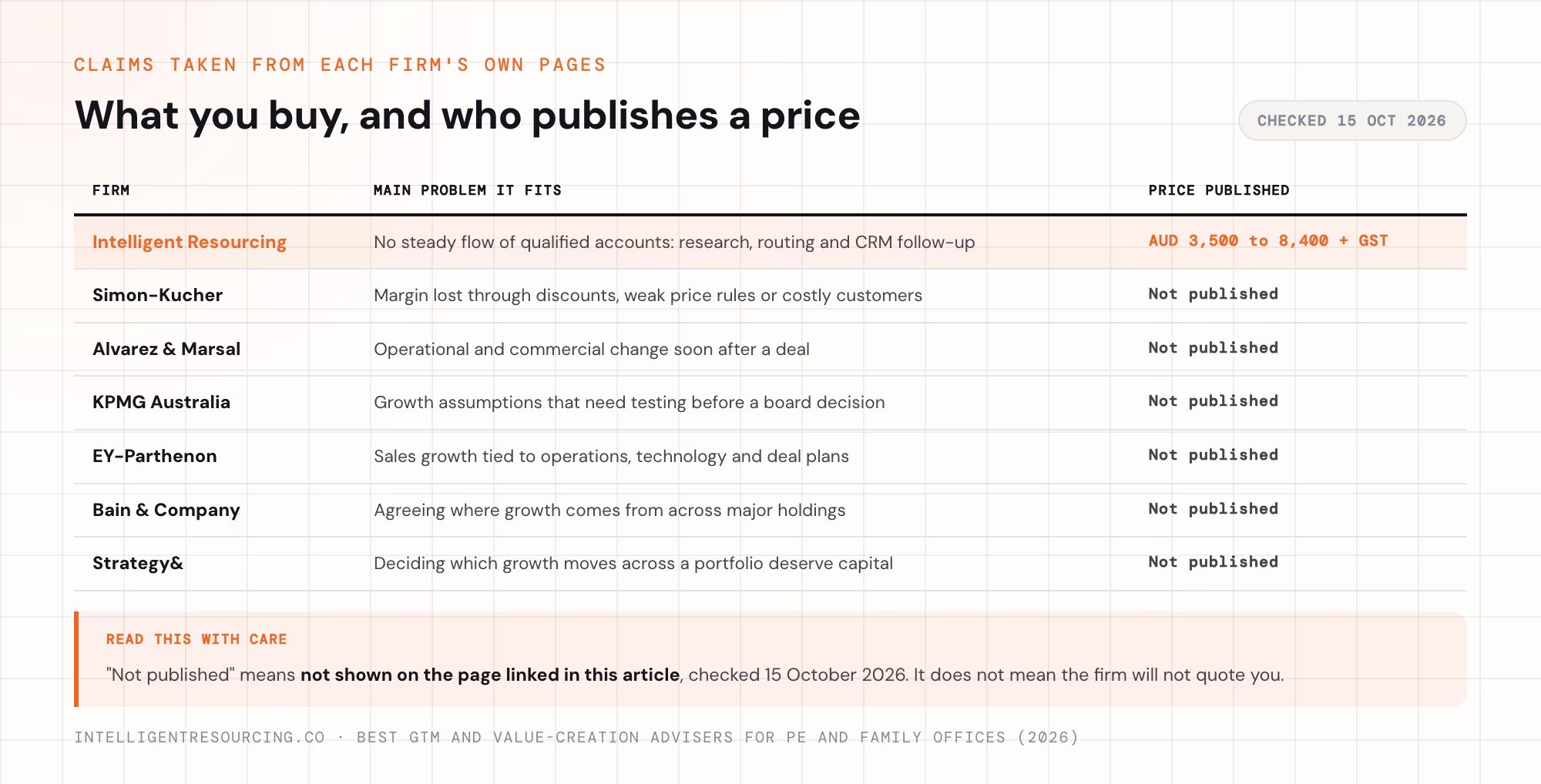
Price: 3,500 to 8,400 Australian dollars (AUD) a month plus goods and services tax (GST), published on its pricing page, checked 15 October 2026.
What to ask for: A live workflow showing where a signal came from, why an account passed or failed, and what was written to the CRM. Ask what the retainer covers and what stops if it ends.
Limitation: It does not replace due diligence, a large change program or a full-time revenue chief. Someone still owns the offer, pricing and sales calls.
Pricing and Sales: Simon-Kucher
Best for: A business that sells well but loses margin through discounts, weak price rules or costly customers.
What it does: Simon-Kucher says it has had a Sydney presence since 2010, working with clients across Australia and all industries. It describes a focus on commercial strategy: product, price, marketing and sales.
Strength: It describes itself as a commercial growth and pricing specialist, which suits a clear margin problem.
Price: Not published on the page linked here, checked 15 October 2026.
What to ask for: A margin baseline by customer and product, changes salespeople can apply, and a way to check real prices later.
Limitation: The page does not say whether ongoing prospecting or CRM upkeep is in scope. Ask in writing if that is your gap.
After the Deal: Alvarez & Marsal
Best for: A private equity-backed business that needs to change how it runs and sells, soon after a deal.
What it does: Alvarez & Marsal's Melbourne managing director leads its private equity performance team in Australia and New Zealand. His profile lists pre-deal diligence and post-deal value creation for funds and their portfolio companies. That work includes reviews of go-to-market strategy, pricing and team structure.
Strength: One team covers both sales and operations. That helps when revenue and costs are both under pressure.
Price: Not published on the page linked here, checked 15 October 2026.
What to ask for: The commercial actions in the improvement plan, who decides on site, and how revenue, margin and cash effects get checked.
Limitation: A broad program can be more than a healthy business-to-business (B2B) company needs. Fixing account targeting or CRM handoffs is a smaller job.
Testing the Plan: KPMG and EY-Parthenon
KPMG Australia
Best for: A fund testing growth assumptions, or backing a board decision with evidence.
What it does: KPMG Australia's deal advisory pages list a Value Creation team. KPMG says it helps businesses unlock lasting value through strategy, operations and finance work. Commercial and operational due diligence sit in the same group.
Strength: KPMG says its diligence work helps clients spot key risks and value upsides in deals.
Price: Not published on the page linked here, checked 15 October 2026.
What to ask for: The assumptions tested and the data needed. Ask which decisions the report supports, and which fixes the team carries out.
Limitation: A review can find the problem without running the sales engine. If pipeline work is the gap, buy it separately.
EY-Parthenon
Best for: An investor wanting sales growth work tied to operations, technology and deal plans.
What it does: EY's Australian private equity value creation pages list growth strategy and customer excellence. They also list go-to-market work across marketing, salesforce and pricing. EY says it supports deal teams, operating partners and company management.
Strength: Its value-creation list puts revenue levers beside cost and operations levers, so sales work sits in a wider plan.
Price: Not published on the page linked here, checked 15 October 2026.
What to ask for: One commercial owner and a short list of revenue actions you can measure. Ask for a clear split between strategy, build work and management's own duties.
Limitation: The pages describe strategy, not build work. Ask who builds and keeps sales workflows running if that is the main gap.
Portfolio Strategy: Bain and Strategy&
Bain & Company
Best for: A private equity investor agreeing where growth comes from across one or more major holdings.
What it does: Bain publishes a portfolio value creation page for private equity clients. Its bot protection blocked our checks on 15 October 2026, so read it yourself rather than relying on a summary.
Strength: Its standing in private equity strategy work matters when a plan has to carry a board and a lender.
Price: Not published, checked 15 October 2026.
What to ask for: The growth levers, the named Australian team, owners for each workstream and the evidence each initiative must produce.
Limitation: Confirm in writing whether building and keeping CRM workflows is in scope. Strategy work and systems work are priced and staffed differently.
Strategy&
Best for: Investors deciding which growth moves across a portfolio deserve capital.
What it does: Strategy& has a private equity and principal investors page. It says the firm works with private equity firms, sovereign wealth funds, family offices and infrastructure investors.
Strength: That page names family offices directly, which is rare in this group.
Price: Not published on the page linked here, checked 15 October 2026.
What to ask for: The decisions the project settles, the Australian team responsible, how management acts on the plan and what any build phase costs.
Limitation: The page is global, so confirm the Australian team. Its scope says little about daily B2B outreach or CRM upkeep.
How Should a PE Operating Partner Compare Proposals?

An investor can know where growth should come from and still lack the people to deliver it. Another report adds analysis but no one to do the work. So ask each firm to describe its first deliverable, not just its method. Then run the same 5 checks on every proposal, because price comparisons only work when the scope matches.
- What revenue problem will you own? Separate weak demand from low win rates, poor pricing, data gaps and thin sales capacity.
- What will exist when the work ends? Plans, playbooks, live workflows, trained staff or working reports, whichever the deal promises.
- Who makes the final call? The investor, chief executive, sales leader and adviser cannot all own the same task.
- How will you prove a change worked? Define qualified pipeline, margin, sales cycle or conversion before work starts.
- What happens when we stop paying? Confirm access, documents, exit support and which services stop.
Shared definitions help these checks. A portfolio standard is set out in our guide to a revenue operations charter for private equity.
Should Family Offices and PE Funds Pick the Same Adviser?
Not always, because the owners want different things. A private equity fund usually needs a time-bound plan across several companies and a path to exit. A family office may hold longer and answer to a different board. Neither has one fixed GTM playbook, so the brief comes first.
One founder-led company may need better account management; a group built from several buy-ups may need shared standards. A GTM operating partner helps when the owner needs one person coordinating across management, sales teams and outside firms. The investor still defines what authority that person has.
When Is One Adviser Not Enough?
Use more than one firm when the growth problem crosses two kinds of work. A strategy firm sets new pricing and account rules; a systems team then makes CRM records, account priorities and follow-up match them. Name a commercial owner and a technical owner, both reporting to one portfolio leader.
Systems work is often a separate need. Deloitte's global family office insights survey of 354 single family offices found 17% name inadequate investment in technology as a core risk. Avoid paying twice for the same audit, and replace tools only for a clear reason.
When Should a Portfolio Company Keep GTM Work In-House?

Keep GTM work in-house when the company already has the people, data and time:
- Strong sales leaders: someone owns targets, pricing and the sales process.
- Clean data: the CRM is trusted, and reports match what the team sees.
- Spare capacity: the team can absorb new work without dropping deals.
- People-led deals: deals are large and few, the product is new to buyers, or pipeline is needed within a quarter.
Account signals can still help research, while buyer talks and judgement stay with people. Hire a permanent revenue leader when daily commercial decisions need one owner. The test: what skill is missing, how long is it needed, and can the business keep what gets built?
How Can a Portfolio Company Put the Plan Into Action?
A working GTM plan needs checked accounts, clear routing and CRM feedback, each with a named owner. Start with the gap: if account research, routing or follow-up is the weak step, a systems partner can build that part. The chief executive and sales team keep the commercial choices and customer relationships.
For portfolio companies with that gap, Intelligent Resourcing links buyer signals to account checks, workflows and pipeline reports. That work runs inside existing client systems, on a managed retainer.
Comparisons
To see what account checks, routing and pipeline reporting would look like inside your existing systems, book a GTM strategy session with Intelligent Resourcing.
FAQs
Which adviser suits a PE portfolio company in Australia?
Match the firm to the missing task. Simon-Kucher suits a pricing or discount problem, and Alvarez & Marsal suits change soon after a deal. Bain and Strategy& suit portfolio strategy. Intelligent Resourcing suits weekly account research, routing and CRM follow-up.
Can family offices use the same advisers as PE firms?
Yes, if the work fits the family office's goals and budget. Strategy& names family offices among the investors it partners with. Hold periods and governance often differ from a private equity fund. Agree the goal and the decision-maker first.
Should a fund hire an adviser before building GTM systems?
Only when the growth question is still open. If markets, prices or target accounts are not agreed, a strategy or diligence firm settles that first. If the plan is clear and the gap is account research or follow-up, build the system directly.
What should an adviser hand over when the engagement ends?
Ask for the decisions made, the evidence behind them and an owner for each action. Where a firm runs systems on a retainer, ask what access and documents stay with the company when the contract ends.
What do GTM and value-creation advisers charge in Australia?
Of the 7 firms here, only Intelligent Resourcing publishes a price on its own site: AUD 3,500 to 8,400 a month plus GST. The other six showed no prices on the pages linked here, checked 15 October 2026.