

Which RevOps Work Suits an Agency, and Which Suits a Hire?
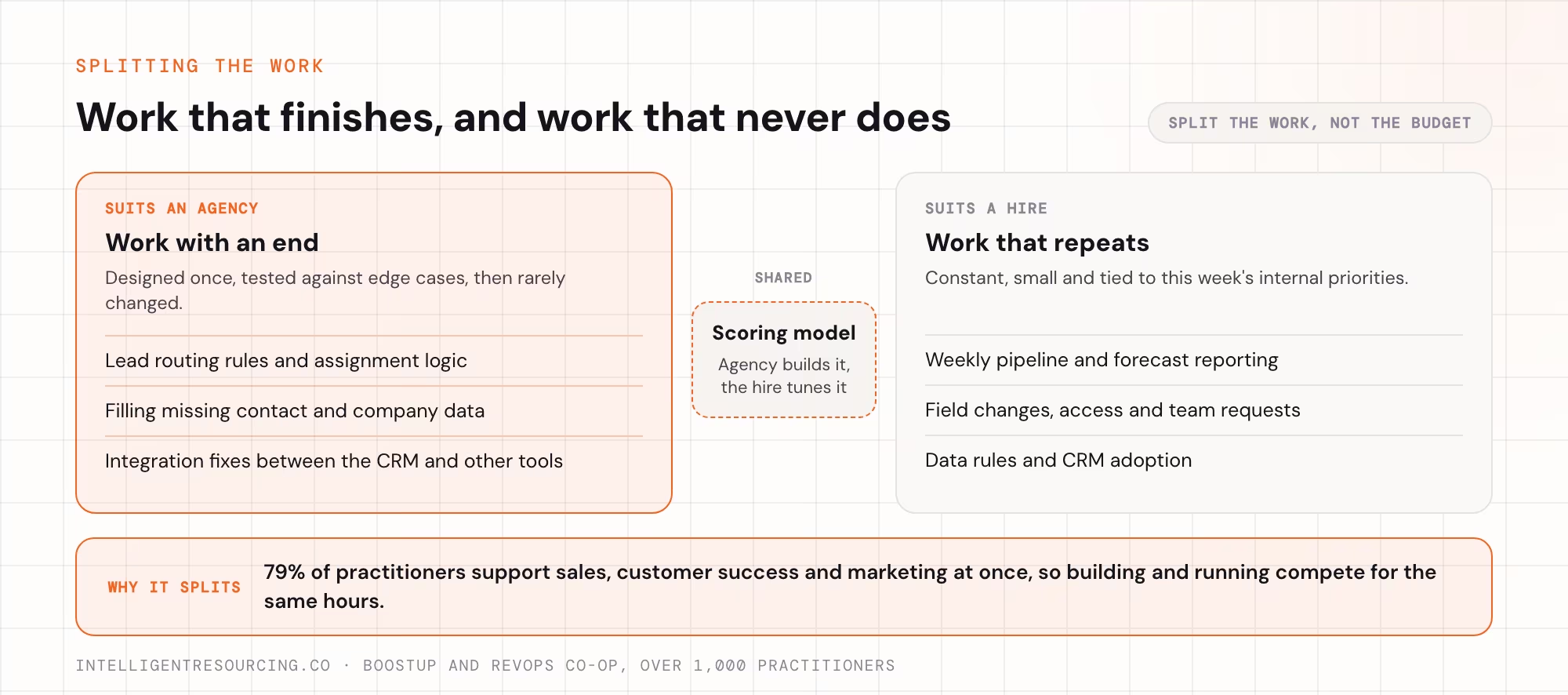
An agency suits project work with a clear end: lead routing, filling data gaps, scoring and fixing tool links. A hire suits the work that never finishes: weekly reports, forecast support, sales team requests and customer relationship management (CRM) data rules. The split matters because revenue operations (RevOps) covers more ground than one person can build and run in the same week.
When BoostUp and RevOps Co-op surveyed over 1,000 practitioners, they found 79% support sales, customer success and marketing at once. That breadth means the build and the daily running compete for the same hours.
| Work | Better fit | Why |
|---|---|---|
| Lead routing rules and assignment logic | Agency | Designed once, tested against edge cases, then rarely changed |
| Filling in missing contact and company data | Agency | Needs provider and cost testing across many builds |
| First lead and account scoring model | Agency builds, hire tunes | The first model needs design, and tuning needs local context |
| Integration fixes between the CRM and other tools | Agency | The same failures repeat across companies |
| Weekly pipeline and forecast reporting | Hire | Needs someone in the room every week |
| Field changes, access and team requests | Hire | Constant, small and tied to internal priorities |
| Data rules and CRM adoption | Hire | Only works when someone inside enforces it |
Automation helps a RevOps person rather than replacing one, because someone still has to own the system each week. Staffing a whole revenue team after a raise is a wider call, covered in our guide to building or outsourcing that first team.
What Does an In-House RevOps Hire Cost in Australia?
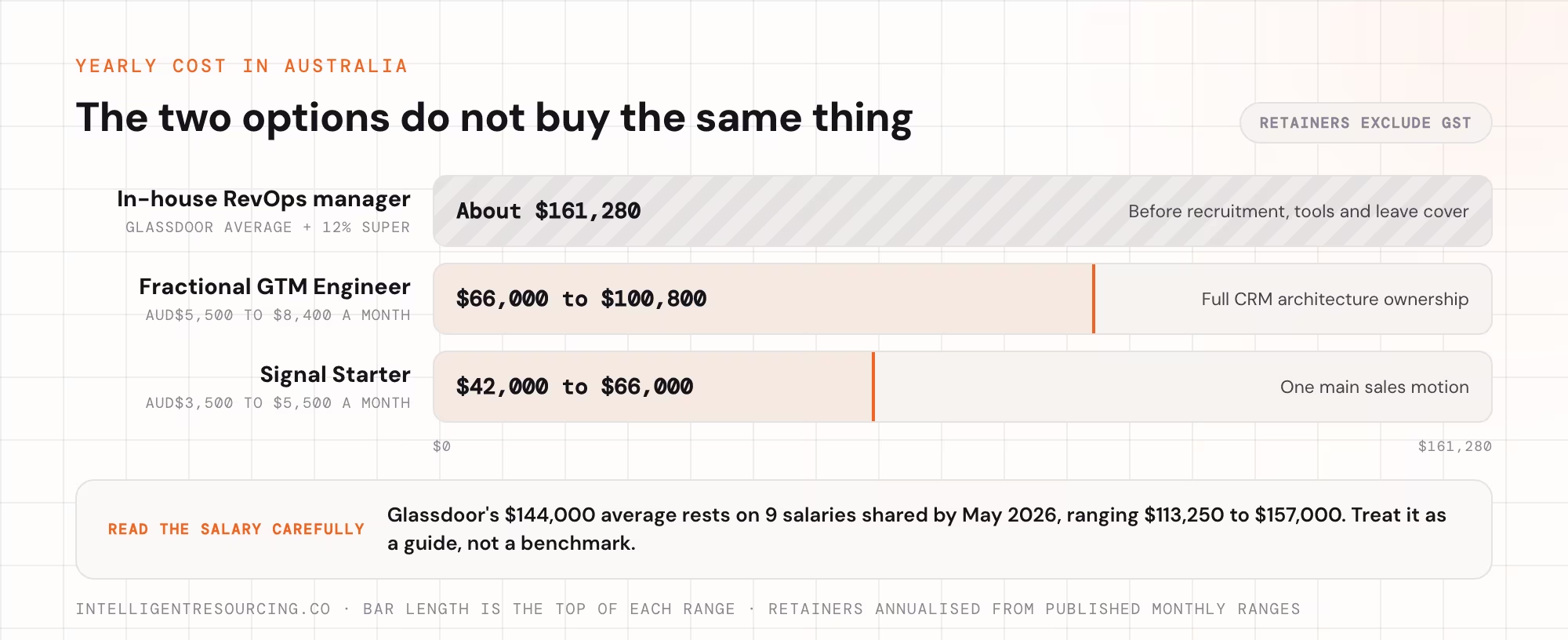
An in-house RevOps manager in Australia costs about $161,000 a year before tools and recruitment, if you use Glassdoor's average of $144,000 plus 12% super. An agency retainer costs less per year and buys a team to build your systems, but nobody from it sits in your weekly meetings.
Treat that average as a guide rather than a benchmark. Glassdoor bases it on 9 salaries shared by May 2026, with a range from $113,250 to $157,000, so a single new submission can move it.
The Australian Taxation Office (ATO) set the super guarantee at 12% for 1 July 2025 to 30 June 2026. Compare that with the go-to-market (GTM) engineering retainer ranges listed on our pricing page, which exclude goods and services tax (GST) and are annualised below from their monthly figures:
| Option | Monthly cost | Yearly cost | What you get |
|---|---|---|---|
| In-house RevOps manager, on Glassdoor's average | About $13,440 | About $161,280 | One person, before recruitment, software, training and leave cover |
| Signal Starter retainer | AUD$3,500 to $5,500 plus GST | $42,000 to $66,000 | CRM, enrichment and signal workflows for one main sales motion |
| Fractional GTM Engineer retainer | AUD$5,500 to $8,400 plus GST | $66,000 to $100,800 | Full CRM architecture ownership across a wider scope |
Each option buys something different:
- A hire gives you one person's full working week.
- A retainer gives you a scoped build from a team that has built these systems before.
- Both in sequence gives you a build, then an owner.
Price the job you need done, then compare.
How Long Before Each Option Ships Working Automation?
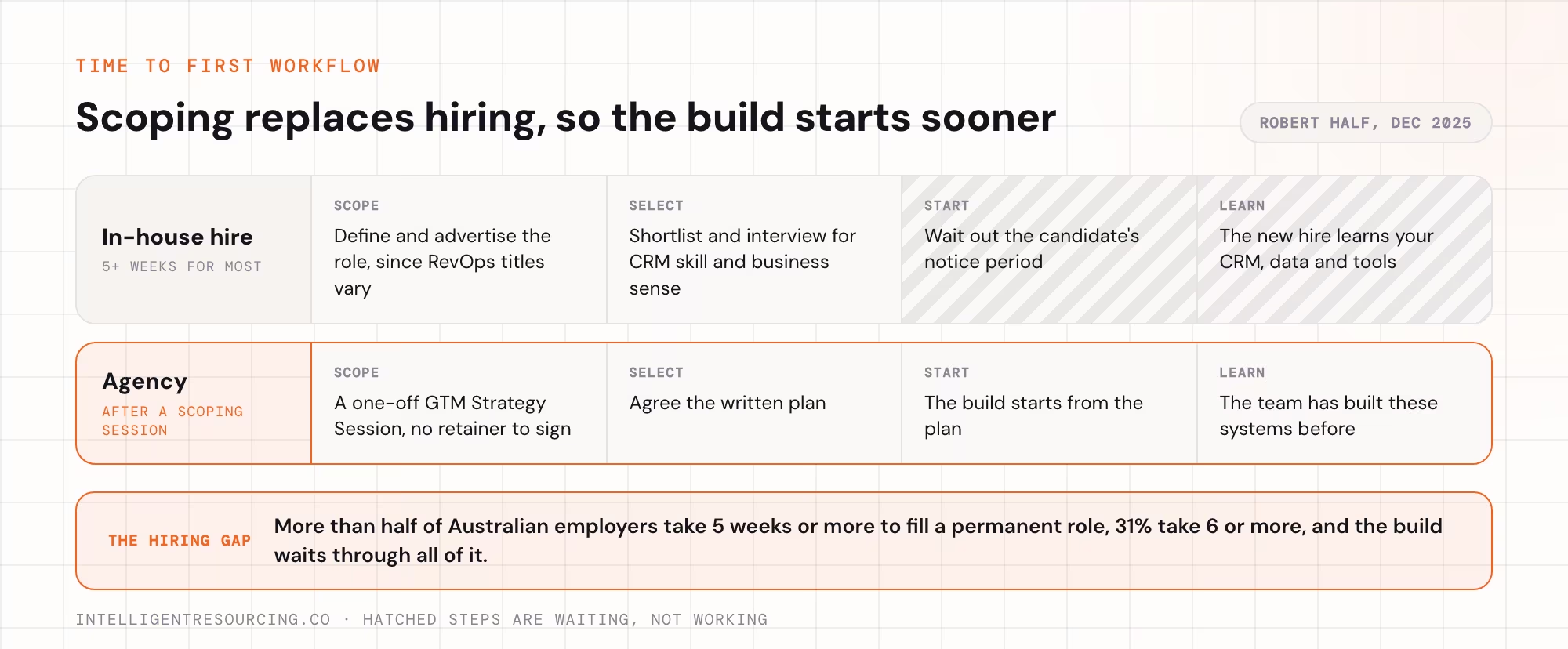
An agency can start building after a scoping session, while a hire has to be found, released from their current job and onboarded first. Robert Half's December 2025 poll found most Australian employers take 5 weeks or more to hire permanent staff, and the build waits through all of that time.
HRD Australia reported that 31% take 6 weeks or more and another 19% take 5 weeks, with attracting candidates the top cause, named by 60%.
The 2 paths before the first workflow ships:
| Stage | In-house hire | Agency |
|---|---|---|
| Scope | Define and advertise the role, since RevOps titles vary | A one-off GTM Strategy Session at AUD$1,500 plus GST, with no retainer to sign |
| Select | Shortlist and interview for CRM skill and business sense | Agree the written plan |
| Start | Wait out the candidate's notice period | The build starts from the plan |
| Learn | The new hire learns your CRM, data and tools | The team has built these systems before |
The agency path starts faster, because scoping replaces hiring. Our GTM engineering builds start from that written plan.
What Happens When Your Only RevOps Person Resigns?
When a solo RevOps person resigns, what they know about routing, scoring and tool links often leaves with them. Revenue Wizards' 2025 report found 23% of RevOps practitioners work alone. Without documentation, the next hire spends their first months working out old workflows before they can improve them.
When Revenue Wizards surveyed 180 professionals across 28 countries, it found 23% are solo RevOps practitioners, some in firms with over 1,000 staff.
For those teams every resignation is a system risk, and these are the parts that break first:
- Routing rules held in one head. Leads start landing with the wrong owner, and nobody knows which rule changed.
- Workflows with no failure alerts. An integration stops syncing, and nobody sees it for weeks.
- Field definitions nobody wrote down. The new hire cannot tell which of 3 "lead status" fields the reports use.
A good agency build is documented by default, because more than one person has to support it.
Check this when you shortlist, because our list of RevOps automation agencies in Australia shows what each one delivers.
Which Option Fits the Moment Your Team Is In?
The right choice depends on what just happened in your business. A resignation, a new CRM, a growing sales team or a new artificial intelligence (AI) workflow each needs a different first step. Use the table below to match your moment to a first step.
| Your moment | Start with | Why |
|---|---|---|
| Your RevOps person just resigned and little is documented | Agency, then hire | Stabilise and document before a new person inherits it |
| You are migrating or rebuilding your CRM | Agency | A one-off build with a clear finish line |
| Your system works and needs a weekly owner | In-house hire | The build is done, and the gap is ownership |
| Your sales team is doubling this year | Both, in sequence | Routing and scoring need rebuilding before a hire can run them |
| You want to add AI steps to existing workflows | Agency | Few in-house teams have built these before |
| Your revenue team has no RevOps role yet | Agency retainer | Scope the work first, and a retainer covers a part-time load |
The AI row reflects a skills gap: in Default's survey of more than 300 RevOps leaders, published June 2026, 18% named missing internal knowledge as their top barrier to AI. Only poor data quality was named more often, at 19%.
If your moment is a build, Intelligent Resourcing builds revenue operations systems and writes down how each one works.
You start with a fixed-price scoping session, and you can stop there if the plan shows a hire is the better fit.
How Does an Agency Hand a Built System to Your Hire?
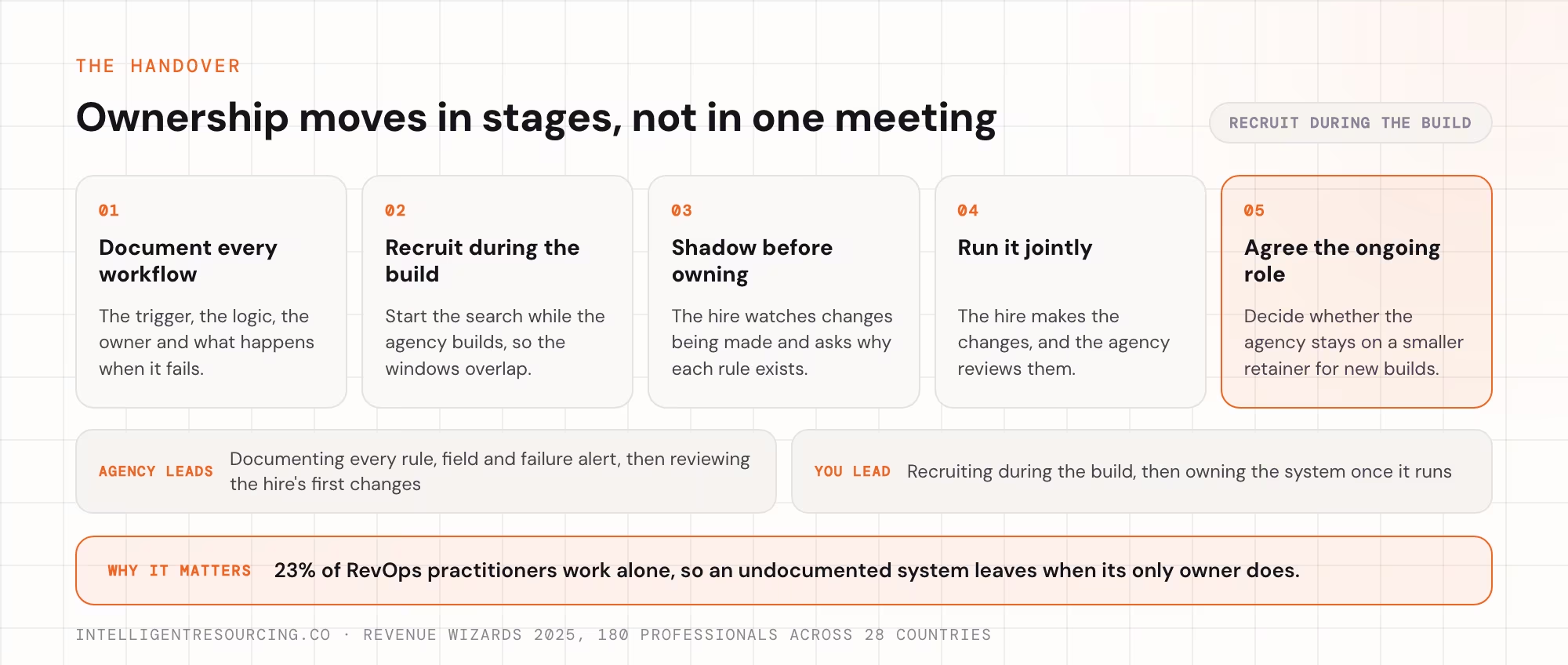
A clean handover moves ownership in stages: write it down, watch, run it together, then hand it over. The agency writes down every rule, field and failure alert. Your hire runs the system with support before running it alone. That stops the new build from resting on one person.
A handover plan in 5 steps shrinks that risk:
- Document every workflow. Record the trigger, the logic, the owner and what happens when it fails.
- Recruit during the build. Start the search while the agency builds, so the hiring window overlaps the work.
- Shadow before owning. The hire watches changes being made and asks why each rule exists.
- Run it jointly. The hire makes the changes, and the agency reviews them.
- Agree the ongoing role. Decide whether the agency stays on a smaller retainer for new builds.
Intelligent Resourcing builds next to your in-house lead, then hands over the system with documents and training.
The same build-then-own logic holds for marketing, and we weigh up marketing automation agencies against in-house teams in a separate guide.
Comparisons
A fixed AUD$1,500 plus GST scoping session with no retainer to sign. If the plan shows a hire is the better fit, you can stop there.
FAQs
How much does an in-house RevOps hire cost compared with an agency in Australia?
Glassdoor puts the average Australian RevOps manager salary at $144,000 a year, or about $161,000 with 12% super, on a thin sample of 9 salaries. Intelligent Resourcing's retainers run $42,000 to $100,800 plus GST a year. The two buy different things, so compare the job you need done before comparing the price.
Should we hire a RevOps person before or after an agency build?
Hire first if your automation already works and you need a weekly owner. Bring in an agency first if the system is new, broken or undocumented. Many teams recruit during the build, so the new hire takes over a working system.
What should a RevOps agency hand over at the end of a build?
Ask for a written guide to each workflow: what starts it, what it does and who owns it. Ask for a shadowing period and a stage of joint running. Agree in writing whether the agency stays on for new builds.
What happens to our automation if our RevOps person leaves?
Any routing rules, scoring logic or tool links nobody wrote down leave with them. Revenue Wizards found 23% of RevOps practitioners work alone, so this risk is common. Written guides and error alerts let the next person take over without starting again.
Does RevOps automation replace the need for a RevOps hire?
No. Automation takes over repeat tasks like data entry, sharing out leads and regular reports. A person still owns the rules, answers the sales team and decides what to change next.