

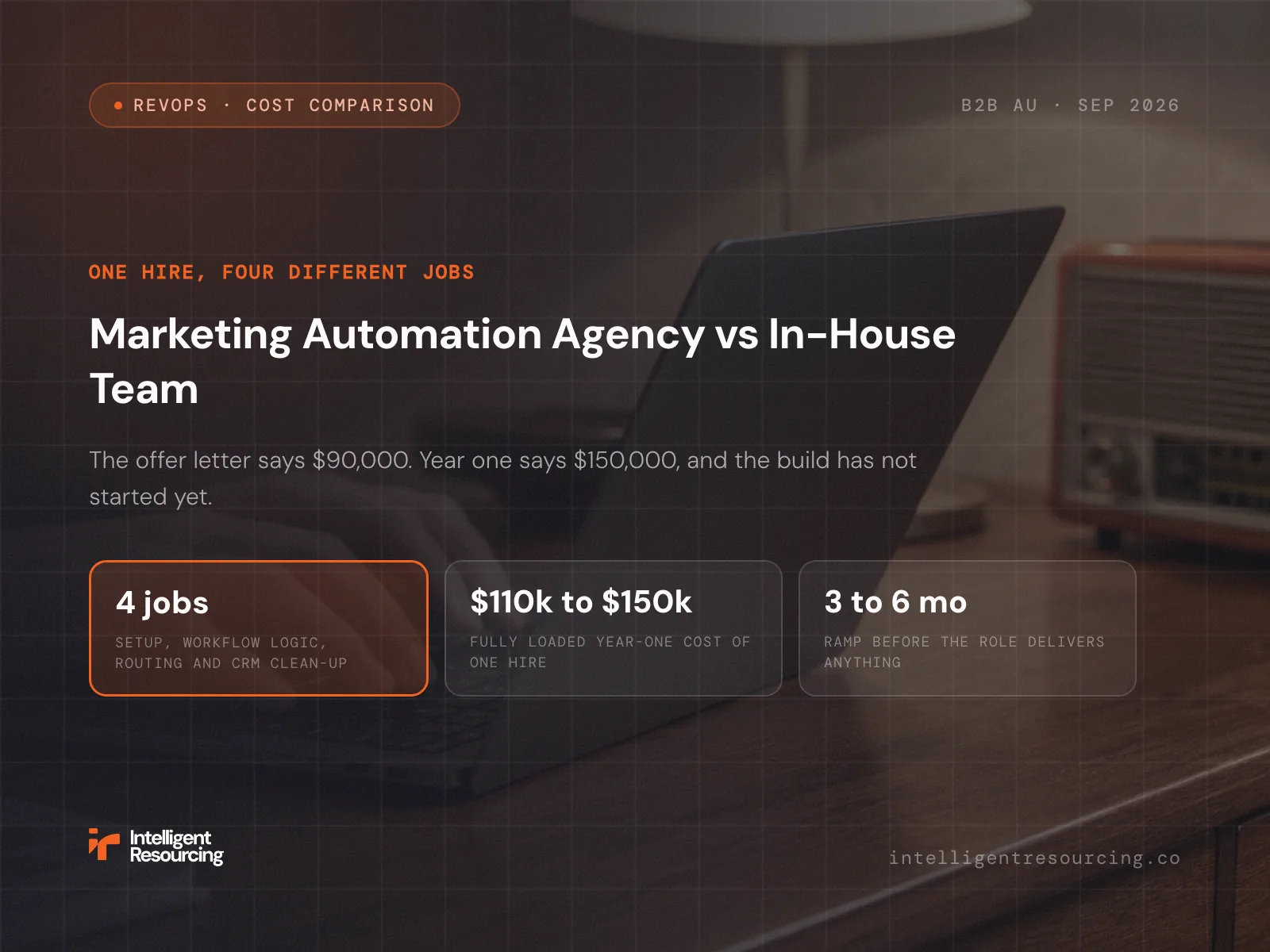
Is This Actually a Build-vs-Buy Question?
Most people frame this as in-house know-how versus outside flexibility. That framing skips the bigger, more immediate problem. One hire is being asked to do platform setup, workflow logic, lead routing and CRM clean-up, all at once, and those are genuinely different skills. If the term "marketing automation" itself still needs a plain explanation, our guide to what B2B marketing automation is covers the basics.
An in-house hire does bring something an agency can't replace. That person sits inside your team, learns your systems, and works only for you. That's worth paying for once automation is a steady, high-volume job. But most B2B teams aren't there yet.
Asking one all-rounder to cover four jobs from day one is exactly how a fully staffed build ends up stalled. Intelligent Resourcing runs full marketing automation as a Signal-Led Growth system, built the way our Marketing Automation services describe. HubSpot, Clay and n8n are each handled by someone who owns that one piece, not one person trying to own all four.
Skill Depth: Four Jobs, Rarely One Hire
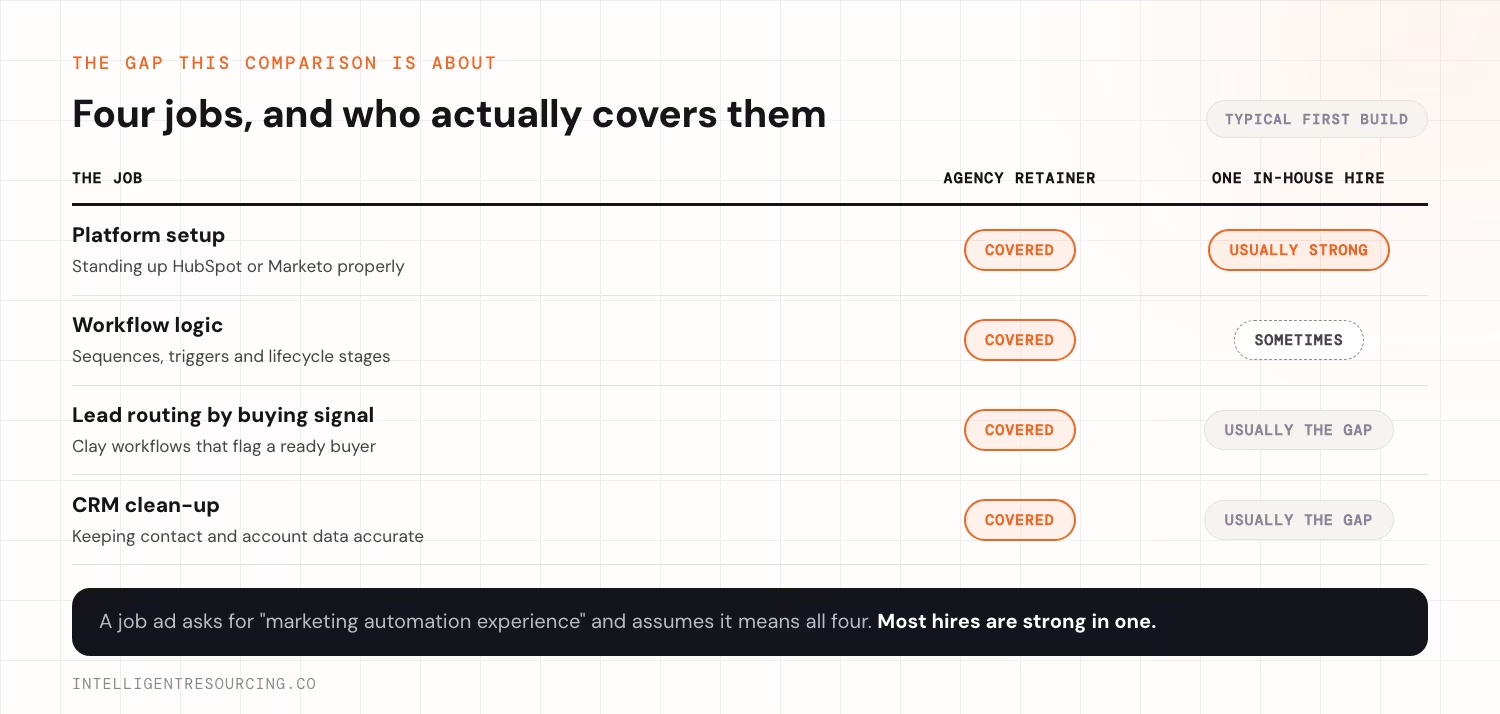
Marketing automation calls for four skills, and most in-house hires end up strong in one and weak everywhere else:
| Job | What it means |
|---|---|
| Platform setup | Setting up HubSpot or Marketo |
| Workflow logic | Building sequences, triggers and the stages a lead moves through |
| Lead routing by buying signal | Clay workflows that flag when someone is ready to buy |
| CRM clean-up | Keeping contact and account data accurate |
A job ad rarely spells this out. It just asks for "marketing automation experience", commonly at the $80,000 to $100,000 mark that SEEK's marketing automation listings advertise. An agency retainer avoids the problem by design: it swaps one all-rounder for a dedicated Clay workflow team. Platform setup, workflow logic and CRM clean-up all run side by side, instead of queuing behind one person's to-do list.
What Does a "Close But Not Quite" Hire Look Like?
A Series B SaaS company hires a "marketing operations manager" expecting full automation delivery. Three months in, HubSpot is set up and email sequences are running. But the part that was meant to flag ready buyers and hand them to sales was never built. The Clay workflows and CRM routing sit outside what the hire was actually set up or skilled to do.
Sales look the same as they did before the hire started. The problem wasn't a bad hire. It was a role set up for one job, given work that needed all four.
The tools were right, the job description was wrong. This is exactly the skill-depth problem described above, not a hiring mistake but a set-up mistake.
Cost: Agency Retainer vs Full In-House Salary
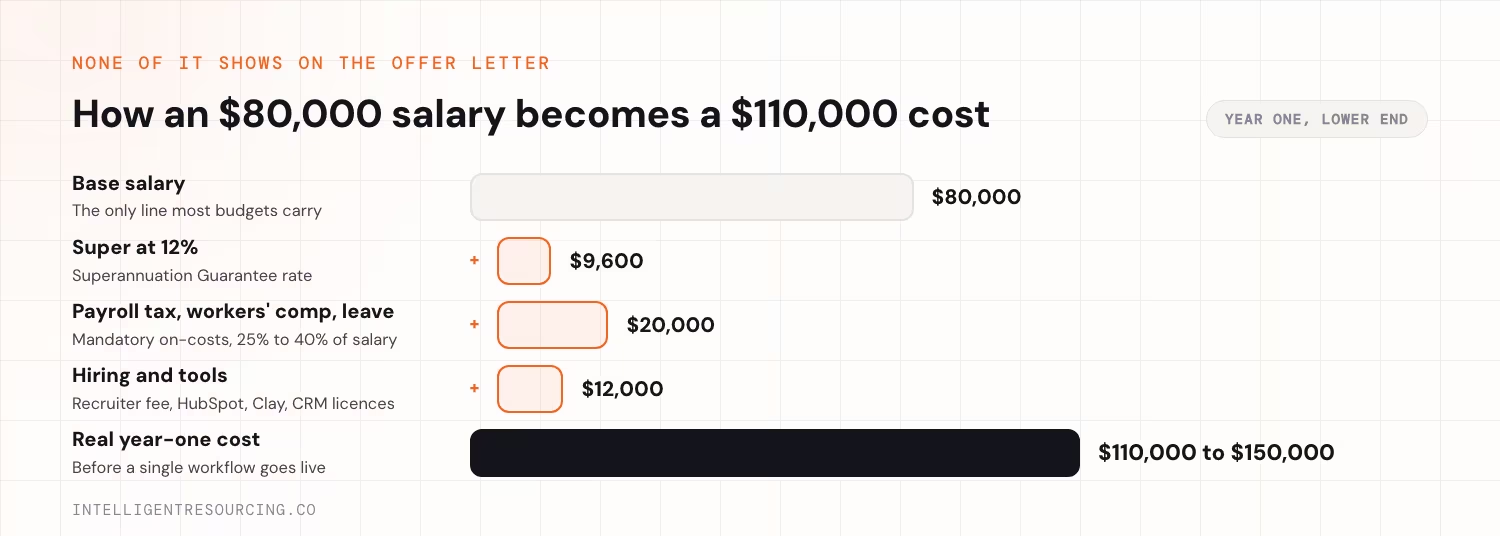
Covering four jobs with one hire also costs more than the job ad suggests. The base salary typically sits at $80,000 to $100,000, and the exact figure depends on experience and how many platforms are involved. Add the usual extra costs and the full year-one figure lands at $110,000 to $150,000, well above what most budgets plan for.
What that figure is made up of:
- Base salary: $80,000 to $100,000
- Super at 12%: the current Superannuation Guarantee rate confirmed by the Australian Taxation Office, adding roughly $9,600 to $12,000
- Payroll tax, workers' compensation and leave: Compono's employer cost data puts these mandatory on-costs, super included, at roughly 25% to 40% on top of salary, depending on the state and industry
- Hiring costs: 15% to 20% through a recruiter, or several weeks of your own team's time
- Tools: HubSpot, Clay and CRM clean-up licences
None of this shows up on the offer letter. Most budgets are built on the salary line alone. That line covers roughly two-thirds of what the hire actually costs in year one, for one job rather than four.
A retained agency fee replaces that whole stack: no super, no hiring cost, no separate tool budget. The platforms and workflows come built into the deal.
Speed to Launch: The Cost of Waiting vs a Team Already Built
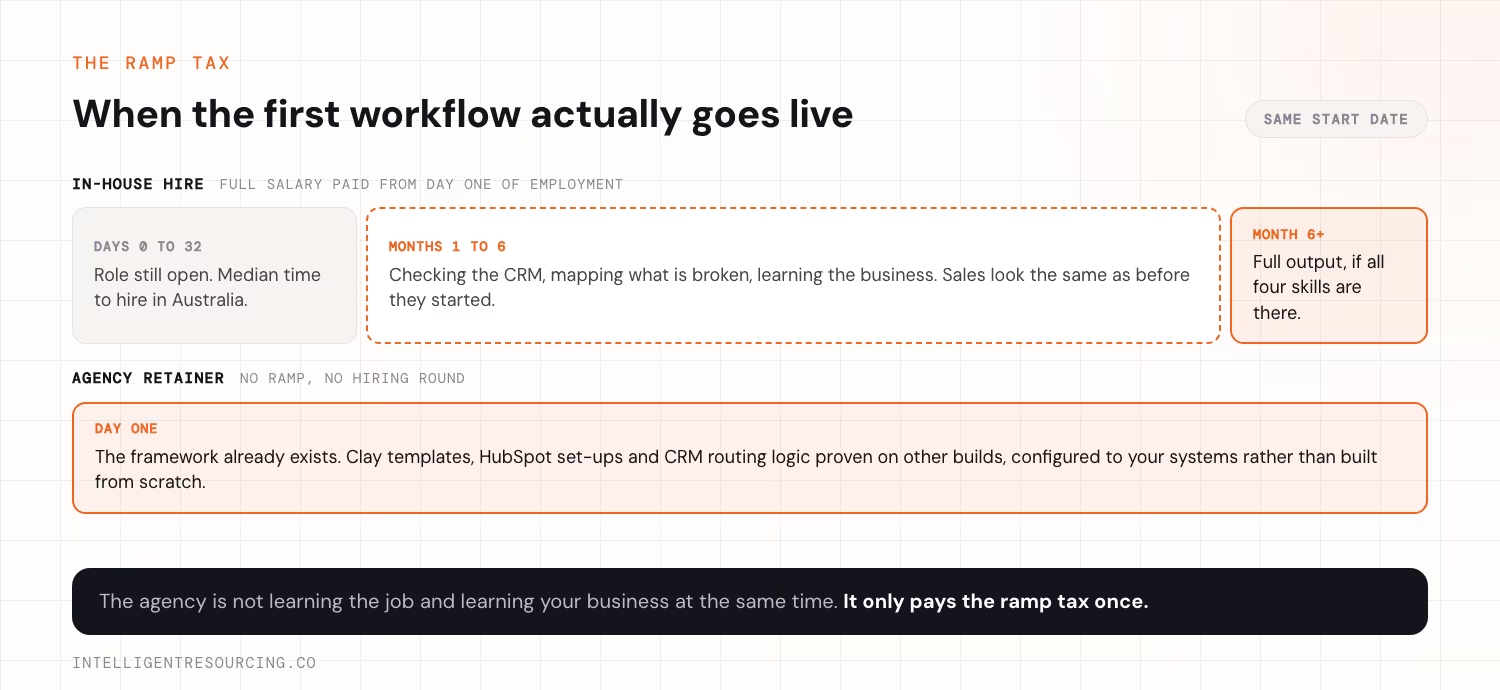
The skills gap gets worse before it gets better, because a new hire spends the first stretch learning your business, not closing the gap. Even getting to day one takes time. SmartRecruiters' Australia benchmarks put the median time to hire in Australia at 32 days, the lowest of the five countries measured, and that is before the ramp-up itself even starts.
- Days 0 to 32 (in-house): the role is still open. Nothing has started.
- Months 1 to 6 (in-house): the new hire checks the CRM and maps what's broken. Sales look the same as they did before they started, and you're paying full salary the whole time. Think of it as a ramp tax: the cost you carry before a hire delivers anything, not after.
- Day one (agency): the framework already exists. It gets set up for your systems using Clay templates, HubSpot set-ups and CRM routing logic already proven on other jobs, not built from scratch.
The agency doesn't pay that ramp tax twice, because it isn't learning the job and learning your business at the same time.
Scalability: Agency Growth vs a Fixed Headcount
An in-house hire has a hard limit that makes the skills gap worse over time. Agency capacity grows differently:
- In-house, more work: a new hire, a new onboarding, a new ramp-up, and the same four-job gap repeating every time the work grows.
- Agency, more work: more capacity added to a system that already exists, not a new one built from zero.
- In-house, a second brand: a second hire repeats both the delay and the salary cost.
- Agency, a second brand: the work scales without a new hiring round in between.
That limit flips once automation is steady, high-volume work across several brands or products. At that point, an in-house expert's know-how builds up and starts paying for itself against a growing agency bill.
Who Should Choose What
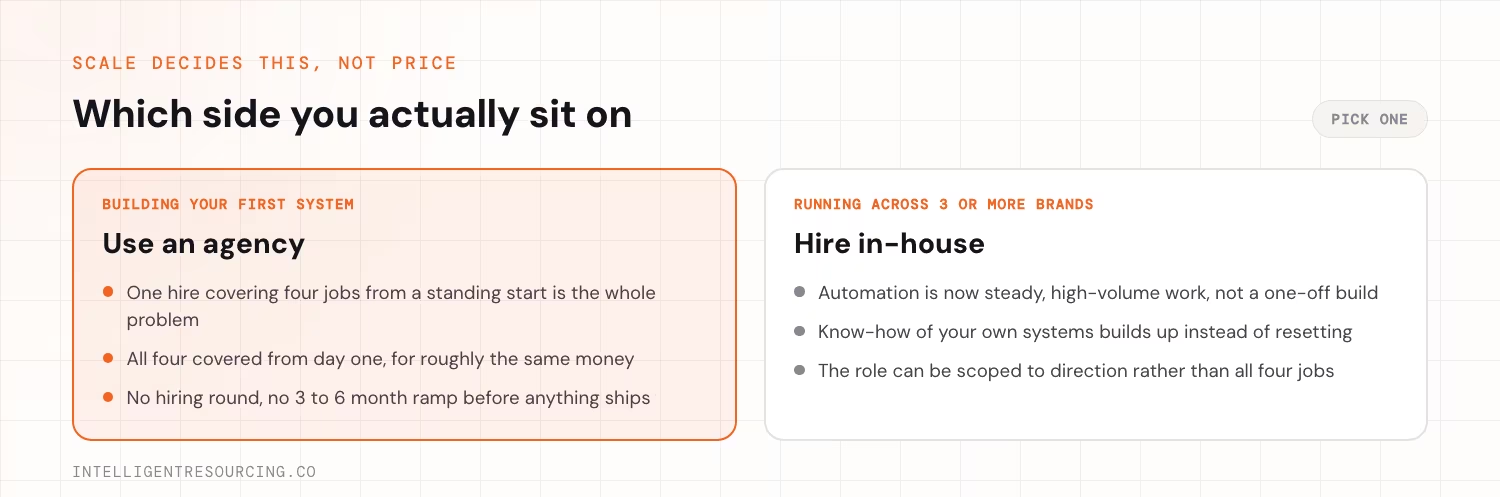
If you're building your first automation system: use an agency. One hire covering four jobs from a standing start is the whole problem this comparison is about. A Signal-Led Growth contract buys the coverage one all-rounder can't, for roughly the same money. For a wider view, see our best marketing automation agencies in Australia shortlist.
If automation already runs across 3 or more brands: think about an in-house expert once the workload justifies it. At that scale, know-how of your own systems starts to matter more than agency flexibility. The role can also be scoped to direction only, closer to what a GTM Engineer does than to running all four jobs day to day.
If you've already chosen Intelligent Resourcing: good. Next, work out which job goes live first: lead routing, CRM clean-up, or the automation sequences themselves.
The Cost of Waiting
Every month spent budgeting for a hire is a month lost. So is every month spent waiting for a new hire to close the skills gap. LinkedIn's B2B Institute, in joint research with the Ehrenberg-Bass Institute, found 95% of potential B2B buyers are not ready to buy today, leaving only around 5% in-market at any given time. That's exactly why the missing skills, lead routing especially, cost more than they look like they cost. Miss a buyer's short window once, and it doesn't come back.
That gap doesn't close once a hire is finally up to speed in all four areas. It builds up against whichever business had full coverage running first, and neither delay is recoverable once a competitor closes it.
Comparisons
Wondering what a marketing automation build would actually cost before you commit either way? Get the figures against your own stack.
FAQs
Is it cheaper to hire in-house or use a marketing automation agency?
In year one, an agency is usually cheaper once you work out the full cost of an in-house hire properly. An $80,000 to $100,000 base salary becomes $110,000 to $150,000 once super, hiring costs and tools are added. A retained agency fee already includes all of that, and covers every job rather than one.
How long does it take an in-house marketing automation hire to become productive?
Usually 3 to 6 months. The hire needs time to check the existing CRM, map broken workflows and learn the business before the first automation goes live. Sales stay flat during that time.
Can one in-house hire cover HubSpot, Clay and CRM routing at once?
Rarely, at a senior level. Platform setup, lead routing and CRM clean-up are different skills. Most in-house hires are strong in one and weak in the others, which is the gap this whole comparison is about.
When does hiring in-house make more sense than an agency?
Once marketing automation becomes a steady, high-volume job running across 3 or more brands or products. At that scale, the know-how a dedicated hire builds up starts to outweigh the benefit of a team.
What does a marketing automation agency retainer typically include?
A retainer usually covers platform set-up across HubSpot and Clay, CRM clean-up, routing logic and ongoing upkeep, delivered as one system rather than one role split across four jobs.
Does a marketing automation agency replace every in-house marketing role?
No. Most clients keep a marketing coordinator or CRM owner in-house for day-to-day requests. The agency runs the platform build, lead routing and CRM setup, freeing in-house roles to focus on content and campaigns rather than technical work.