

What does B2B marketing automation actually do?
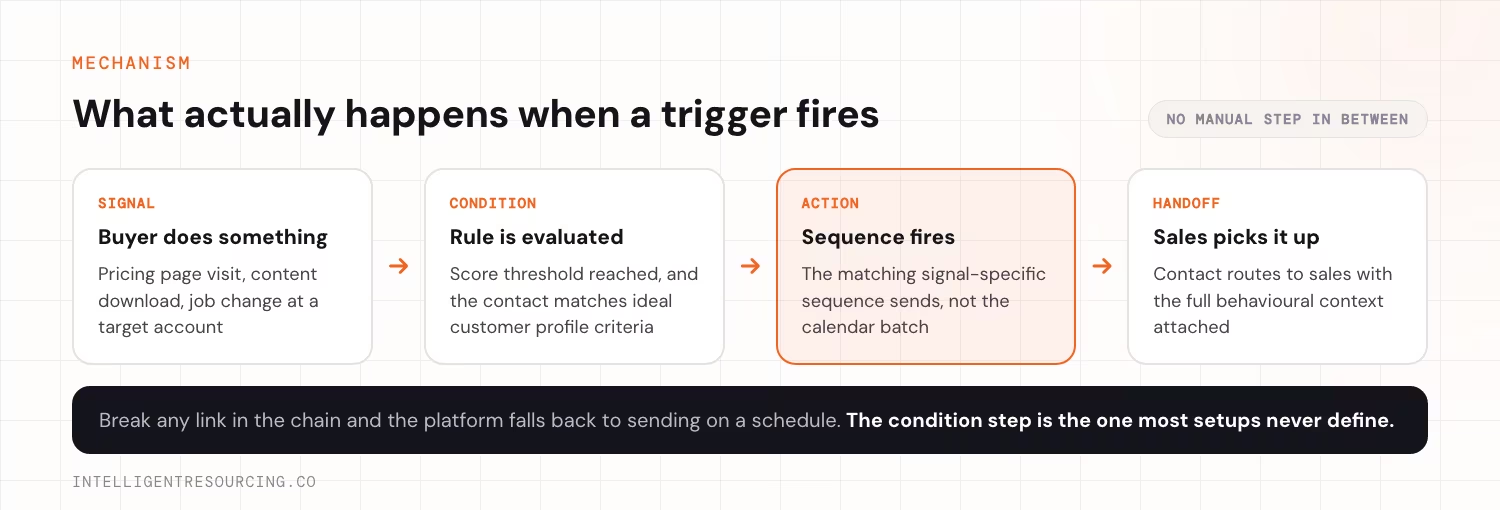
B2B marketing automation executes marketing tasks when a lead meets a defined condition: an email open, a pricing page visit, a score threshold, or a CRM field change. Platforms including HubSpot, Marketo, and ActiveCampaign handle the execution. The team defines the trigger criteria and the response; the platform runs them at scale without manual input per contact.
Core functions
| Function | What it does |
|---|---|
| Lead nurturing | Sends content and follow-up based on contact behaviour, not a fixed calendar |
| Lead scoring | Assigns points for defined actions and flags contacts at a sales-ready threshold |
| CRM routing | Moves a contact from marketing to sales when they qualify, with full behavioural context attached |
| Behavioural triggers | Fires a specific action when a contact meets a defined condition: pricing page visit, 3 email opens in a week, demo call to action (CTA) click |
Why the shift to personalised messaging is accelerating
Salesforce's 2026 State of Marketing found that 83% of marketers recognise the shift toward personalised, two-way messaging. Only 1 in 4 are satisfied with how their teams use data to act on those moments. The gap between recognising the need and building a system to deliver it is exactly what B2B marketing automation is designed to close.
How is B2B marketing automation different from B2C automation?
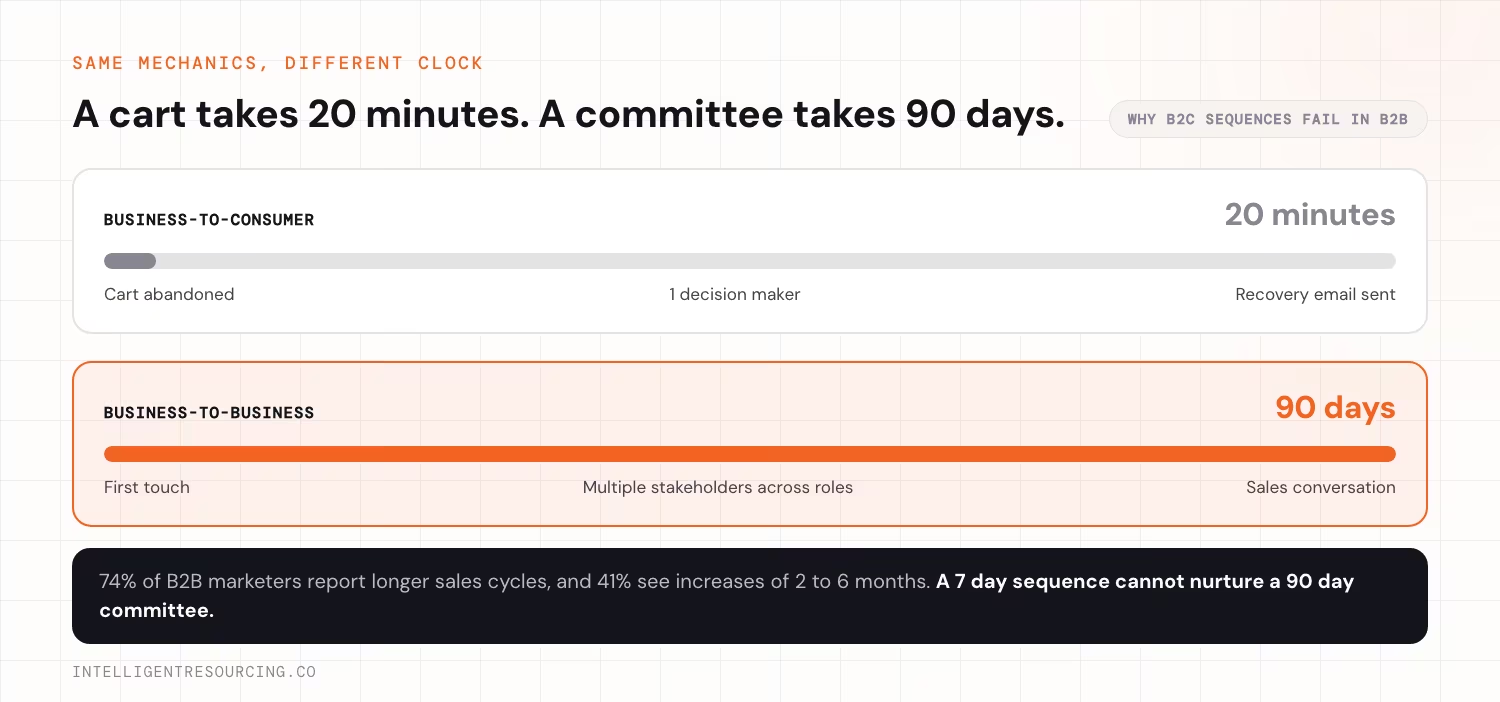
B2C automation optimises for volume and conversion speed. B2B automation optimises for lead quality and timing. A B2C retailer recovers an abandoned cart within 20 minutes. A B2B team nurtures a prospect for 90 days before they are ready for a sales conversation. The mechanics are similar; the objectives and timelines are not.
B2B vs B2C: the core differences
| Dimension | B2C | B2B |
|---|---|---|
| Sales cycle | Hours to days | Weeks to months |
| Decision makers per account | 1 | Multiple stakeholders across roles |
| Email volume | High, broadcast | Lower, behaviour-based |
| Primary metric | Conversion rate | Marketing qualified lead (MQL) quality and lead score |
| Key trigger events | Cart abandonment, browse history | Content downloads, pricing visits, job changes |
What longer B2B cycles demand from automation
Pipeline360's 2025 report found 74% of B2B marketers report longer sales cycles, with 41% seeing increases of 2 to 6 months. That timeline demands automation that nurtures across multiple roles and buying stages, not just the first contact on a form fill. A sequence built for a 7-day B2C buyer does not work for a 90-day B2B buying committee. The same logic drives email marketing automation off buyer signals rather than a fixed calendar.
Which tasks does marketing automation replace?
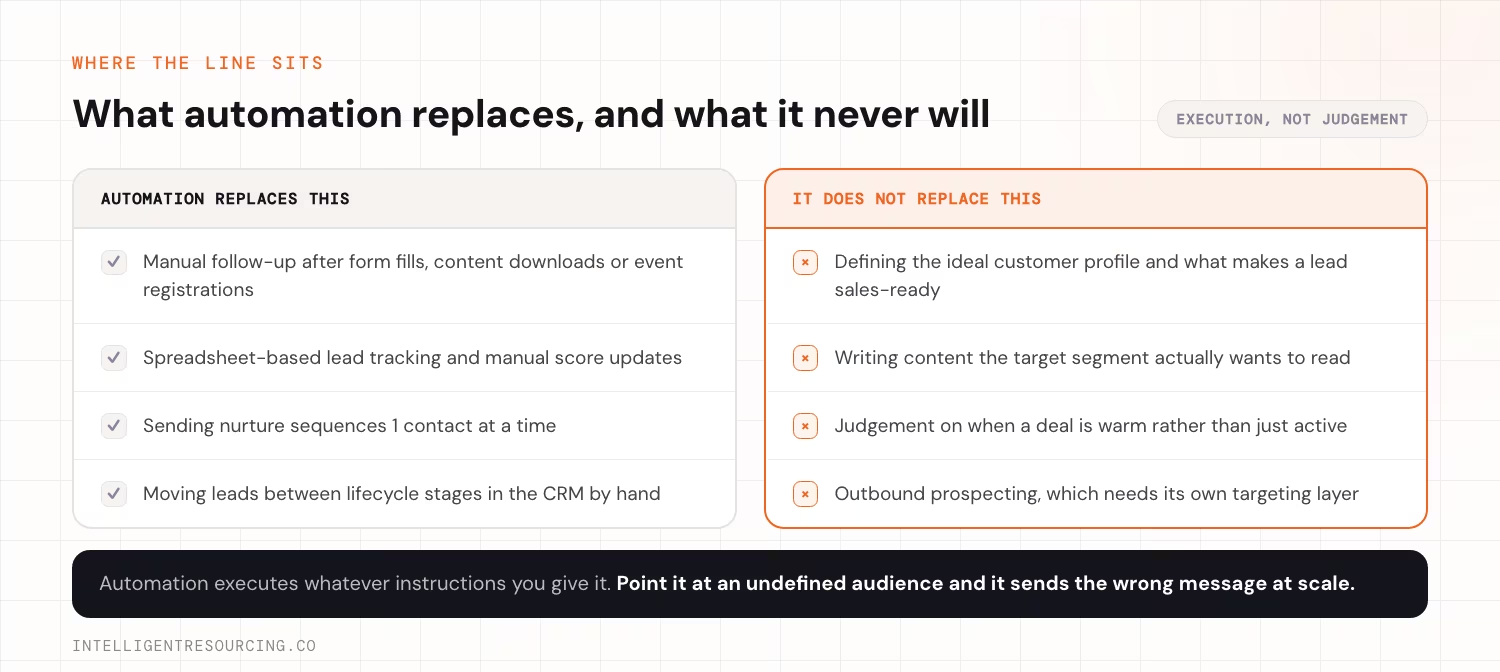
Marketing automation replaces the manual execution of defined, repeatable tasks: sending a follow-up after a content download, scoring a lead when they visit a pricing page, routing a contact to sales when they hit a threshold. It does not replace the judgement required to write those rules, define the ideal customer profile (ICP), or decide when a lead is genuinely ready for a conversation.
What automation takes off your plate
- Manual follow-up emails after form fills, content downloads, or event registrations
- Spreadsheet-based lead tracking and manual score updates
- Sending nurture sequences 1 contact at a time
- Manually moving leads between lifecycle stages in the CRM
Zapier's 2026 report found more than 90% of revenue operations (RevOps) teams use automation for some part of their workflow. Building those automation workflows correctly is what separates teams that see results from ones that end up with a platform and no programme.
What automation does not replace
- Defining the ICP and the criteria that make a lead sales-ready
- Writing content the target segment wants to read
- Human judgement on when a deal is warm rather than just active
- Outbound prospecting and signal-led targeting: automation handles inbound nurture; outbound requires a separate targeting layer
What does a working B2B automation setup look like?
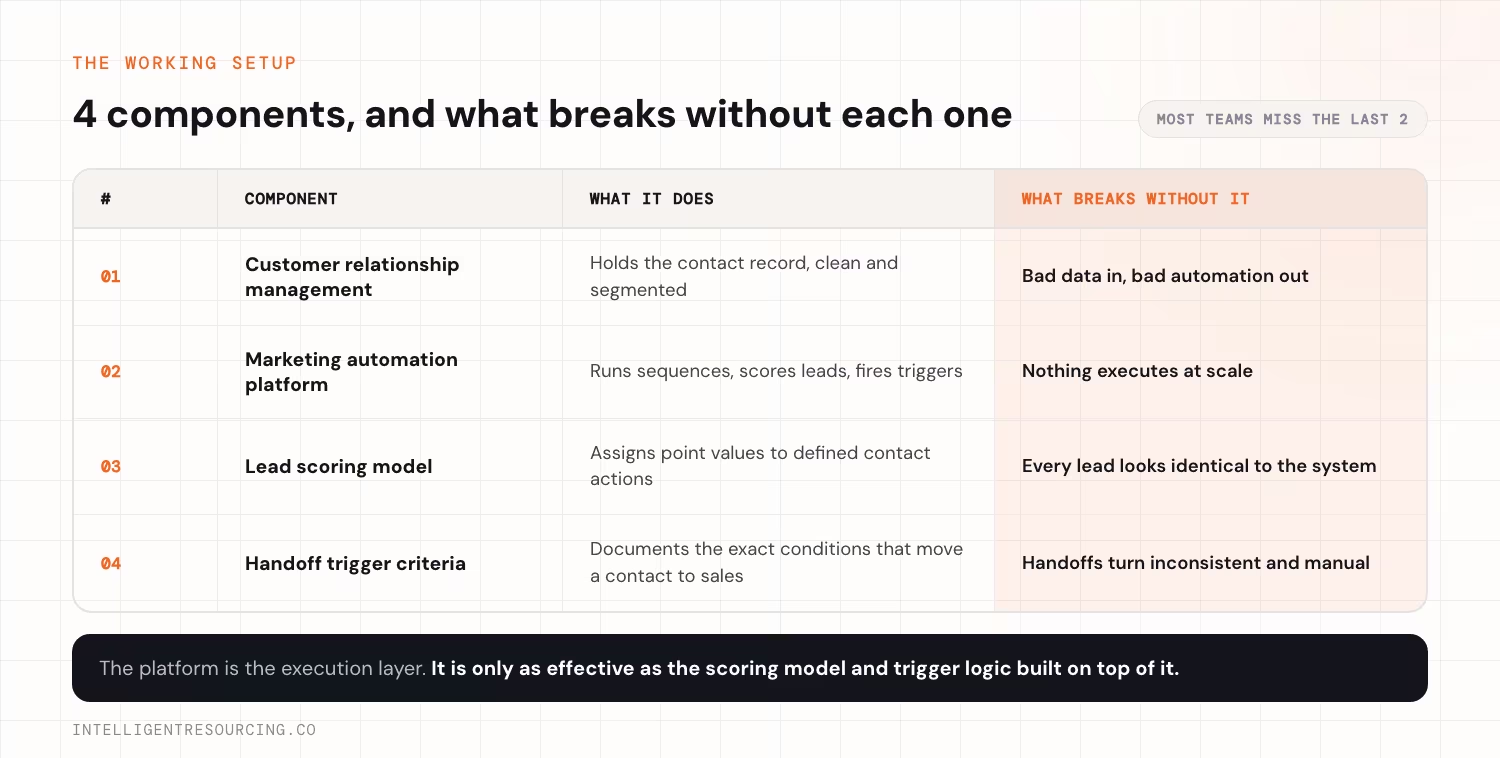
A working B2B marketing automation setup has 4 components running together: a CRM holding clean, segmented contact data; a marketing automation platform connected to it; a lead scoring model tied to defined behaviours; and documented trigger criteria for when a lead transfers from marketing to sales. Most teams that fail with automation are missing the last 2.
Component 1: CRM as the data foundation
HubSpot, Salesforce, or Pipedrive holds the contact record. The automation platform reads from and writes to it. Bad CRM data produces bad automation output. Before any automation is configured, the CRM must be clean and structured. If contact data is incomplete or outdated, start with CRM enrichment before touching the platform.
Component 2: Marketing automation platform
Runs sequences, scores leads, and fires triggers. Common B2B choices: HubSpot Marketing Hub, Marketo (Adobe), Pardot (Salesforce), and ActiveCampaign. Platform choice depends on CRM, team size, and budget. The platform is the execution layer: it is only as effective as the scoring model and trigger logic built on top of it.
Component 3: Lead scoring model
Assigns point values to contact actions. Visiting the pricing page scores 15 points. Opening 3 emails in a week scores 10. Downloading a case study scores 20. When a contact hits 60 points, they enter the sales sequence. Without a defined model, all leads look the same to the system. Building a lead scoring setup that reflects actual buying behaviour is the step most teams skip.
Component 4: Handoff trigger criteria
Documents the exact conditions that move a contact to sales: a defined score threshold, a specific page visited within the last 30 days, and ICP firmographic criteria met. Not "when they seem interested." Precise criteria remove the manual interpretation that creates inconsistent handoffs between marketing and sales.
What we see across setups
In every automation configuration we have diagnosed, the failure pattern is the same. The platform fires on a fixed schedule rather than on buying behaviour. The scoring model exists, but the trigger logic does not connect to live signals: a pricing page visit, a job change at a target account, a funding event. Fixing the trigger criteria, not the platform, is what changes the output.
Pipedrive's sales report found 74% of artificial intelligence (AI) adopters say it increases productivity, with half reporting overall performance improvements. The teams seeing those gains are running a complete setup: all 4 components in place with trigger logic that responds to buying behaviour, not a fixed send schedule.
How do you know if your business is ready to automate?
A business is ready for marketing automation when it has a documented ICP, consistent inbound lead volume of at least 100 to 200 leads per month, and content built for different buyer stages. Without those 3 inputs, the platform has nothing to work with. It runs, but the results do not justify the implementation cost.
The 5 readiness signals
| Signal | Ready to automate | Not ready yet |
|---|---|---|
| Inbound lead volume | 100+ leads per month | Under 50 per month |
| ICP definition | Documented and agreed by sales and marketing | Still debated internally |
| Content library | 3+ pieces covering different buyer stages | 1 blog and a homepage |
| CRM in use | Active with clean, structured data | No CRM or messy data |
| Sales and marketing alignment | Shared definition of what an MQL is | Teams disagree on lead quality |
When manual outreach still wins
Under 100 leads per month, a founder or sales development representative (SDR) running personalised outbound on a signal-led contact list outperforms an automated sequence running on thin volume. Automation multiplies what you already have. If what you have is thin, so is the output.
LXA Hub's 2026 report found 47% of organisations cite manual processes that cannot scale as their top lead management failure. That failure starts before the platform is purchased. The ICP, the content, and the trigger criteria come first. A platform licence is the last thing to buy. For what a calibrated programme produces once it is running, see these marketing automation examples.
RevOps Tools
Intelligent Resourcing builds the signal layer under the platform: trigger criteria, workflow architecture, lead scoring logic and the handoff rules that connect execution to real buying signals.
FAQs
What is the difference between a CRM and a marketing automation platform?
A CRM stores and manages contact and account data. A marketing automation platform uses that data to execute marketing tasks automatically, based on contact behaviour and defined rules. The two work together: the CRM is the database, the marketing automation platform is the execution engine. Most modern CRMs including HubSpot include a marketing automation layer built in.
What is the best marketing automation platform for B2B?
Platform choice depends on company size, existing CRM, and budget. HubSpot Marketing Hub suits most growth-stage B2B teams because it combines CRM and automation in one tool. Marketo suits larger enterprise teams with complex multi-channel workflows. ActiveCampaign suits smaller teams with tighter budgets. The platform matters less than the trigger criteria, lead scoring model, and content strategy built on top of it.
How long does it take to set up B2B marketing automation?
A basic setup covering lead capture, a nurture sequence, and CRM routing takes 4 to 8 weeks. A full setup including lead scoring, behavioural triggers, multi-stage nurture across segments, and sales handoff workflows takes 3 to 6 months. Teams that rush the implementation end up with a platform running and no meaningful programme inside it.
What is the biggest mistake B2B teams make when implementing automation?
Configuring the platform before the ICP and trigger criteria are defined. Automation executes whatever instructions you give it. Set it up on an undefined audience with a fixed send schedule and it sends the wrong message at the wrong time at scale. The sequence, scoring model, and trigger logic must come before any platform configuration.
How do you measure whether B2B marketing automation is working?
3 metrics give the clearest picture: MQL to sales qualified lead (SQL) conversion rate (are marketing-qualified leads turning into sales-accepted leads?); lead-to-close velocity (is the time from first contact to closed deal shortening?); and contact coverage (is the automation touching the right contacts at the right stages, or is there drop-off in the sequence?). Volume metrics like open rates tell you if the mechanics are working. Conversion metrics tell you if the programme is working.