

Why Do Professional Services Firms Need a Different Approach to Growth Marketing?
Professional services firms sell trust before they sell anything else. That is why a generic business-to-business (B2B) automation playbook does not transfer directly. Software buyers compare features. Professional services buyers compare people and track records. Hinge's 2026 High Growth Study found High Growth firms have increased marketing investment to 12% of revenue, more than double the 5% spent by No Growth peers.
It shows firms treating growth marketing as infrastructure to build, not a newsletter to send. A law firm, an accounting practice and a consultancy each sell in their own way today. A law firm leans on referral networks and industry events. An accounting practice leans on compliance-driven touchpoints, tax season, an audit, a lodgement deadline. A consultancy leans on a partner's own network and published thinking. All three share one thing an automation build must respect. The buyer is evaluating a person and a track record, not a product page.
What Buyer Signals Matter Most for Law Firms, Accountants and Consultancies?
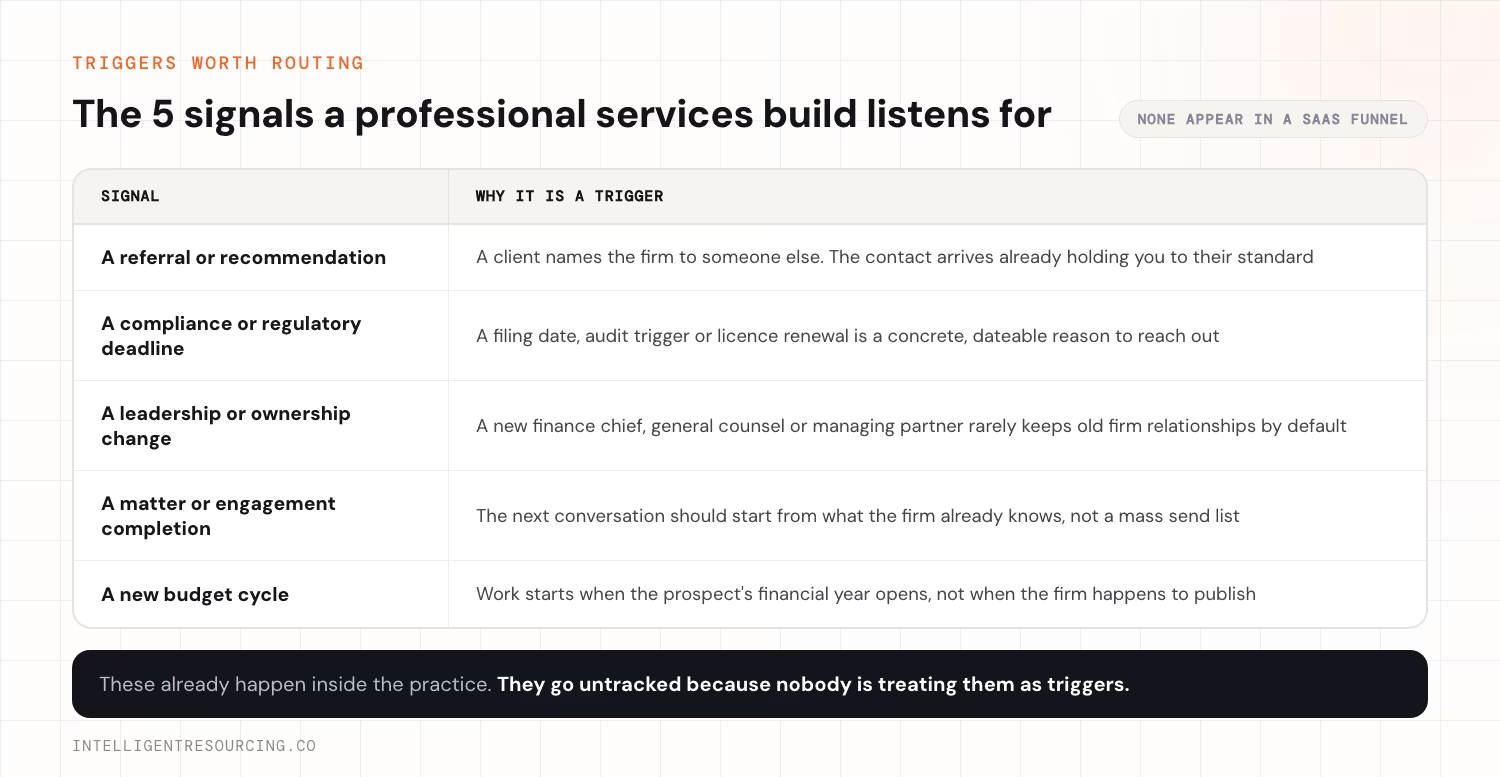
The signals worth automating for professional services rarely look like a typical marketing funnel. They look like moments that already happen inside the practice and go untracked because no one is treating them as triggers. A referral mention, a compliance deadline, a leadership change at a target account: these are the events a signal-led build is designed to route.
- A referral or recommendation: When a client mentions the firm to someone else, that is a signal, not a coincidence. The referred contact arrives already holding the firm to the standard of whoever sent them, and that window closes quietly if nobody follows up.
- A compliance or regulatory deadline: A filing date, an audit trigger or a licence renewal at a prospect's business is a concrete, dateable reason to reach out.
- A leadership or ownership change: A new chief financial officer (CFO), general counsel or managing partner at a target account rarely keeps the old firm relationships by default.
- A matter or engagement completion: When an existing client's project wraps, the next conversation should start from what the firm already knows, not a mass send list.
- A new budget cycle: Many engagements start when a prospect's new financial year opens, not when the firm happens to publish content.
None of these show up in a standard signal-based marketing stack built for software buyers. The trigger logic has to change for how professional services firms actually get hired. The same principle drives what a marketing automation agency is for in any sector: the trigger, not the calendar.
How Should a Professional Services Firm Evaluate a Marketing Automation Partner?
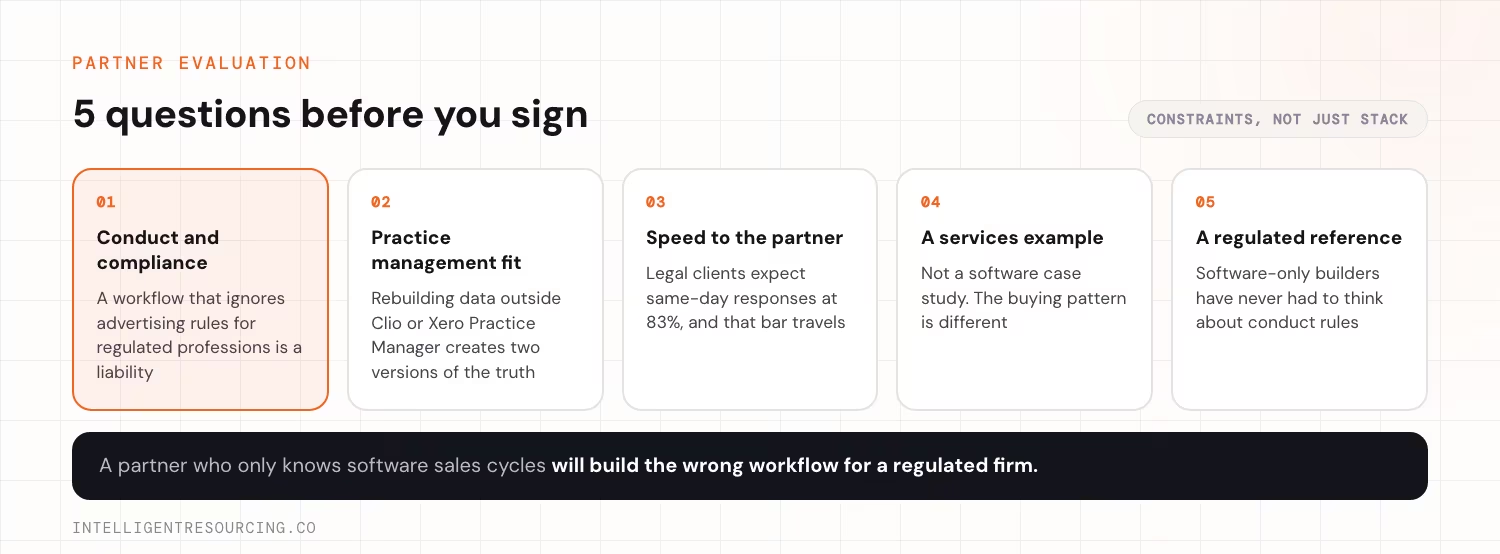
Evaluate a marketing automation partner on whether it understands the constraints professional services firms operate under, not just its tech stack. A partner who only knows software sales cycles and software as a service (SaaS) buyer journeys will build the wrong workflow for a law firm, an accounting practice or a regulated advisory business.
- Ask how they handle professional conduct and compliance constraints. A workflow that ignores advertising rules for regulated professions is a liability, not an asset.
- Ask whether it integrates with the practice management software already in use. Rebuilding client data outside Clio, Xero Practice Manager or a similar platform creates two versions of the truth.
- Ask how fast a routed signal reaches a partner. Law Firm Marketing Club's 2026 research found legal clients expect same-day responses at 83%. That bar applies well beyond law firms.
- Ask for a concrete automation example from a services firm, not a software company. The buying pattern is different, and the workflow should show it.
- Ask for a reference from a similarly regulated firm. A partner who has only built for software companies has not had to think about conduct rules, client confidentiality or the pace at which a partnership actually makes decisions.
Where Do Generic Marketing Tools Fail Professional Services Firms?
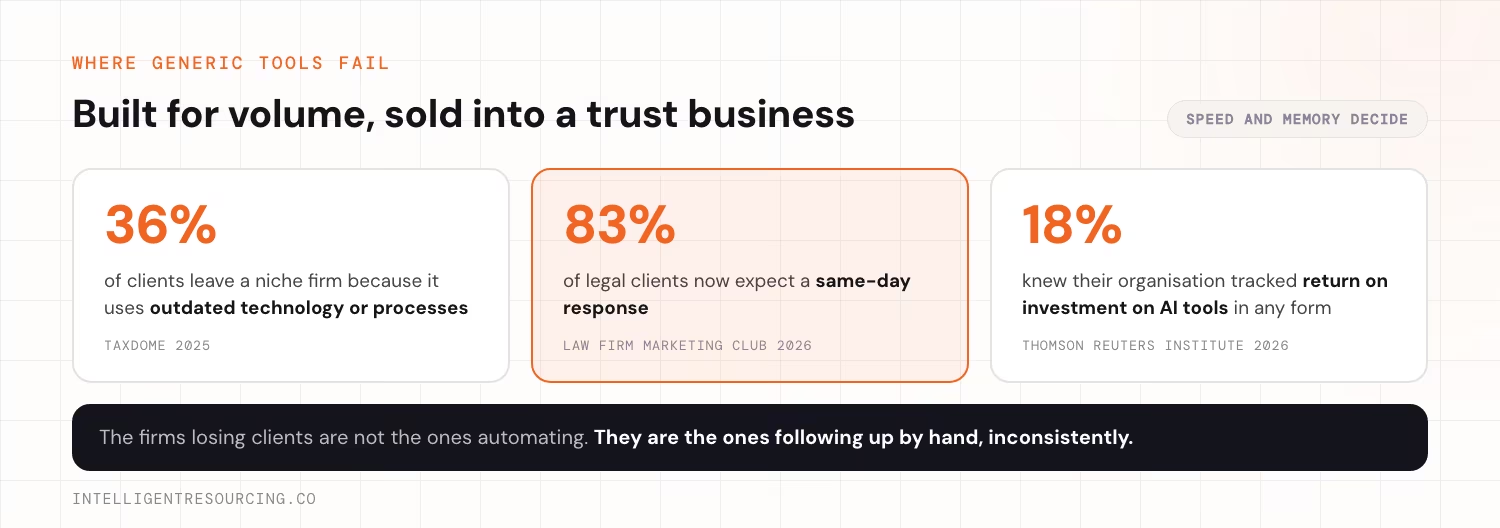
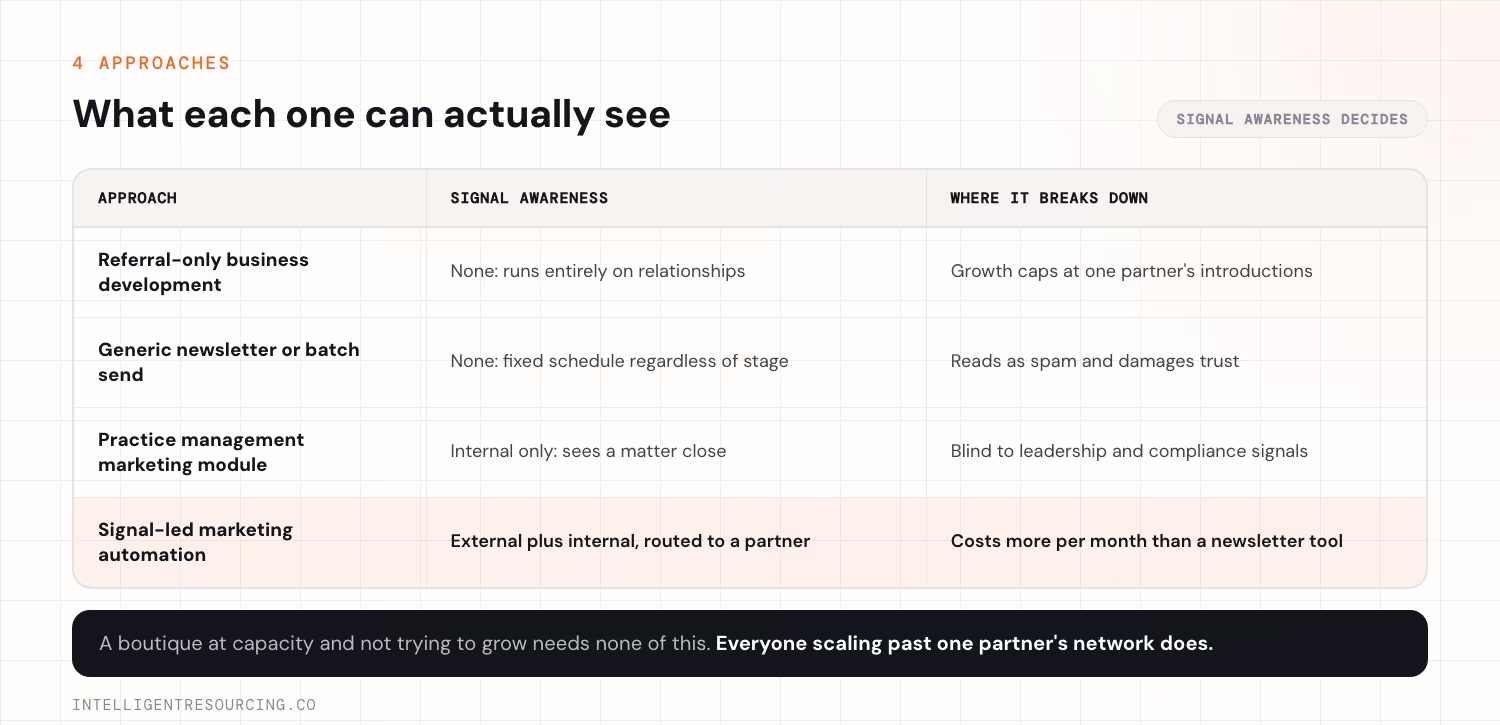
Generic marketing tools fail professional services firms because they are built for volume. Professional services buying runs on trust built over a small number of contacts instead. A batch send that looks routine from a software company can read as impersonal to a client choosing who handles their tax position or their dispute. Sometimes it reads as a red flag.
TaxDome's 2025 research found 36% of clients leave a niche firm because it uses outdated technology or processes. That cuts against the instinct to avoid automation altogether. The firms losing clients are not the ones automating. They are the ones running visibly manual, inconsistent follow-up next to firms that respond fast and remember context. A partner who forgets a client's last conversation looks careless. A workflow that surfaces that context before the call starts looks like the firm actually pays attention.
Fixing this needs workflow engineering, not a bigger send list. The same lead gets scored and routed by the same rules every time, no matter which partner happens to be free that week.
How Does Intelligent Resourcing Build Signal-Led Automation for Professional Services?
Intelligent Resourcing builds professional services automation around Signal-Led Growth. A workflow routes a referral, a compliance deadline or a leadership change to the right partner. That happens inside the Verified Buying Window: the period when a signal is still worth acting on.
Measurement is the part most firms skip. Thomson Reuters Institute's 2026 report on artificial intelligence (AI) in professional services found only 18% of respondents knew their organisation was tracking return on investment (ROI) on its AI tools in any form. A signal-led build is countable by design: 1 connected system where every routed signal has an owner and an outcome, rather than 5 disconnected ones nobody is scoring.
If You Run a Law Firm or Chambers
Matter data, conflict checks and referral relationships already live in the practice. The build connects them to a routing layer instead of replacing them.
If You Run an Accounting, Tax or Advisory Practice
Compliance deadlines are the clearest signal in the business. A workflow that tracks them beats a newsletter calendar every time.
RevOps Tools
A slow, generic follow-up costs a professional services firm the exact trust it spent years building. Talk to Intelligent Resourcing about a signal-led build for your firm.
FAQs
Does marketing automation work for a small law firm or accounting practice?
Yes, once referrals alone stop filling the pipeline. Below that point, a small partner-led practice running on relationship quality does not need it yet. The signals worth automating, referrals, deadlines and leadership changes, exist at any firm size.
Can marketing automation respect professional conduct and compliance rules?
Yes, if the partner building it understands those rules before writing any workflow. Advertising and solicitation restrictions vary by profession and by state. This has to be confirmed with the firm's own compliance function, not assumed from a generic template.
How is marketing automation for professional services different from a general B2B agency's approach?
The signals differ. A software buyer's automation tracks product usage and pricing-page visits. A professional services buyer's automation tracks referrals, compliance deadlines and leadership changes, because that is how the actual buying decision gets made.
Does marketing automation replace referral-based business development?
No. It supports it. A referral is still one of the strongest signals a firm gets. Automation makes sure that signal gets acted on quickly and consistently, instead of depending on one partner remembering to follow up before the referral goes cold.
Can automation integrate with practice management software like Clio or Xero Practice Manager?
In most cases, yes. The build usually connects the practice management system to a CRM and a routing layer. It does not replace either one, so matter and billing data stay in one place.