

What Separates a GTM Engineering Agency From a Traditional Marketing Agency?
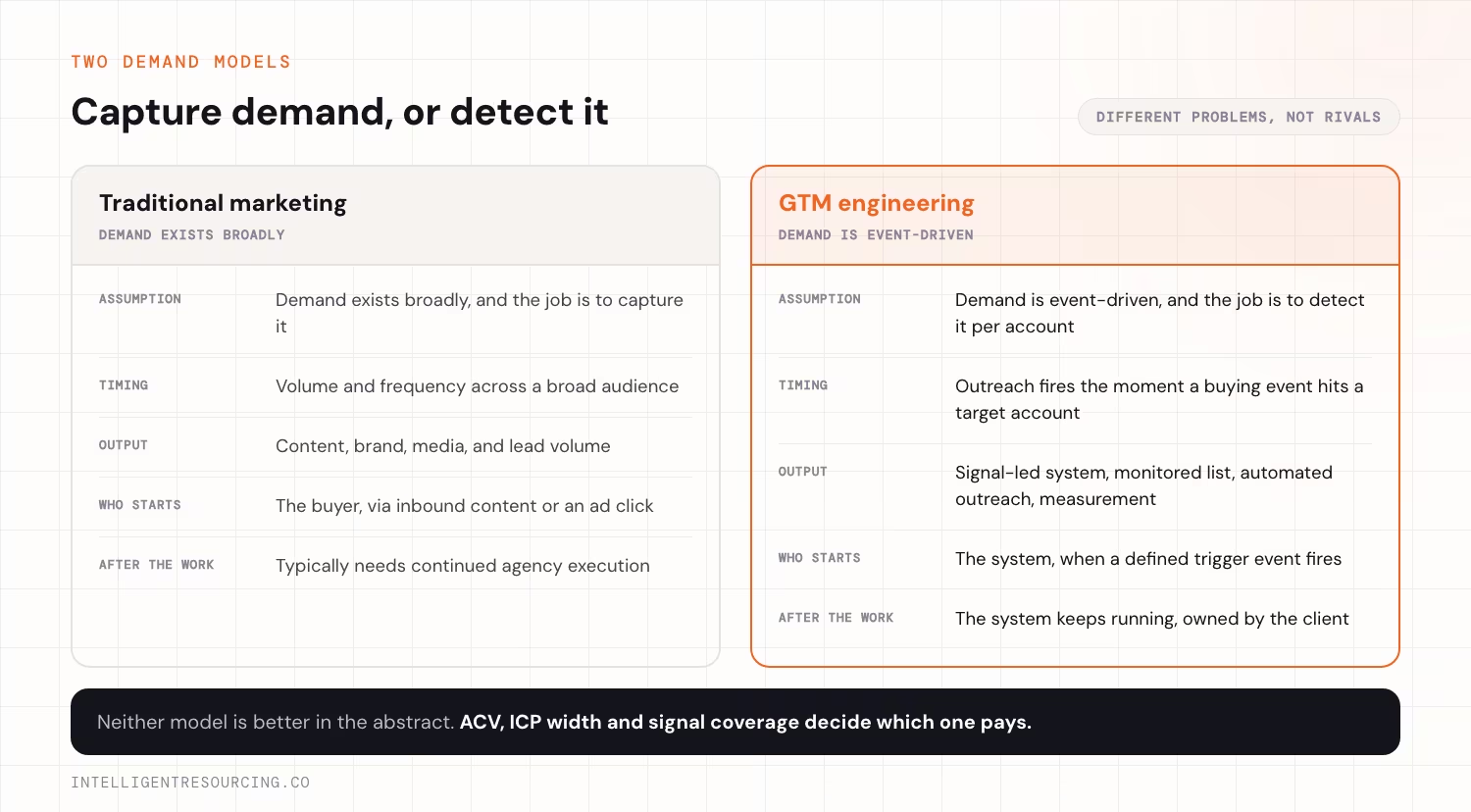
Traditional marketing assumes demand exists broadly and needs to be captured through content, brand, and paid channels. GTM engineering assumes demand is account-level and event-driven: identify it the moment it appears, then trigger immediately.
The 2 demand models compared:
| Dimension | Traditional marketing | GTM engineering |
|---|---|---|
| Demand assumption | Demand exists broadly, and the job is to capture it | Demand is event-driven, and the job is to detect it at the account level |
| Timing mechanism | Volume and frequency across a broad audience | Signal-triggered outreach to specific accounts at the moment a buying event fires |
| Primary output | Content, brand, media, and lead volume | Signal-led system, monitored account list, automated outreach, measurement framework |
| Who initiates contact | Buyer, via inbound content or ad click | System, when a defined trigger event fires at a target account |
| Ongoing delivery | Typically requires continued agency execution | The system keeps running |
What Does a Traditional Marketing Agency Deliver?
A traditional marketing agency delivers content production, paid media management, SEO, and reporting on traffic, MQL volume, and cost per lead. The model works when demand is broad and buyers self-select through inbound at scale. It breaks down when the ICP is narrow and deal values are high, because conversion then depends on reaching the right account at the right moment.
Content and SEO
What it produces:
- Blog articles, landing pages, and gated assets built for search volume
- Organic traffic growth measured in sessions and keyword rankings
- MQL volume from content downloads and form completions
Where it breaks down:
- Content written for search volume rarely matches the specific questions a narrow ICP actually asks
- An MQL from a content download does not indicate a buying window. It indicates interest at an unspecified point in an unspecified timeline.
- For high-ACV B2B products, a content strategy that generates 200 MQLs per month from the wrong stage of the buyer journey produces less pipeline than 20 contacts reached at the right moment
Paid Media
What it produces:
- Impressions, clicks, and form fills from ICP-adjacent audiences on LinkedIn, Google, and Meta
- Retargeting sequences based on site visit behaviour
- Cost-per-lead benchmarks against industry averages
Where it breaks down:
- Paid targeting hits audiences by demographic and behavioural profile. It cannot identify which of those accounts is currently in a buying window.
- Budget spent reaching an ICP-fit company 6 months early produces a follow-up sequence they will not answer. The database entry then goes cold before the window opens
Reporting
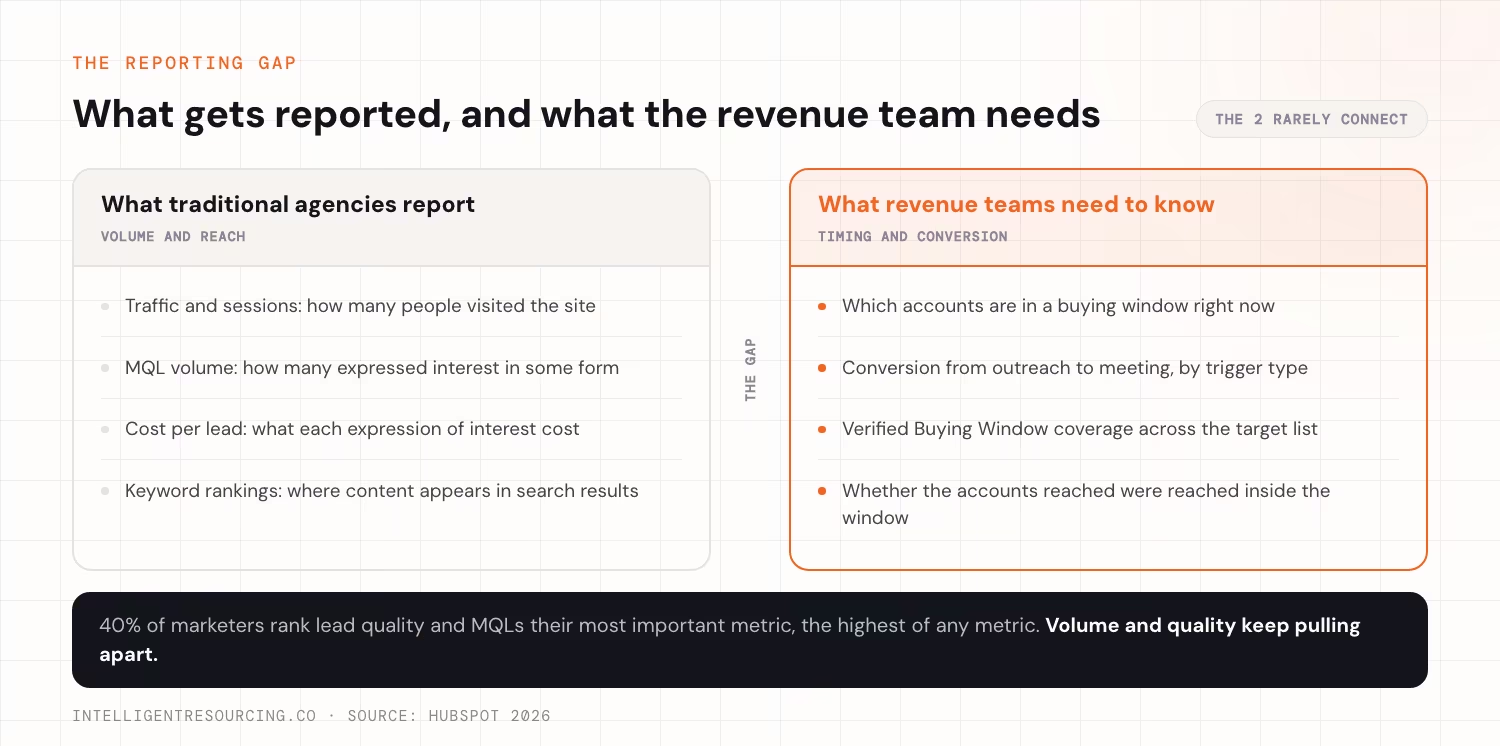
What traditional agencies typically report:
| Metric | What it measures |
|---|---|
| Traffic and sessions | How many people visited the site |
| MQL volume | How many people expressed interest in some form |
| Cost per lead | What each expression of interest cost |
| Keyword rankings | Where content appears in search results |
What revenue teams actually need to know:
| Metric | What it measures |
|---|---|
| Which accounts are in a buying window right now | Timing of real demand at the account level |
| Conversion rate from outreach to meeting by trigger type | What is actually producing pipeline |
| Verified Buying Window coverage | What proportion of the target account list is being reached inside an active decision window |
HubSpot's 2026 State of Marketing found 40% of marketers reported lead quality and MQLs as their most important metric, the highest of any other metric. Even inside the traditional model, MQL volume and pipeline quality are the measurement tension teams keep running into.
What Does a GTM Engineering Agency Build Instead?
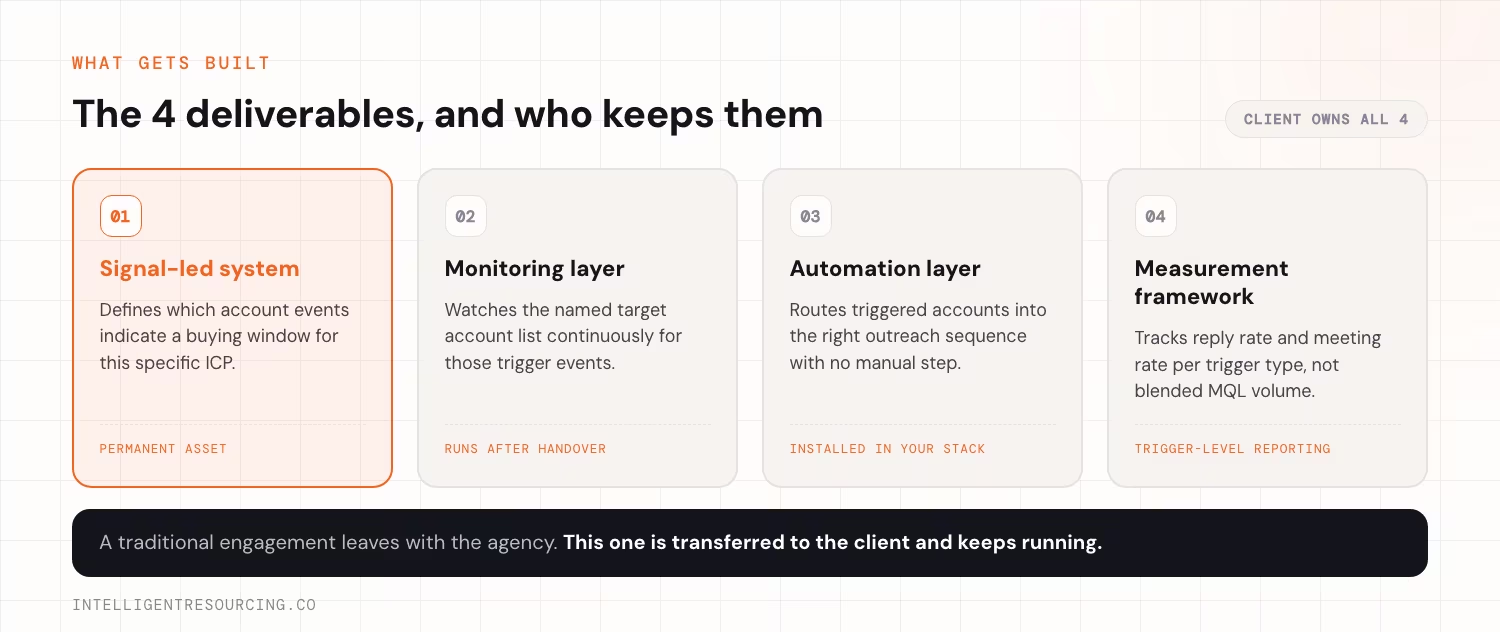
A GTM engineering agency builds 4 things. A signal-led system defines which account events indicate a buying window. A monitoring layer watches target accounts continuously for those events. An automation layer routes triggered accounts into outreach sequences without manual steps. A measurement framework tracks conversion at the trigger level. The client owns all 4 permanently.
The GTM engineering deliverables, compared to their traditional agency equivalents:
| Traditional agency deliverable | GTM engineering equivalent | Key difference |
|---|---|---|
| Content calendar and published articles | Signal-led system: which trigger events indicate a buying window for this ICP | The signal-led system is a permanent asset that defines how the system identifies demand |
| Paid media audience build and ad creative | Monitored account list: ICP-fit companies watched continuously for trigger events | The list is specific and monitored in real time, not targeted by demographic profile |
| CRM with inbound leads | HubSpot configured with enriched trigger records, buying window status, and signal-specific sequences | Records arrive with context attached, so no manual research is required |
| Monthly MQL and traffic report | Trigger-level conversion data: reply rate and meeting rate per signal type | Measurement is tied to timing and trigger quality, not volume and reach |
| Agency-held assets and access | Full system ownership transferred to the client permanently | The system keeps running after the engagement ends |
The tool layer that makes it work:
- Clay monitors the target account list for defined trigger events (job changes, funding rounds, tech stack changes), enriches records automatically, and pushes them into HubSpot when a trigger fires.
- HubSpot receives enriched records, routes them to the correct signal-specific sequence, and tracks performance per trigger type.
- n8n applies conditional routing logic between platforms: the rules that determine which signal triggers which sequence, without a manual decision step in between.
Clay's 2026 guide to GTM engineering reports that at Verkada, automating 80% of SDR workflows let reps book 4 times the meetings per month, at 80 to 100 per rep. That is the output of the monitoring and automation layers running together, not a headcount increase.
Which Fits GTM Engineering and Which Fits Traditional Marketing?
GTM engineering fits B2B companies with a defined ICP, high ACV, and an account segment where observable trigger events reliably precede purchase decisions. Traditional marketing fits companies with a broad addressable market and lower ACV. It works where buyers self-select through content and paid channels at enough volume to produce a viable cost per acquisition.
Decision framework by company profile:
| Company characteristic | Fits traditional marketing | Fits GTM engineering |
|---|---|---|
| Addressable market size | Broad: thousands of relevant companies | Defined: hundreds of specific target accounts |
| Average contract value | Below $20,000 AUD annually | Above $30,000 AUD annually |
| Buying decision trigger | Opportunistic: buyer decides when ready | Event-driven: a business change creates the need |
| ICP specificity | Broad demographic profile | Named account list with specific qualifying criteria |
| Sales cycle length | Short: days to weeks | Long: weeks to months |
| Signal coverage for ICP | Low: ICP segment not well-covered by signal sources | High: job changes, funding events, or tech stack data covers the ICP segment |
| Team capacity for build phase | Cannot invest 6 to 8 weeks before results | Can invest 6 to 8 weeks in build before the system runs |
The Borderline Case
Companies at Series A with a narrowing ICP and an ACV moving from $15,000 toward $40,000 are often still running traditional marketing. It is what they started with, and it worked at an earlier stage. As the ICP narrows and the sales cycle lengthens, traditional marketing produces more traffic and fewer qualified meetings.
The LinkedIn B2B Institute's 95-5 rule, developed with the Ehrenberg-Bass Institute, illustrates the timing problem: at any given point, only a small proportion of category buyers are likely to be actively in-market. For companies selling into a narrow named-account universe, spotting changes in buying readiness beats treating every ICP-fit account as equally ready. This is the inflection point where signal-led prospecting becomes the right model: the system finds the accounts in a buying window and reaches them at exactly the right moment.
When Is GTM Engineering the Wrong Choice?
GTM engineering is a poor fit when there is not enough signal, deal value, or operational capacity to justify the system.
It tends to underperform when:
- Buying signals are weak: Observable events do not reliably indicate purchase readiness.
- The ICP is unclear: There is no defined account universe to monitor.
- Deal value is too low: Better timing does not justify the cost of building the infrastructure.
- Pipeline is needed immediately: The business cannot absorb a build phase before activation.
- No one owns the system: Signal quality, workflows, and routing are not maintained after launch.
In these cases, a simpler outbound or traditional demand-capture model is usually the better commercial choice.
How Do You Evaluate the Right Choice for Your Current Revenue Stage?
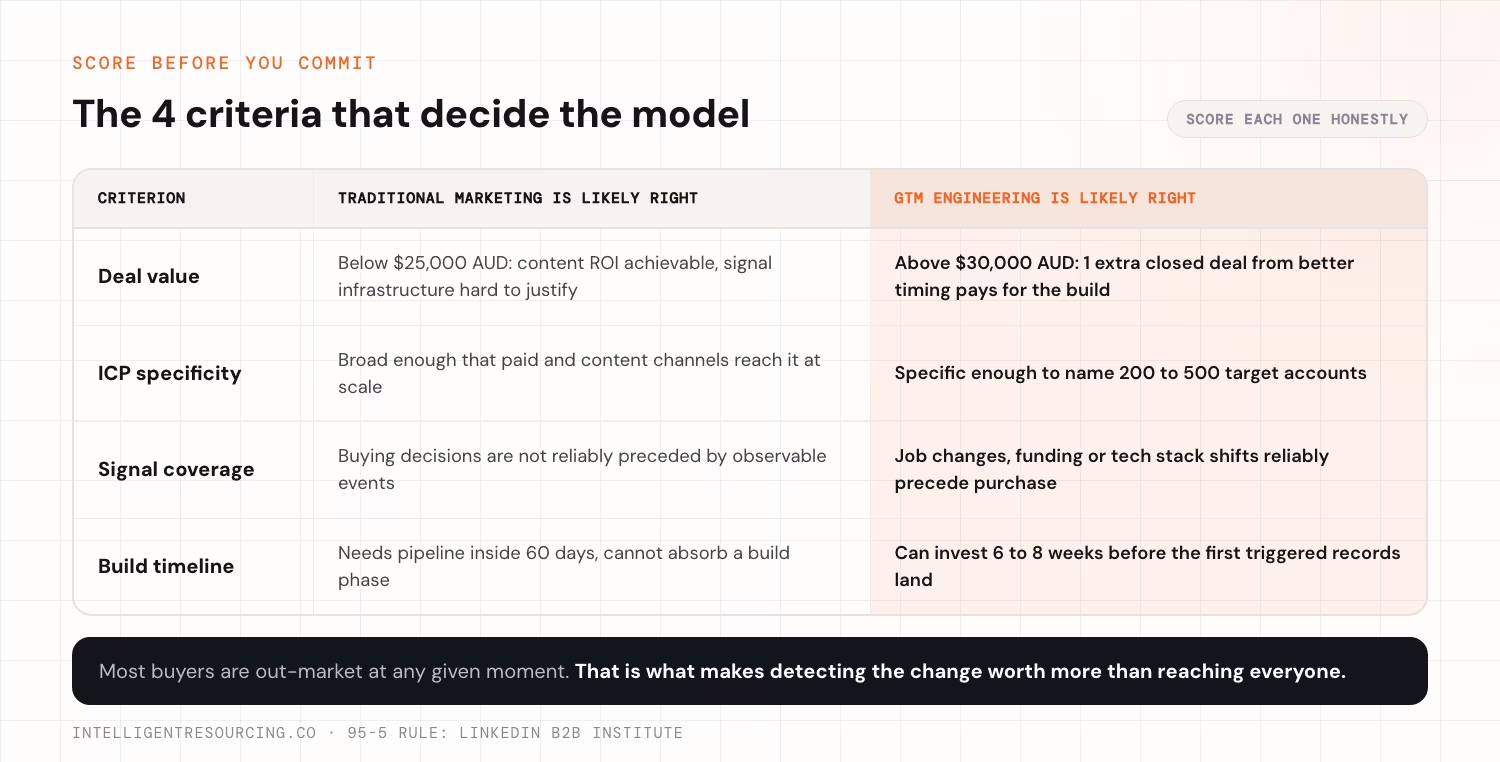
Evaluate on 4 criteria. Does the ACV justify signal infrastructure? Is the ICP defined enough to build a monitored account list? Do observable trigger events exist for that ICP segment? And can the team invest 6 to 8 weeks before the system generates results? Score each criterion before committing to either model.
The 4-criterion evaluation:
| Criterion | Traditional marketing is likely right | GTM engineering is likely right |
|---|---|---|
| ACV | Below $25,000 AUD: content ROI achievable, signal infrastructure hard to justify | Above $30,000 AUD: 1 additional closed deal from better timing pays for the build |
| ICP specificity | ICP is broad enough that paid and content channels reach it at scale | ICP is specific enough to name 200 to 500 target accounts and build a monitored list |
| Signal coverage | Buying decisions in this ICP are not reliably preceded by observable events | Job changes, funding rounds, or tech stack shifts reliably precede purchase decisions |
| Build timeline | Needs pipeline results within 60 days, and cannot absorb a build phase | Can invest 6 to 8 weeks in build before the first triggered records enter sequences |
Red Flags in a Traditional Agency Engagement
These 4 signs suggest it is time to change model:
- MQL volume is high but meeting conversion is below 5%
- The agency reports on traffic and leads, the revenue team reports on pipeline and close rate, and the 2 reports do not connect
- Content is generating inbound from companies that are too early, too small, or too far outside the ICP to convert
- Paid media is producing clicks and form fills from ICP-adjacent audiences who never progress past the first call
Any 2 of these present at the same time indicates the demand-capture model is not working for the current ICP and ACV. Pipedrive's 2025 sales and marketing report found 74% of AI adopters say it increases productivity, and that result compounds across the account list once the signal-led system is live and the monitoring layer is running.
Comparisons
Intelligent Resourcing designs and installs signal-led revenue systems for B2B teams across Australia: ICP definition, signal-led system, Clay and HubSpot configuration, and sequence library.
FAQs
What does a GTM engineering agency actually do?
A GTM engineering agency builds the infrastructure that identifies when a target account enters a buying window and triggers outreach at that moment. There are 4 core deliverables: a signal-led system, a monitored account list of target companies watched continuously for those events, an automated outreach system where sequences fire on signal events rather than on a calendar, and a measurement framework tied to trigger-level conversion rather than MQL volume. The client owns all of it permanently.
Is GTM engineering just another name for marketing automation?
No. Marketing automation manages sequences and workflows for leads that already exist in the CRM. GTM engineering builds the system that decides which accounts enter the CRM and when, based on observable trigger events at those accounts. The distinction is the monitoring and signal layer. Marketing automation starts after a lead is created. GTM engineering starts before the lead exists, with the identification of the buying window that justifies creating it.
How much does a GTM engineering engagement cost compared to a traditional marketing retainer?
Traditional retainers for growth-stage B2B companies typically run $5,000 to $15,000 AUD a month, for a managed content and paid media programme. GTM engineering is typically structured as a fixed build engagement followed by an optional managed service. The build cost is higher upfront than a monthly retainer, but the system is installed inside the client's own stack and stays there.