

What Does Ziff Digital Actually Offer?
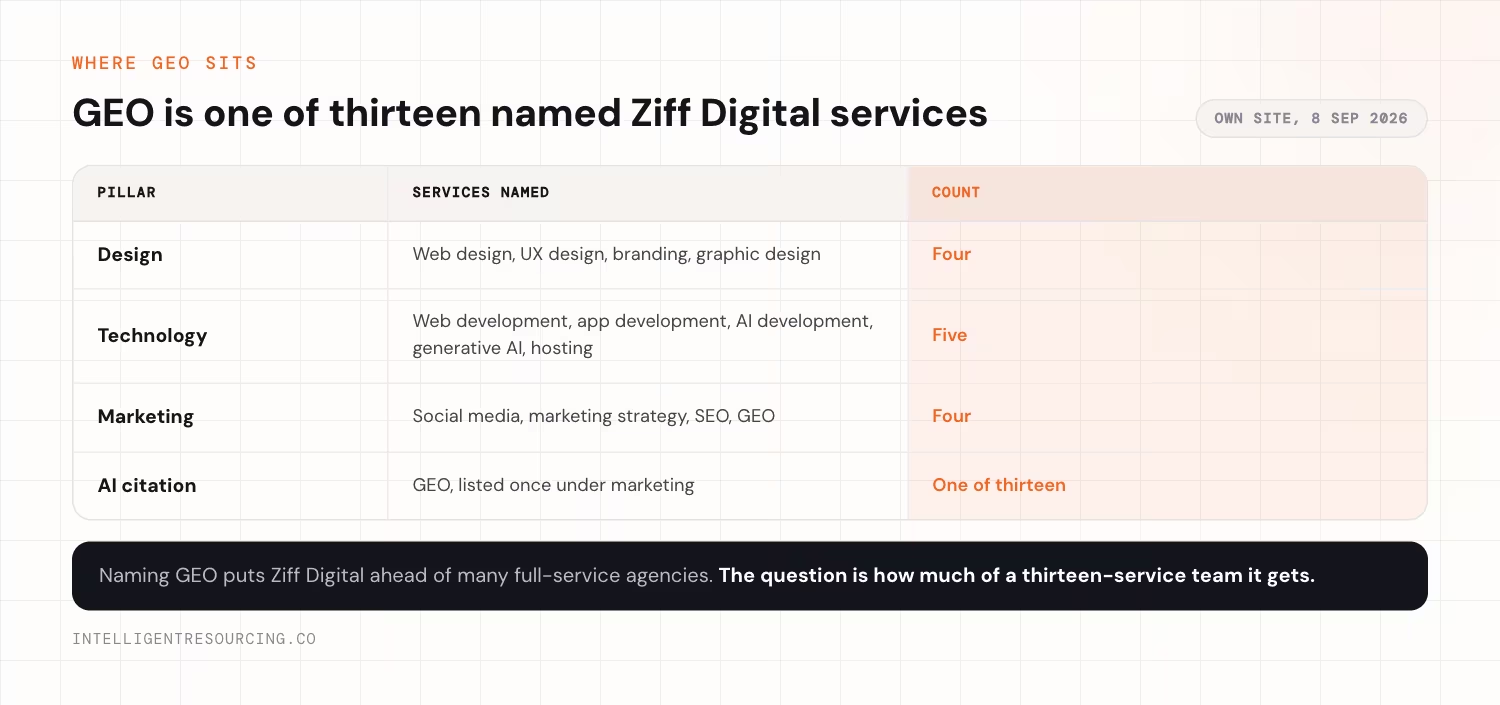
Ziff Digital groups thirteen named services into three pillars, taken from the agency's own site.
| Pillar | Services | What it covers |
|---|---|---|
| Design | Web design, UX design, branding, graphic design | How the brand looks and how a visitor moves through the site |
| Technology | Web development, app development, AI development, generative AI, hosting and support | The build itself, plus any custom software behind it |
| Marketing | Social media marketing, marketing strategy, SEO, GEO | The channels that run after launch, where GEO is one of four |
The shape is the same in all three pillars. Each bundles related services under one team, so the client deals with one account, not three vendors. Design covers how the brand looks. Technology covers what gets built. Marketing covers what runs afterwards.
That is not a weakness. It is a different shape of offer, and for a business rebuilding from scratch it removes a lot of coordination work. The agency's own service index sets it out plainly.
Where Intelligent Resourcing Sits Instead
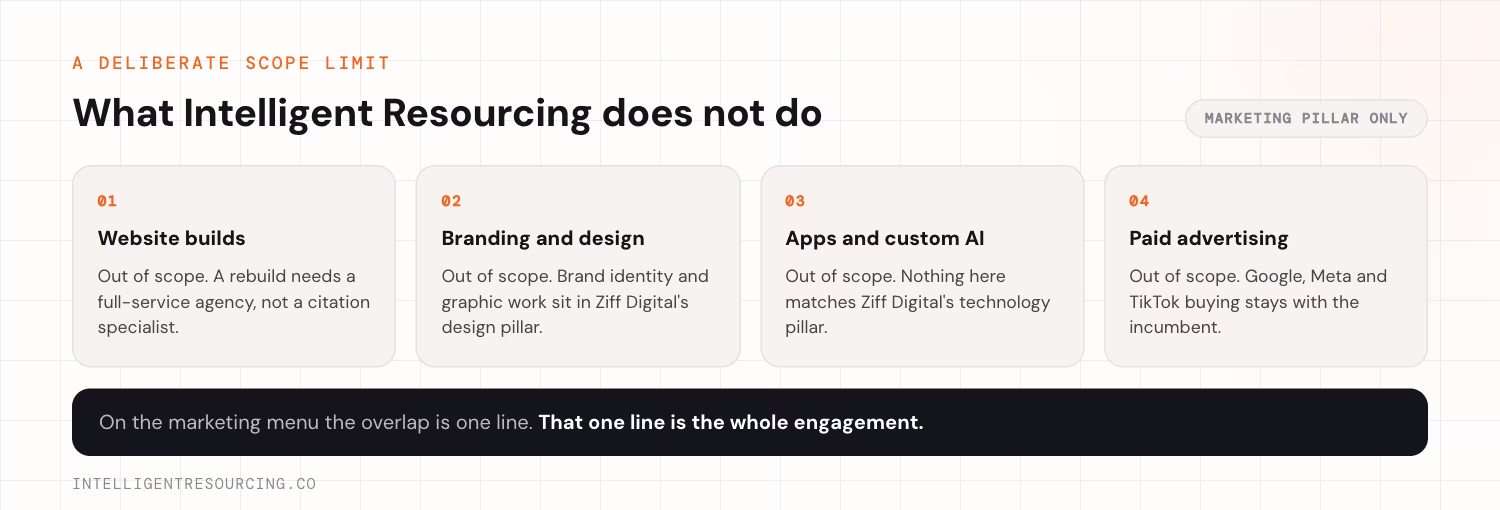
Intelligent Resourcing does none of the work in Ziff Digital's first two pillars. On the marketing pillar it competes on a single line.
- Website builds sit outside scope
- Branding and graphic design sit outside scope
- App development sits outside scope
- Paid advertising sits outside scope
That is a deliberate limit. A business happy with its site, brand and ad accounts does not need another vendor touching them. What it may be missing is a record of whether AI answer engines cite it at all, for which prompts, and on which engine.
Ranking and being cited are not the same result. Ahrefs' September 2026 read of three million United States queries found AI Overview citations concentrated in a handful of large platforms, with YouTube alone taking 22.9%. Ordinary business sites are competing for what is left, and a GEO line folded into a broader retainer can miss that entirely. Intelligent Resourcing's generative engine optimisation service publishes the four engines it tracks and the retainer bands it charges.
Does Your GEO Choice Need to Cover Design and Technology Too?
Not every business researching GEO also needs a new website. Some do, and that changes which model fits.
A bundled model like Ziff Digital's is the better call if any of these are also on the list:
- A full website rebuild
- Branding or graphic design work
- App development or custom AI development
- Paid advertising across Google, Meta or TikTok
Intelligent Resourcing does not compete on any of those, and a business shopping for a build-and-market partner should read that as the honest answer rather than a hedge.
If the site and the brand already work, none of that list changes anything. The decision narrows to GEO on its own. Our comparison against Zib Digital covers the same trade-off with a different generalist, and the roundup of Ziff Digital alternatives puts five other agencies against the same four tests.
GEO as an Add-On or GEO as the System
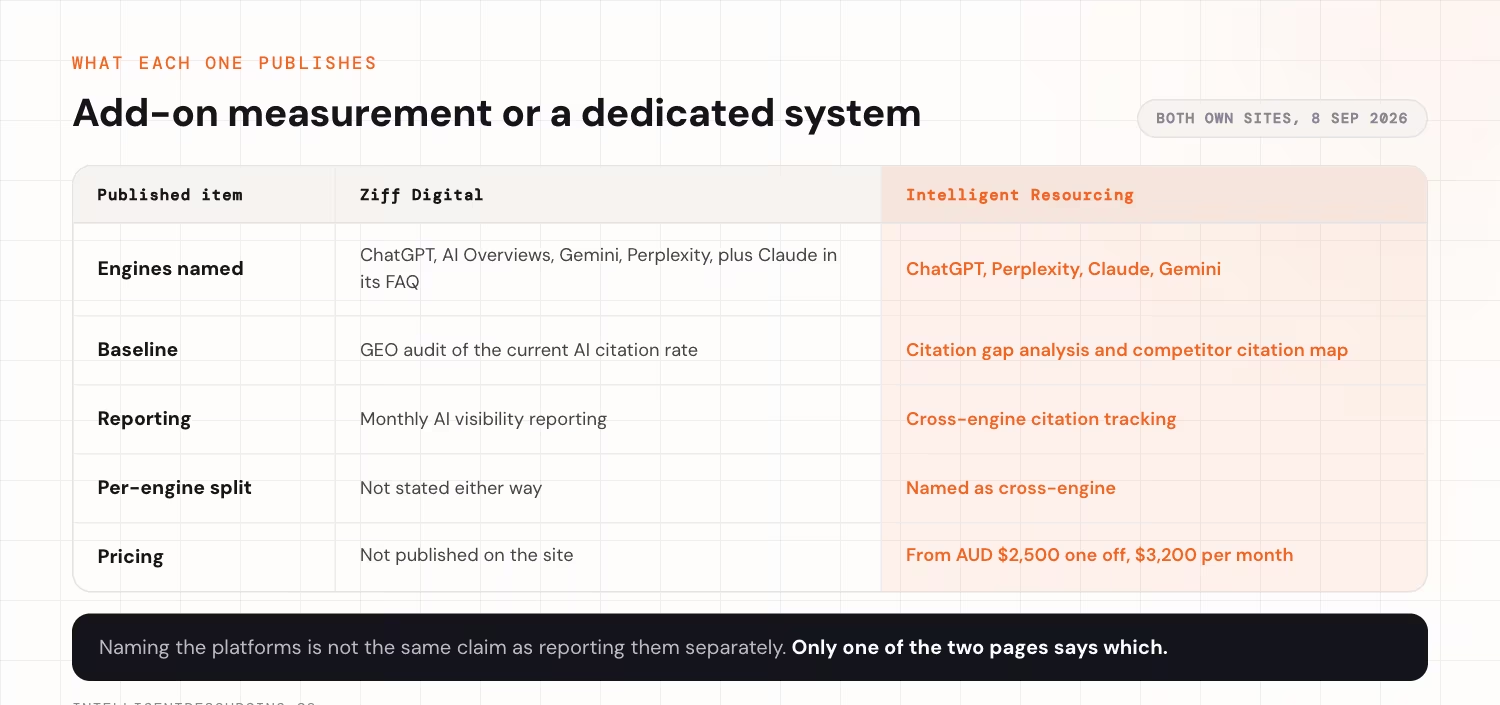
This is where the two genuinely compete, and the difference is method rather than intent.
Ziff Digital's dedicated GEO service page names ChatGPT, Google AI Overviews, Gemini and Perplexity in its service copy, and adds Anthropic Claude in its FAQ answer. It describes a GEO audit as a baseline measurement of the current AI citation rate. Its FAQ states that every campaign includes AI visibility tracking and monthly reporting. That is more than most agencies publish.
Naming the platforms it optimises for is a different claim to reporting results separately across them. The page does not say which of the two it does.
That distinction has evidence behind it. BrightEdge compared the top cited sources across ChatGPT, Perplexity, Gemini, Google AI Mode and AI Overviews in ten industries in April 2026 and found pairwise overlap in cited sources ranging from 16% to 59%. The same study found the engines agree more on brands than on sources, with brand overlap running 36% to 55%. So the picture is not that every engine is a separate world. It is that a brand named on one engine is still absent from another often enough to matter, and a single blended score cannot show which.
Intelligent Resourcing sells cross-engine citation tracking, a citation gap analysis and a competitor citation map as the engagement. A business that ranks well but is never named is invisible at the moment a buyer builds a shortlist, and that is the one outcome the engagement is built to report on.
Who Should Choose Which
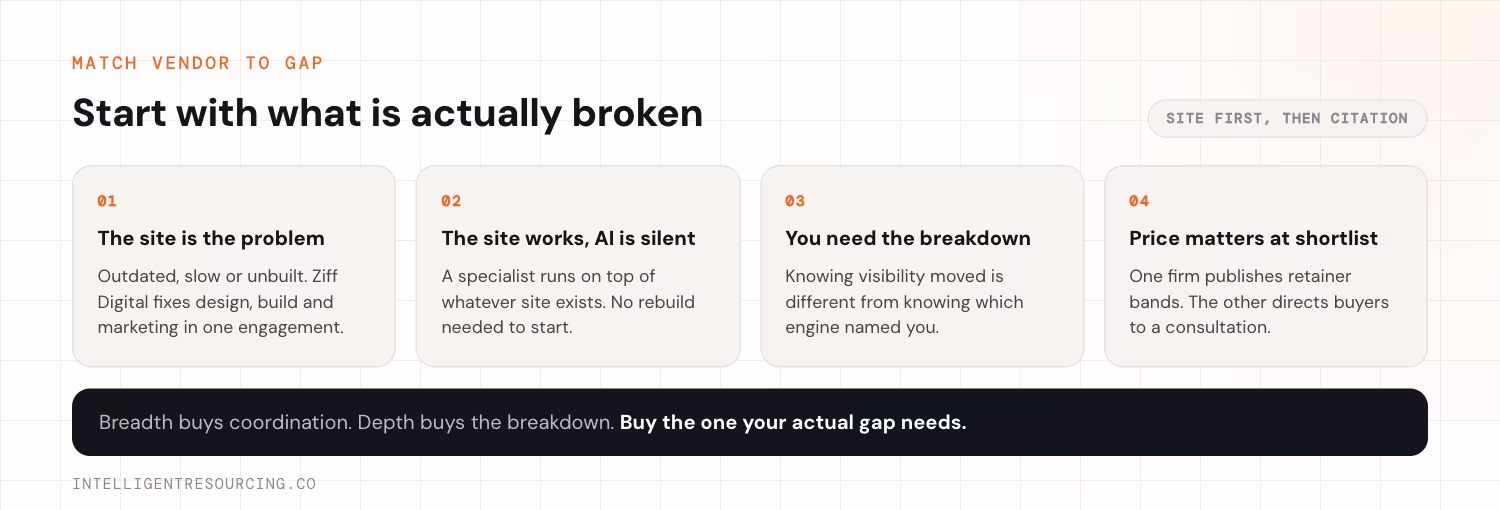
Choose Ziff Digital if:
- The website itself needs rebuilding, not just marketing layered on top
- Branding, app development or paid ads are also on the list
- One team owning design, build and marketing removes real coordination cost
Choose Intelligent Resourcing if:
- AI search is the channel you want to win, not one item on a longer list
- You need to know which engine names you, not just that visibility moved
- A published price and a published engine list matter at the shortlist stage
Neither answer makes the other wrong. Ahrefs' study of 75,000 brands across three engines found the factors that predict visibility are broadly similar from engine to engine, which is a fair argument that one competent team can work on all of them at once. The split shows up in the results, not the inputs. That is why the reporting matters more than the tactics. Our roundup of agencies reviewed for AI citation tracking applies the same test to several more firms.
Comparisons
A first page ranking and a place inside the AI answer are two different results. Book a GEO diagnostic call with Intelligent Resourcing to see which engines cite your category today, and where your brand sits on each one.
FAQs
Does Ziff Digital offer GEO or answer engine optimisation?
Yes. GEO is a named service with its own page, sitting under Marketing next to SEO, social media marketing and marketing strategy. That page carries nine FAQ questions covering what GEO means, which AI platforms it targets and what a GEO audit measures.
Can Intelligent Resourcing build or redesign a website?
No. Website builds, branding, app development and paid media all sit outside scope. A business that needs a rebuild should brief a full-service agency for that part of the work.
Is GEO as an add-on always worse than GEO as a dedicated service?
No. If the website and the wider marketing also need work, one team handling all of it removes real coordination cost. The trade-off is how finely the results get reported, not effort or skill.
Does Ziff Digital publish how it measures AI visibility?
Partly. Its GEO page names the platforms it optimises for, describes a baseline audit of the current AI citation rate, and confirms monthly reporting in its FAQ. It does not state whether that report is broken out by individual engine, or how it separates a citation from a mention.
What does each firm publish about pricing?
Ziff Digital publishes no pricing on its site and directs buyers to a consultation. Intelligent Resourcing publishes a one-off strategic blueprint from AUD $2,500 plus GST and monthly retainers from AUD $3,200 plus GST, on a six month minimum.
Why does a per-engine breakdown matter?
Because the engines disagree on sources more than they disagree on brands. BrightEdge measured 16% to 59% overlap in cited sources between engine pairs against 36% to 55% overlap in named brands. A brand can be well cited on one engine and missing on another, and a single combined figure hides that.