

Why Write a Revenue Charter for a Private Equity Portfolio?
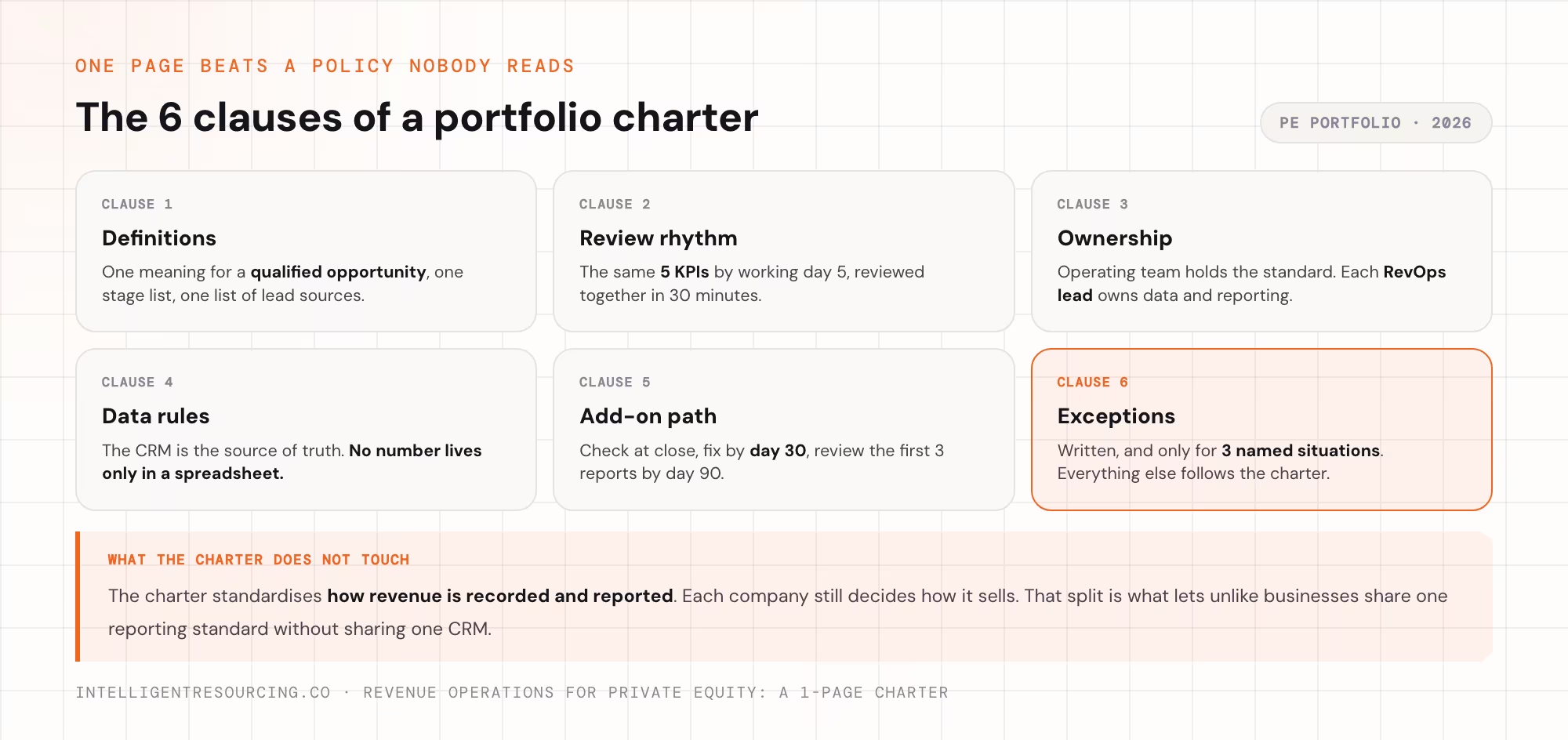
A charter turns a loose agreement into a rule every private equity (PE) company can read. It says what each company records, who owns each part and when numbers are reviewed. Without it, each company defines revenue its own way, so no two reports compare.
Revenue is where most private equity value now comes from. Revenue growth drove 57% of value creation over the last decade, and its share rose from 44% in 2019 to 75% in 2025, says Gain's 2026 value creation report, which analysed more than 15,500 deals. Over the same period the contribution from multiple expansion fell from 46% to 8%. The numbers behind revenue therefore need to be reliable.
A GTM operating partner for PE portfolios can run these shared go-to-market (GTM) standards. Each business still runs its own sales process. Each clause below has a short purpose and sample wording to copy.
What Should Every Company Count and Report?
Clauses 1 and 2 set shared definitions and a shared review rhythm. Every company uses one meaning for a qualified opportunity, one set of deal stages and one list of lead sources. A number then means the same thing in every report.
Investors already work this way at fund level. The Institutional Limited Partners Association issued 2025 templates that set one format for fund reports. Investors can then compare managers, as the National Law Review summarised. A portfolio charter applies the same idea to pipeline.
Clause 1 sample wording. A qualified opportunity is a named buyer with a confirmed need, a budget owner and a next step booked. Every company uses the same stage list: [stage 1], [stage 2], [stage 3], [won], [lost]. Every lead has a single source from the shared list.
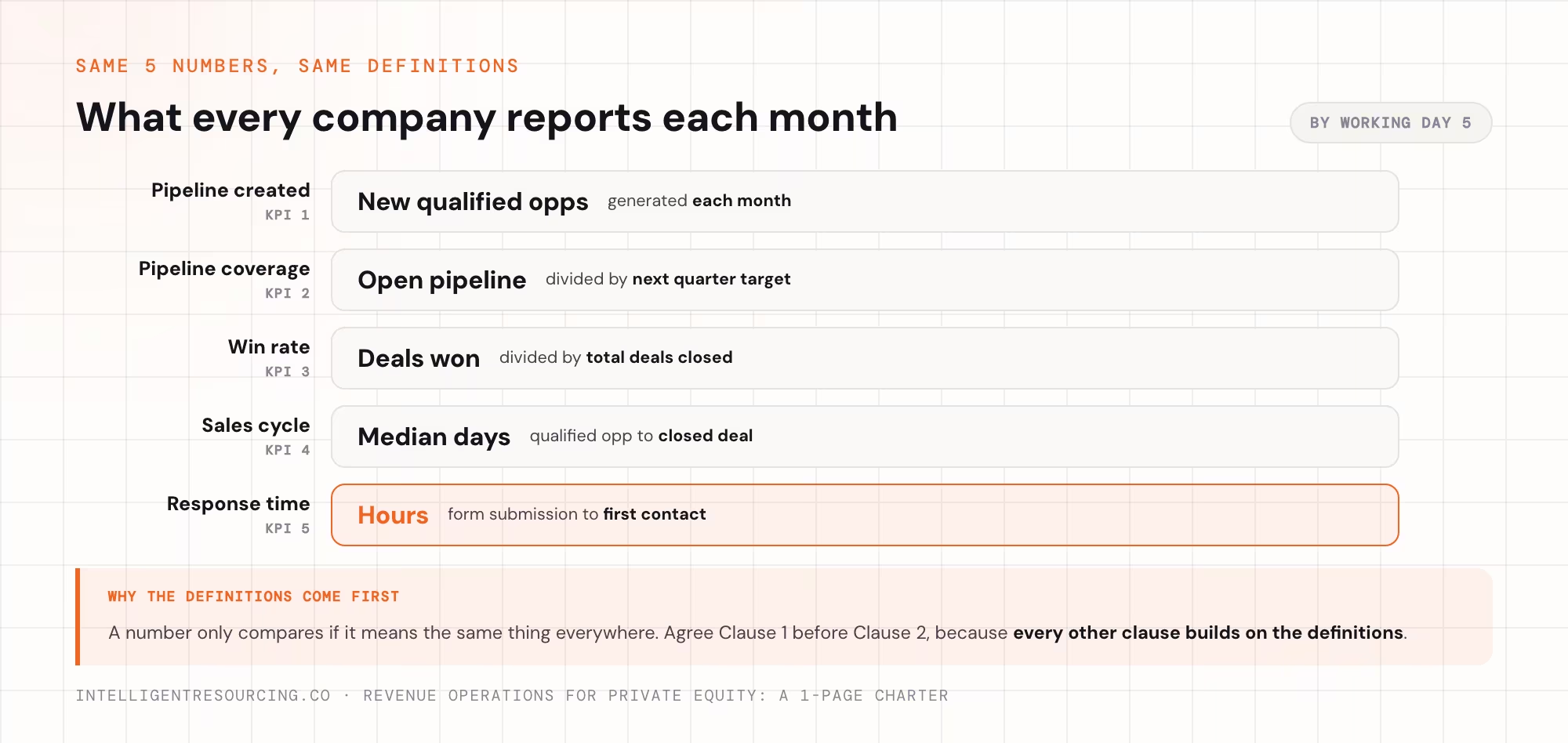
Clause 2 sets 5 key performance indicators (KPIs) every company reports each month.
- Pipeline created: new qualified opportunities generated each month
- Pipeline coverage: open pipeline divided by next quarter's revenue target
- Win rate: deals won divided by total deals closed
- Sales cycle: median days from qualified opportunity to closed deal
- Response time: hours between a form submission and first contact
Clause 2 sample wording. Each company submits the same 5 KPIs by working day 5 of each month, using shared definitions. The operating team reviews all reports together in a 30-minute monthly meeting.
Fill in the brackets with the portfolio's own stages and keep the list short. Each company's RevOps team then keeps those definitions the same in every record and report.
Who Should Own Revenue Operations Across a PE Portfolio?
Clause 3 splits the roles. The PE operating team owns the shared revenue operations (RevOps) standards. Each company controls its own sales process, and its RevOps lead owns data quality and reporting.
Named owners also help with privacy duties in Australia. Australian Privacy Principle 10 asks an entity to take reasonable steps on personal information. What it collects must be accurate, up to date and complete. What it uses or shares must also be relevant.
| Task | Operating team | Company CEO | Head of sales | RevOps lead |
|---|---|---|---|---|
| Write and change the charter | Owns | Consulted | Consulted | Informed |
| Keep fields clean | Informed | Informed | Consulted | Owns |
| Run the sales motion | Informed | Owns | Owns | Informed |
| Send the monthly report | Informed | Approves | Provides | Owns |
| Fix a failed check | Reviews | Approves | Provides | Owns |
Clause 3 sample wording. The operating team owns the shared standards and changes them only by written notice. Each company controls how it sells, while its RevOps lead owns data quality and reporting. Every field has a single named owner.
How Do You Keep CRM Data Accurate Across a PE Portfolio?
Clause 4 sets the data rules. Each company's customer relationship management (CRM) system is its source of truth. Every field has a named owner, new accounts are checked for duplicates and automated updates are verified before reporting. Once those rules hold, building the buyer-signal stack on top of them takes about 12 weeks.
Cleaning data is now routine sales work. Salesforce's 2026 State of Sales survey covered 4,050 sales staff in 22 countries. It found 74% were working on data cleansing: removing duplicates, fixing errors and making formats match across split systems.
Intelligent Resourcing builds and runs signal-led data workflows inside each client's own CRM on a managed retainer. That work covers enrichment, removing duplicates and keeping records clean.
A review on our GTM engineering page comes from the group marketing manager at an Australian waste services group. Its divisions were all prospecting in different ways, on different CRMs. The reviewer wrote that we "built around the systems we already had rather than asking us to replace them." It is one client's review and carries no guarantee of results.
Portfolios comparing outside support can review GTM and RevOps partners for PE and family offices. They differ in CRM integration and ongoing support.
Clause 4 sample wording. Each company's CRM is its source of truth. No number exists only in a spreadsheet. Every critical field has a named owner, new accounts are checked for duplicates, and automated record updates are verified before reporting.
How Should an Add-On Acquisition Join the Charter?
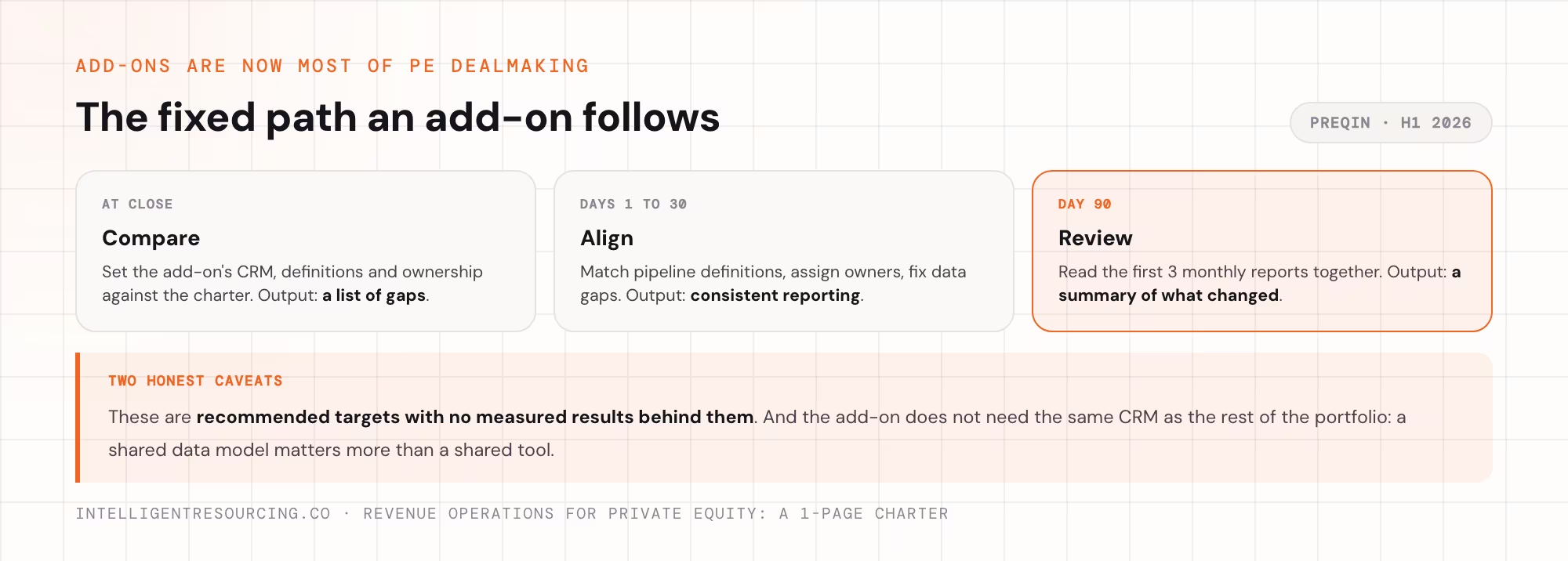
Clause 5 gives every add-on the same path. Check its CRM, definitions and owners against the charter at close. Fix gaps within 30 days and review the first 3 monthly reports by day 90, while the add-on keeps its own sales process.
A fixed path matters because add-ons are now most of PE dealmaking. Add-on acquisitions made up more than half of global PE deal count in the first half of 2026, according to Preqin's buy-and-build analysis.
| Timeline | Action | Expected output |
|---|---|---|
| At close | Compare the add-on's CRM, definitions and ownership with the charter | List of gaps |
| Days 1 to 30 | Align pipeline definitions, assign owners and fix data gaps | Consistent reporting standards |
| Day 90 | Review the first 3 monthly reports | Summary of performance changes |
These are recommended targets with no measured results behind them. The add-on does not need the same CRM as the rest of the portfolio. Building a RevOps tech stack around shared data rules connects the systems each company already has.
When Should PE Firms Make Exceptions to the Charter?
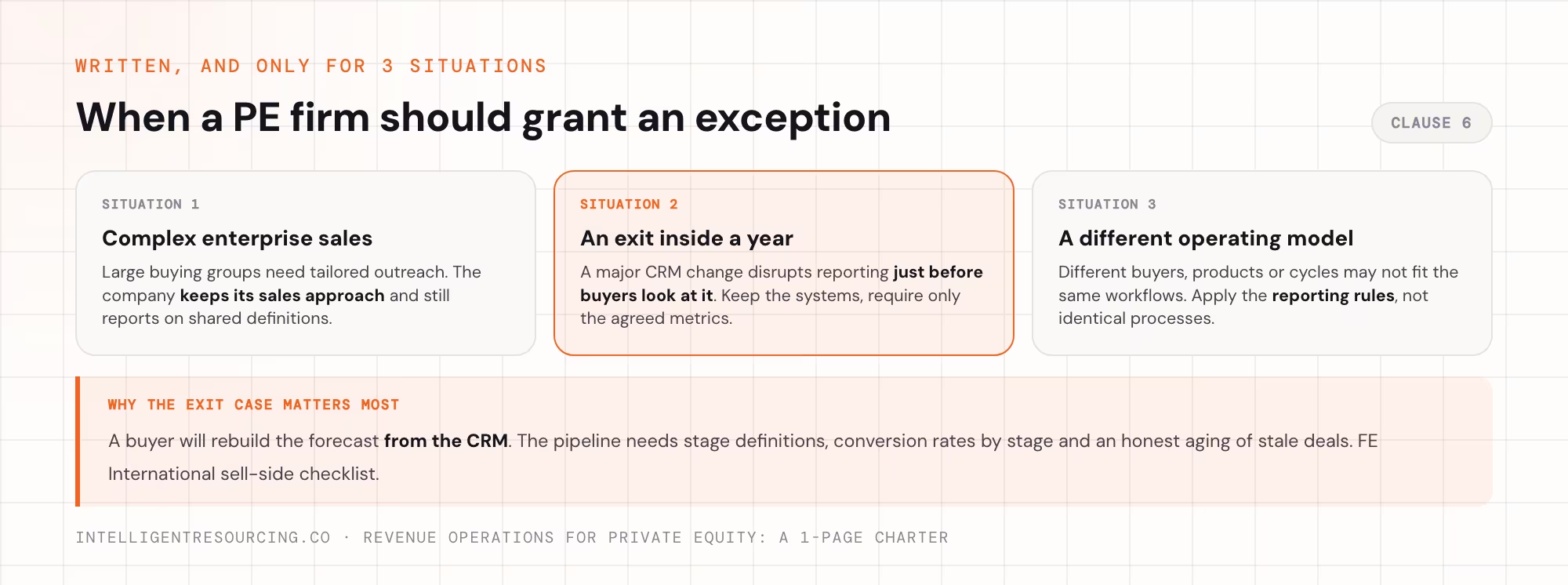
Clause 6 allows written exceptions. The goal is steady reporting without changing how each business sells.
Three situations justify an exception.
- Complex enterprise sales. High-value deals with large buying groups need tailored outreach and direct sales involvement. The company keeps its own sales approach and still reports on the shared definitions.
- An exit less than a year away. A major CRM change can disrupt reporting just before buyers look at it. Keep existing systems and require only the agreed portfolio metrics.
- A company that operates differently. Businesses with different buyers, products or sales cycles may not fit the same workflows. Apply the shared reporting rules without forcing identical processes.
The exit case matters most. FE International's sell-side checklist puts it plainly. A buyer will rebuild your forecast from your CRM. The pipeline needs stage definitions, conversion rates by stage and an honest aging of stale deals.
Clause 6 sample wording. The charter standardises how revenue is recorded and reported. Each company decides how it sells. The operating team may approve written exceptions for complex sales, an upcoming exit or a business with a different operating model.
How Does the Charter Become a Working System?
A charter works when its definitions, checks and reporting rules run in each company's CRM every month. That takes joined-up workflows, clear owners and steady data care.
A written rule nobody enforces drifts back to local habits within a quarter. The charter holds when one person owns the monthly check, and the data layer under it runs without chasing.
Intelligent Resourcing builds and runs those workflows inside each company's own systems on a managed retainer. It joins CRM data to signal-led lead generation, so pipeline is tracked and followed up the same way across the revenue operations function.
RevOps Tools
If the definitions are agreed and the gap is the data layer underneath them, map the build with Intelligent Resourcing before the next monthly review.
FAQs
What is a revenue operations charter for a PE portfolio?
It is a 1-page rule that sets shared revenue definitions, a review rhythm, owners, data rules and an add-on path across every portfolio company. Each company keeps its own sales motion, and the operating team holds the standard.
What should be in the first version of the charter?
Start with Clause 1, the definitions. Agree one meaning for a qualified opportunity, one stage list and one list of lead sources. Once those match, every report can be compared and the other clauses build on them.
Who writes the charter?
The operating team writes it, with input from each company's head of sales and RevOps lead. A GTM operating partner or a RevOps lead runs the rollout and holds the standard once it is signed.
How long does an add-on take to join the charter?
Plan for 30 days to fix gaps and 90 days to review the first 3 reports. These are working targets with no measured results behind them, so check the add-on against the charter at close to find gaps early.
Do all portfolio companies need the same CRM?
No. A shared data model matters more than a shared tool. A single platform pays off in a roll-up of near-identical businesses, while unlike businesses do better with a shared charter on different tools.